How Facebook Changed the fabric of our society

  For someone who is not a millennial, I can say I jumped on the social media bandwagon, pretty early. Before Facebook, I had a Myspace account, and at the time, it seemed like the ultimate way to be cool. In those days, Myspace was the cheaper alternative to having a personal website.  For folks who were self-employed, it was the easy way to put yourself and your business out there without breaking the bank.  This was the forum where all the cool people met. I would spend hours up on hours of my day on this social media network because, for me, it was the hub for pop music.

justin-timberlake

At its prime, Myspace was the most visited social media site in the world. In the summer of 2006, it surpassed google as the most visited website in the United States (Appleton Creative 2013).  However, the downward trend for Myspace began when the company was sold to News Corp for half a billion dollars. The new owners flooded the site with ads without necessarily doing anything to improve user experience.

Then came Facebook, which was originally targeted at college students, minimally diminishing the popularity of Myspace. BY 2008, Facebook had overtaken Myspace basically because it had a more user-friendly website.  Today, Facebook is the most widely used social media network, boasting of over billion users worldwide. Its claim to fame is has revolutionized the way people interact.

facebook-face-to-face

On a personal level, nothing beats the connectivity platform provided by Facebook. I believe that wen the story of inventions that transform the world is told, Facebook would be a major character. The world is now a smaller place because of Facebook. The beauty of it is that it created a platform that allows people to connect over long distances and reconnect over lost years.

facebook-2

The concept of ‘Sharing’ is something we now take from granted. Before Facebook, we didn’t have the ability to share major events with the people closest to us by a single click of the mouse.  Now, basically every kind of announcements are made via Facebook.  Graduations, births, engagements, weddings and even obituaries are all but common on Facebook.

On the other hand, the phenomenon known as Facebook also has produced some negative effects on the social order of our world. Chief of these is cyber-bullying.  People hide under the guise of social interactivity to be mean and nasty.

In conclusion, Facebook has and continues to have a profound effect social fabric of the world.  With Facebook, we know we can share our lives in a way and with a scope that is different, and still be a dominant communication tool.


Posted in Uncategorized | 2 Comments

Social Media’s Role in the 2016 U.S. Presidential Election

Let’s just face it. Whether you are a Democrat or a Republican, the November 8 presidential election in the United States yielded an astonishing victory for the billionaire businessman and celebrity who became a politician, Donald Trump.

By Umaro Djau, USC Graduate Student

As millions here at home and abroad were slowly recognizing voters had chosen Trump as the 45th President of the United States, one political commentator and analyst drew a pointed conclusion as to the reasons for this surprising victory: understanding the current media landscape. “When there is a revolution in media, when there’s a new media form, a new master usually comes along and shocks everybody,” said Anthony Kapel “Van” Jones on CNN during the election night coverage of that cable TV network (2016).

And that “new master” is the President-elect Donald Trump who, according to Van Jones, can be compared to other three successful presidential candidates in different historic periods (CNN, 2016). “People totally wrote FDR off and then he understood radio better than everybody else and he broke through. JFK was totally written off but he understood television better than anybody else and he broke through. Obama totally written off but he understood the Internet, that you could raise money, small donation dollars, viral videos, and he was able to break through,” defended the CNN analyst and political commentator (2016).

Watch Video: CNN’s Van Jones says Social Media contributed to the victory of Donald Trump in the presidential Election over Hillary Clinton  

In an interview with CBS’ “60 Minutes” on Sunday, Donald Trump agreed with Van Jones’ assertion, saying that social media helped him win the recent presidential election. “I think it helped me win all of these races where they’re spending much more money than I spent. And I won,” Trump told CBS’ Lesley Stahl (2016).

Watch Video: Excerpt of Donald Trump’s Interview with CBS 

With more people spending their time on social media networks for messaging, conversations and content exchange, Trump could only find these platforms “tremendous” as they help drive a higher level of engagement between users and foster grassroots support on social media networks (CBS’ 60 minutes; Talkwalker, 2016).

Talkwalker dubs itself as one of the world’s leading social data intelligence companies, specializing in monitoring and analyzing online conversations on social networks, new websites, blogs and forums. Talkwalker (2016) has recently reported on the advantage of Donald Trump over Hillary Clinton on social media, which resulted in the Republican candidate “outperforming not only Clinton but also the traditional media” (para. 33).
Social Media Platforms

Social Media Platforms

According to the President-elect, he has 28 million connections between Facebook, Instagram and Twitter (CBS’ 60 minutes, 2016). Indeed, these three social media networks, coupled with others, have produced some interesting metrics and insights on their influence, “like nothing this country has ever before seen” (Talkwalker, 2016, para. 1).

Donald Trump, President-elect of the United States of America | Getty Images

Donald Trump, President-elect of the United States of America | Getty Images


To illustrate its findings, Talkwalker (2016) said Trump’s Facebook, Instagram and Twitter pages all ranked in the top five. From Twitter only, according to Talkwalker (2016), 30 days before Election Day, Trump produced a sheer volume of tweets, outperforming Clinton with 100 more original posts.

Indeed, this has been a year of political hashtags. From #MAGA (Make America Great Again) and #CrookedHillary to #ImWithHer, social media has become a war room of its own kind with candidates and supporters exchanging barbs, insults, arguments, news and a lot of conspiracies. This takes us to Facebook and the hot issue of alleged fake news. Did fake news have any influence on the outcome of the elections?

Facebook’s founder and CEO says “it is extremely unlikely hoaxes changed the outcome of this election in one direction or the other” (Facebook, 2016, para. 4). According to Mark Zuckerberg, more than 99 percent of what people see on Facebook is authentic (Facebook, 2016).

While this may be the case, people would certainly drive the social media conversation according to their political views. For instance, from January 2016 to October 19 of this year, women, taxes, ISIS, immigration, Mexico and national security were the main issues both in traditional and social media outlets (Talkwalker, 2016). However, according to Talkwalker (2016), the conversation changed to corruption and Clinton’s email as the election was nearing, driven by “vocal and relentless social media followers” (para. 17).
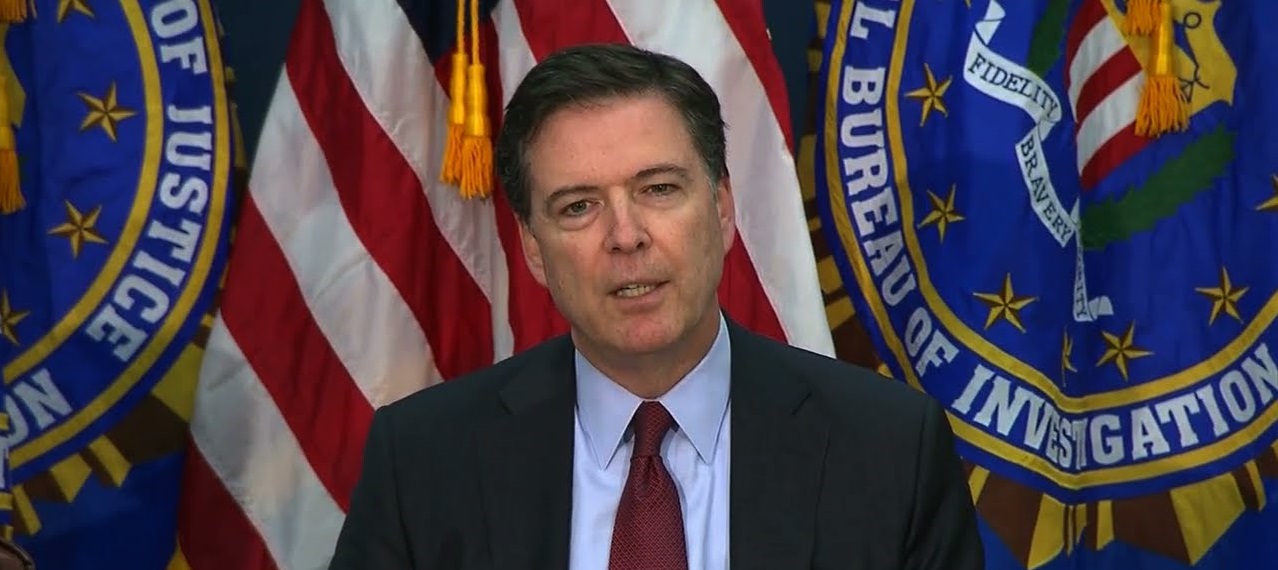
FBI director, James Comey | PBS New Hour

FBI director, James Comey | PBS New Hour

The hot issue of the email takes us to Democratic presidential candidate, Hillary Clinton, who is now blaming FBI director James Comey for her loss due to a letter sent to Congress on October 28 announcing that the FBI had uncovered emails possibly related to its earlier probe into Clinton’s use of a private server when she was the U.S. Secretary of State (CNN, 2016).

While Clinton seemed to have shown restraints ventilating her anger and frustration on social media, Trump was often in full swing, which he now explains and justifies in simple terms. “When you give me a bad story or when you give me an inaccurate story … I have a method of fighting back,” Trump said in his first post-election interview with the CBS Television Network (CBS’ 60 Minutes, 2016).
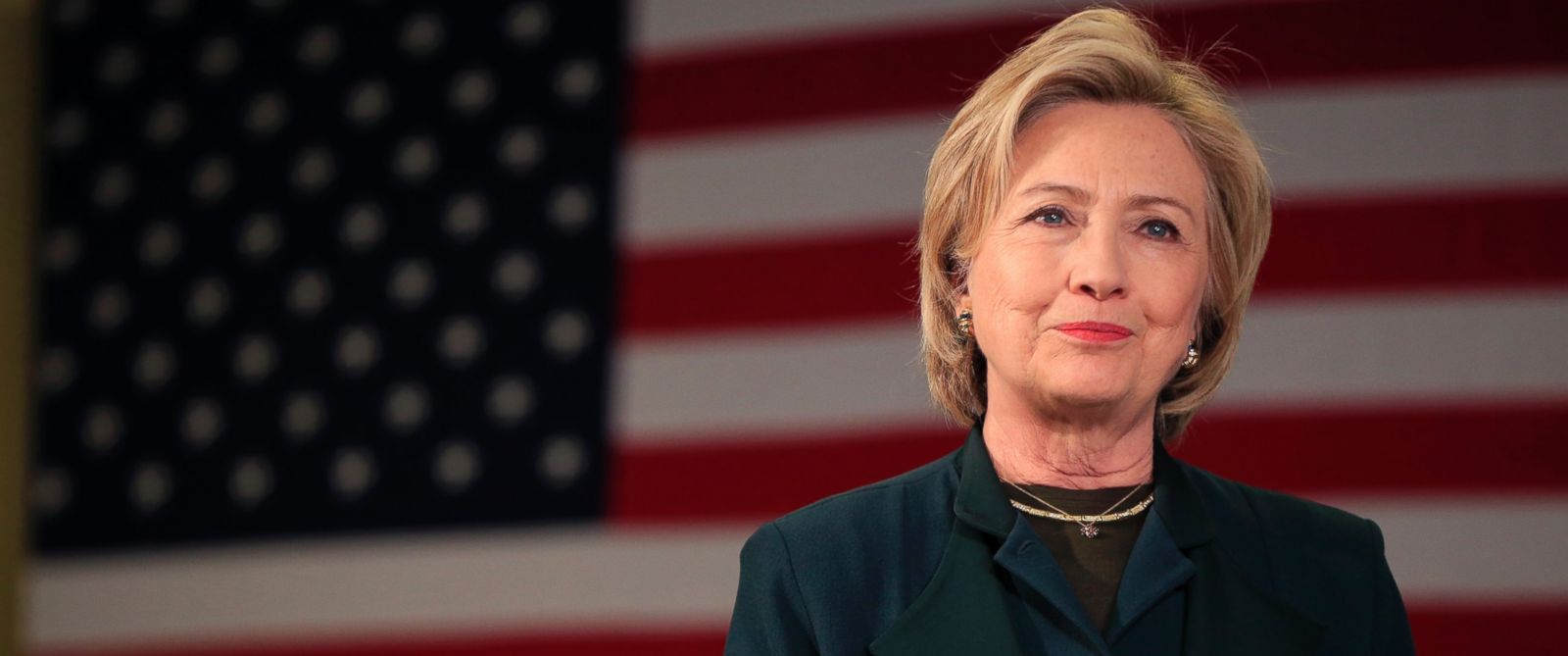
Hillary Clinton, Democratic Presidential Nominee | Clinton for President

Hillary Clinton, Democratic Presidential Nominee | Clinton for President

Now that we are all warned about not underestimating the power of social media as a medium of mass diffusion, we will have to wait and see how much of it Trump will use during his presidency. However, here is a hint: “It’s a modern form of communication. There should be nothing we should be ashamed of. It’s where it’s at,” concluded Trump (CBS’ 60 Minutes, 2016).

Even one of his primary detractors agrees. “That’s the era that we’re in” and we may just want to get used to it because social media is here to stay and Trump “understands social media and reality television better than anybody else,” Van Jones said. This may well be one the reasons the CNN analyst and commentator called him “Trumpzilla” — but soon to be the president of the United States of America (CNN, 2016).

References:



Posted in Uncategorized | Tagged , , , , , , , | 6 Comments

Christmas Ads Already?!?!?

It’s happened, Lord & Taylor kicked off the holiday season on Thursday with New York’s first Fifth Avenue department store window display. That makes it official, the festive season is upon us.

121022-holiday

Many of you may have already noticed that your local Target couldn’t replace Halloween with Christmas soon enough. And the first big Christmas ads have already hit the airwaves and taken the internet by storm. Below is the infamous John Lewis ad that everyone waits for each year. This year’s ad didn’t disappoint, with a fun-loving animal theme to make everyone jolly.

https://www.youtube.com/watch?v=sr6lr_VRsEo

While John Lewis has always been known for its Christmas advert, this year another big name has taken the Christmas crown when it comes to advertising. Marks & Spencer released its holiday ad just a few days after John Lewis, and the Internet world has gone crazy for it. Some have hailed it “the best” of the year and the season is just getting started. Take a look and you be the judge.

While both these ads offer great pieces of marketing genesis…they still beg the question, is it too early for retailers to be pumping out the Christmas ads? In my personal opinion, yes… but shoppers don’t seem to mind. According to Shoppercentric.com, one third of Christmas shoppers said they started looking for gifts in September. That number climbs to 37% for shoppers between 18 to 34 years old.

So there appears to be good reason for retailers to start the Christmas creep, even though we’re still well over a month away. What are your thoughts? When is Christmas advertising too early?

christmas-too-early

Posted in Uncategorized | 8 Comments

Hefty and Excedrin provide relief from political trash

When many Americans simply wanted a break from what has been described as one of America’s dirtiest elections (Barone, 2016), brands Hefty and Excedrin each found unique ways of cutting through the political clutter.

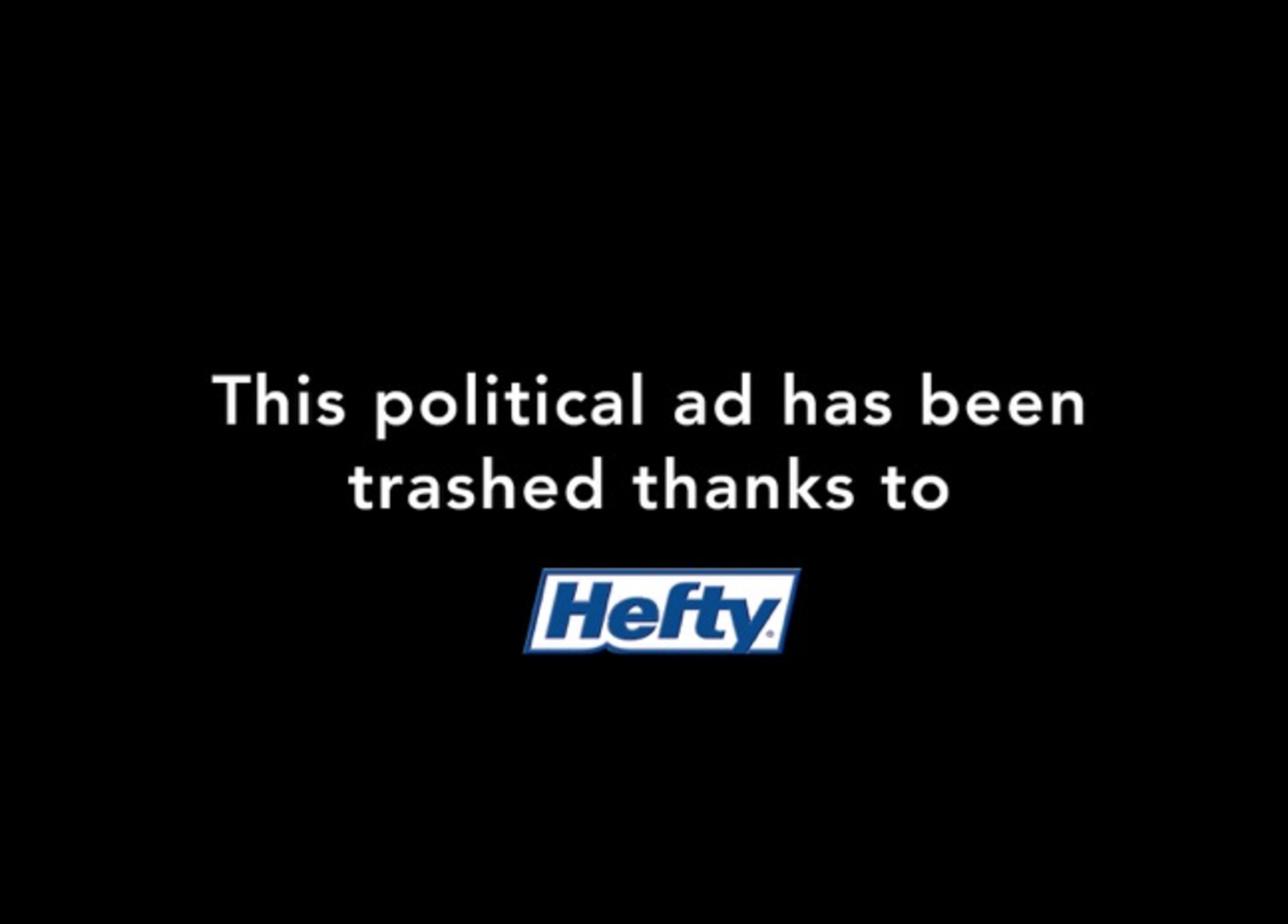
In the weeks leading up to the presidential election, Hefty’s advertising agency, Havas Chicago, decided to purchase ad space on websites that would otherwise be chock-full of political ads, such as CNN, Fox News, AOL and the Huffington Post’s political page (Richards, 2016). Additionally, Hefty replaced the 30-second pre-roll videos, potentially preventing even more political ads, with a 6-second message, “This political ad has been trashed thanks to Hefty” (Richards, 2016, 3rd para.). These ads ran up until election day, primarily in the swing states where the Clinton and Trump campaigns spent the most on advertising (Richards, 2016).

screen-shot-2016-11-13-at-3-17-36-pm

The decision to place these anti-political ads was based on research indicating that 80 percent of people were fed up with the negative ads (Richards, 2016). Jason Peterson, chief creative officer at Havas Chicago, said the goal for the ads was to “build a brand relationship with consumers in a modern way” (Richards, 2016, 5th para.). They wanted consumers to know that Hefty understands their sentiments and empathizes with them (Richards, 2015).

Similarly, Excedrin’s advertising agencies, Weber Shandwick and PHD, found an opportunity to respond to current conversations happening over social media (Bulik, 2016). During the first presidential debate, they observed a surge in mentions of headaches, and even the need for Excedrin as relief, on Twitter (Bulik, 2016). It was then that they decided to build the #DebateHeadache strategy as part of the larger Moments campaign which was already underway (Bulik, 2016).

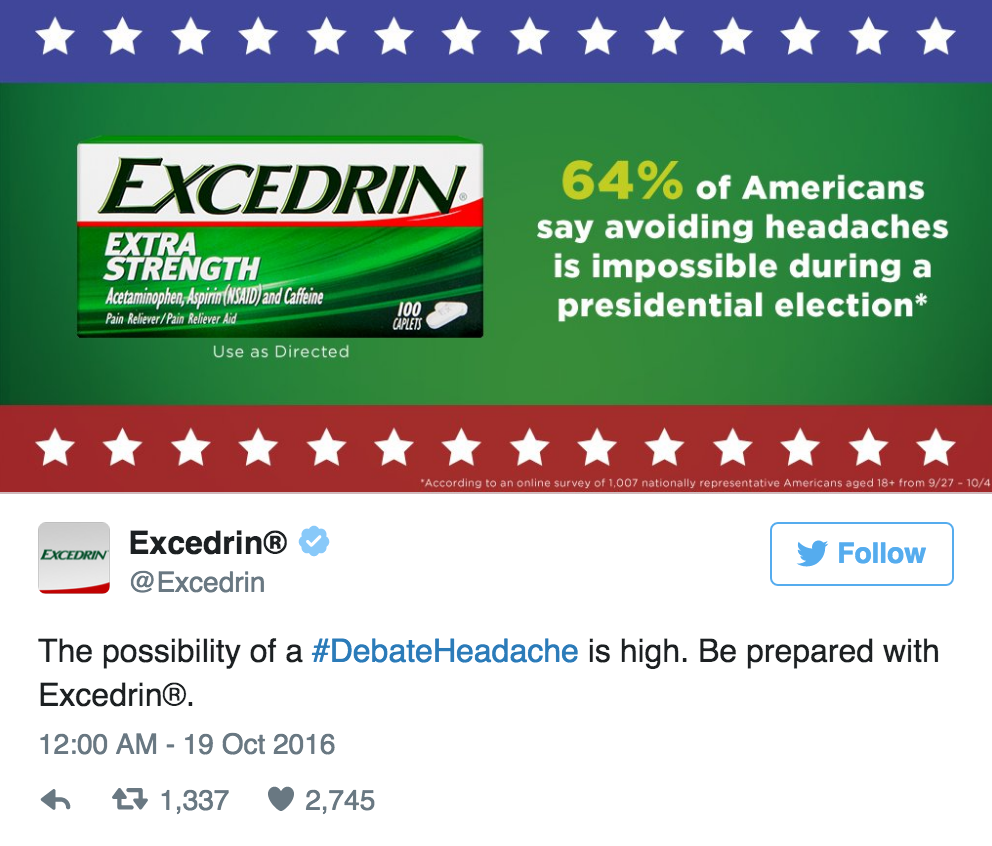
On October 19, the day of the final presidential debate, Excedrin appeared to be particularly in-tune customers when it sent a tweet with the hashtag, #DebateHeadache (Rousselle, 2016).

screen-shot-2016-11-13-at-4-51-12-pm

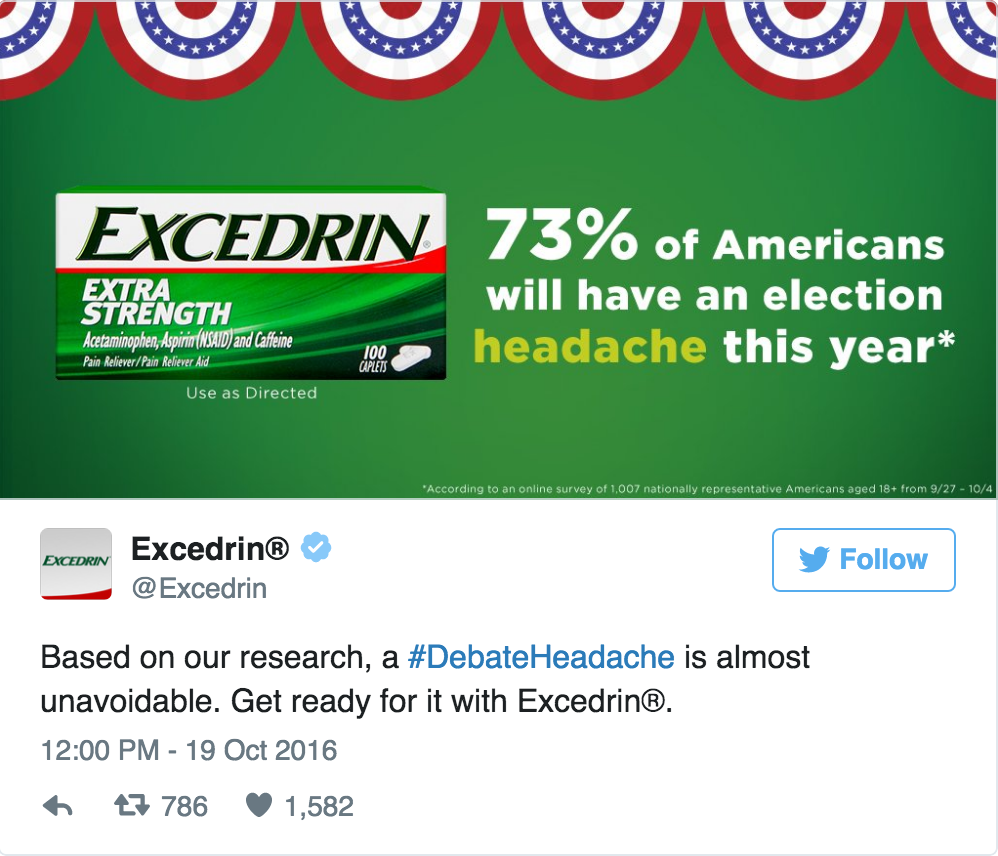
It followed up with another tweet later in the day, declaring that debate headaches are almost unavoidable, citing data from a survey that had been conducted that same day (Maheshwari, 2016; Rousselle, 2016)

screen-shot-2016-11-13-at-4-56-54-pm

Excedrin’s relevant humor did not go unnoticed. According to Adweek, during the debate, #debateheadache jumped 602 percent within the hour, and Excedrin saw a 3100 percent increase in mentions by the next day (Bulik, 2016). CNN even called Excedrin the winner of the debate (Bulik, 2016).

“Content is king, but context is God” (Vaynerchuk, 2013, p. 17). Neither Hefty nor Excedrin have anything to do with politics, yet they found a way to become relevant during the presidential election. These two brands each listened to the conversations on social media and applied their research to develop creative and relevant content. They quickly entered the conversation while the topic was hot, and consumers took notice. Who would have thought that anyone would be thinking about trash bags or pain killers during the presidential election? Well, maybe pain killers . . . .


References:

Barone, E. (2016, November 3). This writer ranked American history’s dirtiest elections. Here is what he says about 2016. Time. Retrieved from http://time.com/4554784/dirtiest-elections-american-history-2016/

Bulik, B. S. (2016, October 24). Got a presidential #debateheadache? GSK’s Excedrin remedy tweets explode on Twitter. Fierce Pharma. Retrieved from http://www.fiercepharma.com/marketing/presidential-debate-headache-gsk-s-excedrin-remedy-tweets-explode-twitter

Maheshwari, S. (2016, November 6). Advertisers try to capitalize on campaign fatigue. The Seattle Times. Retrieved from http://www.seattletimes.com/nation-world/product-ads-pitch-relief-from-presidential-campaign/

Richards, K. (2016, November 3). Hefty is giving you a break from this terrible election by trashing those nasty political ads: A clever stunt from Havas. AdWeek. Retrieved from http://www.adweek.com/news/advertising-branding/hefty-trashes-those-terrible-political-ads-free-you-nasty-election-spots-174407

Rousselle, C. (2016, October 19). Excedrin’s “Debate Headache” tweet goes viral. Townhall. Retrieved from http://townhall.com/tipsheet/christinerousselle/2016/10/19/excedrin-gets-it-n2234723

Vaynerchuk, G. (2013). Jab, jab, jab, right hook. New York, NY: HarperCollins Publishers


Posted in Uncategorized | 2 Comments

Is Anything Real Online?

Here we are, communicating with one another through a screen.  Some of you are reading this on your smartphone, others on your tablet, and some of you are on a desktop or laptop computer.  It’s a daily method of communication – looking at a screen to see what someone else has “said.”  This is amazing, of course.  Figuratively, our world is smaller than ever.  We can write something on a blog or a social media site and, instantly, someone in another part of the world can read and respond.  Nearly every thought and feeling anyone has can be broadcast and discussed in real-time.  Advertisers can create campaigns that show up in newsfeeds and on the side bar of online email accounts, like Yahoo.  It is amazing.  But, how much of it is real?

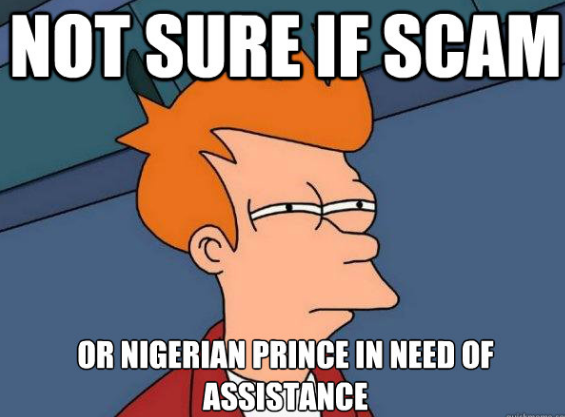
USA.gov has a page on its website that provides tips for remaining safe online due to the level of false information and activity.  They advise about fake auction sites and scam emails.  I mean, we all have that rich, royal, Nigerian relative we’ve never met who wants to give us their entire kingdom for helping them convert $100 into a money order, right?  MTV’s Catfish is an entire series based on people who have been taken in romantically by someone pretending to be an entirely different person.  People can say anything they want behind the protective curtain of a screen.

scam

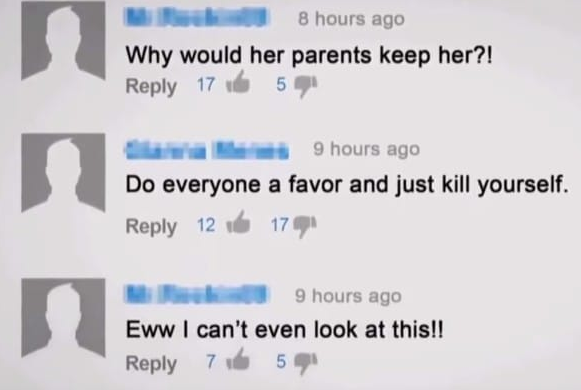
So, what has this done to the way we communicate with one another?  Do we stop really seeing one another as people on this platform?  Do we all think nothing and no one is real online?   In many forums, people may use a fake name, upload fake pictures (or not use pictures at all), and invent intricate back stories about lives they have never lived.  In an online environment, users are offered a cloak of invisibility (Suler, 2004), and they embrace this opportunity.  People freely tell others things like, “Kill yourself!” – as though they are not speaking to another human.

cyberbully

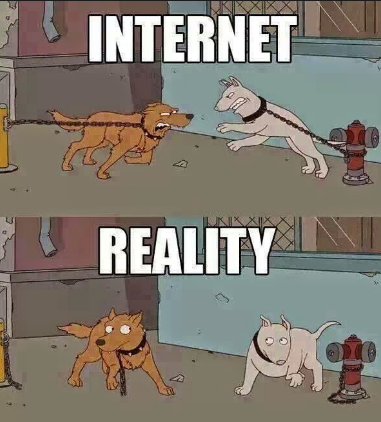
internet-vs-reality

Advertisers photoshop images until the people in the pictures are totally different.  Everything is fabricated.  We cannot trust the words of what may or may not be a “real” person, and we cannot believe our eyes.  All of this means there is a strain on online communications between people and advertisers, as well as online communications between people.  Fake pictures, false profiles, manufactured bravado.

photoshop

In a world where online communication and interaction are part of many of our daily lives, how do we get back to something real?  How do we inject some actual humanity into our human interactions – from a personal as well as a marketing perspective?

References

Suler, J. (2004). The online disinhibition effect.  Cyber Psychology & Behavior. Retrieved from http://www.academia.edu/3658367/The_online_disinhibition_effect

Posted in Uncategorized | 3 Comments

Facebook’s Advertising Tool … discriminating?

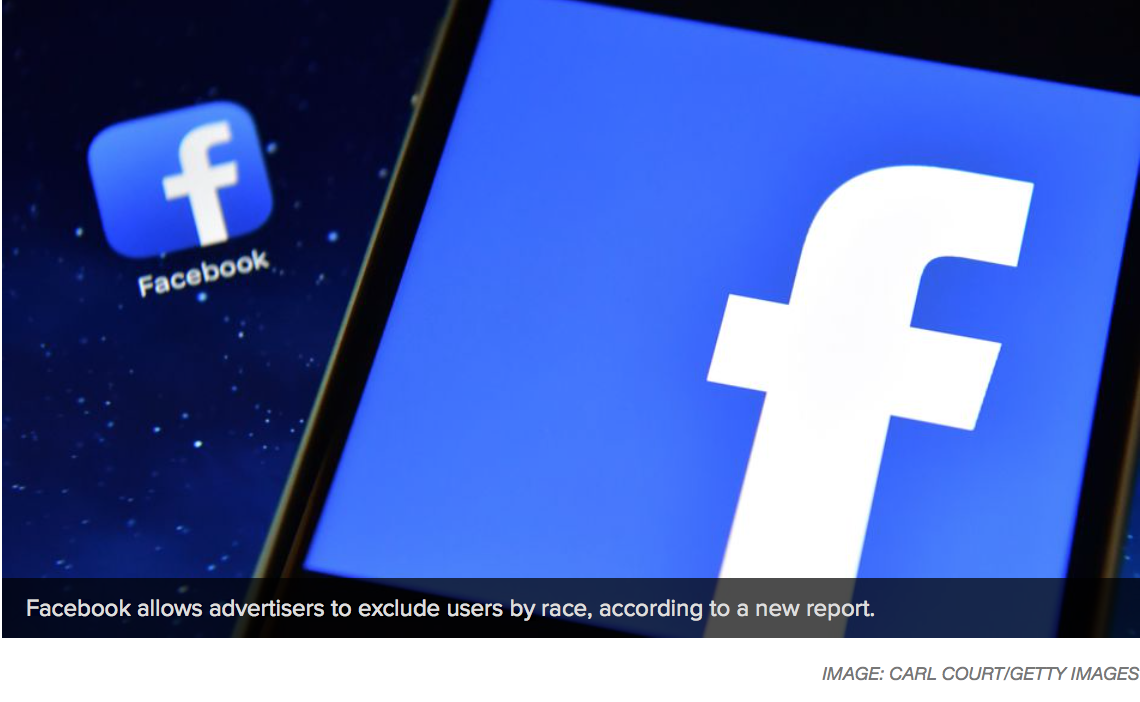
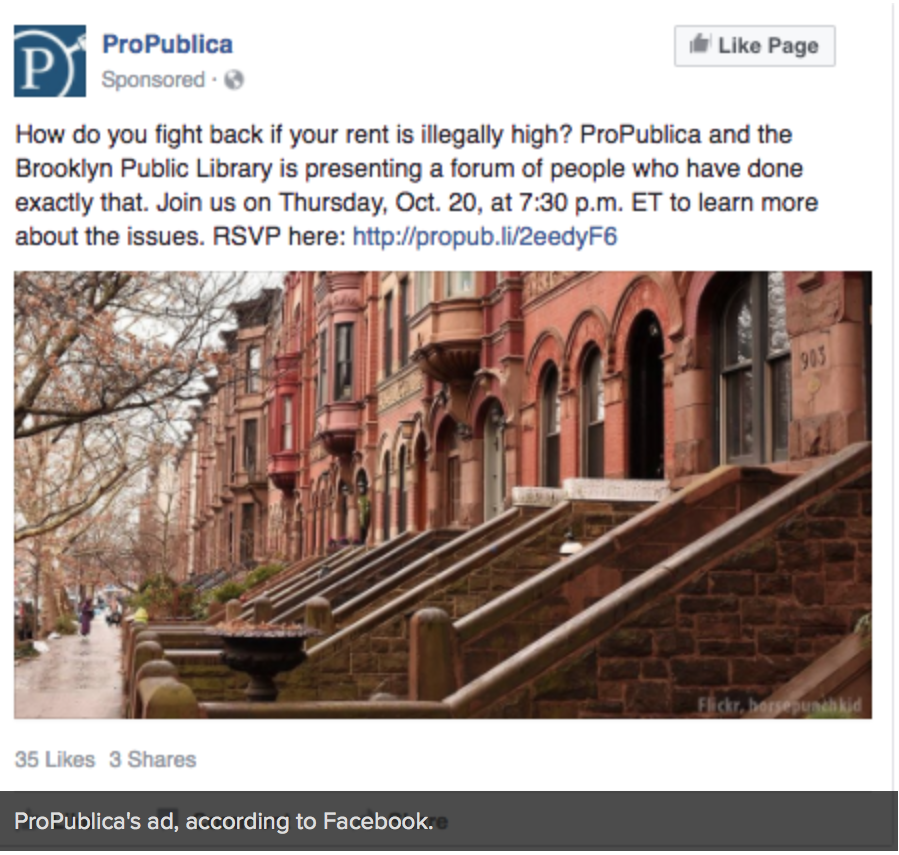
fb-mainProPublica, a New York-based investigative newsroom revealed Facebook’s advertising tool violates civil rights housing laws by allowing advertisers to cater to certain segments. To demonstrate Facebook’s tool violates Fair Housing Laws, ProPublica, a non-profit news team dedicated to consumer interests, created an ad on 10/20/2016. The Facebook tool allows the advertiser to set targeting rules that can exclude viewers by race. Can you believe it?

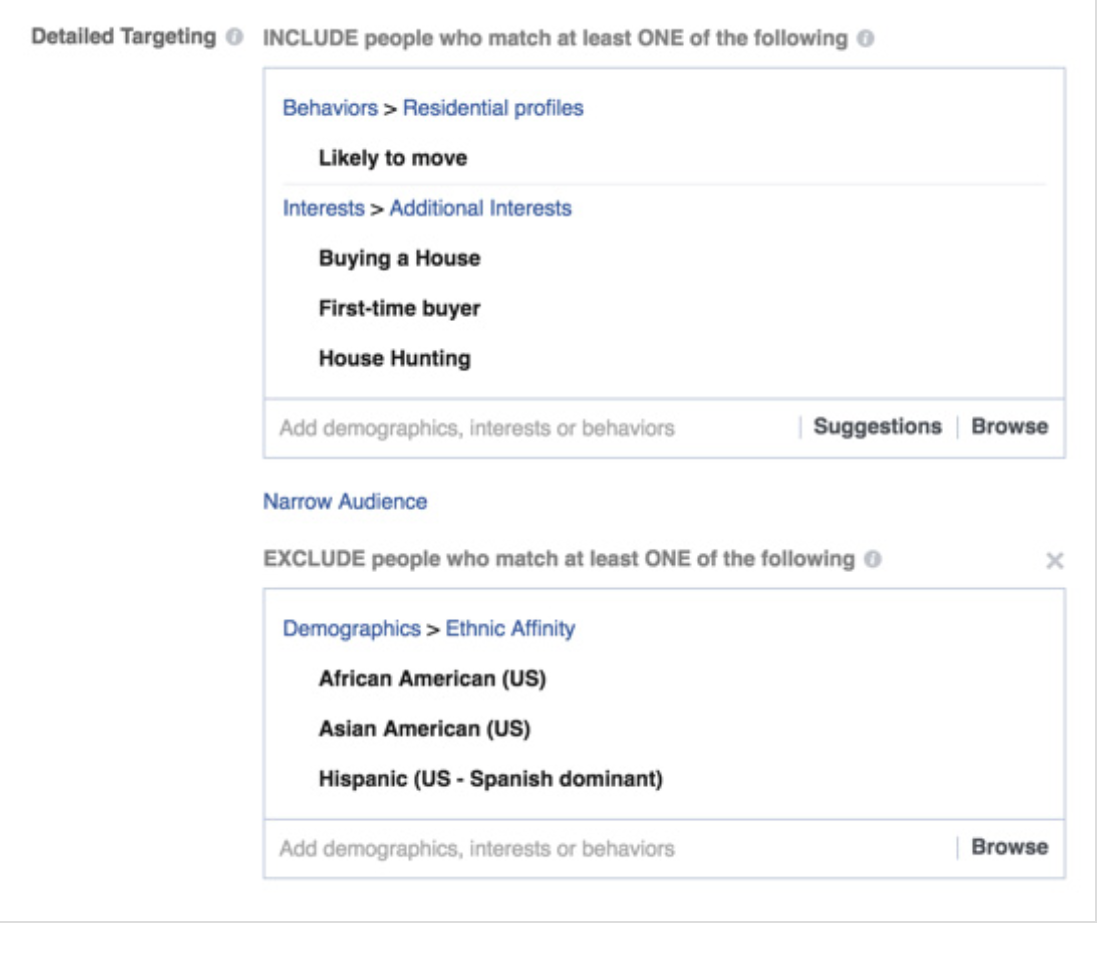
This gives the advertisers supreme rights to target by various criteria including behaviors, interests, and exclusion permission over what is called “Ethnic Affinities.” Ethnics Affinities simply means the ability to hide segments from the ad based on gender, race, or other criteria. This exclusion practice can violate certain federal laws and in this case, housing and employment laws.

Of course, Facebook executives reported their advertising tool does not break any laws. In a statement, Facebook executives stated, “we are committed to providing people with quality ad experiences, which includes helping people see messages that are both relevant to the cultural communities they are interested in and have content that reflects or represents their communities — not just generic content that’s targeted to mass audiences” (Hinchliffe, 2016).

ProPublica’s investigative report found that ads using these tools could still be illegal and the famous civil rights attorney, John Relman, stated the tool is an outright violation of the Fair Housing Laws. After receiving much attention, the Facebook Executives made minimal changes to their advertising tool to comply with federal laws.

I published this article not to debate the discrimination issue but to raise the importance of right targeting in advertising. The ad creative is a critical component of the overall campaign. Equally important is the underlying data and targeting list including the criteria to support the campaign. The creative advertisement and the consumer list must comply with legal regulations and ethical principles.

Facebook is researching the ad and their approval process. See the ProPublica ad below inviting consumers to a renters’ forum. The next image shows the Facebook tool and the criteria used to exclude African Americans, Asians, and Hispanics. Essentially, if consumers in these ethnic groups visited this area of Facebook page, they would not see ad based on the exclusion rule and therefore, would not be exposed to the ad invitation for the renters’ forum. Hmmm …

fb-actual-adfb-tool-criteria

Reference

ProPublica.org About Us (n.d.) Retrieved from https://www.propublica.org/about/

Hinchliffe, E. (2016). Facebook reportedly allows advertisers to exclude users by ‘ethnic affinity’ (n.d.). Retrieved from http://mashable.com/2016/10/28/facebook-ethnic-affinity-advertising/#0QlyLbIFR5qK

Kulp, P. (2016). When Online Ad Targeting Become Blatant Discrimination (n.d.). Retrieved from http://mashable.com/2016/11/12/facebook-google-ad-discrimination/?utm_cid=mash-prod-nav-sub-st#T9FYWq.lKkq9


Posted in Uncategorized | Comments Off on Facebook’s Advertising Tool … discriminating?

I am Woman, Hear me Laugh (to Keep from Crying)

By no means am I a “bra-burning” feminist, but I do support girl power and cheer on fellow women when they succeed. However, pay inequality exists (Adamy & Overberg, 2016) and women are often held to impossible standards regarding beauty and what is considered appropriate behavior. These standards are typically impossible for the average (yet awesome!) woman to achieve, and we each respond to this inequality differently.

Warning: This post contains language that some may deem inappropriate.  Please read at your own risk.

screen-shot-2016-11-13-at-3-01-50-pm

Some men and women are angry and protest, others join political organizations to try to make a difference, many just move on, while others resort to humor to cope with inequality or other perceived injustices. Personally, I respond far better to humor than anger. There is a lot of anger right now following this week’s presidential election results, and it’s just too much to bear. Humans are emotional beings, and sometimes we need someone to make us laugh (Coughter, 2012). It doesn’t mean that these issues are funny and should be dismissed with laughter. The message here is that sometimes humor is simply more effective to get the point across.  Whether your message is for brand advertising or to spread awareness regarding a particular cause, the important thing is to break through all of the social media clutter (Vaynerchuk, 2013).  Delivering the message in a novel way (in this case, using sarcasm and humor) increases the chance that the information will be shared virtually (Greenwald, 2014).

For example, take the below video on “Pinksourcing,” in which Kristen Bell openly mocks gender and racial pay disparities. It’s funny, but it also makes you mad. The video has been shared all over Facebook, and has close to one million views on YouTube and over 4000 comments. Warning: There is a little inappropriate language.

Another example of the use of humor to raise awareness regarding another not so funny topic is the video for the “Transparen-she,” which is an “invisibility cloak” type product used to cover women. This parody depicts various situations in which women are judged regarding their clothing at work, during travel, etc. The “Transparen-she” is intended to make a woman’s body invisible so we are no longer deemed distracting or unattractive. I love this video, but it also really hits a bit too close to home. The clever execution works, though. Warning: There is a lot of inappropriate language in this one.

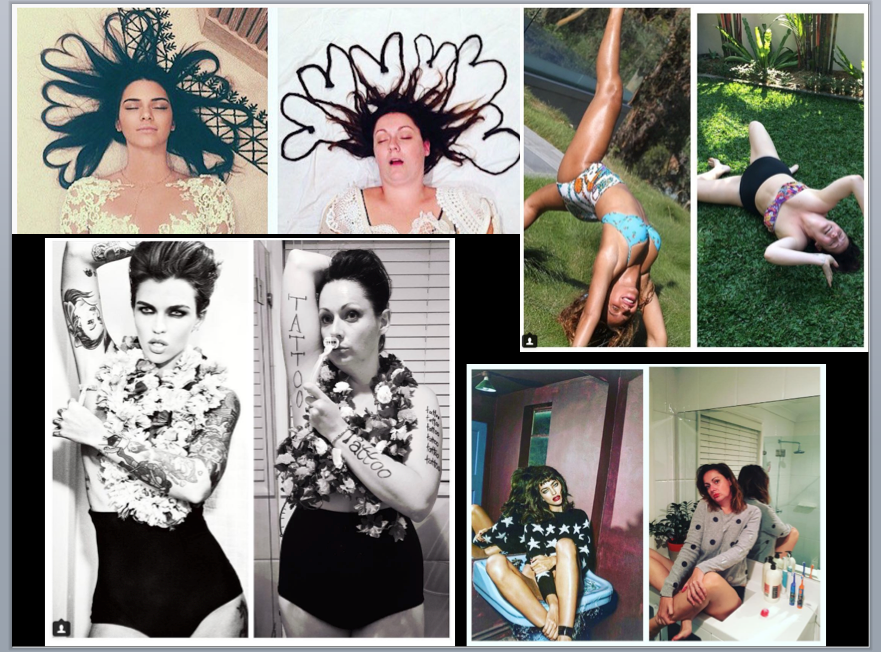
My final example is a bit more light-hearted, and is a series of photographs created by a comedian reenacting photos taken by celebrities and other “beautiful people.” Men also receive redemption here, as she includes the Biebs and Lenny Kravitz in her mix of Kardashian and Beyonce photos. The message is the same regardless: normal people don’t look like this, and it’s ridiculous to try to compare ourselves to them. The full link is worth reviewing, but be forewarned that it contains photos of scantily clad people and sexual innuendo: http://elitedaily.com/envision/celeb-photos-comedian-recreates/1470343/. Below are a few family friendly examples:

screen-shot-2016-11-13-at-2-42-29-pm

Special Announcement: This blog post is not intended in any way to be male-bashing. I am thankfully surrounded by supportive and wonderful male friends and family, and am well aware that jerks come in all genders, shapes, and sizes.

Now back to our regularly scheduled programming! What do you think? How do the above examples make you feel? Are they an effective way to send a message?

References

Adamy, J. and Overberg, P. (2016). Women in elite jobs face stubborn pay gap. Wall Street Journal. Retrieved from http://www.wsj.com/articles/women-in-elite-jobs-face-stubborn-pay-gap-1463502938

Coughter, P. (2012). The art of the pitch. New York, NY: Palgrave Macmillan.

Greenwald, M. (2014). Secrets of 7 of the most effective ad campaigns. Forbes. Retrieved from http://www.forbes.com/sites/michellegreenwald/2014/07/10/secrets-of-7-of-the-most-effective-ad-campaigns/#58387ac51220

Pound, K. (2016). This comedian’s recreations of celeb photos are better than the originals. Elite Daily. Retrieved from http://elitedaily.com/envision/celeb-photos-comedian-recreates/1470343/

The Huffington Post. (2016). Pinksourcing with Kristen Bell. Available from https://www.youtube.com/watch?v=k_m5AlsQqcs

Vaynerchuk, G. (2013). Jab, jab, jab, right hook: How to tell your story in a noisy social world. New York, NY: Harper Collins.

Vox (Plank, Peterson, & Mokalla). (2016). Transparen-she. Available from https://www.youtube.com/watch?v=G6gkZZeddQU

Posted in Uncategorized | 6 Comments

Your audience isn’t looking for content….?

Upon reading Gary Vaynerchuk’s book “Jab, Jab, Jab, Right Hook” (2013), I was overwhelmed with the amount of useful information he gave us. However, I also questioned how relevant the information he provided us with still is. Furthermore, I questioned how creative, artistic, or entrepreneurial people deal with content and context differently than marketers. Yes, I know that marketers will say that they are artistic and entrepreneurial, and in a sense most of us are marketers too, right? We are constantly marketing in ourselves. We market ourselves through our resumes, in our careers, in class, and in our social media platforms. Anyway, my curiosity was piqued by questions I asked myself aloud. “How do musicians view content and context? What about film directors or educators? Would they agree with Vaynerchuk’s statements? Is “content King and context God” (Vaynerchuk, 2013, p. 17) to everyone? Has content gotten better or have we gotten dumber? Or vice versa?” I set about attempting to find out (see TEDx video links below), how content marketing factors into marketing strategy for people in either creative or educational fields.

I find that most of us still carry the marketing campaign mentality. Our ultimate goal is to create a marketing campaign that is powerful and compelling. We are all currently attempting this task in our final projects, correct? In Vaynerchuk’s (2013) book he depicts and explains different brand campaigns used on different platforms, but have content marketing campaigns proven to be more effective in the years since he published his book? Agencies, I would imagine, all have different ideas of what works best, so is context more important? As far as I could find…YES. In this day and age of digital technology, professional marketers, musicians, film directors, etc., etc., must be aware of the platforms and apps consumers are using and what time(s) they are using them, but avoid presenting a carbon copy of the content across all communication avenues. No easy task for the independent types! By getting and developing context instead of establishing content little by little, we can manage to make content marketing campaigns fit into the consumer’s life, thus making it authentic and relatable to them. So your audience isn’t looking for content, they’re looking for you to tell their story.

I admit that I was hoping to find information that was contradictory to what Vaynerchuk offers, if only because I like meshing different perspectives together, but alas, the majority were in agreement.

If you work in the in the film or music industry, I highly recommend you watch this:


Cindy Noriega-Ortiz

References:

Vaynerchuk, G. (2013). Jab, jab, jab, right hook: How to tell your story in a noisy, social world. Harper Collins Publishers.

Posted in Uncategorized | Comments Off on Your audience isn’t looking for content….?

Will the United States ever break the glass ceiling?

The Presidential Election of 2016 changed the way we view politics in more ways than one.  Firstly, a man with no prior political experience attained the highest level of government in the free world, Donald Trump is now the President-Elect of the United States.  Meanwhile, Hillary Clinton, a former First Lady and woman with more than thirty years of public and political service, was defeated yet again in her bid for the Presidential seat.  So how did Donald Trump do it?  Many analysts say he tapped into the fear plaguing most Americans: the threat of terrorism. 

For women around the United States, the Hillary Clinton defeat means the dream of a woman becoming President of the United States will now have to wait a little longer.  During her 2008 speech, when it was clear Barack Obama would win the 2008 Democratic nomination, Clinton mentioned the 18 million cracks of votes she garnered in her presidential bid for the White House. Fast forward eight years later that number tripled to 60 million votes.  In the 2016 election Clinton won the popular vote but she failed to win the electoral college, ultimately ending her final run at President of the United States.  But, how much longer will the American people have to wait to see its first female President of the United States?  No one knows for sure, but one thing is certain, we are closer now than ever before.  In Clinton’s concession speech to Trump she said, “Now, I know, I know we have still not shattered that highest and hardest glass ceiling, but someday, someone will.”  In my opinion Clinton already shattered that glass ceiling, what do you think?

Full Clinton Concession Speech:

https://www.youtube.com/watch?v=FSPBjOnHTaM

Posted in Uncategorized | 5 Comments

Nasty Women of the Ad World

Along with many industries, the advertising industry is no different in its unfortunate lack of female representation.  At first glance, the industry should be given credit for the fifty percent of woman working in the industry, but if you dig a little deeper only eleven percent of women are in creative director roles (Ember, 2016).

Although I am passionate about women empowerment… or should I say empowertizing? this post is not intended to discuss the reasons why women are not being represented at the C-suite level.  Rather, this post is intended to highlight some of the “Nasty Women” (thank you Donald Trump) who are making things happen in the advertising world.


Kat Gordon Founder of The 3% Conference

Kat Gordon Founder of The 3% Conference 

Kat Gordon, is the founder of the 3% Conference tailored to support female leadership in the advertising industry. As industry veteran Kat experienced firsthand what is was like to see women left out of the pitch.  After feeling left out of the conversation she started her own agency that specialized in advertising to women.  In 2012, she started the 3% Conference –three represents the percentage of creative directors at the time— to address the issues that prevent women from excelling in their advertising careers (The 3% Conference, 2016).  Since the inaugural conference, the industry has experienced notable growth in female leadership.


Andi Zeisler, Co-Founder and Creative Director of Bitch Media.   Bitch Media is a

Andi Co-Founder of Bitch Media

Andi Zeisler Co-Founder of Bitch Media

nonprofit, feminist media organizations that engages in thoughtful conversations about how women are portrayed in mainstream media (Bitch Media, 2015).  Andi along with her team produce a quarterly magazine, weekly podcast, and website.  Andi has author numerous books including her most recent We Were Feminists Once: From Riot Grrrl to Covergil and Selling of a Political Movement.


Susan Credle: is the Global Chief Creative Officer of Foote, Cone & Belding and previously she was the first Executive Creative Director for BBDO Worldwide.  Susan is

Susan Cradle, Global CCO of FDC

Susan Cradle, Global CCO of FDC

viewed as an important voice for women in the industry and have received numerous industry awards (FCB, 2016).  She is credited for humanizing M&M’s and creating the Allstate Mayhem character (Ember, 2016).  I must note the Allstate Mayham campaign is one of my all time favorites!  In here thirty-year career Credle has gone from bathroom relief intern to executive; all the while supporting other women.

There are countless other women that should be recognized in this post, but above are three women at I have come to admire greatly.  Please feel free to share any other names in the industry!


References:

3 Percent Conference. (2016). Retrieved from: https://bitchmedia.org.

Bitch Media. (2015). Retrieved from: http://www.3percentconf.com.

FCB Worldwide, Inc. (2016). Retrieved from: http://www.fcb.com.

Ember, S. (2016). For women in advertising, it’s still a ‘mad men’ world. The New York Times.  http://www.nytimes.com/2016/05/02/business/media/for-women-in-advertising-its-still-a-mad-men-world.html

Posted in Uncategorized | 9 Comments