Using Social Media for Holiday gift ideas

Each year around Thanksgiving time I go through the same process of asking the kids what they want for Christmas. As they have grown up, their list contains less items but more expensive items like laptop computers, gaming systems, cars, and of course money. When they were little it was easy to get toys and clothes for them. Gift ideas are difficult. The gifts I like to buy for people is something they wouldn’t buy for themselves, or something thoughtful (like a framed picture of the kids for the Grandparents). My kids have everything that they “need” but what can I get them as they are usually not helpful with giving me ideas of things I can actually get them. Online shopping is increasing as online merchants are offering free shipping and other incentives to get customers to purchase online. With the increase in online shopping, online shopping from a smartphone is also increasing. When shoppers have a few moments free, 4 out of 5 smartphone shoppers use that time to browse online stores.

If you ware going to watch this one, be prepared and turn down the volume…a singer she is not…

Social media is becoming a place to find ideas for Christmas gifts, specifically You Tube. You Tube “stars” are creating videos featuring their favorite products. For consumer electronics, 68% of smart phone shoppers used YouTube in order to make purchase decisions. For marketers, this is a great place to have their products featured. It puts a twist on word of mouth marketing. Will you use YouTube to find gift ideas this year?

https://www.youtube.com/watch?v=jMr9iX9ZN1Q

Reference:

Fabizani, E & Mooney, A. (2016) This Holiday Season, watch for these 3 shopping trends. Retrieved from https://www.thinkwithgoogle.com/articles/holiday-shopping-trends.html


Posted in Uncategorized | 2 Comments

So Many Surveys!

Online experiences seem to be inundated with surveys. Whether you are surfing the web, shopping online, or browsing your social media outlets, you are guaranteed to run across a survey.

ec33d34523619c430be5ba5671736ef2ca1272139cb5b9aade5ae8cd3b84360c

There are many reasons why surveys are so prevalent in today’s online society. These surveys help companies understand what their consumers actually DO. Understanding consumers’ intentions during online and offline behaviors can be monitored and observed by the utilization of many surveys. But is tasseling your consumer base with random surveys worth understanding the reach, reputation, and result? YES!

50b8889a4b0d215121e54e675d8d49097184f1c9988f83f4a9cb1c7aff5a51d8

Celebrity endorsements and surveys? Why not.


The anonymity that online surveys provide can be exceedingly valuable. Biases often occur during traditional interviewer surveys. These biases can be virtually erased. Giving the respondents instant access to product reviews provide instant feedback. Having immediate answers to questions could save tons in marketing expenses. If surveys are boring to the respondent, there is a chance that credibility will be tarnished.

Mobile survey growth trends are only increasing as more people join the smartphone community. Providing the survey at an opportune time can also lead to better thought out answers form the respondents. Where do most people have time to waste on their smartphones? Perhaps, while on the toilet.

be04c6da5dba15a82fcc5d4246fe8dfc

Surveys can be adjusted to meet current marketing questions and are already at the consumer’s fingertips. Smartphone friendly surveys is a surefire way to receive more feedback from consumers. The respondent can swipe for their answers which saves time and the answers will likely be more truthful. To ensure survey success remember to keep it short and savvy.

Disclaimer: No not survey and drive.


References:

A. (2016). Top 3 Trends in Mobile Surveys. Retrieved 2016, from

http://grbn.org/focusvision_3_trends/

Five Reasons Why Online Surveys Are So Popular. (2013). Retrieved 2016, from

http://fluidsurveys.com/blog/why-online-surveys-are-so-popular/

Jones, C. (2013). How Surveys Can Help You Create More Effective Content Marketing.

Retrieved 2016, from http://contentmarketinginstitute.com/2013/12/surveys-help-create effective-content-marketing/

Posted in Uncategorized | Tagged , , , | 1 Comment

Secret Sauce to Effective Marketing

I recently came across a blog post by Strong Social. It didn’t necessarily state anything new or revolutionary. It did however bring attention to something simple and obvious that is extremely critical to anyone who works in communication: It is about the role of research in designing winning marketing strategies.

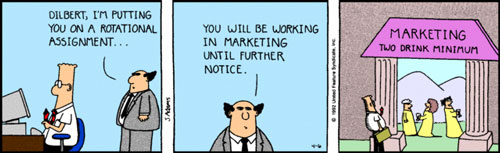
As someone who has spent the bulk of their professional life doing consumer research, I was naturally very intrigued about what this blog had to say. Let’s face it. In the world of marketing, researchers are seen as the nerds. While PR professionals, marketers and advertisers are out socializing and selling the big ideas, researchers are the ones quietly working in the backrooms, slouched over their computers and stacks of data, writing reports.

tumblr_inline_mr0kgn8stt1qz4rgp

It has been my experience that research is usually viewed and judged through a very narrow lens. Depending on whom you ask, research could be described as a tool for testing concepts, it could help optimize messaging and creative, it may be used for segmentation, or it can measure customer satisfaction. But regardless of how it is thought of, it is usually seen as the nice-to-have.

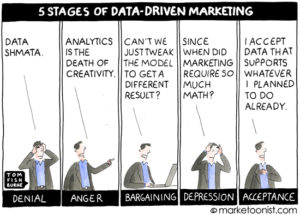
SOURCE: Marketoonist

Every time budgets are cut, the first thing that goes out the window is research. This is in part because some (most) CMOs use research as validation for their recommended strategies. Meanwhile, marketing teams’ interest in research can be summarized into single metric (KPI) that justifies their bonuses.

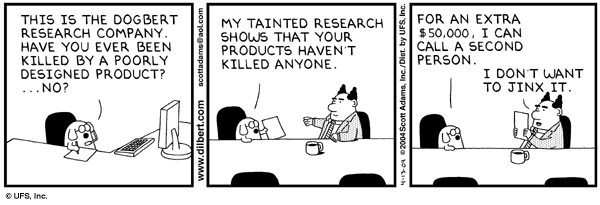
dilbert-sampling

Yet research is much more than a validation or optimization tool. Research, when done right, is highly strategic. The Strong Social blog clearly outlines the depth and breadth of different research methodologies. More specifically, it highlights the unique value that different types of research when it comes to guiding and informing creation of strong marketing campaigns.

“Research when done wring, is highly strategic.”

I highly recommend reading the original article as it is very comprehensive, filled with lots of great information and tips. That said, for those who like to say “TL;DR”, I have outline three key takeaways:

  • Content strategists rely heavily on research. They use the insight to decide on messaging, medium, and placement.
  • Copywriters, get their instructions from the content strategists. Consequently, copywriters don’t always have direct access to the research. Why not give them access to the audience research? Copywriters need research to know their audience and their lingo.
  • Qualitative research methodologies are particularly useful – think beyond focus groups. Examples include ethnographies, user diaries, customer reviews, UX research, social content analyses, etc.

Tell me…

Do you use research for your client projects? What types of research do you typically use? How much value does research bring to your job? 

Posted in Uncategorized | Tagged , , , | 1 Comment

“Why aren’t there more Latinos prominent in television and film”

It seems that every year Latinos are passed up when it comes to lead characters on television and especially in film. For years, Latino organizations like The National Council of La Raza (NCLR), The Imagen Foundation and National Association of Latino Independent Producers (NALIP) have tried to not only to highlight Latinos in entertainment and recognized those individuals who have excelled when it comes to the arts and entertainment, but have also tried to work with the studios to give Latinos a chance to play lead characters. Unfortunately, even with these types of Latino organizations that have been around for years and have raised millions of dollars, they seem to have a tough time landing leading roles for Latinos in television and film.

NBC’s new television drama ‘Shades of Blue’ has cast actress, dancer and singer Jennifer Lopez as one of the lead characters, but perhaps more importantly, she is the executive producer. While this is a strong step in the right direction, it is also an outlier. If you look at the films currently playing in theatres and most television shows, you will not only find a lack of Latinos playing a lead, but almost no Latinos in any of the supporting roles. When Latinos do land a role in a film or television show, perhaps even more problematically, it is the stereotype of a gangster or maid. Latinos are looking for roles like the one Jennifer landed for ‘Shades of Blue’, but unfortunately most struggling Latinos do not have the money nor the pull to be an executive producer of a film or television show to choose the roll they want to play like Jennifer is fortunate to do.

Latinos are becoming the largest ethnic group in America and they love going to the movies more than any other ethnicity in America. The large studios as well as advertisers need to embrace and engage the Latino audience who have also been proven to be a loyal consumer and put pressure on the studios to produce Latino-based shows, casting leading Latinos in movies as well as television. There has been proven successes of Latino themed films like La Bamba and Selena. No one has a clear explanation as to why after all these years of grass roots campaigns and Latino organizations to get more Latinos in front of the camera has not been successful, but I do believe it is only a matter of time before we see Latinos as lead characters and Latino themed stories in television and film.

References

Latimer, B. “Latinos in Hollywood: Few Roles, Frequent Sterotypes, New Study Finds.” NBC. 2016. Retrieved from http://www.nbcnews.com/news/latino/latinos-hollywood-few-roles-frequent-stereotypes-new-study-finds-n523511

Shaw, L. “How Hispanics Became Hollywood’s Most Important Audience.” The Wrap. 2014. Retrieved from http://www.thewrap.com/how-hispanics-became-hollywoods-most-important-audience/

Smith, S., Choueiti, M. & Pieper, K. “Inequality in 800 Popular Films: Examining Portrayals of Gender, Race/Ethnicity, LGBT, and Disability from 2007-2015.” USC Annenberg. 2016. Retrieved from http://annenberg.usc.edu/pages/~/media/MDSCI/Dr%20Stacy%20L%20Smith%20Inequality%20in%20800%20Films%20FINAL.ashx

Posted in Uncategorized | Comments Off on “Why aren’t there more Latinos prominent in television and film”

‘I’m With Her’: Deconstructing Clinton’s Failed Presidential Bid

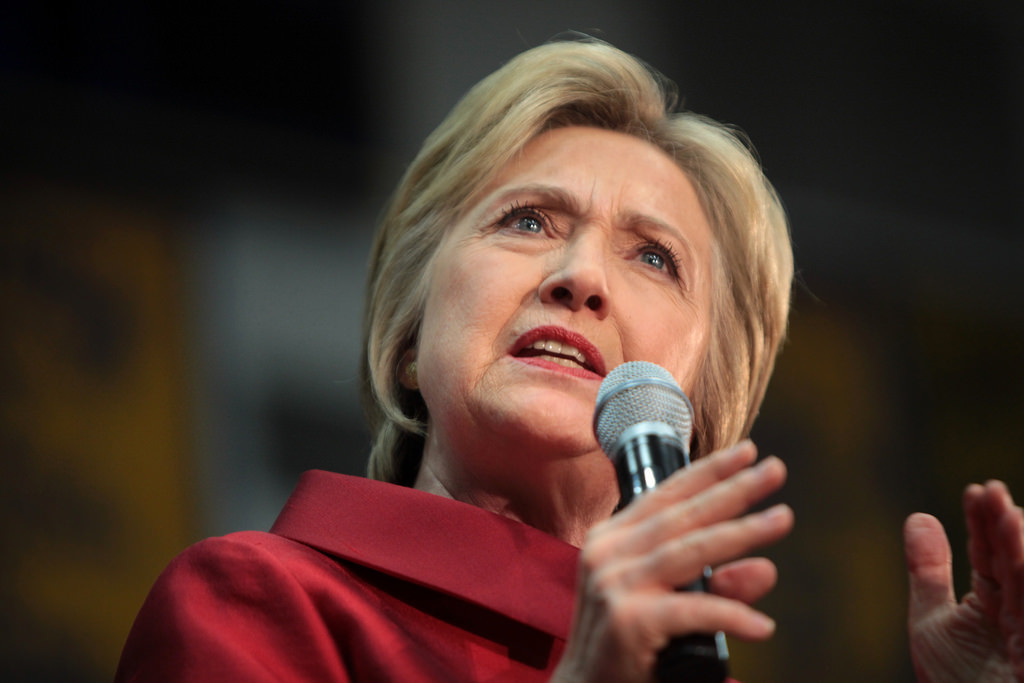
Former Secretary of State Hillary Clinton speaking with supporters at a campaign rally at Carl Hayden High School in Phoenix, Arizona. Photography by Gage Skidmore.

Former Secretary of State Hillary Clinton speaking with supporters at a campaign rally at Carl Hayden High School in Phoenix, Arizona. Photograph by Gage Skidmore.

It’s highly doubtful that Hillary Clinton’s campaign slogan doomed her presidential hopes. No, that falls into another area of communication: her inability to connect with people on a human level. But, roll with me here a minute on the slogan.

Slogans are intended to serve as an articulation of a brand. Slogans should answer questions such as who are you and what do you stand for? There are a lot of ways to interpret the ambiguous meaning of “I’m With Her.”  However, none of those answers get to the core of who Senator Clinton is and why voters should support her.

At worst, her slogan is evocative of a derisive t-shirt I saw a lot as a kid. It featured a wide arrow pointing to the side with the words: “I’m With Stupid.” (such as this one, found on teesbox.com).

t-shirt reading "I'm With Stupid."

I’m With Stupid T-Shirt

“Make America Great, Again” speaks to exactly what Donald Trump, er, President-elect Trump, intends to accomplish. We can debate his ability to do that, or even what golden era he’s referencing. His message, though, is action oriented. The ambiguity is strategic; it allows people to recall a better period in their life and connect that time with Trump’s intended destination. It’s aspirational. It’s something people can own.

In fact, people did own it … in 1980, when Ronald Reagan rode into the White House with the charge “Let’s Make America Great Again.” They called President Reagan “The Great Communicator.” Clearly it was with good reason.

poster used by Ronald Reagan in his 1980 presidential bid reading 'let's make America great again.'The plagiarized slogan alone didn’t vault Trump to 1600 Pennsylvania Ave., just as the lackluster slogan didn’t doom Clinton on its own. But, “I’m With Her” is indicative of bigger problems — and it certainly is a sign of her inability to connect with people. Her slogan might as well have been “I’m Not Him.” In a way, it sort of was. Because the best Clinton could articulate to voters was that people should side with her because she’s not Donald Trump.

If she had a unique marketing position, this was exactly it: vote for me because I’m not as bad as him.

That certainly doesn’t rally the troops like Bernie Sanders did. In fact, the masses generated his slogan: “Feel the Bern.” Sanders inspired people because he delivered the authentic connection that Gary Vaynerchuk touted in “Jab, Jab,Jab,  Right Hook.”

Clinton, in contrast, never connected. She never told America why she was great. As a result, she failed to deliver the knockout blow.

Posted in Uncategorized | Tagged , | 8 Comments

A Blast from the Past: The Power of Nostalgia Marketing

We’ve all been a part of a conversation like this: “Whatever happened to [insert favorite childhood toy, candy, cartoon]? Kids nowadays don’t know what they’re missing. They should totally bring that back.”

If you’re like me and grew up in the 1990s, chances are you know a thing or two about Saved by the Bell, Super Mario or Hi-C Ecto Cooler, but like so many other childhood favorites among the different generations, these brands are now extinct.  Luckily, marketers are getting wise to the growing nostalgia trend and are bringing back brands in bold, new ways.

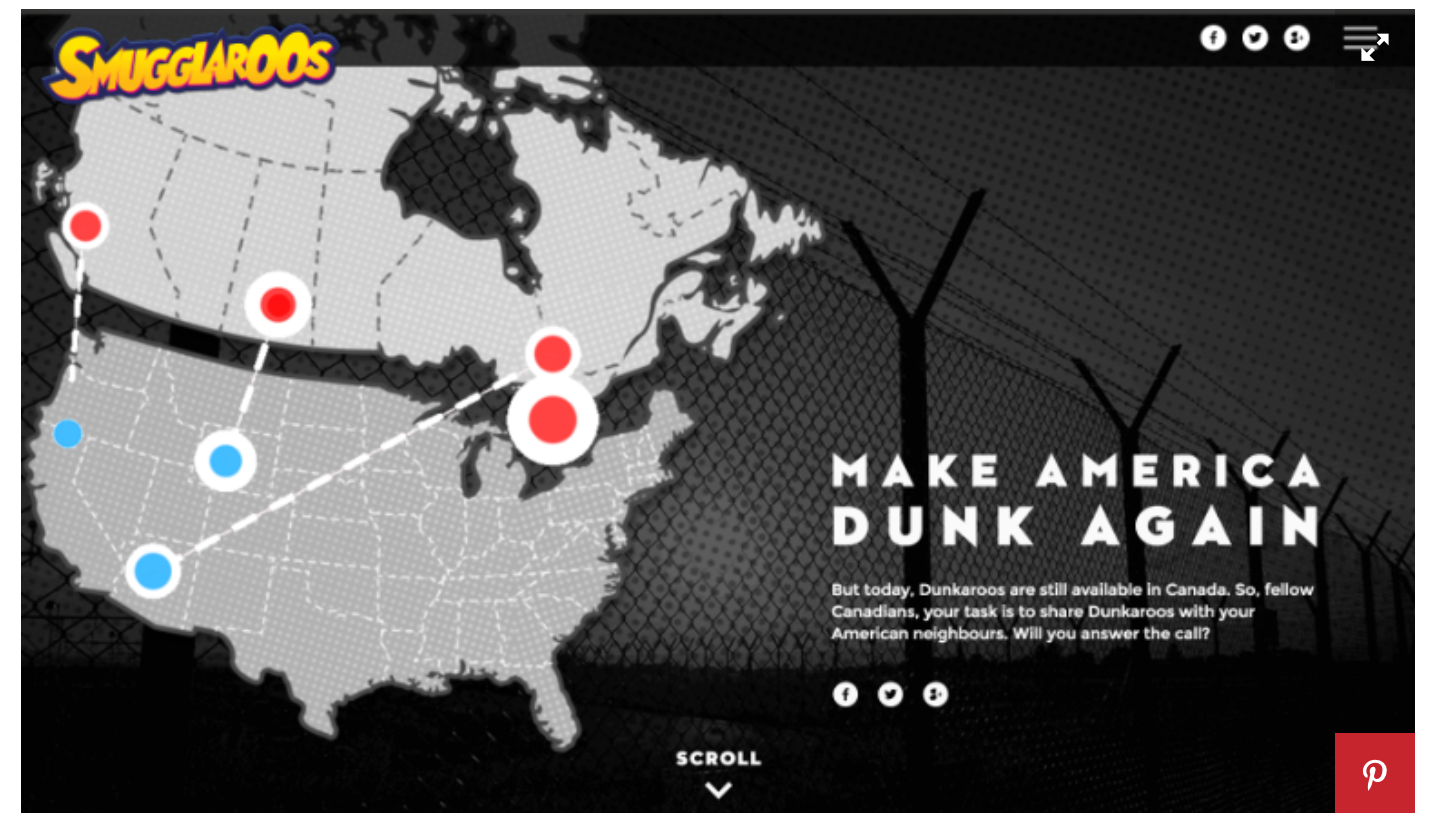
One recent example is the the case of the smuggled Dunkaroos. This once popular frosting-dipped cookie treat was discontinued in 2012 and is now only available in Canada. When General Mills happened upon an insight that nostalgic fans were purchasing their favorite childhood treat from our friendly northern neighbors at inflated prices, they wanted to do something to bring people together across borders (Huffington Post, 2016). The result was the Smugglaroo website, which matches fans with Dunkaroo smugglers. Ridiculous or genius? I’ll let you decide!

screen-shot-2016-11-14-at-10-45-57-pm

So why does nostalgia  marketing work?  

For many, nostalgia is a type of comfort food. It takes us back to a time when life was simpler and helps us connect to the experiences that shaped who we are. While a sense of nostalgia is not unique to just one generation, this affinity is especially strong with millennials (Friedman, 2016). Some argue that the impersonal nature of modern communication or the world-wide turmoil in which this generation came of age are the driving factors for their desire to connect with the past (Cook, 2016; Friedman, 2016). At the core though, nostalgia works because it helps fans connect to a brand on an emotional level.

Tips for successful nostalgia marketing

A throwback campaign may be a risk for some brands, but if done right, it can be a great way to build a relationship with an audience. Listening to your audience on social media is one way to tap into what pulls at their heartstrings. For brands with history, an homage to vintage logos or packaging is a way to transport an audience back to their childhood. And lastly, make sure its authentic and aligns with brand positioning. Fans will be able to tell if you’re just riding the trend.

So here’s a question for the group—what are the brands from your childhood that you’d love to see reenergized?


Cook, K. (2016 September 26). 12 ads that prove nostalgia is a powerful marketing tactic. HubSpot Blog. Retrieved from: www.hubspot.com

Friedman, L. (2016 August 2). Why nostalgia marketing works so well with millennials and how your brand can benefit. Forbes. Retrieved from www.forbes.com

Huffington Post. (2016 November 4). Dunkaroos are making a comeback – kind of illegally. Huffington Post. Retrieved from www.huffingtonpost.com

Posted in Uncategorized | 5 Comments

Facebook Vows to Kill Fake Stories– Are Media Brands In Trouble?


From what started as a means for college students to connect across campuses, Facebook has evolved into an international  communication channel and for many, a news resource and a platform to freely speak their opinions. Makes sense doesn’t it? Let’s be real: You spend way too much time on your News Feed. The NY Times reports that the average amount of time spent on Facebook is “nearing an hour”, and continues to increase. Outside of that hour, it can be difficult to set aside additional time to seek out our news from a different outlet. The problem with the current one-stop-shop model, is  the risk of misinforming the reader with fake news and hoaxes. This became especially alarming during the 2016 Presidential Election, where many Americans believed that these fake stories affected the outcome and contributed to Trump’s triumph (sigh). As a result of the backlash, Facebook’s CEO Mark Zuckerberg has vowed to eliminate fake news and hoaxes from the News Feed, by allowing users to flag fake content for review and potential removal.

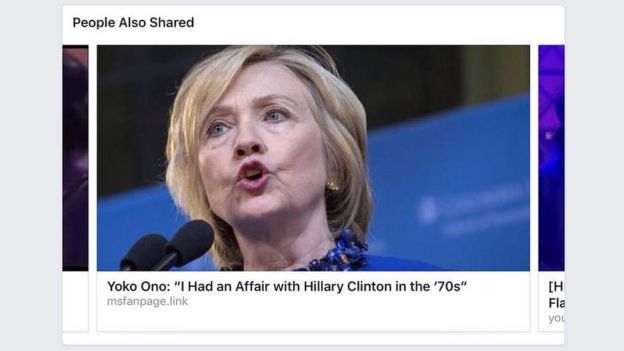
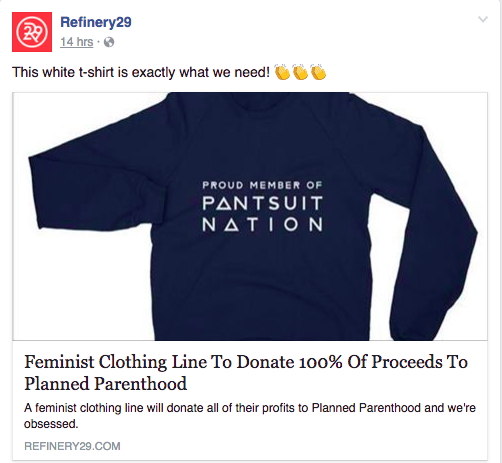
A fake news story on FacebookFacebook touts the prowess of their beloved algorithm that aims to deliver only the most accurate and meaningful content to their user’s News Feeds.  The more a user interacts with a post, the more that post will be seen. It can be a perplexing system for some, but once understood, can be very a powerful tool, especially for brands looking to solidify their position and increase awareness. Media brands like Refinery29 and DailyWorth have effectively used this tool, and often share stories to connect with their consumers. Many of these posts are political in tone, have a defined point of view, one that can potentially be disagreed with. If these brands choose to share a story that someone flat out does not like, a user will have the power to flag it for review and removal. This can jeopardize the connection that these brands has with their consumer and consequently affect their credibility.

screen-shot-2016-11-14-at-9-01-38-pmBrands already battle the algorithm as it is. They are constantly having to come up with cool and relevant content to break through the clutter. Now, they are forced to tread even more lightly with their social media use to ensure that their posts reach the intended audience. Zuckerberg has gone on to say that “identifying the ‘truth’ is complicated” but is committed to cleaning up the site. He’s right, it is complicated because one’s truth won’t be the same for another. Let’s just hope that he doesn’t inadvertently diminish the voice of brands and thus, valuable communication with their consumer.


Posted in Uncategorized | Tagged , , , , | 4 Comments

Music in Political Campaigns

The use of music in political campaigns can be quite dicey. Much of the time you need persmission to use the music directly from the artist and it also should be relevant to your cause and your campaign. How can we forget openly anti-gay, Michelle Bachman’s use of Katy Perry’s openly pro-gay song “Firework” in 2011. Luckily, her lack of research or just plain ignorance bought her some backlash from the LGBT community.

Many republican candidates, like Bachman and previously Mitt Romney experience push back and formal requests to discontinue usage though it sometimes does happen to democrats.

Why use music in your campaign? The same reason that music is used in an advertising campaign and afterall, what is a presidential campaign but a long advertisement for our potential candidates. Music has always been used to inspire and set a mood. It gives voters insight into the values and personality of the candidate beyond the words that are constructed by multiple speech writers. Music is a form of communication that goes beyond written and spoken word and evokes emotion and rhythm.

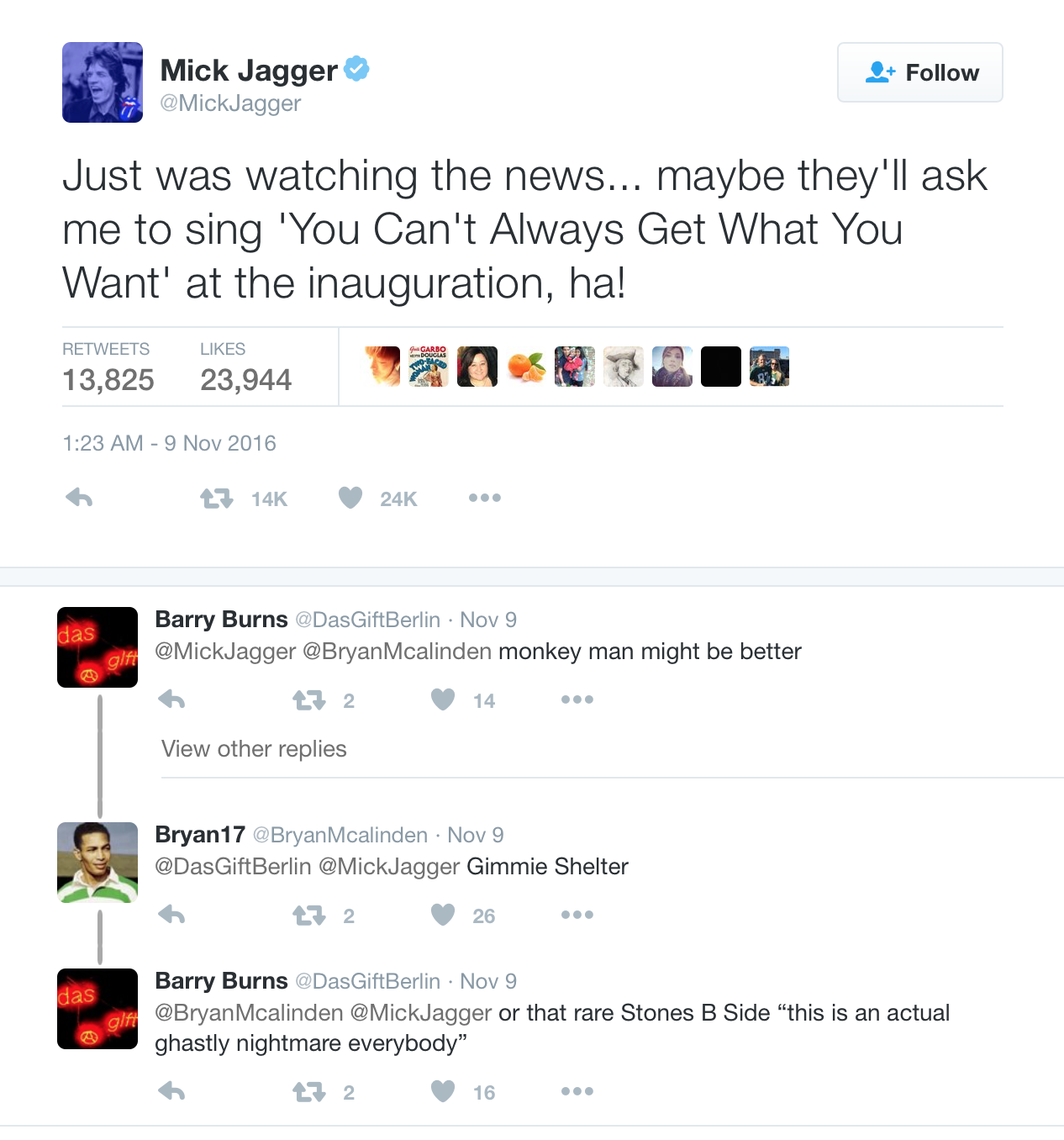
Bernie Sanders used John Lennon’s “Power to the People” and David Bowie’s “Starman” while Trump used Rolling Stone’s “You Can’t Always Get What you Want” multiple times throughout his campaign, including the use of it in closing out his acceptance speech on election night.

What gives? Why use a rather grim song when past presidents have used more inspirational songs like “Don’t Stop Believing” by Fleetwood Mac. Is it a reference to a pragmatic outlook or his outlook just as bleak as many Americans? One thing is for sure, the Rolling Stones surely don’t like it and their fans have offered up some alternatives.

Mick Jagger Twitter

What do you all think about the use of music in political and advertising campaigns? Should candidates always request permission from artists before using a song?

References

http://www.latimes.com/entertainment/music/la-et-ms-donald-trump-rolling-stones-20161109-story.html

http://www.thenewcivilrightsmovement.com/anti_gay_michele_bachmann_uses_pro_gay_katy_perry_firework_as_theme_song

Posted in Uncategorized | 5 Comments

Doing bloody too much? UFC marketing in New York

I’m not a big Ultimate Fighting Championship (UFC) fan. And for those of you unfamiliar with the name, UFC is the mixed martial arts sport that has seen big names and competitors in the octagon such as Anderson Silva and Chuck Liddell.

New York hosted them last night for UFC 205, the first time they had been there since 1995. Here’s 30 seconds (watch video from about 0:40 to 1:10) of the evening’s main attraction, Conor McGregor.

Ah, UFC at its finest.

The sport had been banned in the Big Apple since 1997 because at the time it was considered unregulated (Bhattacharyya, 2016), and others have said there were additional political reasons for its ban as well.

But this piece isn’t about the ban. It’s about their marketing. Check out this musical ad and let me know if you don’t start bouncing up and down like you’re getting ready for the bell to ring.

Pretty good use of Gotham if you ask me.

As a casual observer, we ordered the fight Saturday night (Nov. 12) but only because I had family over who follow the sport quite closely. I’ll have to admit, the fighting tactics, competition, and trash talking were quite entertaining. And I’m curious if their latest marketing tactics have had an impact on other casual observers as well.

UFC marketers have used “activations” where stadiums or venues undergo a digital makeover that allow fans to engage with the athletes for autograph, photo sessions and “extras” at their expos. For example, when UFC was in Las Vegas, a UFC access pass allowed fans who signed up through social media special entries to pool parties, clubs, weigh-ins, and more (O’Loughlin, 2016). This is probably right in tune with the entertainment scene and the big stars of the sport.

In New York, they went even further. They had actual interactive fighting machines. Fighting machines? It sounds interesting and I’m wondering if they were mere virtual games or if you actually got to see what it felt like to take one in the gut. I definitely would pay money to see some of my friends go through that.

UFC had quite a few big name sponsors (Reebok, Harley Davidson, Fox) so the sport definitely did a lot of marketing things right for this event, including landing a historic venue in Madison Square Garden to mark its return. Average tickets were more than $1000 apiece (Markazi, 2016) and management credits social media as a big key to driving their brand. But what’s next?

They did some great pieces for this historic return. With future visits to New York this “first time” is going to be tough to top. Will the brand continue to deliver clever marketing techniques and engagement for its fans on the biggest stages? Or are fighting machines and the sport’s energy filled social media antics simply too much?

Like I said, I’m not a big fan. I just can’t wait to see 206.

References

Bhattacharyya, S. (2016, November 11). UFC returns to New York with marketing blitz. Advertising Age. Retrieved from http://adage.com/article/interactive-media-marketing/ufc-york-launch-focuses-interactivity-fans/306735/

Hiergesell, D. (2016, November 13). Watch Conor McGregor’s epic UFC 205 post-fight interview – ‘Where the fook is my second belt?’ SB Nation MMA mania. Retrieved from http://www.mmamania.com/2016/11/13/13612908/watch-conor-mcgregor-post-fight-interview-following-tko-win-at-ufc-205-new-york-mma

Markazi, A. (2016, November 13). Fans spent thousands to witness UFC history in New York City. ESPN.com. Retrieved from http://www.espn.com/mma/story/_/id/18038761/mma-fans-spent-thousands-witness-ufc-history-new-york-city

O’Loughlin, S. (2016, March 21). Inside 10 leading digital sports sponsorship activation. Eventmarketer.com. Retrieved from http://www.eventmarketer.com/article/inside-10-of-the-industrys-best-digital-sports-sponsorship-activations/

Posted in Uncategorized | 4 Comments

The Future of Snapchat

For marketers, Snapchat ranks near the top of the list of “hot new things.” The social media platform is hip amongst younger demographics, and brands are just beginning to find their footing with branded stories and filters. But will Snapchat continue to reign supreme? Here’s what’s coming next.

1. Stiff competition. Snapchat capitalized on the trend of social messaging becoming more visual. However, so has the social media heavyweight, Facebook. Facebook’s acquisition of Instagram in 2012 showed the social networking giant’s commitment to the space. But recent products and features, including Instagram Stories and Facebook Live, demonstrate that Facebook now “gets it” and is making the necessary investments to be competitive. Expect to see new features, new products, and new competitors as the visual messaging space continues to heat up.
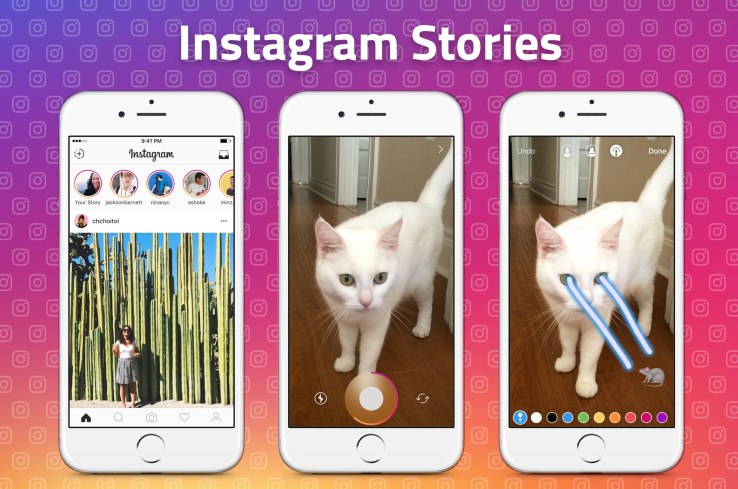
Instagram stories

What’s the story with Instagram?

2. Changing demographics. Snapchat is wildly popular amongst millennials, with 60% of US 13- to 34-year-olds using the app. But the youthful vibe may not last – as of February, more than half of new users are over the age of 25. I joined Snapchat a few years ago to see “what the kids are up to these days” but abandoned the platform for personal use because none of my friends were cool enough to use it. But that is now changing: suddenly my peers are snapping left and right. While my own parents have yet to join, it is only a matter of time before they can’t resist the adorable baby pictures like the below (and who could blame them??). It won’t be long before you start to see snaps from mom, Aunt Judith, or even grandma (yes, Snapchat skews female). And the addition of older generations is sure to cause ripple-down effects: will party-goers still be comfortable posting their exploits to stories, knowing that dad could be watching? Expect updates as Snapchat tries to stay cool.

Snapchat

Snapchat: Now for moms

3. New horizons. Snapchat CEO Evan Speigel has made it clear that he sees Snapchat not as an app, but as a camera company. His statement in April looked backward to Instagram, which essentially replaced the default camera app for some users, and ahead to the launch of Snapchat Spectacles, a pair of sunglasses with a literal camera built-in. What’s more, with the recent launch of world lenses, there is speculation that Snapchat is setting itself up to enter the augmented reality space. The wearables and augmented reality industries are still nascent and the future is hazy. It’s hard to predict exactly where each will land, but it’s clear that Snapchat will be a player.

Snapchat world lenses

Augmented reality? Or merely rainbow-puking clouds?

The verdict. Snapchat remains a critical area of investment for marketers and communication experts as it expands to new demographics and prepares to enter new industries. There are two likely outcomes: first, that Snapchat becomes even more dominant, ala Facebook – in which case, marketers need to be developing their expertise now. Or second, that Snapchat bows under pressure from competitors and goes the way of Vine – in which case, the lessons that marketers learn about shortform video content and photo messaging will doubtless apply to whatever replaces it. Which outcome do you think is more likely? Share your predictions in the comments.

References

Asano, E. (2016, January 25). The Snapchat statistics every marketer needs to know. Mediakix. Retrieved from http://mediakix.com/2016/01/snapchat-statistics-2016-marketers-need-to-know/

Bishop, B. (2016, November 12). Snapchat Spectacles are here and they are ridiculously fun. The Verge. Retrieved from http://www.theverge.com/2016/11/11/13601938/snapchat-spectacles-specs-filters-photos-video-hands-on

Heath, A. (2016, November 8). Snapchat’s latest update reveals its grand strategy. Business Insider. Retrieved from http://www.businessinsider.com/snapchat-world-lenses-update-2016-11

Instagram. (2016, August 2). Introducing Instagram Stories. Retrieved from http://blog.instagram.com/post/148348940287/160802-stories

Kolowich, L. (2016, April 27). 10 of the best brands on Snapchat right now (and why they’re so great). HubSpot. Retrieved from http://blog.hubspot.com/marketing/snapchat-best-brands#sm.00012duewlg8gcsxtp022xi19wgym

Newberry, C. (2016, August 24). Top Snapchat demographics that matter to social media marketers. Hootsuite. Retrieved from https://blog.hootsuite.com/snapchat-demographics/

Raftery, B. (2016, October 27). RIP Vine, the platform that made 6 seconds feel like a lifetime. Wired. Retrieved from https://www.wired.com/2016/10/rip-vine/

Sherretts, D. J. (2016, April 30). According to its cofounder and CEO Snapchat is mainly “a camera company”. TechCrunch. Retrieved from https://techcrunch.com/2016/04/30/according-to-its-cofounder-and-ceo-snapchat-is-mainly-a-camera-company/

Simo, F. (2016, April 6). Introducing new ways to create, share and discover live video on Facebook. Facebook. Retrieved from http://newsroom.fb.com/news/2016/04/introducing-new-ways-to-create-share-and-discover-live-video-on-facebook/

Wagner, K. (2016, February 29). Snapchat users now watch eight billion videos per day. Recode. Retrieved from http://www.recode.net/2016/2/29/11588352/snapchat-users-now-watch-eight-billion-videos-per-day

Posted in Uncategorized | 3 Comments