Just Another Basic

Brands try to pass brand content as advertising and vice versa; in the process, they are often left with bland context.  There is a fine line between branded content and advertising.  When brands try to pitch branded content as advertising they run the risk of being basic.  Research shows that millennials do not respond to ads.  The number one reason is authenticity.  If the lines of content and advertising are blurring, do you risk becoming basic?  CEO Kaaren Whitney-Vernon of Shift2 a millennial-focused ad agency says brands can not put a brand over a shallow narrative in a single, stand-alone piece of content. (2016).

Urban dictionary describes the term basic as:

  • an adjective used to describe a person, place, activity involving obscenely obvious behavior, dress, or action
  • Unsophisticated
  • Transparent motives

Advertising is like the fashion industry.  We all want to be that it girl that is always on trend, that we aspire to be, that we look for, but we have no idea how she manages to always be a fashionista.  To be a brand fashionista you need to know the rules, so you can break them (Pablo Picasso, n.d.).  The rules fall into these four parameters:

Personality
As a brand ask yourself: who are you, are you classic, are you adventurous, are you nurturing?  True fashionistas know their personality and do not try to become someone they are not.  When brands try too hard to be something they are not they become basic and consumers can see their transparent motive.

Be yourself. What audiences want is authenticity Peter Coughter

Values
Now ask yourself, what does my brand enjoy doing? Fashionistas do not veer off the straight and narrow.  They have a clear view of what their values are.  If they are modest, you will never catch her in a full-on bustier, unless she is wearing a sheer mesh shirt and a black blazer.  Brands should not compromise who they are just to follow the latest social craze.

Make a choice about what’s important and let everything else go – Peter Coughter

Brand/Brand Image
Brands need to ask who am I?  What is the brand’s image and how do you feel about your brand?  A true fashionista knows who they are, understands how she feels, and knows what she needs to look like to convey that to the world and allows her to break the rules.   Brands can break those same rules once they connect who they are with how they look and start to become authentic in their brand’s skin.

To get attention violate a schema – Heath & Heath

Lifestyle
Fashionistas do not own a pair of Birkenstock sandals if it does not fit their lifestyle.  They do not own a pair of hiking boots if they do not go hiking.  Brand’s should not adopt lifestyles that do not fit their brand persona.  How do you identify your brand’s persona? Ask yourself, where do I fit in, in my consumers’ lifestyle? Does your brand have a lifestyle that does not fit its target audience?  Ditch it. Fashionistas do not own a piece of clothing they will not wear.

We’re are telling them our truth; that’s our gift to them – Peter Coughter

Fashionistas know that in following these parameters they become credible, authentic, and likable.  If Gary Vaynerchuk has taught us anything is to hook rather than jab.  Reel the audience in by romancing them, caressing them, tell them a story, tell them your story, share what makes your brand’s heart beat.

Be a Fashionista! Who wants to be basic anyway? – J Zubire


Coughter, P. (2012). The art of the pitch. Persuasion and presentation skills that win big business. Palgrave Mcmillan.

Heath, C & Heath, D. (2007). Made to stick: Why some ideas die and others survive. Random House

Picasso, P. (n.d.). Learn the rules like a pro, so you can break them like an artist. Retrieved from www.google.com

Urban Dictionary. (2016). Basic. Retrieved from http://www.urbandictionary.com/define.php?term=Basic

Whitney-Vernon, K. (2016, November 6). How to make sure your brand content isn’t really just an ad. AdWeek. Retrieved from http://www.adweek.com/news/advertising-branding/how-make-sure-your-branded-content-isnt-really-just-ad-174455

Posted in Uncategorized | Tagged , , , , , | 3 Comments

Can Traditional Marketing Still Play?

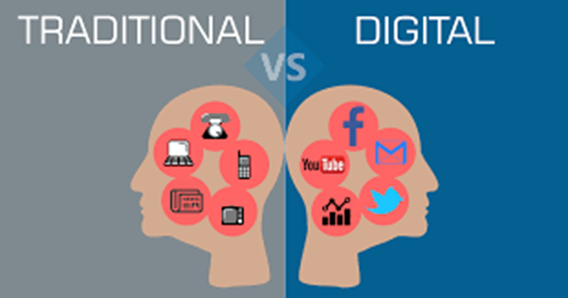
picture1-emojiIs the marketing industry going through an existential crisis? What is the future going to look like? Should companies turn to all digital platforms and forget the past and forgo traditional methods? Well it may be surprising to learn that Clear Channel is refusing to pay its rent for billboards claiming that the ROI is not worth the price (Spainer, 2016). This is not the only company shifting focus to more digital and dynamic platforms to advertise. It seems that a poster no longer grabs enough attention for people to look away from their phones.  Many feel that integration of traditional and digital marketing is best to reach consumers (Cave, 2016), however, it seems that the print is fading fast due to the expense and legacy deals that no longer make sense.  I think that the shift has already occurred and within the next few years; a billboard or poster will be obsolete. It simply comes down to the response from consumers.

picture2-vs

Do you think this is true? When do you think this official transfer will occur?

picture-3-coupons

Another marketing tool that is going under a transformation is the coupon.  Many CPG companies use coupons to help build brand awareness and increase consumer pull at the point of purchase. But in today’s market, a brand needs to stand out on the shelf and increase the likelihood of a purchase. Providing a coupon can influence consumer behavior and help build recognition, which will hopefully result in a lasting relationship with the brand. But is anyone cutting coupons anymore? If so, are they the brand’s target market?

It would make sense to add value where the consumers are naturally hanging out. Mobile phones are very prevalent and embedded in today’s culture in the US. They are always around and are constantly being used.  81% keep their phones handy and check them multiple times a day up to multiple times an hour (Newport, 2015). Facebook knows this well and has created a type of coupon that is highly integrated with online and offline purchases (Swant, 2016). This may be a great option for certain brands, but there is another service that I have found that seems to be a good alternative.  I am wondering if you will agree.

picture4-ibIBOTTA is an app that provides a platform for companies to run promotions and coupons so they are accessible to consumers directly on their mobile phones. IBOTTA does have the attention of consumers, especially the Millennials, who are the most coveted generation to win over (or at least with my brands). It provides consumer insights as it tracks every purchase that redeems a promotion.  It is legal in most states, and as long as the account provides an itemized receipt, the savings is transferred directly into PayPal or Venmo.

picture5-piggy

The convenience factor is high and the campaigns are typically less expensive than traditional campaigns, as the company only pays for redemptions versus pay per clip or circulation. There are multiple options in gaining more insights and engagement by having consumers complete a quick survey or watch a short clip before the coupon is made available.  Companies also have the option to run the promotion until it reaches a cap which is predetermined and the deal automatically shuts off making sure the brand does not overspend its budget (Classen, n.d.). This allows for companies to have more control over the spend and really reach out to its target market.

picture6-phoneIBOTTA also does not just work at retail store but restaurants as well. This channel is sometimes difficult to target, yet this app makes it some simple. The same rules apply.  However, there are some downsides to this app.  There is no way to give away anything other than “cash”.  For example, if a brand wanted to create a point system and give away swag through IBOTTA, this cannot be done.  Which then brings into question of this will truly increase brand loyalty in the long run.  The again, did clipping coupons create more lasting brand loyalty?

IBOTTA will not be on the only alternative out there to speak to consumers, but it is an interesting option for the right business. Coupons directly placed on the package still seem create a lift in sales, but with the more distractions, these may eventually disappear like the static billboards.  It will still take some time, but digital is the future.

References

Classen, S. (n.d.) IBOTTA.  Retrieved from: https://www.dropbox.com/s/v3foxfwi3tsie7t/Ibotta%20Overview%20Deck%20-%20BW%26S.pdf?dl=0

Cave, J. (2016 July 14).  Digital Marketing Vs. Traditional Marketing: Which One Is Better? Digital Donut. Retrieved from: https://www.digitaldoughnut.com/articles/2016/july/digital-marketing-vs-traditional-marketing

Knight, K. (2016 October 31). Reports ID coupon, mobile as engagers. BizReport. Retrieved from: http://www.bizreport.com/2016/10/reports-id-coupon-mobile-as-engagers.html

Newport, F. (2015 July 9). Most U.S. Smartphone Owners Check Phone at Least Hourly. Gallup. Retrieved from:http://www.gallup.com/poll/184046/smartphone-owners-check-phone-least-hourly.aspx

Spanier, G. (2016 October 31). Is the traditional billboard facing terminal decline? Campaign. Retrieved from http://www.campaignlive.co.uk/article/traditional-billboard-facing-terminal-decline/1413562#

Swant, M. (2016 August 30). Facebook Has Created the Digital Equivalent of a Coupon Drawer for Users. Adweek. Retrieved from: http://www.adweek.com/news/technology/facebook-has-created-digital-equivalent-coupon-drawer-users-173200


Posted in Uncategorized | 3 Comments

Find Your New Home on Facebook… Yes, I Said Facebook!!

In this age of social media where you can find anything and everything by going to Facebook, Instagram, Twitter or even Pinterest, one shouldn’t be surprised that you can even search for, view, and find your new home on said platforms. Gone are the days of driving house to house with your realtor to find the home of your dreams. You have access to a 360 view of properties, and the neighborhoods while sitting on your couch. Though this is not a new phenomenon, but it came to my attention when I began looking for a new home. According to Srivatsaa (2016), social media has maximized real estate agents’ ability to provide their clients with the most up to date and constant information regarding available properties. Many agents and agencies have accounts on Facebook, Instagram, Snapchat and Twitter to remain connected (Srivatsaa, 2016).

In 2013, nearly 80% of real estate agents used social media as a sales tool, and 40% of them indicated that they closed, on average, two to five deals based on social media marketing (Doran, 2013). In 2016, that number has risen to 90% of real estate agents using social media to some extent (Cavano, 2016). In addition, more than 75% of home buyers used social media during their search for a home (Henry, 2015). On average, 44% used social media to gather information about specific neighborhoods, and 42% used social media to view their agents Facebook page (Henry, 2015).

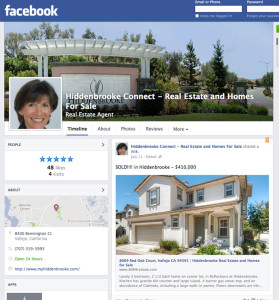
Though Facebook appears to be the top social media platform that real estate agents and homebuyers gravitate to, Snapchat and Twitter are also their go to platforms (Srivatsaa, 2016). On Twitter, one can follow a real estate agent of their choice to view the homes they are selling and promoting. This practice is known as “Tweal Estate.” With Snapchat becoming the platform of choice for the the Millennial generation, realtors are building their brand through the use of Snapchat stories, to promote themselves as well as the properties they are selling (Srivatsaa, 2016).facebook-updated800

That being said, I am still on the hunt and after reading these articles, I will be utilizing social media more than I was when I began my search.

Have any of you used social media in your home buying ventures? If so, how did you use it? And did it help in your selection?


References:

Cavano, K. (2016, January 8). Real Estate Statistics for 2016. Retrieved from

http://blog.contactually.com/2016/01/real-estate-statistics-for-2016/

Doran, J. (2013, July 11). Four Ways to Reach Home Buyers Using Social Media.

Retrieved from http://realtytimes.com/agentnews/technologyadvice1/item/ 142-20130712_usingsocialmedia

Consumer and Market Trends in Real Estate – realtor.org. (2013, January). Retrieved from http://www.realtor.org/sites/default/files/Study-Digital-House-Hunt- 2013-01_1.pdf

Henry, C. (2015, September 17). Home Buying Process Involves Greater Technology,

Realtor® Use. Retrieved from http://www.realtor.org/news-releases/2015/09/ home-buying-process-involves-greater-technology-realtor-use

Srivatsaa, S. (2016, August). Using Social Media to Sell More Homes Faster. Retrieved from http://realtormag.realtor.org/for-brokers/network/article/2016/08/using-social-media-sell-more-homes-faster

Vaynerchuk, G. (2013). Jab, jab, jab, right hook: How to tell your story in a noisy, social world. New York: Harper Collins.

Posted in Uncategorized | 5 Comments

Neuroscience + Visual Design: Three Tactics to Simplify Consumer Decision Making

Times Square New York

The neon lights, enormous animated screens, blaring horns, mangled traffic, crowded sidewalks and confusion of Times Square adequately describes how disorienting information overload can be. Parallels can be made to advertisements as well as retail and online experiences that cause the brain to work too hard in determining what’s happening and what’s important to understand. For example, Yahoo is rife with content whereas Google is incredibly minimal; it’s no wonder why Google is the most trafficked search engine in the world. Smart brands will make it easy for consumers to focus on a product and say yes to a purchase. Neuroscience offers some subtle tips on how to best guide consumer decision making from a visual design vantage point. We will cover three tactics to help busy brains joyfully cut through the noise.

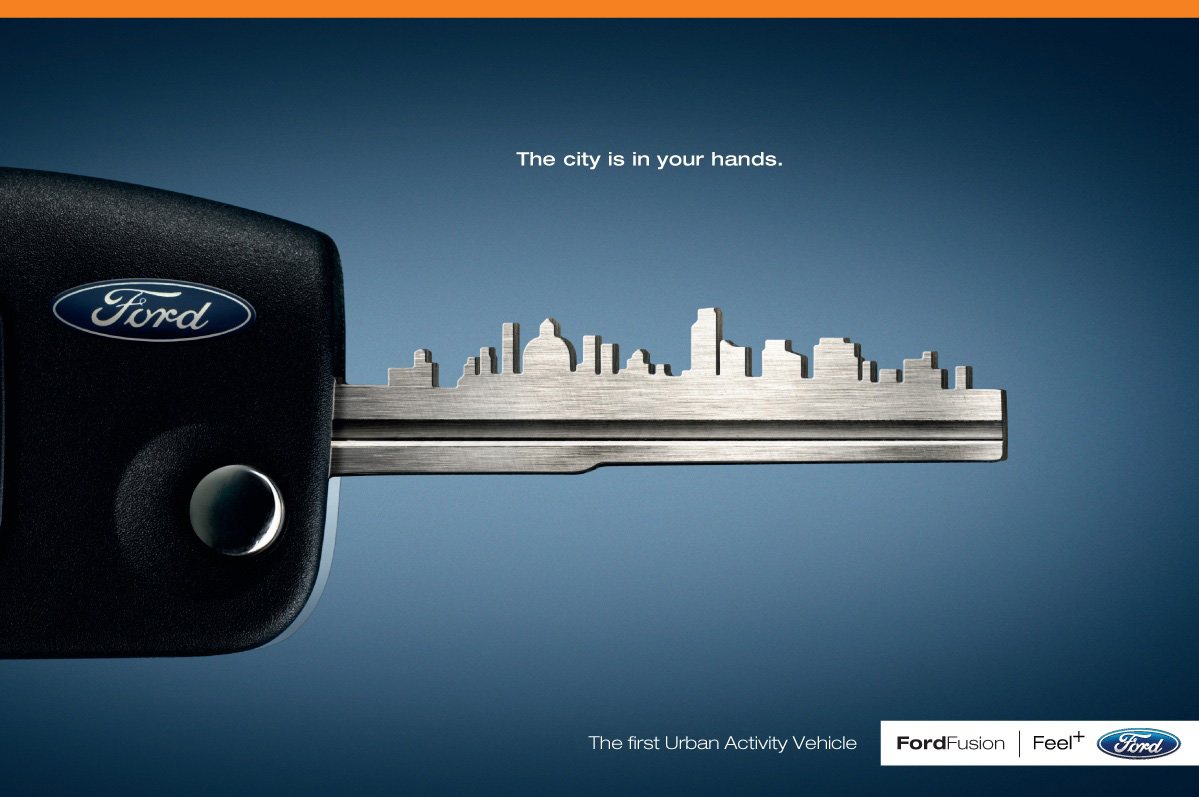
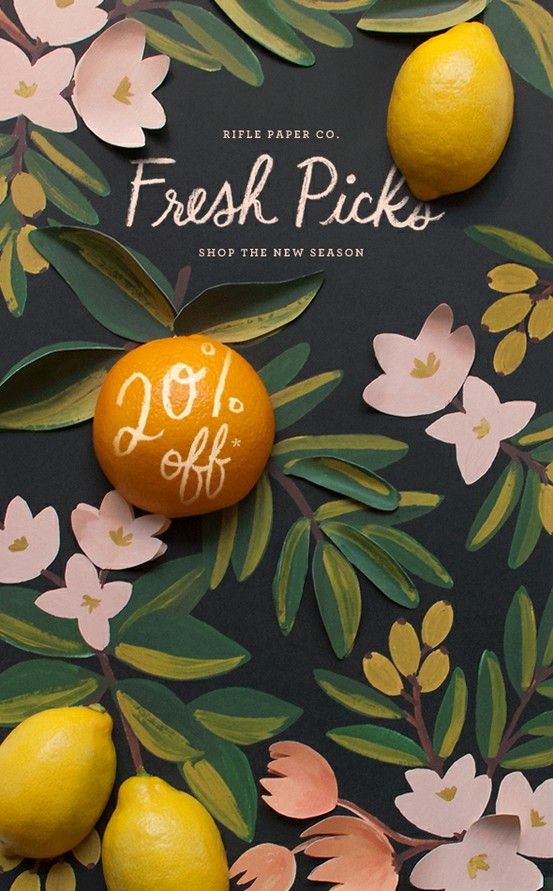
1) Clear the Clutter and Get to the Point. Ruthlessly editing out superfluous information or imagery in an advertisement or ecommerce page empowers consumers (Coughter, 2012). Our brains are drawn to simplicity and are also wired to seek reward (Lindsay, 2015a). When information is presented basically, we quickly comprehend it and make decisions that yield greater confidence, affirmation and happiness. This type of courteous user experience will make consumers feel great about themselves and a brand as a result.

Ford Ad

Rifle Paper Co Ad

2) Pictures are Powerful. Compelling imagery directs neurological focus toward the content that matters (Lindsay, 2015b). A viewer’s attention is first captured by an image and the brain follows a natural pathway of exploration around this area of focus. Correspondingly, important copy or an abbreviated call to action should correlate with an image. Kevin Lindsay (2015b), Head of Product Marketing for Adobe Target, furthers this point, “Images are so powerful, in fact, that just having one adjacent to text makes that written content more believable—even if that visual has zero to do with what the words say” (para. 13). In many ways, the content consumption habits of Generation Z prove that imagery reigns supreme and written copy is secondary; marketers should tune into this insight to guide future strategy (Abramovich, 2016).

Sad to Happy Face

3) Put on a Happy Face. Emotions are neurologically contagious (Wild, Erb, & Bartels, 2001). This is most evident through facial expressions. The mere visual of a happy person can transform the mood or the brand perceptions of a consumer, mirroring the happiness they see (Harada, Hayashi, Sadato, & Iidaka, 2016). On the other hand, an angry face can trigger a different area of the brain associated with fear and threat (Harada et al., 2016). Marketers should be cognizant of this when choosing imagery for advertisements or point of sale creatives. A happy face can nudge the reward center of the brain and positively influence the consumer decision-making process (Harada et al., 2106).

Here’s a fun video on brain reactions to facial expressions from BrainCraft.

Overall, our world is filled with an overwhelming amount of stimulus. Wouldn’t it be nice if consumers felt like their interactions and engagement with a brand were a breath of fresh air, a clear blue sky of aspiration and discovery? That approach, coupled with subtle cues of happiness, will likely result in more brand love and increased revenue.

Thank you for reading,

Lydia

References

Abramovich, G. (2016). Marketing To Gen Z? No Better Time To Get ‘Emojinal’. CMO.com. Retrieved from http://www.cmo.com/features/articles/2016/9/21/marketers-targeting-youth-need-to-get-emojinal-yms-conference.html#gs.null

Coughter, P. (2012). The art of the pitch: Persuasion and presentation skills that win business. Palgrave Macmillan.

Harada, T., Hayashi, A., Sadato, N., & Iidaka, T. (2016). Neural correlates of emotional contagion induced by happy and sad expressions. Journal of Psychophysiology, 30(3), 114-123. doi:10.1027/0269-8803/a000160

Lindsay, K. (2015a). How to leverage decision science to drive consumer action (part 1). CMO.com. Retrieved from http://www.cmo.com/opinion/articles/2015/5/14/how-to-leverage-decision-science-to-drive-consumer-action-part-1.html#gs.CS9Eveg

Lindsay, K. (2015b). How to leverage decision science (part 2). CMO.com. Retrieved from http://www.cmo.com/opinion/articles/2015/5/26/how-to-leverage-decision-science-part-2.html#gs.null

Wild, B., Erb, M., & Bartels, M. (2001). Are emotions contagious? Evoked emotions while viewing emotionally expressive faces: quality, quantity, time course and gender differences. Psychiatry research102(2), 109-124.

Posted in Uncategorized | 4 Comments

Jab, Jab, Jab, Right Hook…Burberry!

Burberry’s new holiday campaign entitled, ‘The Tale of Thomas Burberry’ is a knock-out success (Shepherd, 2016; Vaynerchuck, 2013). The holiday advert features Irish actor, Domhnall Gleeson, as the visionary Thomas Burberry who can ‘dream a world’ in his head (Shepherd, 2016). The advert takes the viewer from Burberry’s humble beginnings as a tailor and inventor of fabrics to setting up his own shop (Shepherd, 2016). What follows thereafter is the stuff Hollywood movies are made of:  Burberry finds love (and a wife) in Sienna Miller’s character; dresses Dominic West’s character and crew in Burberry’s durable fabrics to battle the monstrous cold that awaits them on their expedition to the Antarctic; additionally, Burberry dresses and falls in love with Lily James’ character,  Betty Dawson (ala an Amelia Earhart character), who is attempting to set a world record by flying from London to Cape Town, but mysteriously goes missing in the middle of the flight; lastly, Burberry dresses British soldiers who are going off to war and imagines the many lads who will die for their country (Shepherd, 2016). And all within this story, love, fear, jealousy, anger, and hope are weaved throughout (Shepherd, 2016).

Burberry, with one hard hit via the campaign knows the way to capture the hearts of customers is to give before asking customers to buy (Vaynerchuck, 2013). And, one can say this video is also native advertising as the high-quality video is no different than high-quality videos that people seek out on the web (Vaynerchuck, 2013). In today’s over saturation of information, true art rises above it all, and Burberry’s ‘Tale of Thomas Burberry’ shows that good content is always “king” (Vaynerchuck, 2013, p.117).

Burberry’s holiday campaign is no ordinary 30 or 60 second TV spot, rather, a 3 minute brand video directed by Academy Award-winning director, Asif Kapadia, and features some of England’s most-respected actors (Shepherd, 2016). The holiday campaign creates memorable content and knows that giving the campaign  an actual ‘story line’ can only be done on a platform such as the internet which allows for a high quality visual experience (Tugand, 2016; Vaynerchuck, 2013). Burberry’s ‘Tale’ is the perfect micro-content to an overall Burberry brand campaign, which pushes its product through this engaging video which leave viewers asking for a full-length movie (Shepherd, 2016; Tugand, 2016; Vaynerchuck, 2013). This is the power of great content (Vaynerchuck, 2013).

References

Shepherd, J. (2016, November 5). Burberry Christmas adventure:  Lily James and Twitter want a full movie based on ‘the tale of Thomas Burberry.’ Independent UK [Online]. Retrieved from, http://www.independent.co.uk/arts-entertainment/films/news/burberry-christmas-advert-lily-james-the-tale-of-thomas-burberry-film-a7400831.html

Tugand, A. (2016, August 14). It’s Chilling. It’s Thrilling. It’s a 30 min commercial. New York Times [Online]. Retrieved from http://nyti.ms/2brqqG9

Vaynerchuk, G. (2013). Jab, Jab, Jab, Right Hook: How to tell your story in a noisy, social world. New York, NY:  HarperCollins Publishers.

Posted in Uncategorized | 3 Comments

$2 Billion for Twinkies

twinkiescup-cakes

This week, Hostess, the maker Twinkies and other iconic snacks including Ho Hos and Ding Dongs, announced it will go public three years after being brought out of liquidation. This is a fascinating come-back story for several reasons. In the last decade, Hostess struggled with debt, mismanagement, and escalating costs. The final straw was a strike by the baker’s union that forced Hostess to close its doors in 2012.

What ultimately rescued Hostess was its brand.  In an interview with Forbes, Andy Jhawar, one of the investors who brought what was left of the company said he did so because “the brand awareness was unbelievable.”  Jhawar went on to say that, “It’s not every day you have an opportunity to acquire a brand that is ubiquitous that had $1 billion in revenue before the bankruptcy and 80–plus years of legacy.”  Based on the strength of the Hostess brand, private equity investors committed $660 million to buy and restore Hostess; the company is now valued at upwards of $2 billion. That is quite a healthy profit for a company that’s products are the complete opposite of today’s healthy-eating craze.

So how does a company like Hostess, with mature junk food products like Twinkies, Zingers, and Ho Hos intend to compete in a declining junk food market? By not changing a thing. According to the Wall Street Journal, Hostess is staying the course and will never “shy away from its indulgent nature.” Looking at its current marketing efforts, it certainly doesn’t look like Hostess is trying to reposition itself in the market, reinvent itself, or stave off decline. Other than introducing some new products such as Key Lime Slime Twinkies (in conjunction with Ghostbusters) and Deep Fried Twinkies, Hostess’ doesn’t seem to be doing any more or different marketing. It seems that just getting the product on the shelf is enough.

I’ll be following Hostess to see how this approach works. Is the Hostess brand strong enough, and are its products such a part of Americana that following an 86-year old strategy will continue to work?  What do you think?

Posted in Uncategorized | 3 Comments

Bad Behavior at the CMAs- Beyonce and the Dixie Chicks

Image result for beyonce pic at cma awardsBeyonce killed it at the CMA Awards!  Beyonce is a global entertainer.  She’s known all over the world.  She’s one of the most beautiful women in the world and is a triple threat as she sings, dance and acts.

She is such a big star that she can be courageous enough to use her platform to address issues concerning the African-American community to speak about Black pride and against police brutality.

I was shocked and taken aback at all the hateful, vile and viscious comments that came out on Instagram and Tweets which basically had nothing to do with her performance which by the way was “Flawless.” (Coscarelli, 2016). Beyonce is such a big star that she did not even need the CMAs, they needed her to bring viewers to the fledgling CMA awards and to increase their ratings.  Beyonce has a solid brand with over 89 million Instagram followers and with very limited usage she has over 14.1 million followers.  She sells out every venue she performs in and if you ever see her live performance she gives her all at every show.

Then it appeared as if the CMAs couldn’t take the heat and removed all references of Bey from their social media accounts and online (Melas, 2016).

Just goes to show that our country has a long way to go in racial relations.  It saddened me that the hate overshadowed a great performance that could have brought a whole new generation of fans to country music.

Image result for beyonce pics at the cma awards


Coscarelli, J. (2016). Beyonce’s CMA Awards performance becomes the target of backlash. The New York Times: retrieved from: http:www.mobilenytimes.com

Melas, C. (2016). CMA responds to allegations it removed social media post     over Beyonce performance backlash. CNN Retrieved at:            http:www.amp.cnn.com

Posted in Uncategorized | 1 Comment

FLOTUS AKA “The Closer”

First Lady Michelle Obama

First Lady Michelle Obama

Since Election Day is almost upon us, the status of the United States Presidency seems to dominate all media platforms almost all of the time. President Barack Obama, Hilary Clinton, Donald Trump, and many other politicians, pundits, and bloggers have been at the forefront of advocating for their respective slates ad nauseum and in all of their soundbites, debates, and interviews, yet everyone seems to keep talking about the words of what some referred to as an unlikely political figurehead, the First Lady of the United States Michelle Obama.

It’s no secret that the First Lady is a powerful, effective, and eloquent speaker. She coined “when they go low, we go high” which has become one of the  go-to campaign taglines. Although her words have already touched and inspired many, myself included, throughout her tenure, one of her most recent speeches resonated with so many people that it earned her the nickname, “The Closer” (Davis, 2016).

https://youtu.be/r7e3QKKOp50

First Lady Michelle Obama’s most recent speech not only cemented her force to be reckoned with on the campaign trail, it also established her as a mouthpiece of many disempowered and silenced voices all over the nation speaking out (Davis, 2016). This digital theater became a marketing communication piece heard and talked about throughout the U.S., as its results were twofold: it became a part of the political and public discourse on the gender divide and the double standard women face on a daily basis. It also became its own marketing campaign identifying and highlighting the lack of integrity and inappropriate behavior demonstrated by presidential candidate Donald Trump.

First Lady Michelle Obama’s words caused many to cross the political divide and stand up for gender equality, parity, and for humanity. Her speech wasn’t just about politics; it was about a real, major and sometimes disabling issue. It touched on every one of the SUCCESs principles. It was sticky, it was emotional, it was a reflection into an unpleasant reality that has remain unaddressed for far too long.

So I realize that President Obama has to leave the White House, but does the First Lady have to go with him? If the same thought has crossed your mind, you will probably enjoy this: Can Michelle Obama just be First Lady Forever.

References

Davis, J. H. (2016, November 5). The Closer: Michelle Obama. The New York Times. Retrieved from http://mobile.nytimes.com/2016/11/06/us/politics/michelle-obama-2016-presidential-election-first-lady.html?0p19G=c&referer=https://www.google.com/

Posted in Uncategorized | Tagged , , , , , , | 2 Comments

Meatless Marketing

About three years ago, I transitioned from meat eater, to vegetarian, to vegan, and back to vegetarian again. In just that short amount of time I’ve noticed a huge surge in “meatless marketing”.

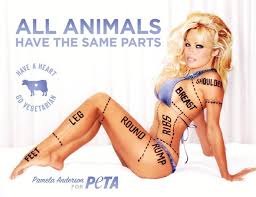
It used to be that people thought vegetarians were long-haired, granola eating, Birkenstock wearing, hippies but in reality, vegetarians and vegans come from all walks of life and are both highly educated and aware about animal rights and environmental issues. Pam Anderson made her debut for PETA a number of years ago sporting a lettuce bikini and that’s when things really started to change.

images pamela-anderson

Most vegetarians are passionate about their vegetarian lifestyle and the brands that cater to their needs. The market for this consumer is currently 18 million strong in the United States and vegetarian food is currently a $2.8 billion industry.  The emergence of numerous faux meats and pre-packaged items have made becoming vegetarian so much easier (and tastier). Vegetarians like myself are plugged in and now access to information is suddenly everywhere; from where to get vegan shoes and make-up, to the use of soy-based ink, to award winning vegetarian products.  It used to be that information was limited to magazines like Veg News and Vegetarian Times but now new vegetarians like myself are also getting their information from nutritionists on Facebook, fellow vegetarians on Instagram who post recipes and restaurant owners proudly showcase their vegetarian menus.

I follow at least 4 people on Twitter who create amazing content about what’s emerging on the medical front and the benefits of a healthy vegetarian diet over that of a meat and dairy based diet.   Vegetarians however are not stopping there. They are also further expanding on social media through YouTube videos posted by organizations like this one created by Mercy for Animals.

https://www.youtube.com/watch?v=0vDoWve1NrE

All of this marketing seems to be working. In the local grocery store, there’s now an entire frozen food case dedicated to all vegetarian products and in my local Target, there is also a refrigerator section of all plant-based foods, almond milk, soy-based ice cream, vegan mayonnaise, etc.

Consumers are also now readily able to access veg documentaries through Amazon video, and Netflix. Certainly Cowspiracy, Forks over Knives, Fed Up, and Fat Sick and Nearly Dead for all the impetus for the juicing craze.

And lastly, I’ve noticed a surge in the number of local veg based events and meet ups.  Just in the last year I have attended 5 community-based veg events in Oakland, Long Beach, Pasadena, San Diego, and most recently in Orange County.   The turnout amongst longtime vegetarians and those who were veg curious was significant.

It is undeniable how consumer access to numerous forms of media has driven and entire meat free market.  GO VEG!

Elysha

REFERENCES:

http://www.targetmarketingmag.com/article/the-meatless-market-403185/all


Posted in Uncategorized | 1 Comment

How Social Media Has Changed Marketing?

This gallery contains 2 photos.

  Social Media has revolutionized not only the way we communicate and interact but also marketing practices. It was not time along that traditional marketing relayed on television, print, radio, direct mail and outdoors to sell and promote a product. … Continue reading

XXX
More Galleries | 1 Comment