Kiip on Winning!

Who said you can’t get paid to play? Well… almost. As if we need to be rewarded for playing on our mobile gadgets, companies can now offer real prizes to players who level-up (complements of Kiip)!

All About Kiip

Now you can integrate your brand into mobile games!

In a nutshell, Kiip is the new age of mobile game and app ad networks. It was founded by  21-year-old, Brian Wong, with headquarters located in the financial district of  San Francisco. Kiip only has 30 employees, but can already boast a resume of top clients such as Best Buy, Sears, Kodak, Pepsi, Disney and Sephora (to name just a few).

Kiip is free for developers to incorporate into their games and apps. The stats so far? Kiip has been incorporated into over 300 apps, 30 million devices and has rewarded over 50 million users thus far! All of which translates into a revenue in the high 7 figures, according to Wong.

According to Business Insider , “this 21-year-old  may have cracked the future of mobile advertising”… I smell the next billionaire!
Full Report: http://pewinternet.org/Reports/2011/Generations-and-gadgets/Overview.aspx

Why it just might work…

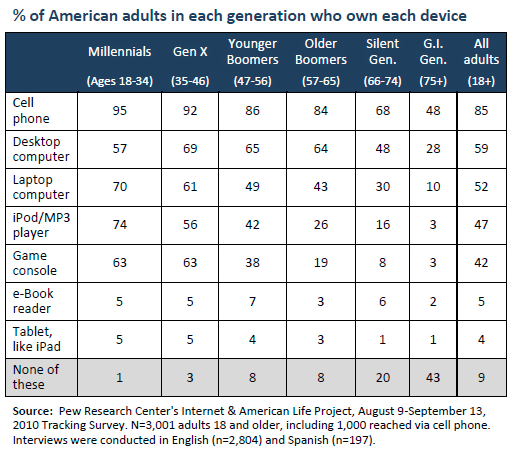
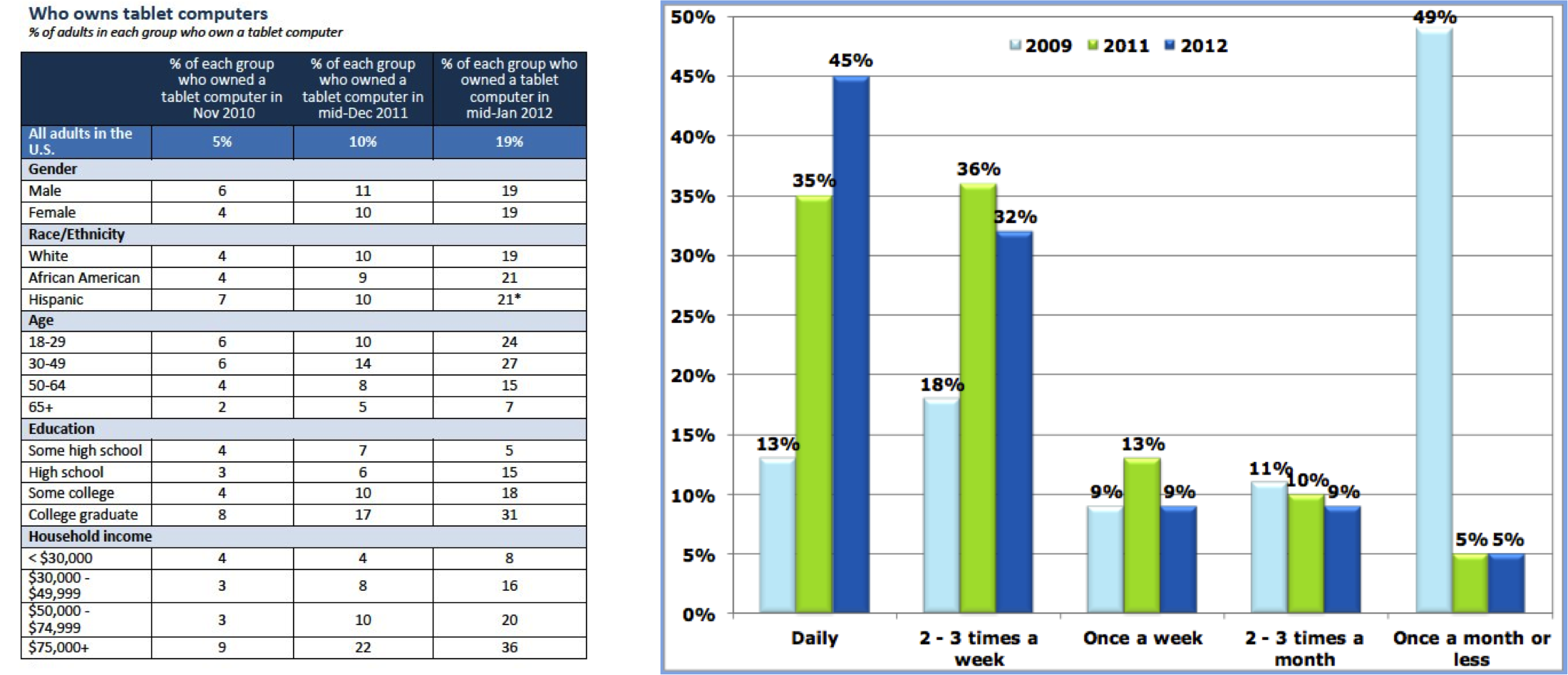
85% of adults own a cellphone? Shocker, right? I thought it was closer to 99.99%, but then again, this study was conducted in 2010 (of course of the Millennials, ages 18-34, 95%  cellphones). And gadget ownership is continuing to rise, as indicated by Pew Internet, a company that conducts research on Mobile usage trends in America. A perfect example = in 2010 Pew found that only 4% of adults own tablets, this year the company reported that tablet ownership is now at 19% among American adults!

Of course if we look at only college grads and those with household incomes of over 75% tablet ownership rises to over 30%.
Full Report: (left) http://pewinternet.org/Reports/2012/E-readers-and-tablets/Findings.aspx?view=all (right) http://www.infosolutionsgroup.com/popcapmobile2012.pdf

We own all these gadgets and what do we do on them? We play! That’s right, PopCap Games Mobile Gaming Research found that in 2012, 45% of US and UK residents are daily mobile gamers.  Another 32% play mobile games 2 – 3 times per week. That’s a lot of gaming! We wont even consider what the numbers would look like if we included teenagers!

Bottom line: A LOT of people play mobile games, so of course big brands want a piece of that action!

Play to Win!

Tired of all the useless banner ads you see while engaged on your mobile device? Not for long… the next time you reach a new level you might just get a real (not virtual) reward!

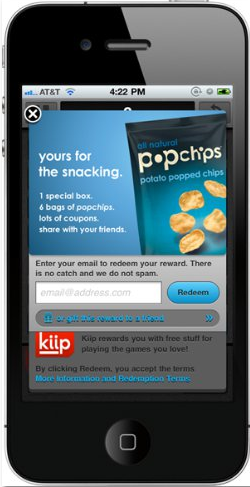
According to the Kiip website “…[Kiip] is designed for in-game engagement via a universal game moment: the achievement moment. Catch the user while they are the most engaged, happy, and attentive.” In simpler terms, Kiip is bribing you to click on mobile ads by offering you prizes! Its a simple 3-step process:

  1. Play game
  2. Win level
  3. Receive reward!

In reality, every time you click on a reward you give you the rewarding brand your information. When interviewed by Business Insider, Wong explained that Kiip already has a 25% engagement rate (people who actually chose to click on the reward and enter their email) and a 5% redemption rate (those who actually go to the brand and pick-up their reward). Those numbers aren’t looking bad, especially not for the big brand shelling out the rewards!

Will it work?

Probably. It has to be better than all the banner ads we are bombarded with these days anyway! I have deleted one to many apps because the ads were just not worth it, but now, if I can actually get something out of them? Well, in this economy, I’ll take all the free stuff and savings I can get!

Sources: http://kiip.me/

http://www.businessinsider.com/this-21-year-old-may-have-cracked-the-future-of-mobile-advertising-2012-5

http://www.forbes.com/sites/ryanholiday/2012/04/25/online-advertisings-greatest-missed-opportunity-kiip-me-founder-brian-wong-answers/

Posted in Uncategorized | Tagged , , , , , , , , , | 2 Comments

Soldier blogs and Army PR…

I subscribe to the Social Media Examiner, which calls itself the world’s largest online social media magazine. The Examiner sends out tips designed to help businesses discover how to best use social media tools. I find it interesting and helpful because it gives me some tips I occasionally use, but more importantly, it helps me think outside the box a bit.

One recent issue had a link to an video interview with Greg Swan, VP of Digital Strategy at Weber Shandwick, one of whose clients is the U.S. Army. That’s right: the U.S. Army uses a PR firm! The idea of the U.S. Army employing a public relations firm (Weber Shandwick says it is a global public relations and communication leader) is not surprising but it IS intriguing. Before I watched the video interview, I had all kinds of thoughts: when did the Army decide it needed to hire a PR firm? Isn’t the Uncle Sam imagery enough? And perhaps most important: who is paying for this? Me – as a taxpayer? And you…and you….and you?

I put those thoughts aside to watch the video. I was impressed to find out that the Army also blogs. Though its “Army Strong Stories” program (a Weber Shandwick idea), 800 U.S. Army soldiers blog. Relentlessly. Their blogs are unfiltered and unmoderated and, according to Swan, always will be. “The authenticity and transparency of soldiers blogging about a terrible day, or that they regretted their decision to join the Army lend credibility to the posts,” Swan notes.

The strategy (which was important to me, given the fact that we’re all about strategy this year in CMGT 502 and 541) is simple: the Army Strong blogs engage prospective soldiers in conversations – honest, real, transparent conversations – about joining the Army and what it’s like to be a soldier. The prospective soldiers can comment about the blogs and make connections with the enlisted men and women who are blogging. And that can lead to…more soldiers to blog (not to mention to defend our country and our freedoms).

“There’s no direct correlation between the blogs and enlistment, but the Army met its recent recruitment goal,” Swan says.

The Army has taken this concept a few steps further: they’ve developed an iPhone app for Army Strong Stories and other apps are in production. (I’ve stopped wondering if taxpayer dollars are paying for this – I think it’s a pretty cool idea.)

I checked out the blogs and, while I didn’t find anything that was really negative and raw in terms of an “I hate the Army but I am stuck until my hitch is up” tone, there are lots of blogs about waiting around, missing loved ones, being bored and being hot (depending on the deployment). There are also lots of wonderful blogs about being proud, working hard and being happy. (Or maybe I just read them that way because I was scoping out the site on July 4!)

I had never heard about Army Strong Stories…but I love the idea of the Army being proactive enough to understand the need for quality public relations, for honest and transparent communication, and for using social media tools to get their message across.

Check it out: http://armystrongstories.com/

Posted in Uncategorized | 4 Comments

Beware of Clichés Creeping Into Your Content

Many of us are exposed to clichés used in business conversation on a daily basis.  Some of my favorites can be found in the Forbes article, “89 business clichés that will get any MBA promoted and make them totally useless” (Jackson, 2012):

1. It’s a paradigm shift = I don’t know what’s going on in our business. But we’re             not making as much money as we used to.

11. I/we/you don’t have the bandwidth = Since we cut 60% of our headcount,                we’re all doing the job of 3 people, so we’re all burned out.

14. We’ll go back and sharpen our pencils = We’ll go back and offer you the                   same for 20% less in hopes you’ll buy it before the end of the quarter

32. At the end of the day…. = OK, enough talking back and forth, we’re going to do            what I want to do

66. We’re getting some push back = They’re not buying it

As marketing communications professionals, we must avoid using clichés in our marketing messaging too.  The authors of Made to Stick (Heath & Heath, 2008) warn us marketing folk about “semantic stretch” (p. 173) when creating marketing ideas.  They claim when effective terminology gets overused its impact is diluted.  Or as Justin Rubner’s blog “Copycation” points out, “A cliché, perhaps powerful once, gets watered down into a puddle of mushy gruel that for some reason everyone eats. It’s a vicious circle of gruel eating. Before you know it, every company is selling “best of breed” services to address the 800-pound gorilla: value-added synergistic seamless integration.”

But how do we stop this cycle?  How can we break the habit of using boring catch-phrases and out-dated lingo in our marketing content? Evan Mailer offers a few tips such as:

1) “Image yourself literally acting out everything you say.  The image alone will help              you divide what works and what’s too ridiculous to make the cut.” This will be fun              for those who like to “touch base” and “circle back.”

2) “Employ better editing skills and attempt to get creativity flowing again.”

3) “Imagine your audience is a foreigner just beginning to get a hold of the English                   language. If you would have to explain any of the phrases and buzzwords you write,             chances are you becoming a cliché machine.

Let me know some of the clichés that make you want to run for the hills. I promise I will “circle back” with any of your comments.

References:
Heath, C & Heath, D. (2008). Made to stick: Why some ideas survive and others die. New York: Random House.
Jackson, E. (June 19, 2012). 89 business clichés that will get any MBA promoted and make them totally useless. Forbes. Retrieved from http://www.forbes.com/sites/ericjackson/2012/06/19/89-business-cliches-that-will-get-any-mba-promoted-to-middle-management-and-make-them-totally-useless/
Mailer, E. (November 5, 2009). Business clichés and the genocide of effective communication. Footprints. Retrieved from http://www.walkersands.com/Blog/business-cliches-and-the-genocide-of-effective-communication/
Rubner, J. (July 23, 2010). Bad business clichés and why it’s time to decommission “Content is king.” Copycation. Retrieved from http://copycation.com/2010/07/23/bad-business-cliches-and-why-its-time-to-decommission-content-is-king/
Posted in Uncategorized | Tagged , , | 10 Comments

Share. Vote. Discuss. See – Starbucks Wants to Hear From You!

Have you ever wondered why Starbucks decided to start selling yogurt parfaits, prepared sandwiches or the fruit and cheese bento-style boxes as snacks? Well, all of those great ideas came from everyday people like you and me. Having recently celebrated its fourth anniversary, My Starbucks Ideas is an online extension of Starbucks that encourages consumers to submit ideas they believe will make their Starbucks experience even better. Through the use of crowd sourcing, My Starbucks Ideas has generated over 150,000 ideas to date that range from offering patrons a free drink of choice on their birthday to using mobile payments at drive-thru windows (Adamson, 2011). Customers are encouraged to visit the My Starbucks Idea website to learn more about the initiative, but also submit their own ideas. Hundreds of ideas are submitted daily, where customers can vote (once) on each idea they think Starbucks should implement. Every vote counts as 10 points, and the ideas with the most points move to the Popular Ideas section where a team of skilled professionals reviews the selected ideas. Consumers who are fortunate enough to have their ideas selected and launched do not receive monetary payments, but instead recognition for making Starbucks better.

My Starbucks Ideas has created a new type of customer engagement that is free, creates brand awareness and most importantly, gives customers a place to be heard. Customers get what they want while seeing change happen! In a 2011 Forbes article, Starbucks Chief Marketing Officer, Annie Young-Scivner said the goal of Starbucks has always been and continues to be about the customer experience.  Starbucks want to “talk to customers, not at them” and by doing so they can create a memorable experience for each of the 60 million people (in 55 countries) who visit Starbucks each week (Adamson, 2011).  So next time you visit Starbucks – whether for coffee, tea or a snack, take a moment to check out what’s new. You never know if the person next to you was responsible for the new seasonal drink or even better, submit your own ideas.

Reference

Adamson, A. (2011, June 7). Starbucks wakes up and smells the coffee – and buzzes back up the leader board. Retrieved on June 8, 2012. http://www.forbes.com/sites/allenadamson/2011/06/07/starbucks-wakes-up-and-smells-the-coffee-and-buzzes-back-up-the-leader-board/

Farfan, B. (2012, June 30). My Starbucks ideas customer loyalty, profits and employee engagement that U.S. restaurant chains can’t afford to ignore. Retrieved on July 8, 2012. http://retailindustry.about.com/b/2012/06/30/my-starbucks-ideas-boost-customer-loyalty-profits-and-employee-engagement-that-u-s-restaurant-chains-cant-ignore-sbux.htm

My Starbucks Ideas. Retrieved on July 2, 2012. http://mystarbucksidea.force.com/apex/ideahome

Posted in Uncategorized | 5 Comments

Pinterest = Word of Mouth x1000!

Word of mouth has long been one of marketing’s strongest tools. The internet helped spur this along with the advent of blogs and, to a degree, user reviews located on e-commerce websites like Amazon.  Now there is a new approach apparently taking the web by storm, digital scrapbooks! More to the point, pin boards, as they are called, created by users on a new social media website called Pinterest.

(Source: www.pinterest.com)

Pinterest has blasted onto the scene garnering over 10 million users between its March  2010 launch and January 2012(Crook, 2012). What’s even more impressive is that the site grew over 50% from January 2012 to February 2012 (Grove, 2012). This new medium was not intended to be a marketing tool but when you generate this much traffic, companies take notice. So how does Pinterest work exactly and how will it change marketing?

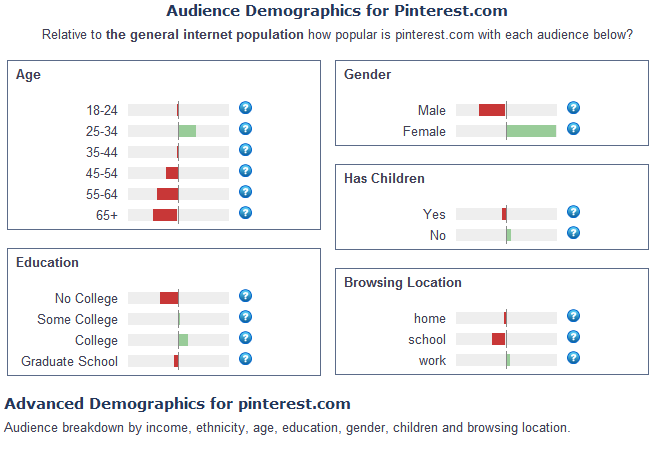
Essentially, users create a collage, or several, using images that capture their attention while surfing the web or by uploading their own. At this time, the majority of the site’s users are women, so , understandably, the majority of pin boards relate to topics of interest to women.

(Source: Alexa.com)

These collages are themed, with topics ranging from architecture and places to visit to weddings. The collages users create from web surfing are composed of images that track back to the original website; this is the key for marketers.

Let’s illustrate using the wedding pin board theme as an example. A woman planning her wedding can now, rather than leaf through mountains of wedding magazines, browse Pinterest for collages assembled by other users. Some of these users may be friends of hers who have already compiled favorite images of their own and whom she “follows”. One of the collages includes a picture of the perfect wedding dress. The bride can right click on the picture and select to open the link in its original web page, which in this case may be the store or designer’s website. And there you have it, word-of-mouth advertising without the words. Basically, Pinterest refers traffic back to the image owner’s website. For a quick video intro see A Marketer’s Guide to Pinterest

The impact of this new medium could be a boon to merchants and a disruption to established bloggers who monetize their sites via affiliate marketing. Using Amazon as an example, shoppers who create Pinterest boards around Home Decor items could potentially drive considerable traffic to Amazon. If Amazon finds that it can generate as much revenue from this traffic, or more, without paying affiliate marketing commissions, it may end this sales channel. Alternately, if Amazon makes the affiliate links available through Pinterest, bloggers may no longer need to spend time crafting informative review articles and simply let the pictures tell their thousand words.

The one caveat to Pinterest, and it’s a big one, is the potential for copyright infringement. One Pinterest user, a lawyer named Kirsten, recently closed her Pinterest account after reading the fine print in Pinterest’s Terms of Use (Shontell, 2012). In a nutshell, Pinterest won’t be held liable in any suits brought forth by the owners of images pinned on a board. The user is in fact solely responsible for obtaining permission to use copyrighted images; failure to do so exposes users to lawsuits and they may find themselves having to repay any damages and/or legal fees incurred by Pinterest as well. This is probably not a big problem for pinning images from an e-commerce website with affiliate marketing programs, but “pinner” beware. It may be best to stick with images that have clear creative commons licensing or pictures you took with your own camera. In any case, Pinterest is likely here to stay, so happy digital scrapbooking to all…

References:

Crook, J. (2012, March 14). This Is Everything You Need To Know About Pinterest (Infographic). TechCruch. Retrieved from http://techcrunch.com/2012/03/14/this-is-everything-you-need-to-know-about-pinterest-infographic/#

Grove, J.V. (2012, March 21). Pinterest grew 52% to 17.8M unique visitors in February. VentureBeat. Retrieved from http://venturebeat.com/2012/03/21/pinterest-uniques/

Shontell, A. (2012, February 28) A Lawyer Who Is Also A Photographer Just Deleted All Her Pinterest Boards Out Of Fear. Business Insider. Retrieved from http://articles.businessinsider.com/2012-02-28/tech/31106641_1_repinning-copyright-entire-image

Posted in Uncategorized | 5 Comments

I Know I’m a Girl, but I Want to Climb Trees Too!

I learned I was a girl because when I looked at my mother, I looked like her. As a result, boys were people who did not look like she or me, but like he—my father.  As I went through school, I began to realize that girls and boys were supposed to behave a certain way.  For instance, girls were people who wore pink dresses with bows and liked to play with dolls and dance.  They wore pantyhose’s and had ruffle socks, and carried around a purse to put things in.  Boys were people who wore blue and red, and wore pants or suspenders.   They played outside, climbed trees, and got to play sports and wear bow-ties when they went to church.  Continue reading

Posted in Uncategorized | 4 Comments

“Hit the Campus”

“There is no such thing as the average American consumer (Young, p. 71, 2010). Says who? Well for one, author Anthony Young (2010) believes that in an era of fragmented media and eclectic genetic and societal makeup, organizations can no longer assume that what works for some will work for all.

Lets do a simple Google test. Here is what populates when I search “average American consumer.”

Not very representative of today’s reality. This is definitely more like it:

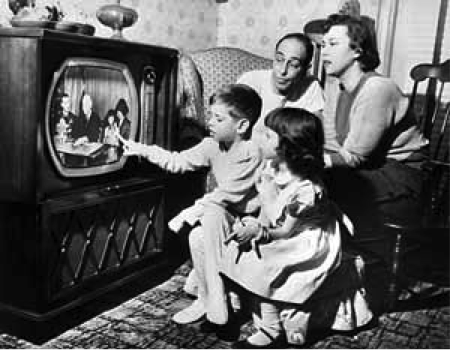
Young (2010) has this mantra that I am completely enamored with – instead of relying only on surveys and tests, “hit the streets” and get to the real people. That’s how you get an insight, an intrinsic understanding of today’s consumer.



I’ve done my own form of “hitting the streets.” It was eye opening, fun, and a great way to organically connect with people.

In 2009, I “hit the campus” to interview college students at UCLA and Cal State Northridge. At the time I was in the Page program, an early career initiative at NBCUniversal. I was on assignment at Focus Features, the film production and distribution company behind movies such as Eternal Sunshine of the Spotless Mind, Atonement, and Coraline.

No one gave me the task to “hit the campus.” I wanted to do it on my own. I’m not the biggest fan of forced research such as focus groups – I think its results have a tendency to be skewed, and aren’t really captured in a natural environment. So I wanted to interview college students in their home turf to get their thoughts about film, college, and life in general. I gravitated towards interviewing college students because I was a recent grad. I wanted to get a sense of what my peers were thinking. Get inside their brain. Use my interest in film and studies in marketing and apply them to a real-life application.

I asked my friend to help me out. He was the cameraman and I was the reporter. We “hit the campus,” and with our results, created a project called “Meet these Ten.”

I spoke with ten randomly selected students, ages 18-25. I asked them a variety of questions in order to get their minds running and also give me the opportunity for maximized communication.

Here’s a breakdown of my questions:

  • What do you love most about film?
  • How do you typically hear about movies?
  • Do you watch trailers online?
  • When do you go see movies (right away, wait for DVD)?
  • What upcoming movie are you eager to see?
  • What two actors would you like to see in a movie together?
  • What do you think of Focus Features (movie titles given for reference)?
  • How many hours a week do you work?
  • What’s the best part of going to college?
  • What are the biggest issues facing your generation today?

I was honestly surprised by the willingness of the students to stop and talk to me. And their responses weren’t quick or forced in tone, which could have easily been the case. We actually had a conversation. I approached them like a friend, and they responded with participation.

It was such a great experience. From a personal standpoint, I was proud of myself for taking initiative and doing something I had never done before. From a learning perspective, I obtained an insider’s point of view and an understanding that insights gained from a “hitting the streets” approach can be incorporated into other research methods, and subsequently have an impact on future marketing strategies.

If you get invasive, and make conversation organic, you can get true responses in return.

Insight over analysis. Numbers are important, but step away sometimes and “hit the streets.” Or in my case, “hit the campus.”

Reference:

Young, A. (2010). Brand media strategy: Integrated communications planning in the digital era. New York, NY: Palgrave Macmillan.

Images courtesy of:

  • http://thepoliticalcarnival.net/2010/12/05/sunday-talkers-33/old-fashioned-tv/
  • http://francisanderson.wordpress.com/2009/10/12/demographics-no-such-thing-as-average-but-boomers-arent-happy/
  • http://ibmsocialbiz.tumblr.com/post/1250164947/digital-indigestion-for-traditional-media-companies
  • http://drtoddhall.com/index.php/students-tend-to-fit-one-of-five-christian-spirituality-types/
Posted in Uncategorized | Tagged , , , | 1 Comment

Is It A Memory or Just Eau De Brand?

Image from: www.perfumeid.com

Luxury hotels and resorts present an opportunity for one to indulge in some of the highest quality sensory experiences from impeccable design, to amazing food and personalized services where you feel like royalty. Most recently top dollar resorts and hotels are adding another weapon to their arsenals to aid in creating a memorable experience for guests that has them wanting more the moment they leave. This secret weapon is a carefully crafted custom scent being piped into hotel lobbies and surrounding areas. Yes, you heard that right brands are developing their very own scents in an effort to create a positive memory in consumer’s minds, a memory that pervades all senses.

Image from: www.good.is

This latest effort to create a memory using the power of consumers’ own sensory experience and subconscious is part of a marketing practice called Neuromarketing (Senior & Lee, 2007). It utilizes neuroscientifc methods, such as fMRI and EEG scans, to help analyze and understand human behavior in relation to markets and marketing interactions (Senior & Lee, 2007; The Lancet Neurology, 2004). It’s basically using brain imaging technology to help answer the question Gerald Zaltman posed in his book How Customer Think, which is why do customer say they want a product but don’t buy it? (Zaltman 2003; The Lancet Neurology, 2004). Like Neuromarketing, Zaltman set out to understand how a customer’s buying decisions is influenced by the convergences of multiple interactions at once between the mind, body, brain, and society (Zaltman, 2003).

In his research, Zaltman found that some basic assumptions marketers were making about their customers were turning out to be false. For example, he found most marketers think consumers think in linear ways, or that their memories accurately reflect their experiences (Zaltman, 2003). He and other neuromarketing researchers have found that once a smell is embedded in a person’s brain just seeing visual cues related to that memory can be enough of a trigger to “resurrect” the scent (Dooley, 2007; Zaltman, 2003).

Just think of the last time a strong or distinct smell triggered a memory to come back to you, chances are it was a pretty vivid memory. This is the exact effect companies are trying elicit with their brand scent. The goal is to create a positive emotional connection that stays in consumer’s minds even when they are not directly interacting with the brand.

Image from: www.scientificAmerican.com

The power of the nose doesn’t just extend to luxury hotels and resorts; many traditional retailers are taking advantage of Neuromarketing through scent. Companies are building scent into their branding approach to forge a deeper emotional connection with their customers, for example Thomas Pink stores are scented with the smell of line-dried linen (Dooley, 2007). However, it’s important that companies use this technique judiciously and in the right context. You wouldn’t want to walk into walk into a car dealership expecting that “new car smell” and get a nose full of an overpowering flower bouquet instead. Thankfully there are many specialty marketing firms positioning themselves as “scent technologists” that can help brands craft the perfect scent and memory for even the most discerning customers (Duncan-Durst, 2007).

Sources:

Dooley, R. (2007). Does your marketing smell? Neurosceincemarketing.com. Retrieved July 05, 2012, from http://www.neurosciencemarketing.com/blog/articles/does- your-marketing-smell.htm.

Duncan-Durst, L. (2007). Scent branding: Smell of success? MarketingProfs.com. Retrieved July 05, 2012, from http://www.marketingprofs.com/7/duncan9.asp

The Lancet Neurology. (2004). Neuromarketing: Beyond branding. The Lancet Neurology, 3(2), 71. doi:10.1016/S1474-4422(03)00643-4

Senior, C., Lee, N. (2008). A manifesto for neuromarketing science. Journal of Consumer Behaviour, 7(4- 5), 1479-1838. doi: http://dx.doi.org/10.1002/cb.250

Zaltman, G. (2003) How customers think: Essential insights into the mind of the market. Audio-Tech Business Book Summaries. Retrieved July 06, 2012, from http://mma6.v4vmedia.com/Courses/6BrandManagement/ebooks/How%20custo mers%20think.pdf.

Posted in Uncategorized | Tagged , , , | 2 Comments

Breaking the Mold

“If we want to motivate people to pay attention, we should seize the power of big surprises” (Heath & Heath, 2008, p. 69).

According to the Outdoor Advertising Association of America, over $6.3 Billion dollars are spent on outdoor advertising annually. Out of home advertising has evolved from slapping up an old Billboard on Route 66 to extensive interactive installations conceived and produced to engage viewers as well as entertain or educate them.  “In the star-filled universe in which we drift, out-of-home (OOH), is a galaxy unto itself, vast and sprawling” (Sanders, 2012, p.57).

Two advertising campaigns for two recent movie releases recently displayed unique examples for us to consider when thinking about advertising outdoors.

Photo by Glen D’Souza, Retrieved from http://laughingsquid.com/billboard-grows-bacteria-mold-cultures-to-promote-contagion-movie/

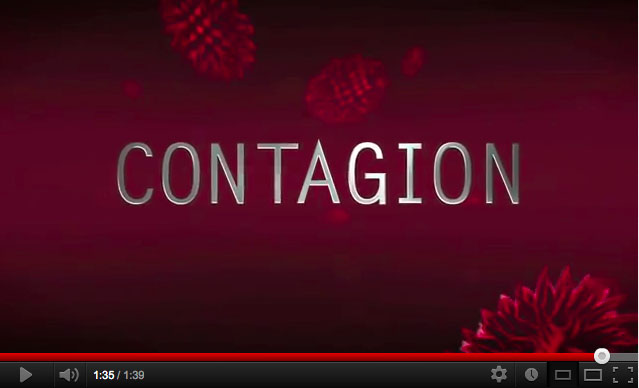
The first unique outdoor advertising campaign was a promotional interactive event/installation for the movie Contagion. Advertisers filled a large, empty, rectangular petri dish with various bacteria and mold in the shape of the movie’s moniker, inoculated it, and hung it in a storefront window.  Over the next two weeks, passersby were witness to an ever-changing moldscape as the petri dish went from a blank slate to being filled with a living mold in the forming the word Contagion.

The first groups of people to figure out what the words were received free screening tickets or other prizes related to the film. The campaign itself garnered Over 100,000 twitter and Facebook mentions, and over 530,000 Youtube views.  The video link below shows how microbiologists and advertisers teamed up to make this one of kind Movie poster made of germs, penicillin and live bacteria.

www.youtube.com/watch?v=LppK4ZtsDdM

The second unique outdoor advertising campaign was a promotional interactive event/installation for the movie Coraline. By taking over a vacant storefront and using up to the minute technology, to showcase the film, the advertisers turned unused window fronts into “Storescapes.”

The 3D interactive technology set up in the window and allowed passersby to superimpose their faces into screens with buttons superimposed over their eyes to simulate what it would look like to be a character in the film.  This unique campaign drew attention to and created a buzz around the film in a memorable way. The following link shows gives an introduction to the campaign.

http://www.youtube.com/watch?v=A16Fc8a2KkU

With consumers being bombarded by so many messages and advertisements on a day-to-day basis, advertisers and marketers may want to consider using unexpected campaigns like the two referenced above.  One piece of advice: if you are thinking of working with live bacteria, don’t forget to put on a Hazmat suit over your thinking cap!   Safety first.

References:

Heath, C., & Heath, D., (2008). Made to Stick Why Some Ideas Survive and Others Die (2nd ed.). New York, NY: Random House

Sanders, J., (2012). The Four Dimensions of Out-of Home, The International Journal of Media Marketing, Promotion and Design, 4(1), 56-67

http://www.oaaa.org/

www.curbmedia.com/case-studies-warner.asp

Posted in Uncategorized | Comments Off on Breaking the Mold

Mac or PC? Does your Preference of Computer Equal a Preference in Travel?

In today’s marketing communications, all the stops have been pulled out. Marketers use word of mouth, social media, guerilla marketing, and many other methods to get attract business. I recently came across an article that explored yet another method –one of tracking consumers.

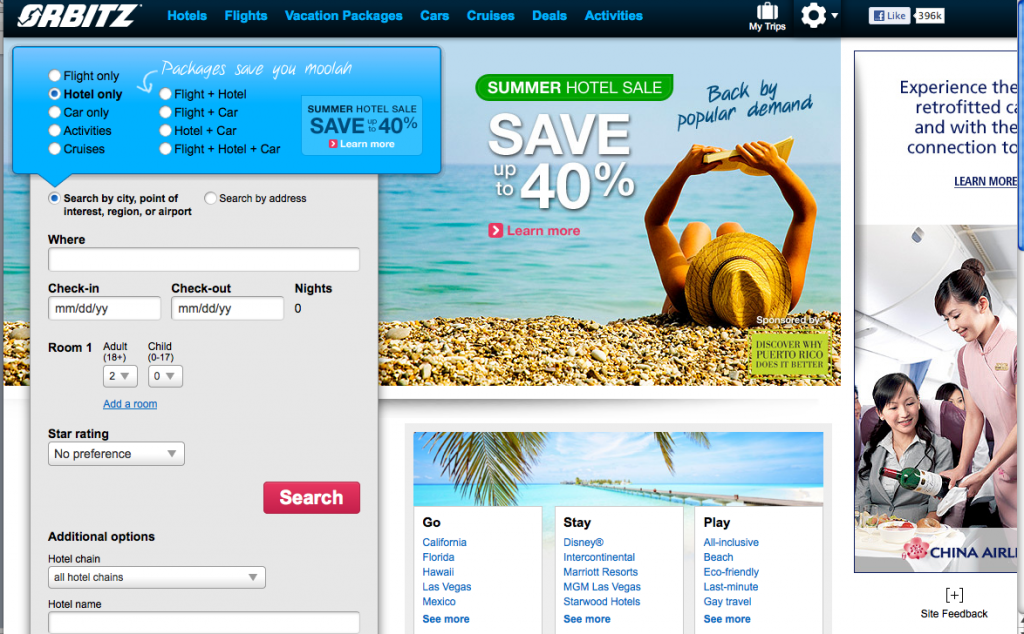
An article in the Wall Street Journal explores a tactic that Orbitz (a well-known travel booking website) has recently put into use. The website now tracks whether a user is searching from a Mac or PC computer and displays different options for each. The company believes that Mac users are willing to spend more for hotel stays than PC users, ending with search results that are a little more expensive if you are shopping on a Mac.

Orbitz Website

This is an interesting tracking system, but I question how likely it is to work. The few Mac users interviewed in this article stated that they did not mind this tracking as long as they were still given the option to search for hotels by price –meaning Mac users would never only be shown the more expensive options.

As a Mac user myself, I feel like this is an unfair tactic. Had I not stumbled across this article, I might have never known that Orbitz was automatically generating search results that are a bit more expensive. If users are unaware that they will need to change the settings of the search (to list hotels by price) and just assume that what is listed is what is available, Mac users might be unknowingly spending more because they are not presented with all of the options.

It is hard to see how much this could affect travel booking since this process of tracking what kind of computer a user is using is still in the beginning stages. Orbitz may also start tracking Mac preferences in flights and car rentals.

From Popular Mechanics

But I cannot help but wonder, does it really matter whether someone uses a Mac or a PC? People who use these sites are looking for a deal on travel. If a user is constantly steered toward more expensive hotels (or less expensive hotels that they are not satisfied with as a PC user) wouldn’t they get fed up with the site and try the competitors?

It will be interesting to see how this works out.

http://online.wsj.com/articl/SB10001424052702304458604577488822667325882.html

Posted in Uncategorized | Comments Off on Mac or PC? Does your Preference of Computer Equal a Preference in Travel?