Political advertising, like everything else in our lives, have evolved with time.The style, the content and most importantly the medium for Political ads have changed. The one thing however, that has not changed is that they are reflections of their time.
Being an election year, we are again being bombarded with political Ads through every considerable medium. And it only gets worse. Political advertising continues to grow with every election circle.In the 2012 election, an estimated $4 billion was spent on political ads, one can only imagine that spending this election year will top that.
Strange as it now sounds, it hasn’t always been like this.Campaigning in the early days were about getting out and about, holding political rallies, and town-hall debates. Harry Truman, in the 1948 presidential election, was said to have traveled 31,000 miles on ground across the nation, shaking hands with approximately 500,000 people along the way. Dwight Eisenhower introduced political campaigns to television when he created 40 twenty-seconds TV spots.
Subsequent campaigns after this realized the power of television as a medium of communication, and thus took advantage. A whole advertising industry was built just to plan and promote candidates through the media; but it was the traditional media. It was Radio, Television, Print and outdoor.
This was basically the pattern. Election circles stood out by whether they were civil or negative.People measured election circles by the degree of their civility or by the negativity of their ads. This remained the case, until a certain junior senator from Illinois declared his candidacy for the presidency.
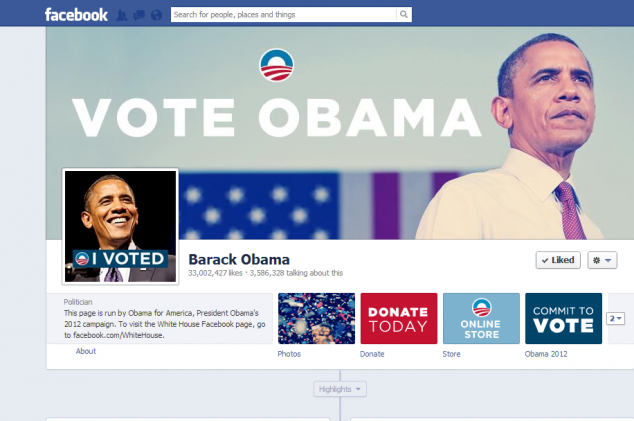
Then Senator Obama, took political campaigning to a different plain. He, to his credit, quickly embraced new media and used them in ways no other politician had thought to.His campaign used appropriate media for appropriate demography.
While not discounting the use of traditional media, he used data in ways no one before him had. He used the internet and guerilla advertising to push his message. Blogs and messaging boards carried his message of hope. His campaign of 2012 is said to be the first to cross the billion-dollar mark in campaign spending.
I went to a high school friend’s baby shower a few weeks ago, and enjoyed catching up with her dad. It has been a while since her and I first became friends. I will leave it as our reunion is currently being planned, but I will not say which one it is. I spent many hours over at her house growing up, and it is always fun to reminisce and see what the family has been up to. Her dad had many fun stories to tell, but carried one regret that he shared with me. He never got to see my friend dance live, as he was always videotaping all of her performances. He never realized this until it was too late. He missed out on that experience and others, since he was always designated as the official cameraman. I now wonder if he would embrace the new Spectacles from Snap Inc.?
SnapChat is an app geared toward young Millennials who converse using pictures on the social media platform that automatically disappear. It boasts 15 Million users of the app which confirms its popularity (Murphy, 2016) and one of the main reasons why it is of interest to numerous brand marketers. SnapChat is growing and is venturing into a new space, hardware.
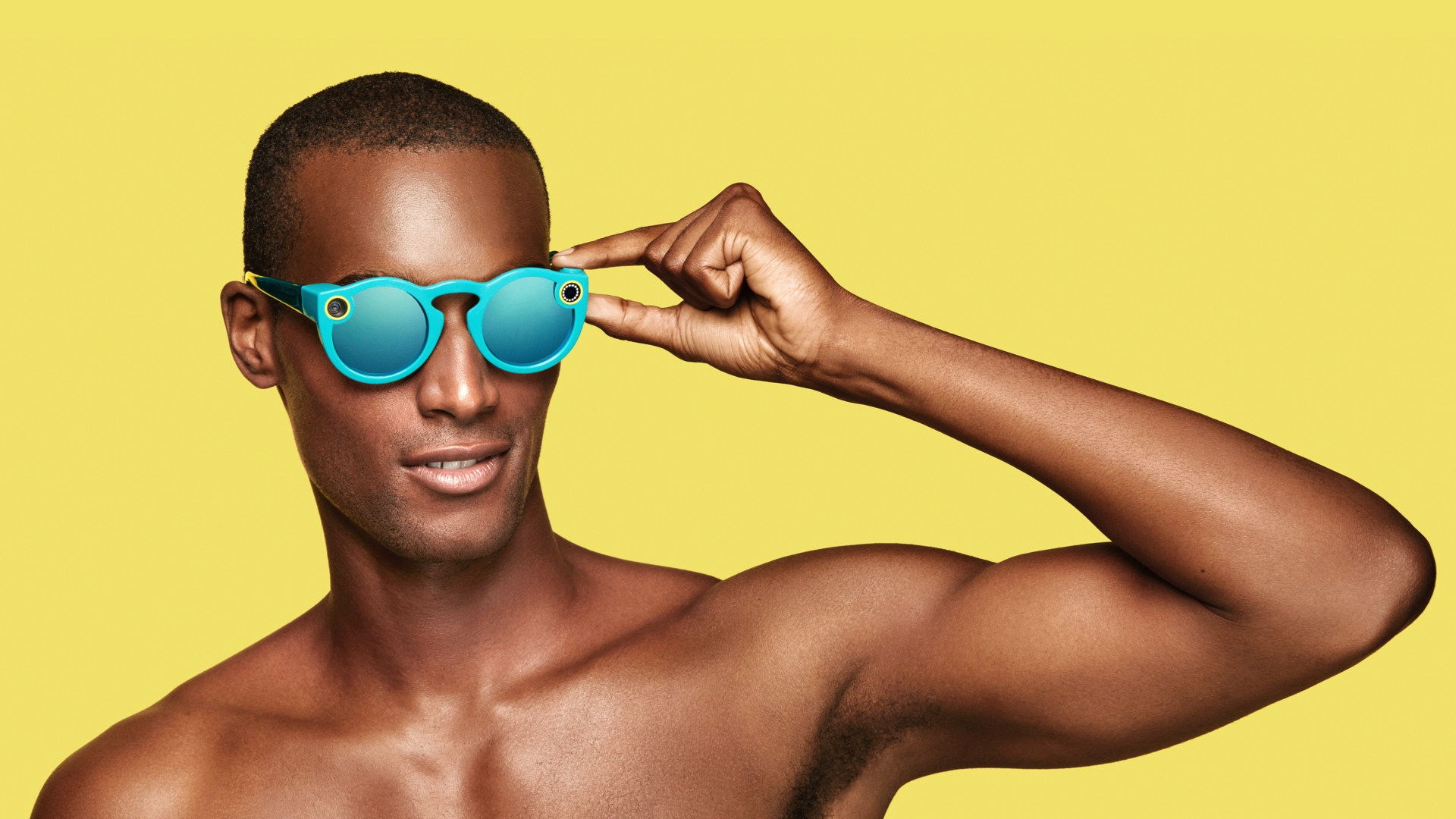
At the end of last month, SnapChat announced it is re-branding itself to Snap Inc. plus is launching a wearable camera called Spectacles. These are big changes for the company and this may lead to a challenging road ahead.
Starting with the glasses, one may be thinking, didn’t Google already attempt this and fail? Not only were the glasses expensive, $1500, but ignited concerns about being recorded without giving consent as one example of possible misuse (Newton, 2016). In contrast, Snap Inc.’s Spectacles are marketed as a toy and are priced at $130, making them more accessible to its demographic. They are bright, fun, and fashionable. Also, it is obvious when the glasses are recording. Does this help fears dissipate? Is it any different than someone filming people on a street with their phone without permission?
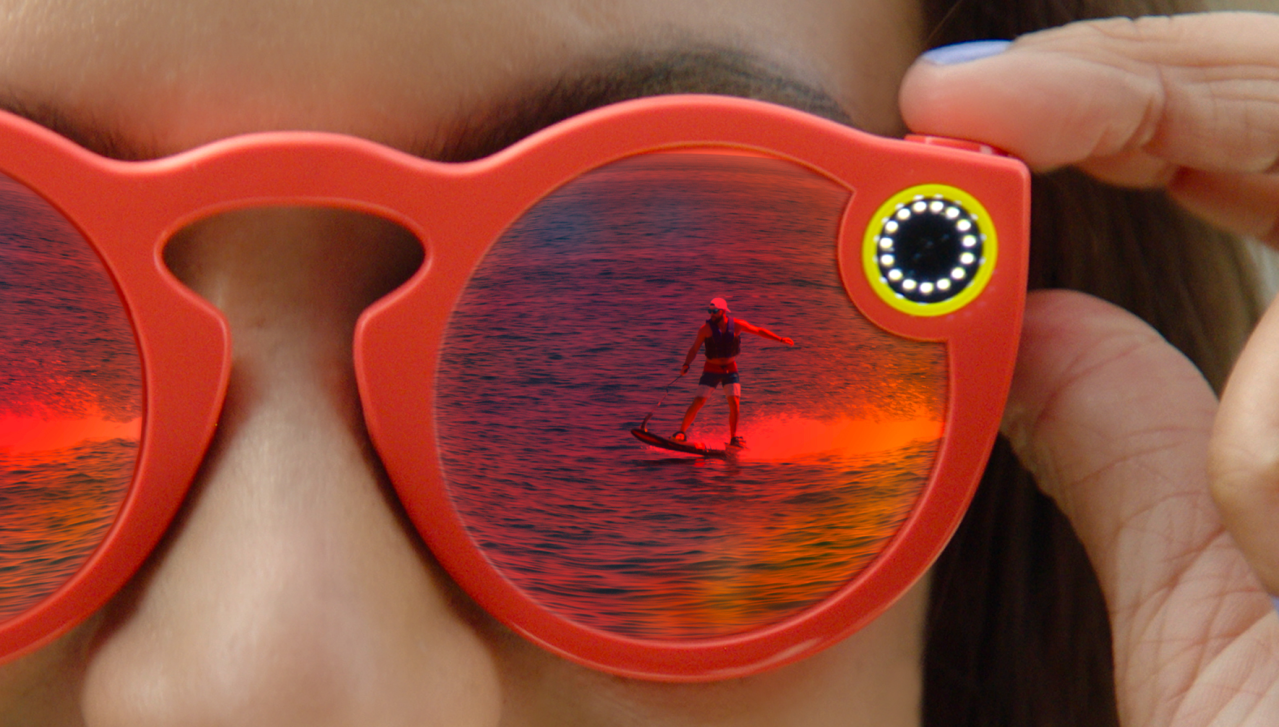
Why are the glasses necessary if they work just like the smartphone camera? According to Snap Inc., the glasses record with 115 degrees circular first person format which is closer to how humans view the world (Constine, 2016). Is this enough of a differentiation from a smartphone video? I would venture to guess it depends on how different the results are in comparison to one another. This will also help predict whether the re-branding will work and establishing Snap Inc. as a camera company. It hopes to change behavior and allow the evolution of the physical camera as opposed to the being contained in a smartphone (Stevenson, 2016). Will these glasses be the answer?
Now, these glasses will record 10 – 30 seconds of video and can be shared on Snap Inc. The current format which the users tend to embrace and protect is the videos will disappear once shared, although there are ways to keep the captured media. If Spectacles do become a hit and do provide a more immersive way to record, I would bet my friend’s dad would purchase these glasses. I know he isn’t the demographic, but it would help eliminate his one regret moving forward with his grandchildren. In addition, I think he could pull them off!
According to statistics from numerous sources, such as Pew Research Center and the US Census Bureau, by the year 2020 Latinos will reach approximately 66 million people in The United States. Over the next four decades the Latino population will expand faster than any other ethnic group in the U.S.
In order to understand the impact Latinos have when it comes to their purchasing power I want to give a little more information that was discovered during the research for this article. Latinos in the U.S will account for more than 20% of the labor force by 2020. For those Latinos looking for higher paying jobs, education is critical, so that is why Latinos are steadily increasing their education achievements with each generation, closing the educational gap with non-Latinos. In addition to increasing in number of potential customers, Latinos are also growing in purchasing power.
Latino consumers spend more on groceries, used cars and phone service than any other ethnic group in the U.S. Latinos contribute economically over $1.3 trillion in the U.S. The average Latinos are younger and have larger household compared to other ethnicities. American Latinos are expected to use the same brand of toilet paper, toothpaste, and cleaning solutions for the home for an entire lifetime. This kind of loyalty usually carries over to the next generations of Latino shoppers.
The next generation of Latinos feel a connection with the previous generation who bought the same product, because they believe that brand engaged with the previous generation and will be the same with them. An assessment that was conducted by Think Now Research has found Latinos stated they always purchase the same brand when it comes to bottled water, laundry detergent, toilet paper, dishwashing soap and toothpaste, among other products. Latinos are so loyal they are 50% more likely than other ethnicities to go to another store if the item they are looking for is out of stock.
Corporations need to wake up, take note and really engage the Latino consumer, particularly since they will be growing and reaching over 66 million by 2020. In this segment, if a product engages and embraces their culture, Latinos will show the appreciation by purchasing the product, often for generations to come. When it comes to word of mouth marketing, Latinos are known to be big advocates of this type of promoting products they trust, believe and are loyal to.
Loyalty still exists among certain segments of the markets besides Latinos. Getting to know these segments and the loyalty they have for a brand that can embrace them is critical. In today’s current market, brands can get lost in the mix, and it is so important for a brand to engage, especially through social media, to reach out and not take a loyal segment for granted. Latino Loyalty rewards the brands that successfully understand the drive to purchase products in the first place.Latinos believe in products and in the brands that engage with them on a meaningful campaign that is current with the consumer. This is the way a brand can create loyalty among its Latino consumers: by showing they believe and care about Latinos.
References:
“Hispanic Brand Loyalty” CSP Daily News. 2016. Retrieved from http://www.cspdailynews.com/category-data/snacks-candy-data/report/hispanic-brand-loyalty
“Hispanic Market & Its Buying Power.” Greater Austin Hispanic Chamber of Commerce. 2015. Retrieved from http://www.gahcc.org/Hispanic-Market-Its-Buying-Power.hispanicmarketitsbuyingpo.0.html
Kokoyachuk, Roy. “Brand Loyalty Among U.S. Hispanic Consumers – Separating Truth from Fiction.” Think Now Research. 2016. Retrieved from http://www.thinknowresearch.com/blog/brand-loyalty-among-us-hispanic-consumers/
Tagliani, H. “Hispanics and brand Loyalty: myth or fact? The Group Advertising. 2016. Retrieved from http://www.blog.thegroupadvertising.com/hispanics-and-brand-loyalty-myth-or-fact/
Thompson, N. “Hispanic Consumers To Spend $1.3 trillion in 2015, Prompting National Economic Growth.” Latin Post. 2015. Retrieved from http://www.latinpost.com/articles/82555/20150928/hispanic-consumers-will-spend-1-3-trillion-in-2015-prompting-overall-economic-growth.htm
Thompson, N. “Brand Loyalty Among U.S. Hispanics: the Myth vs the Reality.” Latin Post. 2014. Retrieved from http://www.latinpost.com/articles/20878/20140908/brand-loyalty-u-s-hispanics-myth-vs-reality.htm
Pew Research Center. 2016. Retrieved from http://www.pewhispanic.org/2008/02/11/us-population-projections-2005-2050/#key-projections (Census Projections)
U.S. Census. 2015. Retrieved from https://www.census.gov/content/dam/Census/library/publications/2015/demo/p25-1143.pdf
For marketing to stick, it has to be memorable. But in a balanced way. The audience needs to remember not only the creativity of what took their attention, but also the product and/or company itself. That can be quite tricky. The examples below are a few that got it right.
And yet, in the same way marketing changed and adapted when radio came into play, the television appeared, and the internet washed ashore, it is in the midst of possibly changing and adapting again. There are some new elements presently that bring a wonder of whether the way memorable marketing has always been achieved will continue to work. Elements such as people’s preference to communicate visually (like the use of emojis) rather than text, people having shorter attention spans, people having less patience, people expecting and believing they have an entitlement of instant access to anything, people being easily offended about anything, people using social media, and – of course – the incoming use new technology: VR (virtual reality) and AR (augmented reality). So… will today’s formula of creatively connecting with the audience via exposing gaps of knowledge, giving a surprise factor, simplifying design, and keeping direct, short messages to create memorable marketing work tomorrow?
It is difficult to say.
On the one hand, the oldest ways of marketing – word-of-mouth – is still the most successful way to go about it. Despite the digital age, word-of-mouth still spreads like wild fire – and the use of social media does just that. Retweeting to the point where countless Twitter users have seen a message is exactly that: the word-of-mouth method. It may be technically in a text format, but the basic principal is there. People are also still more susceptible to emotional comparisons. It’s still a tactic that goes a long way as it connects people to a product or brand through an emotional understanding. Steve Jobs did this with the introduction of the iPod as “1,000 songs in your pocket.”
On the other hand, today’s formula is working in social media as well, if not more so, as it has through television. Social media campaigns such as Disney’s #ShareYourEars and Lowes’ #lowesfixinsix have been very successful at sharing something unexpected, enlightening, simple, captivating, and engaging.
And yet, with knowledge readily available it can be difficult to expose a gap of knowledge. Of everything that has been seen and can be seen, thanks to technology, it is hard to truly surprise or shock someone – and have that factor linger long after. Simplified design will only work if it’s done right and doesn’t come off as stealing from companies like, Apple. Remember, people will easily be offended. And though a message may be direct, to-the-point, clear, and short, it may not necessarily be short and precise enough.
There is also the “reverting back” concept to take into account. As a colleague once pointed out to me: ordering items from Amazon is the same as it was back in the day for ordering items from the Sears catalog. A different format? Yes. But the core idea is the same. And as I heard in a discussion from a favorite radio station, our preference of using images, gifs, emojis, etc. rather than text seems to echo almost-stone-age like forms of communication. Perhaps marketing will need to study the first successful strategies of memorable marketing and translate those to a new format for VR and AR.
So… what will it be to make memorable marketing for tomorrow?
A combination of the successful old and present marketing concepts with an adaptation to the immersion factor.
In much the same way technology builds upon itself, memorable marketing will need to do the same. In the same way things of this world work best when there is balance, memorable marketing will need to do the same. Word-of-mouth will never go away. And though it is becoming more challenging to surprise people these days, that will change with VR and AR over time; just as marketing has figured out ways to be memorable in social media. Marketing is in the very beginning stages of learning how to adjust the formula to make an effort memorable. And no doubt what has worked in captivating and engaging audiences via social media will be used exponentially with VR and AR’s immersion capability. However, until more unfolds and memorable marketing is created in such technology, curiosity will linger with ponderings of what of the formula will transfer, adapt, and fail to work with consumers and up-and-coming technology alike. I, for one, am intrigued to see how the formula will change, if it changes.
References:
(2016). Virtual reality is an immersive medium for marketers. EMarketer. Retrieved from: http://www.emarketer.com/Article/Virtual-Reality-Immersive-Medium-Marketers/1013526
Agius, A. (2016). The 10 best social media marketing campaigns of 2016 so far. Social Media Today. Retrieved from: http://www.socialmediatoday.com/marketing/10-best-social-media-marketing-campaigns-2016-so-far
Brown, M. (2001). 1000 songs in your pocket. This Day in Tech History. Retrieved from: http://thisdayintechhistory.com/10/23/1000-songs-in-your-pocket/
Gallo, C. How to make data in your next pitch instantly memorable. Forbes. Retrieved from: http://www.forbes.com/sites/carminegallo/2016/04/28/how-to-make-data-in-your-next-pitch-instantly-memorable/#5723559faf15
Oreizy, S. (2016). The key to making any message memorable. Forbes. Retrieved from: http://www.forbes.com/sites/theyec/2016/09/28/the-key-to-making-any-message-memorable/#427da6a53899
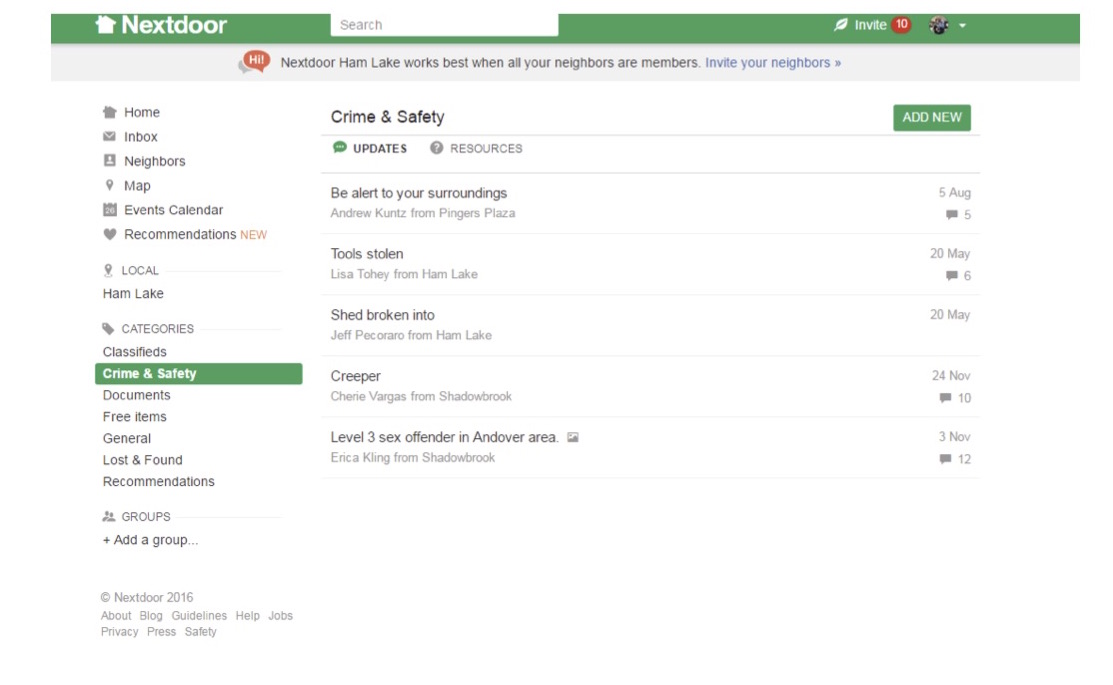
A few weeks ago, I received a postcard in the mail asking me to join a new social media site called “NextDoor.” The joining code that you are provided is supposed to link you with a group of people within a certain radius of your home…your neighbors. It is an interesting concept to “meet” some of your neighbors that you may not otherwise meet. There are all sorts of things you can do on the website from welcoming new neighbors, posting items for sale, if you are looking for a good plumber, heck one of your neighbors might be a plumber. This year you can even go to a map and indicate whether or not you will be handing out candy this year. Yep, you can post just about anything on this website from a found dog to a garage sale you are having. When I think of neighbors that are “next door” I tend to assume that next door is within maybe a 1 mile radius…depending on how your neighborhood is set up. Somehow I am part of neighborhoods up to 4 miles away. Why would I want to do that? The only reason why I see this as a positive, is that I can see what crimes and safety issues the neighbors are having.
Communities are starting to branch out a little with the platform and about 1,400 police departments around the country are on Nextdoor. Police in Seattle are starting to use this website as a way to get involved in their neighborhoods that they patrol. According to the article, the Seattle Police Department feel that it helps them connect with the community and also learn more about the concerns of the neighborhoods. According to Nextdoor, one in five households have signed up for an account and almost 98% of the city’s neighborhoods are represented. The website started out as a positive and quickly went downhill with some users using it to complain and stereotype individuals in areas where crime is an issue. This brought about paranoia and some users felt it was stigmatizing groups in the city. Have you been asked to join Nextdoor or would you consider it?
Wadell, K (2016, May 04). The Police Office ‘Nextdoor’. How Cops use Nextdoor for Community Policing. The Atlantic. Retrieved from http://www.theatlantic.com/technology/archive/2016/05/nextdoor-social-network-police-seattle/481164/
In the last decade, we have seen technology rapidly evolving, result in the rise of web search engines as Google, Yahoo, and Chrome, as well as social media like Facebook, Instagram, and Twitter. We have access not only to information or news in seconds, through our smartphones, but also, able to work, shop, and communicate with anyone. Consequently, society has changed the way we communicate to the way we do business. Companies in their attempt to sell products are willing to do almost anything to get attention from their target audience, even if some practices are unethical.
The Internet and social media have shortened people’s attention span, and companies are literarily fighting to get attention from the audiences. Since audiences are not loyal to buying the same products or consuming news. They go to different blogs and read social media’s news feed to get a sense of the diverse approaches and angles of the famous story, event or social issue. Back in the day, the traditional media, such as television, radio and newspapers was the primary source of news, information, and provided updates on local, national and worldwide events. The news reported on traditional media seems to be credible and reliable, and even journalists, reporters, and broadcasters were truth seekers, who informed equitably and honestly of the current events or issues to the mass audience. The merger of the Internet, and later the popularity of the social media become the driven force for the media cycle.
The new media cycle usually starts in having someone getting paid to write a blog. Since blogs have emerged as a source of information and generated news, companies result in paying advertisements and ads on the most trafficked blogs to hopefully reaching out to their target audience. The bloggers’ main concern is populating as many stories or articles as possible to pick readers’ interest and maintain a high number of pageviews. To keep up with the daily posting, bloggers use information from diverse sources from unknown emails, random websites to companies pitching and sending information to write about product’s reviews, stories, and articles. Bloggers have master the art of manipulating not only media but also tricking readers into clicking their headlines. The blog headlines are catchy and full of a rhetorical question that often does not represent the content of the stories or articles (Brandonomics.com, 2014). The most popular blogs are those having enticing headlines with a combination of extremist, hatred, scandal, and dramatic stories and articles that result in the latest social media’s news feed (Brandonomics.com, 2014). If the blog’s article or story becomes a hot topic on social media, it usually ends up on web search engine. Then, the traditional media gathered information from the internet, blogs and social media to generate news, which often comes from unreliable sources.
It seems that ethics as professionals and consumers has changed as technology evolves. It is scary how social media has become the driving force for media and media’s influencers are making up stories to drive more traffic to their blogs, and then earn a stable income. Consumers also are feeding the cycle by reading unsubstantial reviews, stories, and articles, which later end up on social media. It is an endless cycle feed by business, professionals, and consumers, where ethics seems not longer existent. The only way we could stop the cycle is changing as consumers the way we consume information, news, and products, so marketers, publicist, journalist and public relations practitioners will strive for having the highest ethical standards to conduct business.
References
Brandonomics.com, (2014). Trust Me I’m Lying — Book Summary. Retrieved from: https://bradonomics.com/trust-me-im-lying-summary/
Holiday, R. (2012). The keynote by Ryan Holiday at TNW Latin America 2012 about his NYT bestseller Trust me, I’m Lying. Retrieved from: https://mcm.usc.edu/mod/assign/ view.php?id=39158
I used to be one of those people who had my work email on my cell phone. I thought I’d be more productive at work if I always had access to my email, heard it ‘ping’ on my phone at all hours, where I would, of course, respond to it immediately. What amazing efficiency, I thought; what a dedicated employee, I thought.
It didn’t take long for me to figure out that it’s a really bad idea to have my work email always on, always with me. I didn’t have one of those positions that required I be available 24/7, so why did I think I needed to respond 24/7? I found myself responding to emails that could wait an hour, or two. Or a day, or two. And then I became programmed to look for new emails or make sure the email I sent actually got sent. A 2015 survey by the Future Work Centre of London revealed that “people who get their work email on their cell phones are more likely to feel frustrated and anxious” (Evans, 2016). Ya think?
The best thing happened when I switched phones, and then our email server at work changed, and I couldn’t get my work email on my new phone. I tried to make it work, then I gave up, and it was like a work weight had been lifted from my shoulders. It felt awesome, and I don’t miss it one bit.
So, now I get my USC emails on my phone, and I find myself checking them while I’m at work, and I respond throughout the day. Uh oh.
Resources:
Evans, D. (2016, January 4). Take your work email off your phone right now. New York Magazine.
Imagine searching on google for a favorite topic and coming across a page that looks like it may have exactly what you need. You click the link and begin to read only to be completely annoyed at the pop-ad asking you to subscribe, download a free report, or maybe even an ad for a product or service that has nothing to do with the topic you are reading. According to Forbes.com Apple has allowed for the download for a new ad blocker app. This app is available to use with the Apple browser named safari on the updated iOS9 (Forbes.com, 2015). These pop-up ads have been quite bothersome to consumers and brands such as Google and Apple are listening.
Since the 90’s it has been a common practice for brands to add pop-ups to their websites for a variety of reasons (Oberoi, 2013). The pop-ups can house a variety of additional information to help grab the eyes of the consumer. They can be used as advertisements to promote a product and/or service. Users usually see them pop-up after landing on a site for a few minutes, once the allotted length of time has been reached the pop-up appears to ask you to subscribe to the brand’s mailing list for whatever tantalizing exchange (free tips, report, etc). Sometimes the pop-ups can block the entire page, forcing users to either click the exit button or sign up in order to get back to the content. In some cases users will simply sign up for the advertise information just to get back to the content. These pop-ups can be annoying on desktops, and even more annoying on mobile devices due to their small screens. Because of this annoyance Google has decided to help alleviate some of this annoyance by penalizing website who pop-ads are believed to be intrusive.
In order for brands to no have their mobile sites penalized (0r to simply be seen by the users), marketers are going to have to come up with an integrated solution that will include the smooth integration of the ads. By creating a seamless integration of these pop-up ads can improve the user experience making consumers and users happy. However, with the the ads looking just like the brand will that ad then fade into the background ? Will the user even notice the ad?
How do you feel about pop-up ads on websites when visiting? Does it take away from your experience on the blog?
References:
Forbes Welcome. (2016). Forbes.com. Retrieved 26 September 2016, from http://www.forbes.com/sites/valleyvoices/2015/09/23/ad-blocking-a-primer/#1868382b692b
Forbes Welcome. (2016). Forbes.com. Retrieved 26 September 2016, from http://www.forbes.com/sites/danielnewman/2015/11/03/the-top-10-marketing-trends-that-will-define-2016/#645eda457d58
Oberoi, A. (2013). The History of Online Advertising. AdPushup Blog. Retrieved 26 September 2016, from https://www.adpushup.com/blog/the-history-of-online-advertising/
Zantal-Wiener, A. (2016). Google is Cracking Down on Intrusive Mobile Pop-Ups: Here’s What Marketers Need to Know. Blog.hubspot.com. Retrieved 26 September 2016, from http://blog.hubspot.com/marketing/google-pop-up-mobile-marketing#sm.000002nerj4idjf4uwdeebrb0nvy1
I think its fair to say that Starbucks coffee has been branded from just a commodity to an expensive yet pleasurable coffee experience. Then we have the brand Adidas who has established positioning off of values and beliefs causing loyal customers. I love both brands so I can never get enough of seeing these brands on billboards and tv commercials. However, when it comes to comedian Kevin Hart, am I drinking the Koolaid, if I agree with him when tells everyone that he is a brand? I mean, he is on the bus stop billboard, in magazines, hosting award shows, in commercials and not to mention in a thousand films per year.
Hart is a comedian, producer, spokesman and actor who has a net worth of $85 million. As of December 2013, Hart has been in over 30 feature films and 20 television shows. He is all over the place. Television show credits include Barbershop, Death of a Dynasty, Drillbit Taylor, Epic Movie, Extreme Movie and Fool’s Gold. Film credits include Help Me Help You, Judd Apatow, Kröd Mändoon and the Flaming Sword of Fire, Let Go and Paper Soldiers amongst others. Lets not forget about his stand-up comedy tours. Oh, did I mention that he has an endorsement deal from Nike and is the first comedian to have his own sneaker? Even though there is animosity between comedian Mike Epps and Hart…Epps says that Hart is positioned where he is, due to “good ol’ marketing.”
Unlike the tasteless marketing campaign from Ford for their Figo hatchback, you won’t find Hart showing women “bound and gagged in a car trunk, as celebrities like Paris Hilton and Silvio Berlusconi sit behind the wheel.” What you may find is Hart on Instagram with a pair of Nikes’ running on a treadmill or on FaceBook taking a selfie with a Serena Williams during the US Open. All strategically done as a part of his integrated marketing plan. Hart has the visual component, the tone and voice all working in his favor. Harts’ brand gets paid attention to, and definitely has a say over the lives that some live. Maybe its because of the $2 million he receives if he sends a tweet about a new movie coming out.
Lets think about it for a moment. Hart has found his target market, he a strong message, money, mission and his media presence is undeniable. I mean this guy is all over the place, film, tv stage and commercials, but how much is overkill when it comes to Hart considering himself a brand and seeing him all over social media? Is he being overexposed? Are we seeing too much from the comedic genius? I say who knows and who cares because he is a brand that is very successful and I wish him continued success in the industry. Oh yeah, did I mention that Hart has started a production company called Hartbeat Productions, he is one of the “100 most influential people in the world on the annual Time 100 list”, and has just partnered with Lionsgate to form the “Laugh Out Loud” video-on-demand service?
Whether someone wants to consider Hart as a brand or not, it’s undeniable that Hart has found a way to stay relevant in the entertainment world. his is proven by logging onto a social media site on any given day and you will find a post from him. With that said, maybe Hart isn’t a brand, but instead Hart is more of a “lifestyle.” I for one am not tired of seeing him all over the place!
References
Coughter, P. (2012). How We Connect. In The art of the pitch: Persuasion and presentation skills that win business (p. 52). New York: Palgrave Macmillan.
Kevin Hart Net Worth | Celebrity Net Worth. (n.d.). Retrieved from http://www.celebritynetworth.com/richest-celebrities/richest-comedians/kevin-hart-net-worth/
Kevin Hart Says He’s His Own Brand After Sony Executives Call Him a Whore. (n.d.). Retrieved from http://www.theroot.com/blog/the-grapevine/kevin_hart_says_he_s_his_own_brand_after_sony_executives_call_him_a_whore/
Kevin Hart Slams Haters, Defends His Marketing Skills: ‘Do We See the Level of Ignorance’. (n.d.). Retrieved from http://www.thewrap.com/kevin-hart-slams-haters-defends-his-marketing-skills-do-we-see-the-level-of-ignorance/
McNary, D. (2016, March 13). Kevin Hart Partners with Lionsgate on ‘Laugh Out Loud’ VOD Service | Variety. Retrieved from http://variety.com/2016/digital/news/kevin-hart-vod-service-lionsgate-laugh-out-loud-1201742608/
You Won’t Believe How Much Money Kevin Hart Is Paid To Tweet Things – CINEMABLEND. (n.d.). Retrieved from http://www.cinemablend.com/new/You-Won-t-Believe-How-Much-Money-Kevin-Hart-Paid-Tweet-Things-68835.html
There can be a significant clash of identity than when it comes to the distinction of being Latino in the United States. We are torn in between two cultures, trying to find the ground that suits us and our surroundings best. Unfortunately, the ground can feel like it doesn’t exist, as when doing the right thing for one culture we find that we are at odds with the other. Take calling ourselves American for example. Externally spoken, this can be a sense of pride, but to others it can be either a denial of our roots or an attempt at trying too hard to blend in. Throw in the notion that outside the United States but within the Americas, saying that one is “American” can encompass originating from any country across the two continents (North America and South America). Trying to situate an expression that you are in a sense from two cultures can add confusion to one’s understanding and appreciation of self. Here’s a brief video from Gabriel Iglesias capturing a little bit about explaining this dilemma:
The situation is complex but deserves attention, particularly when considering marketing approaches. Various sectors or categories have been created to describe where one Latino exists according to culture as opposed to another (Alvarez, Dickson, & Hunter, 2014). These variations range from resisting the dominant culture altogether, blending the two cultures together, to existing on the edges of both cultures but not really casting either one as main (see Fig. 1). Segments rating both U.S. and Hispanic identification for Latino individuals in the U.S. have been created to help locate where the Hispanic mindset might be as it relates to their perception and understanding of self (Alvarez, Dickson, & Hunter, 2014).
Alvarez, Dickson, & Hunter (2014). Journal of Business Research
But why does this matter in the first place?
Most of us are probably familiar with the Hispanic population trend. Census figures as of 2014 indicate that there were 55 million Hispanics in the United States, making them the largest ethnic minority in the country (Census.gov, n.d.). As you narrow this closer to home, in this case, California, and ultimately Los Angeles, the Hispanic population is both the largest here for any state and any county in the country. With the buying and political power associated with this continuing trend, there is also the role of needing to understand the multiple layers and conflicts of this population so as to better connect with them as a neighbor, consumer, and influencer of culture. Enter Hispanic generation 1.5.
Language knowledge and preference were once used to simplify the categories that Hispanics would fall into: Spanish dominant, English dominant, and bilingual (Villa, 2012). With the influx of children who enter the United States at a young age such as Hispanic generation 1.5—defined as children of Latino descent that entered the countries as adolescents—there can be a mixture of educational and cultural needs to be addressed. And this may be at the center of a bigger identity issue than first/second generation Latinos (like myself) encounter and struggle with.
From a marketing perspective, this issue needs to be explored further. I’m not sure it is clear what media consumption and advertising language this generation prefers. Is it English? Is it Spanish? Is it a mixture? Is it both? Does it matter? Furthermore, in day to day interactions, what culture do they lean toward? I ask these questions because I have found myself struggling with these ideas and concepts in the past myself, and I’ve been in the United States since day one. And though I take pride in my family’s histories and traditions, I know I am often at a disconnect on several fronts with first cousins (for example) who were raised differently and experienced more about life’s trials at a younger age based on the cultural circumstances that were a part of our youth.
In an article on Advertising Age, Lopez-Knowles (2014) grapples with this issue of identity and culture and captures its essence, writing:
This is a core component of the bicultural Hispanic and it’s foundational to our conflicting values. We are raised in a familial environment that expects passionate, concurrent conversations, and valuing family over self, vs. being taught in U.S. schools that educate us about self-reliance and independence. In fact, it took me years to realize that many times when I was acting in a self-reliant way, my parents interpreted it as acting selfishly. (para. 9)
Conversations and studies about all Hispanic generations (first, second, and of course 1.5) should extend beyond fundamental and conventional necessities such as language and education and into other areas. Such areas may include deep explorations into identity, navigating multiple cultures, and maintaining comfort and confidence with that which we are, and that which we are not. It is only when we begin to examine, understand, and accept the richness, value, and distinguishing characteristics of our many layers of culture that we can begin to realize our full potential. Moreover, this can help leverage the consumption and delivery of media from a narrative that puts us in closer cultural proximity with those that came before us, those that will arrive after us, and those that find themselves somewhere in between.
References
Alvarez, C. M., Dickson, P. R., & Hunter, G. K. (2014). The four faces of the Hispanic consumer: An acculturation-based segmentation. Journal of Business Research, 67(2), 108-115.