The Vehicles that will save lives and money

By Umaro Djau | USC Graduate Student, Fall 2016

If there is one thing that gets my attention, the idea of saving money is undoubtedly one of them. Lately, I have been entertained with the idea of reducing the cost of my car insurance. For many Americans, car insurance is probably their third highest bill after their mortgage and car payment. So, the prospect of saving on car insurance is most likely very exciting news to millions around the world.

You may have already heard about it, read about it or even seen experts talking about it on your local news channel, television or cable network. The federal government is certainly excited about it. Many U.S. high-ranking officials such as the White House economic adviser are keen to tell us that self-driving and autonomous cars will play a significant role in driving down the costs of auto insurance and completely change our lives — regardless of your age group.

But if saving money is not among your biggest worries, then consider something that everyone wishes never happens. Car accidents and their related deaths are tragic realities in all of our cities, towns and communities. Many of us have had the misfortune of being affected by them.

Firefighting paramedics remove an injured motorist after an accident Tuesday June 26, 2012 (AP Photo/Rick McClure)

Firefighting paramedics remove an injured motorist after an accident Tuesday June 26, 2012 (AP Photo/Rick McClure)

In the United States alone, more than 35,000 people die every year due to motor vehicle traffic accidents (NHTSA, 2015). According to the U.S. Department of Transportation’s National Highway Traffic Safety Administration, in 2015 alone there was a 7.7 percent increase in deaths, up from the 32,675 reported fatalities in 2014.


Read More: Report: Early Estimate of Motor Vehicle Traffic Fatalities in 2015 

In the light of these tragic national figures, there is a strong likelihood that — if not you — you probably know someone who lost a relative or a person who was very close to their heart in a motor vehicle accident.

With this painful reminder in mind, I invite you to learn about something that may dramatically reduce the risks of car accidents. The era of self-driving and driver-less cars is almost here. Well, it has been around for awhile if you were to ask a Tesla driver, Uber or a Google test driver. These and many other vehicle manufacturing companies have been testing and planning to deploy autonomous cars in many parts of the country and around the world. Watch video: A Ride in the Google Self Driving Car

self-driving-uber-vehicles are lined-up to take journalists on rides during a media-preview at the company's Advanced-Technologies Center in Pittsburgh, PA | Photo: Uber

self-driving-uber-vehicles are lined-up to take journalists on rides during a media-preview at the company’s Advanced-Technologies Center in Pittsburgh, PA | Photo: Uber

Now, they have gotten the backing of a major stakeholder, America’s federal government. In the mid-September, the U.S. Department of Transportation issued its Federal Automated Vehicle Policy, the first of its kind. These new guidelines will assist manufacturers, technological companies, states and all interested agencies in developing and regulating the safe use of these self-driving vehicles. However, as many officials and experts like to remind us, these are just regulatory guidelines — at least for now.

Even so, this certainly has been a huge news story, particularly in the United States. Just listen to NPR Business Desk Correspondent Sonari Glinton talking about the issue. Glinton lost his father in a car accident, and in his eyes, this is a big moment for millions.

The question that many are asking is how long it will take for computerized-autonomous cars to replace drivers. A lot of work at the federal and state levels and rules and regulations will be needed before your “futuristic” ride in your city or around the country.

“We’re envisioning a future when you can take your hands off the wheel and the wheel out of the car and where your commute becomes productive or restful rather than frustrating or exhausting.” — Jeff Zients, the director of the National Economic Council, from npr.org
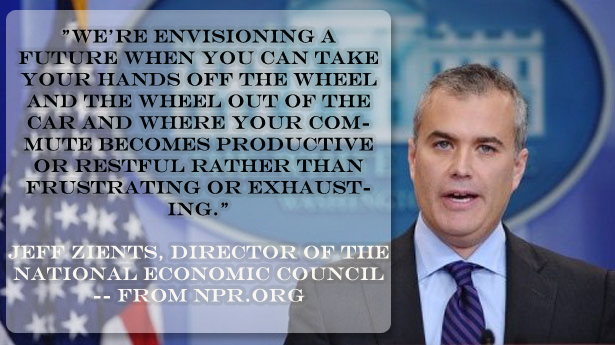
jeff-zients-quote-in-jpg

Despite the skepticism and the fear among Americans, the prospect of avoiding 94 percent of human-related errors that cause car accidents while sparing the lives of more than 30,000 Americans is absolutely worthy of our attention, investment and dedication. In the process, we are expected to build a new economy, thanks to an estimated surplus of $160 billion per year or about 3.5 percent of the country’s gross domestic product, according to the White House (NPR, 2016).

Now, $160 billion per year worth of gas and time spent in traffic is a huge savings by all accounts, even for people like me who are not economists. I am not sure how much I will be able to save, but paying much less that I am paying now will only be a good thing, if not a new beginning for all of us around the world.


References:

Google Self-Driving Car Project (2014, May 27). A Ride in the Google Self Driving Car [Video]. Retrieved from https://www.youtube.com/watch?v=TsaES–OTzM

National Highway Traffic Safety Administration (2015, July 1, 2016). NHTSA data shows traffic deaths up 7.7 percent in 2015. Retrieved from http://www.nhtsa.gov/About+NHTSA/Press+Releases/nhtsa-2015-traffic-deaths-up-07012016

NPR (2016, February 24). Google Makes The Case For A Hands-Off Approach To Self-Driving Cars. Retrieved from http://www.npr.org/sections/alltechconsidered/2016/02/24/467983440/google-makes-the-case-for-a-hands-off-approach-to-self-driving-cars

NPR (2016, September 19). Government Says Self-Driving Vehicles Will Save Money, Time, Lives. Retrieved from http://www.npr.org/sections/thetwo-way/2016/09/19/494648888/feds-to-set-rules-on-self-driving-vehicles

NPR (2016, February 23). Should Self-Driving Cars Have Drivers Ready To Take Over? Retrieved from http://www.npr.org/sections/alltechconsidered/2016/02/23/467836500/should-self-driving-cars-have-drivers-ready-to-take-over

NPR (2016, September 20). Transportation Officials To Issue Rules For Self-Driving Vehicles. Retrieved from http://www.npr.org/2016/09/20/494684730/transportation-officials-to-issue-rules-for-self-driving-vehicles

NPR (2016, September 14). What It’s Like To Ride In A (Nearly) Self-Driving Uber. Retrieved from http://www.npr.org/sections/alltechconsidered/2016/09/14/493823483/self-driving-cars-take-to-the-streets-of-pittsburgh-courtesy-of-uber

Wired (2016, September 14). Inside Uber’s Self-Driving Car [Video]. Retrieved from



Posted in Uncategorized | Tagged , , , , , , , | 4 Comments

Sound Familiar? Using sounds and music effects in integrated marketing communication.


4507-el_poder_de_la_musica

Sure, marketers use every tool that they can to entice their consumers to buy their products.  But many times we are so focused on the visual that we forget just how much our ears dictate what we buy from TV, Radio, and Digital Media.  Below I have a few popular brands that have iconic sounds associated with their sales campaigns. See how many you can “hear in your head” even though I give you only the most basic text example with no indication on tone or melody.  How many can you hear in your mind?

AAMCO – Double A, (honk, honk) M C O
Taco Bell – Gong
Intel (what’s inside?) bum, Bum, bum, Bum
McDonalds – da, da, da, da, da… I’m loving it
T-Mobile – da da da DA da
Farmers Insurance – We are Farmers, da, da, da,da, da, da, da.
State Farm Insurance – Like a good neighbor, State Farm is there
Yahoo – Yahoo-o-o
Maybelline – Maybe she’s born with it, (Maybe it’s Maybelline)
NBC – N… B… C…
THX – An orchestra cacophony of sound to a resolution of sound
LG – Da da, Da da, Da da, ping

How about we try it the other way? See if you can name the brand by only listening to their sound.


Sounds can even draw attention from an audience on its way to get a snack during the biggest game of the year, even if the intent is to sound like something is wrong, like this Chevy Silverado Ad during the 2015 Super Bowl.

https://www.youtube.com/watch?v=Cq3sY_zyU8Y

Musical Branding can influence how fast or slow some people shop (Iordanescu, 2010).

http://m0.joe.ie/wp-content/uploads/2015/07/16081534/menshopping.gif

Some research has been done on how sound and music can map the brain to certain inherent human characteristics such as masculine/feminine, good/evil, however, more recent research even suggests that sounds can map other senses such as taste (Knoeferle, 2015). in other words, the next time you hear the McDonald’s “I’m loving it” music, it may affect how you actually taste their food! It’s one thing to have an actor say the words “can you hear me now?” for Verizon, but T-mobile’s pristine four-note melodic catchphrase may be doing more to your brain than any scripted words.

This next paragraph is for our GenX’ers and older (like me)… But what happens to the iconic sounds our past, or songs that are not being used anymore but have been burned into our memory like “The best part of waking up, is Folders in your cup” or “GE, we bring good things to life”?  Sound conservationists rest easy, someone has thought of that. A man by the name of Brendan Chilcutt has created the Museum of Endangered Sounds found here:

http://savethesounds.info/

Happy Hearing!


Knoeferle, K. M., Woods, A., Käppler, F., & Spence, C. (2015). That sounds sweet: Using Cross‐Modal correspondences to communicate gustatory attributes. Psychology & Marketing, 32(1), 107-120. doi:10.1002/mar.20766

“Music in Advertising; Commercial Sounds in Media Communication and Other Settings.” 2010. Reference and Research Book News 25 (2).

Image used: http://www.aweita.pe/sites/default/files/4507-el_poder_de_la_musica.jpg

Iordanescu, L., Grabowecky, M., Franconeri, S., Theeuwes, J., & Suzuki, S. (2010). Characteristic sounds make you look at target objects more quickly. Attention, Perception, & Psychophysics, 72(7), 1736-1741.

http:///audio-branding-academy.org/aba/congress/2012-2/program-2012/sounds-speed-visual-search/

Sounds retrieved from http://www.moviesoundclips.net/

Posted in Uncategorized | 4 Comments

Killer Clowns from Eight US States (and Counting)

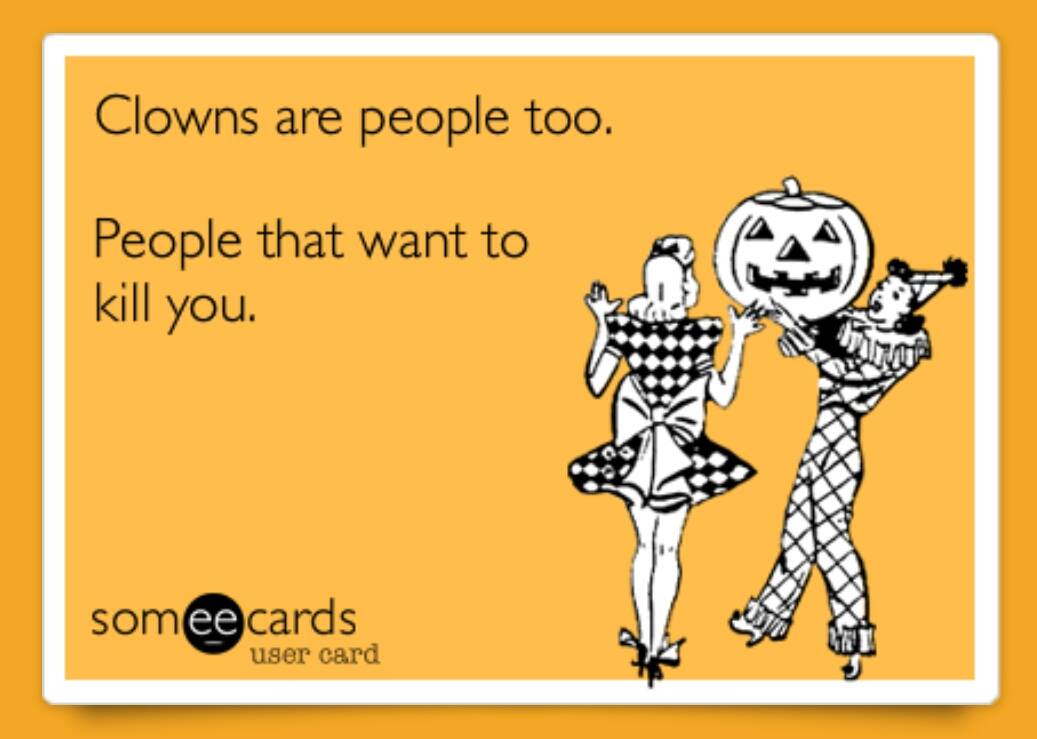
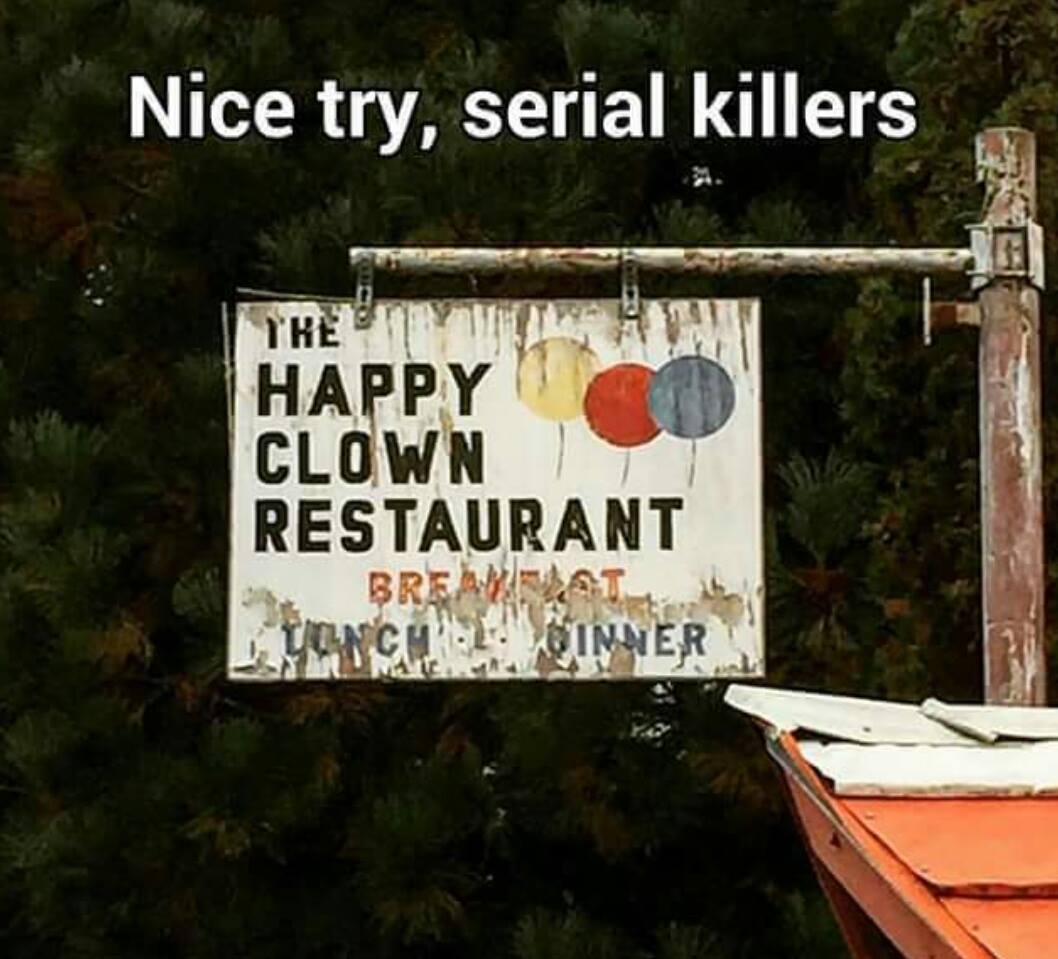
When you imagine a clown, do you think of a happy memory from childhood, or are you convinced it plans to kill you in your sleep? I’m firmly in the second camp, and as much as I love Halloween, the clown costumes and scenes absolutely terrify me. My strong aversion to clowns brings great joy to friends and family, as they tease me and pull a variety of clown-related pranks year-round. The thing is, my excessive fear of clowns is a real, documented phobia (coulrophobia) in the psychology world, and I’m far from being the only one who feels petrified when I see a circus scene at Halloween. It turns out that 2% of the adult population is afraid of clowns, and Charles Dickens’s writing about famous pantomime, Grimaldi, shed a light on the darker side of clowns way back in 1838 (McRobbie, 2013).

14453987_10208142975985265_1560566320_o

I was never sure about the origin of my clown panic, but experienced my “aha moment” a few years ago when a friend sent me this Smithsonian article about the history and psychology of clowns (one word…Poltergeist). The article lists multiple examples of scary clowns in popular culture, to include a long list of movies starring these creepy, murderous beings. If you’re with me in the 2%, you share my horror regarding the recent reports of clowns in South Carolina trying to lure kids into the woods with candy. Even if you’re not afraid of clowns, you have to admit that the reports are extremely disturbing. To make matters worse, as of two days ago, the sinister clown sightings have been reported in eight states (Kennedy, 2016).

So, here’s the question…WHY are there creepy clowns terrifying people across the country? One operating theory is that this is all a viral marketing campaign for Rob Zombie’s new horror movie 31, or even the upcoming remake of Stephen King’s, It (“South Carolina clown sightings,” 2016). While that theory seems reckless and insane, pressure is growing on marketers to create viral advertising that gets people’s attention (Elliott & Vega, 2013). And you know what? Anyone who saw these stories in the news now knows about the movie releases.

14488992_10208142976225271_1702972237_o

The studios affiliated with both movies deny any association with the clown sightings, and police believe some of the clowns are copycats or even hoaxes (Reinstein, 2016; Kennedy, 2016). Perhaps the movie studios are telling the truth, or maybe they are distancing themselves from a growing public relations and legal nightmare. Regardless, both studios and their movies are in the news. How does this end, though? Was this a clever, yet unethical, boundary-pushing marketing campaign that’s gone too far? Or do the 2% of us finally have the validation we never wanted? Let’s hear your thoughts.

References

Elliott, S. & Vega, T. (2013, May 10). Trying to be hip and edgy, ads become offensive. The   New York Times. Retrieved from http://www.nytimes.com/2013/05/11/business/media/trying-to- behip-and-edgy-ads-become-offensive.html

Kennedy, M. (2016, September 24). Sinister ‘clowns’ are scaring people in multiple states.   NPR. Retrieved from http://www.npr.org/sections/thetwo-way/2016/09/24/495298587/sinister-clowns-are-scaring-people-in-multiple-states

McRobbie, L.R. (2013, July 31). The history and psychology of clowns being scary.                 Smithsonian.com. Retrieved from http://www.smithsonianmag.com/arts-culture/the-history-and-psychology-of-clowns-being-scary-20394516/?no-ist

Reinstein, J. (2016, September 8). Those scary clown sightings aren’t a movie marketing     stunt. BuzzFeedNews. Retrieved from https://www.buzzfeed.com/juliareinstein/those-       scary-clown-sightings-arent-a-movie-marketing-stunt?       utm_term=.skg5VkEdnG#.pu66nZ7XQl

South Carolina clown sightings could be part of film marketing stunt. (2016, September 4). theguardian. Retrieved from https://www.theguardian.com/us-           news/2016/sep/04/south-carolina-clown-sightings-could-be-part-of-film-marketing-stunt

Posted in Uncategorized | 4 Comments

Skittles Ain’t Havin’ It!

Leave Skittles alone! What did they ever do to you?!

skittles-bag

The Twitter-sphere was in an uproar last Monday night when Donald Trump Jr. (the son of Republic nominee, Donald Trump) made a distasteful comment on his Twitter account when comparing Syrian refugees to the candy, Skittles (Hauser, 2016). comparision-of-skittles-copy

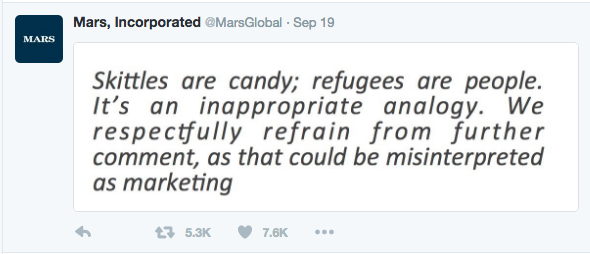
Skittles responded to the comment in the most direct and elegant manner, saying just enough to acknowledge Trump Jr’s comment, and being tactful by not getting caught-up in a sparing match of words, as to not fuel the drama.

screen-shot-2016-09-25-at-3-10-07-pm

Skittles’ parent company, Mars, Inc., packed a punch in the short Twitter statement: (1) The company disagreed with the statement without raging full-on war with the Republican nominee’s son, (2) they acted humanely by acknowledging that the refugees are people (and not candy) (3) and created great marketing for Skittles by not exploiting the situation, which in the end served as the best marketing technique (Disis, 2016; Wheaton, 2016).

Per AdWeek (Wheaton, 2016), Skittles was the most trending topic on Monday after Trump Jr.’s comment. Mar’s, Incorporated’s comment received 7.6K “Likes,” and had 5.3K “Retweets.” This is a company whose brand did an excellent job of taking the high-road and then being warded for it, as it raised Skittles’ brand equity (Wheaton, 2016; Young, 2014). I believe their action has won them high-favor with existing Skittles enthusiasts and potential customers. At the end of the day, when people use their buying power, they, we (I include myself in this context) ,want to invest in a brand of substance (Young, 2014).

Skittles via Mars, Incorporated, taught us marketing students the following 3 marketing lessons: (1) use the power of social media for good (Young, 2014); (2), to complement the previous point, the power of ‘word of mouse’ is a real thing (Young, 2014). People commenting and sharing opinions all over the web leaves a lasting ether imprint, so be on the right side of history, as ‘sitting-it-out’ can generate more good than milking the situation for all it’s worth (as evidenced by the number of ‘Likes’ and ‘Retweets’ Mars, Incorporated received); (3) brand association helps create brand loyalty (Young, 2014), and the words that come to mind after knowing how well Skittles-Mars, Incorporated, handled this situation include:  cool, humane, and people-driven.

Next time I’m in line at my local Gelson’s, I’m gonna grab a bag of Skittles, they deserve my business.

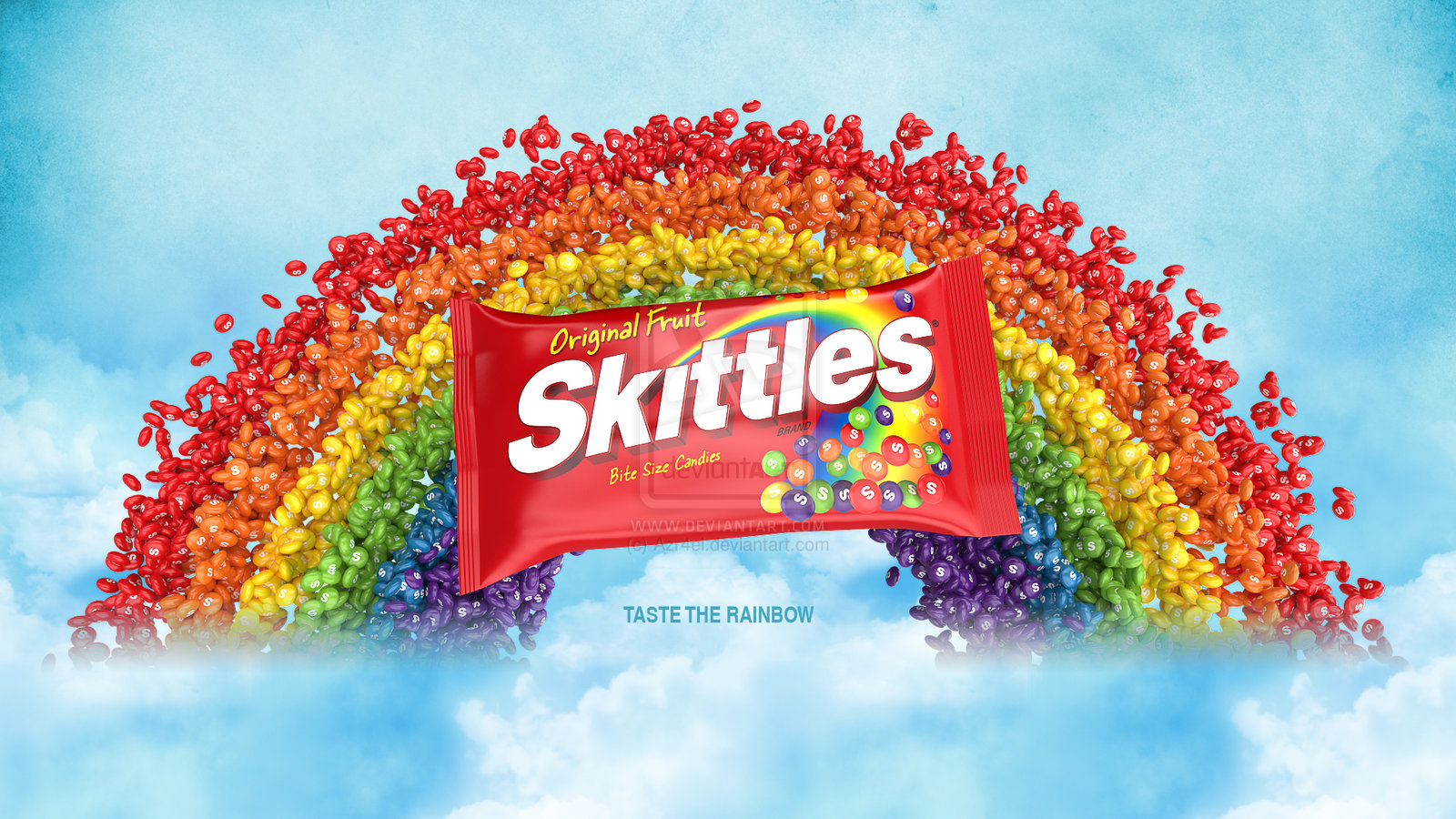
“Taste The Rainbow”

skittles-rainbow

References

Disis, J. (2016, September, 20). What corporate American can learn from Skittles’ response to Donald Trump Jr. CNN Money [online]. Retrieved from, http://money.cnn.com/2016/09/20/news/companies/skittles-syrian-refugee-trump-jr-response/

Hauser, C. (2016, September 20). Donald Trump Jr. compares Syrian refugees to Skittles that ‘would kill you’. The New York Times [online]. Retrieved from, http://www.nytimes.com/2016/09/21/us/politics/donald-trump-jr-faces-backlash-after-comparing-syrian-refugees-to-skittles-that-can-kill.html?_r=0

Wheaton, K. (2016, September). Ad review:  Skittles make the play of the week. AdAge [online]. Retrieved from, http://adage.com/article/ad-review/ad-review-skittles-makes-play-week/306001/?utm_source=daily_email&utm_medium=newsletter&utm_campaign=adage&ttl=1475278574?utm_visit=1982927

Young, A. (2014). Brand media strategy: Integrated communications planning in the digital era. New York: Palgrave Macmillan.


Posted in Uncategorized | 6 Comments

Snapchat CEO Now Onboard with Once “Creepy” Social Media Advertising

Reaching target demographics is key for advertisers to promote their brands effectively and social media advertising has become the best resource for that. According to Ganguly (2016) “social media advertising” allows businesses and advertisers to pinpoint potential customers “by using users’ own shared information to identify interest.”

With the increased popularity of Snapchat by the younger market, their user base can’t be ignored (Newberry, 2016). Those in the 18-24 year old demographic migrated over to Snapchat from Facebook “specifically because their parents do not” use it (Newberry, 2016). Though they have attempted to make Snapchat their own, the demographics and user base is constantly changing. On a given day Snapchat reaches 41% of 18-34 year olds in the U.S., whereas an average TV network only reached 6% of that same age group (snapchat.com). With that said, marketing and advertising agencies are taking advantage of this captive audience available to them (snapchat.com).

Initially, Snapchat’s CEO, Evan Spiegel was “against ‘creepy’ targeted advertising” because “brands try to act like your pal” and track you (O’Reilly, 2015). But now he jumped onboard, gaining revenue from several advertising option that are now offered by Snapchat according to their website. When it comes to making money, one can’t be faulted for changing their mind. The advertising options Snapchat offers are as follows:

Snap Ads – which are mobile video ads that can be up 10 seconds can have an interactive element such as a Sponsored Geofilter or Sponsored Lens added.


Sponsored Geofilters – This interactive element allows Snapchatters to see and use the brand’s Geofilter to snap a phone when in a location of the brand’s choice. These look like they could be fun if you were at one of your favorite places.


Sponsored Lenses – This is very clever interactive element which offers a “new take on brand activation” and allows Snapchatters to play with the interactive ad before sharing with their friends. Now, other than the fact that your had is a giant taco, using these lenses appear to be quite entertaining and engaging.

As described by columnist and fellow Snapchatter, Laurie Keith (2016), the six reasons below are why advertisers are looking at Snapchat to advertise:

1: Snapchat isn’t just for teens – the 25-34 year old range is the fastest growing demographic of Snapchat’s users.

2: Snapchat is an active audience – with delivery being quick (no more than 15 seconds) and the content only available for 24 hours makes users more are attracted to view it before it’s gone.

3: Cross promotion –  when creating content such as that in sponsored geofilters and lenses, the content can be saved on the users devices and shared on other platforms.

4: Authentic storytelling – with Snapchat stories only being available for 24 hours, a brand’s message is raw and uncut making them stand out as more authentic and allowing them to connect more efficiently with their audience.

5: Uncluttered by marketers – branded content will be distributed and consumed without interruption to allow audience to take in the message.

6: 1-to-1 chat function – Snapchat allows brands to connect directly to the consumers to provide updates and information.

Though I’m not a Snapchat user (plus I’m outside of the growing demographic), I do recognize the value advertisers find in Snapchat and why they are attracted to using it to reach specific demographics based on the reasons above. By using the information provided by users advertisers can promote products and services directly to those they deem as having an interest in them. 

How do you feel about social media/networking sites using profile information to direct advertise to you and other? 


References:

Ganguly, S. (2015, March 17). Why social media advertising is set to explode in the next 3 years. Retrieved from http://marketingland.com/social-media-advertising-set-explode-next-3-years-121691

Keith, L. (2016, January 25). Snapchat for Social Good. Retrieved from http://www.adlibbing.org/2016/01/25/snapchat-for-social-good/?hvid=4sHdHi

Newberry, C. (2016, August 24). Top snapchat demographics that matter to social media marketers. Retrieved from https://blog.hootsuite.com/snapchat-demographics/

O’Reilly, L. (2015, December 03). Snapchat is finally learning to love the ‘creepy’ advertising it once said it hated. Retrieved from http://www.businessinsider.com/snapchat-advertising-measurement-targeting-2015-12

Snapchat. https://www.snapchat.com/ads

Posted in Uncategorized | 4 Comments

Bye Bye Time Warner

So, Time Warner who was purchased by Charter Communications in May of this year officially is now Spectrum. I was a Time Warner customer and have to say the customer service left a lot to be desired.  I recall being on hold for what felt like hours just to get a simple billing questioned answered.  And if my service ever went out I could rest assured they would send a service technician out sometime before the next solar eclipse.  My point is Time Warner’s reputation was fairly poor – at least in the Los Angeles market.  Here’s a look at Time Warner’s last commercial prior to the Charter sale:

https://www.youtube.com/watch?v=g8Vjih5Azqw

Spectrum recently released a new commercial to officially announce and promote the name change.  The commercial quickly introduced the name change and that Time Warner is now Spectrum and quickly turned into what a customer should come to expect. For one, I was happy to see the focus on customer service, increased internet speed, and a commitment to reliability.  In addition, I was overjoyed to see Time Warner vanish.

According to the Los Angeles Times, Spectrum has a lot of work to do to win back customers while acquiring new ones.  Customers like me will be excited to see the changes, but if Spectrum doesn’t deliver on its promises they could see market erosion as people look for other service options.  I, for one, would have left Time Warner years ago, but the area I live in has limited options.

Time will tell if Spectrum can fulfill their service delivery promises it should realize a nice boost in sales which will translate to higher stock prices.  The question I now find asking myself is this the time to invest? I might take a flyer on Spectrum and invest in the company.  I’m typically not one to put my money on promises of things to come, but any improvement over Time Warner should yield some healthy returns.

References:

http://www.nydailynews.com/news/national/time-warner-cable-sale-leads-change-article-1.2642360

http://www.daytondailynews.com/news/news/time-warner-cable-subscribers-now-belong-to-charte/nrPdy/

http://archive.jsonline.com/business/charter-says-changes-coming-for-time-warner-cable-customers-b99746159z1-383533321.html

http://www.latimes.com/entertainment/envelope/cotown/la-et-ct-charter-ceo-20160920-snap-story.html

Posted in Uncategorized | 1 Comment

Cutting the Cord is Back and the Future is Bright – My Buyer Journey

rabbitears
[http://www.technologytell.com/hometech/files/2013/08/rabbitears.jpg]

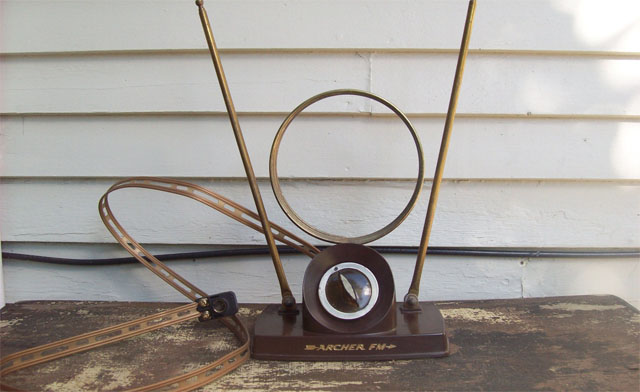
I first cut the cord on cable TV several years ago. More than a way to save money, it was a practical step, being a busy consultant flying over 100k miles a year. There was no point of subscribing when I was never home. It was 2009, and HDTV was available over-the-air (OTA) using conventional rabbit ear antennas (FCC, 2016). I was able to see all of the major broadcast networks (e.g, ABC, CBS, FOX, NBC) for free and in high definition. The problem was, when I did stop all the traveling and returned home, there was not much choice for premium TV content, except to sign up for TV packages from your local cable or satellite provider. If you wanted to watch content from HBO, Showtime, Cinemax, and Starz, it was an add-on to the TV package that you were already paying a premium for. Basically, you went free-but-limited, or you had to go all-in and pay for a subscription package (unless one chose to resort to illegal procurement).

Fast forward to 2016, and there is a growing variety of ways to get TV content. Some of the most popular formats are on the Apple TV and Amazon Fire TV platforms that support services such as Netflix and Hulu. There are add-ons to subscribe to streaming services  and premium channels a la carte, and alternatives like DIRECTV and AT&T U-verse TV. However, the most compelling products have recently come from Sling TV and Sony’s PlayStation Vue (Brantner, 2016; Elliott, 2016; Pressman, 2016).

slingtv
[from sling.com]
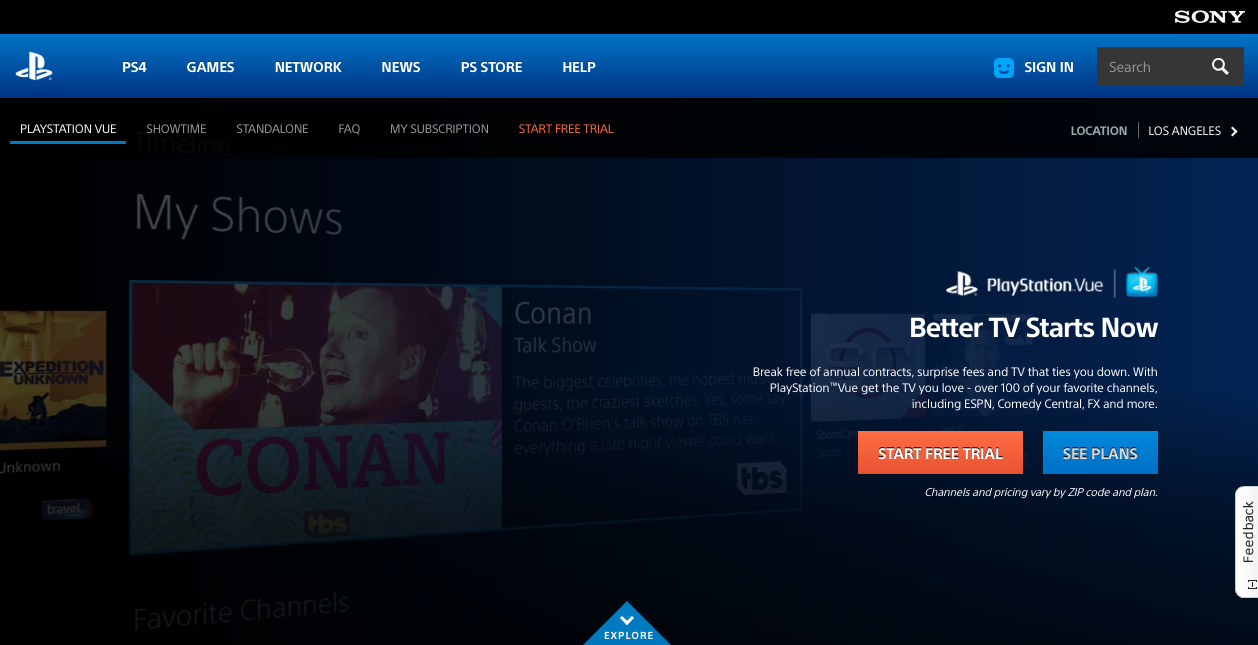
psvue[from www.playstation.com/en-us/network/vue/]

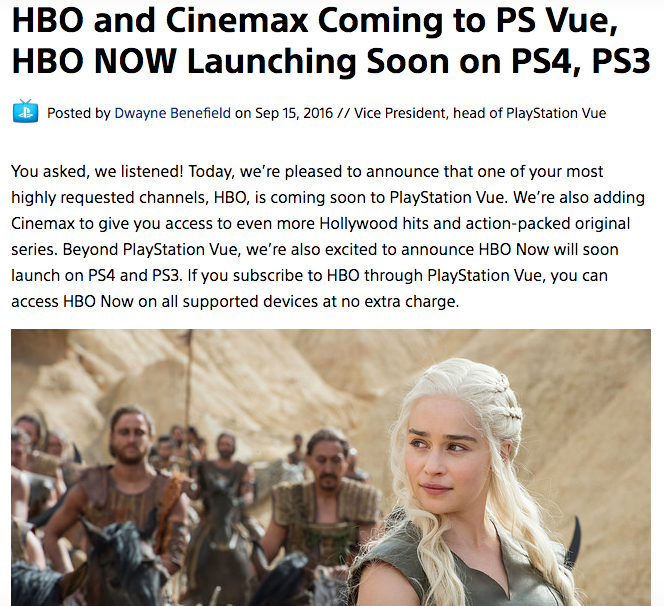
Where OTA broadcast TV, steaming entertainment, and pass-though apps (e.g., HBO GO, WatchESPN) fall short, the TV packages from Sling TV and PlayStation Vue pick up to offer live Internet TV, where you can choose an entertainment package within a tiered price point business model. Furthermore, both services offer cloud-based DVR and add-ons to access traditionally premium channels, the most notable being HBO (and Cinemax) coming to PlayStation Vue (Benefield, 2016) by October 2016.


view-hbo
(Benefield, 2016)

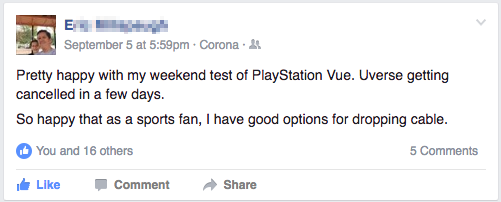
Today, with family life, work, and school, my wife and I only watch a few select shows. Our TiVo/DVR backlog is huge and were never going to catch up anyhow. All we really want, are HBO (Game of Thrones), AMC (The Walking Dead), and ESPN (sports). (I’ve actually become disillusioned with ESPN, but that is for another blog post.) Having reattached the cord, I was looking at cutting it again. I was first made aware of PlayStation Vue through Facebook word-of-mouth from an old high school friend.

fbfriend


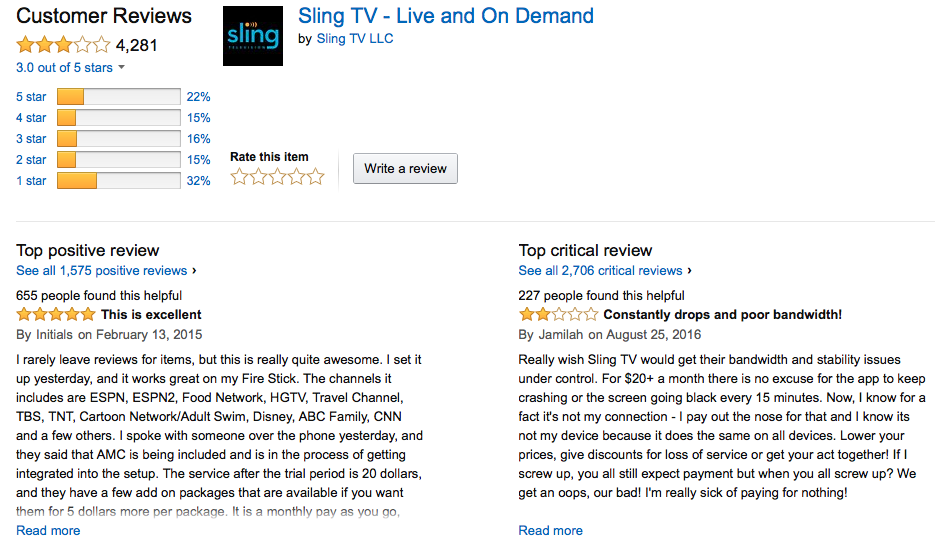
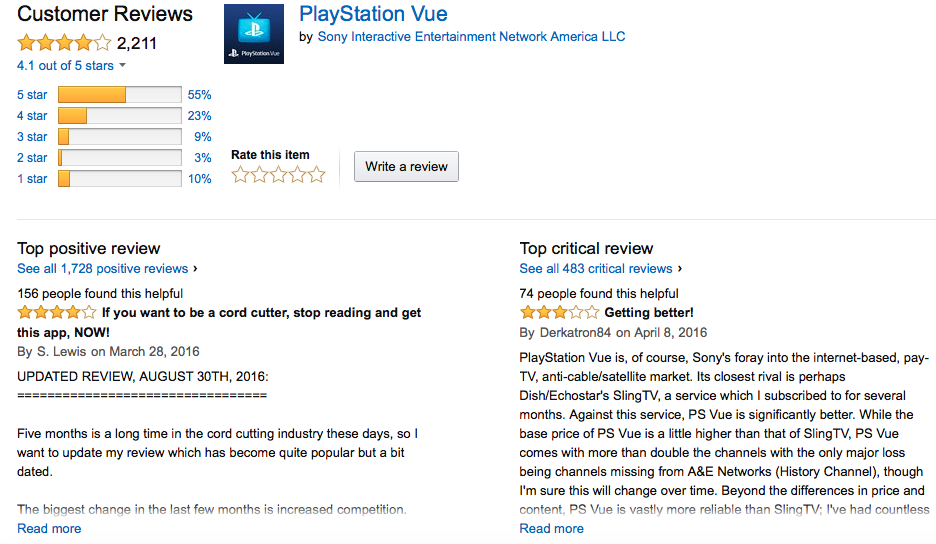
It was this word of mouth in my Facebook feed that got me interested. I began to investigate. I did what most consumers do today — Google and pour over reviews to the point of obsession. Here is a small sample from Amazon.com over the two products.


sling-reviews
[from https://www.amazon.com/Sling-Television-Live-On-Demand/product-reviews/B00ODC5N80]
vue-reviews
[from https://www.amazon.com/Sony-Network-Entertainment-PlayStation-Vue/product-reviews/B015TN9OQI?pageNumber=2]


It was clear that in this early stage, the reviews were mixed. The competing products were still working out the kinks. However, the early adopter in me decided it was worth trying out, and I went with the recommendation from my friend, which supports the research that Young (2014) presented on the most influential touch points on purchase. I took advantage of the 7-day trial period (both offered it). As I was explaining to my wife how I was cutting the cord, I saw skepticism on her face as she wondered how this would really work. She had never heard of PlayStation Vue or Sling TV, while I had been obsessing over it for the last couple of weeks!

It was a bit of a surprise to me that my wife had no knowledge of these products, but it turned out that she had been using the skip commercial feature of TiVo and had not seen one piece of marketing online or elsewhere for either PlayStation Vue or Sling TV. I, on the other hand, had been inundated with marketing communication, through social media ads and search content ads. As a sports fan at the start of football season, I saw many commercials online, especially during NFL broadcasts. The NFL is a big part of Internet TV provider strategies (Brantner, 2016; Elliott, 2016; Pressman, 2016).

Not all has been a TV utopia however. The rollouts of these products have been limited to a few select markets, and the bugs and kinks are real. As much as PlayStation Vue has seen early success, there has been frustration with the user experience from customers, judging from online reviews, Reddit, and the PS Vue support website. My own personal frustration with PlayStation Vue is that the user interface and experience ironically works best on Amazon Fire TV. I, as a PlayStation4 (game console) owner, thought that Sony would better integrate the Vue experience with their own hardware and platform. However, I believe that these issues with new Internet TV offerings will subside and the services will improve and mature.

Here are the two commercials that I remember most from these current campaigns:

Sling TV:

https://youtu.be/aUw8LBuvieA

PlayStation Vue:

https://youtu.be/RyLCj8DXOgE

For my household, so far so good, with PlayStation Vue. It’s not perfect, but with the choices we have in 2016, there’s nothing to lose and a lot of money to save. With the choices we now have, the future is looking up for Internet TV. Considering the inevitable licensing deals with content providers and networks, and new competition coming from Twitter and AT&T U-verse (Brantner, 2016; Elliott, 2016; Pressman, 2016), conventional cable and satellite providers have reason to rethink their strategies.

Questions:
How familiar are you with these products and services?
How would you market to someone like my wife (e.g., work-at-home-mom, mother of 1.5 and a dog, watches recordings in order to skip commercials?)
How would do you gather insight as a TV content provider?
Would you rather be an established giant, or an up-and-coming competitor in this space?


References
Benefield, Dwayne. (2016, September 15). HBO and Cinemax coming to PS Vue, HBO NOW launching soon on PS4, PS3 [Blog post]. Retrieved from http://blog.us.playstation.com/2016/09/15/hbo-and-cinemax-coming-to-ps-vue-hbo-now-launching-soon-on-ps4-ps3/
Brantner, C. (2016, September 9). 3 new ways to watch NFL football this season. TV Over Mind. Retrieved from http://www.tvovermind.com/tv-news/3-new-ways-watch-nfl-football-season
Elliott, M. (2016, September 8). How to live stream NFL games when you don’t have cable. CNET. Retrieved from: https://www.cnet.com/how-to/the-cord-cutters-guide-to-live-streaming-nfl-games-2016-2017/
FCC. (2016). Digital Television. Retrieved from: https://www.fcc.gov/general/digital-television
Pressman, A. (2016, September, 21). Why cord-cutters might like AT&T’s upcoming internet TV service. Fortune. Retrieved from: http://fortune.com/2016/09/21/atts-internet-tv-cord-cutters/
Young, A. (2014). Brand media strategy: Integrated communications planning in the digital era. New York: Palgrave Macmillan.
Posted in Uncategorized | Tagged , , , , , , , , | 2 Comments

Diversity in Marketing

cd-diversity-logo-transparent

Commercials have come along way in the last decade. Prior to 2010 the likelihood of finding a company that would take a chance to feature anything else but a “traditional family” was hard find. Hearken back the olden days when “Father Knows Best” and “Happy Days” were television’s biggest hits the marketing back then was predominantly White, Anglo Saxon, Protestant driven (WASPs). These days it’s a different set of cards as it is estimated the United States will become a “majority-minority nation” by 2043 according the U.S. Census Bureau (2016). By the year 2060 the U.S. will be “more racially and ethnically diverse” with 128.8 million Hispanics, and 34.4 million in the Asian population – doubling in size from the last census taken in 2012 (U.S. Census Bureau, 2016).

Reporting’s from Penn State University find that over the last thirty years many Fortune 500 companies have increased efforts in marketing towards a more diverse audience (Austin, nd) yet when it comes to on-air commercials the change has come as recent as the last six years.

According to Marketing-Schools.org (2016) the definition of diversity marketing “involves acknowledging that marketing and advertising must offer alternative ways of communicating to these diverse groups.”Companies like Allstate, Disney, General Mills, Saturn, Target and Nike to name a few that have re-branded their focus and re-branded their commercials to be more inclusive featuring a broad range families and actors regardless of race, gender, religion, age and sexual identity.

https://www.youtube.com/watch?v=2d917437jd4

In the last few years as television has embraced onscreen transgender actors, digital ads have followed suit, being equally inclusive, especially companies like Nike. Part of Nike’s Unlimited Courage campaign coinciding with the 2016 Summer Olympics, featured Chris Mosier, the first transgender athlete to make the United States men’s national team. The ad depicts Chris running/training and answering  a series of questions like, “…how would you know the team would accept you?” Chris responds to all of the questions with “I didn’t”.

https://www.youtube.com/watch?v=_gq8PO9XK2Y

In 2013 General Mills product Cheerios was met with both commendation and condemnation when they released a series of commercials for Super Bowl featuring a mixed race family. According to Goyette (2013) the YouTube comments had to be disabled as hundreds of people spoke out opposing seeing a white mother, a black father and their mixed race daughter.

However General Mills did not back down as they’re commercials still continue to be inclusive regardless of race, gender, religion, age and sexual identity. “Again,” another Cheerios commercial released eight months ago features a compilation of videos, one of which is two mothers playing with their daughter has received over 2 million views.

https://www.youtube.com/watch?v=Z2ZxKWNbncE#action=share

General Mills also continues to run numerous marketing campaigns that appeal to older consumers of their cereal products. The commercial below features a wife who is driving her elderly father home to live with her and her husband and child.

https://www.youtube.com/watch?v=OqU2_yJEgok

In the last few years Disney has embraced the online commercial that is almost a mini-movie advertising their different destinations throughout the world. Last year Disney released a digital commercial advertising their Aulani resort located in Oahu, Hi, however the family that was being focused on was two fathers and their three kids. The comments on the YouTube video are all positive, showcasing a “win” when it comes to Disney’s marketing tactic.

Disney and General Mills aren’t the only companies that acknowledge the buying power of both the LGBT and black community. Love reports that the black community are making great strides in professional careers geared toward science, technology, engineering and math (STEM) which is only accelerating their income. Subaru and Absolut vodka are two companies that don’t want to lose the $800 billion the LGBT community has in their pocket to spend annually (Fuller, 2013). As the United States continues to evolve into a one united country, fully accepting differences these commercials won’t seem to be that big of a deal, but for right now it’s pretty amazing to see such diversity spotlighted on televisions and computer screens thanks to the bravery and marketing thinking caps of these companies and marketing agencies.

References:

Allstate Insurance (2014, June 12). Safe In My Hands | Allstate LGBT Campaign. Retrieved from www.youtube.com/watch?v=2d917437jd4

Austin, B. (nd). Importance of diversity in marketing. Chron. Retrieved from http://smallbusiness.chron.com/importance-diversity-marketing-24765.html

Cheerios [General Mills]. (2015, September 29). Cheerios commercial – grandpa. [YouTube]. Retrieved from www.youtube.com/watch?v=OqU2_yJEgok

Disney Parks. (2016, January 19). Hawaii vacations with littte ones / Aulani, a Disney Resort & Spa. [YouTube]. Retrieved from www.youtube.com/watch?v=40e3KgKeVkc

Fuller, B. (2013, June 23). Here’s How Some Brands Have Subtly Won Over The LGBT Community. Retrieved from www.businessinsider.com/lgbt-community-untapped-market-consumer-brands-2013-6

General Mills. (2016, January 19). Again [YouTube]. Retrieved from www.youtube.com/watch?v=Z2ZxKWNbncE#action=share

Goyette, B. (2013, May 31) Cheerios commercial featuring mixed race family gets racist backlash (video). The Huffington Post. Retrieved from www.huffingtonpost.com/2013/05/31/cheerios-commercial-racist-backlash_n_3363507.html

Love, D. (2016, February 4). 2016 Nielsen Report: Black buying power has reached tipping point, but how will black america leverage it to create wealth? Atlanta Black Star. Retrieved from http://atlantablackstar.com/2016/02/04/2016-nielsen-report-black-buying-power-reached-tipping-point-will-black-america-leverage-create-wealth/

Nike. (2016, August 8). Nike: Unlimited Courage [YouTube]. Retrieved from www.youtube.com/watch?v=_gq8PO9XK2Y


Posted in Uncategorized | Tagged , , , , , , , , , , , , | 1 Comment

Brand Loyalty. A Marketing Paradox?

Brand loyalty. The holy grail of branding, marketing, and advertising. It is believed to be the byproduct of building deep connections and meaningful relationships between customers and their beloved brands.

Once you earn your customers’ loyalty, then you can count on it to defend or even increase your brand’s market share. Let’s face it, we have all heard this many times before. Loyalty is the metric that is believed to predict growth. It even determines many CMOs bonuses.

all_your_brand_needs_is_love
Photo Credit: Wikimedia

It makes sense. Loyalists will always buy your brand. And they will only buy your products. If you play your cards right, they may even tell their friends about you. They will become your brand evangelist.

Sounds logical. In fact, it is part of many accepted brand models. So it must be true. Or is it?

Professor Byron Sharp, Director of Ehrenberg-Bass Institute for Marketing Science at University of South Australia and the author of How Brands Grow uses data and scientific method to challenge some of these long standing myths and marketing beliefs.

Can too much focus on brand loyalty be in fact blindsiding us to what really matters?

Please don’t misunderstand. Loyalty is great. It is an important metric. The problem is, in the world of brands, customers have a hard time staying loyal. At least, not in the traditional sense of it.

In reality, customers are loyal to a collection of brands which includes not only your brand but also your competitors. They are what Sharp calls “polygamous.”

So perhaps as marketers, we should not be putting too much emphasis on loyalty. Maybe, as Sharp recommends, the focus should be on building a greater share of mind and visibility. This is because the key to brand growth, according to Sharp, is in expanding market penetration. In other words, building presence.

Watch the following TEDx video from November of 2010 and share your thoughts and reactions in response to Sharp’s theory of brand growth.

  • How much do you agree or disagree with his point of view?
  • What part of his theory really resonates with you?
  • What do you find surprising about his claims?
  • Do you think his views are dismissive of the market dynamics brought about in the age of social marketing?

References:
Sharp, B. (2014). How Brands Grow. What Marketers Don’t Know. Victoria, Australia. Oxford University Press.

TEDxAdelaide (Producer). (2010). Byron Sharp: The Science of Marketing [YouTube]. Available from https://youtu.be/d3Or0FkiIa0

Posted in Uncategorized | Tagged , , | 8 Comments

More Than Words: How Fonts Influence the Mood of a Message

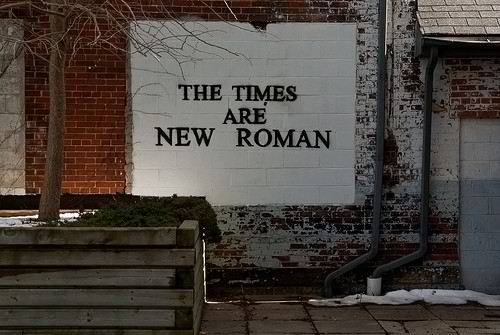
The Times Are New Roman

Fonts are like childhood friends, familiar, steady, endearing and predictable. When we see a font, we know what it’s going to say to us. Times New Roman is the serious and responsible friend, Arial is simply the good friend with no opinion, and Helvetica is the wise iconic minimalist. But what happens when fonts defy our expectations, like when Times New Roman attempts to be humorous? Our brains do a double take. The image above serves as an example; the font personality is used to communicate irony through the humorous meaning of the words. Maybe you smirked like I did? Fonts serve as the tone of voice that words intend to communicate, echoing the old adage that it’s not what you say but how you say it that’s important. Font choice matters quite a bit.

The Power of Font Visuals: Seeing = FeelingLoud Silence Font Mood
In The Art of The Pitch, Coughter (2014) stresses the importance of choosing imagery that will elicit a desired emotional effect. He cites an important study by UCLA Professor, Albert Mehrabian relating to the most impactful ways humans absorb communications, “55 percent of what we take away from communication comes from the visual, 38 percent from the tone of voice, and 7 percent from the actual words” (Coughter, 2014, p. 52). Fonts reflect both the visual and tone of voice categories through the artistic representation of the letter form and the connotations of meaning we attach to what the font is saying. Our brains receive fonts as visual stimuli and make snap emotional judgments about what we’ve seen before our rational mind can grasp what the words are actually saying (Ferrari Carlevari, 2015). This is a really important point to highlight: fonts cast a mood upon the words that are written, which powerfully influences what a reader gleans from the message.

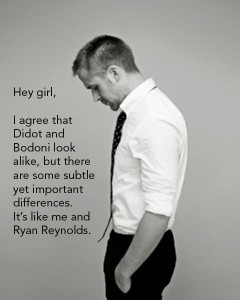
Setting the Mood: Choosing the Right FontR Gosling Hey Girl Font Choice

Advertising intends to impact and persuade aligned with specific brand goals; fonts can be used as a tool to build an emotional frame around a message or call to action. Recent research sheds new light on what people really think of everyday fonts such as Times New Roman (serif) and Helvetica (sans serif), which could help brands engineer better advertising outcomes. Font connotations were as follows:

Times New Roman = credibility and competency (Ferrari Carlevari, 2015)
Helvetica = kind, sympathetic, compassionate but not charismatic (Ferrari Carlevari, 2015)

Ferrari Carlevari (2015) also qualified these findings by noting that Google once had a serif logo but changed to a sans serif font. Because Google is the most frequently trafficked search engine in the world, there was speculation that sans serif fonts could benefit from the brand association with credibility, resulting in new font connotations (Ferrari Carlevari, 2015).

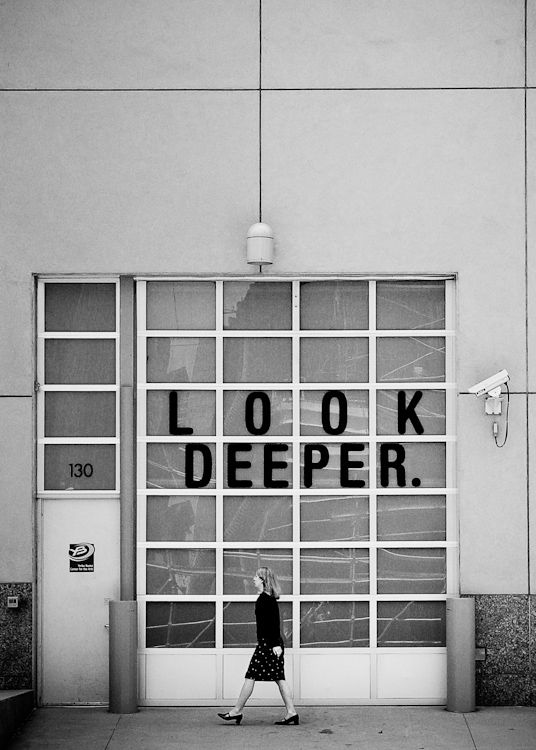
Making a Message Stick: Complicated Fonts Are BetterLook Deeper Font Choice
One last little tidbit of information that I found fascinating was in a font choice study relating to memory. “In a semester-long study at an Ohio high school, students who were exposed to slides and handouts using less legible typefaces (such as Comic Sans) performed better on tests than students exposed to materials presented in more-readable type” (Oppenheimer, 2015, para. 1). Oppenheimer (2015) recommends the use of Monotype Corsiva over Arial in continuous sections of text for the greatest amount of reader recall. Advertisers can gain more mileage from this finding in hopes that consumers won’t forget messaging, but this hinges upon content being visually appealing and compelling to begin with.

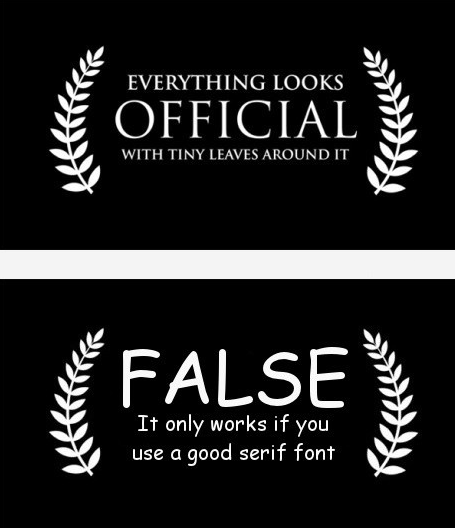
For further information on font mood association, here are a few industry resources:Serif Fonts Humorous
The Psychology of Typography: http://www.makeuseof.com/tag/psychology-typography/
Font Mood Directory: http://www.fontscape.com/explore?70V


Thanks for reading!

Lydia

References
Coughter, P. (2012). The art of the pitch: Persuasion and presentation skills that win business (1st ed.). New York: Palgrave Macmillan.

Ferrari Carlevari, M. (2015). Typeface connotation (Order No. 10046727). Available from ProQuest Dissertations & Theses Full Text; ProQuest Dissertations & Theses Global. (1776197179). Retrieved from http://libproxy.usc.edu/login?url=http://search.proquest.com.libproxy1.usc.edu/docview/1776197179?accountid=14749

Oppenheimer, D. (2012). Hard-to-Read fonts promote better recall. Harvard Business Review. https://hbr.org/2012/03/hard-to-read-fonts-promote-better-recall

Posted in Uncategorized | Tagged , , , , , , | 10 Comments