Counterculture Spaces in the Digital Era: Untapped Markets or “No Brand’s Land”?

 There is nothing new about brands using counterculture trends as a way to revamp their images, create fresh takes on their products, and reach out to new groups of consumers.  In the 1990’s many brands created hip, edgy, and subversive ad campaigns for their products that were consistent with the counterculture movements of the time (Klein, 2010).  “Cool hunters” were employed to seek out youth trends to integrate into their brands or to aggressively market their brands in known trend-setting communities, and did this with resounding success (Klein, 2010).  Brands were able to reach youth markets with ironic kitsch, genderless fragrances, fashionable nihilism, and revolutionary aesthetics (Klein, 2010).  Today’s youth culture bears notable resemblances, many of which are self-aware and nostalgic, to the 1990’s: irony, individualism, identity politics, and postmodernity are once again all the rage (Zeisler, 2016).  This raises the question, should brands repeat history by adopting the practices that made them successful in youth markets during the 90’s, or do the most cutting-edge spaces in today’s youth culture come with new challenges?

The Nature of Contemporary Counterculture Spaces

Before discussing what today’s counterculture spaces are like and how brands ought to approach them, it would be useful to give a rough definition as to what they are: when this article talks about contemporary counterculture spaces it refers to numerous loosely connected communities that consciously deviate from and oppose the dominant cultural norms.  No single movement makes it up, but rather it might be thought of as a river with many currents.  Today’s counterculture spaces are shaped by Millennials and, increasingly, Generation Z.  While they have a lot in common with their predecessors in the 90’s, the cultural landscape also has some differences.  The most apparent difference is technological: while the counterculture spaces of the 90’s dwelled in zines, underground concerts, and culture jamming groups (Zeisler, 2016), today’s counterculture movements also have a large presence in online communities.  The digital presence of these spaces creates both opportunities and challenges for brands.

Some online spaces with heavy currents of counterculture include Tumblr’s social justice community, Anonymous, Reddit’s various “subreddit” forums, -Chan sites, and “Weird Facebook.”  Every one of these spaces has its own culture, worldview, and basis for inclusion and exclusion (all of which differ quite radically from eachother’s).  These communities are challenges for brands because they create their own content quite prolifically, which reduces the demand for branded content.   Additionally, some tend to be averse to large, impersonal institutions such as brands.  It might be tempting for brands to forget about them entirely, but that would be in error; the members of these communities, and thus fit the psychological profile of the most brand loyal consumer if they can be reached (Kay, 2005; Peretti, 1996).
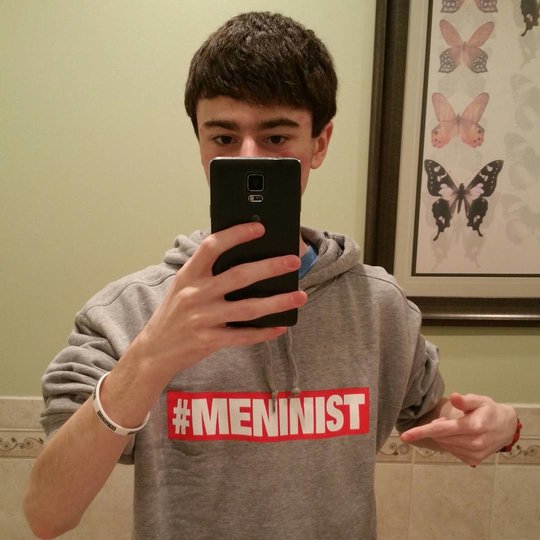

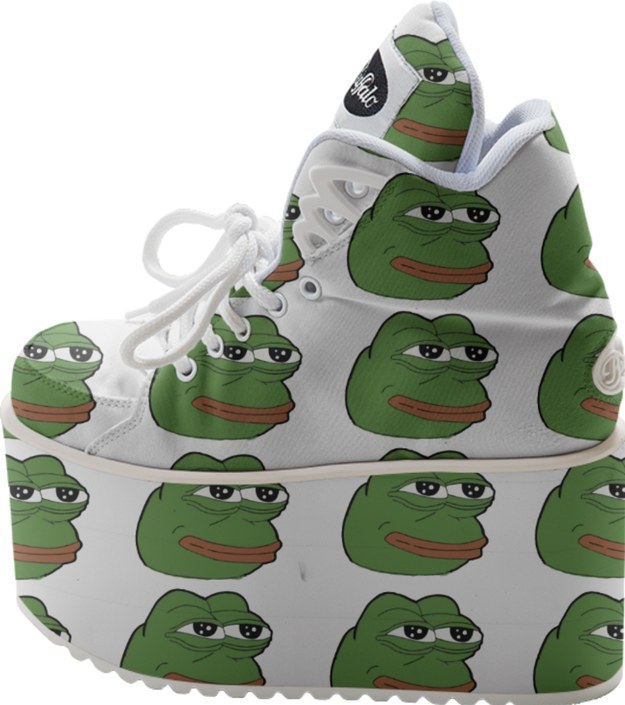
2ns58ja dsc07821 enhanced-12532-1448311572-1Motifs from online counterculture communities integrated into fashion statements.

Anti-Establishment Attitudes and Brand Aversion

The primary challenge brands face if they are interested in penetrating counterculture markets is the anti-establishment attitude that both permeates and characterizes these markets.  Like their predecessors in the 90’s, members of today’s counterculture circles are consciously hesitant to warm up to brands (Klein, 2010). The stratified disparities in wealth in the Anglophone world are known to be conducive to a climate of anti-establishment attitudes (Kapur, Macleod & Singh, 2005) which likely exacerbates the distrust towards brands across society, and especially in its more defiant subcultures, so there is likely not very much that can be done to change these attitudes.  The brand aversion among contemporary counterculture movements is evidenced by the outrage generated whenever a relatively popular brand openly notices some aspect of these groups’ cultures.  For instance, popular news outlet The Daily Dot has found itself at odds with a number of online counterculture communities for allegedly “stealing” or “killing” the memes that they circulate amongst themselves; this conflict has led to responses such as change.org petitions to make The Daily Dot stop writing articles about memes, among other surprisingly intense reactions.  Buzzfeed has also found itself subjected to similar kinds of resistance (“Buzzfeed,” 2015).
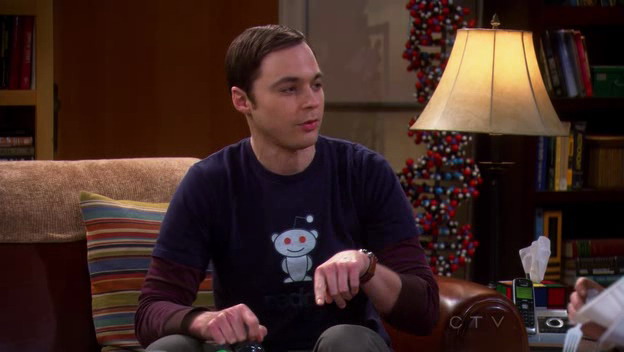
Popular TV Series The Big Bang Theory uses imagery from Reddit.

Popular TV Series The Big Bang Theory uses imagery from Reddit, amusing regular viewers but most likely annoying active Reddit users.

Courting Counterculture: Lessons from the Past

One well known way in which to capitalize on counterculture trends is to bring them into the mainstream for a wide audience, but that is insufficient to reach the consumers who are part of counterculture circles before they become mainstream.   As previously stated, mainstreaming counterculture seems to alienate such consumers from the trends that they started.  In the 90’s brands were cognizant of that and, in order to target the more dedicated members of counterculture circles, would sponsor their events while maintaining enough distance not to interfere too much with the product, itself (Klein, 2010). Likewise, other brands have made products that look independent (or silently bought out independent brands) in order to draw in brand-phobic consumers (Kell, 2015; Oppmann, 2010).  Today it seems that brands succeed when they sponsor counterculture content without “stealing” it, as well.  Many of the most successful meme pages on Facebook are, unbeknownst to most of their audiences, sponsored.  Ultimately the best ways in which brands should market to counterculture markets is to downplay the fact that they are brands, and to stick to very specific kinds of targeting.  Otherwise they run the risk of generating animosity among these groups.

starbucks-15th-ave-coffee-tea-seattle-7

15th Ave. Coffee and Tea, an artsy unbranded coffee shop owned by Starbucks marketed towards consumers who are averse to Starbucks’s chain stores.


References: 

Buzzfeed. (2015). Retrieved from http://knowyourmeme.com/memes/sites/buzzfeed

Kapur, A., Macleod, N., Singh, N. (2005). Plutonomy: buying luxury, explaining global imbalances. Citigroup. Retrieved from: http://delong.typepad.com/plutonomy-1.pdf

Kay, M. J. (2005) Strong brands and corporate brands. European Journal of Marketing, 40, 742-760.

Kell, J. (2015) Coke invests in fast growing organic juice maker Suja. Fortune. Retrieved from http://fortune.com/2015/08/19/coca-cola-investment-suju-juice/

Klein, N. (2010). No Logo: 10th Anniversary Edition. New York, NY: Picador.

Oppmann, P. (2010) I spy a ‘stealth Starbucks’. CNN. Retrieved from http://www.cnn.com/2010/LIVING/wayoflife/01/06/i.spy.stealth.starbucks/

Peretti, J. (1996) Capitalism and schizophrenia: contemporary visual culture and the acceleration of identity formation/dissolution. Negations. Retrieved from: http://www.datawranglers.com/negations/issues/96w/96w_peretti.html

Zeisler, A. (2016) We Were Feminists Once: From Riot Grrrl to CoverGirl, the Buying and Selling of a Political Movement. New York, NY: Public Affairs.
Posted in Uncategorized | 3 Comments

Don’t Write a Check with Lyrics That Your Donkey Can’t Cash

Pop a lot of pain pills

Bout to put rims on my skateboard wheels

Beat that p@$$y up like Emmett Till

Yeah

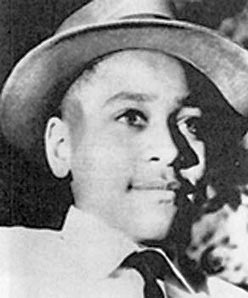
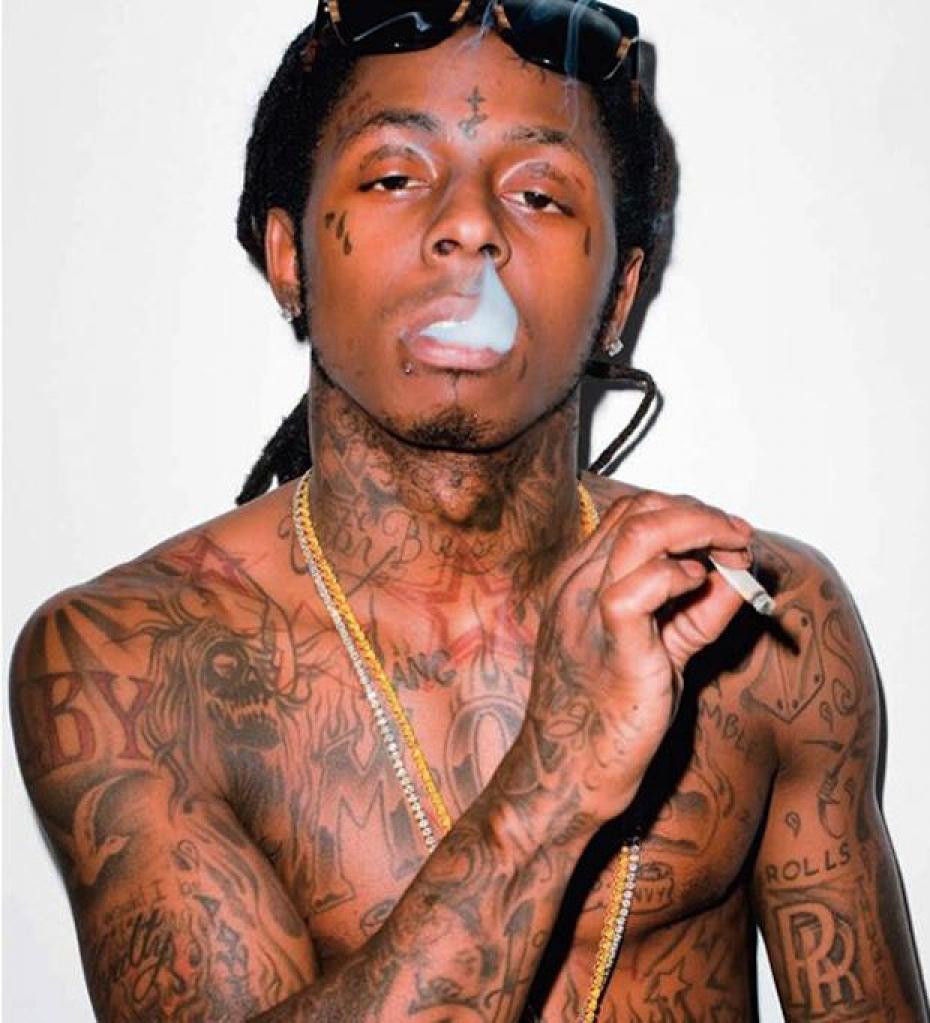
This time rap mogul, Lil Wayne has crossed the line with his controversial lyric from Future’s remix, Karate Chop. Lil Wayne’s reference to civil rights martyr, Emmett Till, a 14-year boy from Chicago who was brutally tortured and lynched for allegedly whistling at a white woman while visiting Mississippi in 1955 was both irresponsible and just plain stupid (Cubarrubia, 2013).

Till was severely beaten, eyes gouged out and shot in the head before his attackers tied a cotton gin fan to his body and barbed wired and tossed it into a river (AP, 2013). Two white men were acquitted of the murder by an all-white jury. After Till’s body was returned to his mother, she insisted on an open casket for his funeral. The images of his battered body help pushed civil rights into the cultural conversation (AP, 2013).

emmett_till

Both Lil Wayne and his record label, Epic were prepared to release the song unedited until the project was leaked and all hell broke loose. The Till family’s attorneys contacted Lil Wayne to express their disdain for his distasteful lyrics as well as the disrespect shown to their loved one (Cubarrubia, 2013).

To make matters worse Lil Wayne lost a multi-million dollar deal with PepsiCo over the lyric controversy (AP, 2013). The soft drink giant cut all ties with the pop idol.  According to a statement from PepsiCo, “Wayne’s offensive reference  to a revered civil rights icon does not reflect the values of our brand” (Cubrrubia, 2013). Lil Wayne was to be the next spokesperson for the company’s Mountain Dew brand.

Lil Wayne offered a written apology to the Till family saying that he would not reference Till or the family in his music especially in an inappropriate manner (AP, 2013).  Lil Wayne’s record label, Epic also issued an apology to the Till family stating that the record that was leaked was not the final release (Cubarrubia, 2013).


1390962401213

Exactly what makes rappers so careless when it comes to their lyrics? TI says that people simply do not understand the rap game or a rapper’s lifestyle and goes on to say that Lil Wayne had a brief lapse in judgement (White, 2013). TI goes on to say that his friend, Lil Wayne made a bad decision. Or could it be that Lil Wayne or anyone in his camp was too lazy to research the reference.

I am not a big fan of rap music but it boggles the mind that rappers and Hip Hop artists don’t take the time to research some of the material they include in their lyrics especially at a time when there is so much racial unrest in this country. Groups like the Tennessee Tea Party are requesting that the references to the Founding Fathers being slave owners be removed from textbooks (Schilmoeller, 2012).

In 2015, students in Texas began using social studies books that all but erased Black History from the pages of the reference guides (Brown, 2015). With that in mind,  there is even a bigger issue looming overhead what do we do to hold rappers, athletes and other influencers accountable for the work that they produce. Especially when when they have  so much influence over the next generation.

How do we begin to educate rappers and other entertainers about the importance of  producing lyrics there are expressions of their lifestyles without going to the extreme and offending the masses? What happens when they are approached by companies who are willing to pay top dollar to represent their brands and ignore the moral compass that helps that holds them accountability to the rest of the Black community?

The next time Lil Wayne decides he wants to add a reference from Black History in one of his lyrics, he will do his homework first.


References

Associated Press (2013, May). Lil Wayne Loses Pepsi Deal Over Emmett Till Lyric Controversy. Billboard. Retrieved from http://www.billboard.com/articles/news/1560660/lil-wayne-loses-pepsi-deal-over-emmett-till-lyric-controversy

Associated Press. (2013, May). PepsiCo agrees to Meet With Till Family, Sharpton. Black America Web. Retrieved from http://blackamericaweb.com/2013/05/07/pepsico-agrees-to-meet-with-till-family-sharpton/

Brown, E. (2015, July). Texas officials: schools should teach that slavery was ‘side issue’ to civil war. The Washington Post. https://www.washingtonpost.com/local/education/150-years-later-schools-are-still-a-battlefield-for-interpreting-civil-war/2015/07/05/e8fbd57e-2001-11e5-bf41-c23f5d3face1_story.html

Cubarrubia, R.J. (2013, May). Lil Wayne Apologies for ‘Inappropriate’ Emmett Till Lyric. Rolling Stone. Retrieved from http://www.rollingstone.com/music/news/lil-wayne-apologizes-for-inappropriate-emmett-till-lyric-20130501

Schilmoeller, J. (2012, February 1). Rewriting history: erasing white guilt from American textbooks. Mint News Press. Retrieved from http://www.mintpressnews.com/rewriting-history-erasing-white-guilt-from-american-textbooks/19527/

Urist, J. (2015, February). Who should decide how students learn about America’s past? The Atlantic. Retrieved from http://www.theatlantic.com/education/archive/2015/02/who-should-decide-how-students-learn-about-americas-past/385928/

White, C. S. (2013, May). Future Praises Lil Wayne’s Emmett Till Lyric For Its Positivity. Black America Web. Retrieved from http://blackamericaweb.com/2013/05/15/future-praises-lil-waynes-emmett-till-lyric-for-its-positivity/

Posted in Uncategorized | 4 Comments

Brand, Reputation, and 548% Price Increases

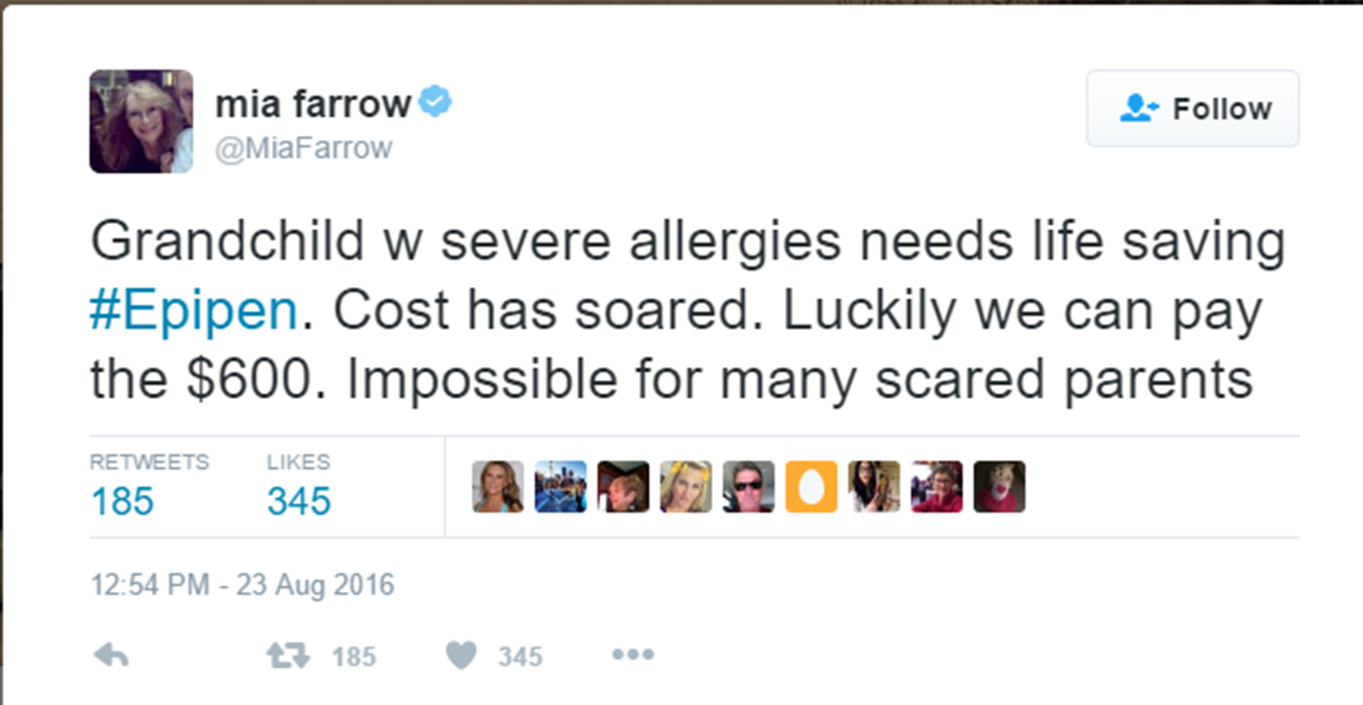
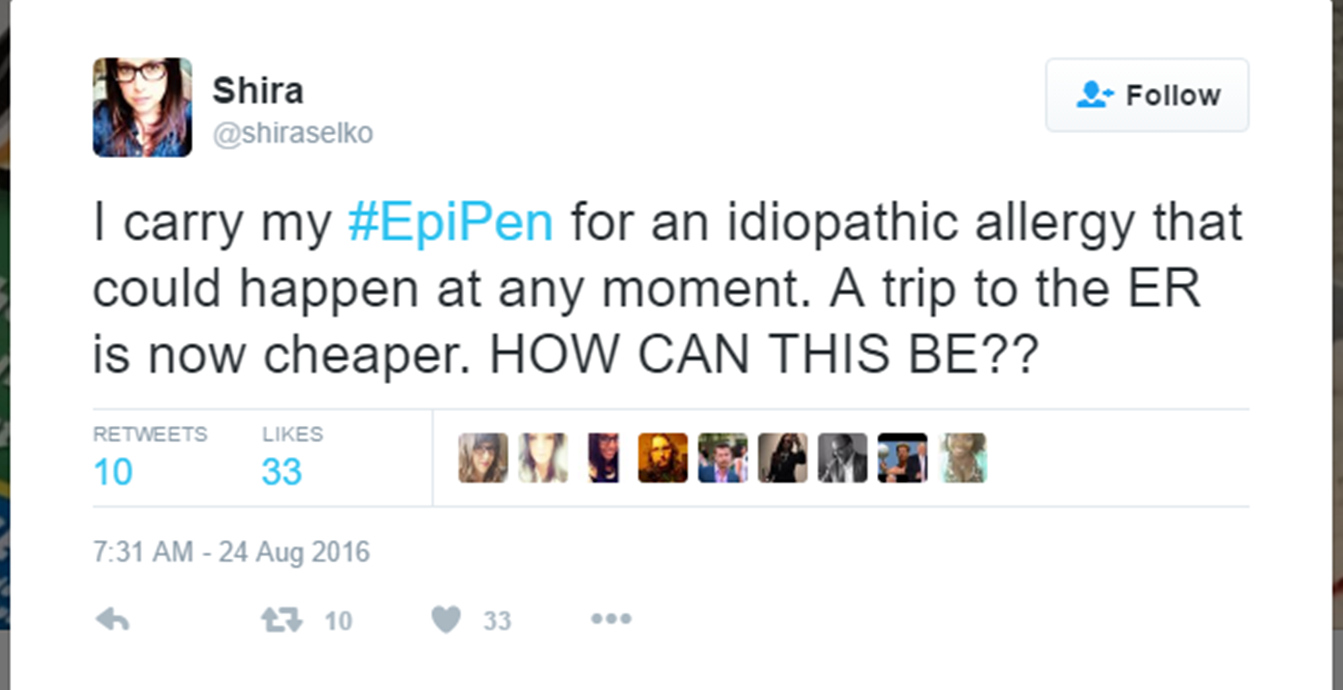
This week, we considered the ethics of advertising and pondered the seesaw of right versus profitable. In considering right versus profitable in marketing, I admit I was distracted from promotion to one of the other four marketing “Ps”—price. Recent news that Mylan had jacked up the price of the EpiPen 548% had me saying ‘What about price?!” If there are guidelines to protect consumers against false advertising, surely there should be legal or ethical guidelines against outrageous price gouging for life-saving drugs.

mia-epishira-epi

Apparently not.

In an interview, “pharma bro” Martin Shkreli, who the BBC dubbed “the most hated man in America” after he raised the price of  life-saving drug Daraprim more than 5,000 percent, expressed disbelief over the backlashed that ensued, saying , “The attempt to public shame is interesting because everything we’ve done is legal.”

In a free market, supply and demand control price. But what if there is no viable competition and neither the industry nor lawmakers will step forward to regulate prices? Then what? When marketing their products, will pharmaceutical companies look at their product roster and decide to charge what they want for products that have no competition?

So what does this have to do with marketing? If I would have considered the question of price gouging before these incidents, I would have immediately thought a company would never do such a thing; to do so would surely create irreparable damage to its brand and reputation.  After all, we’ve been well-schooled in the importance of brand and brand value, and raising the price of life-saving medicine by 548% seems highly unethical and thus a certain path toward brand and reputation destruction.  In the meantime, Mylan made more than $1 billion in revenue from the EpiPen last year, and I’m left wondering if pharmaceutical companies can continue to break all of the rules for brand and reputation building with no consequence.

References

McLean. B. (2016). Everything you know about Martin Shkreli is wrong—or is it? Vaniity Fair. Retrieved from http://www.vanityfair.com/news/2015/12/martin-shkreli-pharmaceuticals-ceo-interview

Rockoff, J.D. (2016, August 24). Mylan faces scrutiny over EpiPen Price increases. The Wall Street Journal. Retrieved from http://www.wsj.com/articles/mylan-faces-scrutiny-over-epipen-price-increases-1472074823

Posted in Uncategorized | 5 Comments

To sit or to stand…. That is the question

I have something to tell you. You may want to sit down, or actually, stand up.  I’m not one to embrace every emerging trend, but the standing desk phenomenon is not one that can easily be ignored.  Luckily I have a very short commute, so that doesn’t add to my daily intake of sitting, but like many of you, I do work in an office, and spend anywhere from 8 to 9 hours a day sitting. Several times a week, I’m racing home to sit at my desk for an hour (or so) long Live Session or meeting with my classmates. After im so buff its ridiculous meetings and sessions are complete, I continue to sit while typing posts, reading articles, or navigating that Moodle maze. That is easily another three to four hours of sitting, and when I’m done I go lay down for about 6 to 7 hours.  If you’re thinking what I’m thinking, this can’t possibly be good for me, right?

I’ve been hearing all over the media that “sitting is the new smoking”, so I thought I would dig a little deeper both for myself and for you, if you’re interested.

Dr. Joan Vernikos, former director of NASA’s Life Sciences Division and author of Sitting Kills, Moving Heals, presents a simple yet powerful scientific explanation for why sitting has such a dramatic impact on your health, and how you can simply and easily counteract the ill effects of sitting.  Studies like hers  have shown that sitting 6 + hours per day increases our risk of death within the next 15 years by 40%!

The Washington Post published an article about a man who rigged up some IKEA end tables on top of his desk, put his computer on top and went back to work. Within a very short time his headaches were gone, his back pain vanished and he noticed that he had more energy.  In a similar story a woman who works just down the hall did the exact same thing, and within two weeks she noticed that her nagging leg cramps were a thing of the past.  The CFO of the American Beverage Association has similar reviews about his experience and he credits his standing work station to his weight loss without having to change his diet or exercise habits.  Are there dangers associated with standing desks?  Some studies have shown that standing for long periods of time can cause varicose veins or other problems but with so many opportunities for sitting in a day, it’s really hard to overdo standing up.

I decided to try it out for myself. I first started by stacking up some books on top of my buffet in the dining room and standing on a folded yoga mat in 25 minute intervals.

You can find more DIY standing desk ideas on Pinterest: https://www.pinterest.com/explore/standing-desks/

I was amazed at how wonderful it felt to stand after hours of sitting.  I recently took the standing a bit further and invested in one of those new Varidesks you’ve probably seen on the infomercials.standing-desk-pro-plus-36-white_main-1

I have to admit their slogan, “work elevated”, is pretty catchy” and true. I can honestly say that I wish I would’ve purchased this during my first semester.  It’s quite amazing how much more productive I feel when I can stand and type, or take a minute and step away from the computer and just circle the room to brainstorm.  Treadmill desks are gaining in popularity as well.  Hmmm… I may have to try that next.

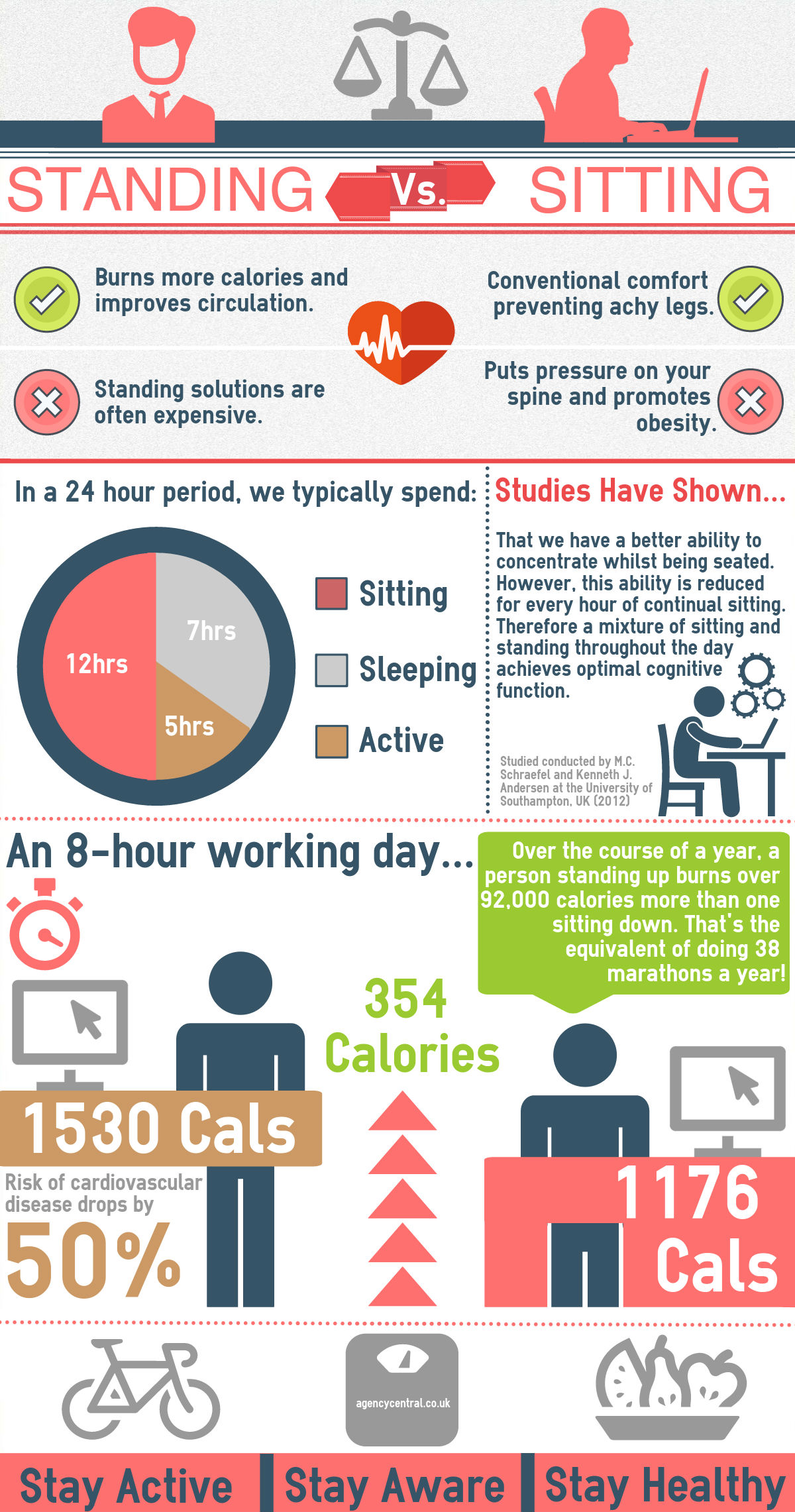
Checkout this impressive infographic which offers some pretty eye-opening statistics on the sedentary lifestyle of im so buff its ridiculous everyday office worker.

Have any of you tried a standing workstation? If so, what was your experience?  If you haven’t tried it, what are your thoughts about its perceived benefits?


143988715024825-standingvsitting-5

REFERENCES:

https://www.washingtonpost.com/lifestyle/wellness/standing-desks-sit-well-with-more-employees/2014/05/20/a3f350f4-dd10-11e3-b745-87d39690c5c0_story.html

http://health.usnews.com/health-news/health-wellness/articles/2015/02/17/4-ways-your-standing-desk-is-doing-more-harm-than-good

http://www.huffingtonpost.com/entry/standing-desk-office-workers-can-stop-being-so-smug-now_us_56ec524ae4b09bf44a9d3c14

Posted in Uncategorized | 6 Comments

Can Good Positioning Save the Apple Watch?

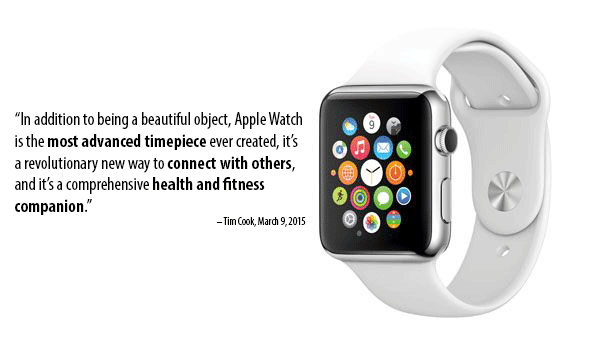
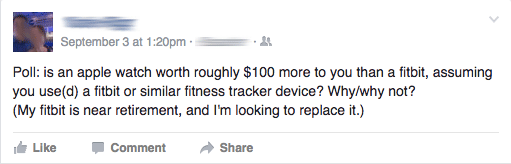
One day in early September, almost a week before Apple’s launch event, I was surprised to see a post cross my newsfeed. “My FitBit is near retirement, and I’m looking to replace it,” my friend wrote. “Is an Apple Watch worth roughly $100 more to you…?” A simple question – but one that holds the key to the future of smartwatches. Before we can unpack the enormous impact of this question, here’s a quick primer on the Apple Watch’s original positioning.

apple-watch-quote

Say you’re in the market for a good-looking, stylish watch. Would you choose Apple – or would you prefer Fossil, Daniel Wellington, Michael Kors, Tag Heuer? Here’s a different comparison. Could you see the Apple Watch replacing your iPhone as the best way to stay in touch with your friends and loved ones – or is that screen just too tiny and too hard to use?

If you’re like me, the answer to both questions above is a resounding “no.” Yet its identity as a watch and its utility for communication were the first two key pillars of Apple’s original positioning for the Watch, leaving Apple to compete against fashion brands for the space on your wrist, and against your iPhone for time with your friends. And in those scenarios, the Watch is bound to fail. Apple Watch may regrettably look like a miniature iPhone on your wrist, but it is nowhere near as full-featured or easy to use as the real thing.

So is the Apple Watch doomed? Perhaps not yet.

apple-watch-fitbit

A clue to the gadget’s salvation lies in the third pillar of the original positioning: health and fitness. The wearables market is expected to grow rapidly, from 39.5 million users in 2015 to a projected 86.7 million users in 2019 (eMarketer, 2015). Right now, that market is dominated by fitness trackers, especially Fitbit (Neiger, 2016). But if Apple can position its smartwatch as a sleeker, more useful alternative, Fitbit users might consider upgrading to Apple Watch when it’s time for a replacement.

Our friends in Cupertino seem to have come around to the same idea. The Apple Watch Series 2, announced September 7, 2016, has been re-positioned with fitness front and center. From its partnership with Nike to its athletic-heavy teaser video, the fitness story is infused in every aspect of the Apple Watch Series 2’s marketing communications. Watch the introduction below and there is no doubt that Apple aims to take on Fitbit and the fitness tracker space. As the price comes down and awareness improves, consumers will evaluate Apple Watch and Fitbit side-by-side when making purchase decisions. And in that competition, the Apple Watch just might win.

https://www.youtube.com/watch?v=p2_O6M1m6xg

References
eMarketer (2015, October). Wearable users and penetration, United States, 2015-2019. eMarketer.

Neiger, C. (2016, May 18). Fitbit’s wearable market share slips even as sales surge. The Motley Fool.

Posted in Uncategorized | 2 Comments

Now Trending: #M.I.L.F.

Did you notice? Apparently being a power mommy is trending on all media platforms. Early adopter Lorde explains her admiration for Kim Kardashian as the twittersphere catches on (Lorde, 2014):

picture1

Brands have also taken notice.  Fashion Brand Kenzo kicked off New York Fashion Week with a short by Carrie Brownstein explaining why being called “mom” by someone on social media is something to aspire to (Boboltz, 2016):

https://youtu.be/VbfSRa5BRhk

Characterizations of motherhood are changing. Today, #mom or “mom” is a first-rate complimentary reference permeating digital media, fashion, music, and pop culture colloquialisms alike. Earlier this summer the pop songstress Fergie provided a visual illustration of this trend with the release of her single titled “M.I.L.F. $” (Stegemoeller, 2016). Fergie reclaimed the acronym as shorthand for Mothers I’d Like to Follow, a theme she carried through to the song’s music video which displayed no shortage of some of the most popular celebrity moms. And these moms fail to mirror those from the traditional 80s sitcom in appearance, notoriety, nor bank account:

I’d be remiss if I didn’t address the controversy associated with Fergie’s posit of reclaiming the word MILF as an act of feminism when the video features women pouring milk over their sexily outfitted bodies (Fisher, 2016). Can we say double entendre anyone? Many critique these images as far from empowering and describe them as reinforcing the over-sexualization of women (Strauss, 2016). Feminism is complex. The issue has layers and is arguably one of the most definitive and undefined movements. There is so much to be said for the historical context that plays into the use of milk, gender dynamics, and how this video reflects or bolsters the recent surge in the popularity of MILF porn (Stegemoeller, 2016). However, Fergie, views her anthem as “liberating” (Hendricks, 2016). Changing the connotation of common female descriptors is a start and in Fergie’s words “just because you’re a mom doesn’t mean that’s all that defines you, and so the underlying message is just be who you are” (Stegemoeller, 2016, n.p.).

Despite where you may fall on the spectrum of perception in the reclamation of the word MILF, the fact that the word “mom” is now a synonym for aspirational cool is universally undeniable. The ways in which brands will continue to monopolize on and employ this trend remains to be seen.

References

Boboltz, S. (2016, September 15). While you were out living your life, ‘mom’ became a compliment on the internet. The Huffington Post. Retrieved from http://www.huffingtonpost.com/entry/mom-compliment-on-the-internet_us_57dae063e4b08cb140944dd2?section=us_celebrity

Fisher, K. (2016, July 1). Fergie’s ”M.I.L.F. $” music video features hot moms Kim Kardashian, Ciara and Chrissy Teigen shakin’ their booties. E Online News.  http://www.eonline.com/news/777354/fergie-s-m-i-l-f-music-video-features-hot-moms-kim-kardashian-ciara-and-chrissy-teigen-shakin-their-booties

Hendricks, J. (2016, August 30). Topless Fergie solidifies MILF status. Page Six. Retrieved from http://pagesix.com/2016/08/30/topless-fergie-solidifies-milf-status/

Lorde. (2014, November 14) [Twitter post]. Retrieved from https://twitter.com/lorde/status/532432442893041664?ref_src=twsrc%5Etfw

Stegemoeller, K. (2016, August 29). Fergie’s back and better than ever. Paper Magazine. Retrieved from http://www.papermag.com/fergie-beautiful-people-1991209868.html

Strauss, E. (2016, July 5). Fergie tries to reimagine the MILF, fails milkily. Slate. Retrieved from http://www.slate.com/blogs/xx_factor/2016/07/05/fergie_tries_to_reimagine_the_milf_and_fails.html


Posted in Uncategorized | Comments Off on Now Trending: #M.I.L.F.

You Have to Advertise to Sell… Or Do You?

Advertisements are everywhere we look.  If you spend any amount of time online, you know that nearly everything you click on has some kind of advertisement associated – somewhere.  South Park dedicated an entire season’s plot on the prevalence of advertising.

It’s Not a News Story?!

We are used to them, we expect them, and, when ads are done well, we even enjoy them!  Some muse that Super Bowl advertisements now overshadow the game, and some viewers watch only for the commercials (BSSP, 2016).  Every product must have an ad.  Right?  Right.  …right?

Let’s think about this for a moment.  Can a product be sold with minimal to no advertising?  What about an expensive purse that may only run print ads within high-fashion magazines?  What wildly popular condiment has no advertising in any form?  Most importantly, how do these companies do it?

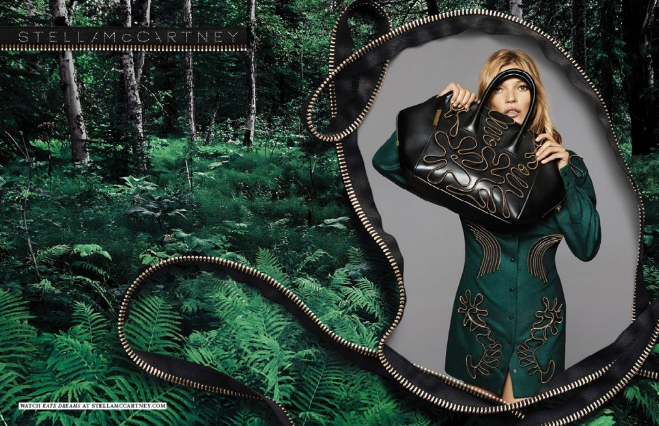
Those high-fashion purses rely on minimalistic advertising as part of their marketing strategy.  They want to appear, simply put, a bit snobby.  The small scale, strategically placed advertisements in publications such as Vogue help reinforce the appearance of exclusivity (Bastien, 2015).  It’s almost like they are saying, “Just knowing about this purse makes you great!”

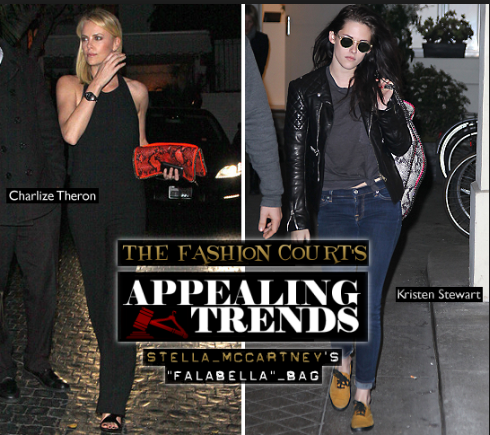
Much of the press that some of these products get does not count as actual advertisement but rather shows pictures of celebrities wearing the gear, in their daily lives.  It’s not just a purse that Stella McCartney is advertising, it’s an idea of exclusivity.  Seeing Charlize Theron holding the bag lends an additional layer to that same message.

stella-mccartney-ad  celebrities-with-falabella

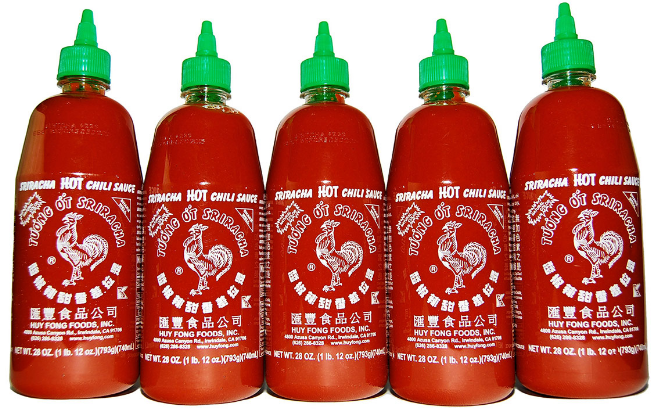
On the other end of the spectrum, we have Sriracha.  The beloved hot sauce, found in restaurants, grocery stores, quick marts, and kitchens all over the world, does not even have its name trademarked.  They have not updated their website since 2004.  And, they do not advertise – at all (Berman, 2013).  What?!  They certainly aren’t aiming for exclusivity like Stella McCartney is with purses.  So what gives?

sriracha

David Tran, the founder and CEO of Sriracha parent company, Huy Fong Foods, readily admits there is no focus on advertising, nor are there any plans to do so.  Tran would rather make sure to deliver a quality product that sells itself, rather than spending any effort toward advertisements (Berman, 2013; Ferdman, 2013).  In the case of Sriracha, this has worked brilliantly!

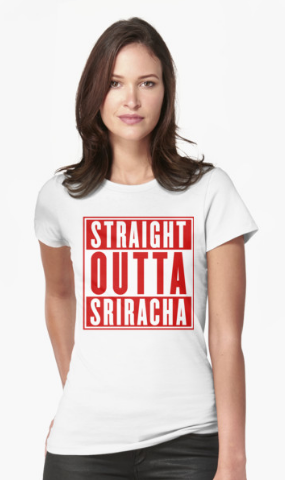
Now a pop-culture darling, t-shirts, stickers, and other paraphernalia with images of the hot sauce are sold by various companies.  Though Huy Fong does not receive any proceeds from sales of these products sold by third parties, they serve as free advertising.  The word-of-mouth element has certainly worked in favor of Sriracha, as it continues to enjoy climbing sales year after year, as it has since inception (Littman, 2015).  On fire!

tshirt

We live in a world full of advertisements, and there is ample evidence that they are an important part of promoting products and increasing sales.  The exclusionary, minimalistic marketing tactics of luxury items will clearly not work for every product.  The complete lack of any advertisement, used by brands such as Sriracha, is a risky one that is certainly not right for every company.  But, if these approaches work for some companies and make it a little easier for the rest of us to “just read the news,” more power to them.

And please, keep talking about Sriracha – we all need more hot sauce in our lives!


References

Bastien, V. (2015, September 20). Marketing to a high-end consumer, using the luxury strategy. Entrepreneur Middle East. Retrieved from https://www.entrepreneur.com/article/250745

Berman, J. (2013, August 26). 10 cult brands so popular they don’t need to advertise. The Huffington Post. Retrieved from http://www.huffingtonpost.com/2013/08/26/companies-dont-use-advertising_n_3768504.html

BSSP. (2016, February 4). Super bowl ads may matter more than the game. Medium. Retrieved from https://medium.com/@bssp/super-bowl-ads-may-matter-more-than-the-game-d6a2361b2a47#.6suwa4ykk

Ferdman, R.A. (2013, October 21).  The highly unusual company behind Sriracha, the world’s coolest hot sauce. Quartz. Retrieved from http://qz.com/132738/the-highly-unusual-company-behind-siracha-the-worlds-coolest-hot-sauce/

Littman, M. (2015, June 25). How Sriracha got so hot. Entrepreneur. Retrieved from https://www.entrepreneur.com/article/246728

Posted in Uncategorized | 7 Comments

Texting and Driving – Scaring Us into Action

Texting and driving has been described as a deadly epidemic, and as more drivers take to the roads, smart phone in hand, many companies have joined the movement to make our roads safer. Public service announcements, typically reserved for government agencies and advocacy organizations, are becoming more and more commonly produced by companies looking to change the public’s eye on this issue and strengthen their corporate responsibility position.

Many of these campaigns rely heavily on scare tactics, videos and commercials so jarring that they demand our attention and inspire change. But do they work? I’m sure many of you have seen an ad that illustrates the scene of a crash so vivid that it seems as if you are actually there. It places us in the middle of the mayhem, tugging at our heart strings. These ads may get our attention—but do they actually compel us to change?  

Let’s take a look at a few of the more popular videos produced by corporate players who have taken this approach with their ads.

AT&T: It Can Wait Campaign, “Close to Home”

https://youtu.be/OVnRcIXEqaU

Quebec Insurance: Don’t Text and Drive

In a 2016 article by Magdalena Cismaru and Kate Nimegeers, the pair researched the effectiveness of texting and driving campaigns and how well the content encouraged new behaviors (Cismaru & Nimegeers, 2016). What they found is that fear-based content may trigger a “boomerang effect” in a person’s intent to respond, which means a person may understand the dangers but are unable to act on it (Cismaru & Nimegeers, 2016). So while jarring content may evoke a strong emotion, it may not compel a person to act any differently.

So this begs the question, what type of content can persuade action?

According to the research, campaigns based on encouragement and supporting small steps to new behaviors may be more effective at helping us commitment to change (Cismaru & Nimegeers, 2016). Messaging that demonstrates others have made the same pledge and are making progress are particularly effective at convincing others to put down their phones (Cismaru & Nimegeers, 2016). The following ad by NewWave Studio is an example of how a softer approach and encouraging language like “take the pledge” and “we did” can work.

NewWave Studio – Take the Pledge

The article by Cismaru and Nimegeers represents just one research example, and more research on this topic may be needed to fully understand which content strategies are most effective at motivating new behaviors. Texting and driving is a serious issue in our country, and now that you’ve had a chance to watch the videos above, I’m curious to know – which content approach would be more likely to convince you to keep the phone down while you drive?

Cismaru, M. & Nimegeers, K. (2016). Keep your eyes up, don’t text and drive: A review of anti-texting while driving campaigns’ recommendations. International Review on Public and Nonprofit Marketing, 2016, 1–23.

Posted in Uncategorized | 4 Comments

Amateur Advertising: Great Marketing or Exploitation

My favorite part of Super Bowl Sunday is the commercials. I know I am not alone. This year, more than 111 million people watched Super Bowl 50. It was the third most watched Super Bowl in TV history. So, why am I talking about a game that was months ago? Two words, Amateur Advertising, specifically Doritos.

For ten years, Doritos has held a contest where an amateur commercial can win air time and cash. Recently, the company kicked it up a notch by adding more money to the pot, $1 million, and employment for one year at Universal Studios. But, is this contest a great marketing tool for Doritos or does it take advantage of amateur filmmakers?

https://www.youtube.com/watch?v=Vj8Cd-OgFsc

The 2014 Doritos Super Bowl ad, Time Machine, cost $200 dollars to produce. It was shot in the backyard of a family member’s home. This ad was placed online with other amateur hopefuls and voted on.

And, while that was a bargain for producing a commercial, others who have entered the contest have paid thousands of dollars in production to submit a commercial that is aired online but does not make the final cut. Not only does Doritos get advertising through the online contest, news agencies also pick up the “Crash the Super Bowl” contest.

So, that’s free advertising on a national news program. Local stations also tend to air the best Super Bowl commercials, so that’s more free air time. While Doritos probably paid $5 million for a 30 second spot, the commercial gets additional air time for free.

My question: Is using amateur commercials for a primetime commercial spot a good marketing tool, or a cheap way to promote a product?

References

Pallotta, F. & Stelter, B. (2016). Super bowl 50 audience is third largest in tv history. CNN Money. Retrieved from http://money.cnn.com/2016/02/08/media/super-bowl-50-ratings/

Schwartz, N. (2016). Stunning infographic charts the skyrocketing cost of a super bowl ad. For The Win. Retrieved fromhttp://ftw.usatoday.com/2016/02/how-much-does-super-bowl-ad-cost

Edwards, J. (2014). Doritos’ ‘time machine’ super bowl ad cost just $200 to make – see it here. Business Insider. Retrieved from http://www.businessinsider.com/doritos-time-machine-super-bowl-ad-2014-2


Posted in Uncategorized | 2 Comments

Ethics Behind Virtual Reality Marketing

The industries of marketing and advertising operate within strict regulations, monitored by the Federal Trade Commission and intentionally public. However, even with constant oversight and truth-in-advertising laws in place, these industries still have significant leeway to violate ethical standards of consumers around the world.

Many marketing tactics are specifically geared at creating ethical gray areas in which to operate. These practices often teeter on the edge of illegal, but stay just inside the limits of truth to avoid prosecution. Tactics including fear marketing, subliminal advertising, emotional appeals and taking advantage of consumers who are less educated, all walk these gray ethical lines.

Most of us have been exposed to these practices for years through various mediums including TV, print and online content. However, the newest and perhaps most dangerous messaging vehicle could take marketing ethics to a whole new level. Virtual Reality Marketing (VRM) is possibly the newest form of content messaging since social media. Companies are flocking to this high-tech forum because it allows them to completely immerse their consumers in content, which equals fewer distractions and more focus on the message. This is huge in our world of attention deficit advertising. A couple of examples are listed below. My personal favorite is the Mercedes-Benz – Loki ad where you can move the video around 306 degrees. The second ad by Lowe’s shows a more practical use of VRM and just how accessible it is with the use of Google Cardboard.

loki
https://www.youtube.com/watch?v=vVNylwQRUQM

lowes
https://www.youtube.com/watch?v=DVsEb9vla-I

Another piece of VRM is being used by non-profit groups and awareness organizations. These parties use VRM to transport viewers into a world where they are able to see those the group aims to help. People can interact with children in extreme poverty so closely, it seems as if they could reach out and touch them. Others experience what it’s like to be a Syrian war refugee or watch people suffer with Ebola or other illnesses just like they were there in person.

syria
https://www.youtube.com/watch?v=mUosdCQsMkM

While ads like Mercedes seems harmless and bringing awareness to the Syrian refugee crisis is crucial, both bring about the question of how far is too far when marketing is concerned? It is after all virtual reality, not reality. While Mercedes makes nice vehicles, chances are that buying one will not magically transport you into a world of snow and ice where you days can be spend running free with your furry friend. And where non-profits are concerned, viewers are limited to the messaging/story that organizations want them to see. We’d all like to hope these groups have good intentions and spend the donations they receive ethically, but we’ve also all heard the many stories of those groups who do not.

We can also make the argument that marketing has carried out these agendas for years, selling buyers on an inflated idea or concept whether that be in print or through a television commercial. But does VRM take that ethical gray area to far? Do people fully immersed in a virtual world have a more difficult time refraining from emotional appeals because the emotions feel too real? If the answer is no, then we can assume the millions of people viewing these virtual ads are simply choosing virtual marketing over reality. What does that say about the type of consumers we’ve become?

Posted in Uncategorized | 4 Comments