Fictional Character Endorsement

If you had been to any big malls recently and were some sort of a fashion conscious person, you must have noticed that “weird” campaign poster outside every Louis Vuitton stores. Right, it is a video game character holding that LV bag. No matter how confusing that seems to you, Nicolas Ghesquière, the creative director of LV was proud of their new face. “Lightning is the perfect avatar for a global, heroic woman and for a world where social networks and communications are now seamlessly woven into our life,” he said.

1452113521-lightning-x-louis-vuitton-1 louis-vuitton--Louis_Vuitton_Series4_Campaign2_5_VISUAL9


https://www.youtube.com/watch?v=ImWljqM8kG8

The heroic, pink-haired figure you saw was Lighting. The female character is one of cult Japanese video game Final Fantasy XIII’s main protagonists and she has millions of devoted gaming fans worldwide.

The fashion industry is known for pushing boundaries, but this might just be its most unlikely muse yet – a computer-generated character. Well, non-video game players like us may never get it. But apparently, Louis Vuitton is using this character to target young generations in its Asia market. What surprised me most was that those Final Fantasy fans did buy the idea and were actively shouting out their love for LV on social media.

This campaign does bring up the topic of fictional character endorsement. Fictional character endorsement has been a popular branding tactic and marketing trend over the last decades. Rather than choosing product placement to leap into the fictional worlds of movies and TV, some brands are extrapolating fictional characters into the real world, where are they are used to promote products to the public. Some benefits of such strategy has been identified:

The most notable benefit of using well-known fictional characters, as I mentioned before, is that brands will have the ability to reach a wider audience including the character’s fan base.

Besides of that, consumers nowadays desire more for some “real” connections with brands, and characters are a solution to offering a “human touch”. It is said that, “the interesting thing about characters is that they can get closer to real life than simply using real life people”. And sometimes people see themselves or their ideal self in certain characters and perceive that as what they are looking for.

Character creation can also be a good option for brands looking to revitalize their image and positioning. But it must be carefully thought out on the alliance fit between the character and the brand. For example, for luxury brand that are about personality and connection, character marketing could play a significant role. While for brand such as technology or some other that are less of a human touch, characters may not help much.

Allow me ask at the very end, what do you think of the LV campaign?

References

Louis Vuitton unveils candy-haired character from cult Japanese video game Final Fantasy as the unlikely new face of its SS16 campaign. Retrieved from http://www.dailymail.co.uk/femail/article-3385036/Louis-Vuitton-unveils-candy-haired-character-cult-Japanese-video-game-Final-Fantasy-unlikely-new-face-SS16-campaign.html

‘I am proud to be chosen’: Final Fantasy character Lightning on being welcomed into the Louis Vuitton ‘family’. Retrieved from http://www.telegraph.co.uk/fashion/people/final-fantasy-character-lightning-on-starring-in-louis-vuitton-c/

James Bond: Secret Agent, Ladies’ Man, and Brand Ambassador: Endorsement and Promotion from Fictional Characters. Retrieved from https://www.qualitylogoproducts.com/blog/james-bond-brand-ambassador-endorsement-fictional-characters/

S&E Insights: Best Practices for Brands – Fictional Character Endorsers. Retrieved from http://www.sesponsorshipgroup.com/main-news/2014/01/se-insights-best-practices-for-brands-fictional-character-endorsers

http://www.chinaluxus.com/20151231/058401.html


Posted in Uncategorized | 2 Comments

Do you know the name of the 9th U.S. President?

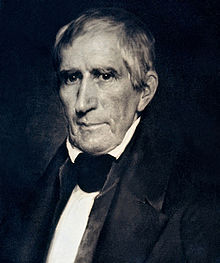
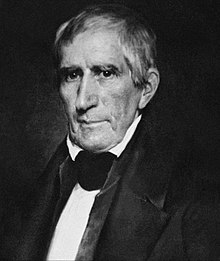
Don’t feel too bad if you don’t know… you’re not alone. Less than 1% of those surveyed didn’t know either.  If you’re dying to know, his name is William Henry Harrison. And if you haven’t heard of him, it’s probably because he was only in office for 32 days before dying of pneumonia in the mid-1800s. Not a very long time to make your mark as president.

220px-William_Henry_Harrison_daguerreotype_edit

University of Utah communications professor, Ken Foster, is currently working on a study to determine the effectiveness of billboard advertising and this is how President William Harrison fits in the picture:

300 random people in Utah were surveyed and asked if they knew who the 9th President of the United States was. As previously mentioned, less than 1% of those surveyed knew. The point of this survey and the study as a whole has and continues to demonstrate how billboards can inform and educate the public.

The study is (it’s still in progress) made up of 4 phases:

Phase 1: COMPLETED! People were surveyed if they knew who the 9th President was and they were also asked a control question: Who is the Lt. Governor of Utah? (Which less than 4% of those surveyed were able to answer: Spencer J. Cox.)

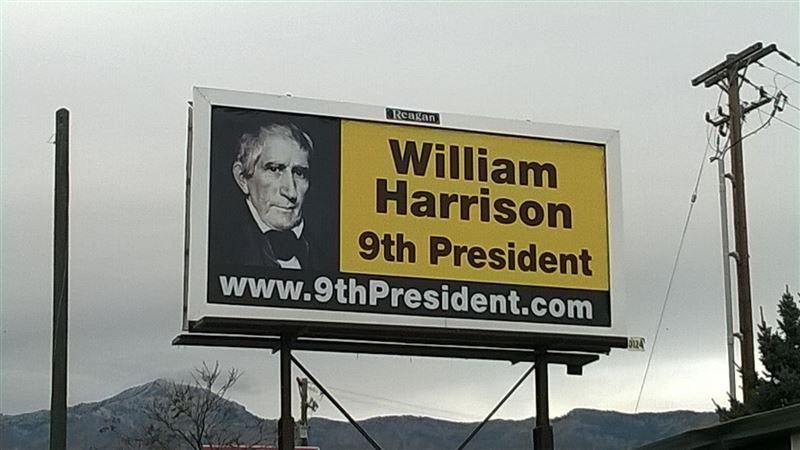
Phase 2: COMPLETED! An advertising company posted billboards (60 in the Salt Lake Valley alone with many others throughout the state) that said, “William Harrison 9th President www.9thPresident.com”.

28 days later, Foster conducted another survey with 300 new people to measure who could name the 9th President and the Lt. Governor. The number of those who knew who the 9th President had increased, while the name of the Lt. Governor did not. The billboard placement throughout the state was designed so that over half of the state’s population would see these billboards at least once a day.

Phase 3: COMPLETED! For another 28 days, the billboards stayed up and a new group of 300 people were surveyed. The number for those who knew the 9th President had increased while the number of those who knew the name of the Lt. Governor did not.

Phase 4: IN PROGRESS! For another 28 days (in progress), the billboards are up and the number of people who know who William Harrison… wait for it, wait for it… continue to rise while the knowledge of the Lt. Governor’s name stays the same.

9th-president-william-harrison-billboard

This study started out with only 1 in 100 people knowing who the 9th President is to now, 1 in 4 know who he is! This market research project proves that “billboards work” and is and will continue to increase billboard advertising. Not only did the billboards educate the public, but they increased the website usage and ultimately, motivated the public to respond to the “call-to-action” (going to www.9thpresident.com to find out more).

Moral of the study — billboards work! To be honest, while traveling down a Utah freeway, I saw the billboard the first time and it looked sketchy. After making my way down the 15 freeway, I saw this billboard again and again (over 6 times!). At this point, I was so intrigued I looked up the website. I was glad I did because this market research project is GENIUS and I knew this is what I wanted to post about because of how intriguing it is! I hope you all find it just as cool as I did!

What do you think about this? Did you know who the 9th President was?When you see a billboard, what are some things that have caught your attention? Has a billboard affected you in any way, whether that be educating you about something, purchasing something?

Thanks for reading and I can’t wait to hear your feedback!

References

http://9thpresident.com

https://www.ksl.com/?sid=38228359&nid=148

https://upload.wikimedia.org/wikipedia/commons/thumb/c/c5/William_Henry_Harrison_daguerreotype_edit.jpg/220px-William_Henry_Harrison_daguerreotype_edit.jpg


Posted in Uncategorized | 18 Comments

Bernie Sanders Gets Straight to The Point With New Ad Campaign

Every day I sit with the harsh reality that my beautiful black son WILL be pulled over and racially profiled with no probable cause, and face the possibility of being brutally beaten, or killed unjustly, just because of the color of his skin. I pray for him every day, but my tears will not protect him. They will not keep him safe. However, my actions and the time and energy I put into making effective, sustainable change, can and will.

“I think we need to believe in a leader like Bernie Sanders. People are dying. This is real. We need a president that will talk about it. Bernie is a protester. He’s not scared to go up against the criminal justice system. He is not scared.” – Erica Garner

Every Sandra Bland, Eric Garner, and Travyon Martin headline that I read, serves as an additional reminder of how much further, as a nation, we have to go. There are only so many people that are willing to speak out on the matter, and even less willing to offer visible substance behind their words. So, when I stumbled across presidential candidate, Bernie Sanders and his recent criminal justice campaign, featuring Erica Gardner (Eric Gardner’s daughter), I was shocked.

The major takeaway I took from this commercial, outside of why I should be supporting Bernie Sanders, or at least learning more about his policies, was how his campaign did an excellent job of connecting with voters through the art of storytelling. Erica Gardner’s story was raw, horrific, inspiring, and a story that hits home for many people and families who are victims of police brutality.

The emotional connection conveyed through this video takes voters beyond being merely being loyal to the campaign, it pushes voters to advocacy. Sanders’ willingness to take on this issue, in such unique and compelling way, establishes a level of trust with voters. Storytelling is the number one driver of value, and it was genius to not only tell Eric Gardner’s story, but to tell it from the perspective of the people who suffered the most from his death – his immediate family.

Its one thing to write some voter-friendly material on your campaign website on the topic, it’s another to collaborate with people that are on the front lines, sharing their stories and spreading real messages. Sanders’ team did an excellent job of taking this emotional, racially driven topic, and merging it with his presidential policy – in a authentic way. No mudslinging or smoke screens, just a timely, honest story, that voters can emotionally connect with.

This video has left me no choice but to look deeper into Sanders’ policies. I owe it to my son, I owe it to myself, I owe it to my country.

What did you think of Bernie incorporating the Eric Gardner story into his campaign? How did you feel after watching?


Posted in Uncategorized | 5 Comments

The Age of the App: The Good, The Bad, and The Accountability

Imagine this: You’re on a road trip with friends, everyone is talking, laughing and having a good time. You’re documenting your adventures through social media and checking in to every known location imaginable for discounts and points to their favorite shops. One minute you are cruising down the highway taking selfies and answering snaps…the next, well no one really knows what happened next…except your car is found hours later, having collided with oncoming traffic and there are no survivors.

Crazy isn’t it? Unfortunately it’s not nearly as crazy as one would think. As technology has grown, marketers and even consumers themselves have often joked that eventually there will be an app for everything, providing more information, entertainment and incentives right to the consumer’s fingertips and keeping them plugged in wherever they go. The truth is, nowadays that’s not as much a joke as a statement of fact.

But what happens when things go too far? When that one post you just have to make causes a car accident?, When that update you saw on social media causes you to lash out in anger putting yours and the lives of others at risk? What happens then and who is responsible?

To date 27% of car crashes have been linked to smartphone use (Sidibe, 2015) and roughly 70 percent of people have admitted to using their smart phone for apps like snapchat, twitter, online shopping etc. while driving (Ziv, 2015).

While this would normally suggest human error, lately it seems that more and more consumers are looking toward the creators, marketers, and companies that utilize these apps, asking the question “What are you going to do about this?” and calling for company and marketing accountability.

Recently Snapchat came under fire for its potential role in the death of three young women, who were speeding down the road and collided into a tractor trailer before their car burst into flames. It was speculated that they were snapping and using the speed filter, a new feature which indicates how fast a car is going.  While snapchat doesn’t condone snapping and driving, they have largely remained silent on the issue and the victims’ families want answers. “I think it’s really horrible. I think that’s horrible that there is something out there to tell them ‘Hey go faster,’…If that happened, it helped to kill my daughter,” (Saltzman 2016).

As marketing communications specialists I believe that we do have a responsibility to an extent but this is also a double edged sword. As we grow with technology and become more aware of its dangers, we have to weigh the pros and cons daily of how our products and our messages will do in the hands of the consumer. While I believe that this growing danger calls for companies and practitioners to be more  proactive we also have to remember that we cannot control everything individuals do.

While many companies have attempted to advocate against distracted driving, this effort has seemed to have little to no effect begging the question Is this convenience really convenient after all? Where does the responsibility of sound human judgement end and company responsibility begin? and where, as marketing communications specialists, do we fit in?

References

http://about.att.com/story/smartphone_use_while_driving_grows_beyond_texting.html

Bloom, T. (28 April 2014). Women Killed in Car Crash Moments After ‘Happy’ Facebook Post. KTLA 5 News. http://ktla.com/2014/04/28/woman-killed-in-car-crash-moments-after-happy-facebook-post/

Death Crash Teen in 142mph Snapchat Boast. Sky News. http://news.sky.com/story/1492342/death-crash-teen-in-142mph-snapchat-boast

Saltzman, W. (12 Feburary 2016). Did Snap Chat Play a Role in the Deaths of 3 Young Women? ABC Eyewitness News. http://abc13.com/technology/did-snapchat-play-role-in-deaths-of-3-young-women/1198016/

Sidibe, N. (25 May 2015). More phones, more wrecks? Distracted driving on the rise. CNBC

http://www.cnbc.com/2015/05/21/cell-phone-boom-leading-to-rise-in-distracted-driving-safety-group.html

Welkie, J. (16 June 2015). It started out as a Snapchat Story…But it Had a Violent Ending. Viral Nova. http://www.viralnova.com/violent-snapchat/

Zeman, E. (http://www.informationweek.com/mobile/mobile-devices/smartphones-tied-to-25–of-us-car-crashes/d/d-id/1098800?

Ziv, S. (17 August 2015). U.S. Traffic Deaths, Injuries and related costs up in 2015. Newsweek. http://www.newsweek.com/us-traffic-deaths-injuries-and-related-costs-2015-363602

Posted in Uncategorized | 17 Comments

55 Years of Love

When it starts to come close to mid-February, everyone begins to think about Valentine’s Day. Whether it’s making dinner reservations, getting the perfect gift, or simply wanting to share a day with someone they love, there is always something to celebrate.

Unfortunately, not everyone has always been able to celebrate Valentine’s Day the way they may want to, as a married couple. Necco, the creators of the Sweethearts candies that everyone recognizes as the colorful heart candies with quirky little sayings, released a video on their YouTube account on February 12, 2016 that shows that Valentine’s Day in 2016 has changed for many people across the United States.

Two old men talk about their years of love for each other and how happy they have been. They talk about when they first heard the United States Supreme Court decision on Same Sex Marriage back in June of 2015. This February 14, 2016 are these two men’s first Valentine’s Day as a married couple!

https://www.youtube.com/watch?v=G93VVehrLnc

Necco doesn’t necessarily need to advertise their Sweetheart Conversation Hearts candies since they are seen everywhere around Valentine’s Day, but they wanted to make it known that they in support of all love. This is what I took from watching The 55th Valentine video when it almost brought me to tears. There are a lot of emotional Valentine’s Day advertisements, but Necco didn’t want to focus their whole video on their product. They wanted to connect with the viewer, and make them see that there are many different types of Valentine’s out there and that there is hope for positive change in the future.

I was already extremely excited when I heard the Supreme Court ruling last summer, but something like the love of two old men never really crossed my mind. It made me think about how this decision should have been made sooner, but now all we can look at it as is taking one more step forward into a more equal America.

NECCO. (2016, February 12). The 55th Valentine [Video file]. Retrieved from https://www.youtube.com/watch?v=G93VVehrLnc

Posted in Uncategorized | 6 Comments

Love Makes You More Selfish

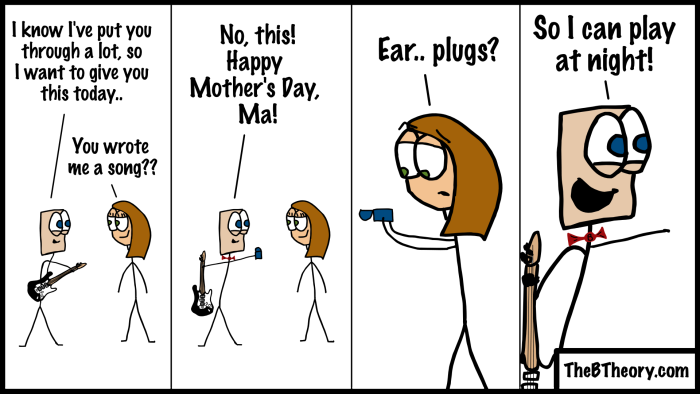
New research suggests that closeness has an effect on how people buy gifts for others. The closer you are, the more selfish you get.

comic

The friendly taking effect suggests people do not always take less from those who they are close to when taking, benefits the collective unit. Tu, Shaw, and Fishbach (2016) found supporting data where participants were significantly more likely in two different scenarios to pick packages that took away benefits from a close friend when compared to a distant acquaintance, in favor of a package that resulted in a greater total benefit.

In the first condition, participants were asked to pick one of two scenarios based on who they were sharing a ride with; a close friend or distance acquaintance. Participants were found to be more likely to act selfishly when sharing a ride with a close friend, picking a shuttle route that resulted in a longer ride for their friend and a shorter one for themselves, but shorter ride overall for the unit. In the second condition, participants were asked to pick between two flight packages based on who they would be going on a trip with; a close friend or distant acquaintance). The experiment also found that participants traveling with a close friend acted more selfishly and selected a package that resulted in higher earned rewards for themselves and none for their close friend, but higher earned points for the unit.

Based on these findings, it might benefit marketers to create bundle packages that appeals to the receiver of the gift, but with benefits that appeal to the buyer and the collective unit. Additionally, promoting packages as discounts or deals would be more effective in getting consumers to purchase gifts for their close ones as the savings are seen as a greater benefit to the buyer and the collective unit than the value placed on the item by the receiver.

With Valentine’s Day as the second largest gift giving holiday of the year, did you come across any marketing that took this into consideration? When you were purchasing a gift, did you fall victim to the “friendly taking effect” where you picked out something because it resulted in a greater benefit for both of you versus just the one?

Just remember, the next time you receive a gift and the buyer seems to enjoy it more than you, just remember, it’s because they love you and are trying to benefit the collective unit.

References

Tu, Y., Shaw, A., & Fishbach, A. (2016). The friendly taking effect: How interpersonal closeness leads to seemingly selfish yet jointly maximizing choice. Journal of Consumer Research, 42(5), 669-687.  doi: 10.1093/jcr/ucv052

Vedantam, S. (2016). Don’t be a stupid cupid! Hear how not to be a selfish Valentine’s Day gift. NPR. Retrieved from http://www.npr.org/2016/02/12/466512300/dont-be-a-stupid-cupid-hear-how-not-to-buy-a-selfish-valentines-day-gift


Posted in Uncategorized | 9 Comments

Misophonia and Visual Triggers

Recently, there was a segment on the Today show where Hoda Kotb and Kathie Lee Gifford ridiculed a rare brain disorder, simply because they did not fully understand it (Today.com, 2015). How could they, it is a real troubling disorder of the brain that was recently identified. It also has connotations to a type of “lazy person’s” mentality. This is so not true. Misophonia is a disorder that causes fear, anxiety, and sometimes downright angry rage that has been classified by many doctors as a growing problem that no one seems to either care for or even want anything to do with it. Yet many people suffer from this disorder set that not only includes sight but more importantly, sound. For the sake of this blog post, the focus will remain on sight. Sight and visuals are real issues within this disorder, and how the affected perceive advertising imagery.

A lot of folks have an idea of what it is when advertisers do their thing and post imagery onto billboards, flyers, mailers, catalogs, etc. But did you know that there are some people that have a brain disorder that when they see certain images, (called “triggers” in this case) that can set them off into an angry rage? It is true, and doctors are scrambling to find answers to a pretty interesting problem of the mind. Misophonia’s literal translation is that it is the “hatred of sound” (Misophonia.com, 2016). But there is far more to it than that. Take, for instance, two people are in a car and they are driving down a major highway. The passenger looks up to see a billboard sign that caught his eye, but then cringes when he sees a fork in the food advertisement, the fork upside down and facing the food on a plate. Although, to some people, they may think that is a really nice and harmless advertisement, but to an individual who suffers from visual Misophonia, they may take issue with it. It is not that the advertisement hurt them physically; it is the impact the image has with the individual.

It is not the most glamorous feeling in the world if you suffer from Misophonia, and as one may have deduced, it can also hurt relationships as well. There are doctors that are trying to come up with solutions, but because this is a relatively new disorder that was named in 2001 (Misophonia.com, 2015), it will take years to develop some kind of counterbalance to it all.

It will be interesting to see what transpires within the next few years, since there has been a ton of promoting of the disorder, possibly to see just how many people “come out” with having it. Anyone can go to the website and self-diagnose themselves, but to get a real diagnosis, there will need to be doctor visits abound. One may have to go to several specialists, but in the end, there may be something that can help since some sufferers only have mild forms. Soon there will be complete answers.

References

Misophonia.com. (2015). Symptoms and Triggers. Retrieved from http://www.misophonia.com/symptoms-triggers/

Today.com. (2015). Munch munch: Do certain everyday sounds drive you nuts? Retrieved from http://www.today.com/video/munch-munch-do-certain-everyday-sounds-drive-you-nuts-509412931554

Posted in Uncategorized | 3 Comments

Cell Phone Addiction: It’s a Real Thing!

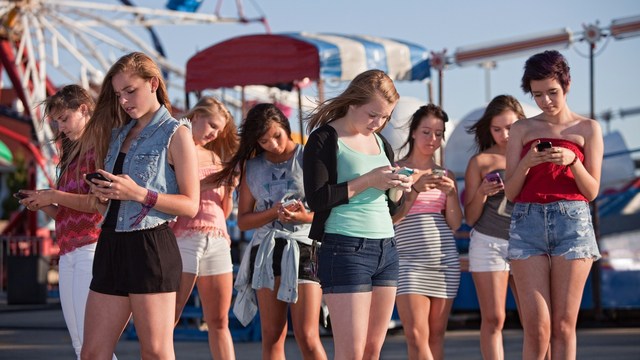
I want everyone to visualize something for me for but a moment. Imagine your last few social situations (three or more people present). You may have been grabbing dinner, seeing a movie, or just hanging out at someone’s house. What was one thing that each situation had in common?

teens-cellphones

At one point, did everyone take out their cell phone and start texting? If you’re anything like me, you can’t stand to see people engrossed with their cell phones at all hours of the day. Whether it be first thing in the morning or right before bed, people seem to be connected on social media and text messaging at all hours of the day via their mobile devices.

Indeed, the studies agree with me. According to a recent look at childhood smartphone adoption, the rate of addiction among internet users from the age of five to 49 is now 7.2% (Park, 2014). Is that not disturbing to anyone? Even more disturbing is that smartphone use fails to fit into any early childhood development stage due to its passive nature — users are simply sitting down and consuming content, it’s a very passive activity. The decrease in activity in the frontal lobe of the brain impairs the ability to think, judge, and concentrate. Let’s not even begin talking about the decline of physical activity of those who spend their days glued to their devices. Another study has even correlated the use of mobile devices with a decrease in time spent sleeping in university students (Roberts, et al., 2015).

The important note that I want to highlight is that this kind of activity has become such a norm in society these days that it’s not even talked about. This high level of media use in young adult’s lives have become so normal that they’re unable to even see their levels of dependence and addiction.

This can’t keep happening.

Back to the situation we visualized in the beginning of this post, several studies have posited that the reason cell phone addiction is so prominent is that when users are frustrated, bored, or uncomfortable in social situations, they find distraction in their cell phones. Because of the high amount of things that are able to be done on phones – from mobile banking to social networking – even the most attentive people can become lost in their devices.

As communications practitioners, we have the ability reverse these trends by setting the right example. I encourage each and everyone to think hard next time you pick up that iPhone when waiting for your food to arrive at a dinner or when there’s a lull in conversation; it could cause more damage than you think.

Park, C., & Park, Y. R. (2014). The conceptual model on smart phone addiction among early childhood. International Journal of Social Science and Humanity, 4(2), 147-150.

Roberts, J. A., Pullig, C., & Manolis, C. (2015). I need my smartphone: A hierarchical model of personality and cell-phone addiction. Personality and Individual Differences, 79, 13-19.

Posted in Uncategorized | 9 Comments

Greenwashing: The Good, Bad, or… Ugly?

If you watched the 2016 Super Bowl, you may have seen Colgate unveil their new PSA-esque commercial called ‘#EveryDropCounts’ this past Sunday, joining the 2016 Super Bowl commercial lineup, (see the commercial here). I was impressed with the message of the campaign and even more surprised to find that this plea was sponsored by Colgate. (I wasn’t the only one (Ostroff, 2016).) Understandably, the company does gain some brand image ‘brownie points’ an account of this advertisement; you would think paying over $5 million to promote the idea of water conservation during a nationally viewed sporting event is worth some kudos (Groden, 2015). However, despite the positivity surrounding this advertisement, criticisms have already been levied against this campaign arguing the $5 million could have been used to provide more than 4 million gallons of water to people in need around the world instead (Grenoble, 2016).

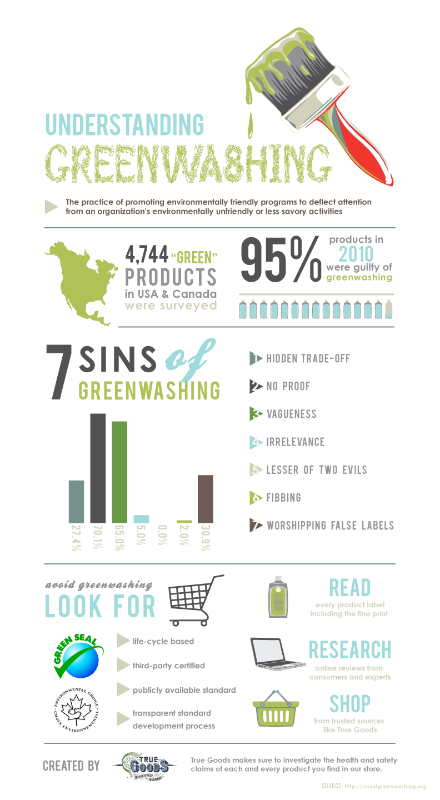
Now, these criticisms may just be the result of certain cantankerous environmentalists, but with the growing prevalence of green marketing/the promotion of companys’ ‘environmental friendliness,’ the reality behinds environmental claims can oftentimes be more than a bit dubious. Everywhere you turn, there are labels stating ‘all-natural,’ ‘greener,’ or ecofriendly, among others as brands try to capitalize on these new consumer sentiments. In fact, TerraChoice Environmental Marketing (2009) conducted a survey of 1,018 consumer products assuming 1,753 environmental claims. Of the 1,018 products examined by TCEM, all but one of the products surveyed used false or misleading claims to market their products – a phenomenon known as greenwashing.
Greenwashing-Infographic

Greenwashing – “the act of misleading consumers regarding the environmental practices of a company or the environmental benefits of a product or service” TerraChoice Environmental Marketing (TCEM) (2009, p. 1). Terrachoice delineates seven ‘sins’ of greenwashing: Hidden trade-offs, no proof, vagueness, irrelevance, the lesser of two evils fibbing, and worshiping false labels. (Visit here for more information.)

So is the Colgate commercial an example of greenwashing? I personally think is is hard to find fault with this campaign. If people were to get up in arms over Colgate (especially with its strong CSR history) could any companies really be marketed as green? Moreover, within the past few weeks, there have definitely been more stark forms of this deceptive marketing tactic.

What’s new in the world of greenwashing? Well, to start off with the ‘bad,’ Nestlé KITKAT announced a new campaign this past week to raise awareness of its commitment to source from 100% sustainable cocoa – purportedly trying to better the lives of cocoa farmers, prevent child labor, and provide educational opportunities to local communities (Malas, 2016). The new campaign features four videos on Youtube (click here), featuring well known stars like soccer player Didier Drogba and YouTube personality Louis Cole. Yet, hidden below this seemingly kindhearted gesture, lies the result of the Supreme Court’s January decision refusing to dismiss a lawsuit against the company for supporting child slave labor (Kendall, 2016). Moreover, despite this new environmentally friendly advertisement campaign, the company has long been under fire from environmental and labor groups for several water scandals such as pumping millions of gallons of water out of California during severe drought (Brodwin, 2015) and sourcing unsustainable palm oil (Tabacek, 2010), to name a few. It appears that, in reality, Nestlé’s marketing efforts are more a diversionary tactic than anything else.

In other news, there’s also what we’ll call the ‘ugly.’ Those plans that aren’t entirely ‘good,’ but also not entirely ‘bad.’ In the tech world this week, Facebook announced it would be joining the likes of Apple and Google to build another tech center in Ireland, and like its predecessors, the social media giant is also promoting to customers that the center is slated to be covered with solar panels (Hill, 2016; Weinberger, 2016). Likely in an attempt to highlight the company’s commitment to social responsibility (https://www.facebook.com/green/). Yet, a recent study by the Lux Research center has demonstrated that the energy efficiencies claimed by these companies are often overstated. In fact, the report states that, “Google underestimates its dependence on coal in four out of seven data centers… As a result, the emissions Google is linked to are likely larger than they estimate by 42,000 million tons of carbon dioxide per year. That’s the equivalent of about 8,500 additional SUVs on the road” (Pierobon, 2016, para. 5). In an earlier 2011 report, Greenpeace called foul arguing that despite claims of sustainability, the tech firms use coal to meet between 50% and 80% of their energy needs. Though, I would also argue just using alternative energies is an improvement. I’d personally take 50% over 0% any day, so I would argue these marketing efforts are more of a grey area.

Ultimately, I do not think I would go so far as to claim that all ‘green’ campaigns are questionable. It is possible for companies to engage in ethical green marketing. But if anything, this mini-investigation into some recent brand image/sustainability promotions illustrates the importance of remaining aware when consuming products and perhaps looking into alternative viewpoints when companies begin to tout how ‘green’ they are. Accordingly, although there may be some relatively ‘good’ companies as we see with Colgate, there seem to be plenty more ‘bad’ ones and others that may fall in between.


Brodwin, E. (2015, April 10). People are furious that Nestle is still bottling and selling California’s water in the middle of the drought. Business Insider. Retrieved from http://www.businessinsider.com/nestle-is-bottling-water-from-california-2015-4

GreenPeace. (April 2011) How dirty is your data? A look at the energy choices that power cloud computing. Retrieved from http://www.greenpeace.org/international/Global/international/publications/climate/2011/Cool%20IT/dirty-data-report-greenpeace.pdf/

Grenoble, R. (2015, February 12). Colgate’s water saving Super Bowl ad dollars could provide 4.2 million gallons of H20. Huffington Post. Retrieved from http://www.huffingtonpost.com/entry/colgate-super-bowl-adwater_us_56b8b778e4b08069c7a7fe1a

Groden, C. (2015, August 6). This is how much a 2016 Super Bowl ad costs. Fortune Magazine. Retrieved from http://fortune.com/2015/08/06/super-bowl-ad-cost/

Hill, J. S. (2016, January 26). Facebook announces newest 100% renewable data center to be built in Ireland. Clean Technica. Retrieved from http://cleantechnica.com/2016/01/26/facebook-announces-newest-100-renewable-data-centre-built-ireland/

Kendall, B. (2016, January 11). Supreme Court denies Nestle, Cargill, ADM appeal in slave labor case. The Wall Street Journal. Retrieved from http://www.wsj.com/articles/supreme-court-denies-nestle-cargill-adm-appeal-in-slave-labor-case-1452526492

Malas, J. W. (2016, February 10). J. Walter Thompson’s Team Iconic and Nestlé KitKat unveil campaign to support the Nestlé Cocoa Plan. PRWire. Retrieved from http://www.prweb.com/releases/2016/02/prweb13209995.htm

Oster, E. (2016, February 12). JWT’s team iconic wants to convince you that Nestlé cares about sustainability. AdWeek. http://www.adweek.com/agencyspy/jwts-team-iconic-wants-to-convince-you-that-nestle-cares-about-sustainability/102425

Ostroff, J. (2016, February 05). Colgate Super Bowl ad about saving water, not selling toothpaste. Huffington Post. Retrieved from http://www.huffingtonpost.ca/2016/02/05/colgate-super-bowl-ad-water_n_9162942.html

Pierobon, J. (2016, February 9). New data debunks some data centers’ clean energy claims. TriplePundit. Retrieved from http://www.triplepundit.com/2016/02/new-data-debunks-data-centers-clean-energy-claims/

Tabacek, K. (2010, March 18). Nestle stars in smear campaign over Indonesian palm oil. The Guardian. Retrieved from http://www.theguardian.com/sustainable-business/nestle-indonesian-palm-oil

Terrachoice Environmental Marketing. (April 2009). The seven sins of greenwashing. Retrieved from http://sinsofgreenwashing.com/index3c24.pdf

Weinberger, M. (2016, January 24). Facebook’s newest data center is going to make some big tech companies very nervous. Business Insider. Retrieved from http://www.businessinsider.com/facebook-eu-data-center-open-compute-project-2016-1.


 

Posted in Uncategorized | 1 Comment

The Force and the Footlong: “Star Wars” and the integration of movie ads

(The Late Show With Stephen Colbert, 2015)

In the Fall and winter of 2015, “Star Wars: The Force Awakens” promotions and product tie-ins were everywhere. It was impossible not to see an advertisement, product, or update on the movie. In some areas it made sense, T-Shirts at the USC Bookstore with Yoda saying “Fight on you must” (promoting both George Lucas’s affiliation with the school as well as the movie), a funny viral video from Jimmy Fallon’s show, even Duracell.

However, there were other areas that the movie joined forces with that did not seem as seamless. Does the “Star Wars” partnership with Cover Girl, Subway, or Crysler have anything to do with either brand’s mission, culture, or goals and what’s wrong with simply promoting the movie without tying into another brand?

When movies tie into products or brands, it is an advertisement for both parties and by partnering with a variety of other brands, the movie can now advertise to a larger audience. In the case of “Star Wars”, the movie’s popularity means that the brands need the movie’s help more than the movie needs theirs (Greenberg, 2015, para. 2). Disney can control the content but doesn’t need to pay a lot; if anything; in this advertising and the brands can hopefully increase sales by offering products with a Star Wars connection (Schwindt, 2015, para. 4). So some brands may welcome the partnership with the movie in the hope that consumers will buy things with the “Star Wars” brand on it.

Subway; while there may not have been an initial obvious connection between a ham sandwich and Han Solo; integrated the movie and the Subway brand pretty well. They offered kid’s meal bags and large soda upgrades that included a “Star Wars” collector cup, making the marketing more integrated and natural. Whereas products like Cover Girl makeup only offered the same makeup products yet displayed “Star Wars” logos and advertising on the products and in advertisements.

Disney says they chose these brands because of their standing and influence in their markets (Vizard, 2015, para 1) which may be marketing speak for brands with a giant reach who can gain more “Star Wars” consumers. While “Star Wars” may have overreached in their marketing by working with brands who were not connected to the movie, it clearly did not make a difference in movie ticket sales. As Schwindt says, the brands needed “Star Wars” more than Star Wars needed the brands and “Star Wars” went on to make $764.4 million in the United States (McClintock, 2016, para. 3).

References:

Greenberg, J. (2015, November 27). Star Wars Marketing Tie-Ins have jumped the gundark. Wired. Retrieved from www.wired.com

McClintock, P. (2016, January 6). Box Office: ‘Star Wars: Force Awakens’ Tops ‘Avatar’ to Become No. 1 Film of All Time n North America. The Hollywood Reporter.: Retrieved from www.hollywoodreporter.com.

Schwindt, O. (2015, December 15). ‘Star Wars’ Mania Awakens The Sales Force: Here are the Movie’s Weirdest Brand Cross-Promotions. International Business Times. Retrieved from www.ibtimes.com

The Late Show with Stephen Colbert. (2015, November 18). May the Forced Marketing Integration be With You. [Video File]. Retrieved from: https://www.youtube.com/watch?v=_X9ISiLhtHY

Vizard, S. (2015, August 14). The marketing force awakens: Star Wars signs up seven brands for promotional blitz. Marketing Week. Retrieved from www.marketingweek.com

Posted in Uncategorized | 3 Comments