Troubled Waters

Triumph passengers spell out 'Help'.

Triumph passengers spell out ‘Help’.

Elation, triumph, legend, dream. Soaring words that are meant to evoke feelings of great joy or pride. Those are also the names of the Carnival Cruise Line’s four crippled ships that in two instances forced passengers to cut their cruise short and return to shore in the last few weeks. To be fair, Elation, Legend, and Dream only had minor problems. But the fact that their technical difficulties happened just weeks after Triumph’s “cruise from hell” could mean trouble for Carnival and the cruise business unless they start communicating with their customers.

la-na-nn-carnival-triumph-returns-20130215-001 carnivaltriumphcruiseship-300x183

The Triumph fiasco dominated news coverage for days as tugboats towed the ship back to an Alabama port. Families of the passengers recalled the conversations with their loved ones: No power or running water, food was in short supply, and the smell. Then came the videos of the human waste floating along the floors of the ship. As bad as it all was, it was slowly fading from memory until this week when three other Carnival ships ran into technical issues. The problems were minor, but the headlines and news stories all recount the Triumph disaster of a few weeks ago. What should Carnival do? What should be its communication objective?

crisis-communication

Carnival will have to address a number of stakeholders but some crisis communication specialists say the cruise line’s focus should be on the customers they have now (Smith, 2013). Communicate transparency to those about to take an upcoming cruise and “create advertising about the safety of cruising in general” (McGregor, 2013).

Steep Learning Curve

concordia-cruise-disaster-main

Carnival has traveled a steep learning curve on crisis communications since the Costa Concordia (operated by a division of Carnival) ran aground last year. Carnival ceased its Facebook postings out of respect for those who died at a time when people were needing information (Sebastian, 2013). Communication experts say Carnival needs to take to those social channels and replace the images of overflowing toilets and confused passengers with a consistent message that cruises are safe and problems are being addressed with candor and transparency (Smith, 2013).

Resources:

McGregor, J. (March 15, 2013). Turning Carnival’s Ship around. Washington Post. Retrieved from Washingtonpost.com

Sebastian, M. (February 13, 2013). Despite missteps, Carnival’s PR was proactive during Triumph Crisis. PR Daily. Retrieved from prdaily.com

Smith, B. (March 16, 2013). Stranded Carnival Cruise ships offer lessons in turning crisis into positive experience. Financial Post. Retrieved from Businessfinancialpost.com


Posted in Uncategorized | 11 Comments

Can’t Just Present, Got to Represent

Learning this class, I always find it very interesting and useful when we learn about the dynamics of marketing strategy. Through the modules, I have found it useful to read about the history and theories behind marketing communication, but I always learn a great deal when I see these theories applied to current situations and compare how it has changed so much.

Traditional methods of presentations have been a one-way communication from presenters to audiences, and these presentations have advanced throughout history in different ways to use boards, posters, and now power point presentations. However, presentations of ideas need to be marketed more creatively and uniquely to get the attention from your audiences.

blog1Kimberly D. Elsbach’s “How to Pitch a Brilliant Idea” from Harvard Business Review does just that. She reviewed thousands of presentations and observed top Hollywood producers, venture capitalists, executives, and other investors on their method of picking their investments. Interestingly, she points out that the investors don’t even have a standard method of analyzing the presentation, and thus apply a set of subjective and inaccurate criteria at the early stages of the presentation. She even stated that investors judge a presenter’s traits within less than 50 milliseconds (Elsbach, 2003)! This comes from a long line of researchers of psychology that we all use a set of stereotypes to categorize strangers (Berkowitz, 1977). The investors generally rely on these stereotypes and preconceptions and often overlook good, creative ideas by focusing too much on the individual. Thus, her article reminds us that again, presenters’ traits and the art of pitching are extremely important as much as their ideas.

Then she categorizes presenters in three prototypes: showrunner, artist, and neophyte (Elsbach, 2003). These three protoypes are what she categorizes as the most successful, and states that 85 percent of these prototypes make up the successful projects. The three prototypes all have very unique characteristics, but goes to show that they are all about creating an appealing conversation with your audience.

Showrunners are those who come off as professionals who have experience and apply creativity in to their field of expertise. Thus, they show an array of charisma, intelligence of the business field, and the know-how of business standards and resources that need to used. Simply, they know their stuff really well, and the author stated showrunners “create a level playing field by engaging the catcher in a kind of knowledge duet” (Elsbach, 2003). This way investors feel confident in investing in the person. When I think of showrunners, I usually think of people like Steve Jobs and Bill Gates who have been through the rough business courses, know their product really well, and ask for exactly what they need.

blog2Artists are those who don’t have a detailed implementation plan, but use creativity to their advantage. For example, instead of using slides and powerpoints, one presenter presented his idea by spilling cereal into the conference table and challenged the investors to build the tallest tower with the cereal. He was giving the idea that children like to play with their food (Elsbach, 2003). This way the investors are engaged in the presentation, thinking the idea, touching it, and using their own imagination. Contrast to the showrunners, they do less talking and appear shy to be in their own world. The author stated 40 percent of the successful presenters she observed were artists (Elsbach, 2003).

Neophytes, unlike showrunners, act as if they are innocent, naïve, young, and inexperienced. They present themselves as if they are new to the field, act as a student, and ask the investors to help them in different ideas as they explore the impossible. In the example in the article, the presenter just came back from Japan and wanted to create a film about an American (like him) in a foreign country learning to play drums. While he was playing different styles of drums, he asked the audience for recommendations on the different camera angles that could be filmed and recorded. This way the audience was engaged and spent their time teaching the presenter about various lighting and sound methods (Elsbach, 2003).

Is there a way to counteract quick judgment?  The author’s main argument that I described is to make the audience feel like they are participating in the presenter’s idea. For example, a presenter can give a series of pictures and viewpoints and then ask the investors for their reactions. She mentions that when presenter gives an opportunity for the investors to collaborate with them, the presenters are “seducing” them. This way, they forget about stereotyping the person into a small category and start focusing on the idea itself. There are many ways to do this and the author just presented three successful categories. Do you have other ideas and experiences in engaging? What do you think about the author’s point of view?

Elsbach, K. (2003, September). How to Pitch a Brilliant Idea. Harvard Business Review, 9. Retrieved February 25, 2013, from http://hbr.org/2003/09/how-to-pitch-a-brilliant-idea/ar/1

Berkowitz, L. (1977). Advances in Experimental Social Psychology, 10. Burlington: Elsevier.

Written by Yeirang Lee.

Posted in Uncategorized | 3 Comments

I Know What I Like…But I Like It More After People Tell Me They Like It Too.

By Melanie Lawson

My running shoes have seen better days.  Since the weather is warming up I decided it was time to buy new running shoes. Yesterday, I had a few minutes before I had to leave for work so decided to log on to Zappos.com and see what I could find.

I’m a Nike brand loyalist and have almost always bought Nike running shoes. So I began my search typing in “Nike running shoes.” I sorted quickly by clicking “Most Popular”, picked my size, and instantly had a shorter list of options to choose from. I clicked on one or two shoes, read a few reviews, and then watched a product video where an average person (not the company) had a conversation with me the benefits of the shoe. After viewing two different shoes, the third one went into my shopping cart and with a click of the mouse I was done and off to work. In less than ten minutes, I had ordered new running shoes, and thanks to Zappos’s wonderful customer service, my shoes arrived this afternoon.

In today’s busy world, everyone is on the go and needs technology to keep up. Customer reviews make online shopping fast an easy. As Antony Young points out in Brand media strategy, “Opinions of friends and family, and even those of strangers, carry more weight than company provided information,” (p. 95).  We trust customer reviews to make our purchase. A complete stranger telling me whether the product fits true to size and is worthy of five stars is priceless. Websites even adjust their format to allow consumers to quickly sort by the top rated products. Consumers can read top reviews, watch a video demonstration from the girl next door, make a selection, and be on their way within a few minutes.  Here’s the sample video:

http://www.zappos.com/nike-free-run-3-polarized-pink-sport-grey-summit-white-reflective-silver

Additionally, if consumer reviews aren’t enough and more information is needed, the consumer can quickly post to Facebook or Twitter and ask their friends for product reviews or feedback. Consumers are always looking for the opinions and reviews of others before finalizing their purchase.

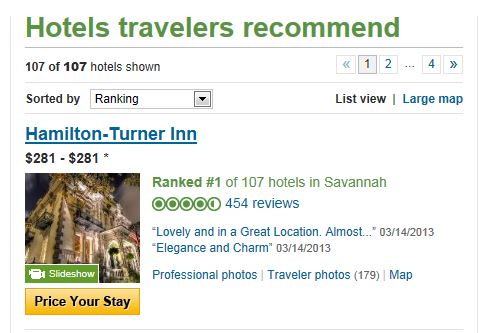
Young (2010) mentions other websites that have embraced this concept and used it to their advantage, such as Trip Advisor. The website’s success is based on consumer’s providing reviews and feedback on locations they’ve stayed at during a vacation. Consumers trust this information more than they trust the company’s advertising and will use these types of sites to book their vacations.

Capture

Now that we know we all appreciate and use customer feedback and star ratings to make our purchases, I have one question: do you leave feedback?  I have never left a product review online, but I use them to shop for everything from shoes to hotel rooms. Now that I’ve written this post and communicated the importance of customer reviews, I feel obligated to write product reviews after purchasing a product…and you should too. Make future customer’s shopping experiences easier, leave feedback.

Did you find this post helpful?

stars

References

Nike Free Run +3. (2013). Retrieved from http://www.zappos.com/nike-free-run-3-polarized-pink-sport-grey-summit-white-reflective-silver

Young, A. (2010). Brand media strategy: Integrated communications planning in the digital era. New York: Palgrave Macmillan.

Posted in Uncategorized | 7 Comments

WHY WE SHOULD CARE ABOUT NEUROMARKETING & BIG DATA

Neuromarketing & Big Data seem to be the new buzzwords in the Marketing and communications world. I disagree. Although these two topics are relatively new, I can bet that both will become the new normal pretty soon.

As Marketers and Communicators, I believe we should not only know about these topics, but should also be on the road to understanding how these trends will impact our approach to strategy, design and implementation of IMC plans.

choices

Today, laggard brand managers and IMCers are struggling to catch up, but it’s never too late to begin.

If you’re doubting whether to read further, just think about how long it took you to jump onto the Digital Marketing and Advertising bandwagon, and how much you wish that you would’ve done so earlier… Continue reading

Posted in Uncategorized | 3 Comments

Why Red Bull’s Advertising Makes Me Want to Jump Off a Mountain (In a Good Way)

We all remember those old Red Bull television commercials. You know the ones I’m talking about. Shaky cartoon. Innuendos everywhere. Odd banter between strange characters. And the fact that we remember them speaks highly of the advertising, or budget, or both, of Red Bull. But over the last few years, Red Bull has somehow managed to make a fluid transition from cheesy oddball commercials to extreme, life-inspired viral videos that have swept the world off its feet. Their new video efforts have even earned them comparisons with the glory days of Nike advertising. Indeed, Red Bull has made its way from corny side conversation to extreme sports enthusiast. We see Felix Baumgartner plastered in Red Bull gear leaping from space. We see people in squirrel suites (so I’m told they are called) zoom mere feet above the sharp treeline of a tall mountain. We see surfers thrashing across perilous waves. And you know what? It’s actually really cool. My wife may kill me, but I think I’m going to have to try that “squirrel suit” jump in the near future.

Type “Red Bull advertising” into Google and you’ll get results like Red Bull as Adweek’s Ad of the Day, a Mashable article entitled “How Red Bull Takes Content Marketing to the Extreme” and AdAge talking about a Red Bull video catapulting to the top of the chart. AdAge even named Red Bull’s historic 120,000 foot free fall from space video as the best integrated campaign of 2012. But why did this transition happen?  And has their strategy worked?

After doing some digging, I learned that the “cartoon” advertisements that we all knew and, well, maybe liked, had been aired “for 23 years in 160 countries” (Beuker, 2010). Red Bull had been sponsoring extreme sports for quite some time as well, but their brand identity did not really reflect that. Enter: The digital age. In a Fast Company article by Teressa Iezzi that ranks the Red Bull Media House as the world’s 29th most innovative company, Iezzi describes how Red Bull was able to capitalize on their vast knowledge of extreme sports by creating videos and selling them online. But it wasn’t until they realized that this extreme sports lifestyle was really the DNA of their brand that they made the decision to transition their advertising away from the cornball cartoon ads, and more in the direction of Nike-esque advertising.

And has it paid off? According to Yahoo Finance, Red Bull maintains a 40% market share in what is understood as one of America’s fastest growing industries (projected 86% growth over the next five years). But what’s more important is how ingrained this company has become in the very extreme culture it has supported for so many years. Oh, and let’s not forget the huge revenues they are making off of these amazing videos. According to Iezzi, they spent just $2 million on a video that went on to reign “atop iTunes’s sports, documentary, and overall movie sales charts for a week, at $10 a pop” (2012).

So what do you think? In my opinion, Red Bull is the coolest energy drink company in the world. But, I also drink a combination of Rockstars and Mosters on a near daily basis. To be honest, I haven’t had a Red Bull in years. So is a positive opinion as important as an actual sale? Has Red Bull’s immersion into extreme culture through iconic videos and historically extreme events (think 120,000 foot free fall) persuaded you to buy a Red Bull? Or, perhaps more importantly, has it changed your image about their brand? Something is obviously working for them. All I know is I love their marketing.

Oh, and for old time’s sake, here’s one of the cartoon style Red Bull ads, which they are still coming out with from time to time.

References

Beuker, I. (2010). Why Red Bull Ignores Its Advertising Agency. Viral Blog. Retrieved from http://www.viralblog.com/user-created-content/why-red-bull-ignores-its-advertising-agency/.

Iezzi, T. (2012). The World’s 50 Most Innovative Companies. Fast Company. Retrieved from http://www.fastcompany.com/most-innovative-companies/2012/red-bull-media-house.

Red Bull Gives You Flavors (2013). Yahoo Finance. Retrieved from http://finance.yahoo.com/news/red-bull-gives-flavors-120000094.html.

Posted in Uncategorized | 1 Comment

Things just got Nerdy…

           blog1


As person who creates social media content, and blog content for a living, I always find it informative to read articles that explain how to write a successful blog. It not only makes me a better writer, but I find that the articles identify what blogging does for a brand’s online presence. When I blog, I think of something interesting to write about, something that will caputure the readers attention from start to finish. I also consider the search engine optimization aspects of the blog, like, what keywords would be good to include in the blog for online search purchases.

In an article entitled “4 Blogging Myths that Just Need to Die Already,” Michael Martine, does a great job of challenging conventional wisdom about blog writing. One myth Martine took on was the myth that every blog should be SEO‘d (search engine optimization) out to the max! According to Martine (2013), not every piece of content has to be about SEO and keyword search. “Not everything you write is going to be an SEO wonder. Nor should it be. When you want to rank for a keyword, it’s very satisfactory to accomplish that. But, sometimes maybe you just want to have a heart-to-heart talk with your readers and customers. What’s the keyword for that? Maybe there isn’t one, and that’s okay. You’ve got subscribers who will read anything you write.” (Martine p# 8) If I were to read that statement a couple years ago, I would have had to disagree with him entirely, I would have thought that every single piece of content, had to be SEO friendly, I would hang on every word;  however, the more I write and the more I research what type of online content brands are creating, the more I agree with Martine. For well known brands, such as Dove, Nike, and Johnson & Johnson it is not necessary to have blog content that is optimized all the time  and show up as numero uno in Google, Bing, and some of the other popular search engines. The name, popularity and other aspects of the website will bring in the millions of searches. In other words, a well- known, global brand, speaks for itself, and the blog content should enrich what the brand in question is all about; Albeit, content should be 100% optimized if the blog is actually promoting a particular product. For example, if Dove creates a blog on a woman that uses Dove and how Dove has impacted her life, it is okay for the blog not to be perfectly optimized, If Dove creates a blog on a new body wash, then yes, keywords should be present within the content.

In conclusion,  writing online content for purposes of driving consumers to a brand’s website is  important,however, so is connecting with the readers. It is okay to “humanize” a brand, or as Martine stated, have “heart-to-heart”and write content that is not necessarily written in an SEO friendly way.


Martine, Michael. (March 4, 2013). Remark blogger.  4 Blogging Myths that Just Need to Die Already. Retrieved from: http://remarkablogger.com/2013/03/04/blogging-myths/?utm_source=feedburner&utm_medium=feed&utm_campaign=Feed%3A+michaelmartine%2FymYs+%28Remarkablogger%29

Posted in Uncategorized | 1 Comment

Facebook and the New Newsfeed: A Philosophical Take

When Facebook made the announcement about their new Newsfeed layout late last week Heraclitus came to mind.

Yes, we’re getting philosophical.  Stay with me here.  I’ll be quick.

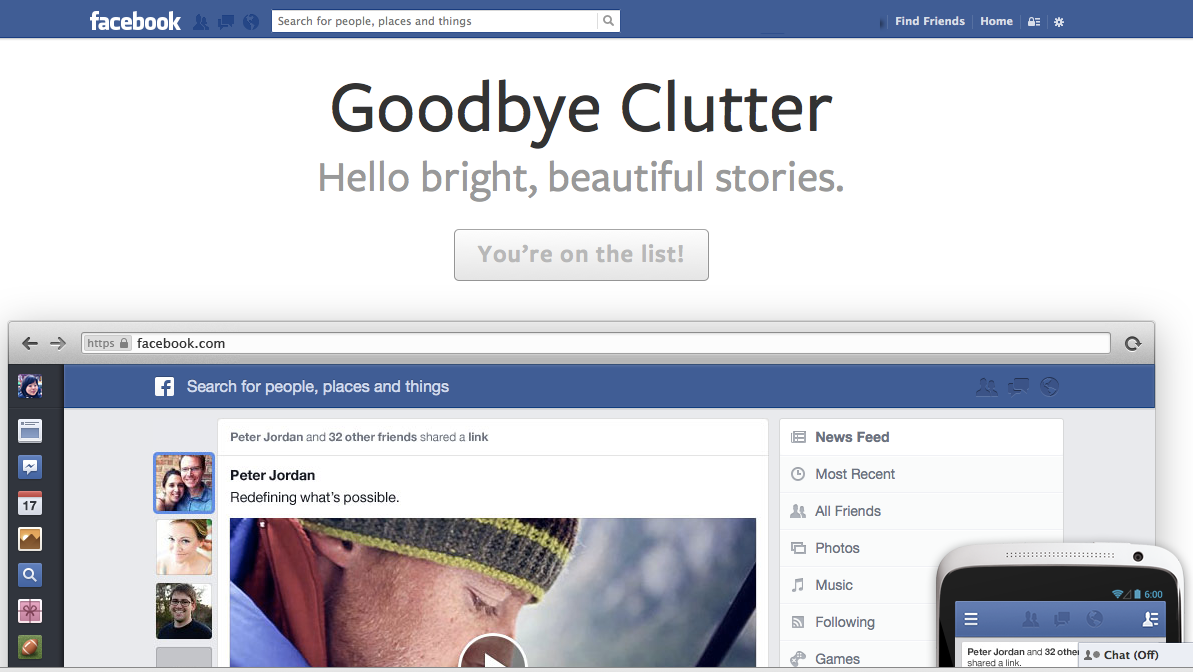
New Facebook Newsfeed

Heraclitus was a 6th century Greek philosopher best known for moving the thinking of the time from the physical to the metaphysical.  “Change is the only constant” is a paraphrase of his Doctrine of Flux, which states that all things flow and never remain the same.   He also coined the Unity of Opposites: all opposites are actually the same.  Because change is constant but no matter the change things will return to a former state, Heraclitus shook the world by thinking about the unity of the universe.  Much like Facebook.

Okay, here I go again: stick with me.

Facebook is constantly changing, and yet, it remains the same.  We use it in the same capacity no matter what it does.  We plan our marketing mix with it as a key channel.  We gripe about the new algorithm, the excitement of the search graph, and the new Profile pages – but we still use it and forget about the change soon thereafter.  Change and sameness, all in one deliciously addictive social network.   From a Facebook perspective this is gold: having the ability to constantly evolve but retain the userbase.  From a marketers’ perspective, it’s more of a bronze-tone: requiring constant adaptation of our strategies, tactics, and specs in order to maintain the community and conversation we’ve built.  Marketers are the Red Queen from Through The Looking Glass“It takes all the running you can do, to keep in the same place.”

With Heraclitus and the Red Queen by our side, here’s how we’re going to keep running with the latest Newsfeed update:

  1. Sign-up for the beta Waitlist.  You’ll give yourself a head start on developing new content and parameters, plus you’ll be able to experience what your fans will see first.  We’ll likely see that it’s much of the same, a change that isn’t.
  2. Learn to love big images and video!  The Newsfeed is embracing Google+, Tumblr, and Pinterest’s love of big, bold imagery.  This will require new sizing and resolution needs for brands in the future.
  3. Prepare for segmentation.  Like Google+, Facebook will now allow user to have different Newsfeeds for different groups – friends, family, brands, crazy-cat people, etc.  Branded content will have the opportunity to be hidden in a feed someone will never check. However, going back to Heraclitus, this change is more of the same: the Facebook Edgerank algorithm change from late last year reduced fan visibility of branded content by more than half in some cases.
  4. Prepare for a fuller, more integrated experience of the social network in mobile platforms.  Optimization of cross-platform content, here we come.
  5. Start thinking about what this means for in-feed advertising.  Because we know it’s coming and it’s going to be bigger, bolder, and more interactive than sponsored stories could ever be.

How happy/sad/indifferent are you about Facebook’s development changes?  Fighting it tooth and nail, or have you learned to love the bomb?

Thanks,

Kristen Mercure

CMGT 541A


Posted in Uncategorized | Tagged , , , , | 10 Comments

H&M Masters the Art of Integrated Marketing Communications

About six years ago on one of my trips to New York, I was walking through the streets of Manhattan with my sister. She told me she was going to take me to a store she knew I was going to love. When we arrived I looked up and saw two big red letters, H&M. I looked through the window and instantly fell in love. I made my way inside the store, saw the price point and I was completely sold.

I was real excited when I found out that H&M was planning to open stores in Los Angeles. Since coming to Los Angeles, H&M has been a strong competitor in the retail market. H&M offers quality clothes for reasonable prices for the whole family.

H&M has mastered the art of integrated marketing. They have utilized various media outlets – website, catalog, blogs, social media, billboards, ads, banner ads, email, in-store promotions and sales, Fashion Star television show (which drives business to their company) and effective commercials.

View the latest spring 2013 David Beckham for H&M commercial:

http://www.youtube.com/watch?v=il21FZu-IUY

If you have not figured out yet, David Beckham is the new campaign for H&M. This year, 2013, H&M used this campaign in their first ever Superbowl commercial. H&M aims to drive more in-store traffic; and are “bridging social media and mobile with a location-based” marketing strategy by putting “mobile advertising at the forefront of a social media fueled campaign.” (Johnson, 2012)

In New York, San Francisco and Los Angeles H&M will be running this campaign until August 31, 2013. This campaign also consists of a scavenger hunt. Statues of David Beckham have been put around these three markets – all you have to do is snap and win. Consumers are to snap a picture of one of the statues “using the Instagram mobile application with the hashtag #HMBeckham and are entered to win a $1000 gift card and other prizes.” (Johnson, 2012) Consumers also have a chance to win by following H&M on Twitter and or signing up for their newsletter.

This is not the first campaign H&M has done via social media. Recently, the company used a mobile ad inside the iPhone Pandora App. In 2010, they teamed up with “GoldRun” on a location based initiative that used augmented reality to allow users to virtually try on products from store windows. Each participant was compensated with a 10% discount to be redeemed within the store.

By: LeiLani Lemle-Macias

Reference

Johnson, L. (2012). Mobile Marketer. H&M bridges social media and mobile with location-based campaign. Retrieved from http://www.mobilemarketer.com/cms/news/social-networks/13604.html

Ritchie, G. (Feb. 6, 2013). David Beckham for H&M Spring 2013. Retrieved from http://www.youtube.com/watch?v=il21FZu-IUY


Posted in Uncategorized | 18 Comments

American Idol’s use of IMC

THIS is American Idol Integrated Marketing Communication.


For this week’s CMGT 541 post, I chose to highlight American Idol’s use of integrated marketing communication to drive viewership and interest, and ensure this American TV staple remains atop network ratings as it has since it first aired in 2002.

AI_tab

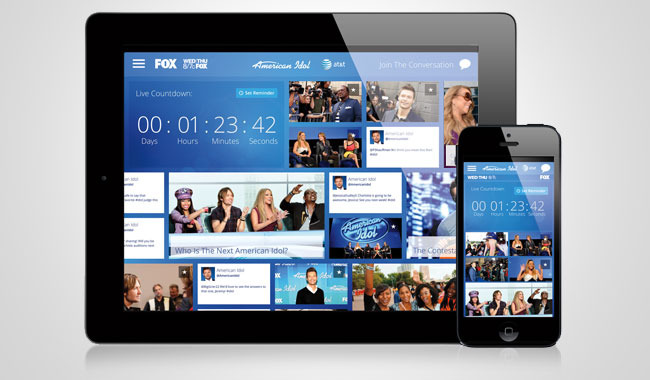
Idol’s slick, but not-so-smooth smartphone/tablet app is a good place to start. When a user logs in, an integrated panel that incorporates show-related tweets, photos, countdowns and videos appears. This landing page provides a wealth of multimedia, made-for-consumption content that keeps users engaged and  clicking through to other portions of the app, website and online, show-related content. Users can vote, learn more about their favorite contestants and judges, and view countdowns and leader boards through this portal as well.

As mentioned previously, the app and website aggregate Idol-related tweets: some good, some bad, but most are entertaining. Throughout each episode, viewers are encouraged to tweet their thoughts about contestants and judges; this ensures that a constant stream of fresh content is always available to be used however developers and producers of the live show see fit (tweets are also included on-air).

AI_SMS

Fans are directed to the Idol website throughout the show to cast their votes and interact with judges, talent and fans, and to vote via phone and/or text message. Once a fan casts his/her vote via SMS, he/she receives an auto-reply that directs him/her to “tell the world why you think ____ should be a finalist,” driving additional social media traffic and mentions, and engaging fans’ friends and family members as well.

vote-image


Additionally, SMS voters receive reminders about upcoming episodes and voting deadlines via messaging in the future, and are offered the opportunity to join additional mailing lists to “support (their) favorite idol like never before”; meanwhile, show support staff receives a never-ending stream of leads used for ongoing marketing activities. By engaging these loyal fans early and often, Idol marketers are able to provide additional user experiences that result in  additional user interactivity while heightening show/contestant visibility and developing brand advocates with a variety of outlets to spread the word.


Posted in Uncategorized | 9 Comments

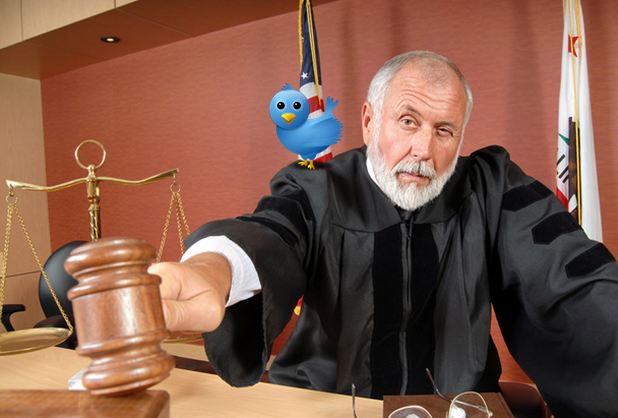
The Legal Risks of Branding on Social Media

blog pic 1

Generation Y consumers, myself included, experienced the birth of social media right before their eyes.  This online medium has changed the way brands interact with their customers, but it has also raised flags for marketers about the legal implications behind social media.  Today, a brand without a social media presence is considered out of touch by its peers (Baird & Parasnis, 2011).  But how can companies protect themselves from the public and ever changing nature of social media, so they are not caught in a possible lawsuit?

A recent article in the Social Media Monthly magazine, gives some perspective on things to consider before companies jump the social media gun.  According to the piece written by Kyle-Beth Hilfer, an attorney who specializes in marketing, advertising, and intellectual property, preparation is the key to success (Hilfer, 2013).  Hilfer suggests that marketers and the legal counsels work together as a social media strategy is developed.

How many of us have ever signed a contract or legal waiver without thoroughly reading the fine print? For brands, Hilfer says, not reading the fine print would compare to ignoring the Terms of Service of existing social media sites (Hilfer, 2013).  A large part of what attracts brands to create a presence in social media sites is the ability to gain consumers’ feedback in real time.  According to the article, in 2009 the Federal Trade Commission (FTC) introduced some regulations urging companies to identify whether consumer feedback through social media was being done independently or if the consumer received a reward for endorsing the brand; rewards are not limited to cash, but can include coupons and gift cards (Hilfer, 2013).  The article cites a case in 2011, where the FTC awarded $250,000 in damages to bloggers.  It is important for brands to monitor their social media sites closely, to lessen the risk of violations and legal damages.

groupon pic

Hilfer also suggests brands should be savvy about protecting their own intellectual property (Hilfer, 2013).  Groupon, who recently fired its CEO Andrew Mason, is an example of what not to do.  A recent article in Forbes magazine, explains Groupon is at a disadvantage because it doesn’t own intellectual property since its main business is an idea, as opposed to a product (Forbes, 2013).  In addition, Groupon also faces a number of patent lawsuits disputing its coupon practices.

Hilfer goes on to advice brands to be cautious of who is in charge of setting up their social media pages and developing content.  More importantly brands must assess if they would like the assert ownership of the content, in the event an employee resigns or is terminated.  The article also suggests the brand should have control of the passwords and management of each site (Hilfer, 2013).  A system to control harmful and disrespectful language must be established.  More importantly training for employees should be made available, so they learn how to separate their personal social media presences versus the company’s page (Hilfer, 2013).

In your opinion, when it comes to social media or blog content that is employee generated who should have ownership over this material, the brand or the employee?

By Allison Cordova (CMGT541 Section B)

References

Baird, C.H., & Parasnis, G. (2011). From social media to customer relationship management.  Strategy & Leadership, 39(5), 30-37.

Jacobs, L. D. (2013, March 1). Firing CEO Andrew Mason Won’t End Groupon Woes. Forbes. Retrieved March 3, 2013, from

http://www.forbes.com/sites/deborahljacobs/2013/03/01/firing-ceo-wont-end-groupon-woes/

Hilfer, K. (2013, ). Fearlesss Marketing: Key legal issues in branding on social media. Social Media Monthly, January/February 2013, 37-40.


Posted in Uncategorized | 8 Comments