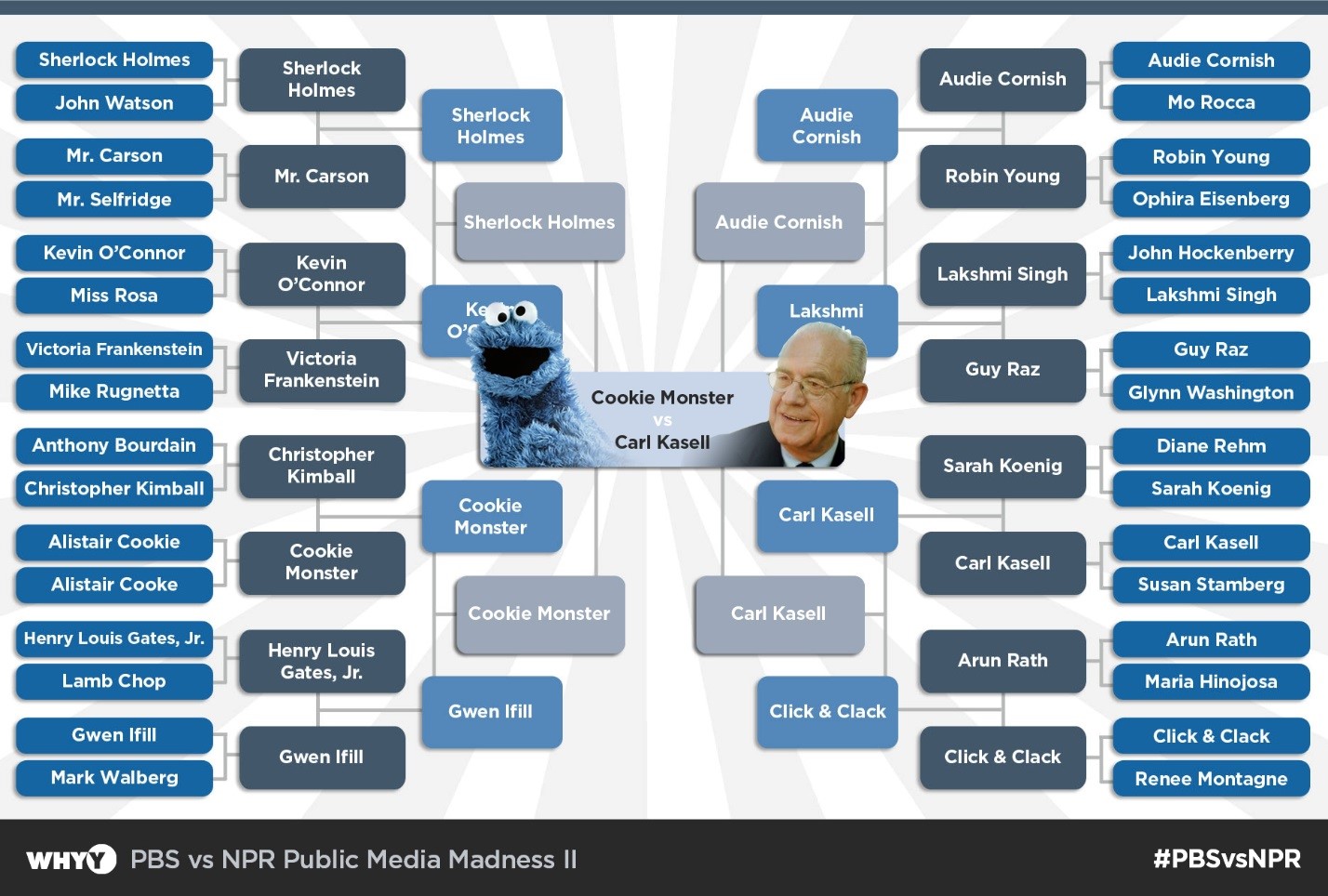
Over the years, social media has become a staple of integrated marketing. It has been utilized as a news outlet, social platform, and marketing medium. Social media has provided a unique platform for people to market themselves and their businesses. Some have made a career out of mastering the art of social media. While others have simply used it to market their business endeavors. However, the two seem to go hand in hand.

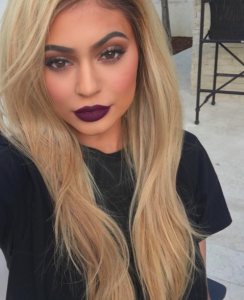
As for someone who has mastered the art of social media integration… Does the name Kylie Jenner ring a bell? For the few people who may not know who Kylie Jenner is, Kylie is the daughter of Bruce Jenner (more recently known as Caitlyn Jenner) and Kris Jenner. For the few millennials who still may not know who Kylie Jenner is (although I am sure they already know), she is Kim Kardashian’s sister.
Screen Shot 2016-03-23 at 7.52.13 PM

Screen Shot 2016-03-23 at 8.01.09 PM


Kylie has mastered the art of seamlessly integrating her fans across all her social media sites. So much so, that she released her own app last year (Teen Vogue, 2015). The Kylie Jenner app has been extremely successful (US Magazine, 2015). It provides a domain that offers a comprehensive list of Kylie’s favorite items, makeup tutorials, and playlists (Teen Vogue, 2015). Kylie advertises teasers of content that is available on her app through her Facebook, Twitter, Instagram, and Snap Chat account. Collectively, across all accounts, Kylie has approximately 100 million followers and she is very active on her accounts (Instagram, 2016; Facebook, 2016).

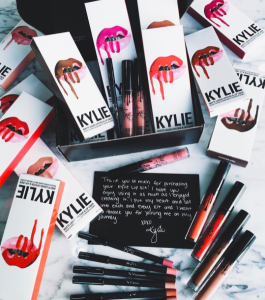
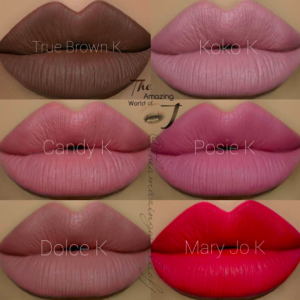
At the beginning of 2016, Kylie introduced Kylie Cosmetics (Kylie Cosmetics, 2016). Currently, the cosmetics line consists of “Lip Kits” that include 1 lip liner and 1 matte liquid lipstick (Kylie Cosmetics, 2016). Only a select amount of Lip Kits are manufactured during each production. However, it is the success of these Lip Kits that prove how she has mastered the use of social media.
Screen Shot 2016-03-23 at 7.38.53 PMScreen Shot 2016-03-23 at 7.42.11 PM


What is the best way to get a Lip Kit by Kylie? The answer: buy her app. The release dates for the product are provided exclusively on her app. The coveted Lip Kits have only been released approximately four times. Each release has resulted in all 7 shades being sold out in under 30 minutes (Hollywood Life, 2015). Not only is Kylie generating sales from the $29.00 Lip Kits (as well as the shipping fees), she is also benefitting from the $2.99 monthly subscription fee (Vogue, 20016).
Screen Shot 2016-03-23 at 8.10.50 PM

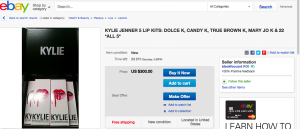
In attempts to purchase the “unicorn” of lipsticks, I searched for them on Ebay and Amazon. To my surprise, the exclusivity of the product has caused many sellers to list the Lip Kits for absurd prices. The average prices ranged from $ 55.00 – $300.00 (Ebay, 2016). I was hoping to purchase five of the colors but at that price, I’ll be kissing that idea goodbye!


http://www.ebay.com/sch/i.html?_nkw=kylie%20jenner%20lip%20kits&ssPageName=GSTL

https://www.facebook.com/KylieJenner

http://hollywoodlife.com/2015/11/30/lip-kit-by-kylie-jenner-sales-lips-kim-kardashian-butt/

https://www.instagram.com/kyliecosmetics/?hl=en

https://www.instagram.com/kyliejenner/?hl=en

http://www.kyliecosmetics.com/aboutkyliecosmetics/

http://www.teenvogue.com/story/kendall-kylie-jenner-apps-interview
http://www.usmagazine.com/celebrity-news/news/kylie-jenner-explains-why-her-app-is-most-successful-among-sisters-20153010

Posted on by Nicole | 3 Comments

LinkedIn and Millennials

hqdefault

As many of us approach our impending graduation date and the achievement of our Master’s degree, we may be pondering the persistent question: How am I going to find the job of my dreams?

Numerous professional fields are becoming oversaturated and competition continues to intensify despite the millennial generation obtaining higher degrees of education and achieving greater entrepreneurial endeavors than previous generations. CNN (2015) reports dismal statistics of employed millennials compared to Generation X. Men in the millennial generation are working 10% less then the previous generation with women working 6% less.

Yet, this data seems to conflict with the abundance of applications and digital resources that are provided to millennials. This begs the question – are applications and professional networking sites such a LinkedIn actually effective for the millennial generation or are they useless tools when trying to navigate the sea of competition?


imgres

Examining the resources and materials provided by LinkedIn exposes the site’s strengths and weaknesses for newly minted millennial graduates.

LinkedIn’s Strengths

  1. The site permits examples of professionals’ work through portfolio glimpses, resumes, and letters of recommendation. This helps recruiters in looking at candidates from a wider lens than strictly their resumes.
  2. Provides resources to vet competition.
  3. Provides resources to evaluate various potential companies and hiring managers.
  4. Allows users to connect with professional networks via email contacts that they may not even realize they have.
  5. Having a LinkedIn account adds a level of professionalism to a potential employee, since the LinkedIn brand has a level of refinement.

LinkedIn’s Weaknesses

  1. If you have not purchased LinkedIn’s premium membership you are at a disadvantage; you can’t see certain recruiters’ profiles and have a limited number of in-mail messages you are able to send.
  2. You have to be active on the platform in order to make the proper connections and utilize the site’s benefits. In other words, it’s atypical for recruiters to consistently come to you.
  3. LinkedIn is more of a networking site then a job placement site, which may confuse some users and prevent them from utilizing the site’s main benefits.
  4. In order to connect with certain people via the social platform you need to prove that you know them, which can prove to be a bit of an obstacle when trying to connect with recruiters and executives that can get you a good job.

AAEAAQAAAAAAAARmAAAAJGM3ZTAyOTdmLWQ1ZGEtNDViNS04YWQ2LTBhYmM0MzE4MzgwYg

What do you think? Why do you think the millennial generation is working less? How can we prevent these statistics from worsening? Can LinkedIn and similar networking applications improve their functions to better serve their user base? Is LinkedIn useful in finding positions? Please comment!


References

Luhny, T. (2015). Millennials: More educated, fewer employed than Gen X. CNN.com,

         http://money.cnn.com/2015/03/20/news/economy/millennials-jobs-college/


Roth, M. (2014). Do you really need LinkedIn to get a job? Experts weigh in.

      MTV.com, http://www.mtv.com/news/1935643/does-linkedin-matter/


Ryan. L. (2015). Don’t waste your time with online job applications—Here’s

why! LinkedIn, https://www.linkedin.com/pulse/dont-waste-your-time-

online-job applications-heres-why-liz-ryan

Posted in Uncategorized | 6 Comments

On the heels of the new #barbie: Using #bodypositive campaigns to reach young female consumers

#tobecontinued #parttwo in my series, #bodyimage #selfesteem #women #girls #thedollevolves

Recap: Girls & their Barbies

In my last blog post I referenced some research done by Dittmar, Halliwell, & Ive that brought to light perhaps what most of us have known for years: just how powerful imagery can be when it comes to making assessments of ourselves. In this case, young girls between the ages of 5- and 8-years old who were shown images of (thin) Barbie almost immediately made negative judgements about themselves compared those shown images of a doll with a more realistic body type.

Women, Fashion & Beauty Brands

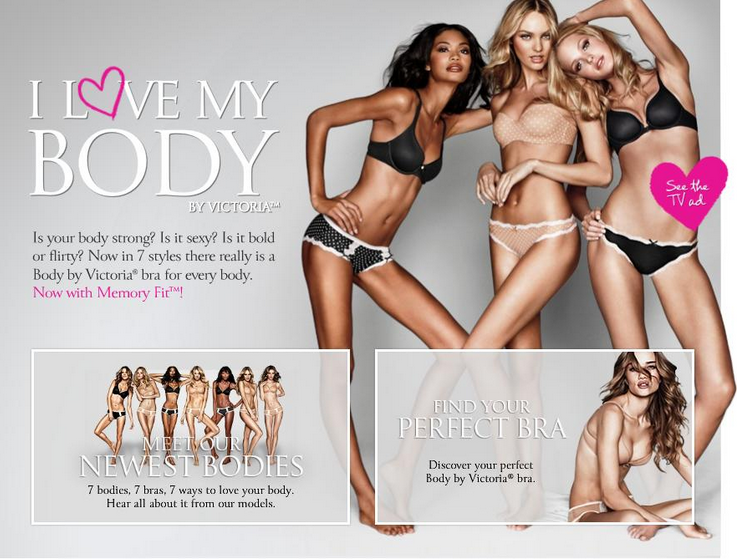
Just like young girls and their Barbies, research shows that women, young and old, are prone to upwardly compare themselves to the body types of models and celebrities in fashion and beauty advertisements. Historically, advertisers have been known to play on the insecurities female consumers have about their bodies, sending them in pursuit of unattainable standards through perpetual consumption.

Screen Shot 2016-03-22 at 11.27.25 PM

Buy our product and you’ll be popular, prettier, thinner, _____ (you fill in the blank)

But is this form of advertising really necessary?

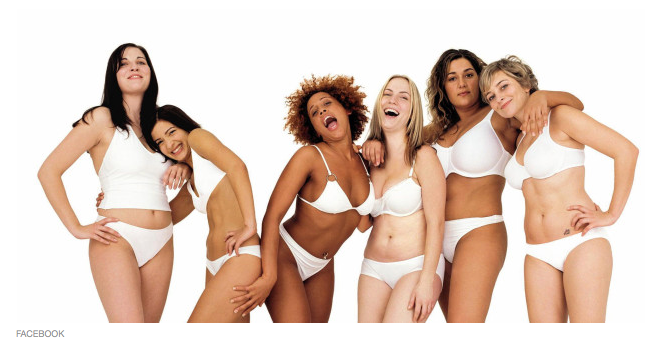
Over the past decade, empowering women to create their own standards of beauty has emerged as a strategy for fashion and beauty brands. Most notably pioneered though the Dove Campaign for Real Beauty celebrating women of all shapes and sizes.

Screen Shot 2016-03-22 at 10.43.47 PM

Innovative? Yes. Inspiring? Definitely. Effective?

According to a study published by Halliwell and Dittmar, advertisements with average-sized models versus those that portray the thin ideal can actually be similar in effectiveness in terms of consumer opinion of the brand and purchasing intention!

Despite research to support effectiveness of the body positive strategy, it still has been a challenge to convince fashion and beauty brands in recent year of its viability, but some have made the brave leap. Notably…

AerieReal

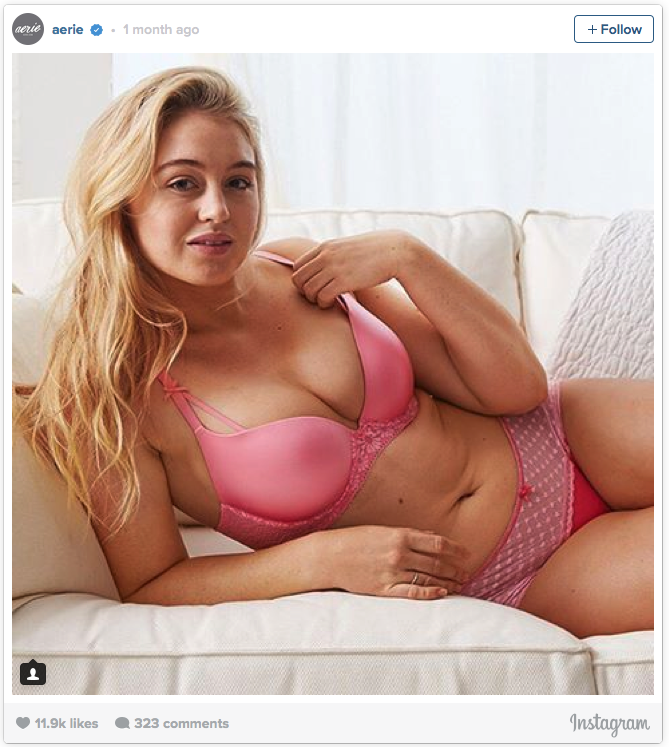
Aerie is a fashion brand owned by American Eagle that has recently been acknowledged for portraying “real women” in their campaign, encouraging customers to take part in the telling of the brand story by posting photos of themselves to social media using the hashtag #AerieReal.

Screen Shot 2016-03-22 at 11.02.23 PM

Not only does the brand use real women in their ads, they refuse to Photoshop them. What’s resonating with the brand’s key target audience, Millennials, is diversity and authenticity – they can see themselves and their friends as part of the brand. To quantify the success of the AerieReal campaign, Aerie has experienced a 13% increase in sales in the past year.

To bring this series full circle, I predict authenticity and diversity will become even more important as we see brands like Dove and Aerie achieve great success with this key demographic that every marketer dreams of capturing the attention of.

And, with brands like Mattel putting new and more realistic versions of Barbie in the hands of young consumers, authenticity and diversity will be important to Gen Z too.
What young consumers think of the new Barbie

Screen Shot 2016-03-22 at 10.44.59 PM

Screen Shot 2016-03-22 at 10.29.41 PM

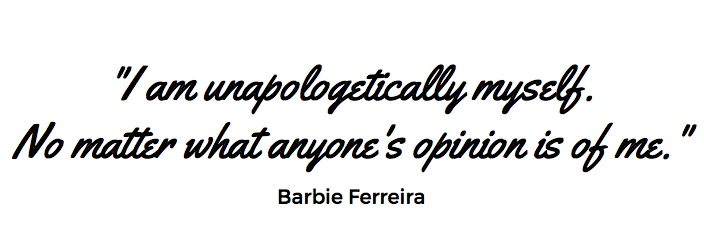
Aerie’s brand ambassador, Barbie (really?) on being herself:

Screen Shot 2016-03-22 at 11.51.59 PM

AerieReal Talk with Barbie Ferreira

This blog series has been fun! Thanks for reading!

Jessica

References

Bissell, K., & Rask, A. (2010). Real women on beauty: Self-discrepancy, internalization of the thin ideal, and perceptions of attractiveness and thinness in Dove’s campaign for real
beauty. International Journal of Advertising, 29(4), 643-668. doi: 10.2501/S0265048710201385

Boscamp, E. (2016, January 25). Aerie features a non-skinny model in its latest campaign. Retrieved on March 20 from http://www.mindbodygreen.com/0-23529/aerie-features-a-non-skinny-model-in-its-latest-campaign.html

Dittmar, H., & Halliwell, E., Ive, S. (2006). Does Barbie make girls want to be thin? The effect of exposure to images of dolls on the body images of 5- to 8-year-old girls. Developmental Psychology, 42(2), 283-292. Retrieved from http://static1.nina.be/static/asset/2014/DoesBarbieMakeGirlsWantToBeThin_1721.pdf

Dockterman, E. (2016, January 28). Barbie’s got a new body. Retrieved February 01, 2016, from http://time.com/barbie-new-body-cover-story/

Engeln-Maddox, R. (2005). Cognitive responses to idealized media images of women:
the relationship of social comparison and critical processing to body image
disturbance in college women. Journal of Social and Clinical Psychology, 24(8),
1114–1138. Retrieved from http://search.proquest.com.libproxy2.usc.edu/docview/224848233?pq origsite=summon&accountid=14749

Halliwell, E. & Dittmar, H. (2004). Does size matter? The impact of model’s body
size on women’s body-focused anxiety and advertising effectiveness. Journal of
Social and Clinical Psychology, 23(1), 104–122. Retrieved from http://search.proquest.com.libproxy2.usc.edu/docview/224667301/fulltextPDF/8A802DF0A8784E35PQ/1?accountid=14749

Wilson, T. (2016, March 6). Aerie’s body positive campaign just proved that it pays to portray real women in ads. Retrieved on March 20, 2016 from http://hellogiggles.com/aerie-body-positive-campaign/

Posted in Uncategorized | Tagged , , , , , , , , , | 2 Comments

Will you stand up for yourself? #WomenNotObjects

Recently I stumbled across a powerful campaign called “Women Not Objects” that blasts advertisers for objectifying women and perpetuating harmful and unrealistic standards of beauty. According to the campaign’s video (below), “we raise our little girls to view their bodies as projects to be constantly improved…Girls grow up to think how they look is more important than how they feel or who they are or what they can do.”

Wow. That certainly caught my attention.

The campaign criticizes corporations that hyper-sexualize women and girls and trivialize violence against women in order to sell products. The group says the objectification of women doesn’t just hurt our feelings, it harms women “psychologically, physically, mentally and socially.”

According to the organization’s website, the mission of the campaign is pretty ambitious. They seek to end objectification in advertising, to teach girls that their worth is not their weight, looks or body parts but who they are, to support brands that empower women and to inspire the world to find a better way.

Of course, I hope the group achieves each and every one of their objectives. I admire their courage to take on such a critical social issue but I will be interested to see how they will set out to accomplish their goals. In my opinion, the campaign lacks an action plan as well as a strong call to action. In all communications, supporters are encouraged to declare their allegiance by posting to their social media accounts with the designated hashtag (#IStandUp). And, that’s about it… There’s no other way for a supporter to join the fight.

While it’s certainly a cause that is widely regarded to be worthwhile, having such ambitious goals of overhauling the ad industry AND influencing the social narrative will ultimately divide the campaign’s efforts and successes. I would recommend that they attempt to transform the public’s view on the issue before tackling the issue with advertisers. Having the support of the public will definitely help them in their crusade against the ad industry.

The below video reached about 1.8 million views on Youtube after just two months thanks to coverage from Time, Huffington Post, Mashable, CNN, Refinery 29 and more. If you have two minutes (and 40 seconds), I urge you to watch this. Pretty powerful stuff.


http://www.huffingtonpost.com/entry/riveting-video-shows-the-harmful-consequences-of-objectifying-women_us_56e184b6e4b0b25c9180e3a8

http://mashable.com/2016/01/26/sexism-advertising-womennotobjects/#jS5G4.QTkPqf

http://time.com/4194269/women-not-objects-advertising-video/

Posted in Uncategorized | 4 Comments

Is That a Pop Up, Wait Where Did It Go?

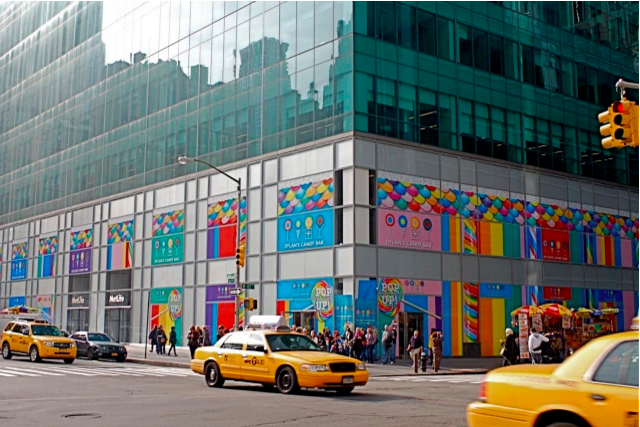
A marketing trend that is now a marketing strategy for advertisers and brand managers to build brand equity is pop up retailing. The shop that purposefully springs up and disappears quick. These shops are intended to be open for a few days up to a year and may or may not offer products for purchase (Kim, et al. 2010). Pop up shops are experiential marketing tactics that promote a brand or product line, in a short time frame and usually in spaces that allow for communication between consumer and brand reps (Kim, et al. 2010). Many people like going to pop up shops to gain the interaction with brand reps and gain their expert knowledge (Kim et al. 2010). The pop up shop is appealing to consumers due to the marketing environment (Hayes, 2014). It provides consumers with new diverse experiences (Hayes, 2004).

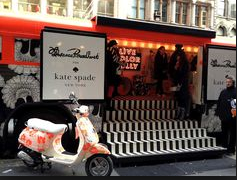
Kate Spade Pop Up in NYC

Screen Shot 2016-03-20 at 9.18.06 PM

Dylan’s Candy in NYC

Screen Shot 2016-03-20 at 9.19.12 PM

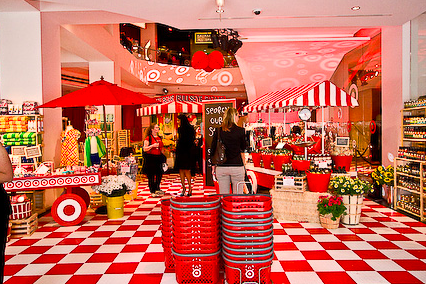
Inside a Target Pop Up in NYC

Screen Shot 2016-03-20 at 9.22.49 PM

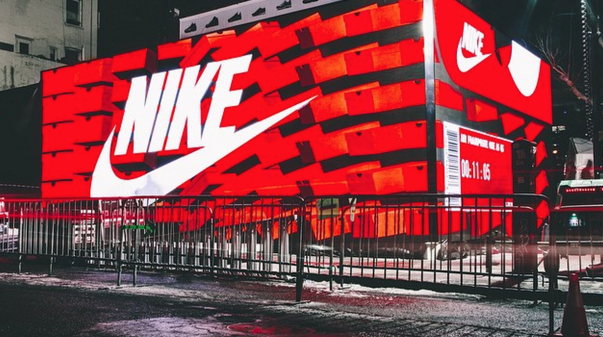
Nike Pop Up – Featuring the launch of SNKRS app in NYC

Screen Shot 2016-03-20 at 9.26.06 PM

This marketing trend started early 2000’s with companies such as Target being the first to spring a pop up shop in Manhattan’s Tribeca neighborhood filling a town house with merchandise from the store (Hays, 2004). Customers could use the wares and place orders with Target employees accompanying the merchandise. The marketing tool gave consumers a sense of Target’s sensibility and offered an experience they wouldn’t have had in the store. A year later Target took a temporary home in a large boat at Pier 62 on the Hudson River in NYC offering customers varying choices of selected products. Any products they liked, could be picked up at warehouse near the pier (Hays, 2004). Fall of 2003, Target’s temporary residency was in the Rockefeller Center advertising the beginning of Isaac Mizrahi’s new clothing line sold at Target. Target has also used pop up shops to provide awareness to breast cancer and offer specific product lines before holiday seasons (Hays, 2004). Besides the enhanced shopping experience, pop up shops also are perfect opportunities to attract media attention. The unique innovative shopping experience provides desirable and memorable experiences that give pop up retailing a good reputation. According to Trenwatching.com in 2004 pop up stores became all the rage with companies such as Louis Vuitton, Gap, Levi’s Jeans, Marc Jacobs and so many more claiming temporary residencies all over the world. New York city is a popular place for brands to utilize this marketing tactic. It has become popular to see the brands you favor offer their products in unique marketing environments such as Gap utilizing a 1960’s school bus that became a traveling pop up with appearances at beaches, summer festivals in major cities like Los Angeles and New York (Kim et al. 2010).

Pop up stores have been springing up all around the world offering consumers with product awareness, interactive experiences, brand uniqueness, exclusivity and exciting shopping experiences (Kim, et. al., 2010). The experiential marketing tactic came about due to declining revenue in mass media advertisements (Zarantonello, 2013). Traditional communication platforms were re-evaluated and alternative platforms became of interest. These alternative platforms were a way for companies to establish brand equity (Zarantonello, 2013). The pop up store created an innovative shopping space where the consumer felt the exclusivity of the brand and product line and was engaged in a different shopping experience (Kim, et. al., 2010). The experience was new, unique and involved the consumer to have an effect on the product line. Pop up shops are intended to build media attention, generate revenue, test the consumer market or retail location (Kim, et. al., 2010). This temporary location has offered many business owners opportunities to commit to a short term lease versus a five year lease commitment (Gregory, 2009). Many online businesses use this tool as a way to get some offline visibility. These pop-up shops are becoming more and more creative in marketing environments ranging from store installations to traveling motor vans. Currently, with digital and social media platforms as means to engage audiences and attract a larger audience pop up shops provide compelling content. You may be able to see the benefits in pop up retailing by a hike in sales but you can also take note of the number of impressions your post receives on social media platforms.

How effective are these pop up shops and do they truly engage the consumer and improve branding?

A study was conducted on consumer psychographic characteristics that effect behavioral beliefs towards experiential marketing such as pop up retailing (Kim et al. 2010).  The study concluded that consumers possessing the need for innovativeness and enjoyment while shopping exhibited positive attitudes towards pop up retailing, perceiving it to be interesting, good, pleasant and appealing (Kim et al. 2010). Pop up retail should aim at building long-term consumer relationship, that result in growing emotional attachment to the a brand or product line (Kim et al. 2010). Pop up retailing needs to be highly authentic and in experiential environments that focus on brand attributes, the launch of new products and enables dialogue with brand reps. (Kim et al. 2010). These are key elements attracting people to the experience and why it has evolved from a trend to a marketing strategy for major corporations today.

References:

“Pop-up Retail” Trendwatching.com Retrieved from: http://trendwatching.com/trends/POPUP_RETAIL.htm

Pop Up Stores Become More Than Just A Trend. Retail Touch Points. Retrieved from: http://www.retailtouchpoints.com/features/special-reports/pop-up-stores-become-more-than-just-a-trend

Zarantonello, L. (2013) The Impact of Event Marketing on Brand Equity. International Journal of Advertising. (32) 2. 225.

Kim, H., Flore, A., Hiehm, L., and Jeong, M. (2010). Psychographic Characteristics affecting behavioral intentions towards pop-up retail. International Journal of Retail & DistrbutionMangement. (38) 2. 133- 154.

Hays, C. (December, 2004). Stores that Pop Up and Go Away on Purpose. The New York Times. Retrieved from: http://www.nytimes.com/2004/12/07/business/businessspecial/stores-that-pop-up-and-go-away-on-purpose.html?_r=0

Gregory, Sean (November, 2009). Why Pop Up Shops are Hot. Time Magazine. Retrieved from: http://content.time.com/time/magazine/article/0,9171,1940675,00.html


Posted in Uncategorized | 7 Comments

Conversations and Advertising

Recently, I’ve been chatting with both artist and corporate folks about how to engage with their audience or reach a new audience and the biggest topic to emerge out of those discussions is how do have a conversation with our audience, not a one way message.

It seems to be an issue that most people thought would be taken care of with social media but that too has become so business friendly, that the current generation is turned off by the commercialization of it all.

The desire to have true conversations with the target audience you’re going after can only be achieved by shaking off the things you have been taught, I know that sounds scary but go with me here. Not leave the the foundational information you have been taught but don’t feel restrained by speaking to your audience like that. We need as individuals and organizations to step back and ask how we would like to be spoken to. What would motivate us to action, find out more info, purchase or share information?

It seems that the social realm is starting to take notice of this as well. Twitter just announced a new feature for advertisers, the conversational ad (Wegert, 2016). This new feature will allow companies to ask questions, poll, survey or create a community for a particular product or topic with specifically designed handles and hashtags. It will allow people to ad their own comments to their retweets and help the companies respond to the answers as they come in. It is still in the beta testing stages but it will be interesting to see what other social sites jump on the bandwagon and engage Wegert, 2016).

In a noisy world, the companies, individual and organization brands that evolve in response to the world around them will be the ones that succeed and move the “conversation” forward. Authenticity and trust is an proven strategy and this is the next step in creating that once again.

References:
Wegert, T. (2016, January 16). Should you use Twitter’s new conversational ads?. ClickZ.com. Retrieved from: https://www.clickz.com/2016/01/21/should-you-use-twitters-new-conversational-ads

Posted in Uncategorized | 3 Comments

Movie Marketing Tie-Ins, Product Placement & Obesity


Although what you just viewed is technically a commercial for a restaurant, it certainly has the feel of toy commercial. The actual product placement is front and center. McDonalds and the movie studio definitely are not being subtle about what they are selling in this commercial. The ad means what it says, “Kids come watch ‘The Lego Movie,’ and oh yeah you can get milk and apples with your Happy Meal. But, mostly come see “’The Lego Movie.’”

This practice is certainly not new, in fact movie studios and fast food restaurants have had these partnerships for decades now (Bernhardt, Wilking, Adachi-Mejia, Bergamini, & Marijnissen, 2013). The restaurant works with the film company to produce a toy or product. Both a character or characters from the movie and a restaurant logo are placed prominently on the product or the meal container. In the past restaurants pretty much advertised the product and movie barely mentioning food at all. Take a look at this Happy Meal commercial from The Incredibles. I think character Violet eventually walks away with a Happy Meal at the very end.


Get the message – Kids come watch ‘The Incredibles.’

If you were from another planet and watched this commercial from 1980’s you would probably think Burger King sold drinking glasses and maybe soda.


These advantageous partnerships became a little more inauspicious during the last few years as the American child obesity rate increased (Abramowitz, 2006). McDonalds was accused of being the biggest offender by marketing unhealthy foods to kids with cool movie tie-ins and toys. This supposedly led to Disney and McDonalds severing their tie-in relationship in 2006, but the restaurants remain in the Disney theme parks (Abramowitz, 2006).

McDonalds then partnered with DreamWorks SKG and 20th Century Fox for deals involving more films aimed at children. The movie tie-ins were for “Alvin and the Chipmunks: The Squeakquel”, “Night at the Museum: Battle of the Smithsonian” and “Ice Age: Dawn of the Dinosaurs” (York, 2009). Burger King also has similar deals with movie studios. However, their tie-ins seem to be aimed at a slightly older audience, viewers of “Star Trek,” “Transformers: Revenge of the Fallen”, “GI Joe: Rise of the Cobra”, “Iron Man”, and “Indiana Jones and the Kingdom of the Crystal Skull” (York, 2009).

If Happy Meals and King Jr Meals are the sole culprits of childhood obesity, the cause does not seem to rely on the images in the advertising. Ads aimed at children as stated above are about the product and not the food. Research shows that images of actual food averaged 20 percent of the screen time in kids’ ads, but 45 percent of the screen time in adult ads (Robert Wood Johnson Foundation, 2013).

The Federal Trade Commission, Bridging the Gap, and the Yale Rudd Center for Food Policy & Obesity said that their research shows that fast food chains spent over $714 million in 2009 at ads aimed at children (Robert Wood Johnson Foundation, 2013). However, it also revealed while some fast-food companies have slightly progressed at making the quality of kids’ meals healthier, the number of television ads for other higher-caloric meals significantly escalated (Robert Wood Johnson Foundation, 2013).

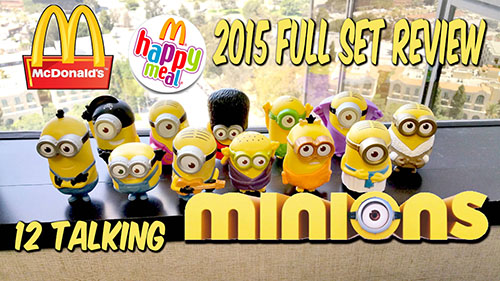
Do these movie tie-ins significantly link to childhood obesity? In the decades since the introduction of these meals, the portion size has also changed (Bernhardt, Wilking, Adachi-Mejia, Bergamini, & Marijnissen, 2013). Could that be the issue, rather than if the Minions toys are inside?
maxresdefault
Full confession, I might still be in possession of a Smurfette glass from Hardees circa 1983. “The Smurfs and the Magic Flute” was released that year, and for the record I have never been a fan of Hardees’s food. Just saying.
Smurfs_Glasses_Hardees_1983_1

Sources:
Abramowitz, R. (2006, May 8). Disney Loses Its Appetite for Happy Meal Tie-Ins As more children lean toward obesity, Mickey and Co. lean away from McDonald’s fast food. Retrieved March 19, 2015, from Los Angeles Times: http://articles.latimes.com/2006/may/08/entertainment/et-mcdonalds8

Bernhardt, A. M., Wilking, C., Adachi-Mejia, A. M., Bergamini, E., & Marijnissen, J. (2013). How Television Fast Food Marketing Aimed at Children Compares with Adult Advertisements. PLoS One , 8, 1-7.

Robert Wood Johnson Foundation. (2013, August 28). Fast-Food Television Ads Use Toys, Movies to Target Kids. Retrieved March 15, 2016, from New study suggests industry’s efforts to self-regulate child-directed marketing practices are ineffective.: http://www.rwjf.org/en/library/articles-and-news/2013/08/fast-food-television-ads-use-toys–movies-to-target-kids.html

York, E. B. (2009, May 19). Coming Soon to McDonald’s Happy Meals: 20th Century Fox Fast Feeder Partners With Studio for Five Movies, Will Kick in Marketing Dollars. Retrieved March 18, 2016, from Ad Age: http://adage.com/article/madisonvine-news/mcdonald-partners-20th-century-fox-movies/136652/

Posted in Uncategorized | 2 Comments

Elements of Email: Getting More People to Your Site

In my last post, I discussed how to improve email open rates through using attention grabbing subject lines, testing EVERYTHING, and using segmentation to target specific audiences based on their demographics and interests. I also discussed the merits of why email is still a relevant platform for engaging with your customers. For a refresher on these stats, visit the post here.

So, once you’ve employed some or all of these suggestions to get people to open your email, how do you get them to actually click and visit your site? You take it a few steps further and integrate some proven tactics into the body of your email to entice the recipient to want more.

Shoot to score by capitalizing on your goals

First and foremost, every email you send should have a specific end goal. You likely already have a goal in mind, even without saying it in so many words, so consider what exactly you are asking from your intended audiences. Are you looking to increase sales, spread awareness about a new location, ask for reviews or referrals? It’s likely you mentioned this in the subject line, but repetition is the key to results (Paquet, 2015). Whatever your main focus is, make sure that is the highlight of the email and isn’t upstaged by superfluous messaging. It’s great to have additional content for those of your audience who might have already acted on the call to action or were never going to act at all, but hopefully through segmentation you can avoid sending irrelevant messages for the most part. As tempting as it might be to include a lengthy introduction or cram a bunch of information in the top of the email, you must make sure your main message is at the forefront. Design has a lot to do with this, which is why you must…

Make it pretty and keep it simple

They say a picture is worth a thousand words, but in an email, a few well chosen words might be all you need to get people clicking. Putting your most compelling imagery and a clear call to action above the fold (where the screen cuts off your message in a standard email browser) gives the best chance of catching a reader’s attention (Wainwright, 2012). If they can’t see a picture of your beautiful new products and don’t know they are invited to purchase right this minute, they might write the email off as a dud and move on to something more attuned to their interests, especially considering more than 205 billion emails are sent/received each day (Radcati Group, 2015). By minimizing the clutter and making your email as aesthetically pleasing as possible, you’re giving your email its best shot at not only being appreciated by the readers, but also getting them to click through to your website.

Say you’ve done all this and you still aren’t getting the results you want – you’ve tested different variables, your emails look great, but you still think you could be doing more. It’s time to bring out the big guns, which means getting psychology involved.

Play some brain games

There are many ways you can tap into psychological theories to try to entice your audience to click; however, I must caution you to use these tactics only if they are genuinely applicable to your content or product. Using a click-bait call to action that is only remotely tied to what you’re marketing is a surefire way to annoy customers and make them never want to click on your email again, or worse, unsubscribe completely. That being said, piquing curiosity is a strong way to get people to your website, if only to get the instant gratification of knowing what it is that you are teasing (Beashel, 2014). If the content you are providing lives up to their expectations (or better yet, exceeds them), they are more likely to keep clicking on future emails as well.

Another tactic is to personalize the email exactly to them, or at least make them think it’s tailored only to them. People love to see something that directly relates to them, so by using a first person call to action (“download my free trial”) or including their name in the email, customers will automatically feel more connected to your brand. Some services available allow you to customize email so specifically toward an individual, it will appear as it was lovingly crafted with only them in mind instead of compiled using an algorithm and stored data. These services can get pretty pricey, so depending on the size of your marketing budget they certainly aren’t for everyone, but simply invoking the first person to demonstrate ownership to the customer will often do the trick (Beashel, 2014).

Hopefully these tips are helpful as we all continue our quest to become better marketers. Again, if you aren’t in charge of the email program, see if these tactics work for your general email communications. Try putting your call to action at the front of the email instead of after a lengthy intro, or see if using the recipient’s name multiple times (not in a creepy way) gets a better response. Any questions? I’ll do my best to answer!

Is there anything else you’d like to know about creating effective marketing emails (retargeting, automation, etc.)? Let me know in the comments below, and if finals don’t get the best of me I’ll do my best to add one more post.

References:

Beashel, A. (2014). 3 psychology-backed ways to improve your email click-through rate. Retrieved from https://www.campaignmonitor.com/blog/email-marketing/2014/07/improve-email-click-through-rate-psychology/

Paquet, M. (2015). 7 Things You Can Do to Significantly Improve Your Email Click-Through Rates. Retrieved from http://blogs.constantcontact.com/click-through-rate/

Radcati Group. (2015). Email Statistics Report, 2015-2019. Retrieved from http://www.radicati.com/wp/wp-content/uploads/2015/02/Email-Statistics-Report-2015-2019-Executive-Summary.pdf

Wainwright, C. (2012). 11 Sure-Fire Ways to Increase Email Click-Through Rates. Retrieved from http://blog.hubspot.com/blog/tabid/6307/bid/30451/11-Sure-Fire-Ways-to-Increase-Email-Click-Through-Rates.aspx

Posted in Uncategorized | 5 Comments

Bracket Madness: March’s Imitation Game Spells Victory for the NCAA

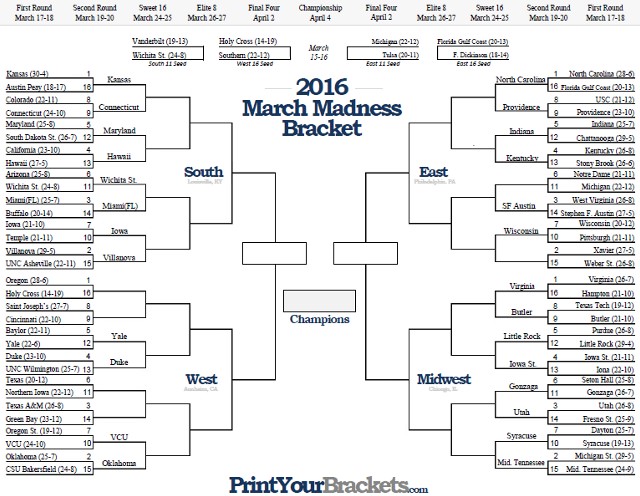
It’s that time of year again, and it’s unlikely that you’ve made it to March 18 without being roped into (or gleefully entered into) some sort of NCAA tournament pool either with your office mates, your classmates, your family, or random strangers on the Internet. “March Madness,” as the three week, 68 team college basketball tournament has come to be known, kicked off yesterday with teams vying for spots in regional tournaments which will eventually result in a final round between the top two teams. From its humble beginnings in 1939, the tournament has reached astronomical heights of viewership with an estimated 28.3 million people watching the final game in 2015 (Steinberg, 2016).

A recent blog post in the Huffington Post moved beyond the sheer popularity of the tournament itself and into the topic of the wild success of the event’s marketing, holding up the NCAA’s marketing team as one from which we can all learn. Of the many tactics mentioned in the “What marketers can learn from March Madness Marketing” section of this post, some key examples include: their use of names and logos that are easy to remember (including many alliterative terms: March Madness, Sweet Sixteen, Final Four . . . ), tie-ins with events, successful promotions, and social media brilliance (Kalb, 2016).

brackWhile all of this is beyond-a-doubt true, I’d argue that there is something simply appealing and “sticky” about the centerpiece of all the “madness”: the bracket. Something about these symetrical narrowing sets of lines that all converge at the center is captivating to Americans. It is estimated that 60 million people filled out brackets last year, and the American Gaming Association estimates that $9.2 billion will change hands through bracket betting in 2016 (Steinberg, 2016).

And, based on the idea that imitation is the greatest form of flattery, I’d like to demonstrate just how beloved the bracket itself is by highlighting three bracket spin-off trends that illustrate how the bracket concept spreads through our pop culture every March and, even when it strays from the initial spirit of the NCAA tournament, still links back to the basketball non-profit and provides it with even more marketing attention.

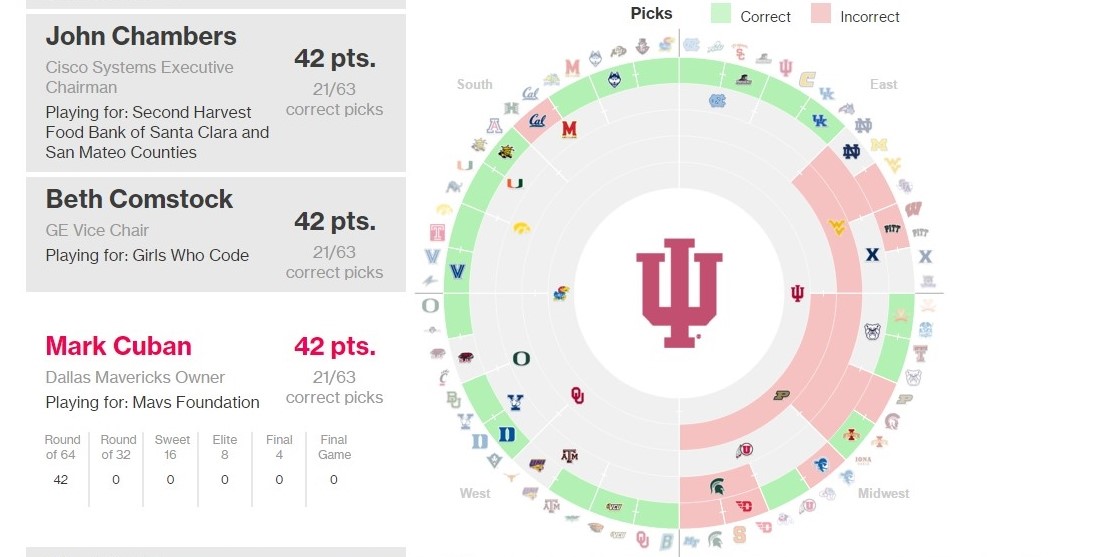
1circle. People harnessing the NCAA bracket for purposes outside of personal entertainment and betting. Outside of the traditional office or family pool, March Madness brackets are now being put to other uses as well. A great instance of this can be found in this example from Bloomberg.com in which not only is the original shape of the bracket transformed into a visually cool, moving circle graphic, but the stakes are also high and, most significantly, all for good causes. In this “pool,” as Bloomberg states, “We brought together a group of titans from the worlds of business and finance to take their best shot at filling out the perfect March Madness bracket. Each of the participants is donating $10,000, with the total pot going to the victor’s charity of choice” (“Bloomberg Brackets for a Cause,” 2016). To check out “Brackets for a Cause,” click here.

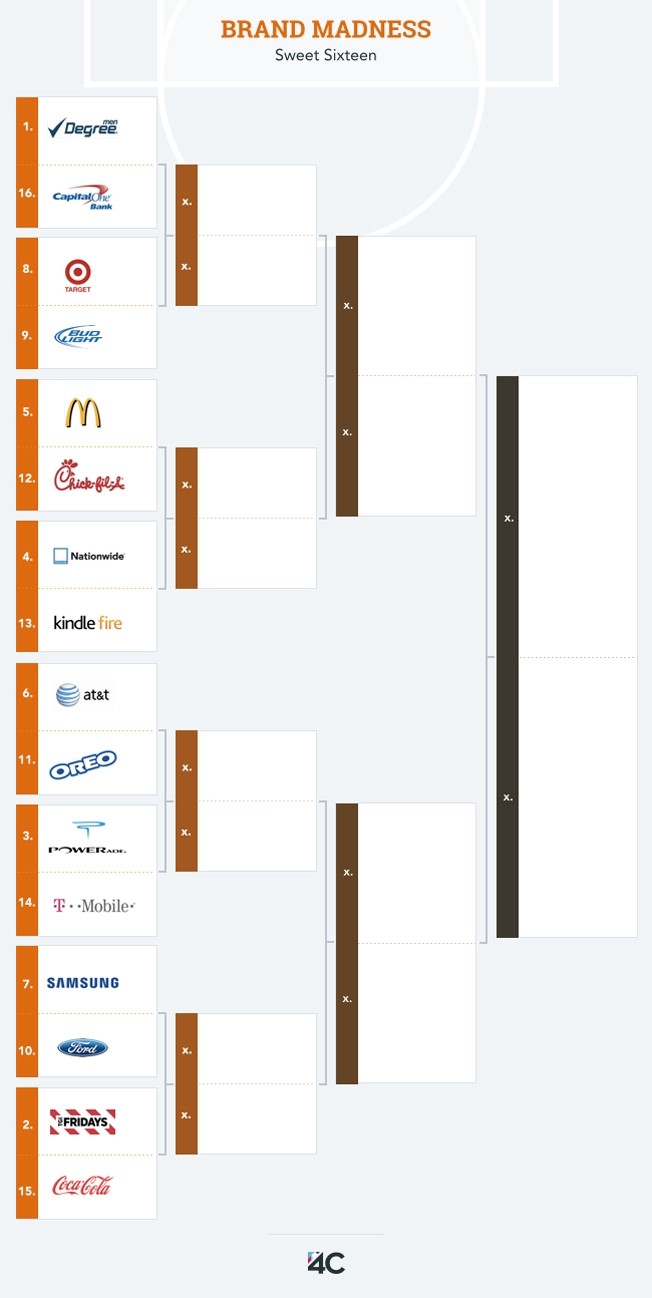
2. Bracbrandbrackkets for things that surround the games themselves, yet are not basketball teams. A few years ago, people started realizing that it wasn’t just the teams on the court that were vying for victories, but also the commercials and the brands advertised during the games’ breaks. This competition, then, was visualized in the bracket format, as shown here by Adweek’s “Brand Bracket,” which gauged each company’s engagement prowess with metrics such as clicks and comments. For the whole story, and to learn who last year’s winner was, click here.

3. Companies, organizations, and individuals who create spin-offs of the bracket concept that have zero to do with basketball or anything relating to the tournament. These are the most inventive copycat iterations of the March Madness brackets, for they take advantage of the basic simplicity of the bracket and use it to stage imaginary or user-driven contests between concocted rivalries. Star Wars character brackets, one decade against another brackets, breakfast cereal brackets, J.R.R. Tolkien brackets, book brackets, cocktail brackets . . . you name it. If there is the potential for comparison, a brnprpbsacket can be made. (See more here).

I have to confess, I have a penchant for the nerdy strain of these, and I love a good NPR show bracket. They, however, come in second to my absolute favorite: the NPR vs. PBS host bracket. To get a closer look at it, click here.

The brilliance of all of this bracketology imitation is that, regardless of the fact that these creations often have no link whatsoever to the NCAA tournament, they do, by virtue of using the “March Madness” label or close approximations, inevitably loop back to the NCAA in people’s minds and thereby provide it with free marketing. And that is a strategy, intended or not, that is far less “broken” than my own NCAA bracket, which, unfortunately, was hinging on the success of Michigan State.

Reference:

Bloomberg Brackets for a Cause. (2016, March 15). Bloomberg. Retrieved from http://www.bloomberg.com/graphics/2016-brackets-for-a-cause/

Kalb, I. (2016, March 11). March Madness Marketing: Another Slam Dunk for the NCAA in 2016. Huffington Post. Retrieved from http://www.huffingtonpost.com/ira-kalb/march-madness-marketing-a_b_9443412.html

Steinberg, L. (2016, March 16). March Madness off the Charts. Forbes. Retrieved from http://www.forbes.com/sites/leighsteinberg/2016/03/16/march-madness-popularity-off-the-charts/#37d0e6267cea

Posted in Uncategorized | 1 Comment

Accidental Fame via Social Media

Social media is arguably the quickest way to spread news today.  Using it, anyone with a significant following can make their whereabouts known–even if these whereabouts are inaccurate.  Misinformation can spread as quickly as accurate information, which is particularly concerning.  However, misinformation can yield more lighthearted results as well.

While in Bogota, Colombia this week, rapper Snoop Dogg mistakenly tagged his location on Instagram as the small village of Bogata, Mures, Romania (“Snoop Dogg,” 2016).  This check-in typo initially drew some confusion and excitement from residents of the town, but folks then realized that his post was the result of a faux pas (Wagner, 2016).  Snoop Dogg’s original Instagram post can be seen below (Snoop Dogg, 2016a).  Upon visiting the native Instagram page for the post, the mistaken tag may be seen under Snoop Dogg’s username (Snoop Dogg, 2016a).

https://www.instagram.com/p/BC6yvmPv9P1/

However, this mistake was not met with a negative response.  Instead, Romanian Snoop Dogg followers quickly jumped at the opportunity and created a tourism website for the village of Bogata (“Snoop Dogg,” 2016; Visit Bogata, 2016).  Below is a screenshot from the tourism site.

capture_wide-b3d5f2caf66bd1a60a3888b90dcb2efbcf486234-s1600-c85

Snoop Dogg’s geographical mistake thus resulted in a lighthearted tourism marketing campaign, bridging the audience of Snoop Dogg’s social media avenues, news stories covering the famous typo, and the tourism site itself at VisitBogata.com (Wagner, 2016).  According to the BBC, “Local mayor Laszlo Barta realised Snoop’s tag confusion was a handy way to promote his town. ‘It was a mistake but it’s a good advert for us'” (“Snoop Dogg,” 2016).  In addition to boasting the name and location of the town, the tourism website showcases the relaxing central Romanian countryside, food, and other local attractions (Visit Bogata, 2016).  And in good humor, the site ends with a collection of recently posted Instagram photos tagged in the village (Visit Bogata, 2016).  Snoop Dogg has since publicly recognized his typo in a newer Instagram post, referencing a possible future visit to the village (Snoop Dogg, 2016b).  This potential visit and future coverage will likely bolster tourism awareness even further.

This case just goes to show that in an era of constant connectivity, errors don’t go unnoticed.  But when they do, they can result in some pleasant surprises, offering delightful marketing campaign opportunities.

References

Snoop Dogg. [snoopdogg]. (2016a, March 13). Retrieved from https://www.instagram.com/p/BC6yvmPv9P1/

Snoop Dogg. [snoopdogg]. (2016b, March 18). Retrieved from https://www.instagram.com/p/BDHRz0uv9PS/

Snoop Dogg tags himself in Bogata, Romania. he’s in Bogota, Colombia. (2016, March 18). Retrieved from http://www.bbc.co.uk/newsbeat/article/35845502/snoop-dogg-tags-himself-in-bogata-romania-hes-in-bogota-colombia

Wagner, L. (2016, March 17). Retrieved from http://www.npr.org/sections/thetwo-way/2016/03/17/470898230/snoop-dogg-makes-romanian-village-famous-with-instagram-mistake

Visit Bogata. (2016). Retrieved from http://visitbogata.com/

Posted in Uncategorized | 8 Comments