MarTech

The annual MarTech conference was held this week in San Francisco. I actually attended the first one years ago and it apparently continues to grow bigger and bigger each year. If you aren’t familiar with it, it focusses on the intersection of where marketing meets technology in this digital age. Scott Brinker, the founder of the conference coined the term Chief Marketing Technologist as a way to describe the direction a lot of marketing is going now between social media, marketing automation, e-commerce and content development. I recommend checking out his initial blog that was posted a few years ago located on the Harvard Business Review here.

Also, Scott has a blog that is a good one as well: http://chiefmartec.com

There were some interesting items that came out of the conference in the news, and while I was not able to attend, there were some good insights I wanted to pass along.

Shep Hyken passed along five lessons that came out from the conference. You can check them out here.

I think this was one of my favorite points of the article :

twitter-pic-3-25.jpg

Hyekn focuses a lot about customer experience and it is definitely worth a read.

On the flip side of Marketing technology is the amount of platforms out there (and it continues to grow. This of course will likely lead to consolidation over time, but there is a lot of debate as to where marketing platforms are going.

Derek Walter notes in this article – that maybe all the marketing platforms are the main problem . In the article he begs the question, how do marketers navigate all these platforms and the noise that is out there in the industry and make the right choices to invest in.

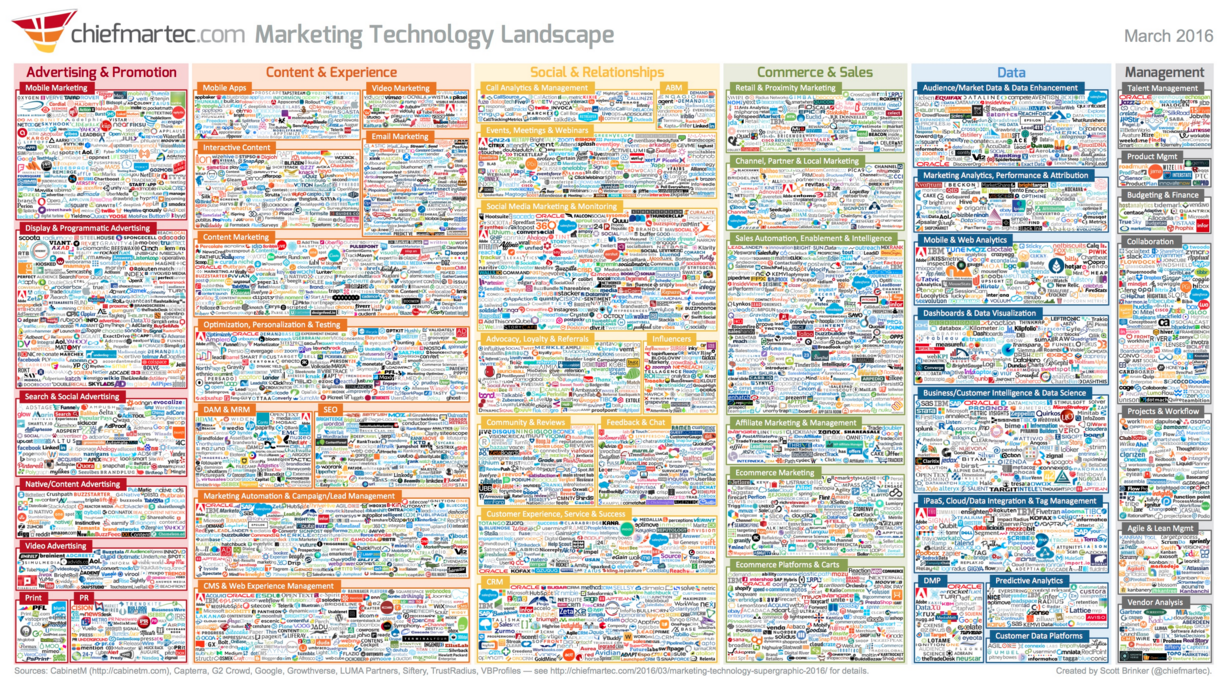
This is Brinker’s latest assessment on all the tech out there. It’s a lot

screen_shot_2016-03-23_at_10.57.11_am.png

This article by Sharon Goldman aligns with a lot of what Walter says, noting it is a real challenge for marketers to make it through all the hype out there. She

That said, there is a lot of positive things coming out of the conference, like how marketers are becoming more data driven and are being seen more as part of the company strategy vs. being the ad and events team,

What are your thoughts? Do you like the direction of marketing technology or find the landscape daunting?

Posted in Uncategorized | 2 Comments

Star Wars: The Force Awakens

star-wars-the-force-awakens-quad-posterThis past December, Star Wars: The Force Awakens, hit theatres around the world, and for the first time ever, was released by the Walt Disney Studios Motion Pictures. Many say the much anticipated film marketed itself, perhaps a brilliant business deal made by the big media conglomerate, Disney, when they acquired Lucasfilm in 2012 for $4 billion and moreover, the rights to the Star Wars franchise. The Force Awakens went on to rake in $2 billion dollars at the box office, breaking many box office records and becoming the third highest-grossing film of all time. The Star Wars franchise has a long history of success and that’s due to its huge fanbase. Though Disney did in fact advertise for the film, however the buzz surrounding the film was big enough for Disney to take it easy. The premiere alone was bigger than the Oscars, with Disney actually closing off several blocks of Hollywood blvd and incorporating a huge and over-the-top red carpet extravaganza unlike any other.

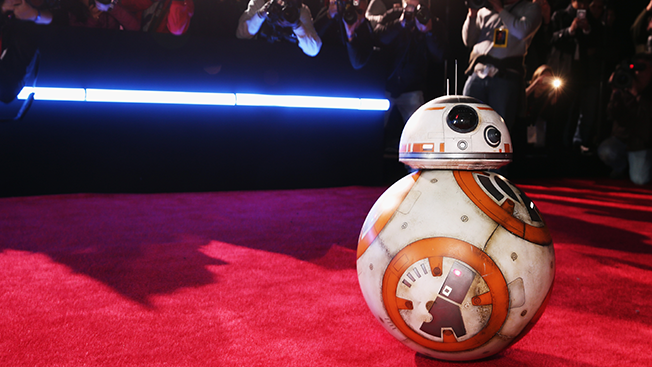
Hstar-wars-voice-bb8-hed-2015owever the question really is, did Star Wars: The Force Awakens really market itself, and did Disney even need to go to great lengths for its advertisement. Further, in today’s market, is it about the film or is it about the status. Surely Disney went above and beyond to market as much as they could for the film, but the unique aspect of this campaign is that Disney did not have to find and target their consumers, as Star Wars consumers were already standing tall and proud looking for any sign of Disney to even utter the words Star Wars anywhere. With that said, while a usual marketing campaign for a motion picture may most about $50 million, Disney actually only spent about $17 million on the huge blockbuster hit’s marketing campaign. An astonishing low number, but just shows how low key yet to the point Disney could go with the marketing campaign for the much anticipated film. Even up to the release of the film, movie trailers on television were at a minimum and buzz was very much self-generating.

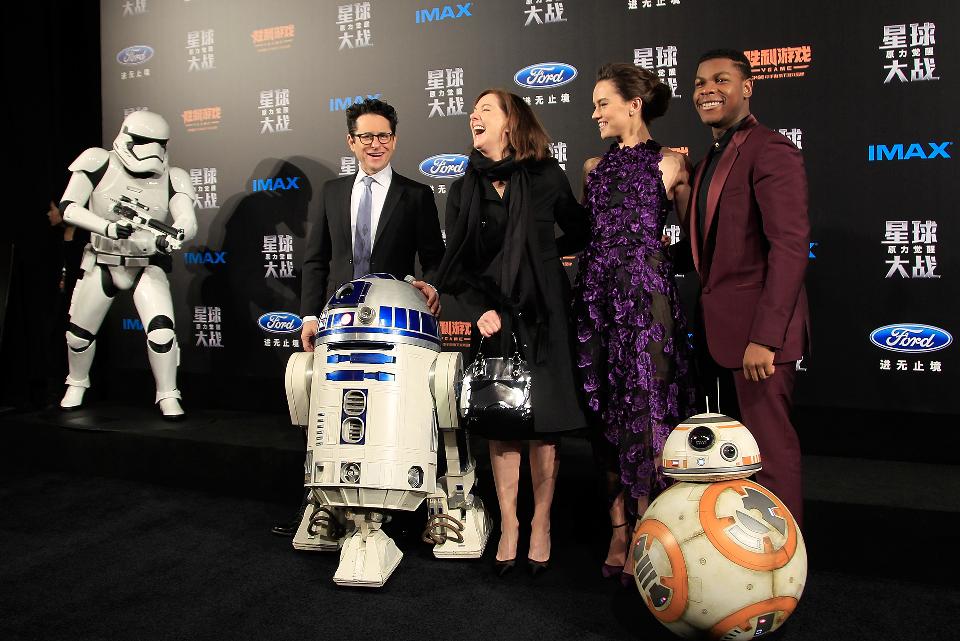
960x0The truth is, Star Wars is already everywhere, there is merchandise in every category and the franchise is world-famous and Disney knows that. They knew that they could simply buy the rights to the franchise and utilize it as their next big project to compete with huge money-making franchises like Jurassic Park and Harry Potter, and that they did. Within weeks after the film brought in its record breaking numbers, Disney had already announced their plans to release the next Star Wars film set for December of 2016. They are making huge theme park expansions to incorporate Star Wars lands and themed attractions, all of which will compete with the ever-successful Harry Potter franchise, now recently expanded to the Universal Studios Hollywood, themepark experience.

960x0-1With all of this taken into account, it is quite interesting to see the significance behind a project that might do well, and a franchise that a studio knows will do well. Disney knew what they were in for, they knew they had acquired a famous piece of art and it was their responsibility to take it and handle it with the famous pixie dust sprinkle, Disney is known for, and that’s exactly what they did. They created characters, infiltrated stories, and made the world fall in love with Star Wars in complete new ways as if we had gone back in time to the original release. A franchise was reborn and there was no one better to handle the job than Disney.

References

Fortune (2016). Retrieved from: http://fortune.com/2015/12/08/star-wars-marketing/

Entrepreneur (2016). Retrieved from: http://www.entrepreneur.com/article/254039

AdWeek (2016). Retrieved from: http://www.adweek.com/news/advertising-branding/disneys-massive-marketing-push-star-wars-was-relentless-also-masterful-168724

Knowledge (2016). Retrieved from: http://knowledge.wharton.upenn.edu/article/star-wars-how-disney-awakened-its-marketing-force/

Forbes (2016). Retrieved from: http://www.forbes.com/sites/alishagrauso/2015/12/28/in-hindsight-how-star-wars-the-force-awakens-ran-a-great-marketing-campaign/#1d0aa9435852

Posted in Uncategorized | 3 Comments

Who says beer and chocolate don’t mix?

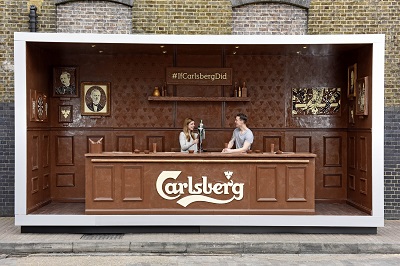
Easter may be known for chocolates and egg hunts but it is also a time to celebrate with beer (Reynolds, 2016). And what a sweet way to promote beer on Easter week by matching it with chocolate! Carlsberg unveiled the world’s first pop-up chocolate bar at the Truman Brewery in London last Wednesday, as part of its #IfCarlsbergDid campaign (Byers, 2016). Built with a half ton of chocolate, everything from bar stools to wallpaper to cups to dartboard was made of chocolate (Reynolds, 2016).

Carlsberg Dartboard 2

The event, dubbed “If Carlsberg Did Chocolate Bars,” aimed to leverage on user-generated content and Internet memes (Reynolds, 2016). It provided a truly memorable experience and at the same time extended its reach globally via social media. In today’s digital age, it was a powerful way of gaining word-of-mouth marketing.

Carlsberg Lady

“If Carlsberg Did Chocolate Bars” was a great example of brand integration using social, digital, print and event marketing. It allowed consumers to have a unique experience while interacting with the brand. It also engaged younger audiences who do not necessarily prefer the traditional channels (Gwynn, 2016).

With three months to build and only five hours to experience (Arthur, 2016), one may ask, was it worth the investment? It appears that this event was all about the people they reached in real-time as well as the free advertising they got out of creating an attention-grabbing event.

Do you think “If Carlsberg Did Chocolate Bars” was successful? How do you measure a successful pop-up event?

Happy Easter!

References:

Arthur, R. (2016, March 24). If Carlsberg did chocolate bars. Beverage Daily. Retrieved from http://www.beveragedaily.com/Manufacturers/If-Carlsberg-did-chocolate-bars

Byers, R. (2016, March 23). The Carlsberg chocolate bar has opened its doors in Shoreditch. Trendhunter Marketing. Retrieved from http://www.trendhunter.com/trends/carlsberg-chocolate-bar

Carlsberg UK. (2016, March 24). If Carlsberg did chocolate bars [Video file]. Retrieved from https://youtu.be/Wx9wc5gbQpo

Gwynn, S. (2016, March 24). Carlsberg’s Shoreditch chocolate bar aims to take the lager beyond football fans. Marketing. Retrieved from http://www.marketingmagazine.co.uk/article/1388829/carlsbergs-shoreditch-chocolate-bar-aims-lager-beyond-football-fans

Reynolds, A. (2016, March 23). Carlsberg reveals giant “chocolate bar” Easter stunt. PR Week. Retrieved from http://www.prweek.com/article/1388724/carlsberg-reveals-giant-chocolate-bar-easter-stunt


Posted in Uncategorized | 5 Comments

#ThePowerToDoMore

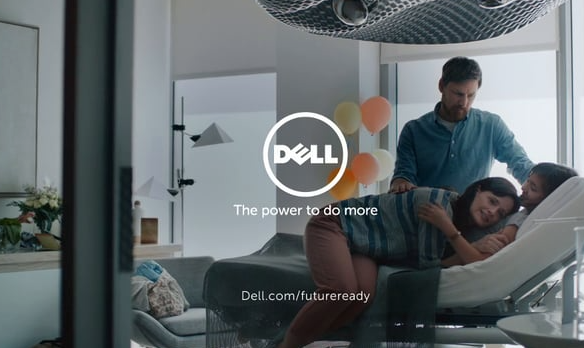
Storytelling is an essential marketing technique for good reason. When executed correctly, storytelling can be a “powerful way to breathe life into a brand” (Monarth, 2014). Dell’s new “Future Ready” campaign is looking to do just that. Following the release of the “Beat Again” ad that launched last year (Maddox, 2015), Dell recently unveiled the next installment in their “episodic storytelling” campaign (Maddox, 2016), which show how the company’s innovative technology is not only helping businesses grow, but also making a difference in people’s lives (Natividad, 2016).

https://youtu.be/_exc_FR56is

Screen Shot 2016-03-26 at 4.59.13 PM

In an era governed by technological advances and globalization, Dell’s new marketing approach is looking “to do more.” Specifically, the brand is looking to tell stories of how Dell is “helping companies transform the way they work – from the device, to the data center, to the cloud – so they can transform the lives of the people they serve” (Quintos, 2015). Along the way, Dell’s powerful ads have touched the hearts of many.

Screen Shot 2016-03-27 at 9.48.57 AMMoreover, with an inspiring message, this new campaign is looking to put Dell “back on the map”. With links to the videos currently on Dell’s website, as well as on their social media channels and various digital media sites, the company is looking to sustain a competitive advantage over rivals like HP and Lenovo. Not to mention, with a recent decline in sales and revenue, Dell is looking to capitalize on “the irresistible power of storytelling” (Monarth, 2014), that has brought success to other companies.

Screen Shot 2016-03-27 at 9.44.29 AMFor example, Extra Gum’s new advertising campaign follows the “The Story of Sarah & Juan” as they fall in love, while constantly sharing a piece of gum. This heartfelt commercial is not only incredibly romantic, it also has all the elements of classic storytelling. As a result, this powerful ad has helped Extra command the attention of their target audience, in addition to unassuming viewers. Having shown this commercial to friends and colleagues, I can attest to its powerful and emotional message. Truth be told, the ad made most viewers reach for the tissue box, while simultaneously grinning from ear-to-ear.

While Extra’s product lines might be making a difference in people’s lives, they are by no means revolutionary. However, this campaign does illustrate how a compelling story can transform even the simplest product. It is no wonder Dell’s ads are looking to evoke a similar response from viewers.

Screen Shot 2016-03-26 at 4.58.55 PM

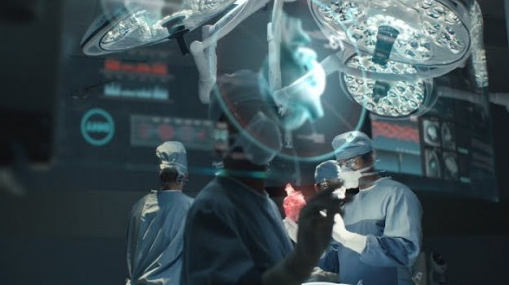
Furthermore, with the healthcare industry being on “the forefront of innovation” (Maddox, 2015), Dell’s Future Ready campaign demonstrates how technology is not just about fancy equipment or cool gadgets, at its very core, it depicts the power of the human mind. Although the videos are set in the “not-too-distant future” (Quintos, 2015), technology has the power to give life to businesses and families around the globe .

With all of this in mind, what’s your take? Did Dell’s “Future Ready” campaign “hit you right in #the feels”?

References

Maddox, K. (2015). Dell debuts ‘Future Ready’ campaign aimed at enterprise market. AdAge. Retrieved from http://adage.com/article/btob/dell-debuts-future-ready-effort-aimed-enterprise-market/298271/

Maddox, K. (2016). Dell breaks three new TV spots using episodic storytelling. AdAge. Retrieved from http://adage.com/article/btob/dell-breaks-tv-spots-episodic-storytelling/303194/

Monarth, H. (2014). The irresistible power of storytelling as a strategic business tool. Harvard Business Review. Retrieved from https://hbr.org/2014/03/the-irresistible-power-of-storytelling-as-a-strategic-business-tool/.

Natividad, A. (2016). How Dell’s ‘Future Ready’ campaign captures the heart (and soul) of tech innovation: Y&R extends story of girl’s heart transplant. AdWeek. Retrieved form http://www.adweek.com/adfreak/how-dells-future-ready-campaign-captures-heart-and-soul-tech-innovation-170358

Quintos, K. (2015). Are you future ready? Direct2Dell. Retrieved from http://en.community.dell.com/dell-blogs/direct2dell/b/direct2dell/archive/2015/04/30/are-you-future-ready.


Posted in Uncategorized | 1 Comment

Is Breastfeeding More Offensive than ISIS?

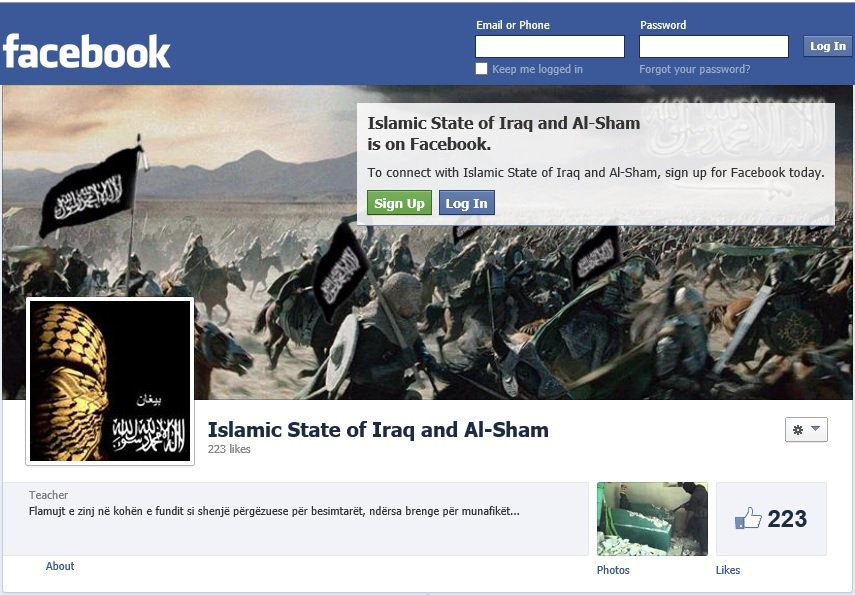
ISIS on FacebookProbably not, but the terms of agreement for platforms like Facebook and Twitter are more likely to trigger the removal of pictures of a mother breastfeeding than a terrorist organization’s content, according to The Sydney Morning Herald (Hall, 2016, March 2).

Matthew Hall (2016, March 2) reports that a professor at the John Jay College of Criminal Justice has called on social networking sites to be more proactive in shutting down terrorist organizations that are using social media to spread their hateful message. Marie-Helen Maras argues that social media is allowing terrorists to connect with millions of people around the world, which helps with recruitment efforts (Hall, 2016, March 2). Maras points out that the only way these organizations get shut down is if they violate user agreements.

Of course, social media companies strive to provide individuals and groups with open platforms for expression. In a 2011 blog post, co-founder Biz Stone wrote that Twitter’s position on freedom of expression requires them to protect users’ right to speak freely. He acknowledges that there are times where they are required to release information to law enforcement, but they try to notify users before handing information over to authorities.

Social media platforms have undoubtedly enhanced the way people and organizations communicate. But do you think organizations linked to terror have the right to use social media sites to spread their message? Does the First Amendment protect their rights?

Where do you draw the line?

Reference

Hall, M. (2016, March 2). Facebook and Twitter are losing the war against ISIS, expert says Read more: Http://www.smh.com.au/technology/technology-news/facebook-and-twitter-are-losing-the-war-against-isis-expert-says-20160301-gn7oef.html#ixzz442gx8XRp Follow us: @smh on Twitter | sydneymorningherald on Facebook. Retrieved March 26, 2016, from http://www.smh.com.au/technology/technology-news/facebook-and-twitter-are-losing-the-war-against-isis-expert-says-20160301-gn7oef.html

Stone, B. (2011, January 28). The Tweets Must Flow | Twitter Blogs. Retrieved March 26, 2016, from https://blog.twitter.com/2011/the-tweets-must-flow

Posted in Uncategorized | 4 Comments

#TW: The Jury is Out

Trigger Warning: the following blog post contains detailed information about sexual assault and/or violence which may be triggering to survivors.

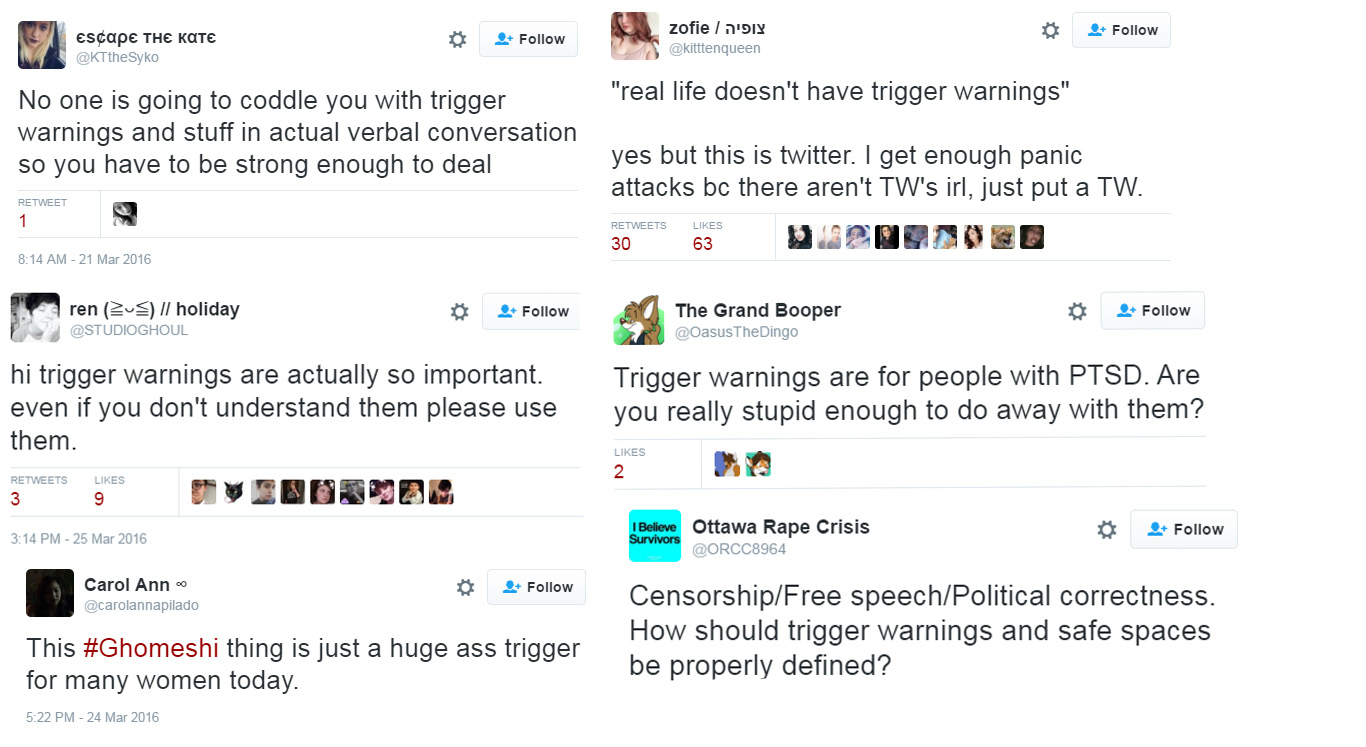
Over the last few years, Trigger Warnings have been increasingly used on blogs and social media content to warn victims of violence in order to prevent re-victimization, PTSD episodes or other negative reactions. The practice has gained popularity on social media where you will see tweets denoted by TW. Also, community groups and survivors have asked for news and organizations to more readily adopt this practice.

Out of respect, it seems simple enough to comply with but little has been studied about the effects of trigger warnings. Some studies show that Trigger Warnings don’t necessarily work. In fact, some studies indicate it may be counterproductive (McNally, 2014). Are trigger warnings turning people off of important conversations? This brings me to an example in the news this week:

imageJian Ghomeshi used to be a star television and radio host in Canada. In 2014, he was fired from his job as a national news reporter after being charged with four counts of sexual assault and one count of choking, related to three different women. This all happened around the same time accusations about Bill Cosby drugging and raping women came to light.

The victims, who were mostly young news interns, came forward accusing Ghomeshi of using his status to lure them to his apartment, where he allegedly assaulted them, forced them to comply with fetishes and recorded the acts using a hidden camera. The media reported widely on the intimate details of the sexual encounters, acts, personal emails and text messages.  The community in turn, praised the women for braving the exposure in order to report these crimes.

This week, Ghomeshi’s trial came to an end. The judge found him not guilty and declared the women to be dishonest and deceptive, claiming there was some reasonable doubt.

image

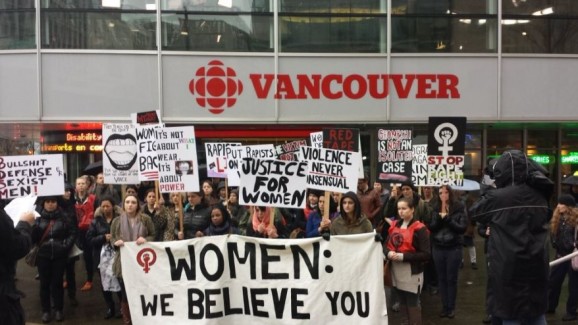
Social media however, erupted with the hashtag #WeBelieveWomen and rallies ensued across Canada.

I work for a police service and we deal with these types of sensitive topics on a daily basis so it’s important for us to be sensitive to the needs of victims and understand community requests for TWs, so I watched to see how TWs would be used/reacted to this week. Some media used them in their reporting but most did not.  It seems there is still a divide.

TW1One sexual assault survivor Zerbisias, wrote an article (2016) where she said “feminism is not about hiding in virtual “safe spaces” while the real work of achieving equality remains to be done. It’s about organizing, getting out into the streets and fighting back…. continue the fight for equality so that we can make the laws, fill the judges’ benches, sit in cabinets, get a say about where tax dollars go and who gets to spend them. But that will never happen until we pull the trigger on trigger warnings and face the enemy head-on. Because all we’re doing right now is firing blanks at each other.”

Things like these seem hard to keep up with. With all the open dialogue about sexual assault, believing victims, and lack of reporting to police, the jury is still out on Trigger Warnings.

References

McNally (2014) Hazards Ahead: The problem with trigger warnings, according to research. Retrieved from http://www.psmag.com/health-and-behavior/hazards-ahead-problem-trigger-warnings-according-research-81946

Zerbisias (2016) MEMO TO MY SOB-SISTER FOURTH-WAVE FEMINISTS: GET OVER IT, Retrieved from https://nowtoronto.com/news/memo-to-my-sob-sister-fourth-wave-feminists-get-over-it/


Posted in Uncategorized | 2 Comments

…and the Marketer of 2016 goes to: Donald Drumpf!!!

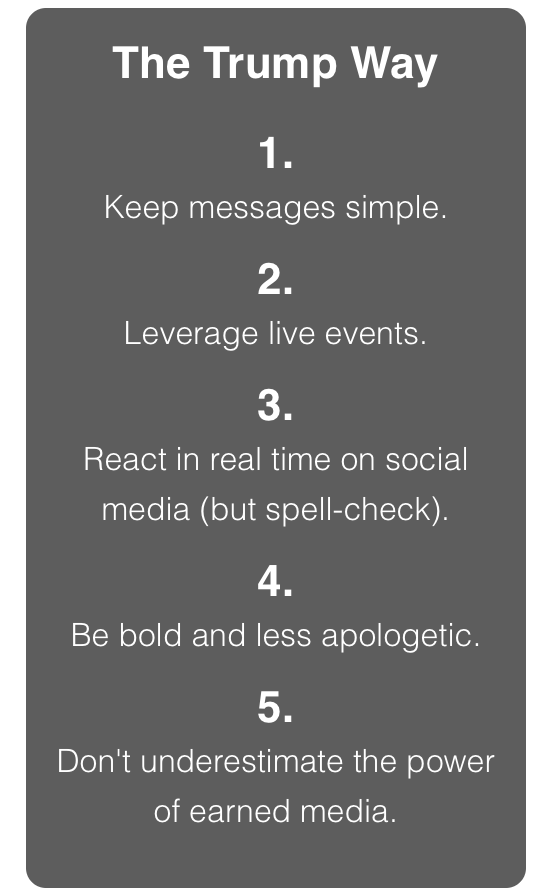
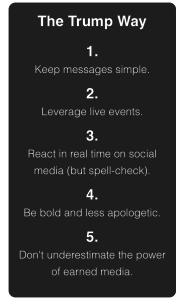
In today’s digital age, the new media environment has the potential to cause more harm than good to many brands today, with overwhelming amount of news coverage and user-generated content that creates constant exposure to crises and further magnifies issues. And yet, within this very environment, there is a specific brand, or a particular individual, that has exceeded all expectations and is using the digital space to his advantage. This man is named Donald Trump. You may disagree with his values or you may even loathe the man. But one thing that cannot be denied is that the businessman turned politician is the top candidate on the Republican polls today. While his tactics may not be traditional marketing methods that are taught in the books, he is successfully achieving his political objective by having a clear message, identifying and emotionally connecting with his core audience, and being sponteaneous.
Screen Shot 2016-03-25 at 3.36.13 AM

With this in mind, it seems that there may be lessons to learn from the individual. Although his marketing may go against many conventional methods that are advised by experts, there are a couple of points that can be drawn from his tactics. First and foremost, regardless of his lack of knowledge in policies and most often falsely made inconsistent comments that has been called out by fact checkers, he has a clear and focused message – to “Make America Great Again” (Stein, 2016). People care less about policies and the steps that are necessary to achieve these goals; rather, they connect with his message and his overarching goal of his campaign.

s-l300

Secondly, he knows who his core audience is and what they want. He is specifically targeting people who are disgruntled and fed up with a politically correct culture (Stein, 2016). These are people who wish to be citizens of “Trumpistan,” a country with big walls and no “M&Ms.” Not referring to the candy, but Mexicans and Muslims. Trump has connected with his audience by consistently reminding voters that they are living in dangerous and reiterating the separate times (Towery, 2016).

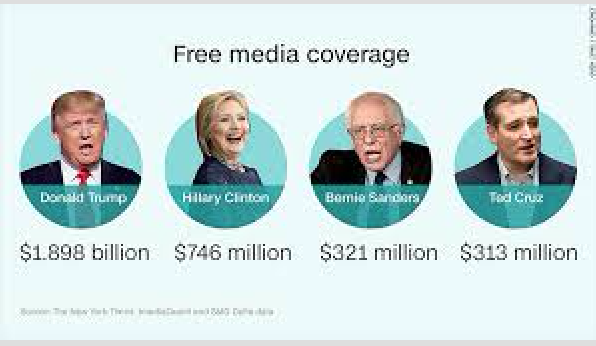
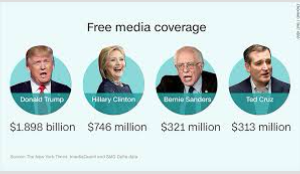
Most importantly, instead of complying with marketing paradigms, Trump intuitively knows when to break from the script. He has consistently controlled his narrative, and people cannot predict his next move (Yalamanchili, 2016). With this spontaneity, he has the ability to draw crowds and mesmerize them by his unfiltered speech and brutal honesty (Friederichsen, 2016). “Telling it like it is” is his trump card and perhaps thanks to all of these tactics, he has the most earned media out of all of the candidates.
Screen Shot 2016-03-25 at 5.05.44 AM

In spite of all of this, it is important to note that while this marketing “genius” has been extremely successful throughout his campaign trail, this political gain comes at a price. His private “Trump” brand that he has been cultivating for decades – an image of a self-made, rich, and successful man – is actually in a real crisis (Irani, 2016). This political triumph that he is obtaining is actually causing self-inflicting damage to his own personal brand and monopoly and must be taken into consideration (Friederichsen, 2016). While Trump is gaining political traction by being proactive and unfiltered, these actions and political gain has the potential to negatively affect his private brand and empire over time.

This leaves me with the following questions:

  1. Do you think Trump is a master marketer?
  2. Are Trumps marketing “tactics” lessons to be learned, or simply unique to Trump and his situation?
  3. Is his political gain compromising his private brand?

Thank you so much for reading!

-Jane Yi


Sources:

Friederichsen, P. (2016, March 18). Trump is a brand in trouble, marketing expert says. Daily News. Retrieved from http://www.nydailynews.com/life-style/trump-brand-trouble-marketing-expert-article-1.2569517

Irani, D. (2016, March 16). Some marketing lessons from donald trump. The Economic Times. Retrieved from http://articles.economictimes.indiatimes.com/2016-03-16/news/71573618_1_donald-trump-marketing-lessons-scott-goodson

Stein, L. (2016, March 7). Love him or hate him, marketers can learn a thing or two from trump. Advertising Age. Retrieved from http://adage.com/article/campaign-trail/love-hate-marketers-learn-trump/302959/

Towery, M. (2016, March 10). Trump is a master at marketing. Newsmax. Retrieved from http://www.newsmax.com/MattTowery/Bush-Establishment-Rubio/2016/03/10/id/718409/

Yalamanchili, S. (2016, March 2). An actual marketing lesson from donald trump’s success. Advertising Age. Retrieved from http://adage.com/article/campaign-trail/actual-marketing-lesson-donald-trump-s-success/302913/

Posted in Uncategorized | 4 Comments

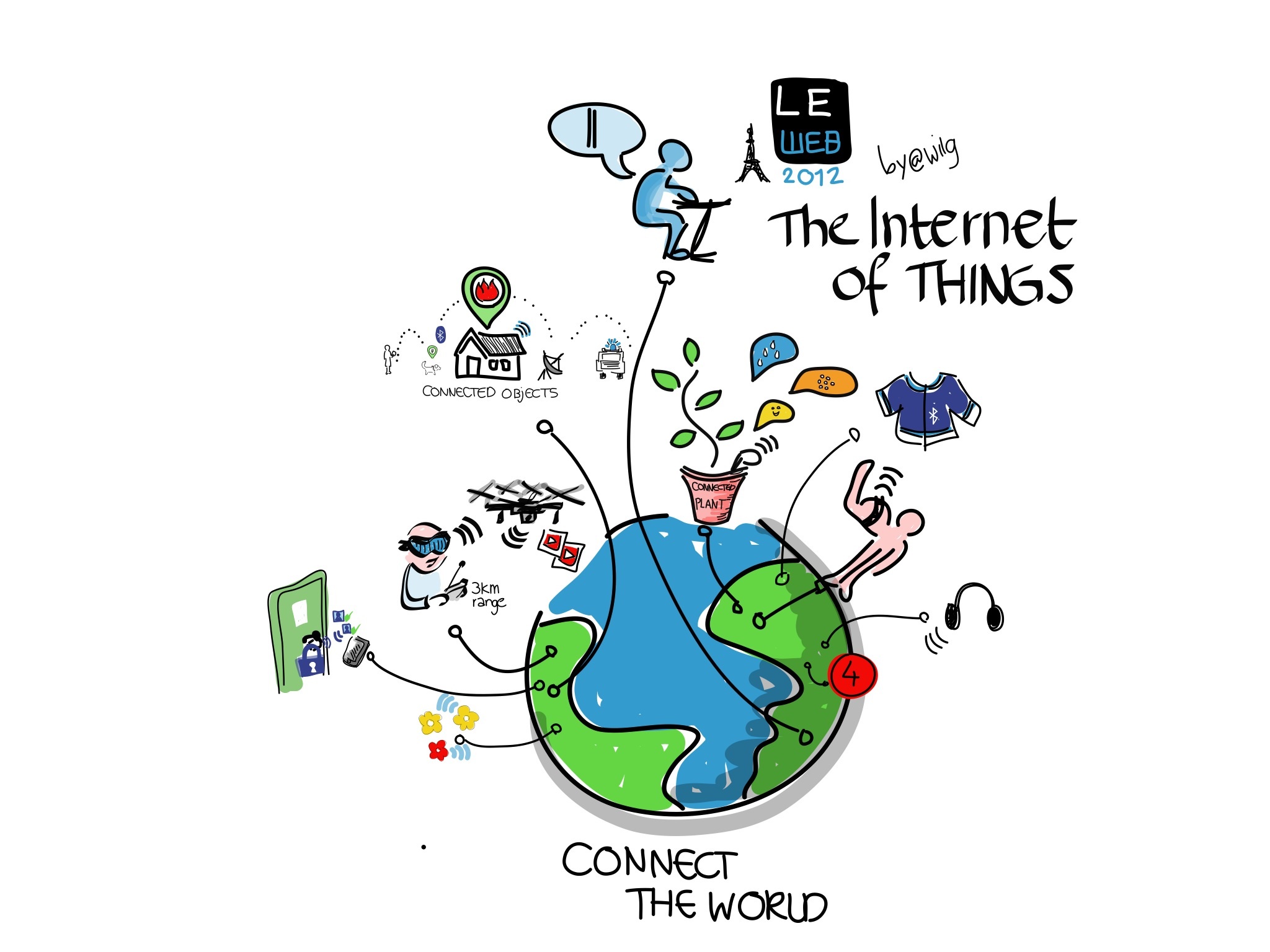
Smart Word: The Internet of Things

April 24, 2015 Apple once again captured audiences’ attention and dollars with the release of the Apple Watch. The Apple Watch features tactic feedback to allow the wearer to use many of the features of their smart phones at the convenience of their wrists (Miners, 2014). Additionally, it ties into two health monitoring application that makes it a strong competitor to the other wearable health monitors on the market. In less than a year the Apple Watch has become a normative part of the technologically processing landscape of the Internet of things.

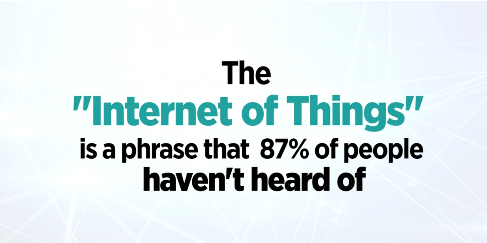
“The Internet of Things revolves around increased machine-to-machine communication; it’s built on cloud computing and networks of data-gathering sensors; it’s mobile, virtual, and instantaneous connection; and they say it’s going to make everything in our lives from streetlights to seaports ‘smart’” (Burrus, 2014)

Screen Shot 2016-03-24 at 11.00.21 PMScreen Shot 2016-03-24 at 11.01.57 PM Screen Shot 2016-03-24 at 11.01.34 PM Screen Shot 2016-03-24 at 11.01.16 PMScreen Shot 2016-03-24 at 11.00.54 PM

http://www.forbes.com/sites/jacobmorgan/2014/05/13/simple-explanation-internet-things-that-anyone-can-understand/#5956747d6828 

Today more than ever, our technological devices are becoming integrated more deeply into our lives. The upcoming collaboration of Intel and Jaguar’s F-Pace SUV showcases a “custom graphical user interface” “designed to interact seamlessly with smart home devices back at home” (Marr, 2016). This will allow for the drive to “turn on central heating remotely as he or she is heading home from work, and ensure that whatever they were listening to on their car audio system is continuing to play as they walk through their front door. It will also alert the driver if they’ve left something important at home, such as a phone or briefcase, if they have been tagged with one of the system’s tiny tracking devices” (Mar, 2016). Yet it is not just our cars and watches that are working in concert to make our lives run more seamlessly. The technology industry is growing and developing at a wildfire pace and this has a dramatic influence on the marketing industry, as well as on the normative workings of daily life. Marketers will further promote this smart world which will only increase inventors to continue developing, thus building a smarter and smart world.

IoT

The Internet of things is the “flying cars” of the future but this times technology is increasing the synergistic ease of living. Imagine, “what if your alarm clock wakes up you at 6 a.m. and then notifies your coffee maker to start brewing coffee for you? What if your office equipment knew when it was running low on supplies and automatically re-ordered more?  What if the wearable device you used in the workplace could tell you when and where you were most active and productive and shared that information with other devices that you used while working?” (Morgan, 2014).

https://www.youtube.com/watch?v=QSIPNhOiMoE

Burrus, D. (2014, Nov.).The Internet of Things Is Far Bigger Than Anyone Realizes. Wired. Retrieved from http://www.wired.com/insights/2014/11/the-internet-of-things-bigger/

Marr, B. (2016, Mar. 24). 10 Potentially Game Changing Wearable Technology Innovations. Forbes. Retrieved from http://www.forbes.com/sites/bernardmarr/2016/03/24/10-potentially-game-changing-wearable-technology-innovations/2/#3da49ad67b74

Miners, Z. (2014, Sept. 10). 5 things the Apple Watch can do, and 5 things it can’t. PC World. Retrieved from http://www.pcworld.com/article/2605140/5-things-the-apple-watch-can-and-cant-do.html

Morgan, J. (2014, May 13). A Simple Explanation Of ‘The Internet Of Things.’ Forbes. Retrieved from http://www.forbes.com/sites/jacobmorgan/2014/05/13/simple-explanation-internet-things-that-anyone-can-understand/#5956747d6828

Posted in Uncategorized | 4 Comments

Integrated Experiences Start with the Employee

IntegratedEx

In my last post on red flag checks, I discussed the candidate experience and how your employees are knowingly or unknowingly influencing the decisions of prospective employees. In this post, I will discuss connecting the employee and customer experience.

Connect the Experience

As a Corporate Communications Partner, it’s my job to make sure the brand experience is integrated across all segments of our population. This is includes what happens before someone joins the company, while they are an employee and what our customer experiences. The candidate experience starts by building affiliation and connection before a person comes onboard and sets the stage for a good employee experience. In turn, when our employees are more engaged, they create a better experience for our customers. But how can this actually be done seamlessly?

Below is just one example of how to connect the brand experience across audiences when you have limited resources.

Look for Opportunities

Recently, my company held its annual client conference. This is the 10th year for the conference and it has pretty much been unknown to employees, until now. While we have approximately 500 customers, prospective customers and exhibitors attend the conference, only a handful of employees actually get to see what happens during three intensive days of sessions and workshops.

My vision was to bring the conference to employees at the ground level. Beyond the recorded sessions, which employees have gotten in past years, I wanted our 1400 employees to feel like they were there at the conference with our clients.

Since we have limited resources to do fancy video productions, I took one communications specialist with me to the conference. Our team of two was responsible for taking the vision I had and creating something awesome. We did this with one cannon camera, a microphone and a tripod. After a crash course in how to record a video from the IT department, we were ready to go. We used Articulate to do the very most basic cut and paste videos, but not one employee cared about the quality. It felt organic and natural, and like the employees were in the conversation with the clients. The background noise, various lighting and different locations made the whole series feel like you were there with us.

What’s the Word on the Street?

The end result was the “Word on the Street” video series. With short one to two minute video vignettes, we were able to produce 20 videos over the three days. The response was overwhelming. Videos being posted to the intranet in real-time gave employees a sense of being at the conference and sharing in the experience. They heard from long-time customers and new clients, and they saw the behind the scenes set up of what it takes to produce an annual conference. We even scored a cameo interview with our keynote speaker, Dr. Sanjay Gupta.

Limited Budget, No Problem

This example shows how with limited resources you can really integrate experiences. If thinking of doing your own video vignette series, I recommend starting with a strategy. For me it was to help employees better understand our clients. The “word on the street” series is just one part of this larger strategy. For me, I looked at where the larger communication touch points were with clients and found a way to capitalize on that experience to give all employees a connected experience.

Finding ways in your organization to connect the candidate, employee and customer experience could be as simple as clicking record on your iPhone. Videos are powerful medium to bring a large audience together. If you would like to discuss more about integrating the brand experience, let me know through the comments.


Posted in Uncategorized | Comments Off on Integrated Experiences Start with the Employee

Creativity or Innovation? Which is More Important

Interestingly enough I attended a workshop this week that focused on leadership skills in which the questions was posed to the class, which is more important to possess as a leader? Should you be creative should you be innovative, and what exactly is the difference? Often times in my organization I hear these words tossed around but if you can relate to me on any level once I was asked this question I realized I really did not know the exact difference.

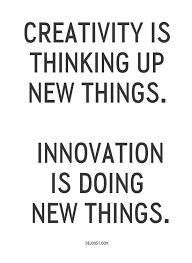
In the workshop the instructor throws on the board the following quote but Shawne Hunter, an esteemed author on leadership, which says the following ” Creativity is the capability or act of conceiving something original or unusual while innovation in the implementation of something new that is of value to other.”

So can we possible deduce that creativity isn’t necessarily innovation. How often have we sat in meeting and throw around tons of great creative ideas, but there is no innovation till something gets implemented. Innovation can be as simple as a tweek to a process, an enhancement or event a product.

It was said leaders interchangeably use the two terms not knowing the exact definition themselves. In your opinion, what is more important? Can you have one without the other? If you had to chose one trait which would you chose and why?

download

Posted in Uncategorized | 1 Comment