The Most Watched Commercials on YouTube 2015

In 2015, people spent about 30 million hours— equivalent to 3500 years in watching the top 120 most popular YouTube commercials. The rankings are based on the statistics of YouTube. Since 2011, YouTube started to release the rankings of the most watched commercials every month and came up with the idea of Ad Leaderboard. By the end of each year, YouTube also announces the annual ranking of the most watched commercials on its Ad Leaderboard.

In the annual list of last year, the ad of mobile game Clash of Clans “Revenge” received the highest hits— 82 million views. Hyundai’s ad “A Message to Space” was ranked in the second place with roughly 69 million hits. Brands such as Adidas, Budweiser, Always, and Samsung also had a place in the annual ranking.  Many of them were continually listed on the Leaderboard in the past few years. An interesting fact is that the commercial ranked as the 10th place on 2015 Ad Leaderboard had 30 million views, which surpassed the champion of the  2012 one by 10 million views.

What can we tell from the data?  In my point of view, the way that consumers watch and engage with commercials is changing and evolving.

If you watched  AMC series “Mad Men”, you might know that there is a rule that protagonist Don Draper believes in— Advertising is based on happiness; if an ad allows viewers to link their products with happiness, then it is successful advertising. This rule is still valid today, but the meaning of happy has been infinitely broadened – it is no longer the literal sense, but rather a recognition of values.

Good advertising is not only a celebration of creativity but also let people see the changes in society.  The most popular commercials share something in common. They are capable of providing positive energy to their audience and address social issues. With a few pieces of this year’s most popular video ads as an example: Always the “Like A Girl” promotes the elimination of gender bias, Budweiser’s “Lost Dog”, celebrates friendship, Fanpage’s “Slap Her ” portrays children’s reaction to violence against women. These ads become prevalent not only because of their creativity but also because of the shared value –human interest.

Here is the 2015  YouTube Ad Leaderboard. Which is your favorite one?

Sources:

http://www.adweek.com/news-gallery/advertising-branding/10-most-watched-ads-youtube-2015-168524

http://www.adweek.com/news/advertising-branding/3-trends-transforming-how-we-watch-ads-168530


Posted in Uncategorized | 2 Comments

“Out of this World” Marketing: #AYearInSpace

Houston, he’s landed.

Yesterday, Scott Kelly, the first American astronaut to spend almost an entire year in space, landed safely in Kazakhstan to cheers from his fellow earthlings (Farey-Jones, 2016). Kelly, who spent the last 340 days of his life in orbit far away from his home, and home planet, has done a remarkable job documenting and sharing his rare journey with the rest of us (Grush, 2016).

Think your Instagram game is strong? Chances are it doesn’t stack up even close to Kelly’s, who now has 946,000 followers, and has posted over 788 “out of this world” images of life from the space station to the hashtag #YearinSpace.

Check out some of them here: https://www.instagram.com/stationcdrkelly/?hl=en

But apart from the real reason why Kelly was in space – to conduct research and learn about the effects on the human body after a prolonged period away from Earth – brands are recognizing the marketing opportunity that comes with attaching to an international superstar astronaut (Hughes, 2016). Time Magazine, for instance, has created an entire documentary series on the astronaut’s journey called, “A Year in Space,” which airs Wednesday, March 2nd at 8pm on PBS (Howell, 2016).

Lexus, in partnership with Time, has leveraged Kelly’s safe landing on March 1st to hype up the safety of its latest Lexus RX model. The ad describes the car as “the official luxury crossover of getting home safe,” and the voiceover says: “While others keep our astronauts safe, we’ll help take care of our future astronauts” (Farey-Jones, 2016).

Take a look at the ad here:

https://youtu.be/yNEbGQD3bvQ

Lexus’s ad, which stresses the importance of getting people home safely, utilizes the power of a universal truth – no pun intended – to pull at our heartstrings; a key marketing strategy used by some of the most successful brands (Baranowski, 2012).

What do you think about Lexus’s “Getting Home Safe” advertisement? Do you think it successfully leveraged this milestone event in its favor? Do you think it was too much of a stretch for the company to air an ad like this? Does it do a disservice to Kelly and his journey to use his story for marketing purposes?

Sources:

Baranowski, M. (2012). Seven universal truths for ensuring brand relevance. Retrieved from: http://www.fastcoexist.com/1679898/7-universal-truths-for-ensuring-brand-relevance

Farey-Jones, D. (2016). Lexus celebrates astronaut Scott Kelly’s record-breaking space trip. Retrieved from: http://www.marketingmagazine.co.uk/article/1385942/lexus-celebrates-astronaut-scott-kellys-record-breaking-space-trip

Grush, L. (2016). Scott Kelly back on Earth: ‘It felt like I’d been up there my whole life.’ Retrieved from: http://www.theverge.com/2016/3/2/11147530/nasa-scott-kelly-first-interview-post-year-in-space 

Howell, E. (2016). Astronaut Scott Kelly’s Year in Space: Documentary Airs Tuesday. Retrieved from: http://www.space.com/32096-scott-kelly-year-in-space-documentary.html

Hughes, T. (2016) After 340 days Space Astronaut Scott Kelly back on Earth. Retrieved from: http://www.usatoday.com/story/news/2016/03/01/after-340-days-space-astronaut-scott-kelly-back-earth/81133930/ 

Posted in Uncategorized | 2 Comments

Starbucks changes its rewards program. Are you steaming?

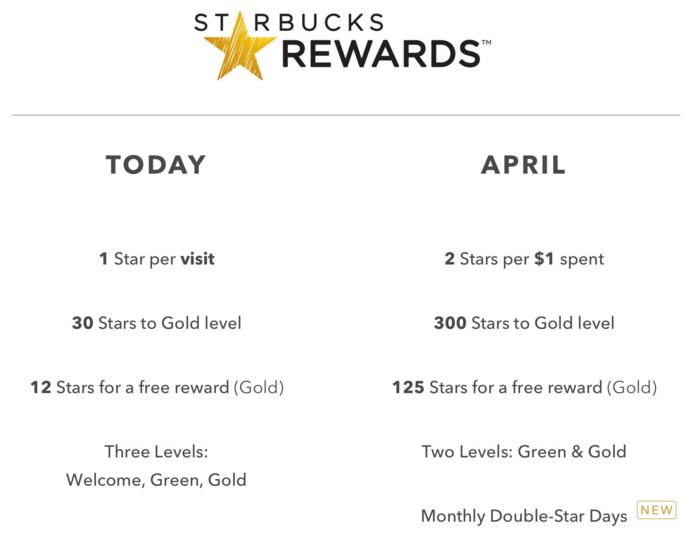
Inspired by its number one customer request, Starbucks recently announced its new rewards program (Coming, 2016). Some customers took their ire to social media to vent their frustration, threatening to abandon their loyalty to Starbucks. After all, they have been devoted customers for many years, why are they being punished?

Should Starbucks be concerned about this backlash? Well, not really. It appears that those who are complaining are actually small spenders — those who spend $2 for regular coffee (King, 2016). According to eater.com, the average Starbucks transaction amounts to $7.67 per visit (Shah, 2015). So both Starbucks and the big spenders win in the new system.

What has changed in the rewards program? Instead of one star per transaction, members will earn two stars per dollar spent (Coming, 2016). The change, which will start in April, can be viewed as a logical move. The most profitable customers will be rewarded. According to Starbucks, the change also prevents unnecessary work for its baristas when customers split their transactions in one visit to earn more stars (Barro, 2016).

For those of us who are addicted to Starbucks coffee, the change does not really matter. We will still be ordering our favorite coffee. And there is even an extra bonus that we will be rewarded for everything that we purchase.

Are you a loyal Starbucks customer? Are you raving or ranting about this change?

References:

Barro, J. (2016, February 25). Free coffee? Starbucks saves its loyalty for big spenders. Retrieved from http://www.nytimes.com/2016/02/25/upshot/free-coffee-starbucks-saves-its-loyalty-for-big-spenders.html

Coming Soon: More stars through Starbucks rewards. (2016, February 22). Retrieved from https://news.starbucks.com/news/starbucks-rewards

King, H. (2016, February 23). Starbucks customers furious about the new rewards program. Retrieved from http://money.cnn.com/2016/02/22/news/companies/starbucks-rewards/

Shah, K. (2015, January 15). Starbucks or Dunkin’ Donuts? Where America’s coffee loyalty lies. Retrieved from http://www.eater.com/2015/1/15/7551497/starbucks-dunkin-donuts-peets-coffee-spending-percent


Posted in Uncategorized | 14 Comments

Facebook Provides Businesses Location-Tracking Data

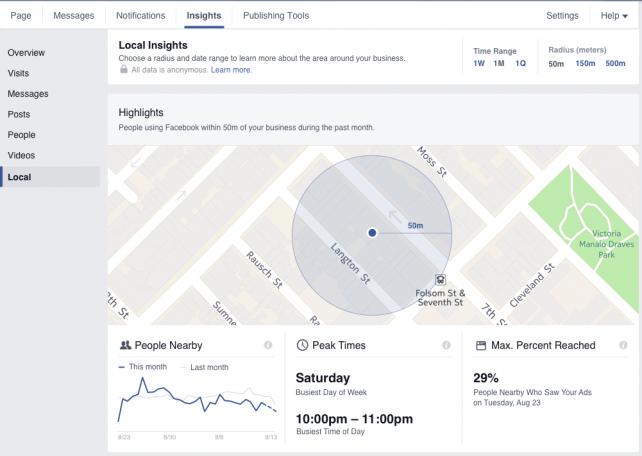
Last November Facebook launched a new initiative that lets businesses see how many Facebook users are in the vicinity of retail stores. Now, Facebook also lets businesses know the percentage of those passerby that may have seen the brand’s ad on the social media platform within the past month. Available for free to any business that advertises on Facebook and uses the page’s location features, the initiative comes in the form of a new local insights tab within Facebook’s page. On the tab, Facebook provides trend information, rather than the actual number of people that passed near a store, allowing businesses to see when particular groups of people are more or less likely to be nearby business locations and what times of the day or days of the week are the busiest in the neighborhood. That information includes breakdowns by age and gender, as well as whether people are from out of town or live within 200 kilometers of a store’s location. Facebook users who do not want the company to gather this type of location information about them can turn off the location tracking by clicking on account settings and then location settings.

target

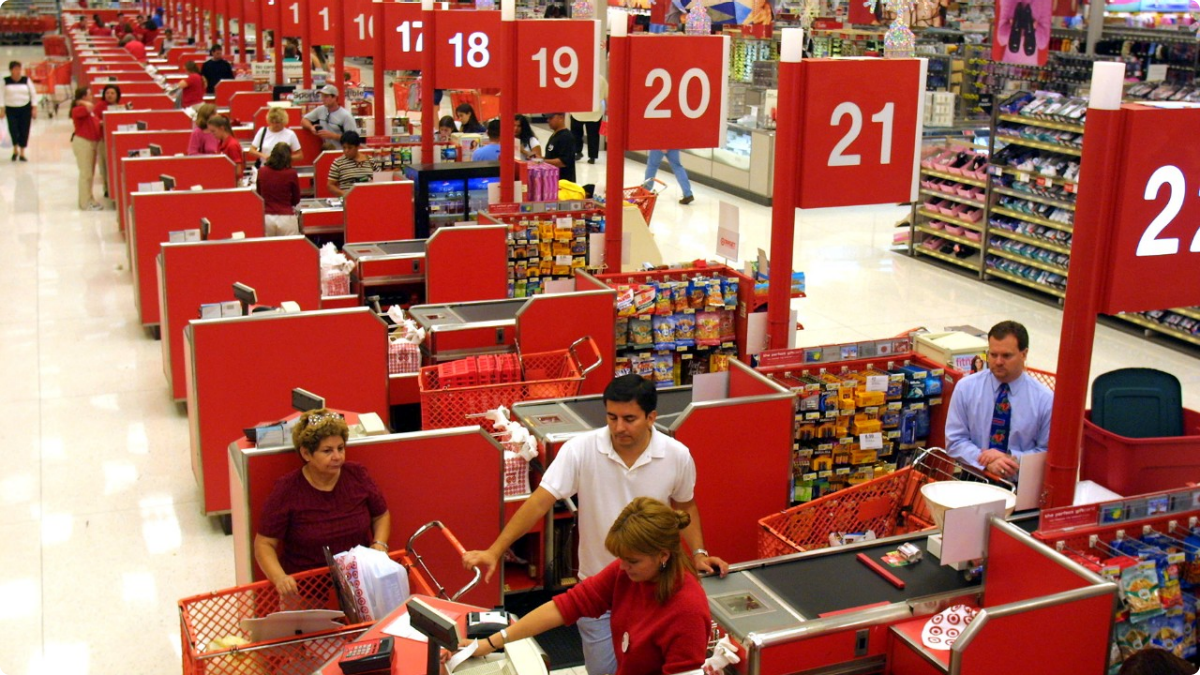
The desire among businesses to collect information on consumers is not new. Duhigg (2012) posits that large retailers like Target, for example, have been collecting vast amounts of data on customers from basic demographic information to the kind of topics they talk about online for years. The company’s goal: to understand consumer’s shopping and personal habits in order to market to them more efficiently.

targetar

Thanks to social media platforms businesses can gather even more insights into consumer’s habits to expand sales. Insights, according to Young (2014, p. 64), help creative agencies decide what to say in advertising, on the one hand, and help the agency creative people develop ideas and ads that connect with their targets, on the other. With Facebook’s latest geolocation initiative, companies will likely be able to generate even more compelling insights and therefore even more customized and targeted marketing campaigns unique to each audience to drive in-store traffic.

Despite its advantages for businesses, Facebook’s local insights tab does pose a number of ethical dilemmas. Should Facebook disclose users’ GPS tracking to businesses? Should businesses let Facebook users know they are tracking consumers’ locations to gather insights on them? How can businesses market more efficiently to consumers without letting them know they’re studying their lives? These are only a few of the questions businesses should contemplate when deciding to use geo-location data to reach their target audience.

References

Duhigg, C. (2012, February 16). How companies learn your secrets. The New York Times Magazine. Retrieved from http://www.nytimes.com/2012/02/19/magazine/shopping-habits.html?_r=0

Facebook now helps businesses see how many shoppers are nearby. (2016, February 24). Ad Age. Retrieved from http://adage.com/lookbook/article/social-media/facebook-helps-businesses-shoppers-nearby/302482/

Young, A. (2014). Brand media strategy: Integrated communications planning in the digital era. New York, NY: Palgrave Macmillan.

Posted in Uncategorized | 3 Comments

What makes a woman beautiful?

“What do you call a woman who believes in her ability to make anything possible? Beautiful.” This line is part of Neutrogena’s new See What’s Possible campaign.

https://www.youtube.com/watch?v=bsdxZOsqG6U

This is similar to the Dove Real Beauty campaign we studied this week. The commercial above does not focus on a product or an unattainable image of beauty to sell a product. Instead, Neutrogena says it is their job to help women put their best face forward. The commercial features women of different ages, ethnicities, and interests. All the adjectives used to describe these women during the commercial have nothing to do with their appearance. To complete the phrase “What makes a woman beautiful?” words like courage and passion. “Beauty is the ability to look in the mirror and see that anything is possible.”

The broad nature of the See What’s Possible campaign makes it capable of maintaining a consistent message even when adapted across multiple platforms. Incorporating it into a hashtag, #seewhatspossible, allows for easy tracking and consistency across all social media. It also keeps the campaign recognizable on multiple platforms.

Whoever was in charge of creating the See What’s Possible likely studied the Dove Real Beauty campaign and Always #likeagirl. These two campaigns saw success when they ran and focused on evoking emotion rather than promoting a product. Neutrogena was able to duplicate this thought process and market a similar campaign of their own.

Neutrogena’s See What’s Possible campaign speaks to women’s emotions. It makes an effort to connect with them and champion the idea that beauty is about more than looks. The diversity in the commercial backs this up. The focus instead is on qualities of inner beauty. Beauty is passion. Beauty is courage. Beauty is following your dreams. This is something to which all women can relate.

Posted in Uncategorized | 5 Comments

What Happened To The Black History Month Celebrations?

1

For as long as I can remember Black History Month was celebrated in the United States in an educational environment as well as by major consumer brands and media outlets on television and radio. During the late 90’s and early 00’s more commercials would showcase African American actors selling big brand name products to American consumer’s during the month of February.  In addition, news outlets would recognize national, regional and local hero’s from the African American community that had achieved over-whelming accomplishments not only for African American community, but American citizens as a whole.

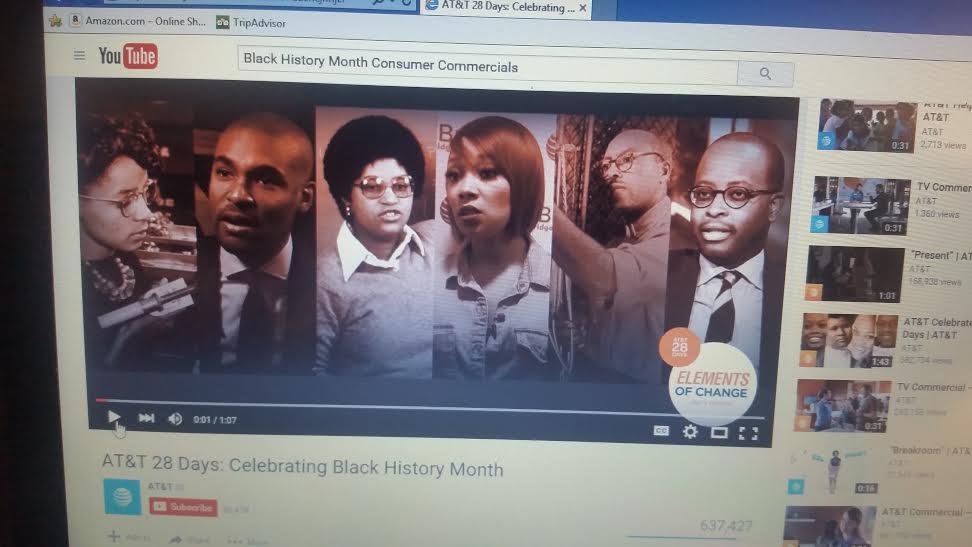
Today, Black History Month is almost not taken seriously by major brands or television networks. Since America has elected an African-American President, the push to showcase African-American consumers in advertisement and television specials during the month of February has dwindled down to almost nothing.  The Disney XD Channel and AT&T were the only two brands that created new television commercials for the 2016 Black History Month Celebration. Why is that?

d3aea66b-816b-4ca7-81ac-db58c27baf7d

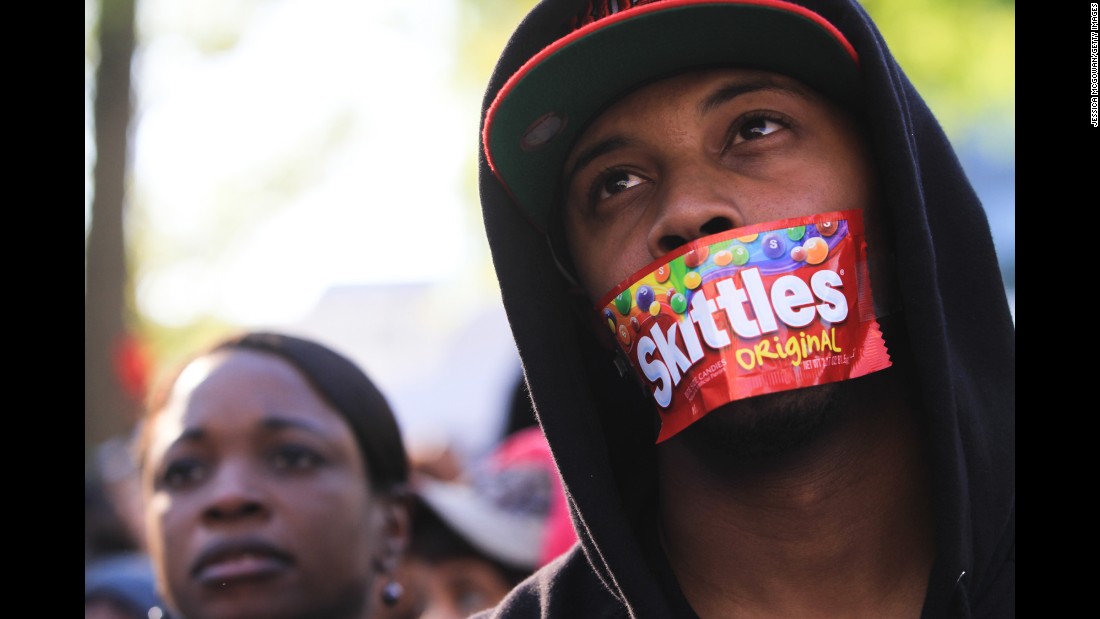
In the last year with the “Black Lives Matter” campaign, that began after young African-American citizens were being gunned down, chocked and beaten to death from the streets of Chicago, to St, Louis and Florida by over aggressive police officers, has been extremely relevant with all the major news outlets. But why can’t the positive attributes in the African-American community continue to be celebrate during the month of February? Where are the marketing dollars from the big brands to help push this agenda through? Clearly the manufactures of “Skittles” have profited from free publicity it gained in the Travon Martin case, but has yet to create any type of campaign or co-partnership with a national children’s organization to help educate young teenagers and keep them safe. But I have digressed.

151223131422-02-black-lives-matter-super-169

According to the NAACP, Negro History Week was originally started by Carter G. Woodson, the African-American historian, author, journalist and father of African-American History, to fill a void in Americas’ history books. Today, there is a large group of African-Americans in the United States that ask the question, why can’t we celebrate Black History Every Day? According to well-known actor and rapper Nick Cannon, “Anytime we can celebrate black cultural, I’m with it.” “We make black history every day, so why shouldn’t we celebrate it?’ That’s why the media and the big brands should re-think how they handle news stories and marketing campaigns not only in February but all year round.

As February 2016 comes to a close, American citizens are somewhat reminded about the achievements of numerous African American Inventors, Innovators and Civil Liberties Movement Leaders in the United States. Now with the invention of social media, very well-known historical data and unknown or under-reported African-American history information can be accessed by history buffs and students on a daily basis. Web-sites like “NAACP “, “Because of Them We Can” and “We Are Black History” will continue to tell the true stories of our fore fathers and how they helped build America in to what she is today, a symbol for freedom and equality for all. Maybe next year big brands and the media outlets will create marketing communication plans that collaborate with social media outlets like “Because of Them We Can” and create positive commercials that can be shown not only in February, but all year round.

References

Brown, S. (2016). Social Media Takes Black History Month Beyond The Classroom. Retrieved from: http://www.thewashingtonpost.com/social-media-takes-black-hisory-month-beyond-the-classroom

Gebreyes, R. (2016). Nick Cannon: We Make Black History Every Day” Retrieved from: http://www.huffingtonpost.com/entry/nick-cannon-we-make-black-history-every-day_us_56cf6010e4b0320bf7602bd?utm_hp_ref=black-history-month

Grinberg, E. (2016). Was February 2016 the Best Black History Month Ever? Retrieved from: http://www.cnn.com/2016/02/26/living/best-black-history-month-2016-feat/

NAACP. (2016). Black History Month. Retrieved from: http://www.naacp/black-history-month


Posted in Uncategorized | 2 Comments

Omnichannel Marketing & the Synergistic Impact

It’s that Friday night, you’re surrounded by textbooks and immersed in homework, maybe you have the T.V. on in the background, providing white noise are you chip away at your work. In the background you hear the commercial for pizza, it sounds delicious, you look up to the sight of melt cheese and savory pepperoni and it hits you, you are starving and you want, more than anything else, pizza! But how can you stop in the middle of you homework to go pickup pizza or even make the annoying phone call to a teenage pizza delivery boy who couldn’t careless about your precious pizza order. What do you do? Just make your life easy and order online at Papa John’s or better yet just Tweet Dominos and enjoy the savory tasted of victory!

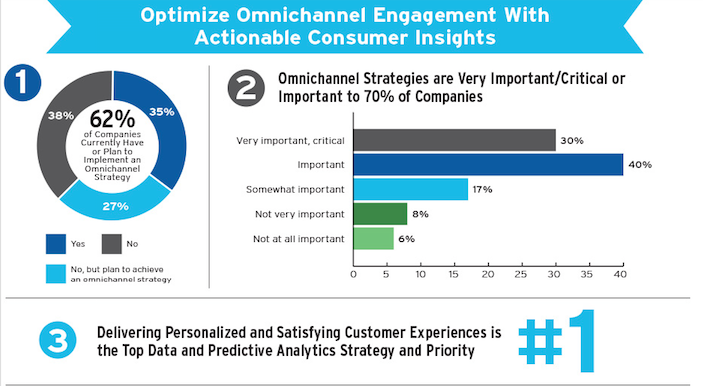
The idea of omnichannel marketing is becoming more and more recognized by marketers as an essential way to connect with and improve the customer experience. It is crucial for brands to create “an integrated customer experience,” reduces the number of “micro events” and allows for customers to have “one smooth interaction” (Newman, 2015).

Ominchannel simply put, “means that your business markets across as many channels as it can to reach the target audience. From websites and email, to social media and print, every channel presents an opportunity to market” (Morrison, 2015). This idea of the omnichannel is similar the connecting across media framework (“Integrated” in Integrated Marketing Communication presentation, 2016).

Screen Shot 2016-02-27 at 11.37.48 AM

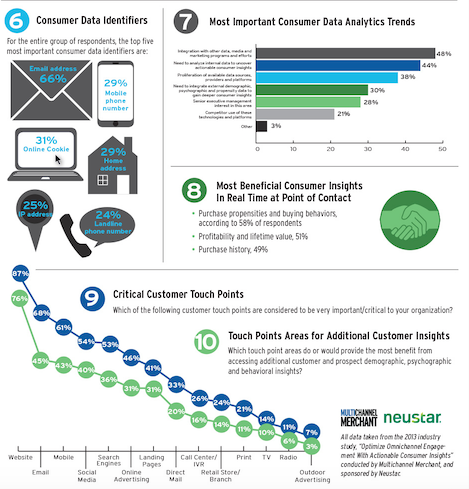
The idea of synergy is a popular idea. Apple incorporates this into their products ad marketing communication, which has proven to be highly successful. As people’s lives get increasingly busier, they will continue to insist that their brands do more for them. This increasingly busy lifestyle is turning consumers off of traditional shopping, omnichannel helps to create “an easy transition between online and bricks-and-mortar locations” (Newman, 2015).

Screen Shot 2016-02-27 at 11.38.47 AM

Another prime example of a company that is excelling at omnichannel marketing is Starbucks. The “company does an excellent job in providing a seamless user experience across all channels” (Trout, 2014). Starbucks customers can use phone application, Starbucks website and in store to check, manage and reload their Starbucks card balance. They can transfer funds, earn rewards, and even receive email updates and offers from Starbucks.  With the addition of Starbucks’ mobile order part of the app customers are  now able to do their entire transaction via their phone application and just pop in and pick up their drink from the counter. This omnichannel retail experience allows for the marketing communication to also be omnichannel, from the cardboard photo booth cutouts at the drink bar, the email offers sent through the app, and a host of other ways to connect and market to the consumer.

Company’s are more and more recognizing the importance of cross channel and omnichannel marketing and retail experiences. As communication specialists and consultants it is vital to understand the new and developing ways to connect with consumers.

References:

“Integrated” in Integrated Marketing Communication presentation, 2016.

Morrison, K. (2015, April 23). How Companies Are Using Omni-Channel Marketing to Reach Customers. AdWeek. Retrieved from http://www.adweek.com/socialtimes/how-companies-are-using-omni-channel-marketing-to-reach-customers-infographic/619265

Newman, D. (2015, November 3). The Top 10 Marketing Trends That Will Define 2016. Forbes. Retrieved from http://www.forbes.com/sites/danielnewman/2015/11/03/the-top-10-marketing-trends-that-will-define-2016/#470647ea7d58

Trout, J. (2014, May 14). 5 Excellent Examples of Omnichannel Retailing Done Right. Multichannel merchant. Retrieved from http://multichannelmerchant.com/must-reads/5-excellent-examples-omnichannel-retailing-done-right-14052014/

Posted in Uncategorized | 2 Comments

Power to The Peeple

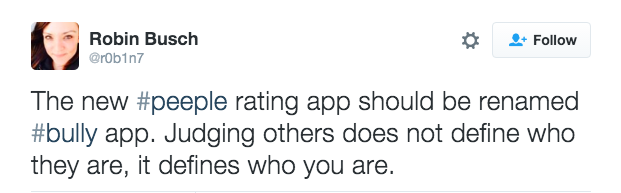
Every night restaurants open their doors to hungry patrons who have chosen their establishment because it received an overall positive review on Yelp. To date, there are over 90 million Yelp reviews posted on the platform. Even in 2016, word of mouth remains the most effective marketing force. Because we live in a recommendation world, we place trust in sites such as Angie’s List and RateMyProfessor. What happens, however, when the product people are rating is you?

Screen Shot 2016-02-26 at 12.58.09 PMPeeple

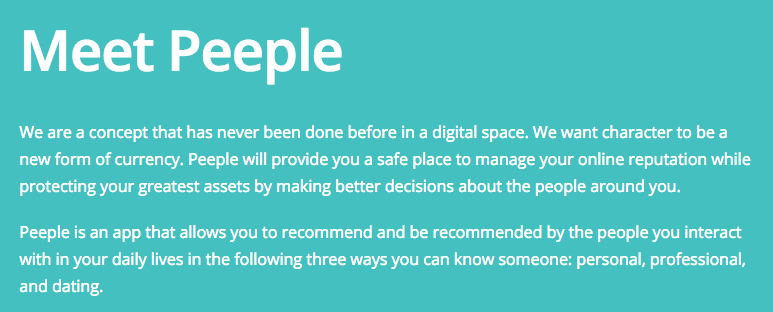
          On September 30th, 2015 co-founders McCullough and Cordray announced Peeple: A new app allowing users to rate the people they know and interact with on a daily basis. Ultimately, every last one of us would be reviewed personally, professionally and even romantically. The co-founders, who refer to themselves as “empathetic female entrepreneurs” who “want to spread love and positivity” had little idea of the backlash they were about to receive. (Sollosi, 2015)

Screen Shot 2016-02-26 at 6.13.11 PM


Twitter

            Self marketing is not a new concept for many of us. We post, like, and make connections on Facebook, Twitter, and LinkedIn everyday. Something about Peeple, however, is different and not in a good way. According to Entertainment Weekly, any Peeple user can produce a profile centered around you or me and there is nothing we can do about it. Without your consent, every girlfriend you ever cheated on is ready to write a scathing review as if you were a restaurant that messed up their order. (Sollosi, 2015)

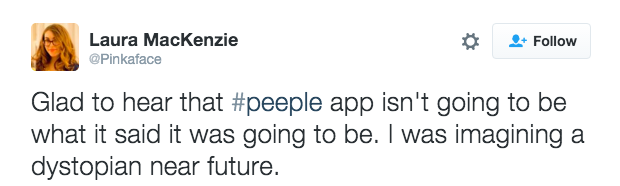
After the app experienced a social media firestorm, it disappeared from public thought until the co-founders recently resurfaced with a new game plan. The potential for negative reviews has been reigned in and a user with a profile has the opportunity to review and delete negative comments before they are publically posted. If you do not have a profile someone may still create one for you, but only positive reviews will be published. I question if this policy change even makes a difference to the initial problem of personal invasion. (Shandrow, 2015)

Screen Shot 2016-02-26 at 6.11.59 PM

Twitter

          Yes, this app does have its inherent problems, but are these advancements in app development inevitable? We rate and review many aspects of our lives, so wouldn’t the next logical step be each other? I would prefer those I’ve worked for, worked with, and broken up with not rate me like I am an Airbnb or an Uber ride on a five-star scale. From a marketing communication standpoint, transparency is important for success. How much is transparency worth if it jeopardizes your professional future? While the co-founders call Peeple a “safe place”, I question where ethics come into play. (Peeple, 2016)

References

Dewey, C. (2015, September 30). Everyone you know will be able to rate you on the
terrifying ‘Yelp for people’ – whether you want them to or not. Retrieved from                       https://www.washingtonpost.com/news/the-intersect/wp/2015/09/30/everyone-               you-know-will-be-able-to-rate-you-on-the-terrifying-yelp-for-people-whether-you-             want-them- to-or-not/

Kulwin, N. (2015, October, 26). The People Behind Peeple, the Internet’s Most Hated App,
Aren’t Going Away. Retrieved from http://recode.net/2015/10/26/the-people-                      behind-peeple-the-internets-most-hated-app-arent-going-away/

Peeple: Character is Destiny. Retrieved from http://forthepeeple.com/

Shandrow, K. (2015, November 6). ‘Yelp For People’ Co-Founder: Your Hate Only Fuels              My Resolve To Launch Peeple. Retrieved from                                                                                   http://entrepreneur.com/article/252542

Sollosi, M. (2015, September 30). ‘Yelp for people’ app will let you ‘rate’ real-life human
beings. Retrieved from http://www.ew.com/article/2015/09/30/peeple-app

White, A. (2015, October 1). These Women Claim They’ve Made An App That Lets You                  Rate Other People And The Internet Is Furious. Retrieved from                                                   http://www.buzzfeed.com/alanwhite/were-just-ordinary-peeeeeple-we-dont-know-            which-way-to-go?utm_term=.haGzkMn14A#.haGzkMn14A

Posted in Uncategorized | 5 Comments

Facebook’s new emoji’s will have you feeling all sorts of ways

We’ve all been there, scrolling on your Facebook newsfeed and your friend posts about losing a loved one.  Do you “like” it?  Or do you just leave it because you don’t actually “like” it since who actually likes it when sad events happen?

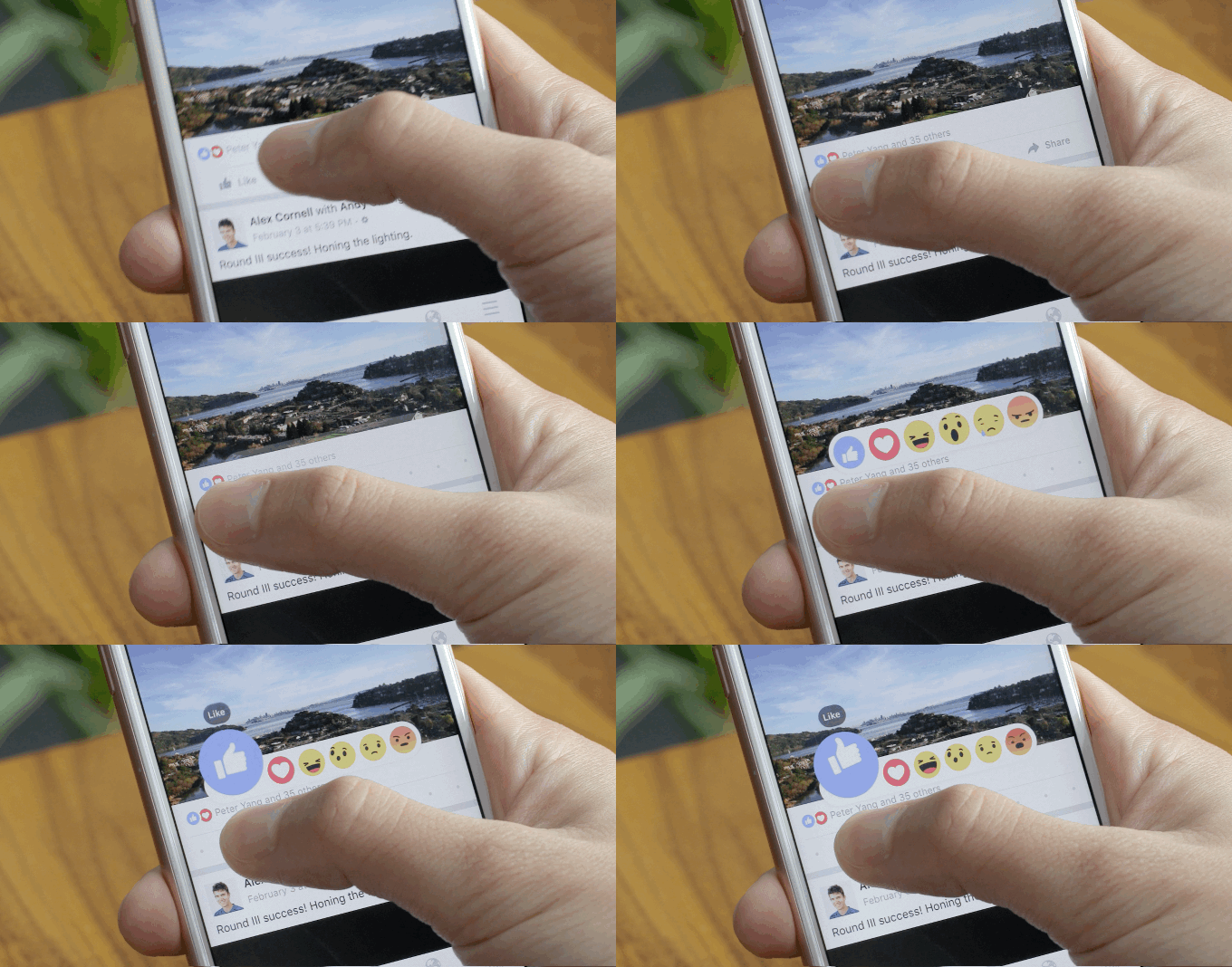
Well, gone are the days of those awkward “likes” because today, Facebook launched emoji reactions.  Facebook users can still “like” and post comments , but can now express love, happiness, sadness, anger, or when they are wow’d with their new emojis (Tan, 2016).

FB Reactions

Source: Facebook

By holding down the holding down the “like” button on mobile or hovering over the icon on desktop, gives users an expanded menu allowing them to choose from six different animated emoji “Reactions” (Chaykowski, 2016).

Facebook Reactions How To

These reactions are not meant to express the full range of human reactions, but Facebook wanted to give people a fast and simple way to express thoughts or feelings in a positive, supportive way” (Guyunn, 2016).

“Not every moment you want to share is happy,” CEO Mark Zuckerberg wrote in a Facebook post. “Sometimes you want to share something sad or frustrating. Our community has been asking for a dislike button for years, but not because people want to tell friends they don’t like their posts. People want to express empathy and make it comfortable to share a wider range of emotions” (Guynn, 2016).

But what does this mean for businesses on Facebook?

Businesses before could only gauge how users were feeling through comments, but with these new reactions, they are able to aggregate more UGC (user generated content). For example, news outlets will be able to garner more engagement from content surround politics or even international affairs. Corporations will be able to take these data and implement them into their marketing communications plans. Advertisers will be able to pinpoint what we’re passionate, angry, or interested in based on these data, whereas previously companies had no idea what users disliked, or any other emotions.

So, how do you feel about these new emojis?  Love?  Happy?  Sad? Angry?  Wow’d?

Sources:

Costine, J. (2016, February 24).  Facebook Enhances Everyone’s Like With Love, Haha, Wow, Sad, Angry Buttons.  TechCrunch.  Retrieved from http://techcrunch.com/2016/02/24/facebook-reactions/?ncid=rss

Chaykowski, K. (2016, February 24).  Facebook No Longer Just Has A ‘Like’ Button, Thanks To Global Launch of Emoji ‘Reactions.’ Forbes.  Retrieved from http://www.forbes.com/sites/kathleenchaykowski/2016/02/24/facebook-no-longer-just-has-a-like-button-thanks-to-global-launch-of-emoji-reactions/#53c62074994c

Guynn, J. (2016, February 24). Meet Facebook’s new emoting emojis: Love, haha, wow, sad, and angry.  USA Today.  Retrieved from http://www.usatoday.com/story/tech/news/2016/02/24/facebook-reactions-launch/80803468/

Tan, Y.Z. (2016, February 24).  Are You Liking Facebook’s New Emojis?  Scrap That.  Do You ‘Wow’ Them?  NPR.  Retrieved from http://www.npr.org/sections/alltechconsidered/2016/02/24/467936392/are-you-liking-facebooks-new-emojis-scrap-that-do-you-wow-them

Posted in Uncategorized | 3 Comments

It’s Not Broke, But Fix It!

For companies operating, multiple measurements for success exist. The most preferred bottom line measurement is whether the company made a profit thru the last quarter. One company that has consistently proven that it will create a profit is McDonald’s Corporation (staff, 2016).

McDonald’s has been excelling at or setting new standards in the business of fast food service over half a century (Hunt, 2013). For some specific reasons of consistency, innovation and affordability, McDonald’s has become a worldwide recognized brand (Bailey, 2015). What parts of these characteristics though would having a successful campaign slogan fall under? Certainly not consistency.

Over McDonald’s 61 years of existence, it has employed numerous campaign slogans (Hunt, 2013). Regardless of the slogan, McDonald’s has been successful. With that being the case, a point could be made that McDonald’s current and most successful to date slogan (I’m Lovin’ It) should not go away anytime soon. More on why later.

McDonald’s currently faces a strong push from trendier and healthier competition (Bailey, 2015). New competitors such as Chipotle and Panera Bread are the latest in new restaurants creating buzz with consumers. Most discerning of all, menu size has negatively impacted the fast food giant from making fast food (Jargon, 2014). Increased menu size is contributed to the desire to compete with specialty food items found at rival competitors.

The operating environment would suggest the need to fortify and consolidate strengths to once again emerge as the undisputed leader in the fast food market (Bailey, 2015). Findings from the Reputation Institute suggest McDonald’s would serve itself best and maintain its hold on the consumer majority base by getting behind a core purpose and standing behind it (Balakrishnan, 2015).

McDonald’s still reins king in the fast food market. There’s still millions and millions that can be indeed counted as lovin’ it. McDonald’s menu size reduction is just in time to embrace the research findings from the Reputation Institute. There’s no need to have your #1 burger (Big Mac) on the menu competing with 15 other burgers. McDonald’s must get back to the menu items that brought millions and millions to it over the years. To do so would show McDonald’s is aware of the changing environment while demonstrating resiliency in the process. The need then for a new catchy slogan in 3-5 years fades away while millions and millions keep lovin’ it!

mcdonalds-im-lovin-it

References

Bailey, R. (2015, December 22). How Has McDonald’s Been So Successful for So Long? Retrieved from francisedirect.com: http://www.franchisedirect.com/information/markettrendsfactsaboutfranchising/thesuccessofmcdonalds/8/1111/

Balakrishnan, A. (2015, June 14). Report: Americans trust Chipotle, but not McDonald’s. Retrieved from usatoday.com: http://www.usatoday.com/story/money/business/2015/06/14/restaurant-chain-reputation-mcdonalds-chipotle/71076802/

Hunt, K. (2013, September 2). Looking back on 58yrs of McDonald’s slogans. Retrieved from thrillist.com: https://www.thrillist.com/eat/nation/looking-back-on-58yrs-of-mcdonalds-slogans

Jargon, J. (2014, December 3). McDonald’s Menu Problem: It’s Supersized. Retrieved from wsj.com: http://www.wsj.com/articles/mcdonalds-menu-problem-its-supersized-1417631056

staff, C. (2016, January 25). McDonald’s beats earnings on surging US sales, China demand. Retrieved from cnbc.com: http://www.cnbc.com/2016/01/25/


Posted in Uncategorized | Comments Off on It’s Not Broke, But Fix It!