New, Existing, or Modified Marketing Approaches for Social Media?

In an article that I recent came across, the author made some good points on how some of the more traditional marketing concepts no longer apply in today’s world.  While the article did not go too in depth into specific concerns, it did highlight how the company reaches their audience and how it is changing, along with the associate challenges.  In the case of this specific article, the company was concerned with educating their customers on their products, including how they work and what they can do for the customer.  The article speaks of how marketing approaches need to be adapted to meet the changing environment that is found today, so that they can get their message across.

Gary Vaynerchuk’s 2013 book, Jab, Jab, Jab, Right Hook, also demonstrates this concept.  Vaynerchuk discusses how to effectively market utilizing current social media platforms.  These platforms each require different approaches to reach their respective audiences.  It is important for a company to be proficient to these various approaches in order to effectively reach their audience.  Through the proper use of emerging platforms, new, innovative, and effective ways of reaching intended audiences can be utilized.

The platforms that are used for marketing have evolved into new, previously unchartered areas.  New approaches are needed to be able to take full advantage of what each of the social media platforms have to answer.  However, it seems that many of the principles of marking for social media applications are just repurposed principles of traditional marketing.  Each social media platform has its own individual requirements.  By adapting what is already known in marketing, these individual requirements might be able to be addressed without having to create an entirely new approach.  However, that should not preclude the development of new marketing approaches, as the field is constantly evolving.

What do you think?

Are brand new approaches needed for changing marketing platforms?

Are traditional approaches adaptable to the new platforms?

Do you think that a combination of both existing and new approaches are best?

References

Soat, M. (2016). A branding lesson from Connected Lighting Company TCP. American Marketing Association: Marketing News. Retrieved from http://www.ama.org

Vaynerchuk, G. (2013). Jab, jab, jab, right hook. New York, NY: HarperCollins Publishers.

Posted in Uncategorized | 2 Comments

Public Messaging: From service to stardom.

Captain Clay Higgins calls himself a patriotic American. Others refer to him as America’s toughest cop or even “The John Wayne of Cajun Country”. He’s most known for his viral Crime Stoppers videos where he speaks directly to the criminals in an intimidating and demeaning manner as opposed to the traditional method of addressing the Crime Stoppers audience (potential witnesses or people who could send in their tips to help solve crime).

Higgins’ tone has raised a few eyebrows but overall, he’s been more popular than not and has aired regularly on local TV. He caught the attention of Jimmy Fallon and The Tonight Show in 2015 as well. And many cops think that, after seeing all they’ve seen and done all they can do,  he’s just saying what they want to say and it’s how they feel about the criminals they go after.

A few weeks ago, Captain Higgins posted another video (seen below) and it caused quite the controversy.

After this video, the American Civil Liberties Union (ACLU) spoke out against Higgins saying he was ignoring the constitutional right to a fair trial (ABC News, 2015), meaning he was speaking to people without considering they were “innocent until proven guilty”.

A week later, pressured by the bureaucracy of his police department, Captain Clay Higgins turned in his badge and willingly resigned. In a press conference, he said:

“I would rather die than sacrifice my principal…People believe in the message and it’s about courage and standing up for what’s right and that’s what I’m doing today….I am not concerned and will continue to not be concerned about the gnashing of teeth from the very small part of the population that has a problem with the truth.” (Captain Clay Higgins, 2016)

But did the Captain take it too far? Was his messaging unethical or do you think there’s a place in society for harsh and intimidating messaging towards criminals?

According to Clay Higgins’ Facebook page, as of March 11th,  he’s received 26 television show offers (reality show types) and he says “the prospects are very very high”.

But, if police are not willing to showcase this style of messaging and the ACLU are against it, do you think it’s acceptable if positioned as a reality TV show?

Posted in Uncategorized | 3 Comments

The power of positivity: The missing puzzle piece to a successful personal brand

Think_Positive

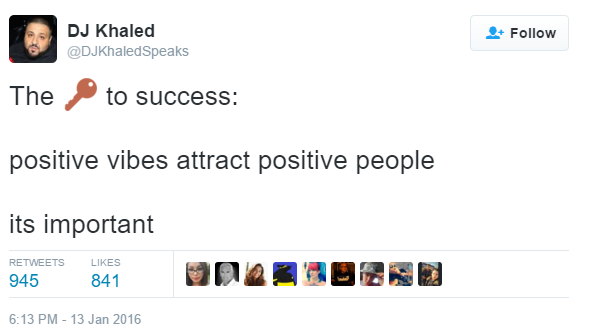
We all know brands are powerful.  They’re a big business that deliver a promise to the world and help define our expectations. We often associate brands with a product and/or a service, but in reality, personal brands are equally as powerful.  Our unique personal brand is instrumental in not only our ability to successfully connect with others, but also in giving us at that competitive edge to stand out and showcase any specializations we might have. (Chritton, 2015).  As Muse (2012) explains, a personal brand is all about YOU, what you represent and what others (i.e. loved ones, coworkers, students, etc.) should expect in their interactions with you. Bottom line, personal brands are a big deal and instrumental in YOUR success. Although each of us bring unique attributes that define our personal brand, for some, the power of positivity might be the missing puzzle piece to a more successful personal brand.

Some research suggests that a positive attitude is critical in navigating life’s daily challenges, allowing people to envision success, thus more likely to overcome obstacles and achieve goals (Hagood, 2015).  But more importantly, positivity is contagious and a critical attribute in a successful personal brand (Hagood, 201).  As Peter Coughter (2012) explains, “an audience will tend to mirror the emotion we establish via our attitude” (p.53).  Thus, if you exude a positive attitude and a seemingly cheerful disposition, more often than not, receptivity by others will be enhanced as people will emulate your demeanor (Hagood, 2015; Coughter, 2012; Delaney, 2011).

Positive 1

While positivity might come natural to some of us, for others, it’s a work in effort. That being said, here are a few tips that can enhance your positive demeanor and improve your overall personal brand:

  • Express Gratitude: In the fast-paced world we live in, we often lose sight of the little things – things that we should appreciate but often do not. If this sounds like you, it might be a good idea to consider a change. As Jantz (2014) explains, being grateful for the simplest (yet often overlooked) things in your life is the quickest way to change your demeanor and enhance your positivity.
  • Smile More: Did you know that there is scientific evidence that proves that smiling is contagious? In a recent study researchers confirmed that “seeing one person smiling activates the area of your brain that controls your facial movement, which leads to a grin” (Detweiler, 2014, p .1). Not only will your pearly whites elicit a positive response from others, smiling can also immediately uplift your mindset and improve your mood (Jantz, 2014).
  • Reframe Obstacles and Setbacks: In the words of Albert Einstein, “Problems cannot be solved at the same level of thinking at which they are created.” Thus, when obstacles arise, an optimist will find opportunity, actively searching for a solution that might transform the problem into endless possibilities and growth (Warrell, 2012).

Thus, incorporating these three simple tricks in your everyday interactions might not only improve your positivity, but might also enhance your receptivity by others and improve your overall personal brand.   What do you think – is positivity the missing puzzle piece to your personal brand?

Posted in Uncategorized | 2 Comments

Consumer Research: Big Data Mindset VS. Traditional Marketing Mindset

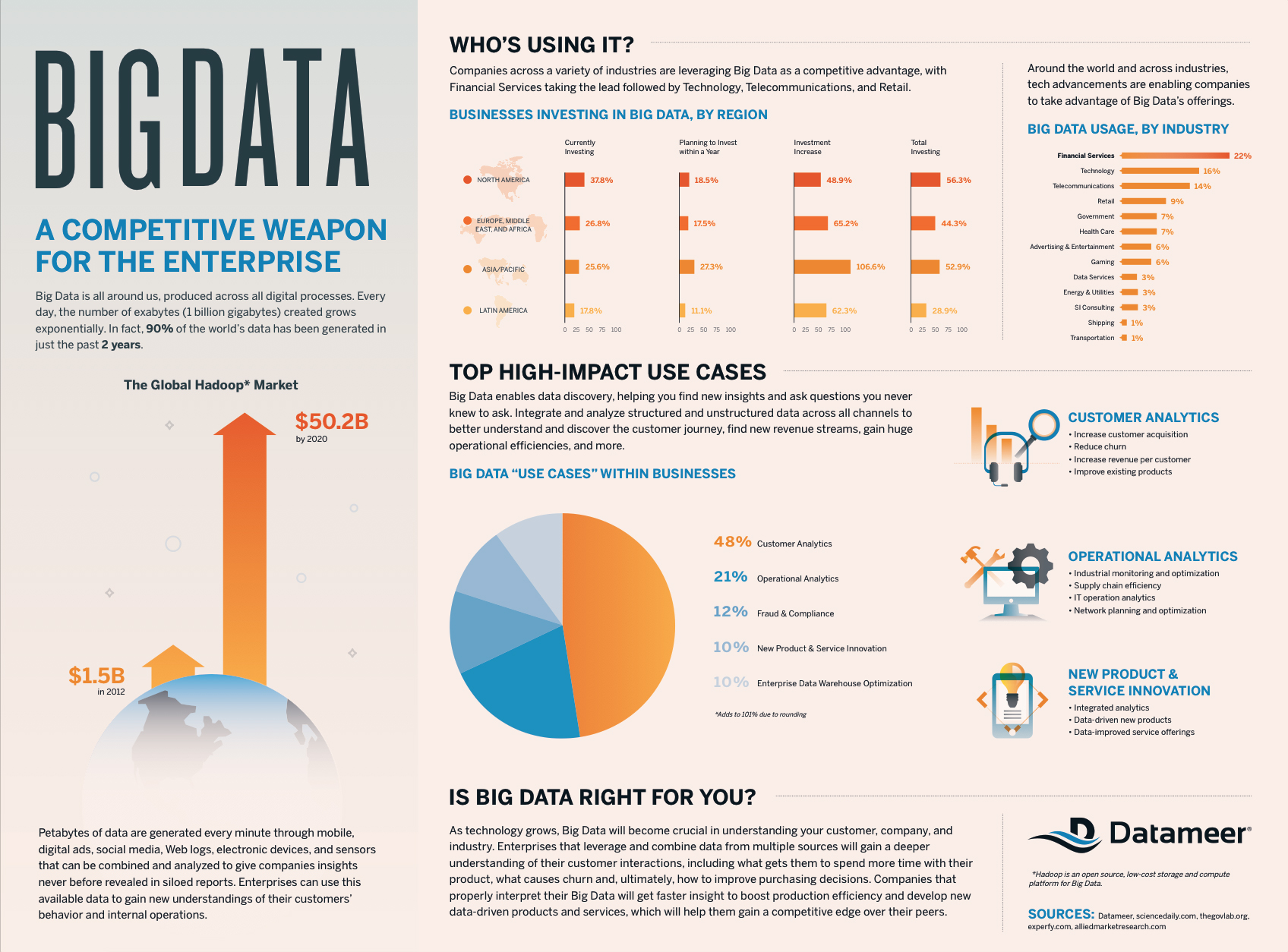
Revolutions are happening in many industries as the trend of Big Data prevails in recent years. To occupy an advantageous spot in the data era, companies are aggressively seeking for their conjunctions with the Big Data. More traditional mindsets and methods that have dominated over the past decade are shaken by the occurring data wave. People are always asking whether Big Data will become a transitioning point that can overturn all the previously established systems of certain industries. Doubts and debates around this issue seem to be endless. In the marketing realm, the emergence of big data is shocking the traditional marketing research. In 2014, there had been 48% of companies using consumer behavior data to generate consumer insights (Martin, 2014). The heated debate aroused about whether the big data research can finally replace the traditional consumer research in the process of making decisions. To have a closer glance at this question, the core difference of big data marketing research and traditional consumer research should be addressed.

bigdata-infographic1

(http://www.datameer.com/company/datameer-blog/the-state-of-big-data-adoption-a-glance-at-top-industries-adopting-big-data-top-use-cases/)

There is no doubt that “Big Data” has become a buzzword. However when it comes to the difference between big data and traditional marketing research, the majority of non-data experts may only know that big data distinguishes itself by using a large volume of data to guide the marketing decision-making process. In other words, compared to the traditional method, the big data marketing research is more quantitative. However, what’s deep-rooted beneath its data-driven method is its big data mindset, which is completely different from the traditional marketing mindset.

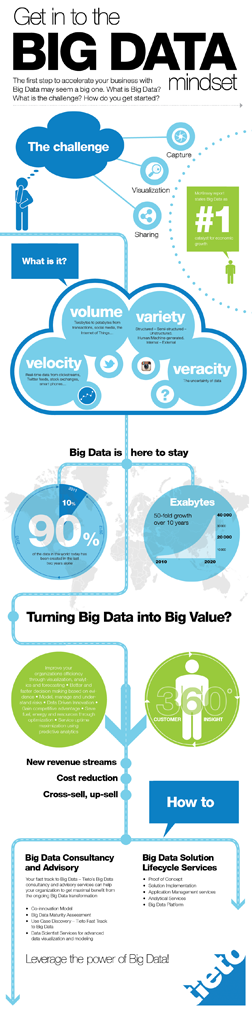
So what’s the unique big data marketing research mindset? I happened to realize the existence of big data mindset in my Big Data course two weeks ago. We were assigned a task to generate a business report for NBC from a pile of data. Just as what I usually do, I began by deciding the theme “How can NBC find its valuable clients according to the data information?”. Then, before actually accessing the data, I started to brainstorm what kinds of clients could be considered as valuable. After narrowing down the types of valuable clients, I used data to locate them. Seems to be a well-organized logic, right? However, my professor commented on my report that I was not using the big data mindset but a traditional marketing mindset to solve the problem, which means I came up with presumptions of how to answer my business question before analyzing the data. Nevertheless, the big data mindset requires people not to let preexisting knowledge and the hypothesis lead the analysis but to firstly extract information from data without a specific purpose and then think about how to apply the findings in the decision-making process. As a paper summarizes, the traditional marketing research mindset is knowledge-based whereas the big data mindset is ignorance-based (Erevelles, Fukawa & Swayne, 2016). To better understand it, let’s take the consumer research as an instance. Traditionally, we observe consumer behaviors to generate some hypotheses. Then we come up with the interview and survey questions based on those hypotheses. Before actually analyzing the consumers, we have already thought about what questions we want to explore, what kinds of data we should collect and even what possible answers we might get from consumers. Thus, it’s called knowledge-based mindset, which requires marketing knowledge and experience to generate better research results. On the opposite, conducting consumer research with big data doesn’t need people to set research directions at first. Data analysts just acquire the consumer behavior data like what they purchased and how much they spent, and then analyze the relations among different variables. Results like “cakes are usually sold with soaps” or “people who buy broccoli are more likely to buy sodas” can be generated. (These relations are randomly made up) We don’t know what kind of results we expect and just find whatever can be found. So this kind of mindset is “ignorance-based.”

14-0082_csi_infographic_big_data

(http://www.tieto.com/services/information-management/business-intelligence/big-data)

Is there a better one between the two kinds of mindsets? In order to answer this question, a pros and cons analysis should be done. In my view, the ignorance-based mindset is more creative, flexible and limitless than the knowledge-based mindsets. Sometimes, the hidden relations of consumer behaviors are unexpected and hard to explain with people’s limited cognitions. Just like you can’t imagine why there is a connection between cakes and soaps. In this sense, big data is able to break through human’s cognition and imagination blind points as well as dig out some surprising but valuable insights. The traditional marketing mindset is superior to big data mindset in its explanatory ability of consumer behaviors. There is a dominant voice that although big data is able to perceive “what is happening” and predict “what will happen”, it can never tell us “Why it happens” (Fromen, 2014; Finding a Place for Market Research). Thus, traditional marketing research mindset doesn’t skip the explaining process and directly jump into the conclusion part like the big data mindset does, it tries to discover deep reasons covered by the phenomenon with the guide of preexisting knowledge, hypotheses and marketers’ wisdom. Furthermore, the lack of explanatory ability of consumer behaviors can hinder the development of marketing theories since the result-oriented big data marketing research is so pragmatic that its results may only serve limited cases and lack the generalization ability. Rather than identifying which mindset is better, I am inclined to believe that they are serving as each other’s complementary part. The two different kinds of mindsets will co-exist and even co-operate together in the future because we need both of the fresh and creative insights and deep explanatory findings; we care about both “What consumers’ behaviors are” and “Why they behave like that”.

References:

Erevelles, S., Fukawa, N., & Swayne, L. (2016). Big data consumer analytics and the transformation of marketing. Journal of Business Research, 69(2), 897. doi:10.1016/j.jbusres.2015.07.001

Fromen, A. (2014). Why big data will never replace market research. Retrieved from http://www.greenbookblog.org/2014/05/19/why-big-data-will-never-replace-market-research/

Wharton Business School. (2014). Finding a place for market research in a big data, tech-enabled world. Retrieved from http://knowledge.wharton.upenn.edu/article/finding-place-market-research-big-data-tech-enabled-world-2/

Anonymous. (2015). Getting into the big data mindset. Retrieved from http://www.tieto.com/services/information-management/business-intelligence/big-data

Sebastian. (2015). Big data and market research myths and missteps. Retrieved from http://data-informed.com/big-data-and-market-research-myths-and-missteps/

Posted in Uncategorized | Comments Off on Consumer Research: Big Data Mindset VS. Traditional Marketing Mindset

Oh snap! Made you look.

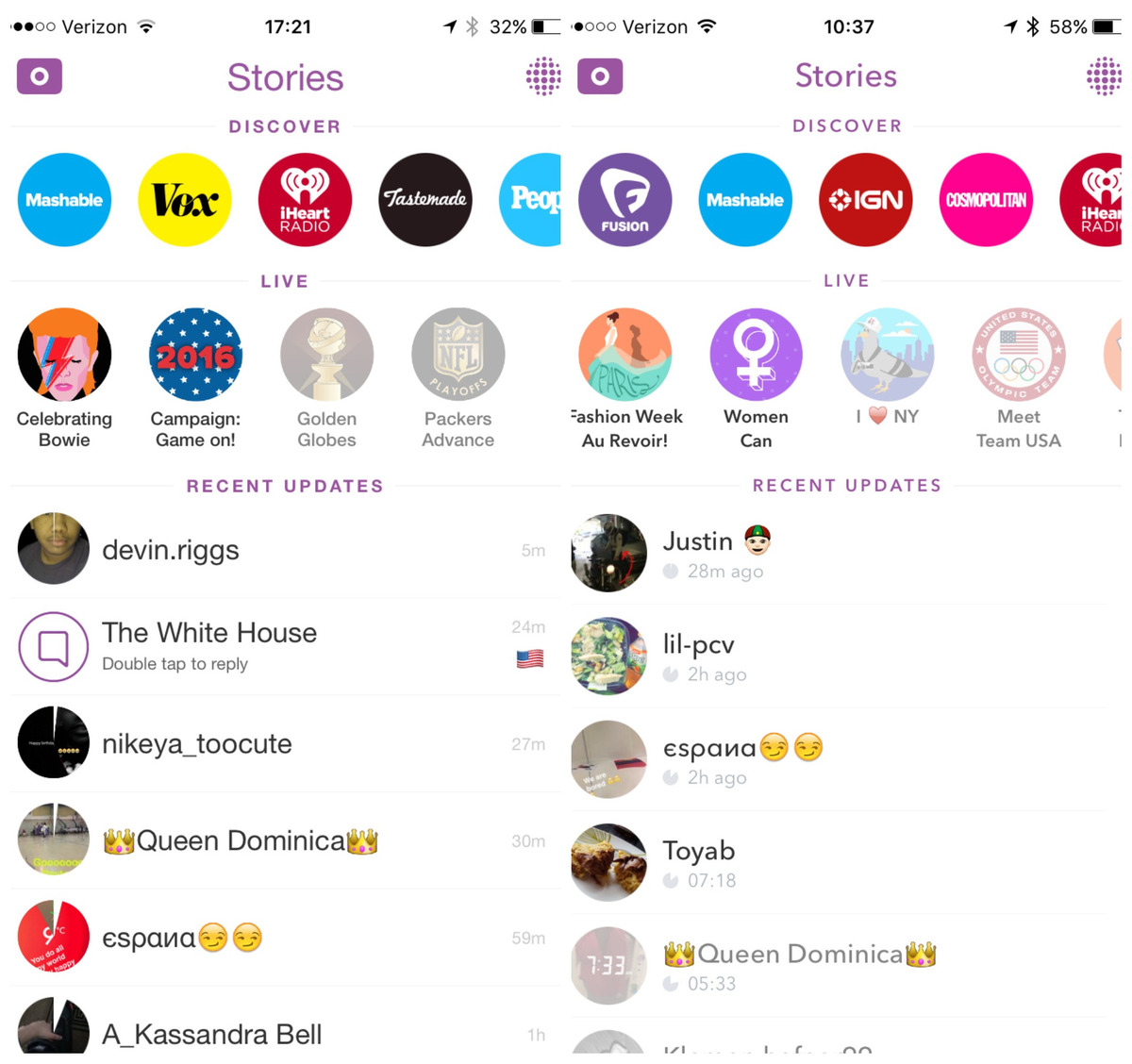
I’m sure you all have noticed by now, but not only did the latest Snapchat update fix a few bugs and make the application run faster, there was also one major unannounced change: the font. Out with Helvetica and in with Avenir; this new font now appears throughout the Snapchat application.

Snapchat-fonts

Now, let me repeat again: it was only a font change. But then came the tsunami of Twitter posts and memes about the update, and the verdict is? PEOPLE HATE IT.

https://twitter.com/GabSaab/status/707268063780012032

Snapchat, or “the insanely fast-growing and – to people born before 1990 – straight-up insane messaging app and media platform” is rapidly gaining popularity, with over 100 million active daily users today (Chafkin & Frier, 2016). However, it seems even the entertaining collection of filters and the A-list celebrities are not enough to keep these users completely satisfied. This got me to think, how could something so subtle as a font change cause such a frenzy?

It turns out that brands today need to align not only their mission statement with their brand identity, but also their typography. Font type has a significant impact on how a brand is portrayed to the public and can be used to communicate to an audience and reflect a brand’s character (Halek, 2014). Brands that wish to portray a more professional or luxurious feel can use classic and traditional serif fonts (e.g., Times New Roman, Georgia), while for the more modern and trendy brands, sans serif fonts (e.g., Helvetica, Arial) are the way to go.

fonts2

Most importantly, it’s crucial for a brand to be consistent and allow their consumers to become familiar with their visual style, because people become attached to the feel of certain brands through visual elements (Guerrero, 2014). When a reliable interface changes, “people experience everything from distaste to a sense of betrayal,” (Halek, 2014). This is supported by experiences that BP and Gap went through when they attempted to rebrand their company, but ultimately failed due to uproars from the public (Hardy, 2013). However, there are other cases like when Apple recently changed their font with the iOS 9 update. While initially people had similar reactions like they did with Snapchat, everyone eventually got used to it.

It seems like even though people may like new things, they don’t really like change. Brands today need to learn how to find that happy medium between updates and innovation. I’m curious to hear what you guys think about this matter and how much of an impact it has on a brand today? How do you feel about Snapchat’s font change, or any other brands for that matter? Can brands truly become successful, so long as they align their identity down to the typography dot?

Thanks for reading! 🙂

Jane Yi


Sources:

Bell, K. (2016, March 8). No, you’re not going crazy: Snapchat’s ios app has a new font. Mashable. Retrieved from http://mashable.com/2016/03/08/snapchat-new-font/#MTpdgh8QPSq4

Chafkin, M. & Frier, S. (2016, March 7-13). If you don’t know it by now, you’ll never make millions on snapchat. Bloomberg Business. Print.

Guerrero, A. (2014, December 14). The art of building a consistent and professional brand identity. Canva. Retrieved from https://designschool.canva.com/blog/brand-identity/

Hardy, T. (2013, October 14). 10 rebranding failures and how much they cost. Canny. http://www.canny-creative.com/2013/10/10-rebranding-failures-how-much-they-cost/

Halek, K. (2014, October 2). How to use typography to align brand identity. Speckyboy Design Magazine. Retrieved from http://speckyboy.com/2014/10/02/use-typography-align-brand-identity/

Koerber, B. (2015, September 16). You’re not going crazy: Apple just changed the font in ios 9. Mashable. Retrieved from http://mashable.com/2015/09/16/ios-9-font-change/#WU3.wKXrPqqd

Web Design. (2013, December 13). Are your fonts projecting the right business image? Wix. Retrieved from http://www.wix.com/blog/2013/12/choosing-fonts-for-your-website/


Posted in Uncategorized | 3 Comments

The Fast-Food Breakfast Battle

In the world of fast-food restaurants, there is currently an epic war being waged on the breakfast battlefield. Since the release of their breakfast menu in early 2014, Taco Bell has being going head-to-head with long-standing breakfast champion, McDonalds, for the public’s breakfast dollar (Malcom & Whitehouse, 2016).

Since the advent of their breakfast campaign, Taco Bell has directly attacked McDonalds, releasing ads like “Ronald McDonald loves Taco Bell Breakfast,” which featured dozens of men named Ronald McDonald eating their infamous Waffle Taco, and “Breakfast Defectors,” which showed people trapped in a land of “circle food” controlled by very ‘Ronald McDonald’ -esque troops (Morrison, 2014).

While Taco Bell has been successful in boosting revenues by joining the previously untapped breakfast sector, they have yet to overtake McDonald’s popularity or sales rates (Munarriz, 2016).

The most recent development in the continuing battle for breakfast greatness has come today with Taco Bell’s announcement of the $1 Breakfast Menu. This new value menu will feature 10 $1 items, several of which include bacon, something not available on McDonalds’ value menu. 

Taco Bell's new $1 breakfast menu.

The press release released by Taco Bell today, in their signature tongue-in-cheek style states, “TACO BELL® REVEALS AMERICAN CONSUMERS WOULD RATHER PAY $1 VS. MORE THAN $1,**” claiming that this recent research coincidently coincides with the release of the $1 Morning Value menu.

While this is obviously not true, the survey results included in the press release are – and they were collected using a relatively new social media app to the business world, Wishbone, a crowd-sourcing app that allows people to vote between two (or more) pictures to help users make decisions. Although Taco Bell is a company known for its social media interaction, this marks Taco Bell’s first foray into the Wishbone marketing world, and they announced that they plan to use it much more in the future (Taco Bell, 2016).

With this latest, albeit delicious, attack from Taco Bell, it will be interesting to see if McDonalds breakfast revenue or number 1 status is affected at all. Personally, I think it is going to take a lot more than some $1 menu items to topple the champion, but it remains to be seen.

Do you think Taco Bell’s attacking tactics are going to be effective in the long run? What moves can they make next to try to stay ahead in the breakfast game?

References:

Malcom, H. & Whitehouse, K. (2016). Taco Bell’s $1 menu heats up breakfast Battle. USA Today. Retrieved from: http://www.usatoday.com/story/money/2016/03/10/tace-bell-announced-1-breakfast-menu/81574282/

Morrison, M. (2014). Taco Bell’s breakfast endorser: Ronald McDonald. AdAge. Retrieved from: http://adage.com/article/news/taco-bell-enlists-army-ronald-mcdonalds-breakfast-ads/292337/

Munarriz, R. (2016). Taco Bell bucks breakfast; Is McDonald’s worried? The Motley Fool. Retrieved from: http://www.fool.com/investing/high-growth/2016/03/10/taco-bell-bucks-breakfast-is-mcdonalds-worried.aspx

Taco Bell. (2016). TACO BELL® REVEALS AMERICAN CONSUMERS WOULD RATHER PAY $1 VS. MORE THAN $1** [Press Release]. Retrieved from: https://www.tacobell.com/news/american-consumers-would-rather-pay-less


Posted in Uncategorized | 6 Comments

After Focusing on “Real Women,” Now “Real Men”? Dove’s “Men+Care” Campaign

In the Dove case study (Deighton, 2008), we learned why its “Campaign for Real Beauty” became arguably one of the most talked-about and successful integrated marketing campaigns in the last decade. Not only did it break new ground (such as by posting ads directly to YouTube, rather than through traditional channels), but it also generated debate about the harmful impact of beauty standards on women. To that end, its campaigns featured “real” women rather than models, and encouraged women to celebrate their natural beauty. Whether or not you agreed with Dove’s strategy, the brand nonetheless took a stand by trying to change beauty norms for women rather than perpetuating them. Now the question is: Can Dove achieve the same effect on portrayals of masculinity with its “Dove Men+Care” campaign?

In early January, Dove rolled out its “Real Heroes Care” ad. With a voiceover saying “Meet the real heroes,” the ad features “ordinary guys”: a man in a wheelchair with his friend; a dad dancing with his daughters in front of a mirror; a group of men shaving their heads in solidarity with young cancer patients. The ad concludes by stating: “The strongest men are those who care.”

Clearly, Dove’s ad is trying to alter depictions of what makes a “real man,” at least in Western society (Krashinsky, 2016). Rather than portraying men in macho, traditional roles, the ad emphasizes their caring, nurturing sides, and their capacity to give back to their communities. While to be sure there is no shortage of misogynistic, hyper-masculine ads today, Dove’s strategy is to go against the grain, positioning itself as a brand that shows real men are more than just macho individuals.

Moreover, Dove is not alone: Other companies are also trying to offer more mature, thoughtful depictions of masculinity. In India, Proctor & Gamble Co.’s Ariel laundry detergent featured an ad in which a father writes a heartfelt letter to his adult daughter. In the letter, he admits he admires her for working and managing a household full-time; moreover, he regrets not setting a better example as a father by helping out more at home (although he resolves to do so more in the future). (The video became viral when it was shared on Facebook by Sheryl Sandberg, author of Lean In and an advocate for gender equality in the home as well as a work.) In another ad for Tide, the video shows a Dallas Cowboys football player doing the laundry at home.

In many ways, the growing popularity of such ads speaks to the rise of “new fathers,” especially in U.S. society. According to the Pew Research Center, only 41 percent of Americans today believe that being a breadwinner should be a father’s sole responsibility; in contrast, 58 percent believed that fathers should primarily teach values and morals to their children (Taylor et al, 2013). In other words, more Americans believe that fathers are just as responsible as mothers for the rearing and nurturing of their children.

In light of such trends, what do you make of Dove’s latest attempt (and that of other popular brands) to spark yet another conversation about problematic social norms—in this case, about standards of masculinity? Do you think such campaigns can be authentic, or are they just a marketing ploy? After all, let’s not forget that Dove is owned by Unilever, a conglomerate which also owns Axe—a brand that is notorious for its obnoxious, misogynistic ads. (Although apparently it has tried to reverse that image with its more recent campaign.) Do you think brands like Dove should have the responsibility to initiate conversations about social norms?

Sources 

Deighton, J. (2008). Dove: Evolution of a brand. HBS No. 9-508-047. Boston, MA: Harvard Business School Publishing.

Krashinsky, S. (2016). Advertisers (finally) depicting a broader view of masculinity. The Globe and Mail. Retrieved from http://www.theglobeandmail.com/report-on-business/industry-news/marketing/advertisers-finally-depicting-broader-view-masculinity/article28920922/.

Nudd, T. (2016, January 14). Ad of the day: Axe gets inclusive in a remarkable ad that’s really pretty magical. AdWeek. Retrieved from http://www.adweek.com/news/advertising-branding/ad-day-axe-gets-inclusive-remarkable-ad-thats-really-pretty-magical-168996.

Taylor, P., Parker, K., Cohn, D., & Wang, W. (2013, June 14). The new American father. Washington, DC: Pew Research Center. Retrieved July 20, 2015, from http://www.pewsocialtrends.org/files/2013/06/FINAL_Fathers_report.pdf 


Posted in Uncategorized | Tagged , | 5 Comments

Damn Ad Agencies! Back at it Again…

Damn Ad Agencies! Back at it Again…

In case you missed it, but let’s be honest, you didn’t. “Damn Daniel” was all over your social feeds because the video went viral.


https://youtu.be/a16Kgh7j8zk

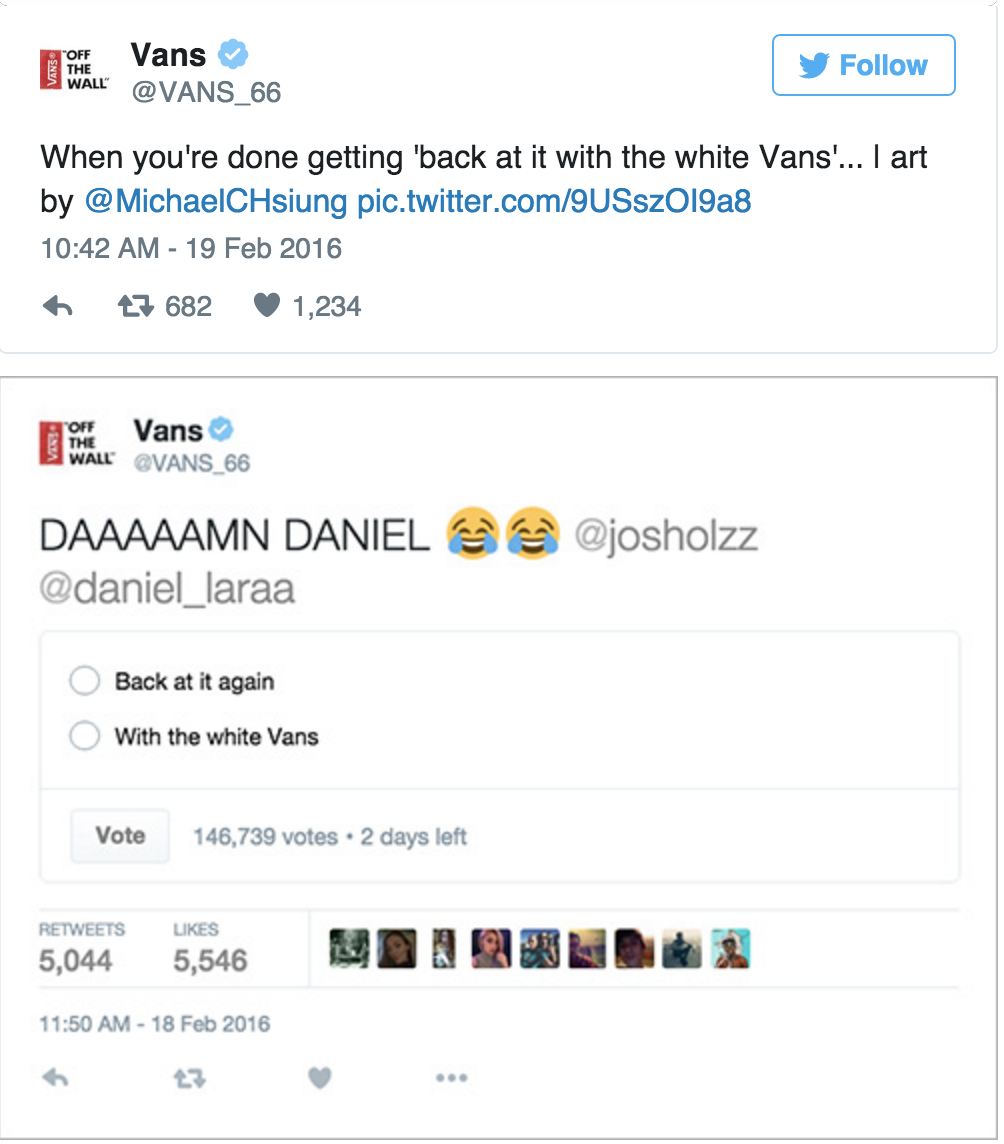
What started out as a 30 second video compilation of a teen boy walking into school with Vans and a friend providing the voice over in the background of “Damn Daniel!” And “Back at it again with the white vans!” took social media by storm. Since being posted in February, the video has now racked up over 7 million views on Youtube as well as others creating parody videos. The hashtag #DamnDaniel was almost impossible to miss anywhere on social media platforms.

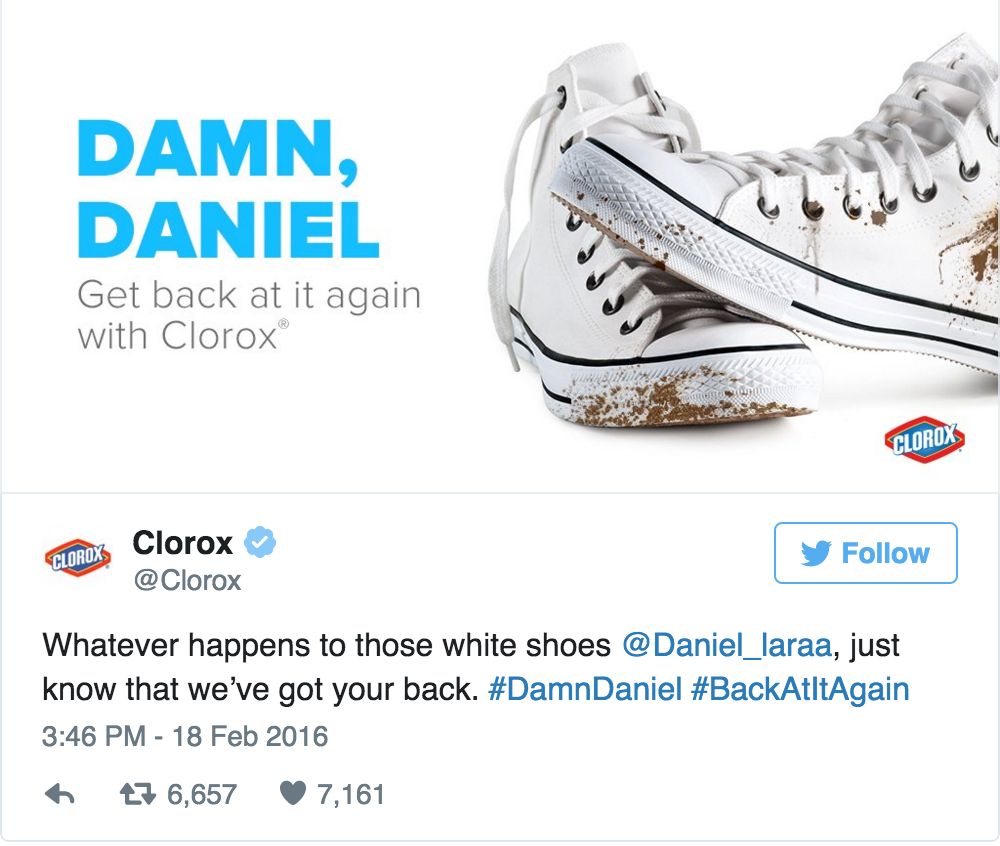
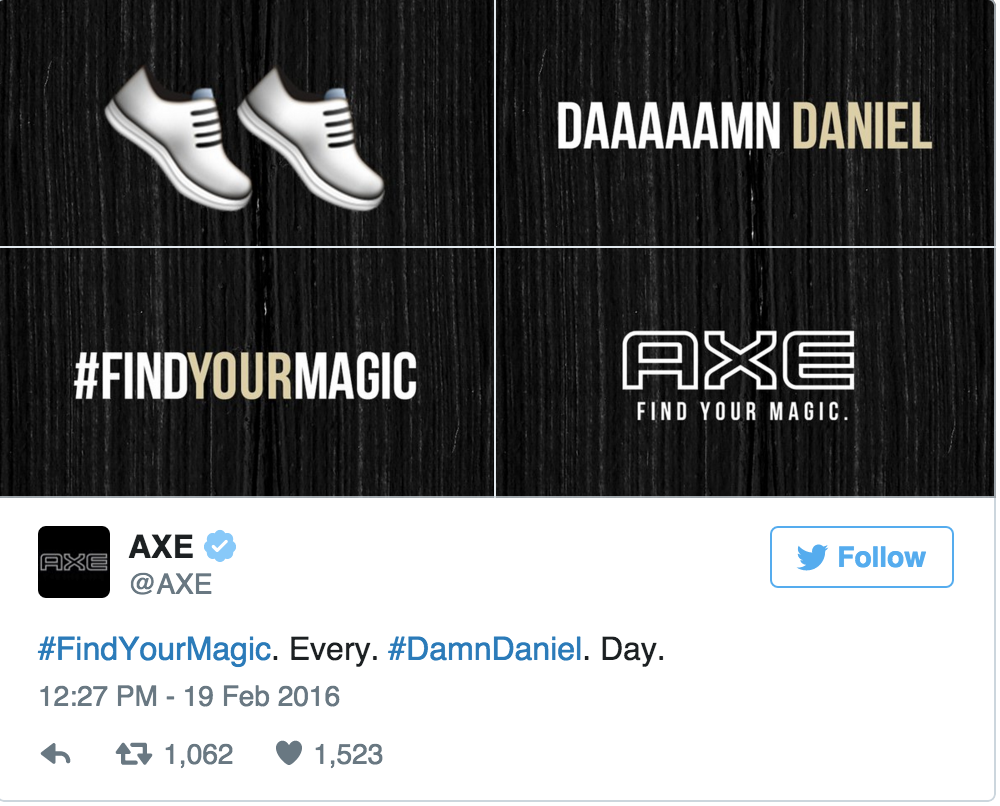
How do videos go viral? Ad agencies are tasked daily to find relevant content and try to capitalize on it and often times fail. In the case that a brand can actually be able to get in and gain momentum from something like this, can be a huge brand win. In this case, Vans got in on the action but not as much as other brands like Clorox and Axe.

Screen Shot 2016-03-10 at 10.41.17 AM


Screen Shot 2016-03-10 at 10.41.38 AM


Screen Shot 2016-03-10 at 10.41.55 AM


The two friends on the video ended up on the Ellen Show. Daniel got a lifetime supply of Vans while the friend who provided the voiceover, got a surfboard.

What was it about the video that caused so much attention? Plain and simple, many found it funny. If anything, the story teaches that going “viral” can’t really be planned. It has to be authentic and make the audience connect in some way. Brands can take a note from these two young men who just wanted to be creative and enjoyed making people laugh. It didn’t cost them to post and the video garnered nation-wide attention. Maybe time for marketing to get back to basics.

Posted in Uncategorized | 3 Comments

Nom, nom, yum, yum!

Nom – a livestreaming service was recently launched by YouTube cofounder Steve Chen. As Chen said in a press release, “Nom is a place for food lovers”, the site provides opportunities for both professional and amateur chefs to share their culinary experience with the public by live broadcasting through their own Nom channels. The idea was similar to Twitch, the site where video gamers broadcast their gaming process. Interactively, the audience are able to chat with the host and ask questions, as well as sharing videos, picture, and GIF with the host.

To this date, Nom has already included some of the most well-known cooks in the service such as 3­-star Michelin chef Corey Lee. Interestingly, the service site was also openly supported by Korean Singer  PSY, who sings Gangnam Style, and Oscar-winning actor Jared Leto.

Let’s take a look at Nom’s website (It also provides iPhone App in Appstore).

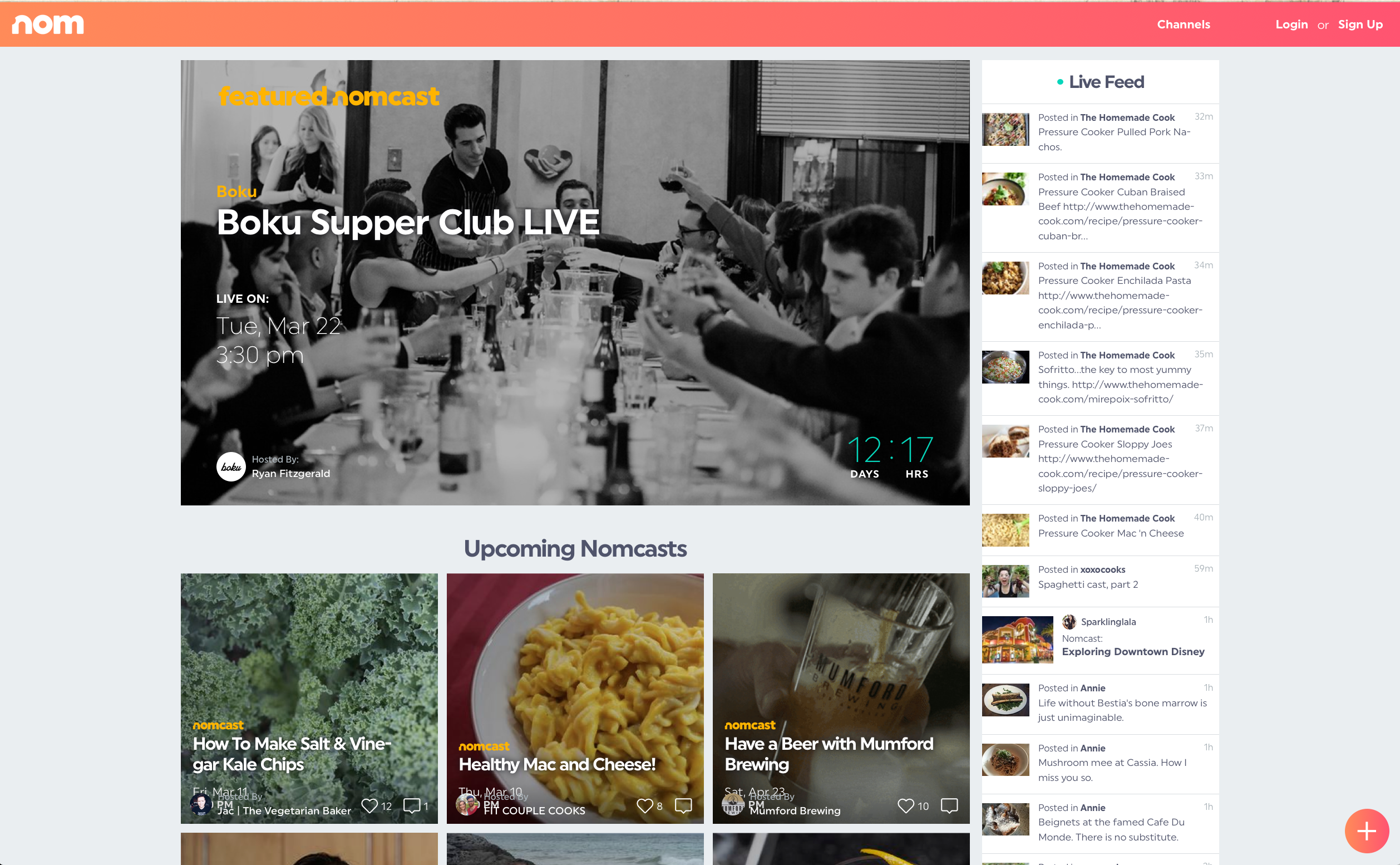
Nom Website

The design is colorful and looks delicious for sure. It is easy to notice that the website mainly features Nomcasts – where the most interactive food talk would take place. The site is straight forward and not difficult to access at this point – you can find most of the content through one or two clicks from the home page. Looking into details, some of user interface are still rough and needs future polish.

As a big foodie myself, I love watching culinary videos. “Tasty” page in Facebook is one of my favorite, it’s fun and interesting, but also practical. Culinary shows such as Chef’s Table on Netflix also caters a lot of food lovers in discovering high-end restaurants and experiences. While looking at Nom, I raised some questions:

  1. what kind of people would visit Nom?
  2. If they start with high professionalism and great quality pictures and videos, would it deter some of the amateur food lovers who might not be able to develop such high-quality visual product?
  3. What do you think of Nom? Do you think it would become a big hit in culinary shows/programs?
  4. What kind of positioning should Nom take in order to have sustainable development?

Let me know what you think and what your favorite food is!


References:

https://nom.com/

http://venturebeat.com/2016/03/09/youtube-co-founder-steve-chen-launches-nom-a-livestreaming-service-thats-twitch-for-food-shows/

Posted in Uncategorized | Comments Off on Nom, nom, yum, yum!

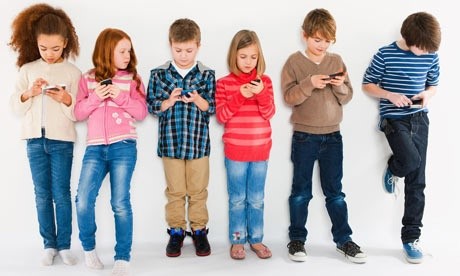
Your screen is making you less social

Digital media has transformed the way we view the world, literally. The average adult spends about 60 hours a week staring at a screen including televisions, computers, and mobile phones (Krishna, 2015). From the way we shop to the way to talk, screen-based media has dominated our lives.

Screens

However, as great as playing Candy Crush is in avoiding boredom and people while you awkwardly wait for your 20 piece nuggets at McDonald’s, your screen may be doing you more harm than good. A recent study conducted by a group of researchers at UCLA found that using screen-based media and communication decreased people’s abilities to develop skills in reading nonverbal cues and understanding people’s emotions (Uhls et al., 2014).

In their experiment, Uhls el al. (2014) recruited a group 105 six graders from a public school in Southern California. The participants were pre-teens who reported that they spent approximately 4 ½ hours a day outside of school engaged in media usage including texting, watching TV, and playing video games. For their experiment, participants were divided into two groups. The first group spent five days in an overnight camp where they were not allowed to use any form of screen-based media and communication such as television, computers, and mobile phones. The second group were allowed their usual media practices. Through a series of pre and post tests, the group that was limited to in-person interactions for five days were found to be significantly better at reading facial emotions and recognizing nonverbal cues compared to the group that was allowed their usual media practices.

Although the digital world has enhanced our ability to communicate with people in terms of distance and time, the implications of the study show that it really could be hindering the quality of our communication in-person.

As society becomes more heavily reliant on digital media usage, have you seen a shift in how people engage with others in-person? Generation X and Y, grew up at the start of the digital world, do you see a differences in how effective they are in communicating with others in-person? I think this is especially interesting as millennials start to dominate the workforce as baby boomers continue to retire. If this is truly the case, it might be beneficial for parents and organizations to change their routines to reduce the use of screen-based media and communication when possible to develop and maintain the ability to read nonverbal cues.

It’s a reality that is hard to escape, you’re literally staring at a screen as you read this. So take a moment, find a person and have a conversation with them in-person, it’ll make you more sociable.

References

Krishna, G. (2014, February 22). Here’s how to stop looking at your phone every five seconds. [Blog post]. Retrieved from http://qz.com/345815/heres-how-to-stop-looking-at-your-phone-every-    five-seconds/

Uhls, Y. T., Michikyan, M., Morris, J., Garcia, D., Small, G. W., Zgourou, Z., & Greenfield, P. M. (2014). Five days at outdoor education camp without screens improves preteen skills with nonverbal emotion cues. Computers in Human Behavior, 39, 387-392. doi:10.1016/j.chb.2014.05.036

Posted in Uncategorized | 3 Comments