Evian: Real Time Marketing Empowered by Social Media

It’s gonna be really hot out there in summer. And Evian is trying to help!

With the new real time marketing campaign on handing out free bottles of water, Evian has successfully built a brand buzz via social media channel.  And what I’m trying to highlight here is that maximizing the marketing success by combining social media campaign and real time marketing together.

The campaign starts from it’s Twitter push in New York from Aug. 19 to 21. Using the hashtag #Evianbottleservice,  this campaign is targeting consumers in major city parks in Manhattan. By tweeting a location based message to Evian via smart phone, the consumers can get a bottle of water delivered within five minutes, and that is totally free.
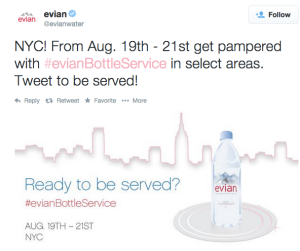
evian_on_Twitter___NYC__From_Aug__19th_-_21st_get_pampered_with__evianBottleService_in_select_areas__Tweet_to_be_served__http___t_co_0gmZAwiuOQ_

According to statistics, the number of new followers represents an 11 times increase from the same time period in July. Evian has roughly 19,200 followers on Twitter.The water company also claims that there were 3.5 times more daily mentions of the brand between the campaign time compared to competitors. And, the engagement on tweets passed the benchmark for CPG brands by 80 percent. Overall, 2.8 million impressions and 75,000 engagements were generated on Twitter. This was such a success because it took the advertising one step further by creating a reward for interacting with the brand as well as promoting.

The following five analysis might explain the significant success of this campaign.

  1. Real time marketing empowered by social media: instant interactions and long lasting results by retweets.
  2. Relatively low cost compared to other forms of media spending.
  3. Consumer Engagement Reward+ Product Sample delivery: users tweet about the brand could have a free bottle of water delivered instantly.
  4. Hyper-local Targeting+Timing: major city park, hot summer time,thirsty city-dwellers. Evian also bought Promoted Tweets to target ZIP codes around the neighborhoods to amplify the real-time efforts.
  5. Consumer-centric: Appealed to consumer’s needs of water in a emotionally attached way.

“We are doing something that is a real-time service for the first time ever” said Olga Osminkina-Jones, vp of marketing for North America at Evian. I believe this new form of real-time social media engagement can be a successful model for future integrated marketing communications.

Links:

https://twitter.com/evianwater/status/500311084277178369/photo/1

Posted in Uncategorized | 5 Comments

Is it time to bury the Press Release?

It wasnRIP’t too long ago that the press release was the ultimate news source for media. Pushed to various news outlets, this well written and summarizing piece was, after all, “for immediate use” and welcomed as a fresh source of information for hungry journalists. But a good press release takes time to prepare, write, get approved, and edit, which slows the process down before being officially sent out to the media. The journalists then take the release and many times adapt it for their own stories—yet another step that slows down its publication. In a virtual world of other real time news sources, the press release may seem like the tortoise running with the hare.
Although articles like 5 Reasons the Press Release Isn’t Dead Yet are convincing in listing press release attributes, the fact is that most Americans are getting their news from other than traditional outlets. Today’s vast options available for public consumption include websites, blogs, and social networks as well as digital versions of traditional news sources. In addition, the many devices made available to connect to the internet has given birth to portable news, making it accessible anytime of the day. In a recent study reviewed by How Americans Get Their News it was found that 56% of American adults reported using a cell phone to access news in a week while another 29 percent reported getting it from a tablet. A little less than half accessed online only sources for their news including Buzzfeed and The Huffington Post among others.

Once word gets out on the internet, anything worthy of notice happens in seconds. Online users are not only reading about news items, their reading about what their friends and family are saying about the news. So is it time to bury the press release once and for all? For those companies who use it for annual reports and anchors for website links to their own news pages and who just can’t seem to let it go, no. But for progressive, forward thinking organizations who want to be on the cutting edge of what’s new and reinventing ways to talk about it, it may be time.

Cody, S.  (2014).  5 Reasons the Press Release Isn’t Dead Yet, Inc. com.  Retrieved October 17, 2014 from http://www.inc.com/steve-cody/5-reasons-the-press-release-isnt-dead-yet.html

Staff.  (2014) How Americans get their news, American Press Institute. Retrieved October 17, 2014 from http://www.americanpressinstitute.org/publications/reports/survey-research/how-americans-get-news/

The personal news cycle: How americans get their news.  (2014).  Media Report to Women, 42(2), 1-2. Retrieved October 19, 2014 from http://search.proquest.com/docview/1528474643?accountid=14749

Posted in Uncategorized | 14 Comments

Sex, sweat, and beer

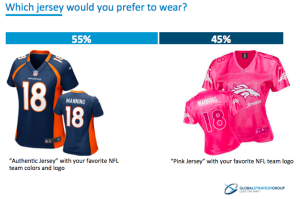
That seems to be the stuff that sells, well, stuff. Or, at least those seem to be the most successful and I must admit, entertaining, ads out there. However, these products seem to be targeted primarily towards men. So, what is the easiest and most effective way to target women? Shrink it and pink it, of course! Right?

For years, “shrink it and pink it” has been the go-to strategy for many companies when it comes to making typically masculine products such as cars, sports, and beer, more female-friendly. Just make it cute and small, and a pretty color. No, this is not some crazy feminist rant. This is a real problem many companies are facing that comes with the difficulty of letting go of this mentality.

blog1

(http://globalstrategygroup.com/2013/11/end-pink-shrink-gauging-success-nfls-new-ads-women/)

Then there is another issue that recently came up regarding selling to women…not even using women in ads to advertise products that are unisex.

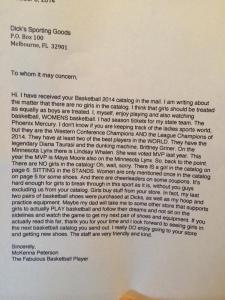
A couple of days ago I read an article about a 12-year-old girl putting retailer Dick’s Sporting Goods in its place after writing a letter pointing out that the basketball catalog she received (she plays basketball) did not use any female models. The only female models were cheerleaders and a woman sitting in the stands…watching. Needless to say, the young girl was disappointed and even stated in her letter that perhaps her dad will take her to a different store next time she needs something.

Here is her letter:

blog2


(http://www.washingtonpost.com/news/business/wp/2014/10/14/a-12-year-old-basketball-player-complained-about-there-being-no-girls-in-her-sports-catalog-the-problem-was-even-worse/)

Dicks’s response: “we clearly messed up”. Is it possible this negative publicity could have been avoided by Dick’s? Most definitely. I personally think that all it takes is a little bit of research and a lot of listening.

According to The Washington Post article, a Nielsen study revealed that women make most household purchasing decisions. In fact, an Economist article says women tend to be more brand loyal. Furthermore, She-conomy.com says 91% of women feel misunderstood by advertisers (it’s the “shrink it and pink it” strategy again). So with that being said, why are companies not putting in the extra effort to figure out how to communicate with female consumers, a powerful and growing market?

I love football, I sweat at the gym, and I don’t know about you but I like my beer big and not pink.

Links to articles:

http://www.washingtonpost.com/news/business/wp/2014/10/14/a-12-year-old-basketball-player-complained-about-there-being-no-girls-in-her-sports-catalog-the-problem-was-even-worse/

http://www.economist.com/node/13278440

http://she-conomy.com/report/marketing-to-women-quick-facts

http://globalstrategygroup.com/2013/11/end-pink-shrink-gauging-success-nfls-new-ads-women/

Posted in Uncategorized | Tagged , | 9 Comments

Commercial songs are not necessary to appear merely in commercials

Have you ever searched a song stuck in your head forever? Commercial song is not a new idea in the advertising field; a nice commercial song can always trigger the interests of the audience. Many people cannot figure out what the song is in the commercial, and tend to search it online immediately. Commercial song is continuously utilized for attracting attention and inspiring emotional response from consumers. Below is the song I love most, which had been used by Japan Airlines (JAL) for over 2 years:

I had worked in JAL for several years during which many colleagues and passengers like me showed great interest and affection to this song. It is “I will be there with you” sung by Katherine McPhee. From 2009 to 2011, the 3 minutes JAL promotion video with this nice song was displayed in each JAL flight during the time of passengers boarding and disembarkation. This video focused on showing the sincere work attitudes of each groups of JAL members ranged from ground staff to cabin attendant so as to emphasize the customer-oriented culture of JAL. This song matched the video theme perfectly by the moving music and lyrics.

Commercial songs are not necessary to appear merely in TV ads. JAL displayed the promotion video in the cabin, which made the memorable song and passengers’ current experiences work simultaneously to enhance customer brand experience. Additionally, this video directly targeted the loyal passengers of JAL. Playing brand song directly for the core consumers can also be applied to fashion brands or restaurant brands. At least, a beautiful song can bring consumers a good mood for shopping or dining.

Some commercial songs never appear in commercials, but you may easily associate them with specific brands, such as the following “I’m lovin’ it” by Justin Timberlake:

This song was viewed over 12,767,019 times, and led to a heated discussion about the relation between Justin Timberlake and McDonalds. Whether it is a McDonalds’ song? The topic is interesting enough to move people’s attention from the song to McDonalds. No matter how many people like or don’t like the connection between Justin’s “I’m lovin’ it” and McDonalds, McDonalds has already won through this heated consumer debate regarding enhancing the brand awareness among young people.

Posted in Uncategorized | 3 Comments

Take kids out to the ballgame…

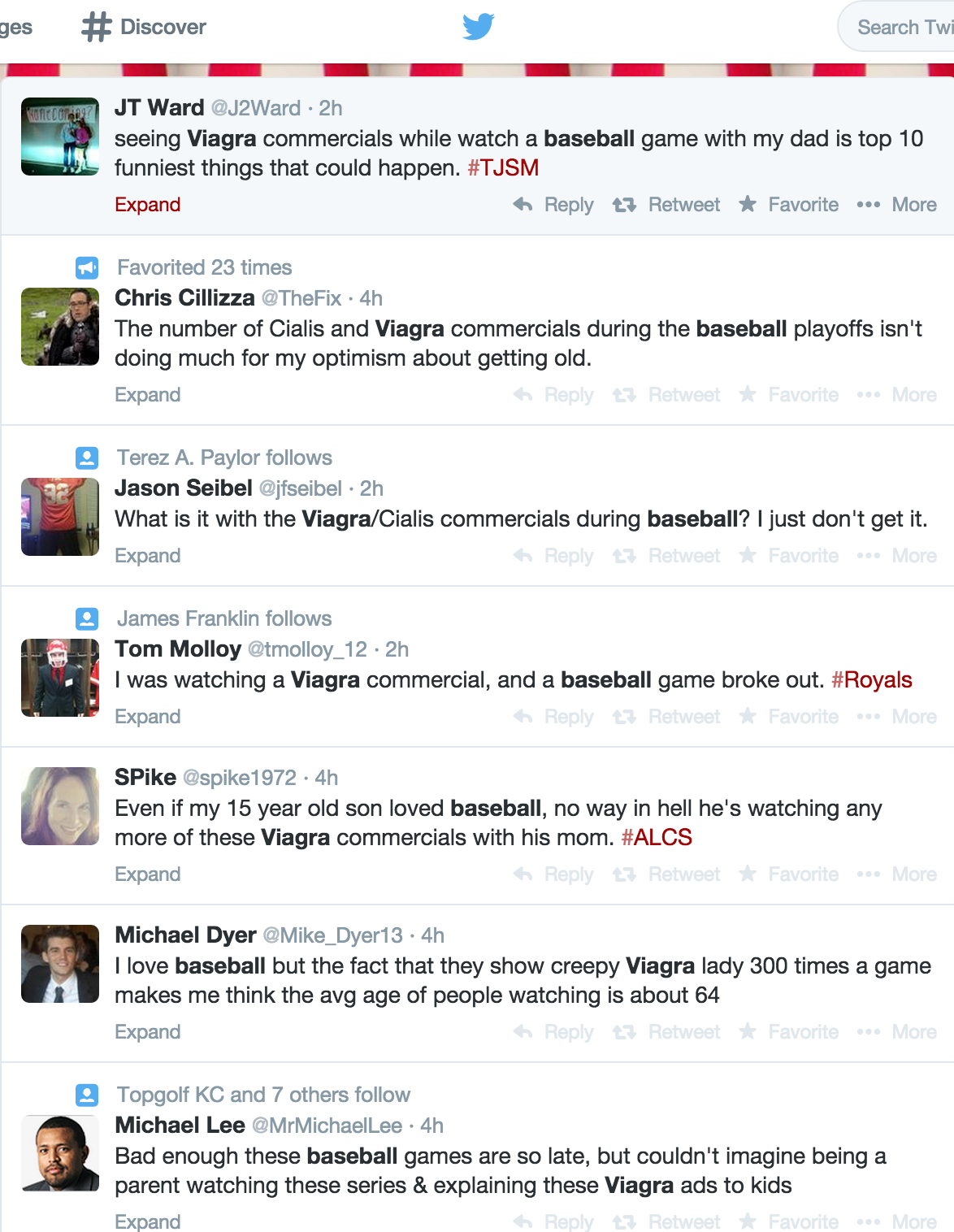
Or they will be destined to watch a Viagra advertisement on TV every time the Kansas City Royals decide to make the call to their bullpen. For non-baseball enthusiasts, you may not have heard about Pfizer’s incessant media buys during the MLB postseason. Specifically, TBS has shown Viagra’s new commercial  , which diverges from the erectile dysfunction company’s familiar montage of manly man-men doing kayak things. This one is a bit more direct. The spot features an attractive 40-something woman cooing in a British accent about sex without any of the child-safe, thinly veiled innuendo. And as evidenced by “baseball Twitter,” folks are upset about it. There are middle-aged men in Kansas City who haven’t watched playoff baseball in their hometown since they applied for their driver’s license – let’s not spoil the end of a 29-year playoff drought with the threat of a whole different kind of suffering, right?

Viagra’s new direction – spoken from the still-sexually-satisfied female perspective – has caught the attention of several national media outlets and has initiated a firestorm on social media. Protesters believe the commercial should not be aired during major national sporting events that occur during primetime hours. This complaint has been levied for years, however. Does GoDaddy.com’s annual super-sexy Super Bowl commercial ring any bells? Regardless, this time around feels different. In my opinion, the outrage stems from the nature of the experience (watching baseball, a more or less quiet sport, with your kid vs. absorbing the overwhelming, noisy spectacle of the Super Bowl), as well as Viagra’s significant shift in messaging strategy. To me, there remains a certain nostalgia that accompanies baseball in this country. Even after football has eviscerated America’s pastime in terms of eyeballs, there is something youthful – fatherly, even – about baseball. While I’m still unsure whether I agree with the flooding discontent surrounding this commercial, I understand where it’s coming from. Obviously, middle-aged men represent Viagra’s target market, but is it possible the company missed by promoting the little blue pill during such a father-son friendly time?

My dad died unexpectedly when I was 23. Some of my happiest memories are sitting in the nosebleeds with him in the sweltering Kansas summer heat. I was born two years after the Royals beat the Cardinals in the 1985 World Series, so every fall for the duration of our time on earth together he would reminisce about how great the Royals and their fans used to be. He talked about it all the time.

Can you guess what he would have never wanted to talk about?

Viagra Twitter

Posted in Uncategorized | 4 Comments

Winning over Consumers

JetBlue Airlines routinely offers competitive prices to consumers with the highest quality in service. Due to the treatment of consumers JetBlue airlines has expanded direct flights from San Francisco to Las Vegas. This change comes in direct competition with other airlines such as United, Virgin, and SouthWest. The routes going in and out of Las Vegas, San Francisco is the second busiest route out behind Los Angeles. The question is does anyone care that JetBlue is stepping into other airlines territory. Virgin Airlines is in direct competition with JetBlue and as a result has established a direct-route to Boston from Las Vegas which is one of JetBlue’s premier airport hubs.

The strategic placement of companies then becomes the fight over consumers; does the need to win over consumers actually bring results that will benefit the public? For fast food chains, airlines, car dealerships or any other enterprise bring better options and treatment of consumers? In response to investing in consumer interests, companies like Domino’s Pizza display where ingredients are purchased or for car companies like Toyota showing the factories where cars are made. Similar JetBlue has developed a customer’s Bill of Rights. This Bill of Rights opens dialogue and expresses what consumers should expect while flying with JetBlue, all done in winning over the consumer.

In answering the question, the need for a company like JetBlue to expand brings the best out of organizations for public interests, whether it is a Bill of Rights or corporate social responsibility all are done to express the company’s genuine concern of the communities that are served while all in the interest of earning consumer loyalty.

Mutzabaugh, B. (2014, October 7). JetBlue adds to competition on Las Vegas-San Francisco route. USA Today. Retrieved October 10, 2014, from http://www.usatoday.com/story/todayinthesky/2014/10/07/jetblue-adds-to-competition-on-las-vegas-san-francisco-route/16848405/

Posted in Uncategorized | 2 Comments

The “Name Names” Phenomenon in Recent Commercials

I watch a lot of TV series online. Correspondingly, I have to watch the commercials from the broadcasters’ sponsors before the episode starts. Then recently, I observed an interesting phenomenon that companies begin to call their rivals’ names directly in their commercials.

It is noticeable that the “Name names” strategy has been going on for a while in the oligarch-competing high-tech industry. Although the target, without any doubt, is always Apple, the “name names” game remains vague and anonymous. For example, you would see Samsung teasing on Apple from time to time by creating a mock or parody of its commercial ideas or by showing off its new features in comparison with one of Apple’s competing products. With Apple’s unique characteristics in design, it’s apparent to know what the finger is pointed to. However, Apple’s brand logo is hidden in the commercials. If the character in the commercial has to talk about the rival product, expression such as “my pad,” “the other brand” will be used to imply, rather than directly name Apple’s name. Nevertheless, the competition now has gone to a whole new level.

The first commercial that rises my interest is Microsoft’s Surface Pro3 vs. iMac and iPad one. In this commercial, one Surface and one iMac are placed right next to each other in the screen. No people face is presented but two narrators are talking with each other behind the curtain while they’re exploring the two products on hand. The plot is very simple. Surface user discovers one new feature of his device and the Apple user will show his surprise and interest. Then the surface user will explain the feature for few seconds followed by a underlying rhetorical question: “your iMac/ iPad doesn’t have this?” After several rounds of this routine, the message of Microsoft cannot be blunter: One Surface is better than your iMac and iPad combined! Well, although I am not an Apple fan at all and have been saving money for a Surface pro for ages, I do not feel good about the intent of the commercial.

Sometime later, just as I decide to treat this commercial as a single case, the new Verizon vs. AT&T commercial jumped into my sight. In this commercial, Verizon ruthlessly laughed at AT&T’s limited wireless network coverage around the country by presenting a contrast coverage map of the two companies. The message at the end of the commercial is even boarder: switch your AT&T service to Verizon if you want a better wireless connection. Unfortunately, I have been a customer of the target’s product again and am pretty pleased with the target internet service it provides. My personal experience obviously does not add up to the content in the commercial. Perhaps AT&T has not been as used to the direct attack as Apple does, the company released an official announcement on the website reclaiming how stable and efficient their network coverage is and accusing Verizon of tarnishing AT&T with false and misleading information.

I have no idea about how this “name names” strategy works. The assault definitely irritates the loyal customers of the rival brand. As far as I observed and experienced, the moderate customers are not feeling very good about this strategy either. From past case studies, those controversial commercials could also ignite a full-scale public relationship war between the brands and ended up with lawsuits, in the worst case.

However, if the risk of this strategy is in plain sight, why are companies still going for it one after another? There is no doubt that the message of this kind of commercials is clear and well-received by the audience. However, are they really buying the claims of the advertising brand and will this “unkind” behavior harms the brand image in the long run? I am curious about these questions and I am still looking for an answer.

Posted in Uncategorized | 3 Comments

Towards a third space: Seeking to move beyond social media, are integrated marketeers villains or superheroes?

First with MySpace then later with Facebook and the social media storm that followed, I was drawn to this new place, a cross section of synchronous and asynchronous communication. A unique place for social, cultural, and digital interactions that merged family, friends, and interests into one package. These sites filled an online gap for social interaction, a third space away from email and websites where individuals like me could interact freely. A digital escape from marketing communication that allowed for authentic brand community building free from the perception of corporate eyes following our every move. But to our dismay, this website on a hill no longer exists.

Do we need a new third space? As social media becomes common place for marketing communication and consumers are inundated with ads based on their big data profiles, are we in need of a new place where we can build true community free of the noise of integrated marketing? To those of you who will say, “but this is an integrated marketing communication blog,” I might sound like an IMC villain, the Joker of Integrated Marketing, seeking to vanquish integrated marketing from the hollows of an online Gotham. But I disagree.

For, it is within these authentic brand communities that consumers share mutual product experiences, exchange tips to overcome product related obstacles, and learn about less obvious product features. It is also where product designers seek information about shortcomings firsthand. Think back to Apple’s early days when users shared hardware and software tips and became true Apple enthusiasts in secretive online chat rooms, messaging boards and through rudimentary email. Or when early PS1 users shared in chat rooms that in order to run pirated games you had to turn your console upside down? I long for a place where these conversations can thrive once again. A social interaction zone where ordinary consumers become brand enthusiasts.

As marketeers it is our duty to foster brand communities that are free from the confines of traditional media and aim to bring together consumers in honest, open exchanges. It is in these places that we can move from marketing villains to marketing superheroes, move from spies of big data toward marketing superheroes that facilitate brand building and forge product innovation.

Do such places exist online? What can we do to facilitate authentic chatter in our oppressive world of big data?

Posted in Uncategorized | 2 Comments

Is Social Listening a New Market Research Method?

Using a consumers input to assess a brand’s reputation is nothing new. Public Relations professionals have been doing this for decades, however, the internet has transitioned this type of brand assessment into a from of business intelligence.

An average consumer can tweet about, review or photograph a brand at any moment. This type of content is scattered throughout the web, living on different social media channels.

Social media has changed the way the public interacts with brands. This new type of engagement allows marketers to have massive amounts of consumer data available right at their fingertips.

With the right set of social listening tools, a marketer can identify what demographic talks about a specific brand the most, assess the brand sentiment of the general public and gain insight on many other things. Furthermore, this type of data mining makes it so marketers are now able to quickly conduct competitive analysis and identify where their brand is leading, and what it might need help with.

Take the example below.

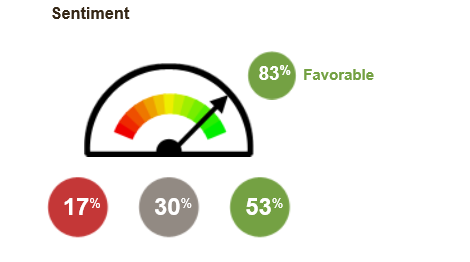
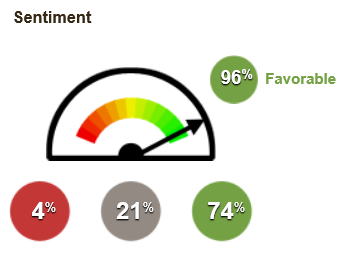
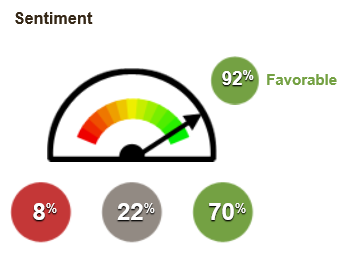
This is an analysis of consumer conversations taking place on social media over the last year about Reebok, Nike and Toms.  NOTE: Charts are not actual representations of Reebok, Nike or Toms.

Mlife_Sent

Reebok

Total Rewards_Sent

Nike

HHonors_Sent

Toms

Looking at this data, Reebok has a significant amount of negative comments compared to its competition. With this insight Reebok would be able to look at the negative comments and design an action plan to address them.

Now lets look at demographics.

Mlife_Demo

Toms

HHonors_Demo

Nike

Total Rewards_Demo

Reebok

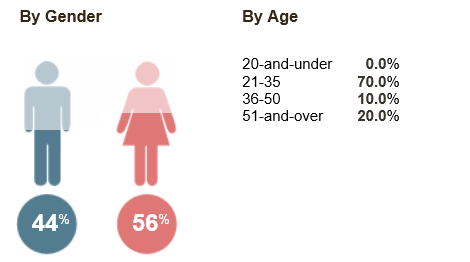
Based on this data we can see Toms has the youngest demographic and has more females talking about their brand. With this data they may skew their ads to woman or try to appeal to mean depending on their marketing goals.

Bottom line, consumers are posting about brands every second, and it makes sense for marketers to use this data to their benefit.

What do you think? Is data like this a true representation of a brand’s consumers? What other useful marketing insights can be gained from social listening?


Posted in Uncategorized | 4 Comments

Rock the Vote

How do you engage the young American voter to vote? Since 1990, Rock the Vote, a  non partisan, non-profit organization, has been engaging the young American voter understand the power of their vote. Through the use of social media, new technologies (mobile technology), music and celebrities in youtube/T.V. campaigns, Rock the Vote has encouraged 5 million young Americans to register to vote.  The question remains why is Rock the Vote so successful in luring the young millennial to vote? What are some of the elements that makes Rock the Vote stand out and inspire the young American voter?

In this video, Rock the Vote gathered several contemporary celebrities to carry out the message of collective voting and  encourage the young millennial that their voice will be heard at the ballots through the use of voting. The “We Will” campaign during the 2012 election season. This video ad below ran for about 8 weeks.

In the next video just published a few days ago, Rock the Vote released a marketing campaign themed, “Turn Down for What?,” to encourage the young millennial to vote in the upcoming 2014 midterm elections. Here, Rock the Vote uses celebrities to remind the young millennial that voting can help them voice their opinion on the  issues they are more concerned about. In the video, one can see that celebrities such as Lena Dunham, Whoopi Goldberg and Lil Jon speaking out the issues they feel are important to address.

References:

Flanagin, J. (2014, October 9). Here’s why you should turn out and rock the vote. New York Times. Retrieved Oct 11, 2014, from http://op-talk.blogs.nytimes.com/2014/10/09/heres-why-you-should-turn-out-and-rock-the-vote/?_php=true&_type=blogs&_r=0

http://www.rockthevote.com

Posted in Uncategorized | 5 Comments