Controversial Cover Girl

Posted by Leah Price

April 2, 2014

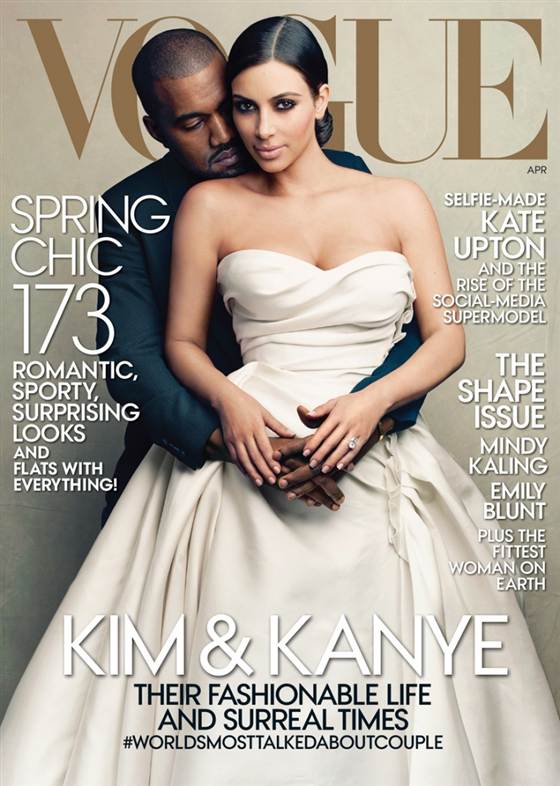
Who’s been on the cover of the last five issues of Vogue? Most people couldn’t tell you, with the exception of one: The April 2014 issue. This issue features reality show maven Kim Kardashian and in-demand rapper Kanye West, sparking widespread controversy among fans of the magazine as well as pop culture followers. Audiences from both camps were not happy about the cover and voiced that opinion on multiple platforms.
KKardashian

The question seems to be why Vogue would put Kardashian on the cover yet from an integrated marketing perspective why wouldn’t Vogue put Kardashian on the cover? Once the word leaked of the cover it spread like wildfire online. There was media frenzy surrounding the cover which included the marketing copy about the issue and a video vignette that had images from the photo shoot. The photo shoot not only includes Kardashian and West but also their 8 month old baby, North. Kardashian’s presence on the cover is so strong it has beat out the fact that she and West are the first interracial couple on the cover and that West is the first rapper. All pointing to the reason why Anna Wintour most likely decided to put them on the cover; people will talk.

Integrated marketing for this cover included public relations and online coverage. Public relations efforts began with the announcement of the issue, appearances by Kim Kardashian and the Kardashian clan on various talk shows and the media coverage of the controversy that surrounded the cover.

Kim Kardashian on Late Night with Seth Meyers

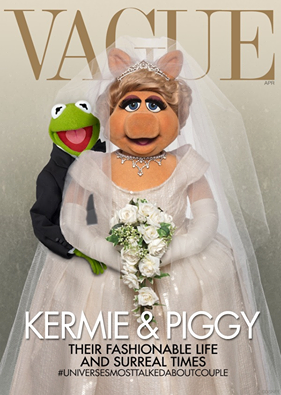
Eldest sister Kourtney Kardashian even appeared on Good Morning America claiming to not know of the controversy (Chan, 2014) which fed more comments by fans and non-fans. Various spoofs were created to mock the cover that went digital including Miss Piggy and Kermit and Seth Rogen and James Franco. Celebrities like Sara Michelle Gellar chimed in to voice outrage about Vogue’s choice of cover claiming they would cancel their subscriptions.
Piggy_Kardashian  Rogen_Kardashian

Controversial covers are not a new scheme. Last year Rolling Stone featured a glamourized version of alleged Boston bomber Dzhokhar Tsarnaev on the cover which was banned from certain retailers and brought out a huge outcry from the people of Boston (Mirkinson, 2013). However, sales of the issue doubled from the previous year. There have been plenty of other controversial magazine covers in the recent past such as The New Yorker and the Obama’s fist bump, Michelle Bachman’s Newsweek cover with the title “The Queen of Rage,” and the Bloomberg Businessweek cover about the merger of Continental and United Airlines in a compromising position (Hoffman, 2012). Controversial marketing can not only raise awareness but can also raise sales numbers (Sodiere, 2012). In an industry where sales are on the decline, magazines have to find new ways to bring in consumers and sell their own brand (Hoffman, 2012).

listicle-bloomberg-businessweek-shuttle-2012

Love it or hate it, people have been talking about the Kim and Kanye cover for weeks (and Vogue) and the chatter is ongoing. The more awareness for this cover the more curiosity on the article and the magazine, even for consumers who don’t like the subject. There is also anticipation of who will be on the May issue of Vogue. For a publication that has seen a decline in sales (4.4% in 2013), Vogue is looking to cultivate younger subscribers (Media Blog, 2013) through the public figures that speak to them. This Kardashian cover could be part of a larger marketing campaign to keep that audience engaged and coming back for more.

Reference

Chan (2014). Kourtney Kardashian ‘last to hear’ about reactions to Kim Kardashian and Kanye West’s Vogue cover. Hollywood Reporter. Retrieved from http://www.hollywoodreporter.com/news/kourtney-kardashian-kim-kardashian-kanye-690612

Hoffman, M. (2012). The 10 most controversial mag covers published. Adweek. Retrieved from http://www.huffingtonpost.com/2013/08/01/rolling-stone-boston-bomber-sales_n_3688127.html

Media Blog. (2013, August 30). Vogue, Tatler and other high-end women’s magazines target teen market. The Guardian. Retrieved from http://www.theguardian.com/media/2013/aug/30/womens-magazines-teen-market

Mirkinson, J. (2013). Rolling Stone’s Boston bomber issue sells big on newsstands. Huffington Post. Retrieved from http://www.huffingtonpost.com/2013/08/01/rolling-stone-boston-bomber-sales_n_3688127.html

Sodiere, F. (2012). 10 examples to increase sales with controversial content. Social Media Today. Retrieved from http://socialmediatoday.com/zocreative/864841/10-examples-increase-sales-controversial-content

Posted in Uncategorized | 12 Comments

Read the Label.

With the world pointing us to a greater consciousness, we are consistently urged to “read the label” and to better understand what is in our food, drink and even clothes.  Ingredients can be important in technology too. Ingredient brands are just that – ingredients – a smaller part of a larger whole.  Often the ingredient brand is unknown to the consumer.  They are virtually invisible, unless the ingredient has marketing muscle power behind it.  In the early 1990’s Intel launched it’s Intel Inside campaign, convincing computer makers that the value of the computers would be increased with the “Intel Inside” brand marketing campaign behind it (Graj, 2014).

Screen Shot 2014-04-01 at 10.38.17 AMScreen Shot 2014-04-01 at 10.38.17 AMScreen Shot 2014-04-01 at 10.38.17 AM

The Intel Inside campaign was the first trademarked in the computer processor segment (Intangible Business, 2005).  The move brought greater general awareness to the processor market as a whole and broader brand awareness to Intel (Intangible Business, 2005).  Business was up 63% after the first year of the marketing and advertising campaign, and in 2001 Intel was listed as the sixth most valuable brand (Intangible Business, 2005).  This is proof positive that ingredient-branding can and does work to improve even the ingredient brand.

Whether it’s Intel inside our devices, Smuckers Jam in our pop tarts or Downey in our Tide, we are ultra aware of the ingredients, of the brand within (Casestudyinc.com, 2011).  Where it gets interesting is where the worlds collide, where we have technology leaping over into our clothes.  With the newly announced Intel acquisition of Basis Science (Hornyak, 2014).  Intel is branching out – moving into the very fabric of our lives – our clothes.  The chip maker is driving towards “wearable reference devices” (Hornyak, 2014).  The question is, do we want Intel in our clothes?

What’s in your Brand?

References:

Casestudyinc.com (2011, October 25).  Ingredient Brand.  Retrieved from: http://www.casestudyinc.com/glossary/ingredient-brand

Fraj, S. (2013, July 10).  Intel, Gore-Tex and Eastman: The provenance of Ingredient Branding.  Forbes.com.  Retrieved from: http://www.forbes.com/sites/simongraj/2013/07/10/intel-gore-tex-and-eastman-the-provenance-of-ingredient-branding/

Hornyak, T. (2014, March 25).  Intel acquires health band maker Basis Science. Retrieved from: http://www.pcworld.com/article/2112000/intel-acquires-health-band-maker-basis-science.html

Intangible Business (2005, November).  Ingredient Branding Case Study Intel. Retrieved from: http://www.intangiblebusiness.com/news/marketing/2005/11/ingredient-branding-case-study-intel

Kepes, B. (2014, January 15).  The Ultimate Branding Coup? – Intel Inside Goes Cloud.  Forbes.com.  Retrieved from: http://www.forbes.com/sites/benkepes/2014/01/15/the-ultimate-branding-coup-intel-inside-goes-cloud/

Posted in Uncategorized | 10 Comments

Creepy or Convenient? Targeted Advertising and the Do-Not-Track Decision

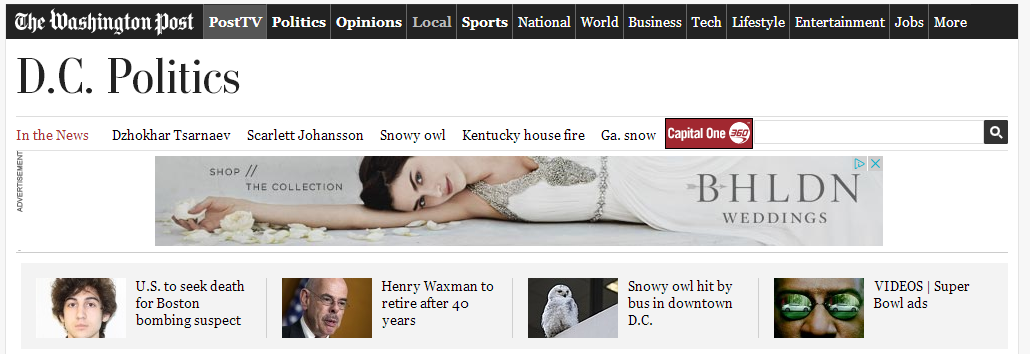
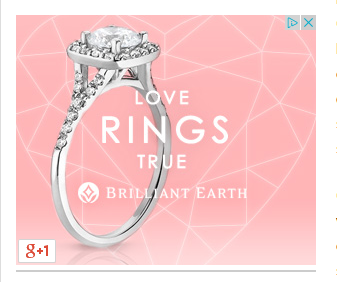
When I pull up my browser every morning, I know what I’m going to see before I ever type in a URL or click on a link: engagement rings. On Facebook, on news sites, on blogs, I see them without fail.

Advertisement for an engagement ringThey are the number one thing advertised to me since one of my best friends started planning her wedding a few months ago. I’ve been reading wedding blogs to send her ideas, and gone down the Pinterest rabbit hole of wedding-themed pages a few times—and you better believe my browser knows it. In fact, because I haven’t turned off my browser’s ability to track my web activity, and because the same browser is also logged into Facebook and Google, every website I visit knows a lot about me—and they have all come to the conclusion that I want to be engaged.

When I log onto a page that uses Google AdSense to fill its advertising space, there’s an ad auction that happens in the milliseconds it takes for my page to load (Google Ads, 2014; Fresh Air, 2014). The decision is data heavy. It’s based on what site I’m visiting, the relevance of the ad to the site content and my tracked preferences, the quality of the ad itself, and what Google ads knows about me (Google, 2014).

And boy do they know a lot. Between the average 64 pieces of tracking information that top websites use to monitor my online habits (Angwin, 2010) and about 200 data brokers that are continuously compiling and selling that info, I’m no stranger (Fresh Air, 2014). Google tells its advertisers I’m a 28-year-old woman in a long-term, but unmarried, relationship who has recently been browsing wedding websites, and BAM—it’s rings and gowns for me.

Wedding dress advertisementAdvertisers bid more—but save overall—to have their ads displayed to the target consumers, and Google contends that I win, too, by only seeing ads of interest and being spared from ads for products I’ll never buy.

I’ve been hyper aware of this practice since we read about it in Brand Media Strategy, and it’s raised a few questions for me that I’m still debating:

  1. Does it really make advertising a better experience for the consumer? As much as I hate to admit it, yes. If I have to see ads on every website, why not for things I actually like? Here’s Facebook showing me a shirt I had just viewed online, a mop I actually purchased, and yes, more rings. Sure, they’re still ads, but they somehow feel less painful. Plus, who cares if Google knows I like practical winter clothing and vintage rings? Paid advertisement for L.L. Bean
  2. Is it really as creepy as it seems? The answer is probably also yes. Since I started monitoring my ads last month, I realized I didn’t see a single ad that I couldn’t trace back to some recent online activity. I’m not sure that I even see ads anymore that aren’t a direct result of my browsing history. Then I heard an interview on NPR’s Fresh Air with an author who said that even though tracking data is anonymous, it’s now so specific that it can easily be traced back to an individual (Fresh Air, 2014). That’s far more unsettling after a search on, say, migraines brings you ads for medications.
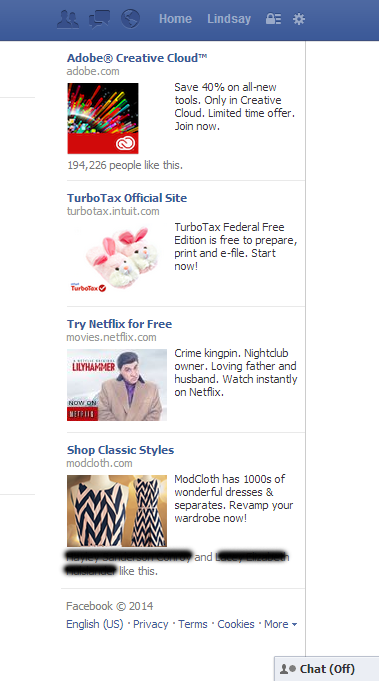
  3. Do they really work for advertisers? These ad auctions allow for incredible targeting and also invite small businesses with low budgets to play in the ad big leagues. But the data side isn’t perfect yet. I frequently see ads for products I’ve viewed but also purchased. All of January I saw ads for the boots I bought my boyfriend for Christmas. The following series of ads was especially ineffective: I already have the Creative Cloud now, I’m a TurboTax user and a Netflix subscriber (but have been searching for it a lot for this class!), and I already purchased that exact dress from ModCloth last October. That’s a lot of wasted ad space.An array of paid advertisements from Facebook

As consumers become more aware of data tracking, and just how much data brokers know about them, I wouldn’t be surprised if new regulations follow. It’s just as likely, though, that we will continue to accept and grow more comfortable with advertisers knowing more about us, especially if it means we see better, more relevant ads.

The advertising scene from the 2002 movie Minority Report used to seem so creepy and futuristic; now it seems like something Google would be beta testing:

I’m curious to see where others come down on the issue. Have you changed your browser’s tracking options? Do you take special steps to stop your data from getting out there? Do you feel like you respond more to online ads when they better meet your interests?


References

Angwin, J. (2010, July 30). The Web’s new gold mine: Your secrets. The Wall Street Journal. Retrieved from http://online.wsj.com/news/articles/SB10001424052748703940904575395073512989404

Fresh Air. (2014, February 24). If you think you’re anonymous online, think again. NPR All Tech Considered. Retrieved from http://www.npr.org/blogs/alltechconsidered/2014/02/24/282061990/if-you-think-youre-anonymous-online-think-again

Google Ads. (2014). AdSense: How it works. Retrieved from http://www.google.com/adsense/start/how-it-works.html

Google. (2014). Help: About the ad auction. Retrieved from https://support.google.com/adsense/answer/160525?hl=en&ref_topic=1628432

Posted in Uncategorized | 4 Comments

LinkedIn Adds Content Marketing (Erica Johnson)

LinkedIn is a popular professional networking website founded in the early 2000’s (LinkedIn about us, 2014).  With over 250 million users around the globe (LinkedIn about us, 2014), organizations and employees alike have flocked to this website.  While I am familiar with the website and have even used it in the past, I never realized that they offer more than the ordinary social media platform.  This year, LinkedIn launched a marketing content insight product that scores the impact of the advertising on their website (Delo, 2014).  The score will be calculated simply using the number of members that have interacted with the brand and been active recently.  Taking their platform and expanding it, LinkedIn plans to use the content marketing score to give advice on what their members want to learn and hear about—what interests them.  Then the brand can deliver content specifically geared towards their target audience of LinkedIn members.

While this is a new product for LinkedIn, Forbes magazine indicates that this marketing concept is one of the most important methods of 2014 (DeMers, 2013).  This will allow LinkedIn to be part of the movement and attract more and more advertisers.  This is a great opportunity for LinkedIn.  Establishing itself as the premier online environment for potential employees to meet potential employers and the place to introduce professionals that may be looking for partnerships or advice, LinkedIn is expanding their scope.  Now, this organization is also going to link specific content with their members.  This could be the start of professional job postings exiting company websites and using LinkedIn exclusively.  It could be the place an employer can find a Temp Agency, learn what an appropriate salary to offer a potential employee and solicit business as well. There are also plenty of benefits for the member.

As a potential employee, a person could learn information about relocation, potential job opportunities and industries they may have never considered in the past.  All in all, LinkedIn may have just opened another exclusive door for their type of organization.

References

Delo, C. (2014). LinkedIn launches insights tool to help brands become better publishers. Advertising Age, , March 2014.

DeMers, J. (2013). The top 7 content marketing trends that will dominate 2014. Forbes, , March 2014.


Posted in Uncategorized | 5 Comments

Is Downsizing the Military Good for the Country

There has been a lot of buzz in the news lately about the Department of Defense budget and downsizing the military to curb the overall debt of the Federal Government.  Secretary of Defense Hagel outlined the restructuring of the military and what affect it would have on the DoD budget (Simeone, 2014).  There are many sides to this issue, but there is a position that isn’t talked about as much.  How do Americans feel about having a smaller military?  Have we gone through this before, then determined there was a need to build it back up?  How is this restructuring pitched to the citizens of the United States, so that we believe having a smaller military will still provide the security needed for homeland defense and to wage campaigns that our senior leaders believe is necessary aboard to thwart any attempts to threaten the United States.

One school of thought is that the Service components of the Army, Navy, Air Force, and Marines are not jointly operating at peak efficiency and that restructuring with a smaller force will motivate the Services to work better together (Pincus, 2014).  This is especially highlighted in the way the Military Health System (MHS) operates.  In an effort to work in a more joint environment, the MHS stood up the Defense Health Agency, which required that the Services share 10 like services during the implementation stages of the Agency known as initial operating capacity (IOC) (Kime, 2014).  By 2015, the goal is to be at full operating capacity (FOC).

There have been great strides in the Service components working jointly.  The wars in Iraq and Afghanistan are good examples of that.  There were Navy units assigned under Army commands and Air Force units assigned under Navy commands.  Certainly, this is an environment where there was a common purpose, but the health care community, with all Service health care components, sacrificed any Service agendas to operate in the best interest of our wounded warriors.  Are there efficiencies that can be made back here in the United States?  Yes.  The government needs to make logical decisions in order to make that happen.  The senior leaders need to stop looking at spreadsheets and look at our Soldiers, Sailors, Airman, Marines, and Coast-guardsman, and do what is right to ensure the citizens of this great country are safe, to the best of their ability.

Whatever the results of the restructuring, after reviewing all of the relevant data, the elected officials need to communicate the way ahead with their constituents and the men and women who service our nation.  The plan needs to be an understandable message that the restructuring of the military is in their best interest.  That the way ahead is good for the country and good for the men and women who wear the cloth of our nation.

Kime, P. (2014). New defense health agency takes on support functions formerly run by services. Army Times: A Gannet Company, Retrieved from http://www.armytimes.com/article/20140120/BENEFITS06/301200027/New-Defense-Health-Agency-takes-support-functions-formerly-run-by-services

Pincus, W. (2014, February 24). Little uniformity in military health care. Washington Post. Retrieved from http://www.washingtonpost.com/world/national-security/little-uniformity-in-military-health-care/2014/02/24/27cb9a52-9b18-11e3-975d-107dfef7b668_story.html

Simeone, N. (2014). Hagel outlines budget reducing troop strength, force structure. American Forces Press Service, Retrieved from http://www.defense.gov/news/newsarticle.aspx?id=121703

Posted in Uncategorized | 3 Comments

So what is programmatic media all about anyway?

If you have had any contact with the digital advertising world lately, you have likely heard the term “programmatic media.” This has become an increasingly “buzzy” term over the past year. The term is widely used to refer to media that is purchased through “real-time-bidding” (RTB) via the use of Ad Exchanges. Although this method has become considerably popular, there is still some confusion.

To lay the foundation for this topic, it is important to understand some of the fundamentals of digital advertising. For starters, websites will have various types of advertising space that they will sell to advertisers, just like with traditional media. The websites, (also known as publishers) will make projections regarding how much inventory (user traffic, also called impressions) they will have over a certain period of time. Based on those projections, the publisher will then sell contracts for that inventory to advertisers. The publishers will typically sell less then their projected inventory to ensure full delivery of their contracted impression volume. The publishers will typically have a surplus of impression inventory for three main reasons:

1. By design, to ensure full delivery of the contracted impressions, and not run a deficit.

2. The projected impression caluclations were too conservative.

3. Unexpected traffic. For instance, if the publisher is a news site, and a significant world even occurs, the site could have more traffic then expected.

Regardless of the reason, the publisher is going to, almost always have surplus inventory to deal with. That is when the publisher will typically turn to an Ad Exchange.

stock-exchange.jpg

An Ad Exchange works very much like a stock market. Advertisers will bid on remnant inventory from publishers at auction. Advertisers from all over, will pre-set their bids for a particular type of inventory, audience, region, demographic, etc. When an impression that fits their criteria becomes available, the bid will be submitted automatically. If that advertiser wins that bid, their ad will be sent to that website to be viewed by that user. This entire process happens in mere milliseconds, while the page is loading.

There are many benefits of programmatic media, which has attributed to its popularity. One of the most significant benefits is that it searches for a specific criteria and only delivers ads to users who fit that criteria. Brands have been able to layer a significant amount of data from data providers such as BlueKai, eXalate and others, in order to deliver highly targeted ads. For advertisers, this means that they can target the user regardless of what website they might be on. For instance, the advertiser can find a highly qualified user on www.momandpopfishingblog.com (which might have a $1.00 CPM) and pay significantly less than finding that same user on ww.CNN.com (which might have a $10.00 CPM). If the objective is to get in front of the eyeballs of the user, then programmatic media buying allows for a much more targeted and inexpensive approach.

Additionally, just like there are many stock exchanges, there are also hundreds of Ad Exchanges. This can make it difficult for advertisers to manage. However, just like services like eTrade, and Sharebuilder (which allow users to buy and sell across many different stock exchanges), advertisers can use a Demand Side Platform (DSP) to manage bids across all Ad Exchanges. Through these DSPs, advertisers can control the bids, frequencies, criteria, and even the actual creative assets that will be delivered to the user.

Much like the way online stock trading changed the investment market, programmatic media has changed the way digital advertising is bought and sold. It may still be a while before we see the end of the mega-deals discussed over three martini lunches.  However, according to eMarketer, $3.6 Billion was spend on “real-time-bidding” in 2013 (Shields, 2013). Major players such as Yahoo!, Google, MSN, and others, have already moved portions of their premium inventory to Ad Exchanges of their very own.

References

Shields, M. (2013, November 3). Programmatic Ad Buying for Dummies | Adweek. Retrieved March 20, 2014, from http://www.adweek.com/news-gallery/programmatic-dummies-153590#intro


Posted in Uncategorized | 2 Comments

How Target is Bringing Pinterest to Life

Target is one of the few retailers that is not afraid of experimenting and thus, has become a pioneer in the social sphere. From encouraging Facebook users to give their friends Target gift cards on their birthdays to providing a consumers with a couponing app called Cartwheel to creating “The Awesome Shop” where Target aggregates the most-pinned items from Target.com both online and in-stores, Target continues to tie e-commerce sales to social media.

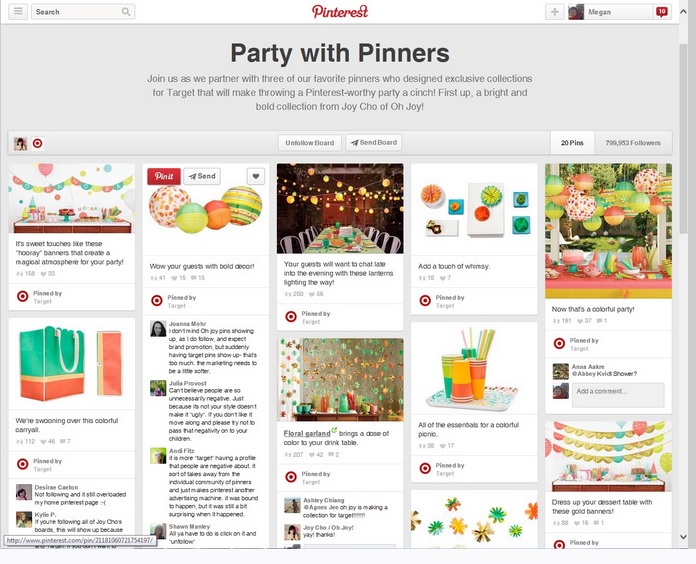
Recognizing the fact that more than 700,000 party planning-related items are pinned every day, Target announced they will be partnering with three of Pinterest’s top pinners and launching three party planning collections in their stores this year.

Target 1

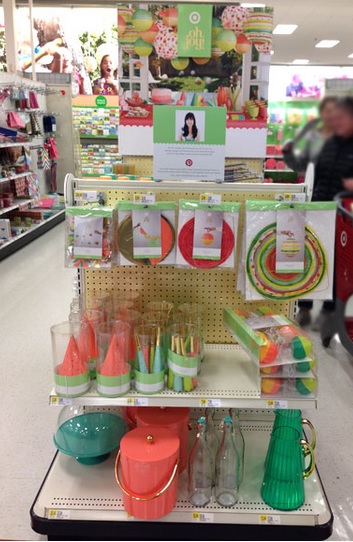
Throughout 2014, Joy Cho of Oh Joy!Jan Halvarson of Poppytalk and Kate Arends of Wit & Delight will create limited-time-only collections that include party décor, paper products and serving pieces designed in their signature aesthetic. Cho’s collection, which recently debuted on March 16, includes bold use of color and pattern in everything from whimsical banners to sparkly party hats.

target 2 target 3

I think this is a genius way of continuing to resonate with consumers. By paying attention to the type of items consumers are pinning, this also helps the retailer gauge which products will be popular from a merchandising perspective. Target has been extremely successful with designer collaborations in the past, including a deal with the Italian knitwear maker Missoni, which prompted such heavy demand that the retailer’s site crashed. I know I was guilty of purchasing a thing or two.

Check out Target’s website for a look at Joy’s full collection, with products ranging in price from $3 to $25.

Will you be browsing their party planning collaborations this year? Do you think partnering with everyday people will help attract more Pinterest follows and boost sales?

References

Gustasfon, K. (2014, February 13). Targets pinterest tie-in is just the beginning. Retrieved from http://www.cnbc.com/id/101412264

Wagner, K. ( 2014, February 10) . Target pinterest party. Retrieved from http://mashable.com/2014/02/10/target-pinterest-party/

Posted in Uncategorized | 10 Comments

Creating ads to be remembered…correctly

As Heath and Heath (2007) mention in “Made to Stick,” creating a marketing strategy that can be easily recalled by consumers over the long term is essential to the success of a campaign and brand. Keeping the strategy simple, authentic, unexpected, and emotional gives messages staying power, and even more so when the ideas are concrete and credible your ad here(Heath & Heath, 2007). These concepts help consumers overcome the curse of knowledge to find the important information without allowing false assumptions and misrepresentations taint the messaging (Heath & Heath, 2007).

There are many ways to help a message stick in a print ad or commercial. As the Commercial Kings explained in several of their episodes, understanding your audience through marketing research adds value to strategic planning, and a jingle, message repetition, and integration are all ways to make an idea stick (Barry, 2012). Market research of a particular target consumer segment may only be scratching the surface, however. In-depth analysis of how memory works may give advertisers an advantage in developing a media campaign.

Memories are a branch of social psychology that has been receiving a great deal of attention recently, especially by the advertising world. In particular, false memories—memories that are factually incorrect—are a common phenomenon (LaTour, Latour, & Brainerd, 2014). It is often seen in witness testimony, but it has its uses and misuses in popular media as well. A recent study by researchers at Cornell University suggests that many incorrect recollections may actually be caused by overthinking decisions (LaTour et al., 2014). Rather than a deficiency in the brain’s storage process, these “smart” false memories are actually originating when consumers think deeply about products and advertising in an attempt to make a purchasing decision (LaTour et al., 2014). Consumers who are more analytical have more trouble with false memories than those who think about marketing at a more surface level (LaTour et al., 2014).

The concept of “smart” false memories, or fuzzy-trace theory, is interesting, both in terms of advertising techniques and ethics. Policies have been put forth in an attempt to protect consumers who are considered susceptible to false or deceptive advertising (McGandy, 2014). But this study has shown that it is overly analytical consumers who are more likely to generate false memories of their own. For these individuals, it may be better to keep the message simple, visually and aurally. Flashing a logo will stick with analytical consumers better than an emotional story that requires them to engage, and gives them more opportunity to overthink and create false recollections (LaTour, 2014). This may be especially true with Internet ads seen by distracted consumers (McGandy, 2014).

Developing effective, memorable advertising is imperative to a campaign strategy, but there are so many factors to include in the planning and research phase. Combinations of visuals, sounds, messaging, and stories can be used to create lasting memories for consumers. With each new study about memory, it is becoming clearer that an exact combination for each product is necessary to reach the greatest audience. Ads must give critically thinking consumers cues that are not only engaging, but also guide their interpretation as they are forming memories (McGandy, 2014). How can Heath & Heath’s methods be used to appeal to both segments of consumers, analytical and artificial thinkers alike?

References

Barry, P. (2012). The advertising concept book: A complete guide to creative ideas, strategies, and campaigns. New York: Thames & Hudson.

Heath, C., & Heath, D. (2007). Made to stick: Why some ideas die and others survive. Random House.

LaTour, K. A., LaTour, M. S., & Brainerd, C. (2014). Fuzzy trace theory and “smart” false memories: Implications for advertising. Journal of Advertising, 43(1), 3–17. doi:10.1080/00913367.2013.811706

McGandy, A. (2014, March 18). Study: Ads can influence ‘smart’ false memories. The Cornell Chronicle. Retrieved from http://www.news.cornell.edu/stories/2014/03/study-ads-can-influence-smart-false-memories

Posted in Uncategorized | Comments Off on Creating ads to be remembered…correctly

Does it matter where recommendations come from?

Why is it okay for our friends and loved ones to recommend products, movies and travel destinations, but we find it intrusive when artificial intelligence is used to recommend them?

We are already utilizing artificial intelligence on our iPhones when we ask Siri for directions or weather forecasts as well as locating information via voice command on our Android-based phones when we ask questions of Google. It seems normal now to interact with this type of technology. We seek information for which restaurant to frequent, which movie to see, or which store has the best price on the latest item we want to buy.

Through our day-to-day interactions with friends and family they come to know our likes, preferences, habits and tastes. Using this knowledge they buy us gifts, recommend items to improve our lives and offer suggestions to events or destinations they think we would enjoy. Yet, when marketers try to understand our habits as we walk through a store (Clifford, 2013), identify the products that we really like (“FetchBack,” 2011), or follow our activity on various web sites (Sloane, 2014) we feel a sense of invasion of privacy even though we are interacting in public places, like clothing stores, coffee shops, and the internet. The computers we use are private, but we enter a public space when we use the internet.

Artificial intelligence continues to grow at the speed of the gazillion 1’s and 0’s traversing the internet. The next step of digital technology is “anticipatory computing” (Hu, 2014). Google Now can learn our habits, see what we do on our cell phones and offer corresponding information. The next steps are for computers to listen to us, then anticipate what we need and get the information we need without us even asking (Hu, 2014).

These anticipatory computers will be marvelous and game changing devices for marketing. Our cell phones running apps or even built in capabilities will be able to anticipate our needs and give us information.  Then perhaps the next step in the marketing realm is for it to start making the connections with the movies we like and start making unsolicited recommendations or if it knows we like to shop at Pottery Barn it can let us know that they are having a sale today. Perhaps in the not too distant future these devices will even be the ones to decide to purchase the items for us.

As these technology devices become more sophisticated and interact with us in a more human way, do you think we will welcome this type of interaction or will it still seem like an invasion of privacy?


References

Clifford, S. (2013, July 14). Attention, shoppers: Store is tracking your cell. Business Day, The New York Times website. Retrieved from http://www.nytimes.com

FetchBack adds new features to its retargeting technology. (2011, July 1). InternetRetailer website. Retrieved from http://www.internetretailer.com

Hu, E. (2014, March 17). Computers that know what you need, before you ask. All Tech Considered, National Public Radio website. Retrieved from http://www.npr.org

Sloane, G. (2014, March 14). Google winds down wildfire to focus on DoubleClick integration. AdWeek website. Retrieved from http://www.adweek.com

Posted in Uncategorized | 5 Comments

‘People you travel with’ – a ’12 marketing pitch. Malaysia Airlines

The ancient adage goes “the journey of a thousand miles begins with one single step.” I looked into the marketing strategies of Malaysia Airlines (MAS) over the past two weeks. This month’s tragedy, regardless of location and status of MAS Flight 370, has touched the lives of two hundred thirty nine individuals. The lost Boeing airplane has captivated cable news channels and audiences since the early morning hours it vanished. The human – and world – hope is for life but surely this has damaged and disrupted families in the very least of descriptions.

A 2012 campaign, commercial of Malaysia Airlines titled “journeys are made by the people you travel with” is both powerful and persuasive. I have included the in this post. Everyone in the ad is carrying luggage. The ad will no doubt be one of the most creative you have seen lately! All sorts of people (all ethnic backgrounds represented) with suitcases, large and small, where ever they are. Birthday parties, bowling allies (while bowling), and yes, swimming pools (yes, while swimming!). This is one smart ad campaign, please take a look.

http://www.youtube.com/watch?v=cMLsCZsnHRM

“We believe that life is a journey, and we are all travelers” are remarkable words and can serve as international sentiments. With the visual aids of actual luggage at the heart of the message for MAS, those with hearing impairments will completely understand the marketing message. MAS kept it simple but striking to the viewer. Authors Chip Heath and Dan Heath in their best-selling book, Made to Stick (2007), would have advised a similar strategy to the global company. The ad is professional and emotional, with world-wide, cross-continent cultures and implications (Heath, 2007). “Journeys” is highly memorable and exceptionally long-lasting in its impact (Heath, 2007).

th

Do you believe this theme and ad would work for local airline carriers and partners across the United States? Think of the business routes, trips between Texas cities and the West Coast. Reflecting on perhaps, the hundreds of thousands of commuters between eastern seaboard hubs of Boston, DC, Philadelphia and NYC? Would this be effective advertising to both businessperson and a private sector company?

Reference

Heath, C. & Heath, D. (2007). Made to stick: why some ideas die and others survive. Random House.

Posted in Uncategorized | 7 Comments