Marketing communication in China

Marketing Communication in China

Have you ever said something you perceived to be funny and a person you were telling it to is completely baffled and even offended? I have! You can say it was very insensitive that I made a comment to an Asian without thoroughly understanding the full cultural sensitivity of the subject. The same can be said to when conducting business and marketing in China. Advertising agencies must fully understand the culture, language, and the ways things are perceived, performed and accomplished.

First and foremost, one must realize China is a Communist state and the Communist party holds the highest authority of the land and maintains tight control of speech, religion, and assembly. The government can control every aspect of life. Albeit China has eased up with its hardline communism practice due to pressure from the burgeoning economy, communism is still alive and well.

To be successful in conducting business in China, the company must understand the customs and practices of the Chinese. It is great importance one has the complete understanding of a culture of a particular country prior to engaging in a marketing strategy. China is in a high-context culture, and much of the information resides in the contexts of communication, associations, and fundamental values of the communicators (Keegan & Green, 2014, p. 115).

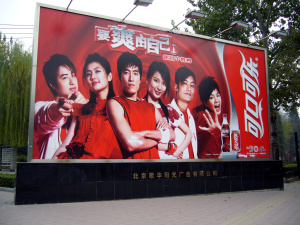
China is a unique culture in a sense that a number and a color signify a diverse meaning. The color red has long had significance in China as it represents the Communist movement in 1949. Red has taken on different meanings and contexts, some ancient and some very modern. The color red has acquired these characteristics over thousands of years, and today, red has the symbol of prosperity and happiness. Importantly, it’s also the primary color for celebrations, especially the Lunar New Year and wedding ceremonies (Gao, 2011).

chinese_coke_billboard21

Chinese-Traditional-Wedding

To establish a strong working relationship with the Chinese in China, one must treat the Chinese counterparts to dinner and communicate through dinner, meals, and other activities. A formal dinner in a private room of a grand restaurant is common prior to a setting down into business. It is highly important to adhere to this rule when attending the meals. At an informal meal, there will always be alcohol. If one cannot consume alcohol, he must use medical grounds as excuses. The best way is to bring someone who can drink alcohol. Chinese like to know and trust the person and establish a relationship before doing business transactions. Make sure to greet everyone with a light handshake as it is regarded as respectful and standard business practice in Chinese business meetings. It is critical to establish an intimate relationship with the Chinese government officials. The government has intimate knowledge and control of the market movements as well as administering foreign enterprises. Potential delays in the process of obtaining a license can be eliminated (Sally, 2012).

Number eight indicates prosperity, wealth, success or social status. One example of its use was the 2008 Beijing Olympics Opening Ceremony held on August 8, 2008 (8/8/08), at 8:08 pm. (Wu, 2015).

Art directors and advertising managers must collaborate carefully in order to avoid certain color schemes and numbers in their advertisements that can potentially offend the Chinese culture and its people. Doing so would certainly implode and lead to epic failure.

Reference:
Gao, K. (2011, January 17). Avoiding insult and injury when using color in China. Retrieved from: http://www.illuminantpartners.com/2011/01/17/color

Keegan, W. J. & Green, M. C. (2014). Global marketing (8th ed.). New Jersey: Prentice Hall.

Sally (2012). Business practices – top 10 critical dos to sustain prosperous business in Guangzhou. Retrieved from http://www.business-in-guangzhou.com/business-practices-top-10-critical-dos-to-sustain-prosperous-business-in-guangzhou.html

Wu, A. (2015, February 12). Number 8 and other “lucky” numbers. Retrieved from: http://www.chinahighlights.com/travelguide/culture/lucky-numbers-and-colors-in-chinese-culture.htm


Posted in Uncategorized | 2 Comments

How do we consume digital media?

With today’s technological advancements, media can be digitally consumed in so many ways – through apps, online, etc. Each year, Reuter’s Institute releases a report that studies the way individuals consume media on a daily basis. Through their research and analysis, they have identified 7 key trends that seem completely logical and relatable with society’s day-to-day functions.

1. People HATE Ads!

When engaging in media, the last thing you want to do is bombard them with advertisements – especially millennials. According to research, 59% of people that obtain their news digitally in the United States has some sort of ad blocking software installed on their device (Coffee, 2015).

2. … AND Sponsored Content!

The same applies for sponsored content – which is content inserted into a publication with an editorial flow. Users aren’t very fond of this form of advertising when viewing serious content and they find it extremely deceiving.

3. News Apps aren’t being used.

Although news applications are being downloaded, this doesn’t necessarily mean that they are being used to their maximum potential. Studies show that more than 70 percent of people have a news app downloaded, but don’t really open/use it because they depend on their news notifications to present a quick synopsis on current events (Coffee, 2015).

Social media – particularly Twitter and Facebook – have been dominating this arena as most people obtain their news through these outlets (Gatchalian, 2015).

4. Property growth/shrinkage.

Digital properties, such as BuzzFeed, have definitely taken advantage of this platform and the rise of digital media usage. Sources, such as BuzzFeed, have doubled their audience outreach within the past year, while others, such as Yahoo and MSN, have “lost ground” (Coffee, 2015). The only news source that is consistently on the rise is CNN. People want what’s new and quick. Being able to access content in a timely manner is a vital asset.

5. Local news is dying.

Unfortunately, there has been a plummet in the traditional media consumption, as more people are in tune with digital engagement.

local news

6. Pay for news? NO!

Let’s face reality. No one is going to pay for news when there are so many outlets that have it accessible for FREE. From the research, almost 70 percent of the recipients expressed that paying for news was definitely not an option (Coffee, 2015). Unfortunately, the people/organizations producing the stories have to find other ways to obtain money to pay their employees.

7. Everyone loves to give their opinion.

People love having the options to comment on content when they feel it is relevant and/or necessary. Studies have shown that over 25 percent of users take advantage of this opportunity by commenting on news stories that they have stumbled upon on their own or that have been shared and linked through social media (Coffee, 2015).

All in all, it is all about convenience and being able to provide a hassle-free experience. People just want to be able to obtain news without being forced to view an advertisement along with the option to share their opinion at any given moment.

References: 

Coffee, P. (2015, June 17). 7 Key Trends in Digital Media Consumption. ADWeek. Retrieved from http://www.adweek.com/prnewser/7-key-trends-in-digital-media-consumption/115327

Gatchalian, M. (2015, July 16). Facebook And Twitter Now Main Sources Of News. The BitBag. Retrieved from http://www.thebitbag.com/facebook-and-twitter-now-main-sources-of-news/113097

Leggatt, H. (2015, July 14). News consumption – the rise of Citizen Editorship. BizReport. Retrieved from http://www.bizreport.com/2015/07/news-consumption—the-rise-of-citizen-editorship.html

Posted in Uncategorized | 3 Comments

The self destructive marketing strategy of Donald Trump

It’s been talked about again and again in the news, on popular radio stations, and made fun of countless times on the internet.  I’m talking about none other than Donald Trump, the former business mogul and presidential candidate whose know-it-all demeanor continues to destroy his own empire.  In fact, I use the term ‘business mogul’ very loosely; I doubt by the end of the year that his vast empire will be anything more than a sandcastle.

Yes, it has been talked about over and over again from so many different viewpoints.  Still, it’s too good not to talk about (in a you-can’t-make-this-stuff-up kind of way).

It has been very interesting watching his downfall (and I realize how cruel that statement sounds) over such a short time period.  Granted, his comments offended a remarkable amount of people (and he seems to be somewhat proud of that fact), but it is very amazing to me just how many big businesses have severed ties with him.  First, Univision cut ties with Trump, refusing to air the Miss Universe Pageant.  NBCUniversal followed shortly after, leaving Trump high and dry and the Miss USA pageant floating in the balance.  Then – something that literally made ma jaw drop when I read it – Macy’s decided to cut ties with Trump as well.  To make matters worse, over this past weekend, Donald Trump got himself into even more hot water, speaking out against war veteran John McCain and the “plight of veterans . . . to the forefront” (Scott, Preston & Bradner, CNN.com, 2015), potentially destroying another brand – the GOP.

This entry is more a comment on the self destructive behavior that Trump has exhibited and how he has ruined several brands in the process, causing several companies to trip over themselves to get away from Trump.  As innovative as marketing is in today’s society, it seems that it can do just as much damage as well.  This situation is a great example of viral marketing working in the wrong way.  It seems that Trump may not have realized (or may have,  depending on how you see it) that his comments could be etched in stone at any time with this remarkable tool called ‘the internet’ and spread like wildfire to all corners of the nation, or of the world, even.  This also gives people a chance to keep viewing the videos and reading the many articles on his comments, leaving them to develop and redevelop opinions on the severity of his comments  I’m not sure whether Macy’s and NBC would have cut ties as quickly if Trump’s ‘marketing campaign’ wasn’t so present.  The same will happen to the GOP, but in a different way – they will have to determine how to deal with Trump because he is destroying their credibility with his free speech.

It will be interesting to see who decides to abandon the Trump ship next.  Considering everything that has happened so far, he would be wise to stop while he’s (somewhat) ahead.  Of all the words that are in his vocabulary, though, something tells me that ‘wise’ isn’t one of them. #TheFallofTrump

Reference:

Scott, E., Preston, M., & Bradner, E. (2015) Defiant Trump Refuses to Apologize to McCain. CNN Online. Retrieved from http://www.cnn.com/2015/07/18/politics/donald-trump-john-mccain-war-hero/index.html

Posted in Uncategorized | 10 Comments

Internet Radio: A Good Start with the Right Marketing Plan

When I first starting coming to Knoxville for business I had no idea I would end up back on the radio. I must admit I was very excited about exploring the radio airwaves and building my brand as a local radio personality. I was also stuck on getting my voice and show on the regular FM signal stations. I was able to co-host a few shows at the local radio station time to time. But I wanted to have my own regular two to four hour show. I wanted to reach the masses. So when I was approach by an internet radio station out of Atlanta, Georgia to do a radio show…I could not help but to be curious and skeptical.

Based on research, internet radio is growing up quickly and much has changed in the last 10 years (Deitz, 2015). People are able to connect to internet radio on a growing range of devices, from PCs, smartphones and tablets to automobiles, connected home appliances and other gadgets (eMarketer, 2013). It allows users various opportunities: variety of music, fewer advertisements (distractions), availability, minimal system requirements, flexibility and good sound quality (Artman, 2015). It also allows the average radio personality the opportunity to have a radio show at a minimal cost but with a massive audience. Most radio personalities want to build a strong brand and increase their numbers (listeners).

Internet radio offers advertisers another way to attach their brands to a niche market.  This market would include people who listen to internet broadcasting and other music-streaming properties. There are two main benefits for advertising on internet radio: the appeal of associating a brand with a particular genre of music and the appeal of in-stream audio ads (which are harder to avoid or skip than other forms of digital advertising) (eMarketer, 2013).  eMarketer (2013) estimates that internet radio ad spending in the US will reach $1.31 billion by 2016.

Now with basic marketing strategies, my radio show should be a success or at least a good way to rebuild my radio brand. Here are a few steps I came up with to help market my internet radio show:

  1. Develop a name, logo, website and other marketing material (e.g. t-shirts, caps and signs)
  2. Develop and distribute a post card advertisement (hard copy and electronic version)
  3. Send out a press release
  4. Visit various businesses, events or meetings where I can talk about the show and give away advertisements, promotional items, etc. pertaining to my radio show

Well based on the facts and a basic marketing plan…it seems I might be able to pull this off. Now I have to work on the format and content of the show! Oh boy! That is a different blog post that I will have to write at a later date. Wish me well!

References:

Artman, J. (2015). The advantages of internet radio. eHow. Retrieved from http://www.ehow.com/list_6518492_advantages-internet-radio.html

Deitz, C. (2015). Cheap tricks for promoting your internet radio station or podcast. About. Retrieved from http://radio.about.com/od/createinternetradio/fl/Cheap-Tricks-for-Promoting-Your-Internet-Radio-Station-or-Podcast.htm

eMarketer. (2013). Internet radio’s audience turns marketer heads. Retrieved from http://www.emarketer.com/Article/Internet-Radios-Audience-Turns-Marketer-Heads/1009652


Posted in Uncategorized | 1 Comment

Artful Advertising

One of the main themes that I have been trying wrapping my head around during this class is the difference between art and advertising. I’ve finally figured out that although advertising can be artful it is intended to sell a product. This was a revelation to me. Advertising is not a corruption of art, it is just a vehicle for it.

In Wadsworth’s Poem “A Psalm for Life” he says Art is long, and Time is fleeting.

I think that quote is more poignant today than in any time in history. Things are being made and created so quickly that there is hardly any time to appreciate the now. The Adobe “Dream On” Commercial was nominated for 2015 Outstanding Commercial. The images are beautiful, couple with the song the commercial absolutely captures what is possible when using Adobe Photoshop (if you have a LOT of skill). It absolutely amazes me that a commercial can be created without having any type of production company. The lines of art and advertising are definitely blurred. Tom Mikulski’s wrote the book Art is Dead after teaching a community college art appreciation course and only 2 or 70 students could name a favorite contemporary artist. In this book different artists weigh in on the question is Art Dead in America? The question remains is art dead because most people can’t name an artist and does it matter if there is still art in the world?

Art was originally created as a language for communication (caveman art) but has evolved. It can create controversies, inspire movements and just make things prettier. When Warhol was producing art in the 1960s top of mind. Today, unless you live in the world of art it is rarely mentioned.

The space between art and advertising has blurred even more when you think about all the beautiful imagery that has become common place in advertising.  Consumers watch it because it is beautiful or compelling, advertisers create it to capture the consumer’s attention and hope they purchase the good they are selling.

We have read a lot about social media as a platform for advertising because that is where consumers are spending their time.  Consumers are being exposed to greater levels of artful images to grab their attention. So does it matter you don’t know the artists’ names who created the Adobe commercial?

These are philosophical questions. The only concreate answer is that we are being exposed to more art today than we were 10 years ago and isn’t that a beautiful thing?


Eye Candy on Instagram

http://www.complex.com/style/2014/09/artists-to-follow-on-instagram/

Art is Dead

http://www.artisdeadbook.com/index.htm

Posted in Uncategorized | 1 Comment

Communication in Art World. What is in here for business people?

It has almost been three months as I have started my new job in Contemporary Art Organization as Marketing and PR Director. Before this I have worked in different companies but they all were B2C and never related to such areas as art and culture. With over 9 years of experience in PR & MKT I felt quite confident about new role in new organization but the more I spent time there and more I dug deeper I have found out that marketing and PR communication in the world of art is a totally different thing and requires many new skills also I have found out that there are many know-hows which could be effectively implemented in business world. As art people in general are more sensitive and see the world differently they are more sensitive to all PR and Marketing campaigns and what could perfectly work in business world would never work in art. I want to share some findings in this post because I think they can help to shape communication for business purposes up to excellent level as well.

“The right PR is like suspension in a luxury car,” said Bill Powers, gallerist and judge on the reality TV show Work of Art. “You kind of don’t feel it. And that’s how you know it’s good.” (Jovanovic, 2012).

1. Language

Communication language in Art world differs a lot from business environment. The nature of Art influenced even the language people express their thoughts in daily mailings. My first mails I wrote to external parties were so business-like that they perceived them as being offensive and not constructive however from my side in the mails I was just trying to reconfirm some agreements made before. The agency working with artists in London expressed some concerns to my boss about it. Good that he also previously worked in business environment and recognized the issue really fast. So, the first finding: do not rush, take breath and be over polite even if you talk about some real issues. People from Art world will get the message. Awareness about this type of people could be helpful in business as well because you never know the background of the person in fron of you.

  1. Social Media

Social media approach is also very different. Of course some common techniques exist. You have to select right message for the audience, be consistent across the platforms and build a community but still it has many differences with business language and approach in general. People interested in art expect social media which represents particular organization, gallery or museum be a part of this art atmosphere, so you cannot post just short messages with promotion or contest or any other easy-to-digest information. People want to know what is behind of the masterpiece to feel a part of it (Black, 2012) and social media can provide this feeling through the photos, videos and extensive information which could not be covered on the website. That could be very useful for the business as well as part of engagement strategy. We rush in business trying to deliver targets and sales figures and as the result content of our communication suffers a lot. But providing high quality communication is important and could positively affect engagement rate.

  1. Consumers? No! Participants

In business environment we think about our target audience as the consumers/customers and provide them information about the products and services the company produces. Of course we are concerned with consumer engagement, participation and receptiveness but not to the extent it happens in Art world. For museums, fairs, art exhibitions the target audience is not a group of people who is loyal or not loyal to the products it is a group of active participants who very often know about your product much more than even you do yourself. And that is a big challenge and opportunity at the same time. Participants can make any exhibition much more interesting by being there and contributing and knowing this marketing people should really care about them and involve actively (Richardson, 2015). This knowledge could be very helpful for business community as well and it is worth to look into parallel industry to reapply some good practices to raise the loyalty of the customers.

Reference:

Jovanovic, R. (2012, June 26). Believe the hype! How PR took the Art World. Observer. Retrieved from http://observer.com/2012/06/believe-the-hype-how-pr-took-the-art-world/2/

Black, M.L. (2012, November 05). 6 Social media tips for artists and gallery owners. American Express. Retrieved from https://www.americanexpress.com/us/small-business/openforum/articles/6-social-media-tips-for-artists-and-gallery-owners/

Richardson, J. (2015, March 19). The audience is dead – let’s talk participants instead. Museum Marketing. Retrieved from http://www.museummarketing.co.uk/audience-dead-lets-talk-participants-instead/

Posted in Uncategorized | 2 Comments

Buying Contact Lists in Email Marketing and Why it Does Not Work.


imgres

This morning at my office, I was running our weekly marketing meeting and upon talking about numbers in regards to our awareness campaign was interrupted by one of my young interns. He blurted out, “Why don’t you just buy a list of contacts and send out email blasts? Seems much faster than the ways you’re going about it.” Immediately everyone in the meeting became quiet. Not the kind of quiet from pondering a brilliant idea, but the quiet from disbelieving someone actually spoke aloud such an idea.   I quickly adjourned the meeting to continue our group discussion later in the afternoon, as it was necessary to explain to him how and why this practice should be avoided, which I am now sharing in this blog.

———

Especially in small businesses and start-ups, we all know one of the primary focuses companies face is how to grow awareness and attract customers. Many who are not seasoned or well versed in marketing immediately think the quick solution is to purchase a list of contacts from a company that have been “pre-qualified” within an industry or interest targeted. However, using lists that were not earned through hard work and external communication channels like social media can do more harm than good. Below is a list of reasons that will illustrate why this practice should be avoided.

#1) It goes against the utilization rules of your software and ISP.

For many software packages and suites including agreements with Internet service providers, these unsolicited email blasts to people who have not opted in is a major violation of the terms and conditions of the software utilized. In some cases, abuse of this term will result in your accounts being suspended or outright cancelled.

#2) Your cumulative reputation will be negatively tainted.

Building a company’s reputation with a strong brand identity cannot be accomplished overnight. If it were as simple as flicking on a light-switch, then everyone would be successful. Receiving unwanted email advertisements can motivate some to engage social media to speak negatively on your practices. With enough of these negative reviews on your business practices, it will sabotage future efforts of enticing others to use your products or services. Tens of thousands of company’s reputations have been destroyed by comments posted on social media outlets like Yelp, the Better Business Bureau, industry forums and even on your own Facebook or Twitter page warning others of your invasive practices.

Additionally, these email blasts can negatively affect your sender score, which ISP’s utilize to determine the trustworthiness of the sender. Especially if you have a high bounce rate, the ISP will filter your sends out due to being labeled spam. Additionally your score can be reduced from complaints and levels of deliverability failure from sending to non-existent email addresses which lists are commonly full of. One large bad campaign of this type can make months to regain your original trustworthiness with the ISP.

#3) List values are overhyped.

As someone who has made this mistake years ago, I have heard from the salesman of these lists that they are “pre-qualified high-quality opt-in lists”. While these list companies talk big game, if the list was so valuable ask yourself they would be selling it for a lot more money. The only good list you can get is one you make yourself from your own efforts. In my experience over 35% of the contact information provided was outdated and full of expired email addresses. The more sends you do to expired or non-existent email addresses, the higher your spam rating goes. More often than not, these contacts have not opted-in to receiving information in your product or service category.

#4) No one wants unsolicited advertisements.

Unless people are specifically looking for your information, will consider your email to be a nuisance. If it doesn’t go directly into their junk folder and they do look at it, your message will fall upon deaf ears, conditioning your audience to ignore anything further you have to say.

#5) ROI near zero.

As I have heard time and time again looking at the pitches from these websites, they claim the ROI of email marketing up to 2500%.   The key words “up to” is the first red flag as it does not state “we guarantee” nor does it state “you will receive”. It’s funny how few of these entities actually have a money back guarantee and those that do have some sort of fine print loophole in the agreement. Imagine if you will, you purchase a list from one of these companies. Initially, you will find when blasting out all of those emails that the deliverability rates are less than 50%. After that, those that continue on the send process, the junk mail filters will typically take up to 60-70% of the emails to people’s email junk folder. In terms of open rates, it ends out if you are lucky, you may have up to 2% open rate, but most statistical reports state it was typically ended up 0.2%-0.8%…. not even one percent made it on average to an interested recipient. As any ROI formula will tell you, campaign profit must exceed cost/expenses to be remotely successful. I compare this to the analogy of 2,000,000 sperm trying to reach one egg. Along the way, most if not all fail to make it to the endpoint and impact.

Conclusion

Successful email marketing is not an overnight process. The time tested methodology of focusing on building relationships and establishing yourself positively on social media, through ads, media exposure and providing a positive product or service that makes your customer’s evangelize about you is the best way to build your following and attract others. Short cuts quite simply do not work.

Posted in Uncategorized | 4 Comments

The Impact of Logo Popularity on Brand Success

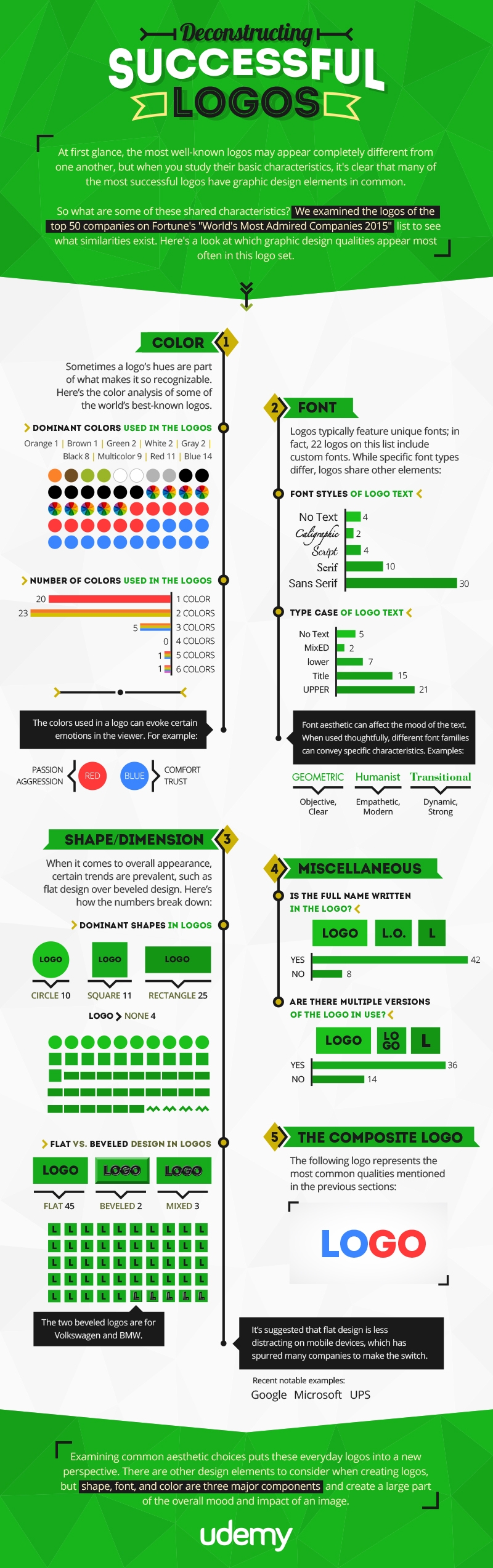
Organizations are constantly seeking the most effective way to capture and sustain the attention of their target audiences. In the critically acclaimed book, Made to Stick: Why Some Ideas Survive and Others Die, Chip and Dan Heath dissect successful ideas in order to identify the key characteristics that make them widely remembered and understood. After extensive research, the list of characteristics was refined into six principles: Simple, unexpected, concrete, credible, emotional, and stories. “Keeping it simple” is a straightforward yet can transcend all facets of an organization. Those that have found success often have visual branding that match the simplicity of their core messaging.

Research conducted on 50 brands from Fortune’s Most Admired Companies list revealed that the logos of these successful brands have simple layouts. 43 of the 50 logos use 2 colors or less consisting of primarily red and/or blue. Udemy, an online education marketplace responsible for conducting this research, also polled 1,000 people on their brand preference, which revealed trends relating to logo shape. Notably, respondents favored round logo over more common square logos.

If a company logo can be used to increase brand recognition amongst targeted audiences, should companies place greater emphasis on the development of their logo and alter it when it’s not yielding intended results?

deconstructing-successful-logos-01-2015 (1)

References

Heath, C. & Heath, D. (2007). Made to stick: Why some ideas die and others survive. Random House.

Richards, K. (2015, July 15). Here’s what the most popular brands’ logos have in common: Deconstructing successful insignias to see what customers like best. Adweek. Retrieved from http://www.adweek.com/news/advertising-branding/heres-what-most-popular-brands-logos-have-common-165884

Posted in Uncategorized | 2 Comments

Viral Marketing: How Viral Videos Work in Branding

Viral Marketing: How Viral Videos Work in Branding

Latest news in retail market – on July 16, 2015, a smartphone video of a Chinese couple having sex in a fitting room of the Uniqlo store located in one of the biggest shopping malls in Beijing, China, went viral immediately. Being a Japan-based company, Uniqlo quickly grew into one of the largest international clothing chains, particulaScreen Shot 2015-07-18 at 11.45.24 PMrly expanding in China. The company denies any involvement with the scandalous video, referring to their dedication in “providing consumes with safe, comfortable and quality shopping experience” and encouraging them to follow moral standards and use fitting rooms appropriately (Jiang, Dong & Watson, 2015).
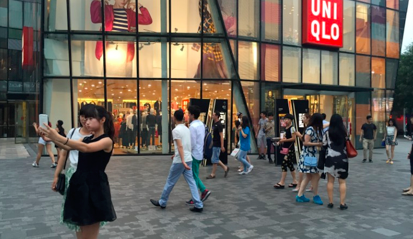

Thus, there is no direct evidence of the video clip being initiated or produced by Uniqlo. However, besides numerous complains and police investigation, deliberately or not, the video naturally attracted attention of potential consumers to the brand, even those who never heard of Uniqlo before. As a result, it increased sales in the store, perfectly serving the purpose of Uniqlo to become number one in the market. In turn, the whole story became a vivid example of how viral videos work in branding.

Screen Shot 2015-07-18 at 11.40.13 PMAs the subject was researched, it turned out that the Uniqlo story is not the only case when viral advertising was used for brand promotion in the market. Among others, there are the shots and videos of Richard Branson, the owner of Virgin, kitesurfing with a naked model on his back, which went viral two years ago and turned into a great marketing tool (Goodman, 2013). Another example is a Trojan Condoms viral video where a young man gives his girlfriend gonorrhea as a birthday present, which achieved 35 million views in 3 month.

Therefore, using such videos is quite a common practice in viral marketing, one of the “hottest” branding instruments nowadays; the most amazing thing is that a well developed video can make the audience to do all marketing for the company (Goldsmith, 2002). According to Bruce Blevennec (2007), an owner of a successful web-agency, such marketing messages are quickly spread among consumers as emails, pictures or videos; they should be easy to forward or share with your friends. Often, they are shocking or appeal to sex. All these characteristic apply to the Uniqlo video. Now, the question is how often we, as the users of Internet and social media platforms, in our desire to be aware of viral news and to share it with our friends become instruments in somebody’s marketing campaign by promoting their content? Are we really turning into marketing tools, being manipulated and helping someone making money for free?

References:

Blevennec, B.L. (2007). Viral Strategies and Buzz Marketing. Retrieved from http://www.slideshare.net/emakina/viral-marketing-theory#14372056470821&fbinitialized

Goldsmith, R. (2002). Viral Marketing: Get Your Audience to Do Your Marketing For You. Prentice Hall Business.

Goodman, K. (2013, October, 28). The story behind Richard Branson’s naked kitesurfing shot. The Virgin. Retrieved from http://www.virgin.com/news/naked-kitesurfing-heres-how-it-happened

Jiang, S., Dong, S. & Watson, I. (2015, July 16). China: Clothes come off in viral Uniqlo sex video. CNN. Retrieved from http://edition.cnn.com/2015/07/15/asia/china-beijing-uniqlo-sex-video/index.html


Posted in Uncategorized | 4 Comments

When Simple isn’t so Simple…make it Simple

insurance brokers

I have spent a good part of this semester trying to understand how an integrated marketing communication plan could help my firm.  You see, my career has spanned over 30 years in the insurance industry and the last 24 years have been in sales on the insurance broker side.  As a result, I have viewed my through the lenses cursed with knowledge (Heath & Heath, 2007).  The challenge I saw was that our firm offers a service that is experienced differently depending on the user.  In fact, many times the employees who work for our clients “experience” our service with only a vague awareness of who we are.  How do you then differentiate your service from the competition?  Last week, an article in an industry online periodical caught my eye.  The article was from “Trusted Advisor”, a company our firm has used to help our sales people gain more business.  It was titled “Ten Myths about Selling Intangible Service”.  Here is a link to the entire article: http://trustedadvisor.com/articles/ten-myths-about-selling-intangible-services.  I recommend you read it because it has universal application.

The main idea in the article was that to successfully market an intangible but valuable service you need to create an environment that is “all about the client” so that you can earn their trust.  It got me thinking about what we do for our clients and that an effective integrated marketing communication strategy should be designed to include all of the departments and how they interact to serve the clients’ needs.  It includes all the ways the client will experience our firm.  This not only includes the obvious customer service but also all of the ways the departments within the firm need to work to make the client feel that we care about them.  For example, in creating employee communication pieces for the client, are they written in a way so that people who are not in our industry understand how the benefits apply to them?   Do we go the extra mile to make sure we help clients and their employees navigate the complex health care system?  An integrated marketing communication strategy for a firm such as ours has to include the clients’ needs as central to our existence so that we gain their trust.  An intangible service must be experienced first and then value is determined by the user.

If your employer offers a health insurance program there is a good chance that you have experienced the service of a broker even though it may not have been apparent.  Your first encounter may have been with the communication you received when you first became eligible for the plans.  Did the plan choices seem clear to you?  If not, were you provided with resources (not from the insurance company) to obtain additional information and clarification?  Even if your human resources manager was your main point of contact, it was more than likely the benefits broker that helped design the benefit communication campaign.  Have you ever had an issue with a denied claim or in obtaining a referral for a procedure that you needed?  Who helped you with the claim or advocated on your behalf to obtain the approvals from the insurance companies?   It is highly likely that a firm such as ours was involved.  Did you feel it was all about you?

References

Heath, C & Heath, D. (2007). Made to stick: Why some ideas die and others survive. Random House

Ten myths about selling intangible service. (2015, July 8). [Blog Post]. Retrieved from: http://trustedadvisor.com/articles/ten-myths-about-selling-intangible-services

Posted in Uncategorized | Comments Off on When Simple isn’t so Simple…make it Simple