Celebrity Endorsements: Do they guarantee success?

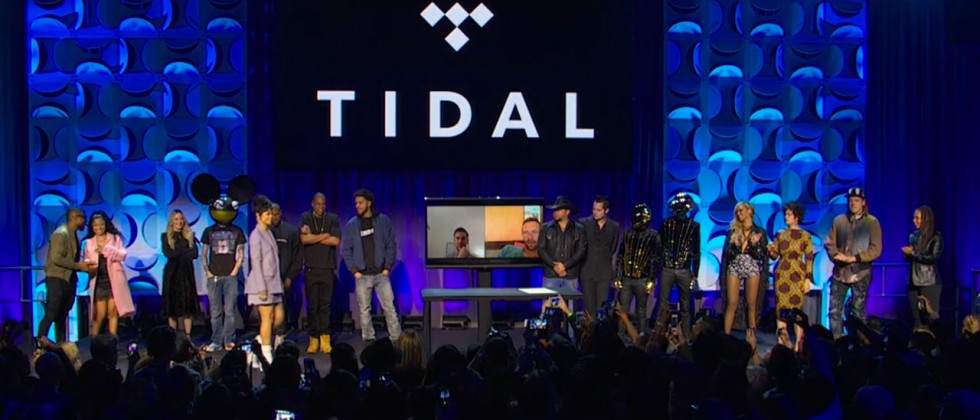
Tidal launch event on March 30, 2015.

Tidal launch event on March 30, 2015.

Back in late March, Jay-Z launched Tidal, a music streaming service. I didn’t see the press conference live, but I remember a friend saying “I’ve never seen so many celebrities on a stage looking so weird.” I recalled the hashtag, #TidalforAll on virtually all social media platforms and wanted to know if Tidal was a clothing line or an upcoming concert series.
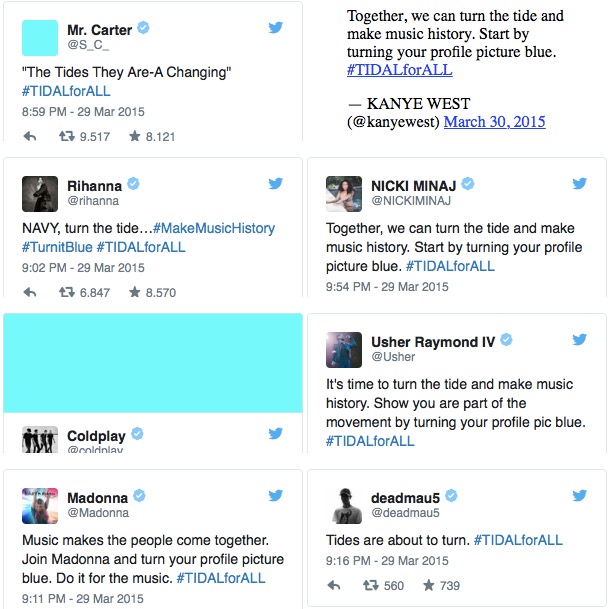
AllHipHop » Watch A Live Stream Of Jay Z’s Special Announcement; Celebrities Promote His New Streaming Service With #TIDALforALL Hashtag Safari, Today at 3.39.34 PM

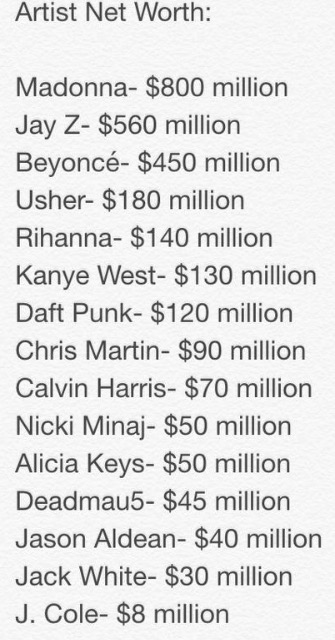
My friend’s comments lead me to YouTube, where I watched the launch event and I soon realized my friend was right. The stage was filled with some of the most influential musical artists in popular culture. You might be thinking, who was there? Well, there was Alicia Keys, Arcade Fire (members Win Butler and Régine Chassagne), Beyoncé, Calvin Harris, Chris Martin of Coldplay, members of Daft Punk, Deadmau5, Jack White, Jason Aldean, J. Cole, Jay Z, Kanye West, Madonna, Nicki Minaj, Rihanna, and Usher. All of these celebrities stood on the stage, and smiled for the cameras. After signing a declaration everyone walked off the stage.

I was confused as to why these musical powerhouses where there. After the launch event, I didn’t know about the details of the service, I just knew it was about music. I wondered why Jay-Z and his musical friends said nothing about what Tidal is/does, why Tidal is different and why consumers should care about Tidal.

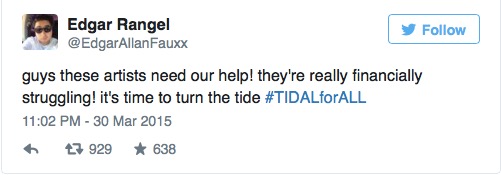
My friend was right after all. What was the point of all these celebrities endorsing this service and appearing at this launch event? Yes, in some capacity they are shareholders of Tidal, but Tidal did not use the celebrity endorsements properly. In fact, Tidal received backlash on Twitter.
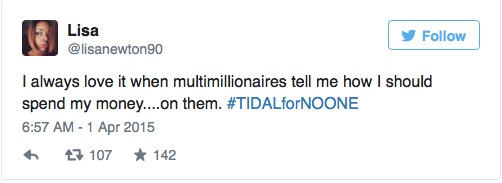
Has the Tidal backlash already begun? Safari, Today at 3.35.38 PM

Has the Tidal backlash already begun? Safari, Today at 3.36.40 PM

Has the Tidal backlash already begun? Safari, Today at 3.37.09 PM

The trending topic #TIDALforALL, quickly turned into #TIDALforNOONE because consumers thought the launch of Tidal was a gimmick to put more money in the pockets of the rich.

Perhaps the Tidal launch would have been more successful without the celebrity powerhouses. While celebrity endorsements can improve brand visibility to the target audience, a strong brand may not necessarily need a celebrity endorsement (Harrington, 2014). For example, Apple recently used celebrity endorsements for the iPhone, but that is not a typical strategy for the company. The Apple brand and the functionality of the products are strong enough where the use of celebrity endorsements is not a high priority for the brand.

What are your thoughts? Are celebrity endorsements the key to a successful marketing campaign?

Reference:

Harrington, K. (2014, January 1). Save Your Money: Celebrity Endorsements Not Worth The Cost. Forbes. Retrieved from http://www.forbes.com.
 

Posted in Uncategorized | 8 Comments

Four Things You Didn’t Know About Fake Yelp Reviews

FAKE

The other night I thought I’d try one of the newest and hippest restaurants in town that everyone’s been talking about over social media. I figured it was worth a try to see what all the hype was about. Unfortunately, there was nothing special about it at all and I had one of the worst dining and service experiences of my life. Not only was the place highly over priced, the service was terrible and it took me over two hours to get my food when people were coming in after me and leaving before me. The waiter also had a terrible attitude problem and had no respect for me as his customer. Like many angry Millennials who have a terrible service experience, I took to Yelp to express my dissatisfaction with the company. In fact, I was so angry that I made a few fake email accounts and wrote multiple reviews as my way of “getting back” at the restaurant. I was able to shave off half a star from the company’s overall Yelp rating. I later felt guilty and removed my false duplicated Yelp reviews, but then it got me to wonder just how many fake Yelp reviews are there? Below are four things you most likely didn’t know about the world of fake online reviews:

Fake Yelp Reviews are More Prevalent Than We Think
I turns out that not only do consumers make fake Yelp reviews about a company, but also, companies make fake reviews about themselves as an effort to increase positive ratings online which in turn will lead to more customers (Lubin, 2012).

Twenty Percent of all Yelp Reviews are Fake
According to an article by Business Insider, a whopping 20 percent of all Yelp reviews are fake. In 2006, it was reported that only 5 percent of yelp reviews were fake which tells us that this trend isn’t going anywhere soon (D’onfro, 2013).

Entire Businesses Specialize in Writing Fake Yelp Reviews
Believe it or not, fake Yelp reviews have become so popular, that there are entire businesses who capitalize on writing them. According to Business Insider, this process is called “astroturfing ” and companies hire freelancers from places like the Philippines, Bangladesh, and Eastern Europe to write fake reviews for $1 to $10 each (D’onfro, 2013). These fake reviews on a website such as Yelp that attracts over million monthly visitors could mean big business for companies who do it.

Fake Yelp Reviews Are the Equivalent of False Advertising
According to the Federal Trade Commission, a review is considered deceptive advertising if any material connection between the reviewer and the business being reviewed is not disclosed in the review (Fell, 2013). Therefore a fake Yelp review is considered a form of false advertising and has been used as a loophole for many reputation management companies to boost their client’s public perception (Suligson, 2013).

With all the fake Yelp reviews on the web, it’s important to know that not everything you read is true and always remind yourself just how easy it is to make a fake review. As mentioned at the beginning of this post, I was easily able to make a number of fake reviews that shaved off an entire half star of a company. Remember that the same thing could be done to gain a half star, and if done on a widespread level, the company could go from having one star to five stars literally over night. As a closing note, readers should think critically when reading online Yelp reviews and seek multiple sources before determining whether or not you will visit a restaurant or use a service that is mentioned online.

References

D’onfro, J. (2013). A Whopping 20% Of Yelp Reviews Are Fake. Retrieved from http://www.businessinsider.com/20-percent-of-yelp-reviews-fake-2013-9

Fell, J. (2013). Yelp: We Won’t Stand for Businesses That Pay for Fake Reviews. Retrieved from http://www.entrepreneur.com/article/227818

Lubin, G. (2012). The Illegal Way To Improve Your Rating On Yelp. Retrieved from http://www.businessinsider.com/the-illegal-way-to-improve-your-rating-on-yelp-2012-2

Suligson, S. (2013). Yelp Reviews: Can You Trust Them? Retrieved from http://www.bu.edu/today/2013/yelp-reviews-can-you-trust-them/

Posted in Uncategorized | 9 Comments

Integrated Marketing Communications: THEN and NOW

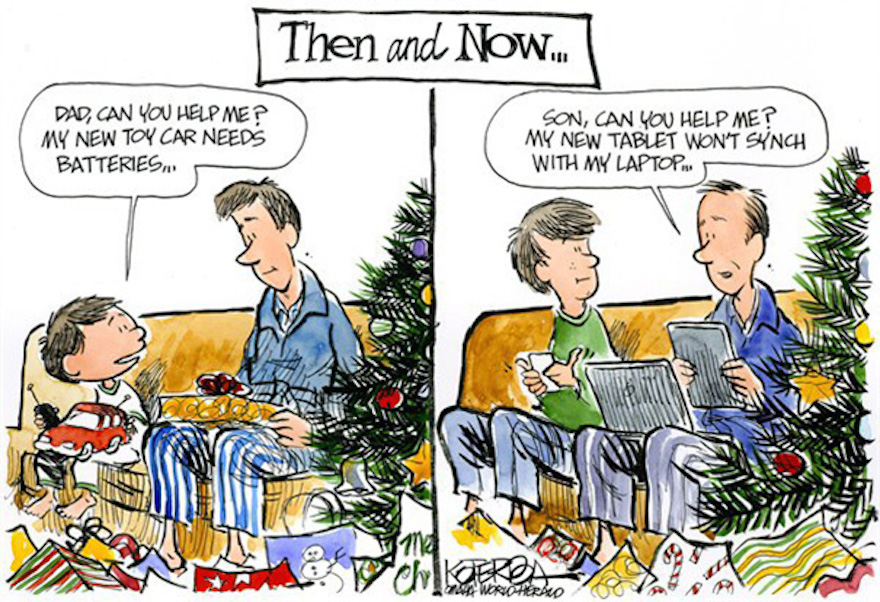
The concept of integrated marketing communications has been continuously evolving over the years, but one question that remains is HOW exactly has it changed from then…..to now?

CMGT 541 Pic

This comic definitely holds true as there are still a number of companies and brands that either don’t understand integrated marketing communications well enough or if they do understand how it all works, don’t utilize it enough. But I’m getting a little ahead of myself. In order to have a clear idea of the perceptions of integrated marketing communications at the present time, we have to take a little trip “back to the future” to see what companies’ first impressions were of this very powerful advertising method….

back_to_the_future2

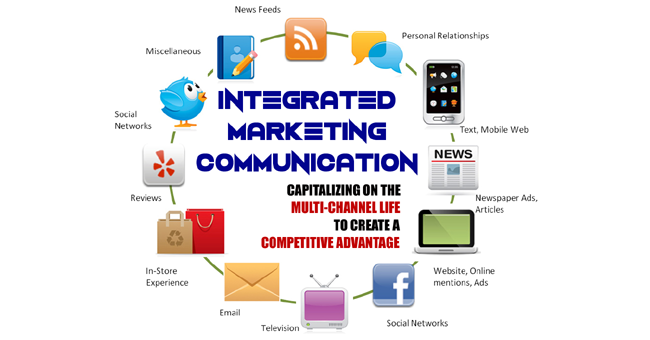
What made the concept of integrated marketing communications so different in the beginning was that it offered a whole new approach to how companies and brands advertised and reached potential consumers in such a way that combined both “online and offline tactics around a single marketing strategy” (Olenski, 2012). At first glance, this seems like a great method right? Well some marketers didn’t feel so enthusiastic about it initially and compared the idea to something of a fantasyland; “an ongoing process made up of many discrete but valuable steps, each contributing to the greater cause” (Olenski, 2012). The need for integration among advertising platforms was considered to be inevitable and the means by which such integration would be achieved was a source of uncertainty.

So what exactly are marketers saying now about integrated marketing communications???

Many major companies and brands (such as Red Robin for example) are aligning their messaging strategies with their online and offline marketing, more so specifically when they are utilizing the traditional media outlets. Integrated marketing communications are especially effective when it comes to promotions or targeted offers for consumers. According to Dwight Griesman, Chief Marketing Officer for Forrester, “online has a proven ability to amplify the message, reach and impact of our marketing aka traditional word of mouth marketing on steroids, and then some.  Integrating your messages, benefits, branding . . . makes tremendous sense.  If the concept is good enough to take to market, then it should be good enough to be executed in an integrated manner. We have learned that it is not about bricks or clicks, but bricks and clicks, and that there is real and valuable crossover across retail channels.  Why would those same dynamics not generally apply in other areas as well” (Olenski, 2012).

IMCF1

So what does this tell us? Ultimately, integrated marketing communications has the power to reach a far greater audience than by just using traditional media outlets alone. But that reach is dependent upon brands developing a solid strategy around a single, unified message. “The most important element remains that customers want and expect a consistent experience across all of their touch points with companies and products” (Olenski, 2012).

REFERENCES

Olenski, S. (2012). Integrated marketing communications – Then and now. Forbes.com. Retrieved from http://www.forbes.com/sites/marketshare/2012/05/31/integrated-marketing-communications-then-now/


Posted in Uncategorized | 1 Comment

What a Kim Kardashian Selfie Teaches Us About Social Media and Beauty Standards

The other day, while scrolling through Instagram, I came across a photo of Kim Kardashian.


Screen Shot 2015-07-26 at 5.09.16 PM

Beautiful, right?  That’s pretty undeniable. However, if you ask me, it seems a bit unrealistic. There’s not ONE flaw to be found in this picture. The easiest thing to believe is that Kim Kardashian is an anomaly and that she’s the ONE person on earth that is literally perfect. I was starting to believe that until I scrolled down a little further and came across a selfie of Kylie Jenner (Yes, I follow the entire clan #NoJudging).

Screen Shot 2015-07-26 at 5.04.53 PM

Her picture is JUST as flawless as Kim Kardashian’s picture! At this point, I became a little dubious and I began wondering what the heck was going on. Is it something in their blood? Is this a level of beauty that I and anyone else can reach?  I had so many questions!


This morning, as I was scrolling down Instagram (Yes. I spend an inordinate amount of time on the ‘gram. Again #NoJudging), I came across a photo of my friend. Her picture looked similar to the photos of Kim and Kylie that I saw earlier in the week. Flawless. That’s when I knew that this was more than genetics and that there was something being used to edit these images. After a quick search on Google (my trusty friend), I found the answer.


Apparently, there’s an app (it shall remain nameless) that allows users to edit EVERYTHING about their photo. Want rounder eyes? You got it! Lighter complexion? No problem! Change of eye color? Done! I must admit that I played around in the app for a bit and started editing EVERY photo in my phone. I was addicted. Once I pried my phone out of my hand and stepped away from the app, I started thinking about what this all meant about current beauty standards and the role that social media plays in setting them.


Think about the number of impressionable young girls who follow the Kardashians, the Jenner sisters and the countless other “Instagram celebs” that flood our timelines with unrealistic images. These young girls see these “perfect” images and they begin to develop an idea of beauty that is completely unrealistic. They  say things like,  “Why can’t I look like that?” or “I wish I was that pretty.” Little do they know that those photos have been altered and changed before being made public. To some, this is a nonissue. However, I see this becoming a major problem as social media platforms become more and more popular. If these types of images continue to be put out (with no disclaimer), you have to wonder about how they are impacting the young, impressionable youth.  If something doesn’t change, we’ll begin to see a rise in plastic surgery operations and a drastic decline in self-esteem.


I don’t know if there’s a fix to this problem, however, I think that campaigns like Dove’s Real Beauty and Always’ #LikeAGirl can help to counteract the negative affect that these unrealistic images have on the minds of young and old people around the world.
Posted in Uncategorized | 8 Comments

Can a company have too many brands?

img-house

In my previous job as Marketing Specialist for a mid-sized company, which I will call Company X, I encountered a situation that was rather odd to me – the number of brands within one company. The brand portfolio was enormous, which was not only confusing to our customers, our employees as well.

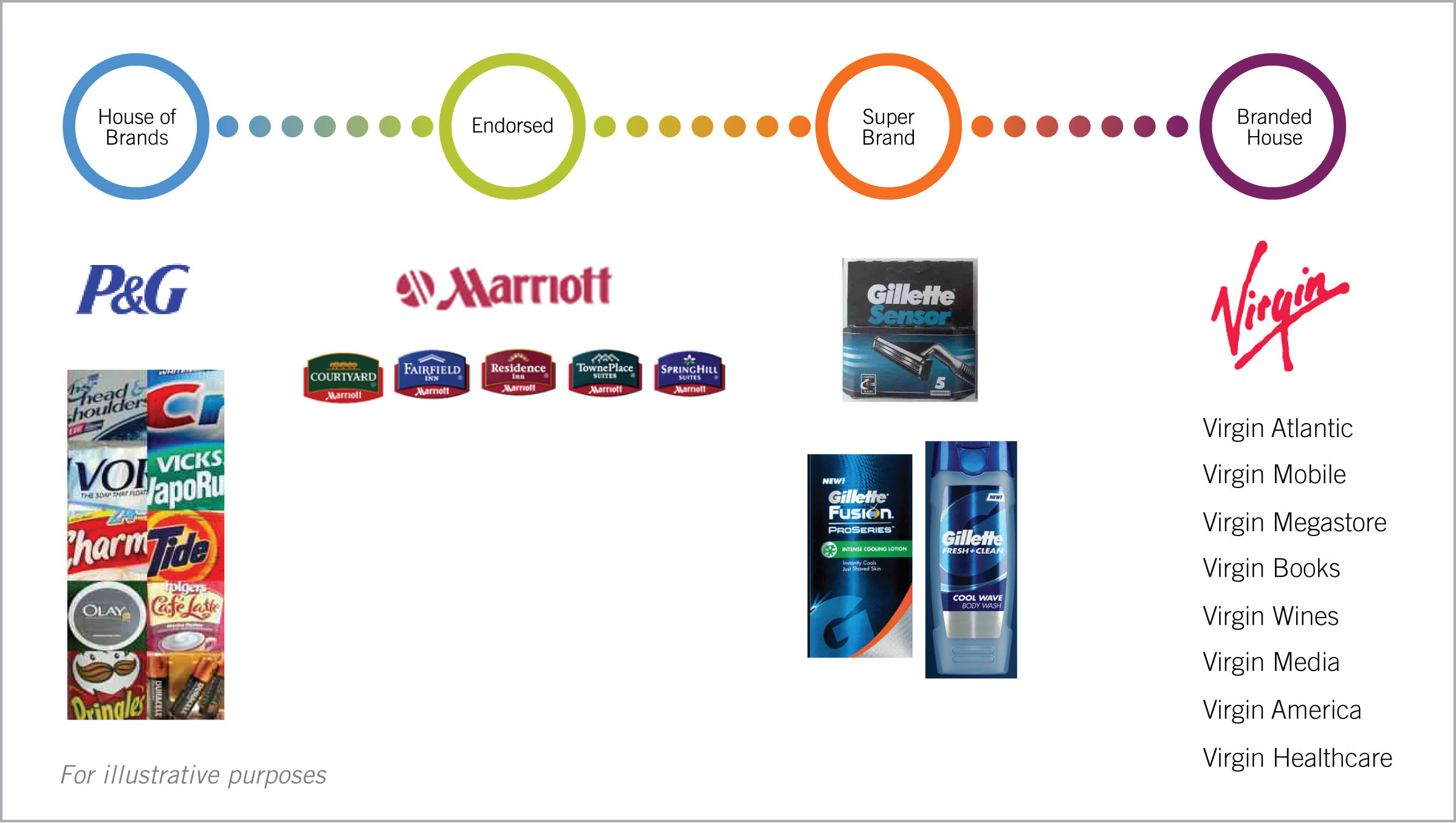
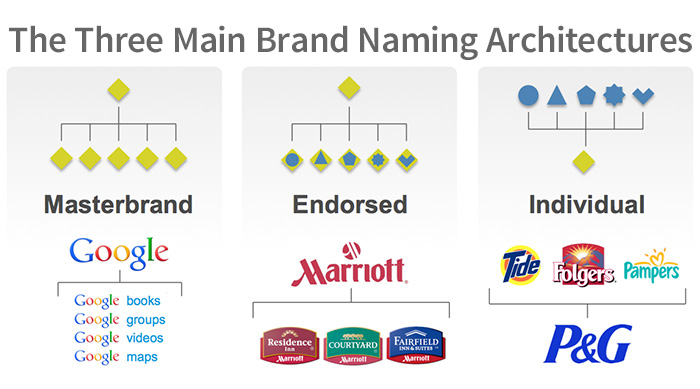
A typical scenario for Company X was as follows – there was the name of the actual company (Company X) which was a brand, several divisions within Company X that all had brands, then within the divisions there were the actual customer facing product units that all had their own brands. These customer facing units within the divisions were often added to the portfolio through an acquisition, so they come with their original branding that would then get updated by Company X, and the new branding would often hold elements of the old branding (and updating the old to new branding would take years – so there was effectively 2 brands during this long transition).

At times, an acquisition would produce the exact same product as a current Company X unit, so instead of merging the two together, Company X would create a third brand that the two similar brands would fall under. In total, with all the creation of brands, there were over 40 various brands floating around, some that actually produced products and employed people, and others that served as umbrella brands to link similar divisions together. I found myself asking which logo we should use on various marketing pieces almost every day. The Marketing Manager may want the Company X logo, the division logo, the umbrella brand logo, or the logo of the actual product unit, and sometimes she wanted all 4 on the marketing piece.

To go a step further, there was also a desire to cross sell when the audience for a product was the same for another, so she would want to put another product unit’s logo on the marketing piece as well, which created confusion amongst customers. Consequently, cross selling efforts often failed and there was a lack of brand loyalty. The branding often seemed out of control, and here’s why: there was no strategy behind branding decisions.

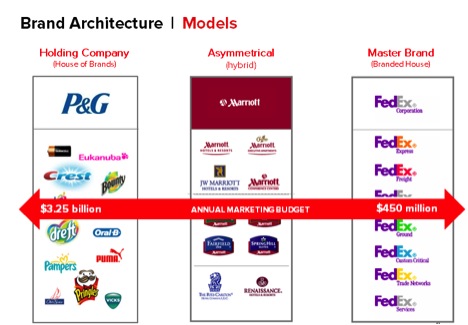
BrandArchitecture_Models

According to Mark Ritson, an industry expert on branding, when brand architecture is a mess, it leads to sales force conflicts, cannibalization, and the marketing consequently appears weak because it is spread too thin (2015). He also points out that profitability will suffer and an organization will hurt from the confusion internally and contradictions, which I witnessed at Company X firsthand. When employees lose sight of the corporate brand and what it is about, then they also forget the larger vision of what the company is striving to achieve (Gulsvig, 2014). Additionally, brands are expensive to maintain and need their own marketing and communications plan and strategy to be successful (Gulsvig, 2014). With a large brand portfolio comes the cost to maintain it, which many companies can’t afford, and as a result the sub-brands will suffer from a lack of support (Gulsvig, 2014). Another negative to having multiple brands is that customer may become loyal to a sub-brand, not the overall line of products the company offers, and they miss out on cross selling opportunities.

Company X’s solution to brand confusion and cross selling was to come up with a new umbrella brand, which means new business cards, a new website to create and maintain, updating existing flyers to include the new logo, the list was endless. In a case study at Procter & Gamble and Unilever, they went from a combined 2,000 brands to a combination of 30 brands where they make the majority of their profits (Ritson). Marketing can be more impactful and strategically focused when it is narrowed down, which in turn will increase profits. So the answer to the question – Can a company have too many brands? – is a resounding YES!

naming_archit

References

Gulsvig, K. (2014, March 5). Bolstering the master brand: streamline brand architecture is key. BrandingBusiness. Retrieved from: http://www.brandingbusiness.com/blogs/bolstering-the-master-brand-streamlined-brand-architecture-is-key

Ritson, M. (2015, Feb. 4). Why too many brands threaten the strategy. Branding Strategy Insider. Retrieved from: http://www.brandingstrategyinsider.com/2015/02/why-too-many-brands-threaten-the-strategy.html#.VaLSak2h1ow

Posted in Uncategorized | 3 Comments

Telehealth Communications

Telehealth Communications 

UnknownIn today’s information society, anyone can track their personal health information through technology devices. The trend is catching on in health care with the rise of telemedicine. Many health care practitioners have the ability to conduct consultations with their patients in the virtual world through video, text or e-mail.

“Telehealth is catching on quickly and it is expected to grow 18.4% by 2020, according to a recent report by health care consultancy RONCOS (Louis, 2015, para 2). Venture funding in the U.S. for telehealth grew 315% just last year, making it the fastest-growing sector in digital health, according to the report” (Luis, July, 2015, para 2). Several trends and cultural changes have contributed to this widespread growth:

Lifestyle change: Today, patients have adapted to using smartphones and tablets to access their information and they are familiar seeking out communication via a smart phone.

Affordable Care Act: Because there is more people who have insurance than in the past, it is important patients are pro-active and have fast, easy access to address their health issues and concerns.

Growth of the senior demographic: As the baby boomer generation ages, there is a need to address health issues early on to prevent health problems from progressing. By treating health issues in the initial stages, cost are lowered and alleviates an overload on physician’s offices and hospitals by excluding the demand for in-patient office visits.

 In store-and-forward telehealth services use digital images, video, audio, observation of daily living (ODLs), and clinical data that are captured and stored on the client computer or mobile device; then at a convenient time they are transmitted securely to a clinic at another location where they are studied by the physicians (Louis, 2015).   The physician’s diagnosis is then transmitted back and based on the requirements of the healthcare entities involved, and turnaround time takes between 1 minute to 48 hours. In the simplest form of telehealth service, basic vital signs like blood pressure, weight, pulse, and blood sugar values are monitored and watched for long term chronic care (Louis, 2015).   Videoconferencing is one of the most common forms of real-time telemedicine. Peripheral devices can also be attached to computers or the video-conferencing equipment, which can aid in an interactive examination Louis, 2015). With the availability of better and cheaper communication channels, direct two-way audio and video streaming between centers through computers is leading to lower costs.

Telehealth services offers extraordinary benefits to consumers, doctors, hospitals and insurance companies, but strategic communication is essential for encouraging the use of this time-saving and cost-saving technology.

Reference

Louis, K. (2015, July) Tackling Telehealth Communication Challenges. Marketing Health Services e-newsletter. Retrieved from http://www.ama.org/publications/enewsletter/mhsnewsletter/pages/default.aspx.

Posted in Uncategorized | 1 Comment

Hello Kitty is worth how much?!

Hello Kitty has officially turned 40 and I am just as obsessed with her now (20 years later) as when I was in elementary school. I used to think it was just me and a crazy few who had shared the same fascination with the character, turns out I was sorely mistaken (Shock to follow).

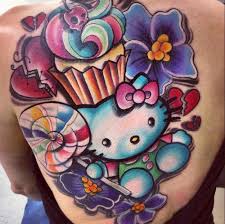
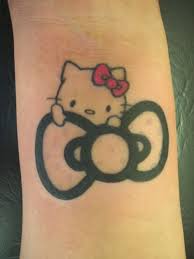
HK10 HK11 HK12HK13

Hello Kitty is worth seven billion a year to the Sanrio organization that created her (Hello Kitty, 2014). SEVEN BILLION. Billion with a B. If you’re thinking what I was thinking, I thought millions, maybe 999 million, but I never thought billions or seven billion for that matter! So how does a simple child-like rendering of a cat become worth seven-bill?

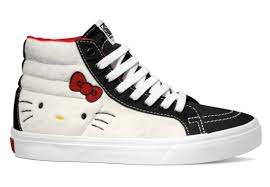
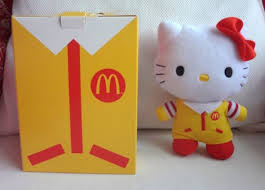
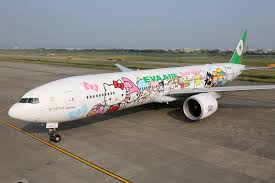
Let us start with the product assortment. Hello Kitty has been featured by many brands including high-end labels such as Yohji Yamamoto, Pour Lolita, and for the prestigious John Galliano for Dior (Medina, 2015). Sanrio has also collaborated with lower end high demand brands such as MAC cosmetics, Vans shoes, and McDonalds (Medina, 2015).

HK 1HK2HK3

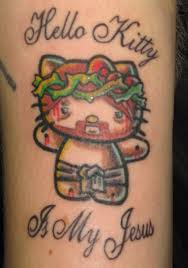
That is seven billion, NOT including collaborations with products Sanrio does not approve. For example products, that people make and distribute on their own. Some of the personal distribution products are pretty awesome. Here are some of my favs.

HK4HK5HK6

Branding expert, Dori Clark states it is Hello Kitty’s mouth-less design that provides somewhat of a blank canvas where we can project our emotions (Hello Kitty, 2014). Hello Kitty expert (yes EXPERT), Christine Yano also states her success to her “aesthetically pleasing design.” With a lack of mouth and no expressions, this allows Hello Kitty to be very versatile and constant, which makes her appealing to every age.

Of course nostalgia very much plays into some of our cult followings too. Who doesn’t remember the simple times when your biggest worry was what HK pencil you were going to buy? From the pencils to the theme park, I think it is safe to say that Sanrio did it right. Simple design, consistent messaging and collaborate with everyone.

HK9HK8HK7

References

Medina, N. (2015). Hello Kitty Clothes for Adults Go High Fashion With Sanrio and Yohji Yamamoto Collaboration. Retrieved from http://www.idigitaltimes.com/hello-kitty-clothes-adults-go-high-fashion-sanrio-and-yohji-yamamoto-collaboration-425774

Hello Kitty turns 40: how did she become so popular? (2014). Retrieved from http://www.theweek.co.uk/business/61149/hello-kitty-turns-40-how-did-she-become-so-popular

Posted in Uncategorized | 5 Comments

What does promoting an ineffective culture – resulting in a billion dollar scandal – get you? Fired.

One of the world’s most recognizable consumer electronics brands has recently announced that at least of the 16 board members, including CEO and President Hisao Tanaka, are resigning over a billion dollar accounting scandal.

Toshiba, a Japanese corporation, has been caught by an independent committee overstating profits for the last seven years by a total of $1.2 billion (151.8 billion yen). The investigation started back in April with the energy division and really heated up in May when the independent committee stepped in to review (Yan, 2015).

CEO and President Hisao Tanaka taking his final bow at his resignation speech.

Tanka indicated he was never aware of any such accounting discrepancies. “I deeply apologize to all stakeholders for causing these problems,” said Tanaka said at a news conference. “This has resulted in the largest damage ever to our corporate image.”

Toshiba took the respectable crisis communication route by having the CEO not only step down, but take responsibility for “causing these problems” even if he will not acknowledge prior knowledge of the issues.

Talk about crisis! If you were hired as crisis communication consultant for Toshiba, what would your communication objective be and who would be your highest priority stakeholder?

Recently, in an effort to revive the Japanese economy , the prime minister of Japan has been cracking down on corporate culture to attract more international investors (Du, 2015). Because corporate governance is the trending area of concentration, leadership affiliated with the incident is likely to experience harsher reprimands.

While some of the executive members did not commit fraud directly, they were complicit by putting intense stress on employees to “achieve unrealistic profit targets” (Mochizuki, 2015). “Management sometimes issued such challenges shortly before the end of a fiscal quarter or year, encouraging division heads to cook the books, the panel said” (Mochizuki, 2015). The report also indicated that employees were unable to protest the unrealistic expectations due to the corporate culture preventing them from feeling as though they could protest a superior.

Since the announcement, Toshiba has postponed its earnings announcements causing analysts to recommend against investment in the company (Yan, 2015). Toshiba’s shares have already decreased in value by 20% since the initial notice in April (Yan, 2015).

Corporate culture should never promote cooking the books to achieve unrealistic profit margins. Leadership needs to be approachable and open to dialogue about pressure the employees are under. If you have a leadership team that always assumes they know best, especially over the people who are actually in the field on a daily basis, the organization will be crippled by the ego of its leadership.

If you were hired as a consultant to implement change in Toshiba’s corporate culture, where would you start and what tactics would you implement?


References:

Du, L. (21 July 2015). 5 things to know about Toshiba’s accounting scandal. The Wall Street Journal. Retrieved from http://www.wsj.com/articles/toshiba-ceo-felled-by-accounting-scandal-1437468537.

Mochizuki, T. (21 July 2015). Toshiba CEO resigns after accounting scandal. The Wall Street Journal. Retrieved from http://www.wsj.com/articles/toshiba-ceo-felled-by-accounting-scandal-1437468537.

Yan, S. (21 July 2015). Toshiba CEO resigns over $1.2 billion accounting scandal. CNN Money. Retrieved from http://money.cnn.com/2015/07/21/investing/toshiba-ceo-resigns/.

Posted in Uncategorized | 1 Comment

What Companies Can Learn From BuzzFeed When it Comes to Content Creation

Millennials love BuzzFeed. It’s undeniable. I can’t log on to Facebook and scroll for more than ten seconds without seeing someone share a Buzzfeed article or quiz, my friends are constantly sending me Buzzfeed links and lets not even get started on the constant BuzzFeed Twitter re-tweets on my timeline. But why is Buzzfeed so popular? What are they doing that is making them one of the most shared websites of current times? I will let you in on the answer. There are two main things.

  1. The content is being created in real time. The instant something happens in popular culture, there is a Buzzfeed article within hours, which outlines; who, what, where and why.
  2. The content is widespread. There is something for everyone. With such an expansive database of content, they have ensured that there is something which will satisfy everyone’s needs. In the same day that I have sent multiple friends a BuzzFeed quiz link to find out which Harry Potter house they would have been assigned to, I have also used BuzzFeed for a creative watermelon feta salad recipe.

Here are a few examples of times which BuzzFeed made sure to keep us updated on popular culture:

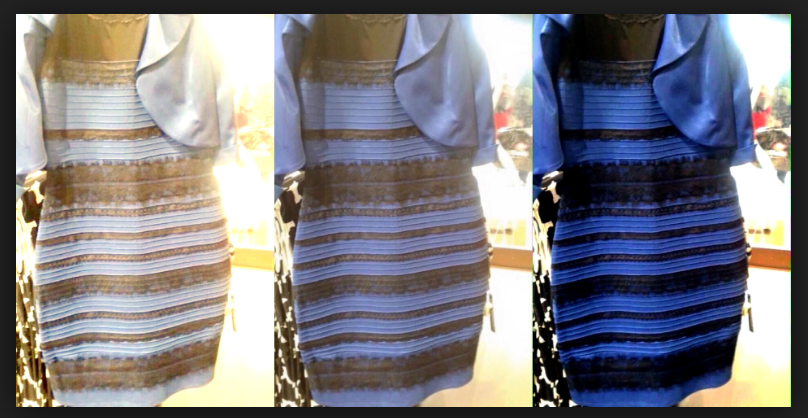
  1. Remember that dress which half of us thought was blue/black and the other half thought it was white/gold. All of my social media accounts were going crazy over that dress and while it was entertaining, it was not as entertaining as the BuzzFeed articles, which flooded my timelines the next morning. They’d collected funny tweets highlighting the frustration which we all felt over that dress, they provided percentages on who saw the dress as which color broken up into categories such as age or gender and shortly following the frenzy, they provided the scientific explanation we so desperately sought, filling us in on the magic of visual perception.
  1. How about Rachel Dolezal? The former NAACP chapter president who’d fooled people into thinking she was African-American for decades. Social media went crazy over this issue. The incident even got its own comedic hashtag #askrachel. Memes were created, jokes were made and then there were the many people who were upset and outraged. As humorous as some found it, others believed it to be downright insulting. BuzzFeed immediately released articles, which covered all of the above elements of this controversy. They didn’t just focus on the humor of the situation but they posted articles which addressed the issue of systematic racism which is what ultimately gave Rachel the privilege to be temporarily Black; allowing her to negate acknowledging she could never have the true experience of being Black in America because unlike others, she could change her “race” again if she chose to.

Regardless of how humorous the situation or how serious it may be, BuzzFeed makes sure to create content which entails any current events that are getting “buzz”.

That is what makes BuzzFeed so popular. They create content on current events as they are happening but they also make sure to provide a plethora of content options so there is something that appeals to everyone. That is exactly what companies can learn from BuzzFeed; two essential keys to being successful in content creation are content which engages your audience and content which is current/relevant. BuzzFeed has mastered doing both.

References:

Cheng, S. (2015, June 16). 10 Must read essays on Rachel Dolezal. BuzzFeed. Retrieved July 20, 2015 from http://www.buzzfeed.com/susancheng/rachel-dolezal-best-essays#.xwr7QQ3LL

De Choudhury, M., Counts, S., & Czerwinski, M. (2011). Identifying relevant social media content: Leveraging information diversity and user cognition. Paper presented at the 161-170. Retrieved July 20, 2015 from ACM Digital Library.

Koerner, C. (2015, June 15). Student who posted Rachel Dolezal intervie wanted public to see her “be herself”. BuzzFeed. Retrieved July 20, 2015 from http://www.buzzfeed.com/claudiakoerner/rachel-dolezal-describes-struggles-of-life-as-a-black-woman#.pxeZMM322

Obell, S. (2015, June 17). 57 Questions Black women have for Rachel Dolezal. BuzzFeed. Retrieved July 20, 2015 from http://www.buzzfeed.com/sylviaobell/we-need-answers-rachel-dolezal#.wvLAjjZYY

Pyne, C. (2015, February 28). The color of the dress according to science. BuzzFeed. Retrieved July 20, 2015 from http://www.buzzfeed.com/brandensueper/the-color-of-the-dress-according-to-science#.ysEk55m33

Yandoli, K. (2015, Feburary 26). Even famous celebrities are melting down over the dress. BuzzFeed. Retrieved July 20, 2015 from http://www.buzzfeed.com/krystieyandoli/heres-what-colors-your-favorite-celebrities-think-the-dress#.heAo55bZZ

Posted in Uncategorized | 6 Comments

Marketing Strategies for Hispanic Millennials


We all aware how much brands influence the purchasing power Millennials control as the largest generation in the United States. Over the next few years Latinos will account for more than 80% of the growth in the population of 18- to 29-year-olds making them a key demographic for marketers targeting young consumers (Humble, 2013). Examining deeper into the Hispanic segment, you will find some interesting characteristics. Unlike their immigrant parents who tried to be less visible, Hispanic Millennials want to “stand out and be noticed” (Humble, 2013). For the most part, they continue to embrace parts of their culture—mostly family, music and food— and they have incorporated American values such as open-mindedness, especially in their relationships (Humble, 2013).

Furthermore, the modern dominant Hispanic demographic is much younger, bilingual and more acculturated than previous generations. As a result, marketers in both the Latino and youth markets must revamp their marketing strategies about how to reach this key demographic. According to the author Better, here are three ways to expand your existing marketing campaign to target Hispanic millennials:

Market Via Text

Of all demographic groups in the United States, Hispanic youth are the most avid texters. A 2012 Pew Internet study revealed that Hispanics between ages 14 and 17 send 100 text messages per day, compared with 50 messages for white youths and 80 for black youths. The median cell phone user, on the other hand, sends an average of 10 texts a day.

A prime place to reach these Hispanic millennials: text-message marketing, also known as Short Message Service (SMS) marketing. Platforms such as Ez Texting and Mobility allow you to collect customer feedback, send coupons and promotional news, and remind customers of appointments—all via text message.

Speak Their Language

Hispanic millennials are more receptive to English-language media than older Hispanics, according to research from MTV Tr3s. Currently, nearly 40 percent of Hispanic millennials are bilingual, which is a 73 percent increase in the past ten years. In other words, you don’t have to launch a brand-new marketing campaign in Spanish. Marketers have to be savvier than just translating ads from English to Spanish. Instead, they must focus on a micro strategy that highlights cultural understanding and includes straight talk, “warm” interactions and a mentality of caregiving—three traits that Hispanic millennials said they most commonly respond to in the survey from MTV Tr3s.

For example, take Verizon Wireless’ new Hispanic-centered business venture, Viva Movil. Viva Movil’s flagship store in Brooklyn, N.Y., creates a bilingual, family-friendly atmosphere for shoppers with Spanish-speaking employees to translate contract details and a play center for customers’ children. Instead of Verizon’s trademark black-and-red color scheme, Viva Movil’s employees wear white shirts and white pants with orange trim—the same color scheme as their advertising campaign, spearheaded by pop star Jennifer Lopez.

Stay Plugged in

Hispanic youth have some of the highest rates of television consumption, cell phone and computer usage compared with other demographic groups. The average Hispanic youth spends two hours and 53 minutes on his or her phone every day, in addition to five hours and 21 minutes viewing TV, according to a 2011 study from Northwestern University. Maintaining a marketing campaign on these platforms is an excellent way to engage Hispanic millennials. More than half of Hispanic millennials report going online to learn more about a product after watching a TV commercial about it, and 51 percent share product information on social media, according to a 2012 report from AdAge Insights and Univision.

Furthermore, one of the keys to a successful marketing strategy understands what this population’s vision is and how they consume your product. Databases such as Simmons and Scarborough can provide insight into how your Hispanic millennial consumer base shops, consumers and views media. With that information in mind, you can then alter your marketing materials on certain media to cater specifically to Hispanic youth. The Hispanic market is the way to the future, and you have to ask now: How are we going to talk to them?

References

Better, C. (2015). Hispanic Millennials: Top Insights and Strategies. Latin Network. Retrieved from http://www.latinumnetwork.com/hispanic-millennials-marketing-insights3

Humble, G. (2013). 5 Ways Hispanic Millennials Differ From Their Parents. Millennial Marketing. Retrieved from http://www.millennialmarketing.com/2015/02/5-ways-hispanic-millennials-differ-from-their-parents/


Posted in Uncategorized | 2 Comments