Tweet to Eat: Walkers Crisps Twitter Vending Machine

Nowadays, companies are not satisfied with only one single marketing strategy or using only one medium. In the digital age, who will still pay attention to the billboard?  People who are waiting buses? No, they will only listen to the music and look at their smart phones! People think that outdoor advertising is dying because no one would pay attention to a billboard anymore.  Apparently, Walkers Crisps integrated its marketing strategies very well by turning the bus stop billboards into an interactive multimedia.

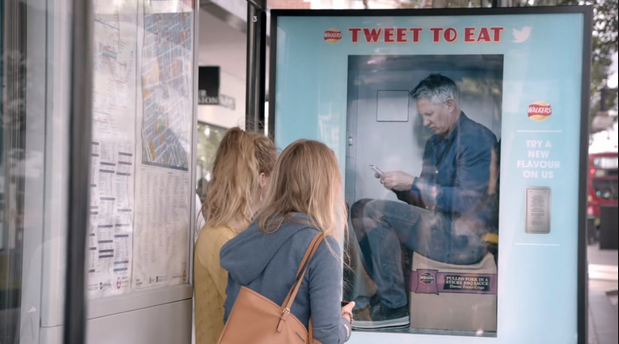
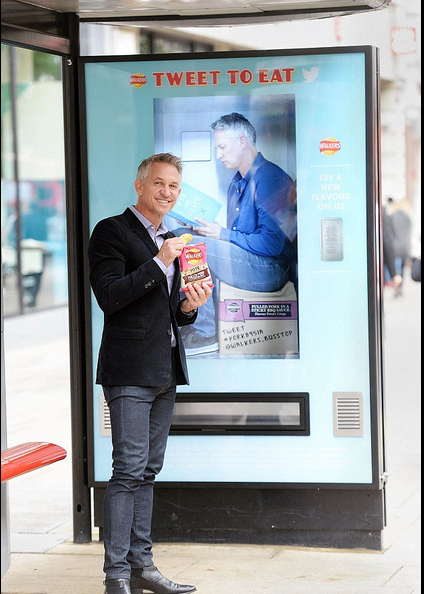
On the back of the Do Us A Flavour campaign, a national research in the United Kingdom was conducted to find a delicious new chip flavour with a one million British pounds prize. Walkers Crisps in London have just launched a series of interactive bus shelters, or more specifically, a Twitter Powered Vending Machines inside bus shelters. Walkers have installed these vending machines at three bus stops in London, featuring the six final flavours.  By simply tweeting @Walkers-busstop, along with a code provided to them after they arrive, commuters are given a free packet of crisps by a virtual Gary Lineker, Walkers ambassador who is an English former footballer and current sports broadcaster.  Each Tittwer activiated vending machine will give away 260 packets a day , with the machines topped up before 11:30 am and 5 pm each day.

Screen Shot 2014-09-20 at 4.30.06 PM

Screen Shot 2014-09-20 at 3.58.47 PM


Lee-Teng, marketing managing at Walkers, says: ” The Twitter vending machine is something completely new for Walkers and we are keen to make this real must see for the public.  The Do Us A Flavour campaign has taken the nation by storm so we are delighted to offer the public the chance to try the new flavours though the first ever-interactive Twitter vending machine.”

Walkers Crisps creates this marketing idea with integrating many advertisements together, including a vending machine, billboard, Twitter, and the word-of mouth.  This brand new way of promoting and marketing could be a good model for other food companies in the future. I mean, who doesn’t love free food..in a fun way?!


https://www.youtube.com/watch?v=jCEiGLPmjgQ

Here is the link of how people reacted as Gary Lineker surprised them with free packs of the 6 Do Us A Flavour finalists.

Posted in Uncategorized | 6 Comments

“They don’t like to have black people making coffee for them.”

In a time where integrated marketing is the norm, and where your average person is likely connected to some form of social media, it is more important than ever for organizations, big and small, to be aware of the implications of all their actions, whether or not they perceive it to have an impact on its marketing communications.

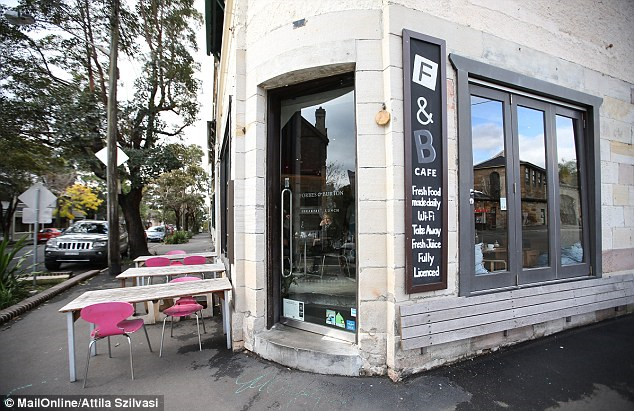
Earlier this year, in a city called Darlinghurst, which is close to Sydney, Australia, the owner of a café told a qualified applicant, who was applying for a role as a barista, that he would not be hired because, “my customers are white and they don’t like to have black people making coffee for them” (Back, 2014).

DarlinghurstCafe

Immediately after his job interview, Nilson Dos Santos, publicly addressed the customers currently inside the café and asked them whether they would object if he was the one to make their coffee. The events to follow were incredible. Not only did all the customers leave immediately (Thackray, 2014), upon realizing what had just happened, but the press and social media went into overdrive, going into debate about this issue with everyone adding their own perspectives – employment law, citizenship and immigration, racism, freedom of speech, national pride.

Comments

Not more than a couple of months later, the owner of the café closed his business (Koziol, 2014).

EmptyCafe

Since the incident, Nilson received numerous job offers and is now currently employed as a barista at another café (Koziol, 2014).

Clearly, from an ethical and moral standpoint, the reasons for not considering Nilson for the job, were wrong. I would like to hear opinions on something else:

  1. Was there any way that the owner could have salvaged his business, by reacting swiftly with effective marketing communication strategies; and
  2. The organizations that flocked to hire Nilson may have done so with the intention of getting positive publicity by being the “hero” of the situation. Do you think this can come across as too transparent and, therefore, backfire for these organizations?

References

Back, A. (2014). Fair Work Ombudsman investigating cafe owner who would not hire man ‘because he is black’. Sydney Morning Herald. Retrieved September 20, 2014, from http://www.smh.com.au/nsw/fair-work-ombudsman-investigating-cafe-owner-who-would-not-hire-man-because-he-is-black-20140819-105unl.html

Koziol, M. (2014). Black barista Nilson Dos Santos finds work after being refused job at Darlinghurst café. Sydney Morning Herald. Retrieved September 20, 2014, from http://www.smh.com.au/nsw/black-barista-nilson-dos-santos-finds-work-after-being-refused-job-at-darlinghurst-cafe-20140828-109g0a.html

Koziol, M. (2014). Darlinghurst cafe owner shuts his doors after refusing to hire black barista. Sydney Morning Herald. Retrieved September 20, 2014, from http://www.smh.com.au/nsw/darlinghurst-cafe-owner-shuts-his-doors-after-refusing-to-hire-black-barista-20140826-108haj.html

Thackray, L. (2014). Shocking claims by a Sydney café owner. Daily Mail. Retrieved September 20, 2014, from http://www.dailymail.co.uk/news/article-2727063/Sydney-Cafe-owner-admits-told-Australian-citizen-job-black.html


Posted in Uncategorized | 5 Comments

Urban Outfitters: Shameless Publicity or Sheer Ignorance?

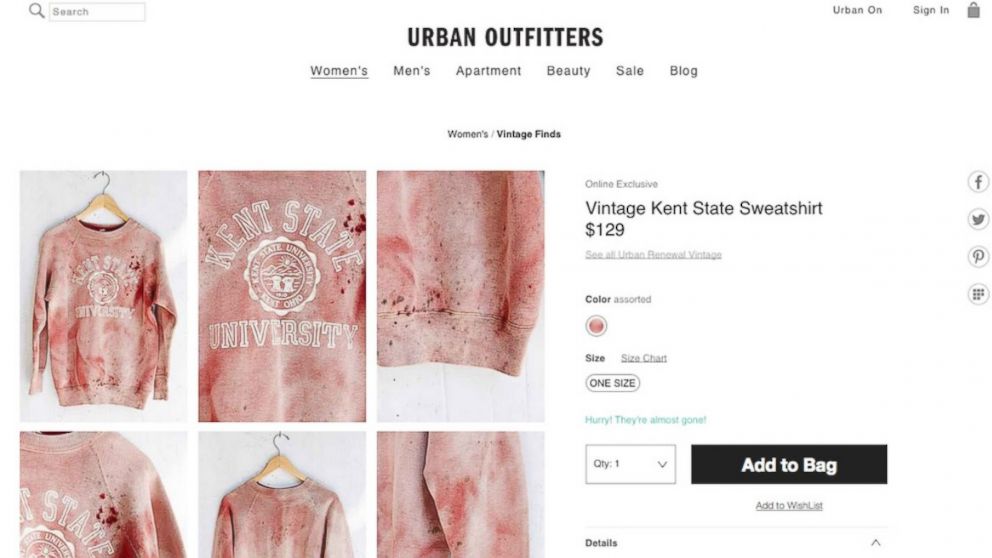
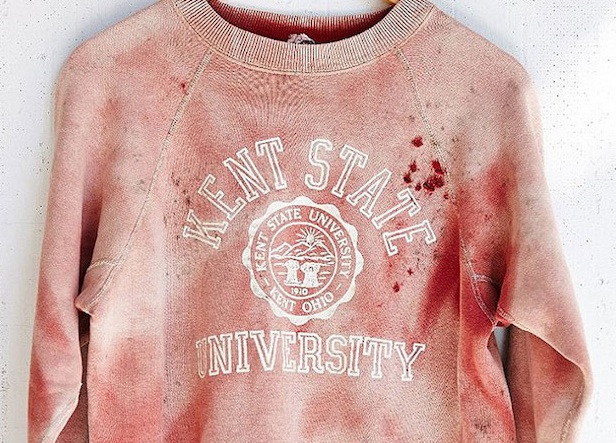
This week, clothing retailer Urban Outfitters released a new product for sale on their website that instantly went viral… and not in a good way. For only $129, you could purchase this one of a kind, vintage-inspired Kent State University tie dye sweatshirt, complete with authentic looking bloodstains:

ht_kent_state_urban_outfitters_kb_140915_16x9_992   sweatshirt

Unfortunately for those of you with questionable taste, the item has since sold out, but don’t worry because this isn’t the first time Urban Outfitters has tried to market something offensive, and it probably won’t be the last. Here is another controversial example from them back in 2012:

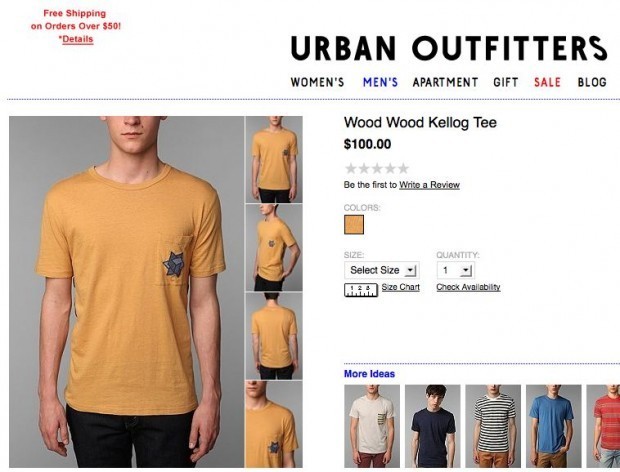
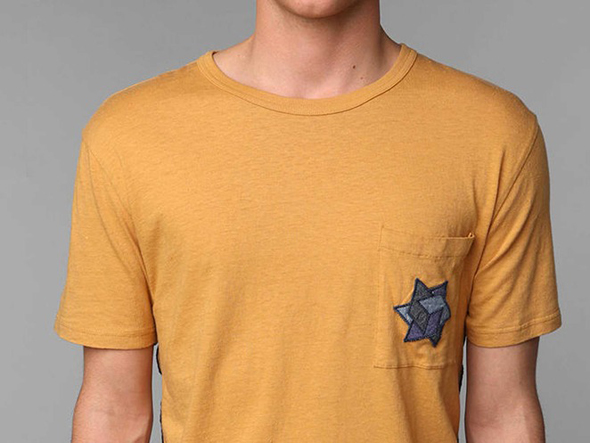
UrbanOutfittersHolocaustTshirt62-2075785_p9   042312-biz-tshirt-controversy-pic-662w-at-1x

In this case, Urban Outfitters was peddling a $100 vintage-inspired Holocaust t-shirt. Seriously?

This begs the question: Is this shameless publicity or sheer ignorance? Personally, I hope that this is another case of complete ignorance, as it would obviously be an outrage to capitalize on such tragedies like those of the Kent State shooting and the Holocaust. What’s next? A Virginia Tech sweatshirt with manufactured “bullet holes” in it for added authenticity?

Ignorance has been the supposed culprit of a few other failed marketing attempts in recent weeks. For example, the Malaysian Airlines “Bucket List” campaign (did anyone over there consider that a bucket list is something you want to do before you die?!) or the new logo for Vietnamese fast food chain Bahn Shop featuring a bright red star reminiscent of the Communist regime, launched by the same organization that owns Taco Bell, KFC and Pizza Hut (you’d think someone in a company that large would know better?).

It seems as though when organizations make marketing mistakes they at least try to rectify them by removing the ad, logo or campaign in question, issue apologies to stakeholders that have been offended, and attempt to move forward with more care. Urban Outfitters however, continues to deliver products that push the envelope, and it makes me wonder if this is a deliberate attempt at publicity. Here are a few more controversial products from Urban Outfitters (13 to be precise), and you be the judge.

Posted in Uncategorized | 6 Comments

What was Burger King thinking?

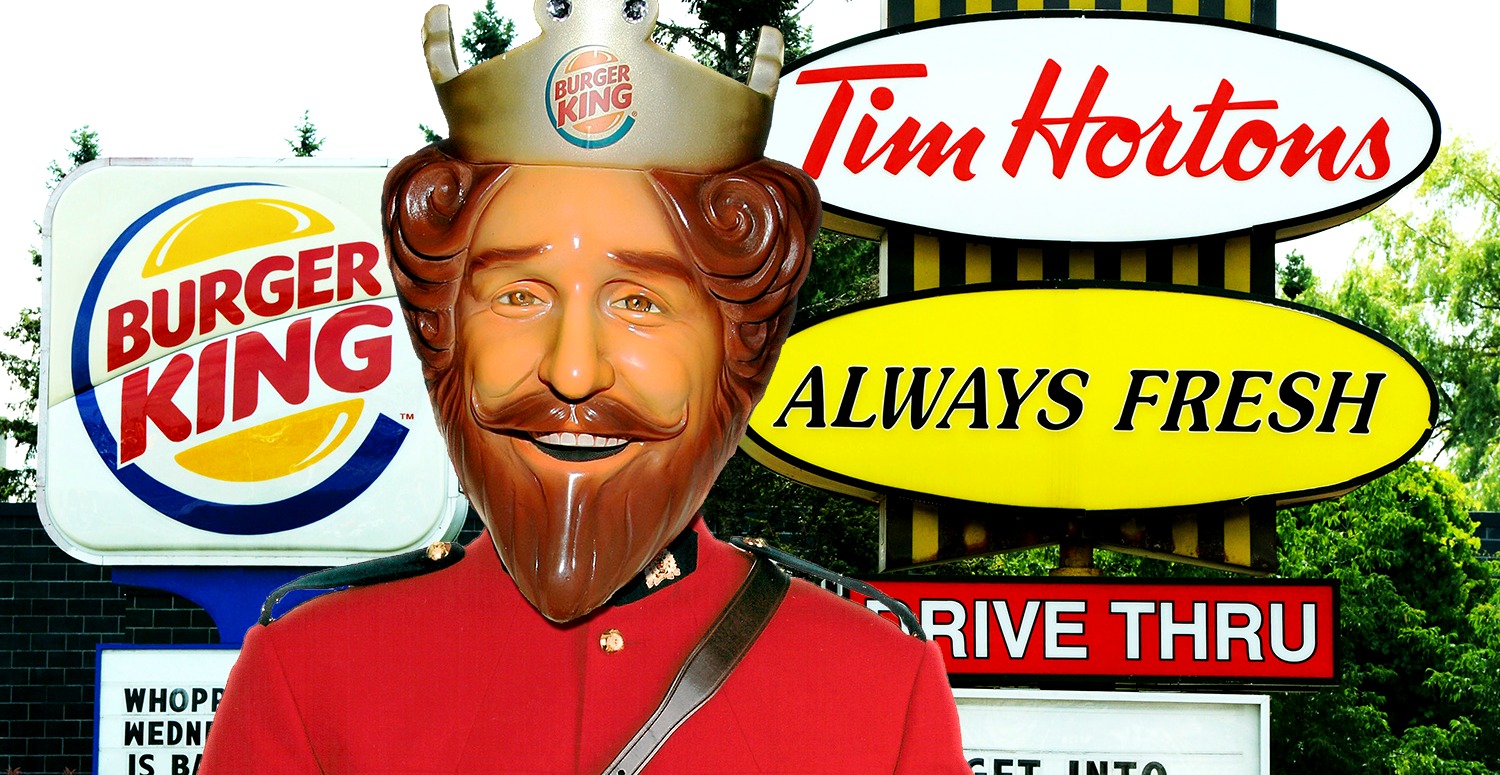
When Miami-based Burger King (BKC) announced its acquisition of Tim Hortons on August 26, the pundits went wild and consumers made mincemeat out of Burger King on social media. While the burger chain claimed they wanted to leverage their new Canadian partner’s breakfast expertise, financial analysts immediately started debating the financial benefits of Burger King relocating from the U.S. to a country with lower corporate taxes—a move known as “corporate inversion.” While it’s tempting to focus on this controversy, the back story of how BKC got to this point is far more interesting.

Burger King and Tim Hortons

Lest we forget, Burger King is the second-largest burger brand in the world, forever living in the shadows of McDonald’s and desperately trying to differentiate itself from the golden arches. With its emphasis on the grilling process—is the Whopper “flame broiled,” “flame grilled,” or “cooked with fire”?—Burger King has tried to create a niche for itself in a crowded fast food market. While McDonald’s ranked seventh on Interbrand’s Best Global Brands list in 2013, Burger King didn’t even crack the top 100.

Have it your way

In the early 2000s, Burger King was struggling. In 2003, ad agency Young & Rubicam reported that it was “a brand that people knew more than loved.” The fast food company made a strategic decision to focus on “super fans,” the young males who accounted for about half of all restaurant visits. While McDonald’s decided to focus on healthier offerings and the McCafé concept, Burger King doubled down on its super fans, with bigger and more indulgent burger offerings. Working with ad and design company Crispin Porter + Bogusky, they launched the “Have it your way” slogan, which became central to all their marketing efforts. BKC also launched the “King” character mascot, using an edgy, slightly creepy sense of humor designed to reach the 18-34-year-old male demographic. The company’s marketing plan focused on unconventional channels for reaching customers, including emerging digital platforms—most memorably its “Subservient Chicken” website, one of the first big viral marketing hits.

With all of these successful marketing efforts, you’re probably wondering what could possibly have gone wrong. Well, Burger King didn’t anticipate that 2008 would usher in a recession and a crusade against trans fats. All of a sudden, consumers wanted cheaper, healthier options and BKC was out of sync with the zeitgeist. By 2010, McDonald’s was 100% ahead of Burger King in average domestic revenue per unit. At the end of 2010, BKC was acquired by 3G Capital and a whole new management team was brought in. Ever since, Burger King has been trying to regain some momentum.

Blame Canada?

The most recent announcement of BKC’s acquisition of Tim Hortons has stirred up controversy about the company’s move to Canada. The deal will create a new parent company with an $18-million market value, making it one of the biggest fast food companies in the world, and each brand will continue to operate independently as before. While the deal has come under fire from the White House and consumers alike, it is actually part of a long-term plan. It coincides with an effort to revamp BKC’s menu offerings and its marketing strategy.

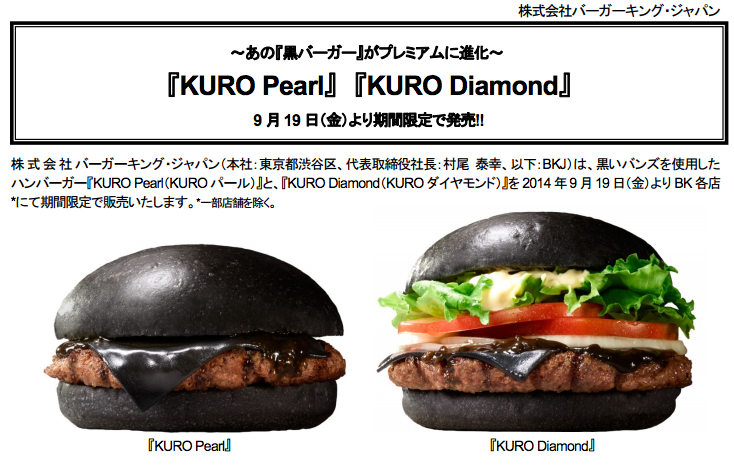
Not only has the King mascot been retired and the ad campaign humor become safer, BKC has targeted a more diverse customer base with healthier, more price-conscious products. Its biggest weakness remains its breakfast menu, and the fast food breakfast wars are heating up. It is no coincidence that Tim Hortons’ greatest strength is its breakfast menu, which undoubtedly accounts for a large part of BKC’s motivation in acquiring the brand. Amid the commotion of the acquisition, many consumers may have missed the news that Burger King has changed its motto this year, to “Be your way.” However, few people missed the launch of a new all-black BKC burger in Japan, which temporarily drowned out the controversy about corporate inversion and demonstrated that the public is not necessarily hostile to the brand.

BK Black Burger


Burger King has been looking for a way forward, to market its product successfully into the future, and it seems to have found a moment in time when consumers are aware of the brand again and their sentiment can be influenced. While there is dissatisfaction with the move to Canada, people are talking about Burger King and it is up to the company to own the conversation by communicating its intentions to all stakeholders. Could the Burger King leaders use this opportunity to pursue their marketing goals and finally have it their way?

Posted in Uncategorized | 10 Comments

Are you in the mood?

In 1975 when telephones hung on the wall and watches only told time there were two equally ridiculous marketing marvels. One was the pet rock and the other was the mood ring. These products were fun, made a few people money and were then lost to the cultural phenomenon dust heap. That is until last week when Apple announced the Apple Watch.

Apple-Watch

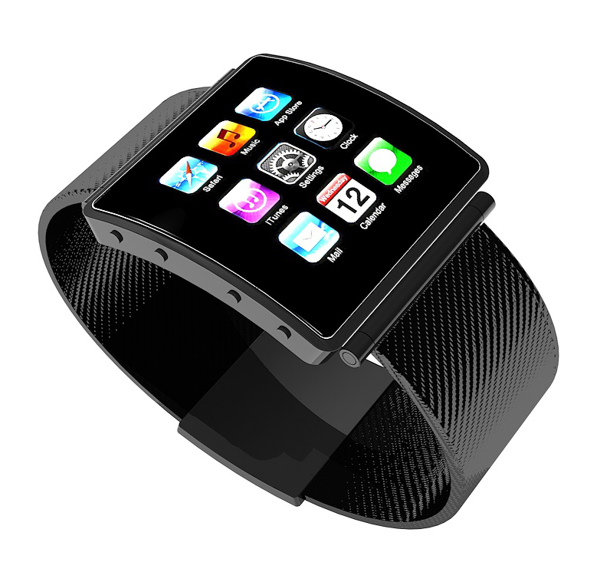
The Apple Watch is not the first in “wearable” technology. We have Google Glass, the Samsung watch as well as a host of other wrist fitness/activity monitors such as the Fitbit and Jawbone. The Apple Watch, however, is truly the “mood ring” of the tech era. Make no mistake, this is no marketing gimmick; it could be a marketer’s dream come true.

What could possibly be more important to the marketer than the mood of the consumer? The ability to tap into the mindset, personal habits and behaviors of consumers is not new and has expanded with each iteration of mobile devices (Pietrzak, 2013). The mobile phone and apps provide abundant information to marketers but the information is limited. The marketer knows what you like by examining your search and “like” behaviors and can respond by pushing to you similar products (Pietrzak, 2013). However, mood has remained out of reach.

The Apple Watch, however, may be the key to unlocking the full potential of neuromarketing. Businesses and marketers know what consumers want but why consumers want a product has been elusive and is the driver of this science (Nobel, 2013). It comes as no surprise that people are driven by things that make them feel good and that includes the purchases they make (Nobel, 2013). Neuromarketing science attempts to explore the why factor but has been limited to expensive, lab-based technology such as MRI’s and EEG’s to help crack the code of what people like and dislike. Businesses hope to use this data to sell more products. The Apple Watch cuts the cord between marketers and laboratory scientists; it takes the person out of the lab and puts the lab on the wrist of the consumer.

The Apple Watch is linked to the consumer in a unique way. Not only is the usual behavioral information collected, now biometric data can potentially be mined from the mind and body (Bolls, 2013). Biometric data such as vital signs, sleep patterns, levels of activity can be cross referenced with purchasing habits to optimize the exact moment that marketers should push advertisements to consumers or make special offers to take advantage of a consumer’s disposition to make a purchase at that moment. That type of information is high-test fuel to supercharge the marketing engine.

There are those who will argue such data mining raises privacy concerns (Nobel, 2013). With each new advance in technology we certainly give away a piece of our privacy. Walking around in 1975 with a mood ring certainly did not give away a lot of useful personal data. The Apple Watch may indeed push the envelope and give away more than the consumer bargained for. Our social networks are interconnected, our purchasing habits are shared. The question now for the consumer: are you willing to share whether you’re in the mood?

References:

Bolls, P. (2013). Wrapping your brain around neuromarketing and biometric research measures. HCD Research. Retrieved from http://www.hcdi.net/blog/view.cfm?bID=22

Nobel, C. (2013). Neuromarketing: Tapping into the ‘pleasure center’ of consumers. Forbes. Retrieved from http://www.forbes.com/sites/hbsworkingknowledge/2013/02/01/neuromarketing-tapping-into-the-pleasure-center-of-consumers/2/

Pietrzak, C. (2013). What wearable technology means to the future of marketing. ClickZ. Retrieved from http://www.clickz.com/clickz/column/2288684/what-wearable-technology-means-to-the-future-of-marketing

Posted in Uncategorized | 4 Comments

“There’s a cockfight on aisle four.”

The last thing I expect to see at Walmart is a cockfight… and yet, it doesn’t surprise me at all to hear there was one.

Bad publicity is nothing new for the Walmart brand.

This is the first time Walmart has been caught hosting a cockfight in a Mexico store, but they’ve had other troubles in the Mexico stores this year.

The company faced a corruption and bribery scandal in Mexico just a few months ago. The investigation has already cost the company over $400 million, and it hasn’t yet concluded.

What after a scandal like that, what is the real cost to a brand? A company’s brand is the emotion and feeling people get when they think about the company.

People can’t feel too great about the Walmart brand. Earlier this week, mind you the same week as the cockfight scandal, a Walmart vice president was caught lying about having a college degree. And he was a vice president of public relations.

Walmart has a reputation for paying low wages, poor company culture, inflated executive salaries, a history of racial inequality, and numerous other grievances that disengage employees. Is Walmart’s company culture too broken to fix?

And, well, and then there’s this…

Friends don’t let friends go to Walmart like this. With 15 fine photos to choose from on this website alone, where does one begin?

How does a brand respond when they have a reputation for this? Walmart’s reputation management chief resigned last year, but, honestly, it’s kind of hard to tell from a consumer point of view whether or not he has been replaced.

I can’t say that the fashion choice of the Walmart customer base is necessarily the company’s fault. But Walmart certainly does have a reputation for an “entertaining clientele,” and that reputation has attached itself to the brand. Friends really shouldn’t let friends go anywhere looking like this.

In today’s article on the cockfight, a Walmart spokesman admitted cocks were in the Mexican store and that they were fighting, but it wasn’t a “cockfight” because razor blades weren’t attached to the roosters.

Oh Walmart.

Maybe friends just shouldn’t let friends go to Walmart… ever.

Posted in Uncategorized | 7 Comments

Advertising’s Mean Streak: A Necessary Evil?

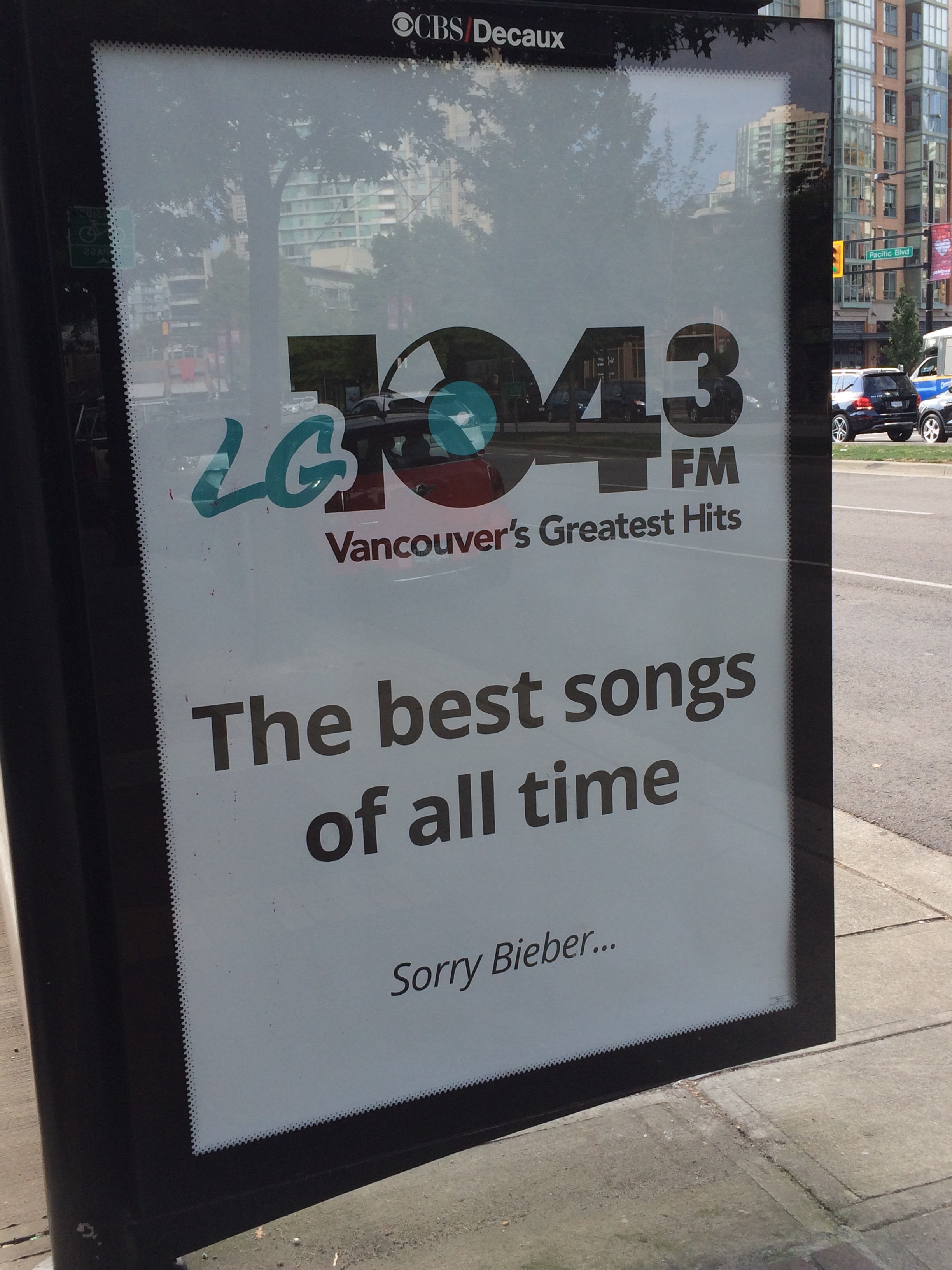
On my way to the post office, I saw a transit shelter ad that stopped me in my tracks. A Vancouver radio station was claiming to play the best songs of all time. “Pretty bland positioning statement,” I thought as I hurried by. Then I saw the punchline, “Sorry Bieber…” My heart sank. Just because a radio station could not offer a worthwhile point of difference, it decided to take a full swing at an artist. Why? Were they trying to be funny? Is all fair in love, war, and advertising? Is such mean-spirited advertising copy truly necessary?
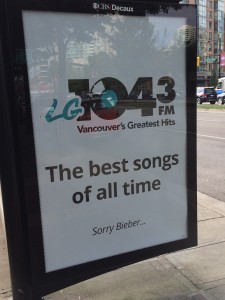
Radio billboard

(Photo by Tina Powell, 2014)

Some may argue that Justin Bieber and others are public figures and as such, unwanted, negative attention goes with the territory. They profess that celebrities and famous people need to develop a tough skin or simply need to learn how to take a joke. To me, such thinking is a kind of blame-the-victim mentality: If Justin Bieber didn’t want to be ridiculed, he shouldn’t have become famous … OR … He was asking for it by writing such sappy songs or by drag racing in Miami. The old adage, “If you can’t stand the heat, get out of the kitchen” comes to mind.

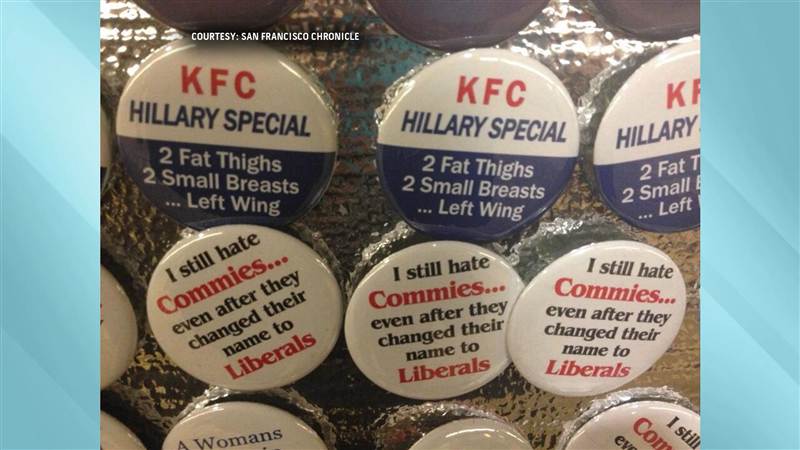
Which leads me to my next example of mean advertising copy – the Hillary Clinton KFC buttons that were offered for sale by a vendor at an August, 2013 Republican event (Muller, 2013). You’ll have to read the buttons for yourself. I can’t bring myself to repeat the words here.
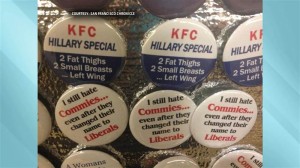
Hillary Clinton button

(Photo from the San Francisco Chroniclehttp://www.msnbc.com/the-last-word/sexist-anti-clinton-buttons-gop-event)

Not only are these buttons wildly offensive and sexist, they are downright mean. Many people, men and women, are self-conscious about their appearance. To have your perceived physical inadequacies written on a button would be horrifying to anyone, public figure or not. Although the world of politics is filled with examples of nasty attack ads, these buttons go too far. If individuals have an issue with a politician’s position or proposed agenda, they have every right to voice their opinions. However, personal attacks on the way someone looks are juvenile and unnecessary. Plus, they’re not smart. As my next example illustrates, such attack ads can backfire and bring some unwanted, negative attention to the advertiser.

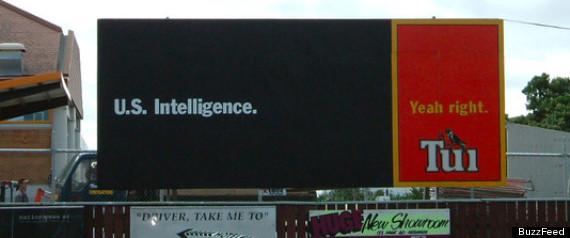
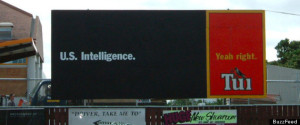
Tui Beer from New Zealand’s DB Breweries ran the following billboard as part of its “Yeah right.” campaign (Hurley, 2012):
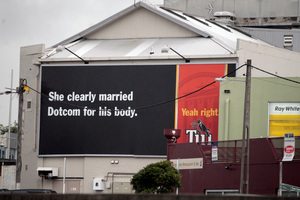
Tui Dotcom billboard

(Photo from The New Zealand Heraldhttp://www.nzherald.co.nz/nz/news/article.cfm?c_id=1&objectid=10845038 )

For those of you who don’t get the “joke,” Kim Dotcom is a high profile, controversial internet entrepreneur in New Zealand (Hutchison, 2014). He is also obese. The Tui headline clearly implies that Dotcom’s wife married him for his money, since his body is unattractive (Siversten, 2012). Fortunately, the Complaints Board of the New Zealand Advertising Standards Authority upheld a complaint made against the ad and DB Breweries took the offensive billboard down (Siversten, 2012).

As someone who has spent her career striving to write advertising copy that uses creativity and intelligence to effectively market products and services, I believe mean advertising has no place in professional marketing. The advertising industry is better than that. As the examples above indicate, mean-spirited advertising is unnecessary, unwarranted,  unacceptable, and unproductive.

I also realize, of course, that many readers may disagree with my position. Fair enough. But I wouldn’t be surprised if they one day have a change of heart should they be the subject of a mean ad…
tui beer

(Photo from The Huffington Post, UK — http://www.huffingtonpost.co.uk/2013/01/15/yeah-right-billboard-ads-tui-beer_n_2478186.html)

References:

Hurley, B. (Nov. 4, 2012). Dotcom: Tui billboard ‘hurtful, insulting.’ The New Zealand Herald. Retrieved from http://www.nzherald.co.nz/nz/news/article.cfm?c_id=1&objectid=10845038

Hutchison, J. (Sept. 18, 2014). Kim Dotcom, Online Renegade, Shakes Up New Zealand Election. The New York Times. Retrieved from http://www.nytimes.com/2014/09/19/world/asia/kim-dotcom-online-renegade-shakes-up-new-zealand-election.html?_r=0

Muller, S. (Oct. 8, 2013). Sexist ‘KFC’ Hillary Clinton buttons at GOP event. MSNBC. Retrieved from http://www.msnbc.com/the-last-word/sexist-anti-clinton-buttons-gop-event

Siversten, J. (Nov. 23, 2012). Complaint upheld against Dotcom Tui billboard. NewsTalkZB. Retrieved from http://www.newstalkzb.co.nz/auckland/news/nbnat/1132068323-complaint-upheld-against-dotcom-tui-billboard

Posted in Uncategorized | 10 Comments

The Beyonce Brand

Beyonce Knowles- Carter aka Beyonce, rose to prominence in the mid to late 90s and early 2000s as the lead singer of the R&B girl group Destiny’s Child. From the moment they first entered the scene, audiences were fully aware that this girl was a star. Beyonce was a country Christian girl from Houston, TX who embodied the essence of a southern belle with her wholesome image, charm and southern accent. Fast forward to December, 2013- Beyonce released a full album accompanied by full visuals for every song. As we’ve come to expect from Beyonce, the album sold almost 500,000 copies in 24 hours. The catch here- there was absolutely no promotion.

At the time, Beyonce was on tour performing hits from all of her previous albums. Popular show Scandal, which airs on Thursday nights, is known for captivating audiences on social media and inciting tons of tweets and posts. What did Beyonce do? She waited until Scandal ended and posted an Instagram video  simply titled “Surprise!” which featured visuals and an instrumental, announcing the album which was available exclusively on iTunes at the same time.

Beyonce Logo

The fact that Beyonce, nor her team, did not do any promotion for the album yet it still sold more than most new releases in this day and age, is a testament to not only the strength of her brand but her team’s use of integrated marketing communications. Once the album was officially released, the above logo was scene on Facebook, Instagram, Twitter and Tumblr. Commercials began running that resembled the instagram announcement video. Beyonce posted a personalized video on her fan Facebook page. Radio stations received the album in full which they played continuously over the next few days. Additionally Beyonce, who was still on tour, began performing songs from the new album the next day and began selling merchandise with the same black & pink theme.

This is the strongest instance of integrated marketing that I have seen as of late. She and her production team used literally every avenue they had to promote the album after it was released. From the two minutes after Scandal went off the air that night through the next few days, it was virtually impossible to get on the internet without some mention of Beyonce-fever. It is worth noting that this could only be successful with major selling artists who still have some cloud of mystery surrounding them and a recognizable brand to match.. Every move Beyonce makes, every word she says is calculated. She has been polished to perfect and that is not something to be taken lightly.

Posted in Uncategorized | 8 Comments

Campbell Soup at your Doorstep

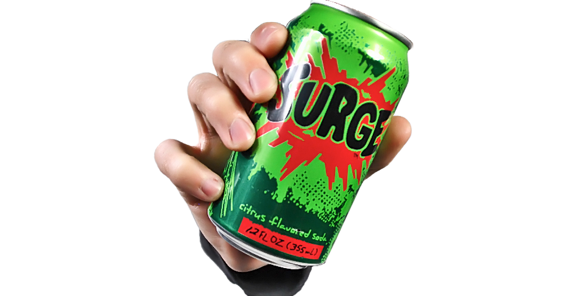
Marketing has evolved since the days when the neighborhood milkman would drop off a few bottles of milk on every doorstep, but with the new announcement from Campbell Soup, it looks as though the milkman is making a comeback. The packaged food producer announced this summer that it will begin marketing its products online – new territory for the brand that is known for dominating grocery store isles. And the company is not alone. Many packaged food brands and grocery stores are aiming to increase their online presence with the intention that they will use the internet as a new frontier for food sales. Whether the idea of delivered groceries is new or not, the trend has been picking up momentum1. In fact, Coca-Cola recently re-released a soda called “Surge” – available only though Amazon2.

surge-soda-facebook

Image source

Many marketing professionals in the packaged food sector are beginning to realize the importance of an online presence. Without it, companies risk falling a step behind the competition or even becoming obsolete3. Even big-box stores like Walmart have turned their attention more heavily towards online sales, including sale of groceries and other packaged foods1.

While opportunities for profit associated with online grocery shopping may be limitless, there are good reasons the industry has held off for so long. First and foremost, established food producers such as Campbell Soup have little experience with marketing in cyberspace1. A far cry from designing grocery store displays, marketing to an online audience will require a whole new approach to sales and advertising. It’s a change many companies are hesitant to make1.

In the last decade, retail in general has started the transition to online sales, and since then have seen a decrease in sales in brick-and-mortar stores – so much so that stores have been closing due to competition from online sales. If history is the best indicator of the future, a transition to online sales of groceries and packaged foods could mean downsizing and closure of grocery stores3. On the other hand, access to foods not available in all areas will increase, and grocery shopping may become a chore of the past. Would these considerations convince you to shop for groceries online? How should these companies market their online groceries?

References

1. Schultz, E.J. (2014, September 16). Packaged-goods marketers wade warily into e-commerce. Advertisement Age. Retrieved from http://adage.com

2. Schultz, E.J. (2014, September 14). Coca-Cola brings Surge back in e-commerce experiment. Advertisement Age. Retrieved from http://adage.com

3. Kollewe, J. (2012, March 20). Over 20% of High Street shops ‘could close over next 5 years.’ The Gaurdian. Retrieved from http://www.theguardian.com/us

By Laura Neuffer

Posted in Uncategorized | 4 Comments

Is Content Marketing the biggest thing in advertising since the creation of the television commercial?

Content marketing has been defined as “the overarching practice of using information and entertainment to promote a brand or product” (DeMers, 2014, para. 1).

It is important to note that this content does not have to be produced exclusively for an online or mobile application, even if some articles about content marketing focus heavily on the online or mobile application of content marketing and its growing importance in those mediums. A strategic content marketing plan is much more than having a content based digital strategy. If you go to the following page, you will see a variety of content marketing campaigns employed in different mediums.  My favorite example is the Duracell example.  It uses both an outdoor billboard (bus-stop) and the advertisement, which is available on you-tube, its website and my guess several other places.

http://contently.com/strategist/2014/04/08/whats-the-difference-between-b2b-and-b2c-content-marketing/ – great examples

Content marketing is the next big thing in advertising. In fact, 61% of consumers agree that they are more likely to buy products from companies that create custom content online than those who do not (Singh, 2014, para. 1). Some advertising experts have even compared the ongoing popularity and trends towards using content marketing to the importance placed on the television commercial at the beginning of advertising (Contently, 2014).

The impact is clear inside of many companies. Tribune Publishing invested in a content marketing shop called “Contend.” Contend will make videos to assist in telling the stories behind its Tribune advertisers. Content marketing is a significant part of the marketing strategy for P & G, Microsoft, Cisco Systems, & John Deere, Red Bull, Coca-Cola, Oreo to name only a few of the biggest players in the space (Content Marketing Institute, 2014; Contently, 2014).

This is only the beginning of the content marketing. Today, content is important to all phases of the marketing and promotion.  With a variety of different media available to tell your brands story, story means more to the consumer than it ever has. Producers of content, marketers and promoters need to work together in this new age of media and find the best story to tell around their brands.  Brands that create compelling stories or lifestyles around their product keep them top of mind.  For instance, Red Bull has a sports division, a publishing division and a media house all dedicated to content around Red Bull that has very little emphasis on the sports drink itself.   Instead, Red Bull is developing an entertainment based lifestyle that consumers follow and embrace the Red Bull product around.

Content marketing needs to be considered a priority in companies that want to connect to consumers in a meaningful way.  This is not an additional asset that you employ in the chain of marketing and promotion.  Content marketing is the DNA that will be essential in connecting with consumers across all platforms, whether it is a blog, a webcast, a magazine or social media event.

References:

Contently. (2014, Feb 25). From Oreo to red Bull, CPG Brands are transforming   marketing. Mashable [Blog post]. Retrieved from             http://mashable.com/2014/02/25/cpg-content-marketing-brandspeak/

DeMers, J. (2014, August 19). The top 7 content marketing trends dominating     2014. Forbes Magazine. Retrieved from http://www.forbes.com/sites/jaysondemers/2014/08/19/the-top-7-content-   marketing-trends-dominating-2014/

Singh, K. (2014, August 11). 61% of consumers prefer companies with custom       online content. Mashable [Blog post]. Retrieved from  http://mashable.com/2014/08/11/content-marketing-roi-data/


Posted in Uncategorized | 6 Comments