Well Hello, Ello. Who Are You?

While battling a vicious cold, I was perusing my Facebook feed and saw an interesting article posted by 97.1 AMP radio talking about a new social networking site called Ello, which identifies itself as the “Anti-Facebook.”

Here’s the skinny on Ello. It’s an invitation-only networking site that, according to CNET, looks like a basic version of Tumblr. Once added, users can post images and content to their page and see their friends’ posts. Ello claims to offer an environment respectful of the user’s privacy and advertisement-free. In fact, if users don’t indicate that they agree with the Ello manifesto while signing up, they are immediately sent to the Facebook site.

Paul Budnitz, a 47-year-old designer and entrepreneur started developing the site with is team in January of 2014. In the past few weeks, the site has received thousands of requests to join per day. Ello’s entry into the social media market comes at a convenient time with Facebook privacy paranoia at an all-time high thanks to the new required FB Messenger application and its permissions. Ello claims that it will be different than Facebook. But how?

Here are a few things to consider before you leap off the Facebook bandwagon and on to the much smaller Ello one. First, you cannot just join the site. You have to request to be added and hope an existing user likes you enough to invite you to join. Second, if you want the Ello mobile app, ability to give access to business profile pages or flexibility to change the color scheme on your page, it’s time to whip out that credit card because you have to pay for these features.

I tried searching the Google Play store for the Ello app to get an idea of pricing, but low and behold, there isn’t currently an Ello app available. Well, at least there isn’t an Ello social network app available, but if you want Ello TV or the Ello messenger and calling app, they’re ready to be downloaded—for FREE. Huffington Post’s Robert Rosenthal wrote an awesome, simple article about why he’s mellow on Ello (for now), and in it, he details his reasons why, as a social networker Ello doesn’t have the best appeal at this time.

I have to agree with Rosenthal that at this time, I personally am not intrigued by Ello, nor do I have the desire to request to be added to the network. Sure, I was a little put off by needing to ask to join a network I’ll eventually have to pay for to access from my phone, but that wasn’t my key qualm. Upon reading the first article about Ello, I was immediately irritated by the fact that the network calls itself “the Anti-Facebook.” Upon further investigation of more articles, I found that Ello consistently hinged its services on being completely different from Facebook.

In my opinion, Ello’s marketing tactics have been extremely weak and a bit hypocritical. The company talks down about Facebook’s lack of privacy (which is nothing new) and its overuse of advertising, yet Ello uses Facebook to promote itself by boasting itself as the “Anti-Facebook.” Am I taking crazy pills here? Or did Ello just dis Facebook and then use the FB name to promote itself? And the way they did it was way less clever and funny than the Esurance ads that play off of GEICO’s “15 minutes could save you money on car insurance.” Hashbrown, selfie.

The marketer’s task to create original content and advertisements for his/her organization is a constant challenge, but surely, Ello could have created something more original than being the “Anti-Facebook.” Then again, other than the lack of advertisements and alleged protection of privacy, what exactly does Ello have to offer? Well those of us who don’t use the site don’t really know because Ello has been so busy talking about Anti-Facebook, which reminds me, I need to check my FB feed.


Posted in Uncategorized | 5 Comments

#Bendgate: Marketing Opportunities Seized by KitKat

After customers complained that the newly-released iPhone 6 Plus could bent unexpectedly, lots of brands, not only Apple’s smartphone rivals, have taken to mock the so-called “bendgate” using the hashtag function on Twitter.


“Curved. Not Bent.” Samsung wrote on Twitter.

“Our phone doesn’t bend, it flexes … on purpose.” LG Tweeted.

Heineken posted a picture with its signature beer cap, saying “No worries, it happens to us all the time.”

Pringles had a piece of twisted chips beside the line “What’s wrong with a little bend?”

If  you are interested, more #bendgate tweets can be found here: #bendgate tweets

Kitkat


Surprisingly to me, the brand which got the most tweets so far is KitKat. It posted a picture of a KitKat breaking in two with the caption “We don’t bend, we break”. KitKat #bendgate tweet Currently the post, which was created by JWT London, has had more than 27,000 retweets and about 13,000 favorites, double the amount of Samsung’s “Curved. Not bent” tweet with a picture of the Galaxy Note Edge. Someone believes that KitKat is leading the way with the least objectionable brand tie-in.


After some “research”, I found that it is not the fist time that KitKat has mocked Apple. Earlier this month, KitKat has produced a new YouTube clip poking fun at Apple’s well-known product introduction videos: instead of Jonathan Ive guiding you through the ins and outs of new hardware from Cupertino, “Chief Breaks Officer” Chris Catlin will be extolling the virtues and design principles that go into producing confectionary: Android KITKAT 4.4 – The future of confectionery

Actually, the current version of Android is called “KitKat”, and the PR teams at both companies have clearly been working together. In a larger picture, Google and Nestlé have been working under an extensive co-branding arrangement overtime.

Isn’t it extra cool that it’s KitKat mocking Apple like this?


Opinions of why KitKat succeeded in #bendgate tweet? And what other #bendgate branded tweets do you guys like?


References:

Jack, L. (2014) KitKat’s mocking Apple tweet outperforms Oreo’s Superbowl, Retrieved from http://www.campaignlive.co.uk/news/1314521/kitkats-mocking-apple-tweet-outperforms-oreos-superbowl/

Welch, C. (2014) KitKat mocks Apple with Android 4.4 parody video, Retrieved from http://www.theverge.com/2013/9/3/4690744/kit-kat-mocks-apple-with-android-parody-video

Posted in Uncategorized | Tagged , , | 3 Comments

Brand Names….The NFL doesn’t catch a break!

5890_128430656203_5047510_n

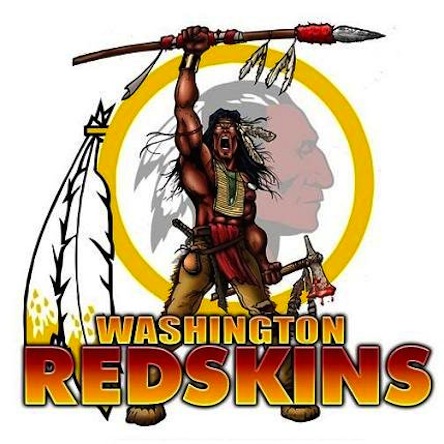
Since we are learning about branding and organizational names, I thought this would be an appropriate topic of discussion. While this controversy is nothing new, it has been thrust into the spotlight. Owner Daniel Snyder insisted that he would never change the team name and that it was a name of honor and respect (“Daniel Snyder defends ‘Redskins'”, 2014). About 50 Senators led by Senator Maria Cantwell (D-Wash) announced the plan to revoke NFL’s tax-exempt status in order to put pressure on the league to change the Washington team name (Levine, 2014).

Recently, the Daily Show aired a controversial clip interviewing both team fans and Native Americans on their opinions of the show seen here.

What images are conjured with the name “Redskins”? Do you find it offensive? Should the team change their name? Will it affect fans and the brand of the franchise?

Posted in Uncategorized | 6 Comments

General Mills knows to walk a fine line with Annie’s

MacCheese_PeacePasta_CR___

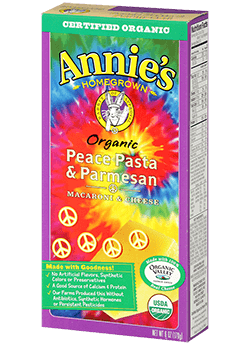
While reading the article on Burt’s Bees (the all-natural maker of lip balms and other skin care products) and how it is now owned by Clorox (best known for being the maker of bleach), I couldn’t help but think of something similar going on in the world. What I thought of was General Mills’ recent purchase of Annie’s Homegrown.

Annie’s – known for its organic food and boxed macaroni and cheese – has established itself as a prime player in the organic food market. Just as Clorox felt that Burt’s Bees was worth upward of $800 million ($925 million, to be exact), General Mills thought the same of Annie’s ($820 million).

In regard to the deal, General Mills CEO Ken Powell has stated that “We’ve learned a tremendous amount from these various natural and organic companies we have acquired and we have been very good about leaving them alone, letting them do their thing” (Kennedy, Sept. 17, 2014). Powell went on to say that the company has built a strong brand. The same can be noted for Clorox. As I looked through the Burt’s Bees website, I could find no mention of Clorox whatsoever. At least on the surface, it appears both conglomerates are content with letting the companies continue business as usual.

The Annie’s/General Mills deal brings up an interesting question in the role of the internet and brands. General Mills has fought requirements regarding the labeling of GMO food, which has raised the concern of loyal Annie’s consumers (Northrup, 2014). The allure of Annie’s to many consumers is exactly that – the all-organic food.

Theoretically, General Mills could simply remove any mention of “organic” or whatever language to comply with FDA requirements, and manufacture the food for Annie’s as it saw fit. In the past, they may have been entirely possible. A comprehensive media campaign would possibly be able to minimize consumer loss. However, that is not as simple now.

The role of the internet and the intense brand loyalty would command immense attention. With the activity of consumers on social media, the value of the brand ($820 million, according to General Mills) would become far less valuable were word to spread that General Mills was changing the procedures. So therefore, the most profitable venture is to not change Annie’s means of operations in any way, thereby maintaining the value of the brand.

In this day and age, a valuable organic food brand takes years to be built, but can be destroyed in a matter of days. The hardest part of this deal is saying enough to quell the concerns of organic food consumers who know about the acquisition, without alerting consumers who have not heard. Same as Clorox does not advertise that it owns Burt’s Bees, it would seem logical that General Mills does not want to advertise to the organic food consumer base that it has taken over Annie’s. It want’s to maintain the brand: the image of the Berkeley-based, tie-dyed box of mac and cheese that it paid quite a bit of cash to acquire. General Foods knows this. It also knows that the organic and natural food market has been growing at a 12 percent compound rate since 2004 (Soloman, 2014), which is why the company probably knows to follow the old adage, “If it ain’t broke, don’t fix it.”

References

Kennedy, C. September 17, 2014. General Mills CEO: We’ll Let Annie’s Homegrown ‘Do Their Thing’. Minneapolis/St. Paul Business Journal. Retrieved from http://www.bizjournals.com/twincities/news/2014/09/17/general-mills-well-let-annies-homegrown-do-their.html?page=all

Northrup, L. September 26, 2014. Customers Petition General Mills To Keep Annie’s Products Organic. Consumerist. Retrieved from http://consumerist.com/2014/09/26/customers-petition-general-mills-to-keep-annies-products-organic/

Soloman, B. September 9, 2014. Buying Organic: General Mills Swallows Annie’s for $820 Million. Forbes. Retrieved from http://www.forbes.com/sites/briansolomon/2014/09/08/buying-organic-general-mills-swallows-annies-for-820-million/

Whitfill, A. March 16, 2009. Burt’s Bees, Tom’s of Maine, Naked Juice: Your Favorite Brands? Take Another Look — They May Not Be What They Seem. AlterNet. Retrieved from http://www.alternet.org/story/131910/burt%27s_bees%2C_tom%27s_of_maine%2C_naked_juice%3A_your_favorite_brands_take_another_look_–_they_may_not_be_what_they_seem

Posted in Uncategorized | 3 Comments

Without split ends, I too can overcome adversity

Pantene Philippines has recently launched the “Whip It” campaign, elaborating on the parent companies long running “Shine Strong” campaign. Whip It Logo Since I’ve been in grad school I haven’t had much time to spend on social media. Recently during my break I checked in on Facebook and found this video coming up in my feed, that I just could not resist to watch about a single Filipino mother and actress and her struggle to overcome derogatory labels that have been assigned to her.

The Whip It campaign is elaborating on the Shine Strong “Labels Against Women” videos which appeared earlier this year in which the labels given to men and women in the same situation are different: a man is the “boss” in a position of power, and woman is “bossy” in a the same position.

I have to admit that these feminist themed videos touched a nerve with me personally. I have long been an advocate for women’s empowerment, and feel it is a personal mission to point out sexism when I come across it and shame the perpetrators. Immediately following the video’s releases they went viral, and many including the Huffington Post, applauded Pantene for these campaigns, and Whip It won advertising awards at Kidlat in the Philippines.

While becoming addicted to Pantene’s Youtube feed, I found a previous ad campaign based on mini dramas produced for the “You Can Shine” series. These fictitious stories include a a deaf girl who wants to play the violin in Indonesia, and an awkward young Russian girl who dreams of becoming a gymnast. Although hokey and predictable the stories were enough to keep me watching 4 minute episodes.

On a second watch of these videos I keep noticing the amazing hair on the actresses. The camera flaunts the bouncing, perfectly posed hair as it shimmers and flows flawlessly from the shoulders of our featured heroines. Wait a minute, I think, my hair has not been looking so great, and I’ve got some split ends, perhaps I should get some Pantene or else I won’t be able to overcome adversity like the women in the videos.

Wait another minute, I think, I’m being sold to! Pantene is playing on my emotions to sell hair care products! Am I angry? Do I feel betrayed? No, not really. Pantene just entertained me for about an hour, pandered to my point of view… and I really should consider buying some better shampoo…

References:

http://www.huffingtonpost.co.uk/2013/12/09/pantene-whipit-advert-label-women-feminism_n_4411390.html

http://www.rappler.com/bulletin-board/57764-whipit-kidlat-awards

http://redalertpolitics.com/2013/12/10/watch-new-pantene-ad-highlights-how-men-and-women-are-viewed-differently-in-the-workplace/

http://youtube.com

Posted in Uncategorized | Tagged , , , , , , , , | 3 Comments

Twitter & Corporations

John Oliver Twitter

If you watch the above video by John Oliver you’ll see that corporations have made it a priority to nudge their way into conversations happening between consumers across Facebook, Twitter, Instagram, Vine, etc… All is done under the guise of “real time marketing”. The moment really grabbed national advertisers attention during the 2013 Super Bowl between the 49ers and Ravens. Famously, in that game there was a massive blackout, leading to the game being suspended for close to an hour while the stadium regained it’s lights. In that time frame, Oreo tweeted out the below message…


Oreo Super Bowl Tweet

This tweet got a tremendous amount of engagement, leading marketers to believe that their brands had a place during real time moments; and while consumers were having real time conversations. Next thing you know, real time war rooms have been created at Gatorade, Adidas, Taco Bell and pretty much any other major organization; all under the premise that these teams should be monitoring social chatter, and feed content directly to that social chatter as appropriate. But of course, brands cant be trusted in these environments and they just can’t help themselves, leading to some very awkward moments that John Oliver points out in his hilarious diatribe.

It all leads to an interesting question; given the amount of time people spend on social media plus an advertisers intent on integrating into the mediums where people spend the most time; is there any way that advertisers can actually contribute to real time conversations and interject their product and/or brand messaging appropriately? While some marketers have been famously terrible at it, I do still feel like there is a time and place for it. For example, Electronic Arts, which makes Madden (the video game) has famously created a real time gif generator where moments happening during Sundays games are turned into gifs. Those gifs are then distributed across peoples timelines through Twitter’s promoted tweets. The gifs are usually very funny in nature, apply to real time moments, and are highlight shareable. But, this campaign is successful because it is directly in the wheelhouse of what EA and Madden are all about; football and having fun moments with your friends. It’s when brands step outside their jurisdiction where it seems like the problems lie; even if one Oreo tweet happened to do well.

Thoughts?

Posted in Uncategorized | 2 Comments

What Color is Your Company’s Logo?

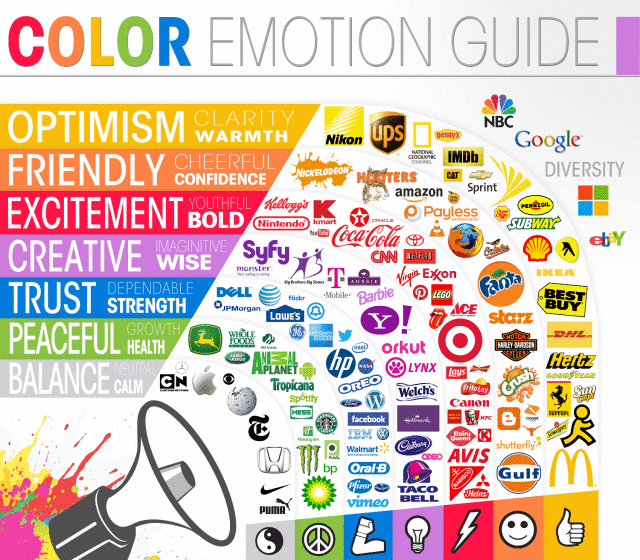
Although I’m not a graphic designer (maybe a wannabe), corporate visual identity has always fascinated me. Whether you’re working at a start-up company, or creating a campaign, or selecting new product packaging – hoping for a unique and inspiring look and feel, remember the colors you select matter to your customers. Much more than you think. Certain colors make your consumers feel emotions and how they are tightly or loosely connected toward your company’s identity can strengthen the brand or be an inadvertent disconnect.

I found this interesting infographic published back in 2013 (many of you may have already seen it) presenting “the emotions and qualities” (Marketingtechblog, 2013) of well-known brands across the globe.  It looks pretty accurate.  Taco Bell is pretty creative, imaginative and wise. Just see this Doritos Locos Tacos ad and wise for eliminating green onions permanently from their menu as a result of its Coli crises.

guide-to-color-emotions-640x560

Source: MarketingtechBlog.com

Hynes (2009) states that corporate visual identity helps establish and maintain a company’s central corporate image and the company’s color and design of its logo is a central component.  This triadic relationship between color, design and logo and vigorous consumer marketing communications evoke meaning and contribute to building a consistent corporate brand (Hynes, 2009).

The Guide reminded me of a very recent mistake I made managing a design project to create a logo and identity for a program.  I completely forgot to take time and think about how color psychology plays an important part in logo design, brand identity and (company) brand reinforcement.  It’s too late for my program since that cart (before the horse) has already left the stable. But, maybe not too late for your next effort.  The jury is still out on the results of my program.

Resources:

Hynes, N. (2009). Colour and meaning in corporate logos: An empirical study. Journal of Brand Management, 16(8), 545-555. doi:http://dx.doi.org/10.1057/bm.2008.5

Karr, D. (2013, May 8). Color emotion guide. MarketingTechBlog.com. Retrieved, Sepetmeber 25, 2014, from http://www.marketingtechblog.com/color-emotion/

Posted in Uncategorized | Tagged , , , , , , , | 18 Comments

#friendsarewaiting

If you watched that and your eyes are dry, you may have a heart of stone. Personally, I found myself in the fetal position searching for my dog to soothe my broken soul.

Budweiser hit us where it hurts with this one, guys, in possibly one of the most effective public service announcements ever made. Those painful seconds when I thought the guy died in a fiery crash were absolutely excruciating. It was a powerfully effective reminder of the terrible consequences of drunk driving, but it was artfully paired with the sweet innocence of the bond between a boy and his dog.

Budweiser is winning your hearts and your money with this spot. They’re tapping into a marketing technique called emotional branding, a theory developed by Marc Gobe in his 2001 book, Emotional Branding: The New Paradigm for Connecting Brands to People. Gobe theorizes that brands are able to develop such a trusting and deep connection with consumers that people actually feel loved and genuinely cared for by them. This ad/PSA executes this beautifully with a genuine and heartfelt message. #friendsarewaiting

Posted in Uncategorized | 12 Comments

Should Ben & Jerry’s Rename Ice Cream Flavor ‘Hazed & Confused’ ?

Ben and JerrysBen & Jerry’s has a history of “interesting” – to say the least – names for flavors in which it has had to express regret for. In 2012, the company issued an apology for “Taste the Lin-Sanity” – a flavor that contained a popular Asian fruit (lychee), pieces of fortune cookie, and honey – named after an Asian-American NBA player, Jeremy Lin. The flavor became a limited edition after talks of the name being culturally insensitive were voiced. Prior to this, Ben & Jerry’s released a flavor called “Schweddy Balls” after a “Saturday Night Live” skit featuring fudge-covered rum balls. The name was so lewd that some grocery stores refused to stock it.

This year, a new flavor containing chocolate and hazelnut ice creams and a hazelnut fudge core named Hazed & Confused was released. Lianne and Brian Kowiak, whose son died during a fraternity hazing ritual in 2008, was the first to express their dismay to Ben & Jerry’s. After three more complaints regarding the insensitivity toward hazing were received, Spokesperson Sean Greenwood reported that the possibility of a name change is on the agenda at the next global leadership meeting in October.

Greenwood said, “While the company has a history of giving its products cheeky names, this one was never intended to have any association with hazing. The ice cream contains hazelnuts, so it was always meant as a pop culture reference to ‘Dazed and Confused,’ the Led Zeppelin song.”

In a statement emailed to HuffPost, the company said, “Ben & Jerry’s believes that hazing and bullying have no place in our society. No individual, group, or entity should benefit by marginalizing others.”

This is not the first time and as history continues to repeat itself, albeit not exactly the same, it does not look like it will be the last time that Ben & Jerry’s will be called-out for their impudent naming style. While Ben & Jerry’s apologizes for their naming convention oversight, their marketing and advertising campaign certainly brings awareness to their branding. But, is this right? What do you think?

Bradford, H. (2014 September 19). Ben & Jerry’s may rename ‘Hazed & Confused’ ice cream after complaints. The Huffington Post. Retrieved on September 21, 2014 from http://www.huffingtonpost.com/2014/09/19/hazed-and-confused_n_5845650.html

Posted in Uncategorized | 22 Comments

Digital Sales: London-Based Designer Debuts Spring 2015 Collection Online

For the longest time, I have been infatuated with New York Fashion Week and everything it encompasses. I have never attended, but I always imagined it all: the glamour, the fur coats, the bright lights. As years have gone by, the digital world has expanded and I have been able to watch the shows live from the comfort of my own computer. This year, I was very shocked to see many brands take a step back from the Lincoln Center and hold their shows in different parts of New York, from Chelsea Piers to Brooklyn and more.

However, this year was also very revolutionary for NYFW and designers that wanted to showcase their Spring 2015 collections. AllSaints, a London-based label, decided to skip Manhattan altogether and unveiled its men’s and women’s collection entirely digital. AllSaints will continue to present their Spring 2015 collection on their social media channels as well as other digital platforms.

AllSaints Gone Digital

Another clever of this digital move from AllSaints was the way they marketed the collection. They called it “Runway,” but instead of shooting the collection on the expected runway, it was shot on the runway of an airport. Wil Beedle, the brand’s creative director, mentioned that they strategically decided to premiere their latest collection online because of its recent global expansion to new regions like the United States, South Korea and the Netherlands, while also demonstrating the brand’s “regeneration.”

This is a good marketing move for AllSaints, especially considering how quickly the digital world is moving and also considering that AllSaints target audience (and customers) now live tied to their phones, tablets and computers. As Joshua Espinoza from Complex.com puts it, “It’s a pretty damn clever, and highly effective.” It makes me wonder if soon enough, the entire way in which NYFW is conducted will move to a more digitalized promotion.

What are your thoughts on AllSaints showcasing their Spring 2015 collection digitally, instead of putting on a fashion show during NYFW like all other brands?

Posted in Uncategorized | 4 Comments