Tourism Fail

What do you think when you hear “Rhode Island”? Do you think of quaint New England towns, maybe of waves upon a rocky beach?

Do you think of anything at all?

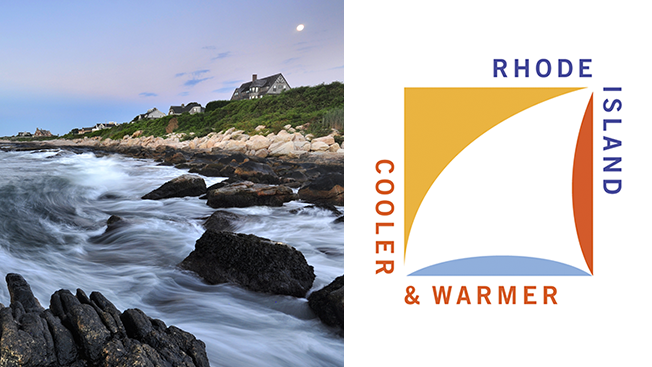
If you’re in the latter group, the Rhode Island Commerce Corporation wanted to change that. They announced a $5 million dollar tourism campaign. They hired Milton Glaser, who became famous for designing the “I Heart NY” logo. They even announced a press event to launch the new campaign.
rhode-island-split-hed-2016

It did not go well.

Viewers immediately noticed that the 2-min commercial included footage from Iceland. (At the :09 second mark, the skateboarder is actually in front the Harpa music hall in Reykjavik.) The backlash on social media (especially Twitter) was swift and brutal.

Beyond such a critical gaffe, many more Rhode Islanders were left puzzled by the rather cryptic tagline. What do they mean “cooler” and “warmer”? The agencies claimed that the tagline was tested considerably amongst different groups of Rhode Islanders, but many remained unconvinced.

Given such fallout, it is no surprise that finger pointing, public apologies, and resignations ensued in due course. The CMO of the Rhode Island Commerce Corporation resigned. The agencies involved agreed to give back a total of $120,000 in taxpayer money, which was used to produce the botched video.

This recent incident was striking to me for one reason: How could they have gone so off-track? Some point to the agencies’ failure to conduct thorough research; others blame the fact that out of state agencies failed to capture what the state is truly like.

If I could hypothesize one reason why the campaign really went wrong, I would suggest that it demonstrates the pitfalls of loving your idea so much it leaves you blind to anything else, both good and bad. In a way, this incident also reminded me of that “Tonopah, Nevada” episode of The Pitch that we watched for class. In that episode, the two men wanted to describe the town as “weird” (if I remember it correctly). However, after testing that idea out with the city council members, they realized that “quirky” was a better fit (especially since “weird” felt offensive to the city council). But at least they listened to such feedback, instead of pushing on with their original idea.

Having gone through our own “big idea” pitches recently for this class, I myself realized how hard it is to keep tweaking and adjusting a big idea based on constant feedback. I think at some point you have to draw the line somewhere, but in Rhode Island’s case, I would argue that they drew that boundary too soon. (And maybe they also should’ve avoided using footage from Iceland in their promo video.)

Sources 

http://www.citylab.com/politics/2016/04/the-anatomy-of-a-disastrous-state-branding-campaign/476751/?utm_source=atlfb

http://wpri.com/2016/03/30/new-ri-brand-cooler-and-warmer-cost-550000/

http://www.adweek.com/news/advertising-branding/rhode-island-will-revamp-marketing-campaign-after-disastrous-roll-out-170589

http://turnto10.com/news/local/ri-commerce-corp-releases-state-promotional-video

 

Posted in Uncategorized | 5 Comments

McDonalds, Obesity and Corporate Social Responsibility

It will come as no surprise that America is ranked as one of the top countries grappling with obesity, according to data from World Atlas (2016), along with North America being listed as the top continent where the obesity epidemic prevails the most. This issue begs the question what Americans and surrounding countries can do to curtail these high rankings and begin to embrace health and prosperity.

1209256-supersizing-mcdonalds-eco-cred-rotator

A direct correlation is fast food. While French fries and apple pies are good, not dying is better. McDonalds, Wendy’s In –N-Out Burger, and Jack and the Box provide scrumptious and convenient meals, but at what cost? Moderation is the key to dealing with any vice, even when that vice is food. Unfortunately, there are individuals who can’t control the intake of their fast food transforming what was once a casual vice into a full-blown addiction.

McDonalds has an interesting history with Corporate Social Responsibility (CSR) and company accountability. While the corporation continues to publish annual CSR reports that detail monetary and philanthropic donations, they do little to shift their menu to healthier options and smaller portions (McDonalds, 2016). The company continues to avidly market and produce high caloric options towards kids, attempting to seize a target audience at their most vulnerable beginnings (Reilly,2015).

gallery-photogallery_pics-pic_73

However the complexities of the fast food industry and accountability are much more nuanced and have been up for discussion for decades. First and foremost, whose responsibility is it to address obesity issues and addictions in America? Is it the fast food corporations? The consumer? The government (Dier,2014)? Additionally, this topic is deeply rooted in issues of economic and class disparities amongst Americans. When you are a single mom struggling to financially put food on the table, quickly feeding your children a meal that costs ten dollars is compelling. Perhaps fast food corporations need to acknowledge these economic disparities and try to address the issues through community discussion and or governmental legislation in the form of smaller sizes or healthier options (p.2).

While this post begs many more questions than it provides answers, I think it continues to be a timely topic for discussion. I would love to hear all of your thoughts on this ongoing and interesting issue.

References

Dier, A. (2014). Study: It’s Not McDonald’s Fault Our Kids Are Fat. Newser.

doi:http://www.newser.com/story/180882/study-its-not-mcdonalds-fault-out-

kids-are-at.html


McDonalds (2016) Making a difference

http://www.aboutmcdonalds.com/mcd/sustainability.html


Reilly, L. (2015). McDonald’s slapped down for focusing its Happy Meal

advertising on the toy and not the food. Business Insider.

doi:http://www.businessinsider.com/mcdonalds-told-to-change-ads-by-

childrens-advertising-review-unit-2015-5


World Atlas (2016) 29 Most Obese Countries in the World.

http://www.worldatlas.com/articles/29-most-obese-countries-in-the-world.html


Posted in Uncategorized | 8 Comments

Coolhunting on Kickstarter

What is coolhunting?

banner_libro_coolhunting

For those of you who are not familiar, coolhunting refers to a breed of marketing, where ‘coolhunters’ make observations and predictions on changes of new or existing cultural trends.

The hunt is about finding the source of trends.  The idea is that if you know where the source is, you can get a head start on creating a product or selling a product that becomes a part of that trend.

Coolhunting is identifying a certain type of social influence and using it to your advantage.

What is Kickstarter?

Screen Shot 2016-04-20 at 1.29.49 PM

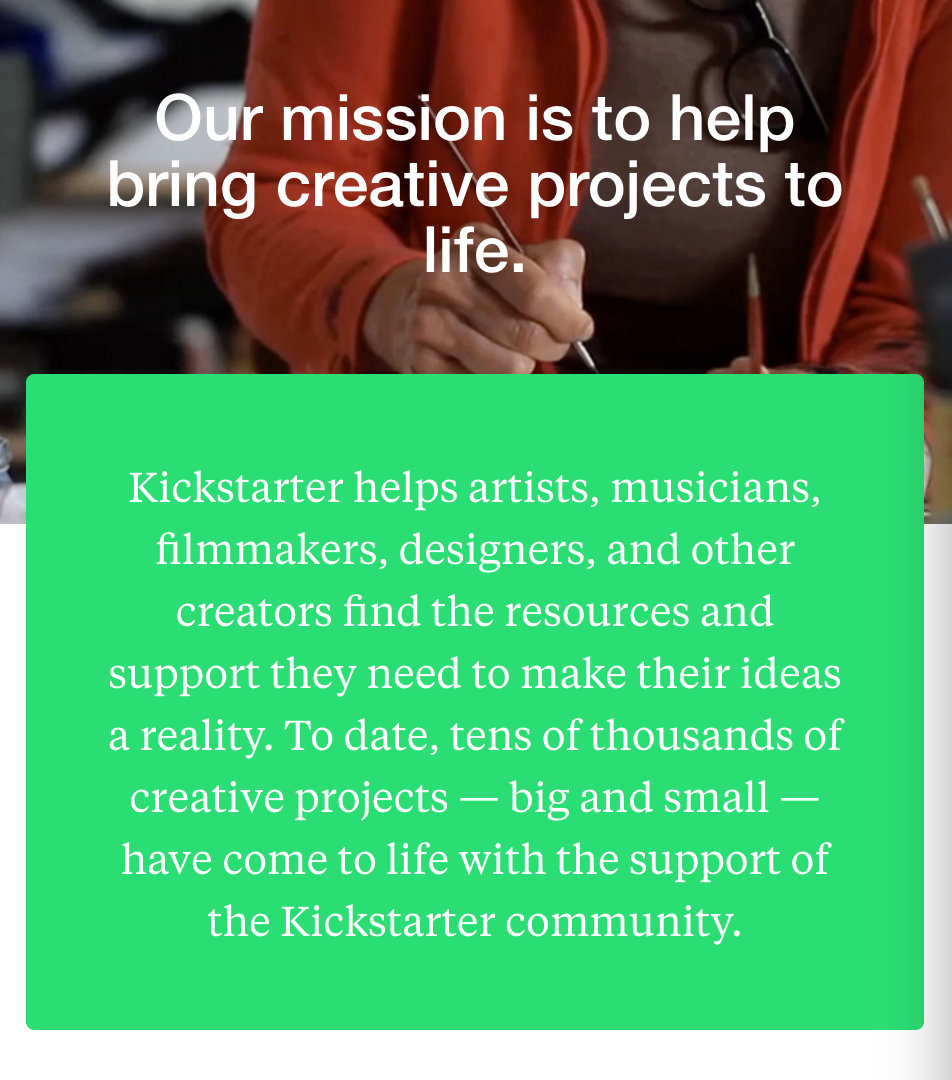
The platform allows creators the opportunity to create the universe and the culture that they dream of.  These creators are like entrepreneurs, looking to create the product that they see a need or a want for.

Each project is independently created.  The creator makes a page, creates the page content, and determines rewards to offer backers.  Then they are able to launch and share their product with the Kickstarter community.

Since its initial launch in April of 2009, 104,081 projects have been successfully funded and 11 million people have backed a project.

What does coolhunting have to do with Kickstarter?

Marketers are always searching for trends of consumers.

Kickstarter is interesting (with respect to coolhunting) for the following reasons:

  1. You can see what people are interested in creating. Are there similarities between projects?  What is lacking from products already in the market that makes these creators feel moved to create something new?
  2. You have access to a massive pool of consumer data. On Kickstarter you can browse through categories and see which types of products are being sponsored, and how many people within the Kickstarter community are interested in sponsoring a project.
  3. You can identify products that you can create. Maybe you identify a product that people are willing to sponsor, but that could still be improved upon. You get to see where people are headed and skip ahead a step or two.

What do you think?

 What do you think about coolhunting on Kickstarter?

How should marketers be taking advantage of coolhunting?


References:

http://www.businessdictionary.com/definition/coolhunting.html

http://www.pbs.org/wgbh/pages/frontline/shows/cool/interviews/gladwell.html

http://www.coolhunting.com/

Posted in Uncategorized | 4 Comments

SK II #ChangeDestiny

Since it is towards the end of the semester and we’re all killing our brain cells trying to come up with suitable “big ideas” for our brands, this blog post may shed some light on your projects.

At the beginning of 2015, a well-known cosmetic brand named SK II launched its new campaign #ChangeDestiny. It is an empowerment campaign with the messages that we all have the power to make our lives better, and no one and nothing can dictate our lives but us.

From my memory, Sk II used to be labeled as the upscale skin care products for wealthy women. However, as time changes, an increasing number of younger and working women started to use SK II’s products. This younger group of customers has the economic power to treat themselves and the will power to make decisions for themselves.

Since the launch of #ChangeDestiny, SK II has aired a series of storytelling videos. All of these videos tell stories of different people’s life journeys and how they (mostly women) have overcome obstacles.

Recently, SK II added a new video to the series. This video featured a certain group of women that are labeled as “leftover women”. The phrase “leftover women” describes single women over the age of 25. In the documentary-like video, “leftover women” expressed their wishes of becoming independent and confident women, as well as their stresses of being criticized by society and their parents.

The video soon went viral. Along with popularity and high numbers of views came bipolar comments. Some felt inspired by the video to become strong, independent, and confident women, while others disapproved of the using of the phrase “leftover women”. Since all SK II’s previous videos were about one single person’s life and the new video targeted a stereotypical group, controversies have grown tremendously with popularity.

Please watch the attached video (with subtitle turned on) and share your thoughts on SK II’s newest movement.


Posted in Uncategorized | 6 Comments

Creating Your Personal Brand

Developing your personal brand is a topic that has navigated its way in Public Relations Society of America (PRSA) and International Association Business Communicator(IABC) chapter meetings. In a recent article, posted by PRSA your brand is how you appear to the world. This seems easy enough to understand, yet when we attempt to build our brands we are lost. I assume, it is because we haven’t found what we are passionate about and do not have knowledge of the target market.

matt-clayman-193x300While attending the April IABC meeting, guest speaker Matt Clayman, Director of Client Partnerships at Innovation Protocol stated , “a personal brand needs to be able to have legs and speak to a specific market.”

In my observations on twitter feeds, I began to notice that the industry thought leaders had done a great job of branding themselves. Each of the people who had success, took a topic and commented on posts, engaged in twitter feeds and curated analysis and opinions of their own. For example, @angelgonzlz, he is a fashionista and you feel that brand in everything he posts.

Angel Gonzales, iss a Hollywood stylist/fashionista. His focus on posts and engagement have to do with style and fashion. Frequently he will comment on how celebrities are dressed or what makes for a great on camera look. He takes it a step further and documents his work life as he styles celebrities and news anchors. This strategy has created a brand for himself.

The idea is to take what you love, are good at and develop a brand around it. The brand doesn’t have to be your employers brand, its all about you. If you love technology, then become that tech expert who is commenting about tech devices and what is hot in trends. In the process, according to Lauren Marinigh you will have social consistency and will be looked and it will help you become an expert.

Personally, I think this is the ticket to ensuring you stay relevant and marketable in your career. If you know your category well, and can engage an audience any company would be fortune to employee you. Here is a helpful worksheet to guide you along. Those of you who remember completing the Galup strengths and weakness, and the CISCO personality test can use those attributes to guide your branding process. Not a bad summer project if you ask me.

As the school year ends, let’s all take some time and do our own homework on how to develop your personal brand? Mine would be all about travel, destinations, and hotels—what would yours be? I would love to see what type of experts we have at here at USC.

Fight On!

Posted in Uncategorized | 8 Comments

The “Canada Goose Phenomenon”

This Spring break, when I was in Fairbanks, Alaska for northern lights, I was surprised that more than half of the Chinese travelers there were wearing the same kind of jackets—the parka jacket with fluffy fur hood and a striking circular patch on the left arm. Right, those were Canada Goose parkas. My experience there literally looked like this (caution: profanity in video):

The Canadian brand suddenly became a superstar in the fashion world in recent years. Since 2013, many business media have talked about the company’s outstanding sale performance: Over the past decade, the privately-held Canada Goose has posted a growth rate of more than 4,000 percent, increasing its annual revenue from $5 million to nearly $300 million. The craziest part of this phenomenon are that these jackets are not something you could get at $200, their classic parkas sell from $595-$885.

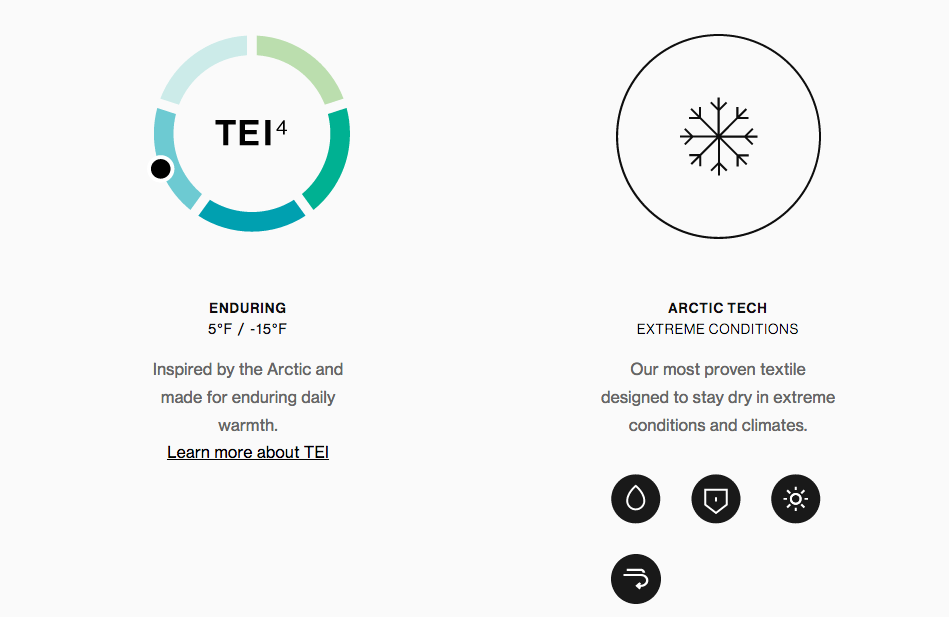
The jacket was first designed and manufactured for people who work in frigid conditions that required high quality and warmth retention. For example, each United States Antarctic Program (USAP) staff was equipped with a red Canada Goose parka as working gear. Well, the comment they gave on the jacket was “it doesn’t seem fashion”. Right, the jacket was once perceived had nothing to do with fashion, and was purchased by USAP mainly because it was the warmest jacket could found in the market.

However it is the technical capacity of keeping physically warm that naturally introduced the jackets to tastemakers and stars. The trend started after celebrities were spotted wearing these coats on shoots, in movies and on the streets.

Looking at this phenomenon from a marketer’s point of view, there are really a few concepts at play here:

Cultural branding
Canada Goose doesn’t do a lot of marketing, instead they are doing cultural branding. Cultural branding could be understood as placing the products into the target audience and let the brand naturally become part of the culture.

“It comes down to having an amazing product that exceeds people’s expectations, creative and authentic marketing, and staying true to who we are, always,” said Dani Reiss, the current CEO of Canada Goose. “Because of that, we’ve been part of key moments in pop culture, which of course helps visibility, but on their own wouldn’t have been enough to fuel our continued global success.”

The “intended use” strategy

It is reasonable that the cold wave helped boost the sales of CG jackets, but what explains so many Chinese students in California were snapping up the jackets for a five-day long vacation to Alaska. The reason is simple, they want to keep warm in that bulky yet chic jacket. Cold is a physical sensation, but fear of cold is a psychological suggestion. You never know when it’s getting cold. Canada Goose is just taking advantage of that.

“Our job is to keep free people from the cold, right?” Spencer Orr, VP of design & merchandising at Canada Goose, says. “There’s no fixed standard of temperature. As long as I could tell customers what specific product they should wear under that specific weather condition, it’s always easy to sell out.” In other words, Canada Goose is more like selling an “intended use” rather than a down jacket.

屏幕截图 2016-04-11 01.33.19

This is kind of like the marketing positioning of Volvo. Everybody wants the best in front of the unexpected. Who doesn’t want the safest car in a potential accident? And who doesn’t want the warmest parka on a freezing cold day?

What do you think made the brand’s huge success?
Last, let’s enjoy Canada Goose’s first global campaign launched last year:

https://youtu.be/eKim9AJlM3Q

References:

http://www.bu.edu/today/2015/the-success-behind-canada-goose/

http://www.adweek.com/news/advertising-branding/why-so-many-people-are-suddenly-wearing-500-canada-goose-coats-163192

http://adage.com/article/cmo-strategy/canada-goose-debuts-global-campaign/301292/

Posted in Uncategorized | 4 Comments

Emotional Marketing/Advertising: Good or Bad?

In recent weeks in China, one of the biggest and most heated topic in advertising and marketing industry is the SK II campaign focusing on a very popular community nowadays in China – the “leftover” women. (I saw another classmate was also trying to post on this topic, well, don’t worry, I am just using this campaign as an introduction of my post, you could still write yours lol)

In 2007, the Women’s Federation defined “leftover” women (sheng nu ) as unmarried women over the age of 27 and China’s Ministry of Education added the term to its official lexicon. Since then, the Women’s Federation Web site has run articles stigmatizing educated women who are still single.

And this ad focuses on describing the similar dilemma for all the “leftover” women in China. People’s stereotypes of leftover women and the pressure, both from peer and from parents and families of this community, and their opinions are well depicted in the video. The video culminates in the ‘leftover women’ delivering a personal message to their parents at the marriage market, saying that “I don’t want to get married just for the sake of marriage. I won’t live happily that way.”

The main big idea of the ad is trying to say that “leftover” women are not left over. They have the right to decide whether and when they would like to pursue a career and marriage. It was said to be a progress in women’s right and has generated a lot of debates.

Personally speaking, I like this video because leftover women is a very good topic. However, what I am wondering is that is there any other way to approach this same topic. This ad clearly goes with the way of emotional advertising/marketing and this is clearly a very successful strategy. But I was thinking that the reason because why it is so successful is that SK II is a beauty brand. Just think about Dove, one of the reasons why the beauty campaign they did is successful is that it is a very on-brand and suitable strategy and idea. But emotional marketing/advertising is probably not the strategy for every brand and campaign. Advertising should treat consumers as intelligent, reasoning people, and not as passive zombies. Advertising’s role should be to introduce people to a product based on where it may fit into their lives and how it might benefit them, in a charming, compelling or entertaining way. And when they become customers of the brand, their attitudes will change in favour of it as a matter of course. Emotional marketing/advertising sometimes will be very misleading. It could be a very impressive story-telling but it might do nothing to help with the brand. Many stories are not closely connected to the brand.

But when I was trying to think of any bad example of emotional advertising, I cannot think of one. What do you guys think?

References:

http://www.marketingmagazine.co.uk/article/1285626/why-emotional-ads-bad-brand-building

http://www.themarysue.com/sk-ii-leftover-women/

http://www.telegraph.co.uk/women/life/chinas-leftover-women-this-emotional-advert-wants-to-empower-the/

Posted in Uncategorized | 7 Comments

Citi’s Success with Experiential Marketing

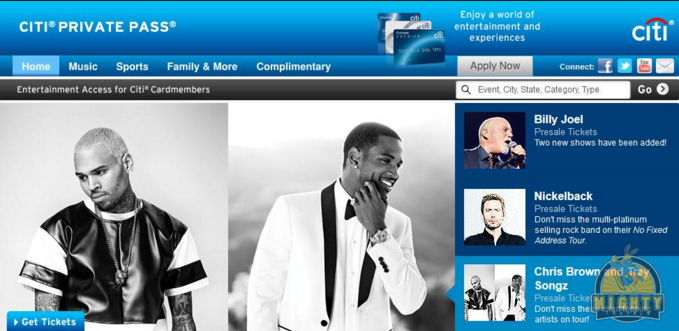
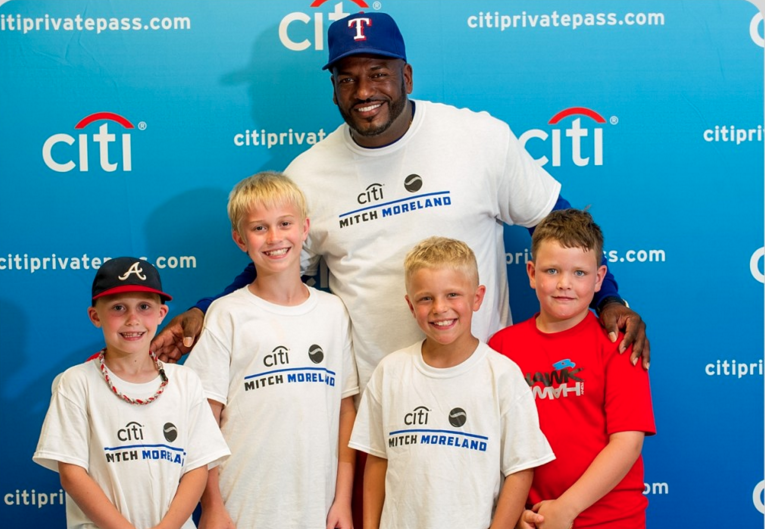
Screen Shot 2016-04-12 at 10.47.00 PMYou may know Citi to be another financial company offering banking products and services. However, Citi has started doing something different. The Private Pass has become Citi’s way to differentiate from its competitors, attract consumers and, most importantly, boost credit card revenue. The company’s managing director of media, advertising, and global entertainment, Jennifer Breithaupt, is focusing on creating an experience for Citi cardholders that is unique and unmatchable.
Screen Shot 2016-04-12 at 11.58.27 PMWhat is this Private Pass all about? Basically, the Private Pass enables cardholders special access to music, sports, dining, and family entertainment events and experiences. Only Citi Credit Card and Citibank Debit Card holders receive these exclusive updates and alerts for offers. This new marketing strategy is helping to connect with customers in a way that offers them greater value.

Experiential marketing is a marketing strategy that directly engages and encourages consumers to participate in the evolution of the brand. Citi is shifting its brand image, serving a greater purpose than just taking care of personal finances. In this way, Citi is inviting its customers and potential customers to interact directly with and rely on the company in a positive way that expands its previously static banking brand image to encompass something more fun, unique and participatory.This experiential marketing is Citi’s way to become a top-of-wallet card for consumers. 

With the plethora of digital messaging and marketing, it is becoming increasingly difficult for brands to connect with and impact consumers.

“This information overload has led consumers to become more selective about the content they engage with, and they keep raising the bar for brands competing for their digital attention.”

Brands are investing more in experiential marketing as a way to stand out, and there have been many successful examples, like Red Bull’s Stratos. Traditional and physical marketing challenges the overabundance of digital marketing by enabling consumers to develop real, tangible memories and bonds with the brand that create a more lasting impression. In addition, brands that leverage this strategy are also creating impactful ways to stand out in the crowded digital landscape as consumers share these marketing tactics online creating an integrated and connected experience of the brand with others that may not have even physically been present or participated.

Brand recall may still be considered higher in traditional marketing but I wonder if these experiential marketing strategies would be as successful or impactful without the digital engagement of consumers sharing content online surrounding their experiences or interactions with the brand’s marketing?

Sources:

http://www.dmnews.com/news/citi-hits-the-right-note-with-fans-through-experiential-marketing/article/488771/

https://www.clickz.com/clickz/column/2410735/why-brands-need-to-invest-in-experiential-marketing

Posted in Uncategorized | 5 Comments

Massage Envy’s Rebranding Efforts: A Touch Point Selection Perspective

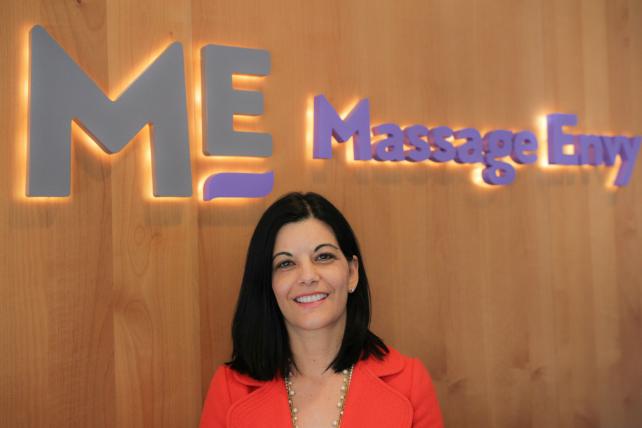
Earlier this year Massage Envy, the pioneer and largest national therapeutic message and skincare franchise, announced a rebranding strategy to appeal to Boomers and Millennials (Madov, 2016). According to Debbie Gonzalez, Massage Envoy’s Chief Brand Officer, the franchisor hopes to make the brand more modern and approachable to Boomers and Millennials because they see wellness as an important part of their lives: “Boomers are aging and becoming more health and wellness focused” and Millennials “already come to this space with that mentality (Madov, 2016, p. 3). Capitalizing on this cultural shift, the company launched a revamped version of their “Because Everything” campaign this year. “Because Everything” aims to shift the perception of massages as a luxury or treat to showing how they can help people deal with daily aches and pains or common injuries (Madov, 2016). The campaign includes digital marketing and social media, as well as advertising and PR outreach. To date, the company has bought national time and individual franchises have bought spots in local markets.

Debbie_Gonzalez_of_Massage_Envy

The Massage Envy rebranding case illustrates the touch-point strategy, as described by Young (2014), of selecting media by clearly defining one’s communication objectives. Arguably, Massage Envy’s two-pronged communication objectives are (1) to create brand awareness among Millennials and Boomers and (2) to shift people’s perception of massages from a luxury to a necessary aspect of one’s well-being. The media mix for this campaign, as mentioned earlier, consists of television, online (digital, social), and PR outreach.

While it is difficult to determine the success of Massage Envy’s ongoing campaign because the company has yet to release any reports, one can predict how each channel and/or platform will influence the effectiveness of the overall campaign. Young (2014) suggests that different media offer different benefits: magazines can prompt response and action while online media can drive brand familiarity. To illustrate this point, the author delves into a case study on Sara Lee International’s successful campaign for their tea brand Pickwick. Sara Lee International leveraged television (43%), print (48%), and online (8%) media over a 15-week period, ultimately increasing product awareness, purchase intent, and position awareness by 36%, 35%, and 20%, respectively (Young, p. 135). For example, Young writes that Sara Lee’s tea campaign effectively leveraged television to generate awareness about the product and online media to drive brand familiarity (2014, p. 135). Massage Envy’s media mix, especially television and online, may help the brand to accomplish its two-fold communication objectives: brand awareness and redefining massages, but that’s to be determined.

Apart from stating that different media offer brands unique benefits, Young (2014) presents three main inputs for touch point selection: data, consumer insight, and communication needs (Anthony, 2014, pp. 136-138). A touch point is any way a consumer interacts with a business, such as through a website, television, or any form of communication (Young, 2014, p. 136). While an exhaustive analysis of the three inputs is beyond the scope of this blog post, briefly data encompasses all data-led decision-making processes (e.g., market-mix modeling, performance marketing, and audience reach and frequency). Consumer insight takes into account culture and media consumption, receptivity insights, etc., and by communication role, the author advises communication planners to take into account how a brand can create differentiation and cut through as well as amplify the central communication idea to guide touch point selection and use (Young, 2014, p. 137). Massage Envy has not published extensive reports relating to its touch point selection, except that the brand’s new ads feature men. This marketing approach makes sense because the company has found that its current client base is 25% male, and they hope to attract more males (Young, 2014, p. 6). In spot ad below, for instance, Massage Envy appeal to both genders by offering to help potential clients manage the side effects of scenarios they encounter on a daily basis, from playing football, to dancing at a wedding, and watching television.

https://www.youtube.com/watch?v=lxBr51IjkAg&nohtml5=False

As Massage Envy publishes reports on its 2016 “Because Everything” campaign, it will be interesting to see how successful, if at all, the campaign is at achieving its core communication objectives. If the campaign fails to create brand awareness among its target demographics and to redefine massages from a treat to a necessary aspect of one’s well-being, one may want to consider if the issue was with the brand’s touch point selection and use.

Sources

Madov, N. (2016, April 12). Massage Envy changes its message to appeal to Millennials and Boomers. Ad Age. Retrieved from http://adage.com/article/cmo-strategy/massage-envy-reinvents-wellness-brand/303489/

http://www.prnewswire.com/news-releases/massage-envy-adds-new-chief-commercial-officer-to-leadership-team-300243741.html

http://www.prnewswire.com/news-releases/massage-envy-adds-new-chief-commercial-officer-to-leadership-team-300243741.html

http://www.ispot.tv/ad/Ad1Z/massage-envy-because-everything

Posted in Uncategorized | 7 Comments

Pitching with Force! – by Frank Rivera

pitch1 pitch2

As a course developer and instructor you witness many styles of delivery when it comes to teaching and instruction. You have your cutters, forks, curves, you get it. The cutters always walk up with a joke, they begin with the angle of trying to win the audience with humor. The forks have 3-4 points they want to get across.  The curves, well, they ruin your day.

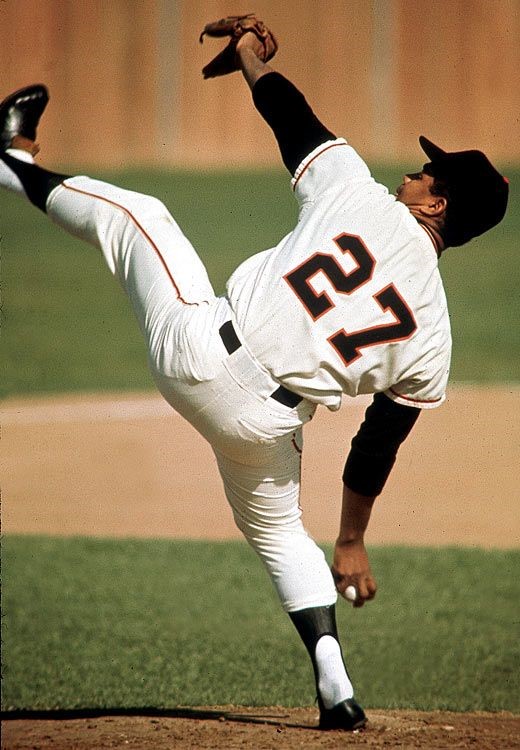
Former MLB pitcher Steven Ellis notes that pitching mechanics is one of the most complex moves in all of sports. A combination of skill and art, the skill is something that is learned while the art of a pitcher’s own unique style is something that is inspired over time through coaches, other players, determination, and comfort level.

Consider the analogy in relation to your speaking style. Have you ever considered an analysis of your own abilities and strengths? Where could you improve? Who shaped your methods? Did it take years to master your style or were you a “natural” at being center stage? Did you create a delivery that had impact and could touch the audience on a level that was unique?

Awareness of your pitching style is very crucial as a communicator. How you appear and connect with others relates to how you are as a representative, a leader, or business owner. The “pitch” method you deliver is something that can enhance your result in communicating. For any pitcher, they know that the edge lies in one area….the energy they bring to the presentation, no matter what the topic.

But how do you build energy for a presentation? High energy is one thing that excellent speakers are known for. High energy deliverers such as Tony Robbins, Oprah Winfrey, and countless other stage and screen performers deliver at the top of their game.  So what is it?  What do they do? Simple, they warm up! Warming up is the process of using motion, to gain control over emotions, in order to fine tune their locomotion! Let me explain, when one is nervous, emotions are out of control. “The pitcher is wild” so to speak, and has to gain control or their night is over. The same goes for the speaking pitcher. If the speaker is nervous, he may forget his points, she may have to resort to notes, they may just not appear ready. The pitcher may be beyond the nervous stages of his or her career, perhaps they don’t need the warm up because they are masters of impromptu or prose. But every pitcher knows that there are between one and one million people who are about to be on the receiving end of their stage, so why not deliver with power?

High impact “pitching” comes with an effective warm up, and the warm up MUST involve motion. So what do you do? MOVE! Forbes Magazine notes that speaker Tony Robbins is known for his high energy, high impact seminars and the way he prepares before each “performance” is through motion! He takes 10 minutes for jumps, swings, spins, fist pumps, fist bumps, high fives, you name it…he does it.  Energy is based in the kinesthetic movement which serves to charge the body which in turn gives an incredible delivery. Energy leaves the audience feeling energized, focused, and wanting more of whatever you had to deliver. Even the most boring regulatory governmental information, when passed on with energy, can draw a fantastic audience response. Fight on!

Sources:
Ellis, S. (2016). Pitching mechanics: The complete guide. Retrieved from http://www.theultimatepitcher.com/pitching-mechanics-guide/

Gallo, C. (February 24, 2012). How Tony Robbins gets in peak state for presentations. Forbes Magazine. Retrieved from www.forbes.com/…/how-tony-robbins-gets-in-peak-state-for-presentations

Posted in Uncategorized | 10 Comments