Much like Periscope and Snapchat, live streaming has become one of the hot trends for social media developers. It is also one of the easiest and most affordable approaches for broadcasting a live event, and reaching a more targeted audience than traditional live viewing. With opportunities for more UGC (User Generated Content) and advertising money, it was only a matter of time until the world’s largest social network joined the bandwagon.
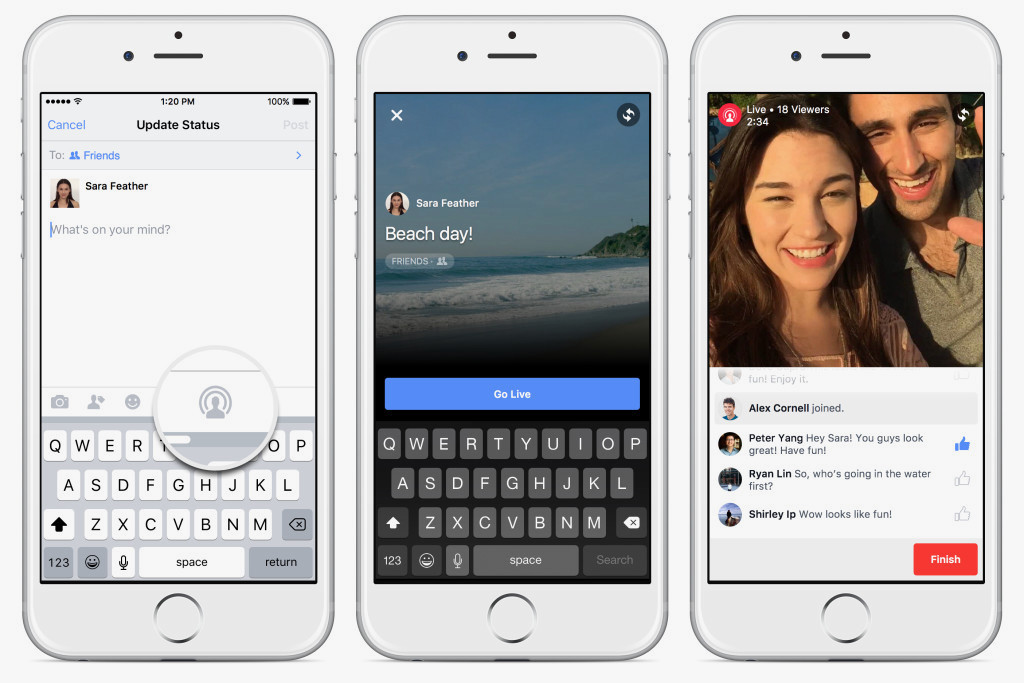
Facebook announced that the social media platform would be going “all in” with live video last night via the company’s CEO/CFO, Mark Zuckerberg. “Facebook Live displays
on-screen reactions from users and has comments you can replay, and like Snapchat, broadcasters can add filters and draw on their videos. Users are also able to view the Facebook Live Map to see broadcasts from around the world” (Vanity Fair, 2016).
Now that Facebook is going full-force with live viewing provides a lot of opportunities for advertisers to embrace more integrated marketing communications campaigns. The company initially placed a bid to broadcast live NFL games, but was beat out by Twitter. Although Facebook did not successfully acquire this deal, it just goes to show what companies and TV networks will be able to accomplish with this feature, and the massive audience brands can reach with Facebook’s 1.5 billion users.
In what ways do you think brands could use Facebook Live to incorporate or enhance their integrated marketing communications?
If Facebook Live lives up to the expectations everyone is thinking, what do you predict the future of live television will be?
No longer do you need to have cable to watch Thursday Night Football, just a Twitter account! This past week, the NFL made a deal with Twitter to live stream Thursday Night Football games on the social platform.
“Re/Code’s Peter Kafta is also reporting that Twitter paid only $10 million for these streaming rights, beating out larger offers from other players, as high as $15 million” (Crook, 2016). Those other players include Verizon, Yahoo, Amazon, and Facebook. So why did the NFL decide to take less money and go with Twitter?
Many sources said that Facebook undervalued the NFL’s content rights and has a poor monetization model. In addition, Facebook’s live streaming is still evolving, whereas Twitter is ready for primetime. “Hans Schroder, senior vice president of media strategy, business development, and sales for the NFL said the NFL opted to go with Twitter, which “wasn’t the highest bidder,” because it has a unique way to drive engagement” (Castillo, 2016).
The NFL-Twitter streaming deal will allow for mobile audiences to access Thursday Night Football games from anywhere, and from a platform that has users express themselves in 140 characters or less. Also, “given Twitter’s slowing growth numbers — the company has plateaued at around 300 million active users — this deal could be a huge boost for the platform” (Crook, 2016) and could potentially reach a a tough advertising demographic, millennial males (Castillo, 2016).
So will you be tuning into Twitter for Thursday Night Football?
Every single day, you walk through a series of doors, not thinking much of it. Enter, exit, male, female – all descriptions that you are probably so used to, that you don’t put much thought into it. What if you approached a set of doors that yielded two option for you to choose – ‘beautiful’ and ‘average’ – which door would you walk through?
May seem like a silly question, but Dove’s 2015 ‘Choose Beautiful’ campaign forced women, in Shanghai, San Francisco, London, Sao Paulo and Delhi, to make this decision, and the results probably won’t surprise you.
“Am I choosing because of what’s constantly bombarded at me and what I’m being told that I should accept? Or am I choosing because that’s what I really believe (Long, 2015, para. 10)?”
I’m sure you are certain that you would walk through the ‘beautiful’ door without a second thought, but of the 6,400 women who were put on the spot, many of the women chose the average door – which isn’t a surprise at all when you consider how narrow-minded society is with their definition of beauty (Arce, n.d.). It wasn’t until after these women made their split decision, that they thought about the deeper psychological elements associated with their actions. Most women were embarrassed, even ashamed of their choice.
Dove’s campaign forced many to take a good look at how they perceived themselves, and reflect on these realities. Although the ‘Choose Beautiful’ campaign’s goal was to empower women to embrace their beauty and “seize the opportunity to chose what makes us feel beautiful everyday”, many felt that the campaign missed the mark, asserting that the ad was patronising and shallow (Kemp, 2015; Vagianos, 2015).
“I should be more grateful of my natural beauty. It impacts the choices and friends that we make, the jobs we apply for, how we treat our children. It impacts everything. It couldn’t be more central to your happiness (Long, 2015, para. 7).”
Dove’s primary goal with this campaign was to encourage women to be happier with themselves, but many argue that the campaign was overly melodramatic, taking away from the underlying message (Long, 2013). Critics raised issue with the fact Dove is moving with a spirit of hypocrisy, as they’re are pushing a campaign that focuses on natural beauty, yet they sell products like cellulite firming cream (Long, 2013). Some focused on the the lack of choices offered to participants, with only “beautiful” and “average” as choices. “And instead of giving women two superficial choices, Dove could have added several qualities — such as Funny, Intelligent, Unique or Kind” (Arce, n.d., para. 5). Lastly, many criticized Dove for not digging deeper and exposing the unapologetic culture that demeans women by imposing unrealistic ideals of beauty, instead of asking women to shut up about their insecurities (Arce, n.d.). A task the beauty giant may never want to participant in, as they could be labeled as a potential culprit.
Despite naysayers and the negative backlash, Dove’s Real Beauty campaign – which the ‘Choose Beautiful’ campaign is a subset of – afforded the company a significant boost in sales, from $2.5 billion to $4 billion (Chumpsky, 2015). Dove has also been recognized for offering some of the best advertising campaigns of the 21st century. Dove accomplished exactly what they set out for, but many question if Dove is simply adding to the problem.
Dove hasn’t crossed any ethical boundaries with their ‘Choose Beautiful’ campaign, however, for those of us that can look past great production and compelling music, it’s clear that the ad “has mastered the art of passing off somewhat passive-aggressive and patronising advertising as super-empowering”, which is troublesome enough (Chumpsky, 2015, para. 3).
Honestly, which door do think you would of walked through? Where do you stand on the ‘Choose Beautiful’campaign? Was it passive-aggressive advertising or do you feel they are apart of the ‘feel beautiful’ solution?
References
Arce, N. (n.d.). Dove’s New Choose Beautiful Ad Sparks Online Backlash. [Web log page]. Retrieved from http://www.techtimes.com/articles/45843/20150413/new-dove-choosebeautiful-ad-campaign-sparks-online-backlash.htm
Chumpsky, S. (2015). Why Dove’s ‘Choose Beautiful’ campaign sparked a backlash. [Web log page]. Retrieved from http://fortune.com/2015/04/15/why-doves-choose-beautiful-campaign-sparked-a-backlash/
Kemp, N. The top 10 marketing mishaps of 2015. [Web log page]. Retrieved from http://www.marketingmagazine.co.uk/article/1374495/top-10-marketing-mishaps-2015
Long, H. Dove’s ‘real beauty sketches’ ad deserves some praise. [Web log page]. Retrieved from http://www.huffingtonpost.com/2015/04/07/dove-beauty-choose-beautiful-campaign-video_n_7010178.html
Vagianos, A. Dove’s ‘Choose Beautiful’ Campaign Says Women Are So Much More Than
Average. [Web log page]. Retrieved from http://www.huffingtonpost.com/2015/04/07/dove-beauty-choose-beautiful-campaign-video_n_7010178.html
Long time ago, when social media first popped up into the Internet world, we were enthusiastic about the content and the stories told. Texts, images, and videos were fair games for users. Today, images were still popular in social media sites. Pinterest use images as the major language that communicates with its audience, so is Instagram. This phenomenon is not surprising as visual aids often delivers more clear and stronger voice compared to texts. Therefore, it is also not surprising that words has often lost its popularity and authenticity in the evolving process of internet marketing.
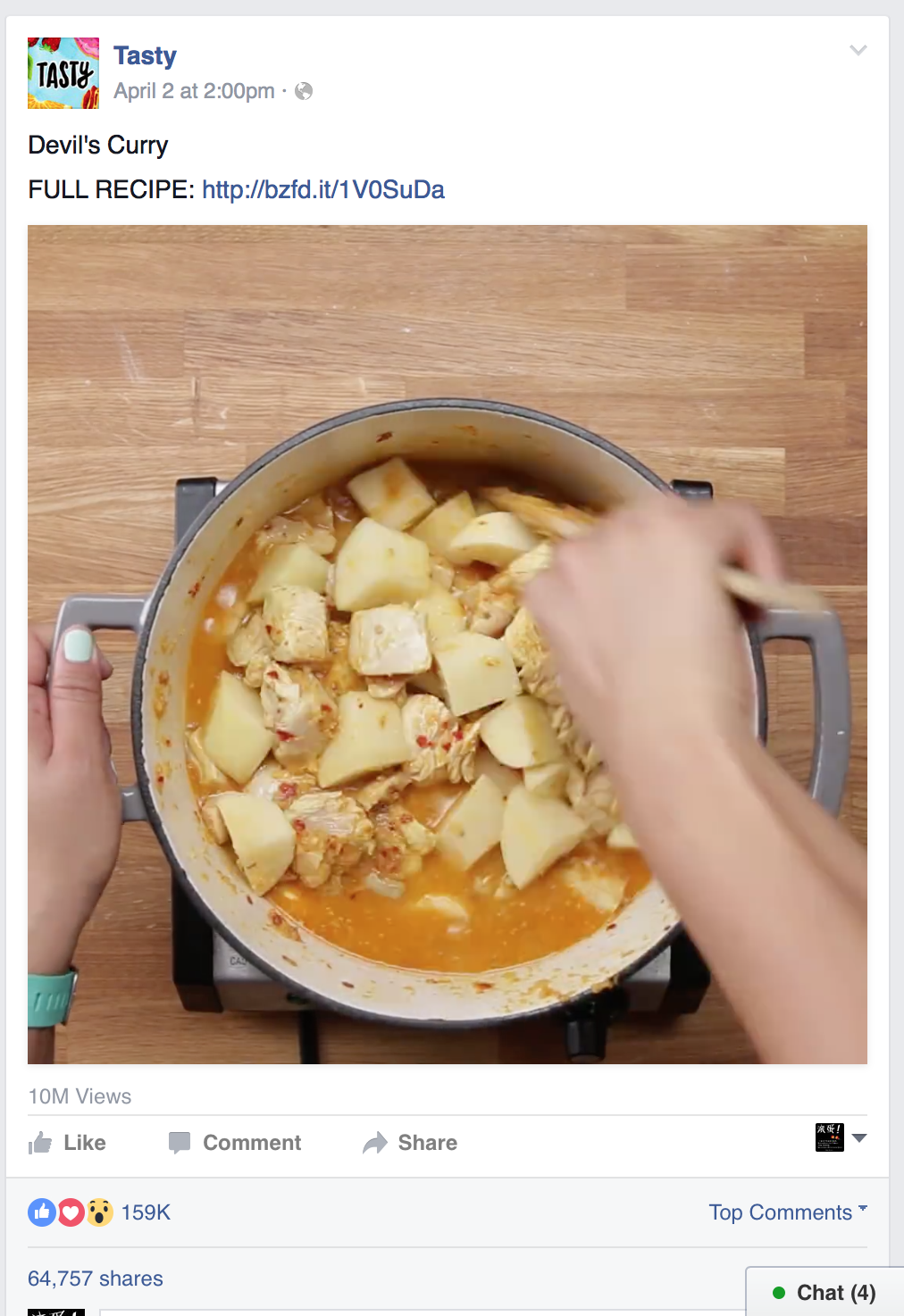
At the mean time, video content usage has been rising across different social media sites. For example, instead of posting detailed recipe, Facebook account “Tasty” decided to post videos to show the cooking method step by step. It is certainly more interesting and understandable for audience to follow. Also, the colorful scenes engage people to finish the entire video even if they are not necessarily interested in that particular dish or recipe.
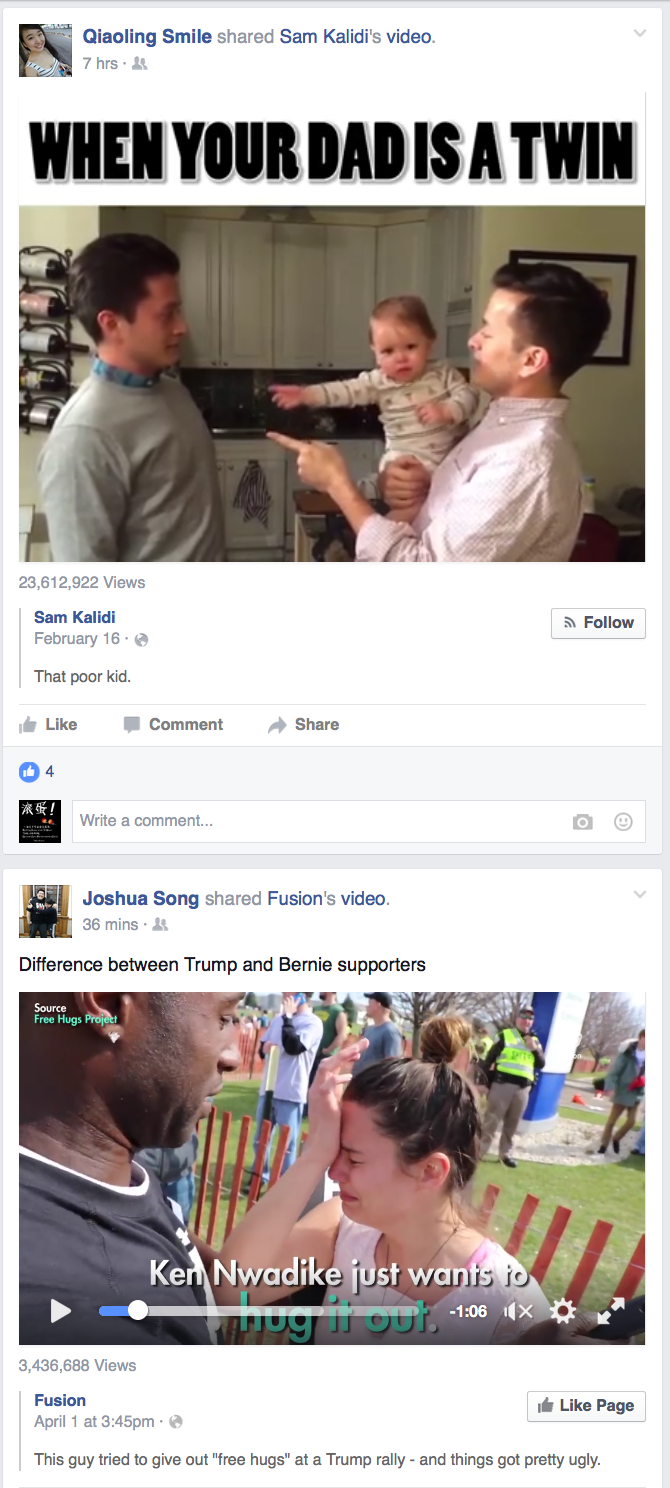
Take a step back and look at my Facebook Home page, videos show up in over 70% of the contents. They spread out in different forms: news, DIY videos, comedian videos, and other short documentary videos that call for awareness and actions. We did not care much about texts, rather we are so used to gather information from videos.
Studies have shown that one video content could keep people engaged on a specific website for two more minutes on average. Business also realized the importance of videos into online marketing and message delivery. “A picture is worth 1,000 words, while a one-minute video is worth 1.8 million words!” (Harrison, 2016).
As an audience, I love videos due to the clear message and engaging visuals. But sometimes, I had to avoid watching them when I am not available to play it right away. I am currently running a social media platform for a campus student organization, too. We always think about ways to spread our words and promote our events. Making a video is interesting. However, we did find it sometimes difficult to fit it in the event or we worried that people would not have the time to watch a 2 to 3-minute video.
Ultimately, I do have the questions from time to time: do people really like watching videos more than reading texts or images? Is video a good choice in serving any kind of marketing or sales purpose? What are some of the restrictions or possible drawbacks videos could bring?
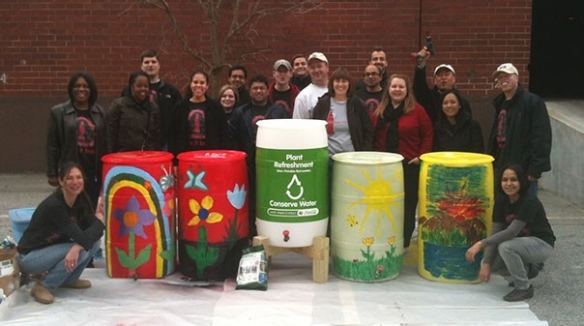
April is designated as ‘earth month’ at several universities (USC, Harvard, Yale, Georgetown, Berkeley, to name a few) an extension of Earth Day, which is coming up on April 22, 2016, a day where both individuals and companies alike try to think of ways in which they can become more sustainable. This year marks the 46th anniversary of Earth Day, and since the first Earth Day in 1970, more than 184 countries, 5,000 international organizations, and hundreds of millions of people around the world have participated in various events and grassroots campaigns. International companies like Coca-Cola, Honest Tea, Nestle, and Apple, among many others also worked to celebrate Earth Day through various events such as converting old syrup barrels into rain barrels (Segrest, 2015) or partnering with Pakistani non-profit groups to develop water conservation plans (Nestlé, 2015).
Coca-Cola 2015 Earth Day Rain Barrel Project
Nestlé 2015 Earth Day Conservation Partnership
Earth Day was founded by United States Senator Gaylord Nelson as an environmental ‘teach-in’ first held on April 22, 1970, to ensure that the maximum number of students could participate and create a mass movement. The idea for the event gained momentum by combining the anti-war protests of the 1960s with growing environmental concerns, rooted in publications like Rachel Carson’s book Silent Spring about the effect of pesticides on ecosystems and other chemical waste dumping incidents. Nelson hoped to use the day to bring environmental issues to national attention. On the first day, 20 million Americans and thousands of schools celebrated in the festivities.
Since then, it has become increasingly common for companies to develop campaigns and other public dialogue on Earth Day. Some companies in clean energy or organics sectors may find it easier to develop earth day campaigns, or simply highlight their current endeavors and previous campaigns. But other companies are beginning to join in the fray, touting their own environmental friendliness on Earth Day; for example in the past, companies have highlighted current initiatives, run educational campaigns teaching customers about current sustainability practices or means in which they can become more sustainable (Click here for a list of the top 9 Earth Day campaigns from 2015 compiled by Campaign U.S. )
There are now many online resources delineating different ways companies can use Earth Day to better their brand image. For example, some articles outline different ways that companies can celebrate Earth day, whether via the creation of on-site events, a green team, or company-wide community service initiatives. Others discuss different ways to get the office involved through tree plantings, and partnerships with existing NGO events and other organizations hosting eco-events. In addition, other articles highlight several means a company can ‘green up’ its business practices and workforce through energy tracking and consumption reduction, reducing paper use and carpooling initiatives; citing that companies which lead in sustainability, social responsibility, and good governance tend to have a 25 percent higher stock value.
Given the state of the local environment, Earth Day arguably should be every day, but corporate earth day campaigns are certainly a start. It will be interesting to see how companies celebrate Earth Day this year, so keep our eyes open for what your favorite brands do this Earth Day and what you think about the campaign. Is it Greenwashing or do you believe the company is making a substantive environmental change?
Lastly, what are you going to do for Earth Day? If you’re interested, here is a list of earth day events in Southern California.
Nestlé. (2015, Apr 22). Environmental movement: Nestlé celebrates Earth Day 2015. Nestlé Corporate Media Relations. Retrieved from http://www.nestle.com/media/newsandfeatures/world-earth-day-2015
Segrest, S. (2015, April 21). Earth Day and Beyond: Easy Ways to Help the Planet. CocaCola Stories. Retrieved from http://www.coca-colacompany.com/stories/earth-day-and-beyond-easy-ways-to-help-save-the-planet/
Recently, a McDonald’s advertisement launched in Taiwan, my home country, caught my attention. The purpose of the commercial was to market McDonald’s “chat cup” for McCafe, a cup that would allow one to warmly greet others with words and great coffee.
The commercial was a story about coming out of the closet. A son wrote “I like boys” on the cup and passed it to his father. Nervous about the father’s reaction, the son sat there and waited anxiously. The father took the cup, added a few words to the cup and passed it back to the son. “I ‘accepted that you’ like boys” was the new sentence appeared on the cup. The advertisement soon went viral after it was launched. While most people found the commercial warm and touching, there were still people angry about the advertisement because they believed that the ad was encouraging “incorrect gender knowledge” and claimed that they would resist buying McDonald’s. “I won’t even go use the bathrooms in McDonald’s anymore”, one of the resistant claimed.
The cup with the words: “I like boys”.
“I ‘accepted that’ you like boys”.
Video for McDonald’s chat cup:
https://www.youtube.com/watch?v=4CfgO56C0I8
In addition to this particular commercial, I found that there have been more and more homosexual issues being inserted in advertisements in recent years. For example, Burger King’s “Proud Whopper” and its campaigns were significantly successful with more than more than 7M views across all social platforms. Australian bank ANZ’s GayTMs were hugely popular and thousands of people took them to social media to spread the message. Airbnb’s #HostWithPride film broke a leg and caused a great response by showing the challenges queer couples may face while planning trips or traveling. The trend made me wonder the motivation behind these advertisements and the consequences of these launching these advertisements.
https://www.youtube.com/watch?v=NNah94XacS4
https://www.youtube.com/watch?v=SWDW114cji8
First of all, I’ve noticed that LGBT advertisements have a higher chance to go viral due to the debate between gender equality promoters and conservatives who are against gay marriage or other gender issues. Such as the Chat cup advertisement mentioned earlier, the protests of conservatives actually created more news coverage of the product. Regardless of the practical sales of the advertised product or service, I consider adding LGBT elements in advertisements a good way to raise attention.
Second, there has been more and more attention focused on LGBT rights and studies have shown that people’s opinion toward LGBT issues actually influence how they make purchase decisions. The phenomenon is especially true among young millennials. According to Snyder (2015), 47.4% of consumers under 24 years old claimed that they were more likely to support a brand after seeing an equality-themed ad. Of them, more than 54% further stated that they would choose an equality-focused brand over its competitor.
Last but not least, LGBT ads could directly attract LGBT buyers. I recalled a social psychology approach learned in a persuasion communication course. According to the theory, similarity increases liking, and liking increases the success rate of persuasion. The LGBT elements shown in the advertisements may present similarities between the characters in the ads and actual LGBT population, and further increase the liking of LGBT population toward the ads and the advertised product. According to an analysis conducted by Witeck Communications, the combined buying power of the U.S. LGBT adult for 2014 was estimated at $884 billion (Witeck Communications, 2015). It will be beneficial to increase the liking among such a great buying power.
To sum up, I think it is a great strategy to include LGBT elements or themes in ads because they can increase publicity and the liking among gender equality promoters and the LGBT population.
Snyder, B. (2015). LGBT advertising: How brands are taking a stance on issues.
Witeck Communications. (2015). America’s LGBT 2014 buying power estimated at $884 billion.
Retrieved from: http://www.witeck.com/pressreleases/americas-lgbt-2014-buying-power-estimated-at-884-billion/
It should come as no surprise that sports are big business and advertising during a sporting event. Whether it’s a television commercial airing during the event or sponsorships at the stadium, businesses want to get their name seen by as many people as possible.
In a session with Brandon before the Super Bowl, one of the things he mentioned was to watch how businesses, even those who did not buy ad time during the game itself, would capitalize on the momentum and outcome of the Super Bowl to market and sell a product. With the 2016 Opening Day of baseball in the books, this brings to mind a local example of the idea mentioned by Brandon.
Hailing from Kansas City, using the Royals first World Series win in 30 years as a marketing strategy can be seen as theme in the city. Billboards throughout the city have the word Royals in big letters or images from the game for all to see. This is not limited to the team’s marketing campaign either. Three other companies that come to mind are Commerce Bank, HyVee (a Midwest grocery store chain), and Farmland. The billboards boast slogans like “Proud Sponsor of the 2015 World Champion Kansas City Royals” or “Forever Royal.”
The MLS team Sporting KC also has billboards up throughout the city with images of players capitalizing on the teams success in recent years. Several members of the team played for the United States in the World Cup and will likely be traveling to Rio for the Olympics as well.
For a city that has seen so much success when it comes to sports in the last few years, businesses have used this to tailor the marketing in Kansas City. While it may seem subtle, when someone drives passed the same billboard day after day, it starts to form an association in his or her brain. So the next time he or she is in the grocery store shopping for bacon or in need of a new bank, the brand or company on the billboard will come to mind.
It may be a tried and true method, but Kansas City is finally able to reap the rewards.
When March expires, we all digest personal and professional messages with a bit of skepticism. When a friend’s April Fool’s prank goes awry, the embarrassment is usually slight. But when a major company chooses to put its brand on the line for a laugh, it better pay off. This year, one hit a humor home run, while a few struck out badly.
Esurance turned to its usual pitchman, Jon Krasinski to offer election insurance.
The phony coverage was the brainchild of Britt Nolan and his creative team at Leo Burnett Chicago. The reviews were overwhelmingly positive. With more than 140,000 views just on esurance youtube page, more than a thousand gave the spot a thumbs up, while only 17 turned a thumbs down. Time magazine named it one of the best pranks of 2016, along with this spot from Plant Fitness offering tandem exercise bikes.
One thing you don’t want to do after your well planned prank, is have to apologize. Within six hours of launching a “mic-drop” feature in Google’s Gmail, the company issued this statement, “Well, it looks like we pranked ourselves this year. Due to a bug, the Mic Drop feature inadvertently caused more headaches than laughs. We’re truly sorry”. Among the complaints, professionals sent important emails that ended with an immature mic-drop. At least one person complained that news from their funeral home was punctuated by a mic-drop. Yes, embarrassing for Google and many Gmail users.
But Google’s fail wasn’t the only one. An online grocer offered endangered animals such as panda, tiger, and whale. An Irish news site lost credibility after posting a picture claiming ISIS has taken land in Ireland.
News consumers who rely on this site were not amused.
A good joke gone viral can be valuable in building a relationship with customers, but the damage from a misstep can linger.
Analytics are commonplace for a lot of reasons in the marketing business. They help define who the actual customer is, or who the potential customer might be. They can tell a business owner what is hot and what is not. Analytics can even be a sort of crystal ball to help in looking into the future. It is estimated that by the year 2020, there will be more than 5 billion businesses connected to the internet through wired and wireless means (Strategyanalytics.com, 2016).
Social media is doing a fine job in helping businesses use analytics in ways that can help them go a bit further. Global reach, rather than local reach, can give you mounds of information and can sometimes give you the right kinds of information to help businesses sell to the right demographic. It is important to note that anyone can get this kind of information if they know the right tools to use. Although, website owners are usually the ones who can get them without a lot of bargaining or going to some dark alley offering bribe money to an ominous overcoat, fedora wearing criminal-type.
With Twitter, if an account owner has a particular post that does well, there is a number that is shown at the bottom of the tweet showing just how many users saw that post. You click on it and it takes you to a backend page that only the account owner can view which tells them just exactly where their audiences are. A verified account is all that is needed in order to view this information. It is the same with Facebook
It is the same with Facebook Pages and Instagram. Your photos on Instagram can be accessed by millions, if you have a product you would like to sell, most people would like to see the picture before buying. The digital analytics involved with this social platform are two-fold.
Businesses need to be aware that unless you have the information on-hand and do not need a website, which all businesses should have a website in the 21st century, you are going to need background information on your customers. And what better way than to tap into the vastness of the internet and its connection to the rest of the world and beyond?
~ Robert
Reference
Strategyanalytics.com. (2016). About Digital Media. Retrieved from https://www.strategyanalytics.com/access-services/media-and-services/in-the-home/digital-media/digital-media/about-digital-media#.VwHbwWMzDKs
On the day before the release conference of Samsung, Facebook announced the news that it would apply 360- degree video streaming media technology on Samsung VR Gear head display.
Facebook’s reliable business partner, intelligent mobile phone giant HTC also unveiled its VR technology together with its latest VR head display. Mark Zuckerberg claimed, ” HTC will be collaborating closely with Oculus and Facebook’s other team, to create the cornerstone of future social media VR experience on all platforms.”
“VR will be the next platform where anyone can experience whatever they want,” said Zuckerberg Mark. “We have no doubt about it, and we believe that VR will be a major mean or tool, which people will understand in any way. ”
Facebook’s innovative spirit on the Internet to allow it to have a steady stream of good ideas, such as the production of Basics Free applications, as well as the deliberation about the possibility of using laser coverage to connect to networks. “Our offspring should have much better lives than ours,” Zuckerberg said “but the problem is that you how to invest to make it all come true?”
Facebook hopes that they can work to create low-cost network infrastructure equipment, so the expansion of network will be more cost-effective, Zuckerberg says.
“This year we will do our best to do what we are doing,” Zuckerberg said at a recent global mobile conference in Barcelona.
The leaders of the Facebook social VR team are the famous game developer Daniel James, who developed the “Pirates Puzzle”, and the developer of the classic game “Left 4 Dead”– Mike Booth. “Imagine that you can sit in front of a bonfire, and play with your friends anytime,” Zuckerberg said. He also shared some VR data and mentioned there had been a total of more than one million hours of video being hit to watch on the Gear VR head display.
Facebook is committed to using its “new social VR team” to create the foundation for the long-term future of social VR continually.
It seems that VR is about to play a significant part in our future social media. So what do you think about VR technology?