Breaking the Internet at LACMA: When Pop Culture and “High” Culture Collide

lacma, internetlacma,singleladieslacma,dadbod

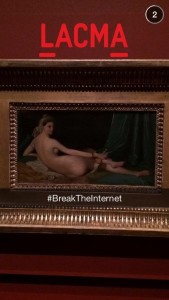
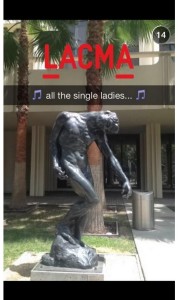
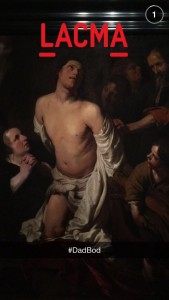
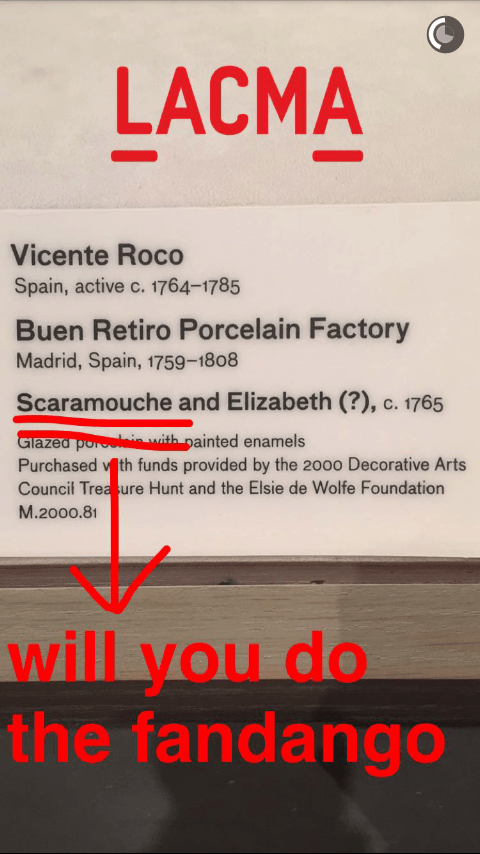
By almost all accounts, the Los Angeles County Museum of Art’s (LACMA’s) 2014 leap into the then-new, ephemeral social media platform of Snapshot was a total slam dunk. Often hilarious and always hip, their memes followed a simple format: LACMA in red at the top and a full-screen photo of one of their pieces of art, overlaid with a simple strip of text that drew a connection between the artwork and a pop-culture sound bite. Rodin poses that echo Beyonce’s dance moves, classical paintings that evoke an Iggy Azalea-esque attitude, and artwork that seems to quote “Mean Girls,” LACMA’s social media manager Maritza Yoes created pairings that were both irreverent and brilliant at once and, in the process, created a buzz in the art world. Publications lauded the success of this thinly veiled marketing campaign with headlines such as, “You Need To Add This Art Museum On Snapchat Right Now!” (Buzzfeed), “LACMA Is Killing It On Snapchat” (LA List), “LACMA Snapchat Wins at Social Media” (ReDesign Report), and many many more equally hyperbolic titles of praise.

To my memorylacma,fetch, never has a traditional art museum managed to pull off something so downright, utterly, and entirely cool.
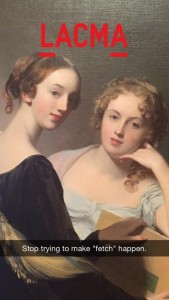
Seems like a win / win: LACMA proves it has 21st century cultural currency and the public’s laughter brings people right through LACMA’s front door as the museum experiences a rise in attendance.  Museum gets hip, people go to museum. Art world saved. #micdrop. That’s the whole story . . . amirite?

Not completely.

What interests me, and should interest all of us who are involved in both communications and art experiences such as museums, theaters, and the like is a subtext that runs subtly in many of the articles written about the LACMA Snapchat phenomenon. In not all, but some, of the coverage, questions such as the following were asked about the campaign:

“Did it devalue the original intention of the art works?” (Larouci, 2015).

“Is it innovative or another example of the dumbing down of culture?” (Jinman, 2015).

These questions are great ones to ask. And, certainly, this line of thinking is not new or lacma,bohemiansurprising. It springs from the age-old “high art” vs. “low art” debate, and I’ll leave it to you to decide where your opinions lie on the validity of this categorization. But, whether you believe that some art is sacred and pristine and other art is not, or you believe in the democratization and de-snobbifying of all artistic accomplishments, I think that it’s time that those of us who are in the business of marketing things we may consider to be “pure” acknowledged a central truth: our “pure” thing won’t continue to exist if people don’t participate in it.
As they say in the theater business: we need butts in the seats to have a show on the stage.

Art marketers, education marketers, and socially or environmentally driven cause marketers are frequently accused of “selling out” or cheapening” the product that they seek to promote. And, for sure, there certainly is value to being on the lookout for the type of packaging of art that reduces it to nothing but a cheap commodity. But, where do we draw the line?

LACMA’s social media manager decided to answer this question as such:

“My intention was to democratize the experience and make it accessible, showing
the creativity of the museum, rather than try to emulate the museum experience . . . You have to communicate in the voice of the Internet for sure, and also have to carry the weight of a very famous institution” (Larouci, 2015).  And, “Not only is Snapchat a great way to reach a younger audience, but it also provides us with a platform for play — a place where we can create stories and experiences around the museum, our collection, and our staff” (“Arty Snaps,” 2014).

Tlacma,fancyo me, such thoughtful responses reflect anything but a dumbing down of the art world and do not seem to
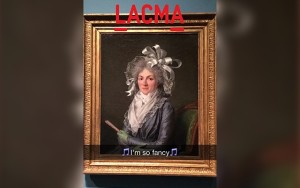
forebode museums’ death-by-Beyonce. What this sounds like is, rather, a celebration of art as a public, shared experience, a reminder that our revered museums have at least bit of room for our modern meme-loving, hash tagging moments of joy, and an example of  a success story that can perhaps provide a moment of reprieve for the oft-maligned profession of marketing and communication.  #wesellgoodstufftoo

References:

Arty Snaps (2014). Contagious. Retrieved from http://www.contagious.com/blogs/news-and-views/15274981-arty-snaps

Jinman, R. (2015, July 18). A Los Angeles art museum is turning classic works into memes and sharing them on Snapchat for youngsters to view. Independent. Retrieved from http://www.independent.co.uk/arts-entertainment/art/news/a-los-angeles-art-museum-is-turning-classic-works-into-memes-and-sharing-them-on-snapchat-for-10399282.html

Larouci, S. (2015, September 11). Art History’s meme queen connects Monet with Nicki Minaj. Amuse. Retrieved from https://amuse-i-d.vice.com/lacma-snapchat/

Probus, J. (2014, August 21). You need to add this art museum on Snapchat right now. Buzzfeed. Retrieved from http://www.buzzfeed.com/jessicaprobus/this-museum-is-better-at-snapchat-than-you#.srMQVbO89K

Tabasi, S. (2014, August 22). This museum wins at social media. Redesign Report. Retrieved from http://redesignreport.com/lacma-snapchat/

Trinh, J. (2014, August 22). LACMA is killing it on Snapchat. LA List. Retrieved from http://laist.com/2014/08/22/lacma_is_killing_it_on_their_snapch.php

 

Posted in Uncategorized | 6 Comments

Jumping on the Bandwagon – Top Marketing Trends of 2016

As I sat last week working up communication plans for lifeguard recruitment, Bike Month, a cemetery photography contest and a 200+ summer intern program, I stared at the finite list of delivery vehicles we typically use and I got bored. Bored, because I was trying to put a fresh spin on the same annual information, but I was still using the same, and what felt like tired, channels we always use. Don’t get me wrong, they work for the purpose, but it motivated me to investigate what new options might be out there.

So at the end of each calendar year we are inundated with lists – Top Celebrity Diets That Are Blue, Popular Holiday Gifts for Dogs, Top Ten New Ghizmos and Thing-a-ma-bobs. With those so recently in my memory, combined with the uninspired feelings while crafting those aforementioned plans, I decided to see what the hot new trends in marketing were for 2016. As you might imagine, those lists weren’t hard to find. It seemed like anyone with any marketing interest was creating such a list, as broad as “Marketing Trends for 2016” (Chaffey, 2016), and smaller niches like “5 Visual Marketing Trends That Will Dominate 2016” (DeMers, 2015).

1994e491846625c0756219352b2e9bdf

“Dominate,” you say? Let’s see what some others have to say about it. Below are nine lists I found in just one Google search – chances are pretty strong there are many, many more posted online as well. Here are some trends these predictions have in common:

  • Relationship Marketing – This is related to ‘know your audience’ and ‘meet your audience where they are,’ hence the emphasis on Snapchat by several lists as a place where younger generations “are flocking” (Sareen, 2015). Snapchat is a platform that enables the marketer to reach the consumer in real time, increasing the ability to develop a relationship with them. And with the bombardment of marketing only increasing, a personalized experience leading to a strong relationship will stand a brand in good stead. I’ve personally avoided the platform (it’s all I can do to manage the ones I already use), but after seeing this mentioned repeatedly, I have accepted my fate.
  • Virtual Reality (VR) – With the release of Oculus Rift (a highly anticipated VR device) expected sometime this quarter (Forbes, 2015), marketing prognosticators are expecting VR to rapidly move way beyond video games and real estate tours. Start setting funding aside now for FY17 to experiment with this.
  • Internet of Things – Beyond Fitbit, wearable technology is on the cusp of providing marketers with more data than they may have dreamed possible. And with an anticipated user rate of 28% in 2016 (Moraes, 2015), we need to start planning now to anticipate the accuracy of behavior-driven data. Bye-bye assumptions!
  • Digital & Mobile – While nothing new, the user rate over other devices continues to grow, and for the first time, Google saw that mobile use outpaced desktop use in 2015, which makes sense, since 68% of American own a smartphone (Entrepreneur, 2015). But laptops and desktops aren’t going away anytime soon, so emails, websites, and other communication vehicles you own need must to be optimized for both to compete.
  • Content Rules Them All – Consumers continue to become more savvy, and they are ever-more adept and recognizing (and calling out) insincerity or shaky rationale. Brand trust is valuable and it takes marketers considerable to time and effort to strengthen that, even in the best of conditions. Quality and relevant content continue to increase in importance, so sharpen those writing skills.

In an environment where everyone has an opinion, and the platform to express them, it’s important to take the time to review and assess multiple sources. Because while no one can be 100% certain that orange really is the new black, the data behind these predictions can help point us in the right direction.

May your 2016 database grow and prosper.


References

Chaffey, D. (2016). Marketing trends for 2016 – Will we be in a post-digital era? Smart Insights. Retrieved from http://www.smartinsights.com/managing-digital-marketing/marketing-innovation/marketing-trends-2016/.

DeMers, J. (2015, December 29). 5 Visual marketing trends that will dominate 2016. Forbes. Retrieved from http://www.forbes.com/sites/jaysondemers/2015/12/29/5-visual-marketing-trends-that-will-dominate-2016/2/#69c9009cf1dd.

DeMers, J. (2015, September 29). The top 7 online marketing trends that will dominate 2016. Forbes. Retrieved from http://www.forbes.com/sites/jaysondemers/2015/09/29/the-top-7-online-marketing-trends-that-will-dominate-2016/#35a3ae964c04.

Hall, J. (2015, November 23). 7 Marketing trends you need to know for 2016. Inc. Retrieved from http://www.inc.com/john-hall/7-marketing-trends-you-need-to-know-for-2016.html.

Impress. (2015). Top 3 digital marketing trends for 2016 (which you should be starting in 2015). Retrieved from http://impress1.com/connect/blog/entry/top-3-digital-marketing-trends-for-2016-which-you-should-be-starting-in-2015.html.

Lucas, J. (2015, December 31). 4 Trends that will shape marketing in 2016. Entrepreneur. Retrieved from http://www.entrepreneur.com/article/254502.

Moraes, M. (2015, September 25). 7 Game-changing marketing trends to tackle in 2016. HubSpot. Retrieved from http://blog.hubspot.com/marketing/7-game-changing-marketing-trends-to-tackle-in-2016.

Newman, D. (2015, November 3). The top 10 marketing trends that will define 2016. Forbes. Retrieved from http://www.forbes.com/sites/danielnewman/2015/11/03/the-top-10-marketing-trends-that-will-define-2016/#4d46ce517d58.

Sareen, H. (2015, August 03). 4 Marketing trends to watch for in 2016. ClickZ. Retrieved from https://www.clickz.com/clickz/column/2419469/4-marketing-trends-to-watch-for-in-2016.

Posted in Uncategorized | 4 Comments

Employees and Brand: Three Things to Consider

redflagredflagredflag

I started with a new company about a month ago, but before accepting the position, I did the “red flag check.” The red flag check is my way of finding out what people really think about working at the company. I start with the usual suspects…review sites like Linkedin, Glassdoor, Google reviews and Yelp. I then progress to check ins on Facebook and finally the company Facebook page, where I scan comments of customers and employees responses. This type of research usually gives me a pretty good idea of what the company is all about.

Candidates like me look for the unfiltered voices of real employees to give an honest picture of the company. Is the company kind to employees, are there quirky things like “no meeting Fridays” or do people love the cafeteria food? This type of authenticity cannot be bought in a native ad. It comes from the heart; it comes from your employees.

  1. Your customers are looking for an authentic brand voice

Surprisingly though, very few employees these days actually understand their company’s brand. Only 41% of employees feel like they have a grasp on what differentiates the company they work for. Now compare that statistic to the Edelman Trust Barometer which measures consumer trust. What you find is that employees are one of the most trusted sources of information about a company. Consumers see employees as representing the brand. The real question here is, do your employees see themselves as representing the brand?

  1. Real Stories come from real life

 So your company hires a fancy big name advertising agency, you have a fabulous new logo, a brand story, lots of graphics and a multi-million dollar marketing and PR campaign planned. You are ready for greatness. But then there is the call center, a miserable place where dreams go to die. These frontline employees are impatient and sometimes rude to customers. Your ads are not real life, your people are. And what employees experience day-to-day is often what your customers experience every time they call you.

  1. Employees need to know the brand first

Do employees have the information they need to represent the brand? You can close the trust gap by using employees to deliver on the brand promise. To do this, employees must first know the brand. Do you have a live the brand site or an internal branding campaign so your people know where to go for brand information? Secondly ask yourself, do employees really know where you are in the marketplace and understand your key differentiators? As a follow up, do they know where you are on social media and can they connect with the company online? If your company is like many out there, IT Is blocking facebook and twitter at work. Why is IT blocking social media, is it really deep down because you don’t trust your employees to work and promote the brand at the same time? Making social sharing a part of your culture is the first step in allowing employees to represent your brand.

What can you do?

The first thing to do is to take stock. You can do your own red flag check. What I found out in my own audit as a candidate was that employees at our call center in Arizona were checking in on Facebook on a regular basis. Unfortunately, they were checking in on holidays and commenting about how much they hate working on Thanksgiving and Christmas. While we can’t change the hours (right away), we can make it more fun and change the way they look at working on holidays. This comes through a focus on employee engagement. I strongly recommend the book, Magic by Tracey Maylett and Paul Warner for more information on how to build employee engagement.

There are plenty of articles and resources out there on how to build an employee brand ambassador program, but before you dive headlong into a grand strategy stop and think. Evaluate what the experience is for candidates, for employees and customers. If you are connecting all three through your brand, then you are off to a good start and ready for a more formal program. If you aren’t connecting brand to these three segments, then start mapping what you are currently doing.

Brand Ambassador Resources to Get You Started:


Posted in Uncategorized | 5 Comments

Super Bowl Sunday: Can Brands Still Come Ready to Play Today?

image

It’s the most wonderful time of the year…well at least in my eyes. But for most of society, it’s the most watched television event of the year, the Super Bowl. With it’s 50th anniversary matchup set in two weeks, people will be on their couches either ready to watch some football, the puppy bowl, or let’s face it, the overly anticipated commercials. It’s ridiculously difficult to secure one of these live spots as a brand, most spending upwards of 5 million. It can make or break your company if you end up with a fantastically funny new campaign, or just flop. The real competition begins here for the marketers. This has been the trend in the Super Bowl era…but a huge dip I believe marketers are about to face is the lack of live television watchers. If you think about it, most people live stream their television shows, and with CBS airing the game people could just get it done. Many of times this takes away from those prime moments these marketers have been waiting all year for, and we will walk into work on Monday morning confused about the Doritos Dogs commercial that everybody is raving about, yet half of you didn’t even watch it – you YouTubed it! Or you wait for the reviews to come out on some blog you follow and catch up on the commercial buzz during your Monday morning cup of coffee. Where has the Super Bowl Commercial magic gone? Has the new “Netflix and Chill” generation ruined any hope for this tradition to succeed past what could be replacing cable, satellite dishes, and other television services all together?

Of course, all social media sites want to stay relevant, and brands include hashtags in their commercials to include the viewers and make things feel more “2016”. But it all just doesn’t feel the same. The marketing strategy has turned. It’s interesting what kinds of markets succeed today because of our technological resources and our live streaming priorities and the lack of our “back to human reality” sense of recognition we used to have. The commercials were something enjoyable, but today sometimes people forget commercials exist. They zip through them on the DVR or just watch the “commercial break” screen stream while a show through an application is televised live.

For the 5th year, Marketing Land is encouraging viewers to participate in the Hashtag Bowl. They’ll break down the strategies, see how pre-game branding does for each company, and score them based on their implementation of hashtags. They’ll track all social media embedding in commercials and see what sites will get the most earnings from these mentions.

Here are a few stats from the past Hashtag Bowls:
2012 – Facebook and Twitter mentioned just eight times each.
2013 – Twitter/Hashtags mentioned in 26 of 52 national ads.
2014 – Hashtags mentioned in 57 percent of national ads, Facebook mentioned five times and Twitter four times.
2015 – Hashtags mentioned in 50 percent of national ads, Facebook most mentioned again.

What’s left for 2016?? You’ll have to watch live…or Monday morning…to find out.

For now, a few teasers! Amy Schumer and Seth Rogen are both big stars – it’s a huge marketing strategy to send out a teaser and hook the viewers to wait and watch what happens with the comedians come Super Bowl Sunday.

http://youtu.be/JAP7JGnwT1c

This Doritos commercial is hilarious, it reminds this 24/7 phone occupied generation very much active on dating sites and apps like Tinder – this is a great way to target an audience they want to bring back in! Swipe for Doritos!

References:

8 Marketing Lessons from the 2015 Super Bowl Commercials. (2015, February 09). Retrieved January 24, 2016, from http://enveritasgroup.com/2015/02/09/8-marketing-lessons-2015-super-bowl-commercials/

Best and Worst Of Superbowl 2015 Marketing Strategy. (2015, February 2). Retrieved January 24, 2016, from http://www.rohitbhargava.com/2015/02/best-and-worst-of-superbowl-marketing-strategy-2015.html

Gesenhues, A. (2016, January 22). Super Bowl 50 Advertisers: These Brands Are Ready To Play The Commercial Game. Retrieved January 24, 2016, from http://marketingland.com/super-bowl-50-advertisers-these-brands-are-ready-to-play-the-commercial-game-159578

McClane, C. (2014, March 5). Strategic Marketing Techniques in Ads and Commercials. Retrieved January 24, 2016, from http://www.business2community.com/marketing/strategic-marketing-techniques-ads-commercials-0801792#6gWXJDvHXwrat7pE.97

Mcgee, M. (2016, January 11). Game On: The 2016 Marketing Land #HashtagBowl Is Coming Soon. Retrieved January 24, 2016, from http://marketingland.com/2016-marketing-land-hashtagbowl-is-coming-soon-158894


Posted in Uncategorized | 3 Comments

The 3 F’s of Cord Cutting

cable 1

A few weeks ago I remember getting into a debate with some friends about the future of cable television. My opinion was that cable would be around for a while in spite of cord cutters (those who choose to end their subscriptions to cable television) because popular television shows, even if they are available online, depend on television to be produced in the first place. For instance, the very popular show The Walking Dead, I said, would not exist on the internet if cable television went out of business. However, after doing some digging and getting to understand the issue a little deeper, I now believe that in many ways, I was wrong. The truth is that cable television’s days are numbered – at least for the cable television as we know it from the past. Indeed, the future of cable TV is going to depend on its ability to adapt to the changing tides. Currently, however, things don’t look to good. Following are the three most important F’s surrounding the issue of cord cutting.

Financial Implications

The stocks of many entertainment companies took a huge hit in 2015; 2016 is looking like it may be even worse. For instance, Time Warner sunk by over 20 percent; Disney saw its biggest drop in years (though it increased some recently due to Star Wars success), while Viacom tanked by over 40 percent. In contrast, Netflix’s stock more than doubled last year. Many people, especially millennials, feel that cable is just too expensive; and with a subscription to streaming services such as Hulu and Netflix costing less than $10 per month, it’s not hard to see why. One question I had in relation to all this was – well, what about the internet? Most telco companies like Verizon, AT&T, and Time Warner offer packages that include both internet and cable, with internet comprising a big portion of the costs. The answer is that people are becoming increasingly resourceful in finding free WiFi, especially in cities. Many cities offer completely free WiFi to some extent. Even if they don’t, every Starbucks offers free WiFi as do many other businesses. Facebook is even working on providing free WiFi to many people.

The next question I had is – what about shows that are not available for free streaming online? Again, many people, especially millennials have found ways to access this content online, in the form of piracy. Pirated content, though risky and completely unethical, has gotten easier. With special browsers and encryption available to make it more difficult to be tracked and with most people realizing that piracy is so rampant it would cost more for authorities to prosecute the small fish in the sea, people seem willing to take the risk. I remember reading an article recently about pirated Netflix and NBA League pass subscriptions. Apparently, thrifty hackers out there collect usernames and passwords and then sell the subscriptions to buyers for a one-time fee. The amazing thing is that many of these hackers offer a “lifetime guarantee” meaning that if the illegal account they sold you gets shut down they will just provide you with another account. In the eyes of those who buy these illegal subscriptions, it is the hackers taking most of the risk.

In any case, the bottom line is that cable has a lot of competition, both legal and illegal. Even just the legal aspect is cause for huge concern in the industry. Taking a closer look at Disney helps to illustrate this. At first glance, one would think that Disney’s position could not be better. They are one of the most loved brands in the world, they have the success of retail products, the Star Wars movie most recently, beloved toys and classic movies, the success of Disneyland and Disneyworld, and even a brand new Disneyland Shanghai opening this year. How could their stock be in trouble? The answer lies in the fact that over 50 percent of their operating income comes from “media networks” that include ESPN, ABC, and the Disney Chanel. ESPN alone is in real trouble and is the primary reason for Disney’s stock trouble, having lost over 7 million subscribers in two years. This shows very well how much companies that rely on cable have to worry about their bottom lines while the above paragraphs illustrate why consumers have huge financial reasons of their own to become cord cutters.

Another financial issue of concern is advertisements. In spite of losing subscribers, costs for advertising on cable networks is increasing. Much of this lies in the fact that television still accesses large audiences in the course of a single advertisement. This feat is currently not fully true for many other media outlets, including the internet. However, I believe advertising will find more and more ways to integrate into mobile, streaming, and web based services – even to the point where they no longer are willing to pay the cable fees.

cable 2

Freedom Implications

Millennials enjoy their freedom in every sense of the word. We want our work-life balance. We want our shows when and where we want them. Currently, television programming does not allow this. Streaming services do. Finding media content online, whether it be TV shows, videos, or movies, gives us the control of deciding when, how, and where we want to watch everything. This combined with the financial benefits is difficult to resist. Add the reality that soon internet will likely to be more and more readily available for free in major urban areas and this means that unless something changes, many of us and even the generations before us will continue cord cutting in masses.

Future Implications

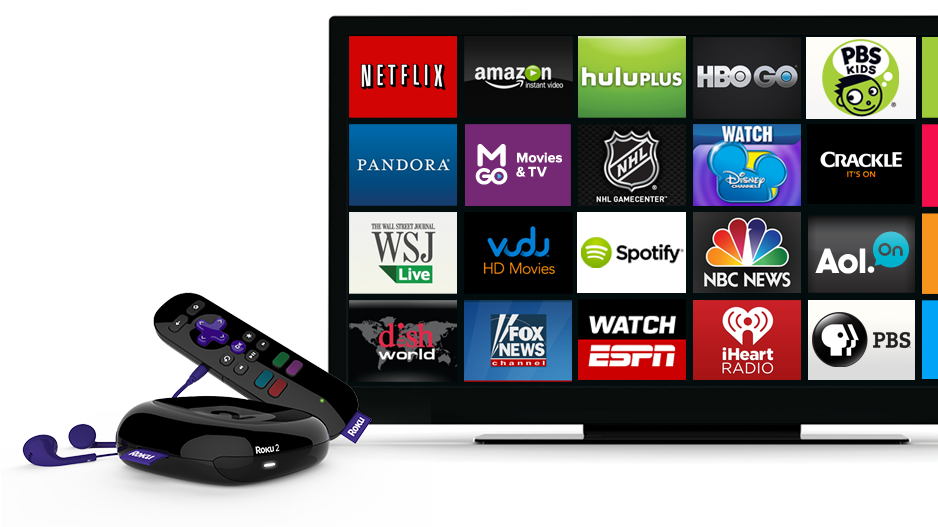
Cable companies need to find a way to adapt or they will fail. Projections are that people will continue to become “cord cutters” as more affordable options continue to become popular. Many of these options, such as Netflix, Hulu, Netflix, and Youtube, are changing the game even more by opening up their own studios and beginning to produce their own series. Furthermore, with technologies such as Roku and Amazon Fire available, this makes things very easy to do. Apple is even rumored to be releasing an Apple online streaming service sometime in the near future to go along with their Apple TV. With Apple’s reputation of shaking up things, I think it’s safe to say that when Apple’s streaming service hits the market there will be a flood of cable cancellations and a surge in Apple’s stock price once again.

Cable companies really only have a few options. They need to make cable cheaper. They need to find a way to provide their own streaming services. They need to talk to the networks and come up with new ways to get online. They need to make up in volume what they are losing in margin. They need to make shows available for viewing based on the customer’s convenience of whenever they want. They need to make new deals with the networks so that that customers can get personalized sets of channels rather than paying for a ton of channels they will never watch.

What do you think about cord cutting? Do the cable companies have a chance? Where do you see the future of media in a decade?

References

http://news.yahoo.com/obama-taking-state-union-speech-cord-cutters-230151503–finance.html;_ylt=AwrXnCGqn6VWslAAzWfQtDMD;_ylu=X3oDMTBya2cwZmh2BGNvbG8DZ3ExBHBvcwM1BHZ0aWQDBHNlYwNzcg–

http://www.businessinsider.com/cord-cutters-and-the-death-of-tv-2013-11

http://www.huffingtonpost.com/david-mager/the-end-of-broadcast-tv_b_4247351.html

http://content.time.com/time/magazine/article/0,9171,2149608-2,00.html

http://sports.yahoo.com/news/espn-says-apple-frustrated-streaming-155800667.html;_ylt=AwrXnCGqn6VWslAA0GfQtDMD;_ylu=X3oDMTByMjR0MTVzBGNvbG8DZ3ExBHBvcwM3BHZ0aWQDBHNlYwNzcg–

http://www.cnbc.com/2015/12/30/can-cable-compete-with-streaming-tv-in-2016.html

http://www.billboard.com/articles/business/6828171/entertainment-stocks-report-2015

http://finance.yahoo.com/news/hackers-selling-lifetime-access-stolen-160911565.html;_ylt=AwrTccV0r6VW5GkA3OknnIlQ;_ylu=X3oDMTByb2lvbXVuBGNvbG8DZ3ExBHBvcwMxBHZ0aWQDBHNlYwNzcg–


Posted in Uncategorized | 6 Comments

The Dawn of the Communications Executive

Okay, I will admit that my title is a bit misleading. This is by no means the dawn of the communications executive. That honor belongs to Arthur W. Page, who in 1927 became the first public relations executive to serve as an officer of a major public corporation (Arthur W. Page Society, n.d.). Since then, the Page Society has been working to strengthen the profession. Recently, I have become more interested in looking at organizations and their levels of investment in communications. This could be the result of finding myself — for the first time in my career — working within an organizational structure where communications lacks key leadership.

However, I am willing to bet that I am not the only individual within the Master of Communication Management program wondering why my organization lacks a “real” communications executive. I say “real” because in my case, the organization leverages the expertise of several public information officers who really serve as jacks of all trades who weigh in on various communication issues, but whom lack any real influence at the upper echelons of the power structure. In the end, that makes us wonderful consultants who lack any kind of decision-making authority, which is sometimes useful for implementing change.

Before I transitioned to my current position, I worked at a nonprofit where the senior vice president of communications was the CEO’s right hand and had significant influence within the organization. This particular organization raised more than $100 million in unrestricted donations consecutively for many years, and had high brand visibility within the Los Angeles market.

Goodman (2006) points out that organizations require truth telling and effective communication, especially at the C-Suite level. Goodman goes on to emphasize how today’s most successful global companies not only recognize the value of corporate communications, but invest significantly to ensure competence in areas such as media relations, public relations, crisis communication, employee relations, advertising and investor relations, just to name a few.

I cannot emphasize how proud I am to be at USC’s Annenberg School for Communication and Journalism. Not just because of the proud Trojan tradition, but because I know that this program takes communication seriously, as I do. There were many programs I considered, but when I looked at the curriculum, I knew that the Master of Communication Management program would teach me lessons to use throughout my career. I sincerely hope that our profession continues to evolve so that every organization — large and small — begins to take communications seriously. Of course, as professional communicators, we all understand that if they do not, they will likely not succeed.

References

Arthur W. Page Society. (n.d.). Retrieved January 24, 2016, from

http://www.awpagesociety.com/about/

Goodman, M. B. (2006). Corporate communication practice and pedagogy at the dawn of

the new millennium. Corporate Communications: An International Journal, 11(3), 196-

213.

Posted in Uncategorized | 5 Comments

#OscarsSoWhite and why it likely won’t persuade advertisers to say #ByeFelicia

Sometimes what’s right isn’t as important as what’s profitable.” – Trey Parker and Matt Stone (CMGT 541, 2015).

A night full of Hollywood’s elite, famous names, beautiful clothes and even more beautiful faces all celebrating the best in the industry, all celebrating a year’s worth of wonderful and captivating entertainment, all enjoying the elegance that is a Hollywood event, and all…white?

images-1

The Academy Awards, also know as the Oscars, is an annual awards ceremony that honors cinematic achievements in the film industry across various categories. On February 28th, the 88th Academy Awards will be televised live from Hollywood on ABC, the second year in the row on this station. Although in its 88th year, this year marks the second year that the awards are clouded in controversy.

That is because for the second year in a row all 20 acting nominees are all white.

The lack of diversity across minorities and women representation has not gone unnoticed by the average American, or the actors themselves for that matter. The lack of diversity in the nominations has caused the #OscarsSoWhite hashtag to begin trending for a second year in a row as well as the boycott from several prominent Hollywood names.

The purpose of this post is not to discuss the controversy itself, but to examine how this controversy might (or might not) affect the advertisers who have paid millions to promote their brands and products during the show.

By the time of the controversy, ABC has already sold almost all advertising slots for the awards show that will be watched by millions with most advertising having completed their work in September-October (James, 2016). These 30-second spots were sold for a record breaking $2.15 million per 30-seconds (Killoran, 2016).

At this time no advertisers had pulled out and many in the industry don’t believe they will. And why would they?

In fact, controversy might even make advertising during the Oscars even more attractive. As Ashwin Navin, Chief Executive of Samba TV, points out, “controversy, in general, helps TV ratings. Anything that generates interest in a program is good for ratings” (James, 2016).

In this week’s readings we learned about unethical advertising. This brings up an important ethical dilemma for the advertisers who have paid to advertise during the Oscars.

Should advertisers consider pulling their advertising? How does one balance an ethical dilemma while ensuring they are also not doing a knee-jerk reaction?

“If I were an organization who had purchased time during the Academy Awards, I would do some soul searching to see whether I had the courage to use the platform to advance justice, inclusion and equality, or would I just be contributing to the status quo? Advertisers run the risk of being labeled part of the problem — or part of the solution,” said Nicholas Pearce, clinical assistant professor of management & organizations at Northwestern University’s Kellogg School of Management (James, 2016).

Whether advertising agencies choose to pull their ads, which they have spent the time and money to already create, or not I think it is important for them to at least have the conversation about what to do. As Pearce mentions, the advertisers risk of being labeled part of the problem instead of being part of the solution. It is an important conversation for advertisers to have. Is it possible that they can win hearts and minds by abstaining from the Oscars? Will participating damage their brand?

With just around a month to go till the Oscars, ABC’s wallet might be the only winner of the night.

References

CMGT 541. (2016). Ethics. Retrieved from https://mcm.usc.edu/mod/page/view.php?id=33944

Crupi, A. (2016, January 20). Oscars boycott not likely to shake up ABC’s bottom line. AdAge. Retrieved from http://adage.com/article/media/oscars-boycott/302240/

James, M. (2016, January 21). Why the diversity controversy won’t hurt the Academy Awards’ bottom line. Los Angeles Times. Retrieved from http://www.latimes.com/entertainment/envelope/cotown/la-et-ct-oscar-telecast-diversity-20160122-story.html

Killoran, E. (2016, January 24). #OscarsSoWhite Controversy: Can it boost ratings for the Academy Awards telecast? Forbes. Retrieved from http://www.forbes.com/sites/ellenkilloran/2016/01/24/oscarssowhite-controversy-can-it-boost-ratings-for-abcs-academy-awards-telecast/#5557f6ed30dd

Posted in Uncategorized | 6 Comments

Trending: #WinterStormJonas

Screen Shot 2016-01-24 at 2.08.47 PM

While Californians have been staying dry and warm, the rest of us on the eastern half of the country have been experiencing the cold, snow, and flooding brought on by Winter Storm Jonas.

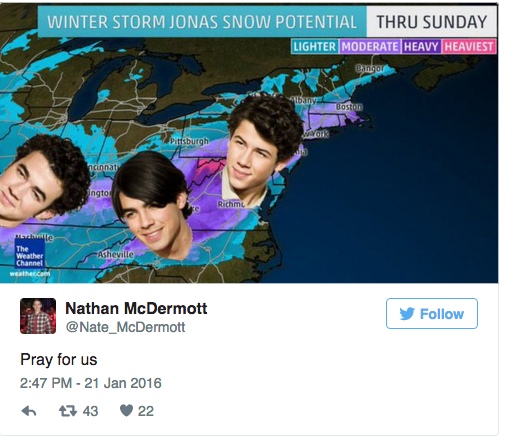
The non-stop coverage of the storm began Thursday morning as meteorologists predicted that the brunt of the storm would begin hitting the south throughout the night and into Friday morning. As I began seeing Winter Storm Jonas pop up all over the radio, television, Facebook, and even Snapchat – it made me consider the purpose and history of “branding” a winter storm.

While tropical storms and hurricanes have been named by the U.S. government’s NOAA since the early 1950s as a method of reducing confusion when multiple storms were occurring at the same time, winter storms did not begin being named until 2012, with The Weather Channel’s description of a snow storm called “Snowtober” that took off on social media.

Unlike the government regulated naming of hurricanes, however, winter storm naming has only been condoned by The Weather Channel themselves, which has created much debate among meteorologists and media outlets.

Critics of the policy say TWC is just using it as a marketing stunt, with Accuweather founder Joel N. Myers saying, “In unilaterally deciding to name winter storms, The Weather Channel has confused media spin with science and public safety.” Many other major news outlets such as the New York Times and CNN have also refused to use the names.

While Chief meteorologist for TWC, Bryan Norcross, did say the advent of the naming idea did stem from social media, TWC is sticking to their guns, saying that naming winter storms helps people identify when a storm is going to have a serious impact, and give them an easy and up-to-date way to track the storm’s path. Even Mary Glackin, senior vice president for public-private partnerships at the Weather Company and former NOAA employee, says naming storms is best for public safety, with social media becoming the main news source for many Americans.

Despite the naming convention remaining up for debate, it is safe to say that Winter Storm Jonas took off over the weekend with hashtags such as #Jonasblizzard, #Jonas2016, and #winterstormJonas trending on social media all weekend.

So, what do you think – Winter storm naming – Marketing ploy? Good for public safety? A little bit of both?

References:

https://www.washingtonpost.com/news/capital-weather-gang/wp/2015/09/22/would-naming-winter-storms-be-a-better-idea-if-more-organizations-got-on-board/

http://www.ibtimes.com/whats-storm-name-weather-channel-policy-draws-critics-catches-1073016

http://www.nytimes.com/live/winter-storm-jonas/weather-channel-storm-naming-tk/

Posted in Uncategorized | 4 Comments

Start, Relief, Close…Handle those Throws: Anatomy of a Closer and Anchor

1-1 1

It was always the most thrilling part of the game. End of the eighth
inning, you see him in the bullpen, the long lanky relief pitcher. He
had a forward flowing whirlwind throw and his form was funny. Deadly
accurate, he’d throw one. Always looking down, focused. He’d throw
another, “thewp!” The snap of the catchers glove. Shaking his head,
as if displeased with himself, one last wind up, “THAP!” With a
small grin and a quick nod to the dugout he gave an acknowledgment that
spoke confidently without a word… “I’m ready, it’s time.”
With perfect timing, the C note riff to the Metallica classic Enter Sandman blasts from the
loudspeakers. The bullpen door opens, the announcer enthusiastically
shouts “and here comes Rivera!” Yankees fans and the team all stand to their feet,
the greatest closer of all time is here to do what he does best, save the
game and secure the win.

Am I day dreaming? No. Those privileged to see the Mariano Rivera pitching era know the picture. With a level of consistency that was second to none he threw a cutter ball, a hybrid fastball and slider, a batter’s nightmare.

His reputation as a relief pitcher started and grew through 19
seasons. Consistency didn’t save every game, but consistency gave
hope to millions of baseball fans everywhere for a win, a save. Being
the greatest closer had its perks as well as its disadvantages. You
win, you lose, but your team always counts on you.

In a relay race the same applies to a team dynamic. You have the
starter, these are usually the fastest runners. The starter has the
greatest pressure because she has to get the team to a strong lead
off. The second and third runners ideally should have some kind of
connection. They are usually good friends, or best friends. The kind of
friends you don’t need to say anything to, but when they look at each
other, they know what they are thinking. They are more than
friends, they are sisters. As the connectors to the team, they are
catalysts there to accelerate the team forward. They maintain the
connection to the lead the starter began. The only thing that could
lose them the race is the hand off from runner two to receiver three.
Last is the “anchor” and she is, without doubt, the most emotionally
strong and resilient runner on the team. The anchor is a
strong runner beginning the race fast and finishing even faster, no
matter the pain. The win depends on her, but if an unfortunate loss
happens early on a race day, she must be able to get up and motivate
the team again for the next one. She must remain constant, win or lose.

Any workplace has the same perks and disadvantages, but as a
communication professional many times you will be looked upon to serve
as the “closer” in your own organization. As you begin to strategically set up your game plan this semester, learn to identify strengths and weaknesses in yourself and in others. Build a good team and remember every member of the team has value, as a leader, find it.

Don’t tear down, securing a save is why you’re a team. As the communication professional you are the anchor, the closer. You are the confident catalyst who is consistent and constant in all you do. Finish strong. Fight on!

References:

Traub, J. (2010, June 29). Mariano Rivera, the king of closers. New York Times. Retrieved from http://www.nytimes.com/2010/07/04/magazine/04Rivera-t.html?pagewanted=all&_r=0

Rosenbaum, M. (2014, December 16). Strategies for the 4×100 relay race. About Sports.com. Retrieved from http://trackandfield.about.com/od/sprintsandrelays/a/400relaystrat.htm

Posted in Uncategorized | 2 Comments

I Love Meetings! Said No One Ever! 3 Ways to Make Them Painless


image

You’re sitting at your desk plugging away getting your work or homework done, feeling like you need every minute available to be productive then DUN DUN DUN you receive the feared meeting request invite. The temptation of clicking that decline or maybe button is staring you in the face, but reluctantly you accept. Let’s face it no one likes meetings yet they apply to all of us. It’s the beginning of the year, and your company wants to schedule numerous meetings for strategizing in 2016 or it’s the start of the spring semester meaning group calls and live sessions

How can meetings be quick and painless? These three easy to follow tips will ease your pain, create effective meetings, and are extremely easy to start implementing today!

  • Be clear about the goal of your meeting- Are you having a discussion or making a decision? Start your meeting setting that expectation “we are here to have a discussion about x,y,z” or “this meeting is to make a decision about x,y,z.” Many times we receive requests that lack explanation/action or are extremely general such as “sales meeting” or “follow-up.”
  • Ask for input before the meeting- List some key questions or topics for attendees to think about before the meeting. This way attendees know exactly what is being discussed and can brainstorm their thoughts prior
  • Collect all materials in advance- If you are reviewing a deck, copy or whatever it may be, have attendees send in their contributions to the meetings so all parties can review and this will save more of the time for discussion.

Between work and school, there will be meetings you will be participating in this week, and what better time to start implementing these action items. Try these few tips, and before you know it your meeting time will be reduced, and meetings will become more productive. Before you know it that accept meeting button won’t seem like life or death!

https://www.mindtools.com/CommSkll/RunningMeetings.htm

Posted in Uncategorized | 2 Comments