“Taste the Feeling” of Chinese New Year

Happy Chinese New Year!!!

Although Chinese people use the same calendar as the rest of the world, we still celebrate some traditional holidays according to the lunar calendar. Therefore, the New Year’s day is different from year to year. The 2016 Lunar New Year is on February 8th.

Chinese New Year is much like Thanksgiving and Christmas in the States, during which families gather together to feast, communicate, and give… (oh wait, this part is different) MONEY! Yes, instead of presents, we give money to children. The money is always placed in red envelopes, because the color red symbolizes happiness, fortune, and joy. Most of the new year wishes also revolves around happiness, health, fortune, longevity, and good luck.

Before I go into the marketing communication portion of this post, I would like you to first watch a commercial from Coca-Cola. A few notes before you start watching.

Pay attention to:

  • The color red
  • The pachira plant that’s used as a slingshot
  • The two animated dolls
  • The sense of family

Coca-Cola vividly depicted a typical Chinese New Year’s Eve dinner, where the house is decorated, family is gathered, and food is served. The two animated dolls are inspired by traditional Chinese clay folk art figurines, and they symbolize good luck and blessings. The pachira plant, on the other hand, has a Chinese nickname called the “fortune tree”.

For the past seven years, Coca-Cola has been developing and promoting the campaign “Open Happiness“. Coca-Cola’s new global CMO, Marcos de Quinto let go of “Open Happiness” and started a new campaign called “Taste the Feeling“. Marcos de Quinto explains that, the previous campaign was more like preaching, which focused on big social issues. Instead, Mr. de Quinto made the change to have Coca-Cola take a more humble role in the new “Taste the Feeling” campaign. The new campaign focuses on ordinary moments in daily life, such as dating, family gathering, and hanging out with friends. In fact, the Chinese New Year commercial is part of  Coco-Cola’s new marketing campaign. At the very end of the commercial, a Chinese phrase appears “(family) reunion should taste like this” with the Coca-Cola logo next to it.

Now, let’s watch a commercial from the previous campaign “Open Happiness”.

https://www.youtube.com/watch?v=zlA9tXYxD8g

This first time I watched the above video, I was deeply touched and astonished by it. I was glad to see that a brand is putting in so much effort to make the world a better place by using their product as the conduit. I think such commercial can be very useful at promoting the brand. However, after reading about the new campaign “Taste the Feeling” I agree that contents that are closer to daily life would work better at promoting the product.

So….which campaign do you prefer? Is it the touching ones that are changing someone else’s life or the heart warming ones that could happen to you?

References:

http://adage.com/article/cmo-strategy/coke-debuts-taste-feeling-campaign-strategic-shift/302184/

http://adage.com/article/advertising/coke-sticking-giggling-characters-chinese-year/302163/

Posted in Uncategorized | 4 Comments

Marketing with Instagram Influencers

Marketing With Instagram Influencers

Today while I was browsing through my Instagram and doing my daily routine of checking the newest updates of several Instagram influencers that I follow, I suddenly realized why so many brands are looking for suitable influencers to collaborate and do marketing and branding for them. As a potential target customer myself, I don’t feel annoyed when I see these influencers promoting a specific brand or product. (Well, but I do get a little bit annoyed when I found out that they are probably taking up the mkt or pr jobs we communication students should do lol..) In fact, sometimes I even actively check and search what they have been talking about recently to know the latest trends and new brands. Especially when I decide to make purchase of a product they recommend, I will always look at their posts for promotional codes. And if the purchase is satisfying, this will increase my trust in this influencer and the possibility of making future purchase of suggested items.

More and more companies and brands have been noticed this process long time ago and have explored the far-reaching impact and viral growth potential of marketing with social media influencers, looking to popular social publishing platforms like Instagram, YouTube, and Snapchat for a competitive marketing advantage with millennial consumers. Instagram, though not as mature of a marketing medium as blogs or YouTube, holds one of the highest affinity rates for the 18-34 adult demographic.

So how do these brands and companies work with social media influencers? There are three primary ways:

  • The One-off — usually direct-response in nature, one-off marketing with social media influencers can involve a call-to-action (CTA) directing an influencer’s fan base towards a company’s latest product, service, or media channels. These CTAs can be coupled with “reader-only” promo codes, contests, giveaways, or the influencer can solicit their followers for valuable consumer feedback and engagement regarding a brand or product.
  • Branding content — oftentimes devoid of specific CTAs, companies can partner with social media influencers to favorably co-brand new products or services or feature well-integrated product placement.
  • Deeper Collaboration/Partnerships — while all work with social media influencers implies some level of collaboration, partnerships are much more in-depth, involve longer-term commitments across entire seasons, campaigns, and may feature the social media influencer as an official brand ambassador. YouTuber and beauty vlogger, Ingrid Nilsen – Miss Glamorazzi, was CoverGirl’s first social media “Glambassador.” Travel blogger, Jessica Stein of blog Tuula Vintage, partnered with airline Cathay Pacific for their #LifeWellTraveled campaign.

And when different brands are choosing influencers to collaborate, they choose carefully according to the type of products they are selling. For example, beauty and makeup brands usually collaborate with influencers that present finished looks/images of their products. A 15-second video featuring quick how-to and DIY branding opportunities is very popular. Choosing the right influencers to collaborate has become important for brands and there are a lot of platforms nowadays that are building upon this need. Platforms such as izea and snapfluence are trying to link companies and influencers to create a marketplace, which is very interesting to me. Social media has created a public space that influence, which was a very abstract concept in the past, has now become something that could be measured and sold at a clear price.

References:

Anonymous. (2015). How brands market with top Instagram influencers. Mediakix. Retrieved from: http://mediakix.com/2015/08/brand-guide-to-working-with-top-instagram-influencers/ 

Anonymous. (2015). Top Social Media Influencers Series 2015. Mediakix. Retrieved from: http://mediakix.com/2015/07/top-social-media-influencers-2015-series/

Anonynous. (2015). Instagram Ads vs. Influencer Marketing: Deciding What’s Best for Your Brand. Adweek. Retrieved from:

http://www.adweek.com/socialtimes/instagram-ads-vs-influencer-marketing-deciding-whats-best-for-your-brand/624838

Brown, D., & Fiorella, S. (2013). Influence marketing: How to create, manage, and measure Brand Influencers in Social media marketing. Que Publishing.

Posted in Uncategorized | 5 Comments

When Bad Ads Happen to Good People

captivitybillboardbig

Last week’s discussion on ‘ethical grey areas’ in advertising got me thinking. How does an ad that is so logically offensive to a majority of consumers get on the air in the first place? Could a bad ad be a ploy to bring attention to a brand? All publicity is good publicity, right?

Well as I said, this got me thinking, so I set out to research some high profile advertising flops to see just how a bad idea gets itself on camera.
1- Burger King disrespects Mexico.

https://youtu.be/mNabO2d-zbw

In a 2009 advertising campaign, Burger King promoted its new “Texican Burger” (a burger they describe as a “spicy version of the whopper” (Business Pundit, 2011)) using a tall American cowboy and a “mini” Luchador wearing a Mexican flag around his neck (Associated Press, 2009). This proved disrespectful to the Mexican community and the Mexican flag.

Burger King’s response: That wasn’t their intent (Parekh, 2009). (They announced a revision of the ads.)

2- The Captivity film’s advertisements show no sympathy.

captivityposterbig

A film deemed a “Saw rip-off” posted billboards and taxicab ads across Los Angeles and New York that showcased graphic photos of a woman being tortured in captivity (Business Pundit, 2001). These ads were not only “gross” but with America reporting close to 850,000 kidnappings each year, they were insensitive (Business Pundit, 2011).

Film owners’ Lionsgate and After Dark Films response: It was an accident… and by the way, Captivity is more than a “Saw rip-off” (Gawker, 2007).

3- Australian KFC ad provokes racism claims in the U.S.

alg-kfc-chicken-tub-jpg

KFC produced an Australian commercial showing a white man at a cricket match surrounded by a group of “black West Indie supporters” (O’Malley, 2010). The ad read: Need a tip when you’re stuck in an awkward situation? While meant for the Australian market, this ad ignited cries of racism from offended Americans.

KFC’s response: The ad was meant for Australia and was illegally reproduced in the U.S (O’Malley, 2010). (KFC eventually apologized and pulled the ads.)

There are many more examples of shockingly bad ads, but these three highlight three possible themes of how bad ads happen to good people…

1- Accidental offensiveness: The creators of these ads really didn’t see anything wrong with them. (Hint: They were somehow able to overlook various sensitivities of large groups of people.)

2- Quality Control issues: Somehow these ads got released even though they were never supposed to be seen. (Hint: Someone got fired.)

3- Thinking a regional ad will stay regional: In a digital era with YouTube and smart phones, owners of these ads didn’t think they would go viral. (Spoiler alert: They did.)

References:

O’Malley, R. (January 7, 2010). KFC Australia pulls controversial ad. Retrieved January 31, 2016, from http://www.freerepublic.com/focus/f-news/2423302/posts

Business Pundit (May 12, 2011). 15 Controversial Pulled Ads – Business Pundit. (Retrieved January 31, 2016, from http://www.businesspundit.com/15-controversial-pulled-ads/

Parekh, R. (April 14, 2009). BK to Revise Ad After Complaints From Mexican Official. Retrieved January 31, 2016, from http://adage.com/article/global-news/burger-king-revise-ad-complaints-mexican-official/135989/

Gawker (March 19, 2007). Annals Of Ill-Conceived Outdoor Movie Advertising: The ‘Captivity’ Billboards. Retrieved January 31, 2016, from http://gawker.com/245382/annals-of-ill-conceived-outdoor-movie-advertising-the-captivity-billboards

Associated Press (April 14, 2009). Mexico says Burger King ad is ‘whopper’ of an insult. Retrieved January 31, 2016, from http://www.nydailynews.com/news/money/mexico-protests-europe-burger-king-texican-whopper-advertisement-mexican-flag-article-1.360441

Posted in Uncategorized | 7 Comments

Wait… loss? Or Weight Loss: A New Year’s Resolution

Screen Shot 2016-01-30 at 9.30.04 PMI’ve never been one to actually make a new year’s resolution. I thought they were cheesy and have always felt that if I want to do something- lose weight, work smarter not harder, make more money, etc. I’m going to do it all year long not on the first day of a new year. January is also a month of melancholy for me. The holiday season is over, its time to go back to work and to be honest, in January there’s not much to look forward to but the 6 long months until the summer.

As we find ourselves here today, at the end of January, I felt it was interesting to see what the last month has looked like in the marketing world around new year’s resolutions. January was always a month when I avoided the gym- new gym goers that haven’t been since last January taking time on the machines (they’ll be gone in 2 weeks). And the countless weight loss ads on TV and news clips about how to de-stress and make more time for friends and family. Statistics show that 45% of Americans actually set new year’s resolutions (Anderson, 2015) but only 8% actually keep them (Fottrell, 2016). Those that do set new year’s resolutions, 44% said that health and fitness was the number one resolution for them in the new year (Fottrell, 2016).

The weight loss industry is valued at $20 billon (ABC News, 2012). It is estimated that consumers that make new year’s resolutions have around $5.6 billion to spend on those resolutions (Klara, 2013). For those marketing the health and fitness products and services, reaching this audience to generate demand could be very lucrative. Statistics show that 77% of consumers looking to get healthy start their journey with an Internet search (Pruitt, 2013). A quick Google search of the term ‘diet’ resulted in over 445 million results.

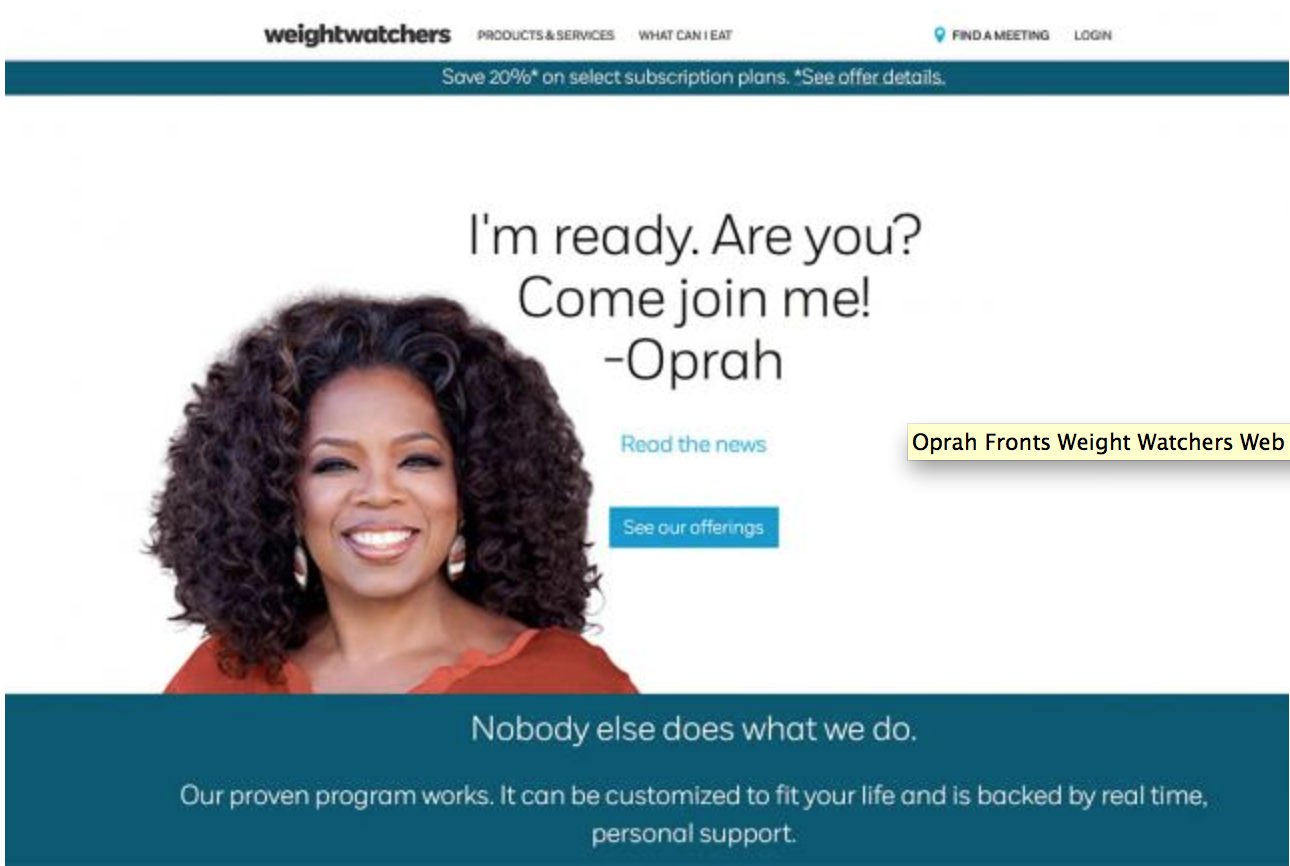
By now, most of us have heard or watch Oprah’s commercials on TV for Weight Watchers Screen Shot 2016-01-30 at 9.04.38 PM(Disclaimer- I AM an Oprah fan). Not only has she become their spokesperson and newest ‘loser’ (of weight that is!) for Weight Watchers but she also has a seat at the table and bought 10% of the business (Schultz, 2015). A commercial is currently airing that has her raving about how she eats bread every day on the plan (Pesce, 2016). A subsequent tweet about she ate bread and lost weight, broadcast to over 31 million Twitter followers, generated Oprah over $12.5 million on one tweet (Pesce, 2016). That’s an impressive feat and a nicely integrated campaign.

Did you make a new year’s resolution? Are you as sick of the weight loss commercials as I am?

References:

ABC News. (2012). 100 Million dieters, $20 billion: The weight-loss industry by the numbers. Retrieved from: http://abcnews.go.com/Health/100-million-dieters-20-billion-weight-loss-industry/story?id=16297197

Anderson, N. (2015). Six ways to make your new years resolutions stick in 2016. Forbes. Retrieved from: http://www.forbes.com/sites/nancyanderson/2015/12/26/six-ways-to-make-your-new-years-resolutions-stick-in-2016/#712a18021f90

Fottrell, Q. (2016). 5 People getting rich off your new years resolutions. Market Watch. Retrieved from:http://www.marketwatch.com/story/5-people-getting-rich-off-your-new-years-resolutions-2014-12-30

Klara, R. (2013). How much are new year’s resolutions worth? Answer: They’re big business for brands. Advertising Age. Retrieved from: http://www.adweek.com/news/advertising-branding/how-much-are-new-years-resolutions-worth-146478

Pruitt. (2013). Tips for health and wellness industry advertisers: Prepare now for new years resolution customers. Retrieved from: http://advertise.bingads.microsoft.com/en-us/blog/28025/tips-for-health-and-wellness-industry-advertisers-prepare-now-for-new-years-resolution-customers

Schultz, E. J. (2015). Coming soon to Weight Watchers ads: Oprah. Advertising Age. Retrieved from: http://adage.com/article/cmo-strategy/coming-weight-watchers-ads-oprah/301241/


Posted in Uncategorized | 6 Comments

A.D.I.D.A.S.

ADIDAS

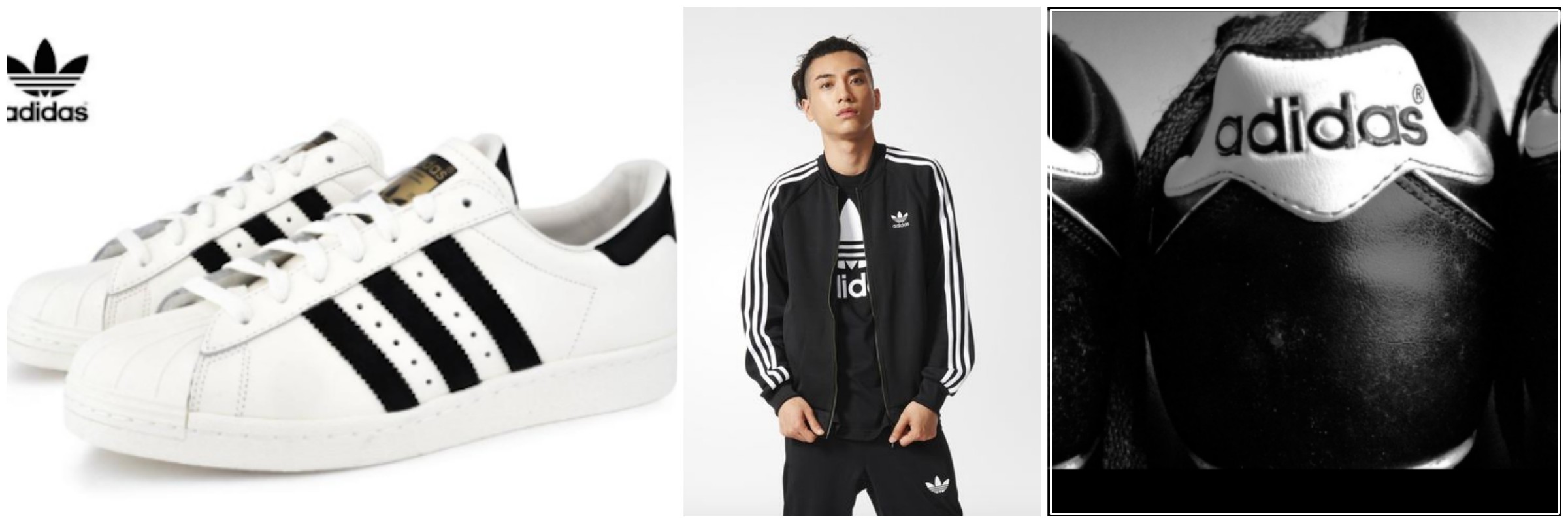
Chances are, if you had access to the radio or watched MTV in 2003, you can recall the popularity of Killer Mike’s A.D.I.D.A.S. song. If not, you might remember hearing kids (and adults alike) singing/rapping the lyrics “All Day I Dream About… [Sex]. Where I grew up, kids recognized Adidas more for the hit rap song than the sportswear brand. While track jackets and “superstar” shoes were nice to have, Adidas just wasn’t as “cool” as its rival Nike. But why is that? Was it the products and design aesthetics, or was the problem more with its integrated marketing strategies?

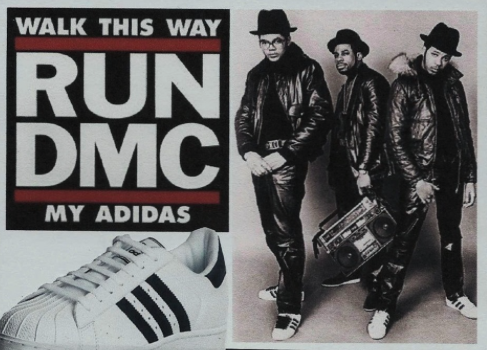
Screen Shot 2016-01-30 at 9.23.51 PMWhile the company has seen its share of popularity, thanks to collaborations with RUN DMC in the 1980’s and Missy Elliot in the 1990’s (Johnson, 2014), Adidas’ success has come and gone throughout the years (Hobbs, 2016). As Vogue reported, Adidas’ marketing team previously had a difficult time finding innovative ways to “inspire and engage” the 15-25 year old target audience (Johnson, 2014). Fast forward to 2016, and Adidas is steadily rebuilding its brand loyalty (Hobbs, 2016).

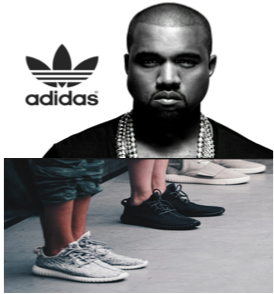
Screen Shot 2016-01-31 at 4.33.24 PMWorking alongside artists such as Kanye West and Pharrell, as well as fashion designers like Rick Owens and Stella McCartney, Adidas is repositioning itself in the sporting goods market (Johnson, 2014). Just look at the success of the Air Yeezy sneaker. The shoe is commonly seen on every major celebrity. Much more, its sell-out rate is astonishing. Everyone is looking to get their hands on a pair (or two). Resale prices are sky-high. A simple Google search reveals people are reselling the shoe for over $1,000.00! Simply put, the Yeezy sneaker is the latest hot commodity taking over the shoe market. Not to mention, pictures of the highly coveted shoe are all over social media.

Screen Shot 2016-01-31 at 4.45.01 PMSpeaking of shoe trends, the “Stan Smith” sneaker is another Adidas shoe making its way into pop culture. From in-demand models like Gigi Hadid and Kendall Jenner to fashion mogul Victoria Beckham, the “Stan Smith” shoe is being worn by almost every “it” girl. Not to mention, men like David Beckham, Pharrell, and A$AP Rocky have also been spotted wearing the sneaker. By capitalizing on the popularity and exposure among influential celebrities, Adidas has finally reached its target audience. With its increased presence on social media, the brand has successfully made the shift from traditional to digital marketing.

But what does this all mean?

Well….it means Adidas is looking to close the gap with its rival Nike. While Nike’s dominance and success are unparalleled, Adidas is looking to capitalize on Nike’s major weakness. Since “Nike isn’t interested in building ongoing collections around individuals who aren’t athletes” (Johnson, 2014), Adidas is using that to its advantage and recruiting “an army of artists and designers”(Johnson, 2014) to help transcend the brand.

However, as Hobbs (2016) reported, while Adidas remains the largest sportswear manufacturer in Europe, in the U.S. (and every other country for that matter), it comes second behind Nike. So how can Adidas win the “race to innovate faster and better” (Johnson, 2014)? Here are a few tips provided by Hobbs (2016):

Maintain star names: Adidas should work to preserve the healthy relationships it maintains with sports stars like: Aaron Rodgers, Derrick Rose, and Lionel Messi. Not to mention the highly lucrative deals Adidas has with club teams such as Manchester United, Bayern Munich, and most recently, Real Madrid (Forbes.com).

Win back dominance in the U.S.: The “key to Adidas’ growth in America will be ensuring it chooses sponsorship deals that are right for the US market.” Foremost, it should make “a lot of divestments” and “shake up” its current portfolio.

Re-evaluate its sponsorship of FIFA: Given the recent scandal plaguing the soccer world, it might be best for Adidas to distance themselves from all the controversy before the negative spotlight falls on them too.

Will the proposed marketing communication strategies help Adidas dethrone Nike? That is to be determined. The best marketing and branding strategies stand the test of time. So for now, we’ll just have to wait and see. In the meantime, we can keep our eyes on Instagram (and other social media platforms) to see who’s ahead in the race.

When facing a giant, the best way to win is to play by your own rules” (Johnson, 2014).

References

http://www.vogue.com/13268578/033114-adidas-pharrell-williams-collaboration/

http://www.forbes.com/sites/chrissmith/2015/05/06/soccers-richest-sponsorship-deals/#68f12b9d23a7

https://www.marketingweek.com/2016/01/25/adidas-looks-to-avoid-reputational-risk-with-move-to-end-athletics-sponsorship/

https://www.marketingweek.com/2016/01/05/adidas-creates-new-brand-activation-role-as-it-refocuses-eu-marketing-division/

Posted in Uncategorized | 8 Comments

Missed Connections

No, this isn’t some Craigslist ad where I saw some guy at Whole Foods with ripped abs and man bun who stole my heart and I am now seeking to find. Although if you were that guy I saw at Whole Foods while I was buying organic air, call me…

This is about the where the future of branding is taking us…and not taking us.

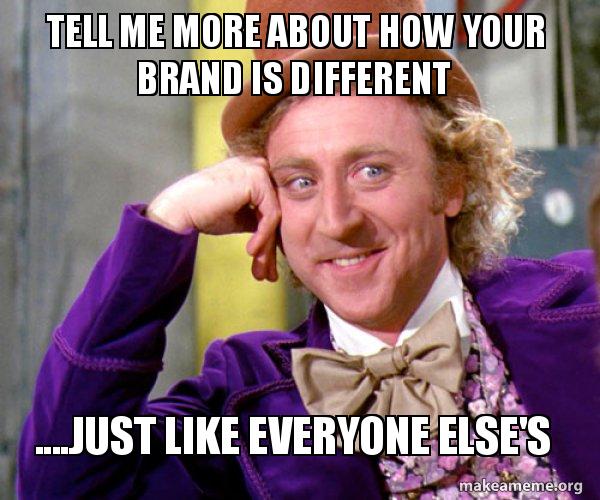
Every single brand out there has a story they’re trying to tell. The problem? People aren’t listening. This is where marketing communications are failing: CONNECTIONS. tell-me-more-47poqt

I follow Gary Vaynerchuck religiously. Yes, he can be a lot to take in sometimes but you cannot deny his genius. Speaking of relationships, in Gary’s book, Jab, Jab, Jab, Right Hook, Gary talks about how to get your story told in a noisy social world. In this YouTube video he touches on this and talks about the difference between marketing and branding.

Branding is the long haul game. Summed up by Gary: Relationship building is what creates a strong brand: Instead of trying to sleep with someone on the first night (marketing), look to marry (branding).

Connect. Seek to help people. Come from a place of service. You might fail. In fact, expect to, many times over before you get it right but when it’s genuine, people will finally hear you. People will follow, people will want to marry your brand and not just sleep with it for one night. This is truly what will make a brand a winning one.

Effective marketing communication may ultimately be about sales, but it’s about PEOPLE first. It’s about realizing behind the Internet, are people who are looking to be inspired and moved. When you can make people feel something, that is what makes marketing content engaging, shareable, viral, and what ultimately gets people hooked on your product or service.

There is a time and place to ask for the business. In the meantime, build the relationship!

Posted in Uncategorized | 4 Comments

The truth is, looks really DO matter!

beautybeauty 2

Growing up, we were always taught that “Looks don’t matter” and “It’s what’s on the inside that counts.” Now what I tell you may come as a shock, but the truth is, looks DO matter. Let’s not sugar coat the hard facts any further. In today’s heavily saturated and highly competitive marketplace, it is more important than ever to create visually-appealing, professional and compelling marketing collateral. You can have a powerful product and/or service, an award-winning team, and strong messaging, but as Coughter (2012) mentions, based on a previous UCLA research study, 55 percent of our communication takeaways are derived from visual elements. Let’s think about that figure for a second, over half of what you and I take away comes from visual devices such as symbols and other non-verbal forms of communication. Gulp…no pressure marketing professionals out there, but it’s clear some efforts and resources are needed to ensure that a company’s collateral is making full use of its potential.

With this in mind, here are a few tips:

Keep it simple and clean. Ever hear of the term cognitive overload? In case you haven’t, let me explain. “Jane” creates a marketing piece with loads of text, unreadable fonts, and endless clutter. There are no message headings, no clarity, and no key takeaways. We, as her audience, have no idea what we are supposed to be looking at, no direction, and feel lost. This, my friends, is cognitive overload.

As marketing professionals, it’s our duty to give our audience a user-friendly map that guides them to the key takeaways we are striving to highlight. How do we do this? Simplicity is key. As Coughter (2012) explains, using concise, provocative and colorful language is important in creating a powerful image for your intended audience. Eliminate irrelevant content, add headings, highlight key takeaways, and make room for a little white space (Coughter, 2012; Mindtools, 2015). Easy enough and I promise, you’ll thank me later.

Use visually compelling images and meaningful charts. When using visual devices, choose wisely. Some companies (particularly in the investment management industry) often select the most complex and incomprehensible charts in an effort to assert their intelligence. Agency Post’s Content strategist, Jami Oetting explains “Charts and graphs should clarify information. When you choose the wrong type of chart or simply default to the most common type of visualization, you could be going against this principle: you could either confuse the viewer or lead to mistaken data interpretation.” Furthermore, like charts, images used in marketing collateral should also be chosen carefully, as they too hold the key to an emotional and powerful connection with your audience (Coughter, 2012).

Consistency across all marketing collateral. As part of a company’s integrated marketing efforts and overall brand strategy, it is important that marketing professionals maintain a consistent look and feel across each communication channel (CMGT 541, 2016). As we transition into the digital era, more businesses are focusing their efforts on website design and social media, and falling short on other communication fronts like print ads and collateral. The reality is that successful marketers implement a consistent strategy across all communication channels, recognizing that not only does each medium complement one another, consistency across media also renders the deepest penetration into target markets (Stokes, 2014)

As Creative Designer, Mark Stokes puts it, “marketing collateral that feels tired and outdated gives the impression that your business is falling behind its competitors,” thus further substantiating the reality that looks really DO matter.

References:

Coughter, P. (2012). The art of the pitch: Persuasion and presentation skills that win business. Palgrave Macmillan.

CMGT 541. (2016).  Integration. Retrieved from https://mcm.usc.edu/mod/page/view.php?id=33944

Mindtools.com (2015) Creating Effective Presentation Visuals: Connecting People With Your Message. Retrieved January 27, 2016, from https://www.mindtools.com/pages/article/creating-presentation-visuals.htm

Oetting, J. (15, May 10). A Simple Guide to Choosing the Right Chart for Your Data. Retrieved January 28, 2016, from http://blog.hubspot.com/marketing/data-visualization-choosing-chart

Stokes, M. (2014). Marketing Collateral Tips | Marketing Collateral Still Matters! Retrieved January 27, 2016, from https://medianovak.com/marketing-collateral-tips/

Posted in Uncategorized | 5 Comments

Are You Willing to “Binge-Watch” a Marketing Campaign?

With video streaming at an all time high, brands are in search of innovative tactics to market new products, broaden their reach, and increase user traffic. In a cluttered digital landscape with constant messaging, brands need new ways to target audiences. According to a 2015 study by eMarketer.com, there will be an estimated 78 million Millenimagesnial digital video viewers this year alone, representing more than 92% of all US Millennial internet users.

Brands, like L’Oreal and Coca-Cola, have seen tremendous success with sponsoring YouTube videos and partnering with influencers or celebrities, whose social followings and reach go beyond YouTube, however brands are always looking for “the next best thing.” Although sharing branded content on YouTube isn’t new, producing and launching original scripted series for brands uninvolved in film and TV is a new arena that is gaining a lot of attention. With the growing popularity of online streaming and binge-watching and releases of original series, like Orange is the New Black on Netflix, it is no surprise that companies are willing to take big risks to enter this new environment to drive revenue and brand awareness.

Most recently Refinery29, a global fashion & lifestyle website, joined forces with WIFEY.TV to launch “The Skinny,” an original 6 episode scripted series on YouTube. Targeted to Millennial women, Refinery29 describes the new series as a “dark comedy series that follows feminist wannabe YouTube star Jessie (Jessie Kahnweiler) as she explores love, life, and friendship in L.A. — while struggling with bulimia.”

Screen Shot 2016-01-29 at 8.47.10 PM

The new series, which made its debut at this year’s Sundance Film Festival, was heavily promoted both organically and across multiple female-driven websites with various digital executions from banner ads, homepage takeovers, rich media to pre-roll units. As an avid Refinery29 reader, I was served many ads across platforms, so it was definitely not hard to miss. Episode 1 of the series premiered January 27, and as of January 29 (8pm PST), has reached over 40,000 views.

MargotvsLily_ABetterForItProduction_16X9_original_native_1600

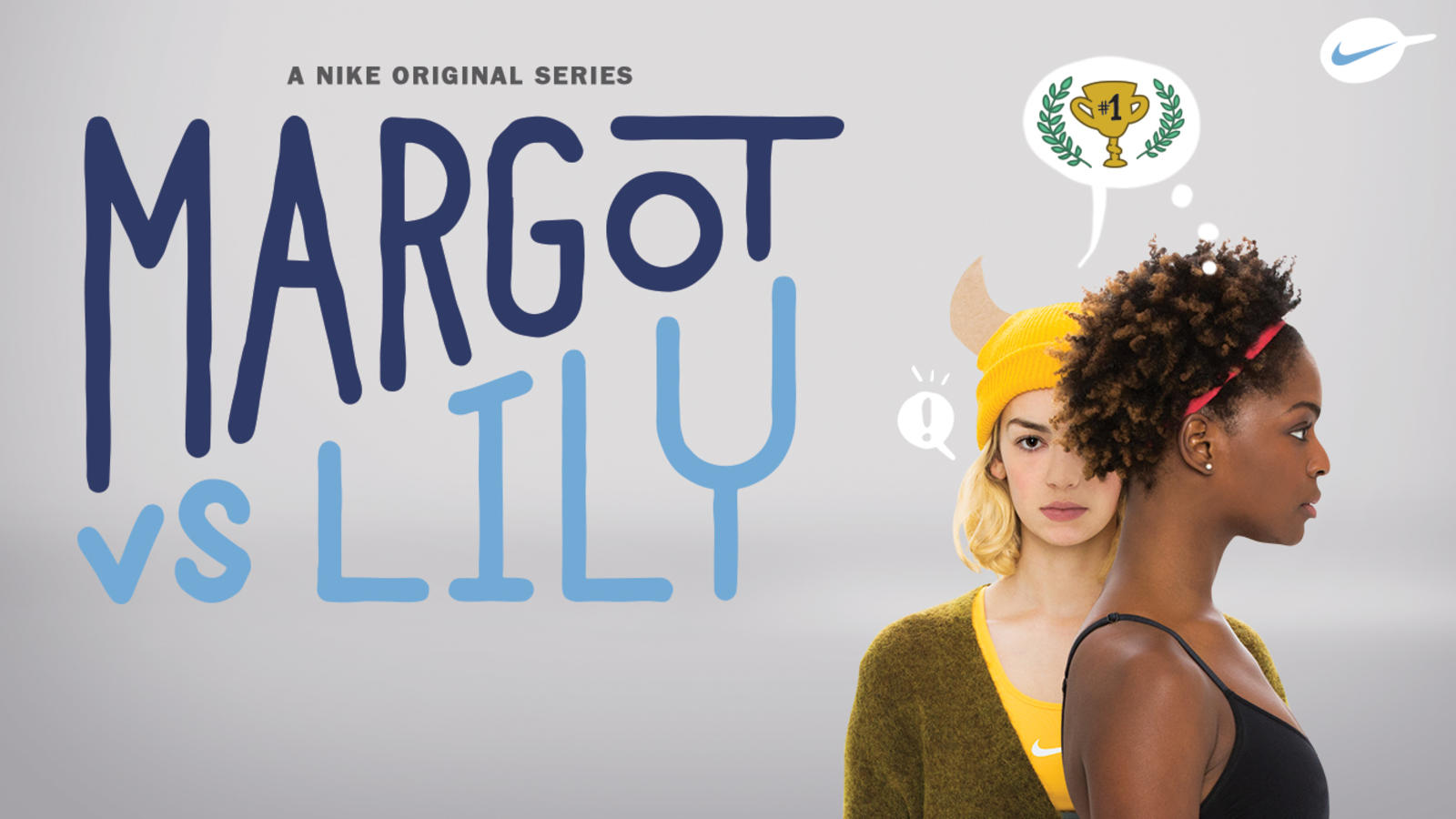
Nike, in the midst of their global female targeted, “Better For It” campaign and multiple marketing tools like digital apps (Nike+), e-newsletters, and running clubs, also joined this new marketing trend. Making its premiere February 1st, Nike’s first original scripted series, “Margot vs. Lily,” is based on a story of two sisters, Lily, the antisocial fitness Youtube star, and Margot, the laid back social personality, who push one another to reach their personal goals. The series is meant to inspire women to get active, and of course, promote Nike products.

Both Refinery29 and Nike’s new series share similar storylines about real women with real problems striving to reach their goals. By sharing relatable content, I believe the brands are seeking to develop more personal relationships with current and prospective consumers that will ultimately spark conversation and build brand loyalty amongst Millennial women facing similar struggles.  

As a fan of both of these brands, I look forward to seeing how these campaigns will progress and how many new companies will join this marketing trend in the coming months.


References

(2015, September 2). What are millennials up to with digital video? eMarketer. Retrieved from http://www.emarketer.com/Article.aspx?R=1012939&ecid=MX1086

Jarboe, G. (2013, August 19). L’Oreal launches new makeup line designed by YouTube beauty guru Michelle Phan. Search Engine Watch. Retrieved from https://searchenginewatch.com/sew/study/2289834/loreal-launches-new-makeup-line-designed-by-youtube-beauty-guru-michelle-phan#

Taitor, D. (2013, September 3). YouTube artist Kurt Hugo Schneider’s mesmerizing Coke video saw high engagement. AdWeek. Retrieved from http://www.adweek.com/videowatch/youtube-artist-kurt-hugo-schneiders-mesmerizing-coke-video-saw-high-engagement-152171

Zuckerman, E. (2016, January 28). The Skinny recaps: Episodes 1-6. Refinery29. Retrieved from http://www.refinery29.com/2016/01/101938/the-skinny-r29-original-recaps

Posted in Uncategorized | 4 Comments

The Effects of Marketing Communications and Climate Change

Climate change is a topic in which we continue to hear a lot about in today’s news, political and social discussions. Throughout history, the earth’s climate has continued to change drastically and science has shown that humans have contributed significantly to global warming trends throughout the past 100 years (Nasa.gov). Gasses that are omitted by human activity are resulting in a heat-trapping nature of carbon dioxide and increased levels of greenhouse gases, which are causing warming climate patterns on planet earth (Nasa.gov). Further, arctic temperatures are warming, sea levels are rising, and wildlife is being affected as natural habitats are quickly changing (Nasa.gov). Throughout the past 100 years alone, sea levels around the world have seen a rise of 6.7 inches, however in the last decade, that rate has doubled (Nasa.gov). These statistics are just the start of a long list of statistical research that shows the harmful results global warming is having on planet earth.

Below are a few more climate change statistics from Nasa.gov:

New-York-SkylineSea Level Rise – Sea levels are rising around the world, causing potential threats for future flooding and washed away waterfronts in majorcities and populations around the world.

Global Temperature Rise – Temperatures around the world
are increasing significantly with planet Earth having seen an astonishing 10 of its warmest years all having existed within the last 12-year timeframe.

Clouds_over_the_Atlantic_OceanWarming Oceans – With temperatures rising, oceans are warming and taking on the heat exchanged from the atmosphere. 

Shrinking Ice Sheets – Miles of ice in Greenland and Antarctic are disappearing. 

Declining Arctic Sea Ice – Sea ice is vastly thinning and disappearing.

icebergs-and-glaciers-1280x800Glacial Retreat – Glaciers are also disappearing in many mountain ranges around the world.

Extreme Events – High temperature records are increasing, and low temperature records are decreasing. Further, severe rainfall and weather patterns are significantly increasing.

Moraine_Lake_17092005Ocean Acidification – Due to increased carbon dioxide emissions into the atmosphere, the ocean is seeing significantly increased amounts acidity.

Decreased Snow Cover – Snow cover is decreasing and melting faster in recent years.


With these statistics in mind, it is important to acknowledge and understand that climate change legitimately exists, proven by scientific research. This research confirms that human activity is significantly impacting global warming, and as a result, organizations are aiming to use marketing communications to help influence people’s climate affecting behaviors (Aaron-Mele, 2012). In recent years, the public is increasingly seeing these marketing communications surrounding climate change and the significant impacts it is having on wildlife, human life and the earth as whole (Peattie, Peattie & Ponting, 2009). These marketing communications are potentially influencing peoples understanding and behaviors concerns surrounding the topic and are thus influencing public support for public policies (Maibach, Roser-Renouf, & Leiserowitz, 2008). However questions remain on whether or not these marketing communication tactics are seeing positive influences in human behavior in regards to climate change (Aaron-Mele, 2012). Further, do marketers have an obligation to respond in a time where communication to the public is needed in order to educate humans on the severity of global warming as a result of human activity (Aarons-Mele, 2012)? Knowing that global warming exists is separate from knowing what humans can do about it. As Aarons-Mele (2012) states, “74% of American agree global warming is affecting weather in the United States.” Aaron-Mele (2012) goes on to say that there are two areas of significance in which marketers can educate the public on the following, first; “facing climate change demands big as well as small changes”, and two; “preserving our way of life.” However, most humans, specifically Americans feel as though it is not their responsibility, but rather the responsibility of big organizations to make changes in their behavior, feeling as though it is the big organizations that are causing these global warming issues to begin with (Markowitz, Hodge & Harp, 2014).

Taking these facts into account, it is evident that there is a major social issue here surrounding the behavior of humans and their contributions to global warming (Markowitz et al, 2014; Peattie et al, 2009). Marketing communications tactics are in place, but are they effectively communicating and educating humans on the severity of the climate change issue and that they too can and should make behavior changes to help reverse these climate problems (Markowitz et al, 2014; Maibach et al, 2008)? I personally believe that people want what is best for the earth, but do not want to compromise their personal ways of living. As a result, they leave the big climate fixes to big corporations and environmental teams. Surely we are seeing significant steps being taken by big organizations and governmental agencies but are the steps they are taking enough to fix these problems. Marketing communications can be essential in educating the public on how they too can contribute to lowering emissions into the earth’s atmosphere and harming planet earth for future generations to come. With the knowledge and research we have, it would seem almost inevitable what needs to be done, but even still there is so much left to do. Can marketing communications surrounding climate change be the answer to educating humans around the world? Personally, I believe it is a major solution that could contribute significantly to a safer world, cleaner environment and healthier planet earth.

References

Aarons-Mele M. (2012). What Can Marketers Do About Climate Change? Harvard Business Review. Retrieved from: https://hbr.org/2012/12/what-can-marketers-do-about-cl.

Maibach, E. W., Roser-Renouf, C., & Leiserowitz, A. (2008) Communication and Marketing As Climate Change: Intervention Assets. A Public Health Perspective, 35488-500.

Markowitz, E. Hodge, C. & Harp, G. (2014). Connecting on Climate: A Guide to Effective Climate Change Communication. New York and Washington, D.C.

Nasa.gov (2016) Global Climate Change: Vital Signs of the Planet. Nasa.gov. Retrieved from http://climate.nasa.gov/evidence/.

Peattie, K. J., Peattie, S. & Ponting, C. A. (2009). Climate change: a social and commercial marketing communications challenge. Euromed Journal of Business, 4, 270-286.

Posted in Uncategorized | 4 Comments

#BeAwesomeToSomebody

For most people, their off days consist of running errands, cleaning, and catching up on other activities that have fallen through the cracks of a busy work week. Yes, that includes binge watching Netflix. However, for Mark Bustos his job is never done. Mark is a hairstylist at Three Squares Studio in New York City. Three squares studio caters to clients such as Brian Atwood, Marc Jacobs, Tommy Hilfiger, and Naomi Campbell.

Picture1

Fueled by his passion, Mark spends his off days walking the streets looking for somebody to be awesome to. On his off days, Mark trades in his designer clothes for a more casual look and walks the streets of New York.

Picture3 Picture4A few of Mark’s street cuts include Apache, Kevin, and Marcus. Do any of those names ring a bell? Of course not! Yet, they are some of Mark’s richest clients. Perhaps, you are not familiar with them because their wealth does not exist in monetary form. Their riches are in the form of wisdom, honesty, and life experiences. Apache, Kevin, and Marcus are a few of the homeless people that Mark has been awesome to.

Picture2

“Be more aware and just be more compassionate to fellow human beings all around us.” Mark Bustos

For years Mark has been restoring the hope in humanity by providing the homeless with hair cuts, confidence, and hope. He has learned through experience that how you approach them is very important. “It is important to be genuine and compassionate.” Mark’s Instagram is a collage of awesomeness and inspiration. The awareness of his hashtag #BeAwsomeToSomebody has expanded from Instagram to Facebook, YouTube, ABC News, and traditional print. It is refreshing to watch such a positive movement expand from the superficiality of social networks to the depths of society. As you continue to carry out your daily tasks, don’t forget to be awesome to somebody!

http://fusion.net/story/51584/watch-awesome-celebrity-stylist-pays-it-forward-with-haircuts-for-the-homeless/

https://www.instagram.com/markbustos/

https://www.youtube.com/watch?v=f4gZlEk1CKM

https://www.youtube.com/watch?v=tf_vRKL1tq8

Posted in Uncategorized | 9 Comments