Advertising Vampires

Lance Armstrong, Ray Rice, Adrian Peterson, Tiger Woods, Danny Heatly… Yes, I’m talking about sports scandal and Advertising Vampires.

According to Psychology Today, an Advertising Vampire is a celebrity who overshadows a brand endorsement with an ethical dilemma (Dholakia, 2015). Much like the Skittles issue we read about in the New York Times, sometimes an issue or a person becomes bigger than the brand and this can create a PR nightmare.

Each of the above mentioned sports figures have at one point (or still) had their endorsement contracts revoked due to ethical and/or legal issues affecting the reputation of their signed brand. CNBC reported in 2012 that Lance Armstrong lost 8 sponsors in one day and Nike, who had supported Armstrong since 1996, was the first to pull their deal.

In a statement about Armstrong, Okley said:

“Oakley does not approve in any way the use of illegal substances for enhancing                       performance in sports. Our policy with our athletes is to support them until proven               guilty by the highest governing body of sport or court of law. We are reviewing the                extensive report from the USADA, as well as our relationship with Lance, and will                await final decision-making by the International Cycling Union” (Rotunno, 2012).

It didn’t take long but shortly after, Oakley followed Nike, Budweiser and other big names in cutting ties with the cyclist (The Guardian, 2012).

Robin Evans, an advertising expert, says celebrity endorsements gone wrong can “suck the life-blood of the product dry” (Dholakia, 2015). Essentially, the audience remembers the scandal and not the product (Dholakia, 2015).

This vampire effect is a dangerous one but in today’s world of quick-fingered tweeters, it can go a step further. Scandal and public shaming can go hand in hand, making things go from bad to worse in a matter of minutes.

The negative impact from indignity is said to affect the brand and the effectiveness of any ad that brand appears in (Dholakia, 2015).
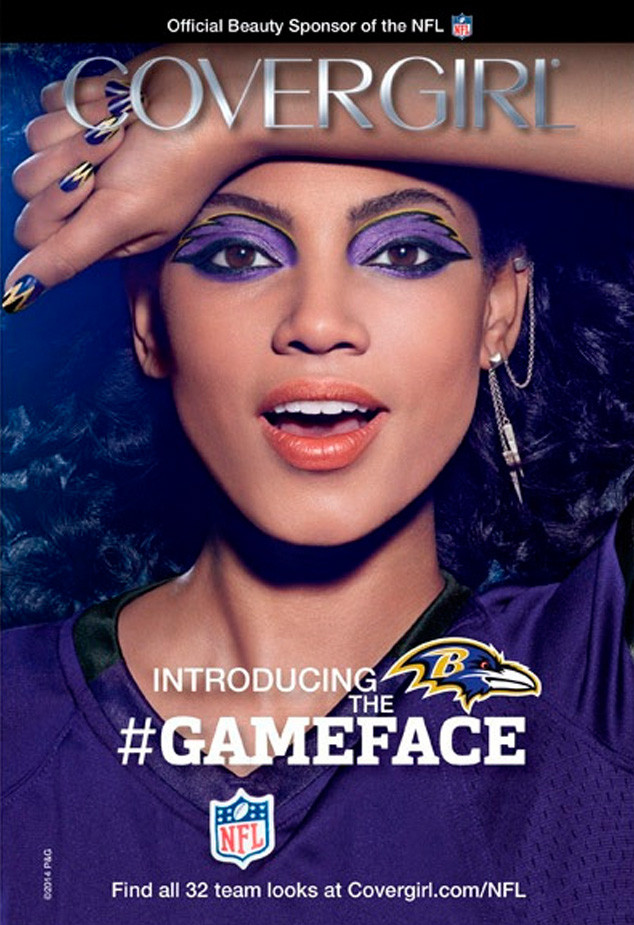
Covergirl NFL Ad
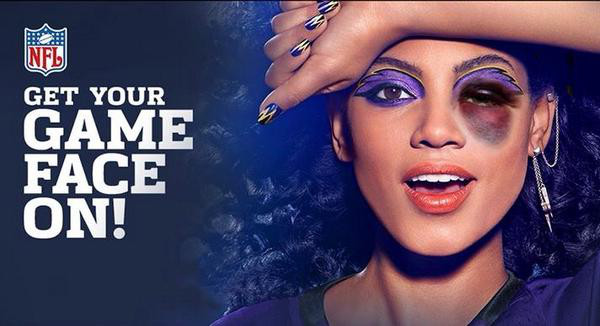
Covergirl NFL Ad

Speaking out against NFL, using Covergirl ad.

Speaking out against NFL, using Covergirl ad.


In the case above, things got complicated. The NFL was the target of public boycott due to football player Ray Rice’s violent actions, yet singer Alicia keys was innocently brought into the mix simply because she had previously posed for a Covergirl ad, which sponsors the NFL. The ad was posted all over social media and soon the lines were crossed as Covergirl began to get hate mail and pressure to drop their connection to the NFL.

Wow!

So, what can marketers do to reduce the possibility of  hooking up with a vampire? Dr. Utpal Dholakia, a Professor at Rice University and author of The Science Behind Behavior, says that there are 3 things marketers can do:

  1. Ensure your brand matches the qualities of the celebrity;
  2. Avoid celebrities with larger-than-life personalities; and
  3. Build long term relationships (Dholakia, 2015).

Ok, that’s all fine and nice but, I would argue that, in some cases, I don’t really think there is anything you can do to prevent these things from happening. It’s like the Powerball,  some things are just unpredictable.

But, I do believe in one thing – strategy. And as usual, your best defense is a good offense.  If you sign a celebrity, just make sure you have a really good crisis communication management plan…just in case.

References

Dholakia, U. (3 Nov, 2015) Can a Celebrity Endorsement Hurt the Brand? In Psychology Today, retrieved from https://www.psychologytoday.com/blog/the-science-behind-behavior/201511/can-celebrity-endorsement-hurt-the-brand 

The Guardian, (22 Oct 2012), Lance Armstrong loses Oakley sunglasses sponsorship, Press AssociationRetrieved from http://www.theguardian.com/sport/2012/oct/22/lance-armstrong-oakley-sunglasses

Rotunno, T., (18 Oct, 2012) Armstrong Loses Eight Sponsors in a Day, CNBC, Retrieved from http://www.cnbc.com/id/49462583

Posted in Uncategorized | 6 Comments

Presidential Candidates Efforts to Create Awareness

I know what your all thinking, “not politics, this has no place in this class” Well hear me out first before you burn me at the stake. It seems all we are hearing about is the 2016 presidential election. From late night shows, to radio, to print ads, the media everywhere is swallowing up politics. I am not a die-hard political guru like some but recently politics and the election have caught my attention. The amount of money and effort put into political advertising and marketing campaigns to capture certain demographics attention has been really interesting to follow.

With todays fast moving digital world in order to reach several demographics you really need to be utilizing several if not all areas of advertising as possible in order to fully reach your target audience. There’s a lot more than the traditional TV and Radio ads with today’s available channels.

Presidential candidates and their teams are figuring out ways to create awareness and capture those “on the fence” voters through a strong presence and recognition through a variety of outlets. One example I’m sure most of you have seen is candidates appearing on late night shows such as Jimmy Fallon or Kimmel.

https://www.youtube.com/watch?v=WlY52Kig49w

While appearing on a late night show will certainly get people tweeting about you, its important to stay on top of the conversation and get involved with topics people are discussing. This may be one of the most challenging outlets to stay on top of as there are so many people who quickly respond and re-tweet what candidates are discussing. If done right, these social media conversations can go a long way.

Another interesting focus of presidential candidates advertisements is the actual ad itself. Some of the candidates are using fairly aggressive strategies to reach those anti Hillary voters. After seeing the topics of choice on the presidential debates, I’m sure most of you can see how many of the topics discussed are candidate’s responses to allegations from other candidates. It’s a much different approach to winning an election than we have seen in the last decade. Money really needs to be placed in all areas of digital formats as well as in traditional outlets such as TV, Radio, and print in order to successfully compete with candidates and actually take the lead in the election.

As I sit back and watch all this effort being released from politicians I ask myself the question, are the tactics and strategies being used effective? Do I better understand their political stances? What are they saying to lure me into voting for them? Certainly all this money spent will pay off for at least on candidate right?

https://www.instagram.com/realdonaldtrump/


References

http://www.npr.org/sections/itsallpolitics/2015/08/19/432759311/2016-campaign-tv-ad-spending

Posted in Uncategorized | 4 Comments

NFL and Corporate Social Responsibility

The National Football League (NFL) has come under a lot of scrutiny lately around issues ranging from domestic violence, cheating scandals, drug abuse and civil unrest issues such as fighting and drug usage.  However, most of these incidents are isolated and even though it garners a lot of media attention, it is rarer than often perceived.  The NFL, like many other global brands, has developed a mindset of Corporate Social Responsibility (CSR) to help mend fences and keep their brand image high in public perception.

The NFL, as most other companies, are often reactive to issues as something has already happen.  As discovered that most professional athletes go bankrupt when their playing days are over, the NFL set forth mandatory financial training for all rookies.  When the video of Ray Rice punching his wife in an elevator became public, Roger Goodell, NFL Commissioner, took a lot of criticism over decisions made about the handling of the situation.  Soon afterwards, other ‘player incident’ issues would arise.  NFL leadership had to step in and repair the NFL’s reputation as it was open season on player episodes throughout the media.  The NFL decided to step up a campaign of CSR through promoting a domestic violence prevention campaign labeled “No More”.  This campaign showed several NFL players saying things such as “no more, he is a nice guy.”  This commercial is designed to imply that women need to stop making excuses for guys who abuse them physically or mentally.

Around this same time frame, the NFL announced that they have also brought three experts in domestic violence to serve as senior advisors to the league (NFL hires domestic violence advisers, 2014).  Let’s be honest, these steps were taken to ease the public outcry that NFL leadership was not doing anything significant.  NFL leadership implemented the campaign commercial and advisors to show the public they recognize the need and are taking the steps necessary.

Many other iconic corporations have been caught up in similar dilemmas such as McDonald’s and their high calorie, high fat food products or Coca-Cola and their use of cocaine in soda formulas or Nike and their use of underpaid employees at foreign sweat shops plus the ration of shootings surround the Air Jordan’s of the 1990s.  Events such as these are now easily spread around the globe because internet and social media outlets, which has forced companies to be more socially conscious and aware of how their brand is perceived.  It is more important now, than ever, for corporations to be out in front of potential issues and convince consumers that purchasing their brand items are not only in their best interest, but society’s best interest as well.

Think about it; as consumers we have a surplus of choices when deciding on a particular item to buy; how do you choose one brand over another?  Do you simply compare cost, status or quality of each brand or product?  Do you maybe consider how these corporations are viewed in the media, globally, or perhaps how ethical the company is… what about how they treat employees or if they are involved in community projects?

Chances are, most people think they are ‘smart shoppers’ and believe they choose products by price and quality.  However, according to Reputation Institute, a global consulting firm which interviewed over 55,000 consumers from 15 different markets, 60% of an individual’s choice is driven by your perception of the company and 40% by the actual product or service sold (Smith, 2013).  This study used statistical measures to rank people’s emotional indicators of trust, esteem, admiration and good feeling.  Then also took score in dimension of corporate reputation: workplace, governance, citizenship, financial performance, leadership, products, services and innovation (Smith, 2013).

Even though most people are not familiar with term Corporate Social Responsibility, the study shows that most people do recognize that the effect of CSR speaks to who the company is and what it believes in.  About half of an individual’s willingness to trust, follow, respect and feel good about an organization is based on their opinions of the organization’s social effect (Smith, 2013).  The NFL, which faces scrutiny in the media and from women’s groups, must step up their social responsibility and hope the perception changes over time.  However, in the current, this remains a hot topic and the NFL must maintain their push and education in accountability to recover their positive image.  It is often better for a corporation to step up and recognize their issues publicly and lay out a plan to recover by working out problems.  Much like Nike, McDonald’s and others before them, the NFL can recover and maintain their status.

References

NFL hires domestic violence advisers. (2014, 9 15). Retrieved from ESPN: http://espn.go.com/nfl/story/_/id/11531293/roger-goodell-nfl-create-social-responsibility-role-help-domestic-violence-social-issues

Smith, J. (2013, 10 2). The Companies With the Best CSR Reputations. Retrieved from Forbes: http://www.forbes.com/sites/jacquelynsmith/2013/10/02/the-companies-with-the-best-csr-reputations-2/


Posted in Uncategorized | Comments Off on NFL and Corporate Social Responsibility

Everyone and Everything is Mobile

Alright from the title alone, you may say to yourself… “Who cares?” or “I already knew that”, but to the young entrepreneur, the entry-level marketer, or to the person who is launching their own business; this is critical information to know and implement in any industry.

Mobile devices have already incorporated so many features that many individuals use daily. These built-in applications include maps, contacts, calendars, and most recently the wallet. Ever since the introduction of the Blackberry in 2001 or the iPhone in 2007, technology continues to evolve with mobile technology and this evolution will continue as more people rely on their mobile phones for updates, purchasing and more. Every marketing enthusiast needs to realize that mobile is the way to go when attracting any consumer to buy products or offer deals for in-store purchasing. Millennial’s and younger generations do almost all activities from their phone.

In fact, according to the Pew Research Center 58% of adults own smartphones and 42% own tablets. These numbers are expected to increase as smartphones continue to decrease in price. Also, a recent study included that email marketing is still one of the most popular ways to reach a target demographic. If this is in fact true and all individuals are using smartphones, than email messages are being viewed more from mobile devices than desktop PC’s. This is reasoning why it is critical that marketing is mobile friendly and viewable by smartphones. All links should be optimized for mobile devices and this includes ensuring that microsites, webpages, QR codes, and business coupons are mobile friendly.

Most recently mobile marketing has advanced with Passbook and Google Wallet. Many big brands such as Men’s Warehouse, PepBoys, and Unilever are utilizing the mobile wallet into all their integrated marketing efforts. For example, someone can download the Men’s Warehouse application or go to the Men’s Warehouse website on their phone (which is mobile friendly) and click on coupons, which automatically opens up into the phones Passbook or Google Wallet. No more cutting coupons from the weekly paper! Imagine getting a special offer in your email from your mobile device, by simply clicking on one button from your phone the promotion is downloaded to your phone! Mobile is streamlining and organizing the shopping for the consumer.

One of the greatest tools of mobile marketing is the metrics. Marketing assistant will shine because they can download metrics on click-throughs, QR code redemptions, website analytics, email opens, etc. to evaluate if the marketing campaign was successful.

The future of mobile marketing is looking promising. Developers have already looked into reward based mobile advertising where consumers spend enormous amounts of time on applications or browsing specific sites. The more browsing and length on the site the more reward points and incentives the consumer is offered. This is a great way to build brand loyalty! Additional testing is also geo-targeted mobile marketing where an individual will be prompted with a notification that a coupon or offer has been downloaded to their Passbook or Google Wallet because they walked by a specific department store.

References:

http://blog.marketo.com/2015/05/ebook-introduction-to-mobile-marketing-the-past-present-and-future.html

http://www.inc.com/peter-roesler/why-mobile-marketing-is-still-the-next-big-thing.html

http://www.forbes.com/sites/steveolenski/2015/06/08/mobile-in-mind-thoughts-on-the-present-and-future-of-mobile-marketing/


Posted in Uncategorized | Comments Off on Everyone and Everything is Mobile

How to Make Your Marketing Efforts go Viral!

Big brands spend millions of dollars on huge marketing efforts to create viral video content in hopes of reaching the masses, sell more products, and to spread positive brand recognition. Marketing executives research and spend countless hours on materials, production, and talent in hopes of creating the next big buzz. Most of the time the hopes for viral content diminishes because the campaign was not as successful as imagined. At times viral video content is spontaneous and unexpected. So the question is…. How do you make your marketing efforts go viral?

You may think that this is a simple question to answer, but there is no real guarantee that your company’s video will go viral in the first place. If content does go viral, there is a small window of time to maximize the target audience reach. In order to increase your chances in creating a viral video, the content must be well thought and capture the message of the product or brand.  It is important to set a goal. What is it that you want to accomplish? Is it awareness? Increase in revenue? At times too many marketing executives think too hard about making unique content that they overthink too much! Do not get hung up on only having one idea; more than one will help maximize the ability to have viral content. At times the simplest creative have received the most shares, likes, and gone viral.

Be prepared to spend money! Making a video or marketing content go viral is going to take a marking budget to help spread interest and to kick-start the promotions. The budget doesn’t have to be large and viral isn’t only meant for big brands. Even with a small budget, a viral video can spread especially with the help of social media.

Make sure that the video or content is telling a story and sometimes the best ideas come from the consumers themselves. Look at what people are saying about a brand on Twitter, Facebook, and Instagram. You may be able to pull an idea just from reviewing comments.

Once the viral content is created make sure to share on as many social media sites as possible and track the commentary. What are individuals saying? Whether it is positive or negative, consumers are still speaking about the product. It is also helpful to engage in the conversation as well. This will assist in consumer retention and building a brand identity. It shows a human perspective behind the product.

While the viral content is being shared with the masses, start planning a follow-up to the viral concept. There is nothing wrong with a sequel in brand marketing! In fact, a secondary video will keep the brand conversation flowing. Take a look at major brands such as Axe, Old Spice, and Dove. Each of their famous viral marketing videos has had a follow-up.

If video or content does go viral, reach out to celebrities and other brands that can merry themselves into the viral content. They may want to sponsor or share in marketing dollars for future content.

References:

http://www.theguardian.com/technology/2014/feb/26/secret-to-viral-video-marketing

4 Rules for a Video to Go Viral

http://www.entrepreneur.com/article/233207

http://www.creativeguerrillamarketing.com/viral-marketing/the-9-step-checklist-for-squeezing-the-most-out-of-viral-campaigns/


Posted in Uncategorized | Comments Off on How to Make Your Marketing Efforts go Viral!

Facial Recognition, Analytics, and the Future of Digital Signage

A data-driven approach is now mandatory for any legitimate marketing department; analytics allows practitioners to understand the effectiveness of an online digital marketing campaign. Today, technology companies like Intel and Panasonic are developing ways for marketing professionals to apply that same approach to other traditional marketing mediums.Digital signage is one medium that is going to see a lot of growth in the next 5-10 years. More and more, you will see static outdoor graphics replaced with digital screens allowing for more companies to advertise in high impression areas. Prior to a couple years ago, companies running outdoor campaigns were unable to get any reliable data on impressions or conversions, making it incredibly difficult to measure the efficacy of these campaigns — until now. New developments in technology are underway that will drastically affect the way we currently utilize digital signage.

Intel has recently dubbed their software, Anonymous Video Analytics. The goal is to give companies the ability to gather metrics on who is viewing their ads. Additionally, marketing teams are enabled the opportunity to customize content in real time for whoever is viewing the ad. For example: say you are the marketing manager for an apparel company, and you sell men’s and women’s clothing – you can have the ad adjust depending on the sex and age of the viewer. Add Panasonic’s technology, which has the capabilities to control thousands of screens from a centralized location. How is this possible? In a nutshell, the intelligence uses a face recognition sensor with processor performance. We are on the front step of one of the biggest marketing innovations since Google Ad Words!

Here are 5 benefits you can expect if your company adopts this technology:

  1. Marketers can have more precision when developing targeted campaigns.
  2. Executives or business owners can purchase outdoor media confidently due to a more refined advertising approach.
  3. Eliminates the elusiveness of whether consumers or target audiences are truly viewing the ad and converting to sales.
  4. Gather comprehensive metrics on the profiles of who is viewing your ad(s).
  5. Deliver integrated content via digital signage, ultimately enforcing brand power and loyalty.

https://www.youtube.com/watch?v=qNafo2t_mec


References:

Posted in Uncategorized | Comments Off on Facial Recognition, Analytics, and the Future of Digital Signage

The success of Share a Coke campaign

I have friends that worked at Coke that gave me the heads up last year about the “Share A Coke” campaign. With my name being so common, I walked right out to a grocery store and found my name (Michelle) and my mother (Mary) very quickly.

I spent the rest of my summer looking, but never finding my father (Elisha) and sister (Yulonda), and nephew (Marquez).

I behaved like a typical consumer and complained to the company and little did I know that not only would they hear my cry, they found a way to quantify on the desire.

The summer 2015, Share a Coke campaign expanded the to not only include more diverse names in the pre-printed bottles, but it would let you customize your own glass bottle for $5.

I lost my mind. With free shipping on four or more bottles, to date I have spent over $100.

It was a Father’s Day and Mother’s Day gift. baby shower gift and wedding gift. Today, Coke released an article stating that over 500,000 personalized bottles had been shipped.

The success of the campaign has not gone unnoticed by its main competitor Pepsi. The response to the ad was to hide codes in the bottle tops of Pepsi products giving consumers a chance to win tickets to a concert or other great prizes. The tag for the campaign was “But at least you have your name on the bottle”.

Sarcasm aside, the ability to add to the company’s bottle line in such an unexpected way, was, excuse the pun, signature!

Posted in Uncategorized | Tagged , | 3 Comments

Scan this code

We’ve seen them on advertisements, products, even clothing, but how many of us actually use the QR code? Just the other day at LAX I passed by an ad for free WiFi, all you had to do to sign up was scan the code on the ad. That gave me pause. In my life, I’ve never actually scanned a QR code. Does anyone?

sample

(Disclaimer: I have no idea what this code is for)

According to research conducted in 2013 – which promises a massive rise in the years to come – just 21% of the consumer market has scanned QR codes. The study indicated a rise in usage up till that point, but that rise fell short of expectations (Kolowich, 2014). That rise does not seem to be happening. One recent article even called the QR code a “blinking VCR clock” for this century (Goetz, 2015). Ouch.

These codes have been around for far longer than one might expect, having been introduced in Japan in the early 1990s. But they didn’t make their way across the pacific until just a few years ago. When they did, they seemed to appear everywhere, and fast (Strout, 2013). But the lack of built-in QR code readers in most smartphones (Apple and Android and even Blackberry) made them slow to be adapted, which can be a product killer in the tech-world.

While the lack of applications is harming the QR code, is it far from dead. Some very high profile brands are still using the little squares, including Coca Cola, SnapChat and that WiFi ad. Should Apple or Google start putting automatic code-readers into their standard mobile operating systems sometime soon, we may still see a resurgence for the code.

References

Goetz, Geoffery. (2015, January 31). Why QR codes are the blinking VCR clock of the 21st century. Gigaom Research. doi: https://gigaom.com/2015/01/31/why-qr-codes-are-the-blinking-vcr-clock-of-the-21st-century/

Kolowich, Lindsay. (2014, August 14). Are QR codes dead? Hubspot Blogs. doi: http://blog.hubspot.com/marketing/qr-codes-dead

Strout, Aaron. (2013, April 4). The death of the QR code. Marketing Land. doi: http://marketingland.com/the-death-of-the-qr-code-37902


Posted in Uncategorized | 23 Comments

Brand Storytelling… “A brand is a story that is always being told.” –Scott Bedbury

Brand Story

Earlier this week, I attended the U.S. Navy’s 2015 Public Affairs Symposium in Leesburg, VA at the National Conference Center. I am a Navy Public Affairs Officer currently serving on USS America (LHA 6) homeported in San Diego, CA. This symposium provided an opportunity for Navy Public Affairs Professionals (military and civilian) from all over the globe to come together and discuss ways to better market and communicate the U.S. Navy mission. Unfortunately, many of us in the Navy get consumed by the “Navy bubble” and forget that there is another market in the “real world” to communicate to. Luckily, we had a handful of very inspirational and powerful speakers present refreshing concepts on how to potentially rejuvenate the Navy brand through effective storytelling.

One of our speakers was Ira Glass from NPR’s “This American Life.” He spoke to us about the power of audio storytelling and how stories need to be about people, not events. By telling stories that make listeners feel something, and that help them relate to a specific person, we can better connect and resonate a universal idea. Another noteworthy presenter was Professor Bruce Strong of the S.I. Newhouse School of Public Communications, Syracuse University. Bruce stressed that effective storytelling begins with a compelling plot that eventually leads to the transformation of a person (a.k.a. the protagonist). All transformation comprises of an emotional core, which, in turn, produces an unalterable emotional connection with the audience.

The last speaker I want to highlight is Kori Schulman, who is the Director of Online Engagement for the Office of Digital Strategy at the White House. During her presentation, she expounded on the meaning behind the White House’s communication focus, Connect People with Purpose. By developing a strong and diverse digital communication plan, Kori and her team have been able to encourage the American public to participate in the President’s request to take action on issues. The Digital Strategy Office has also designed social media platforms that help the public relate to significant moments in our nation’s history and that inspire dialogue.

All in all, what I am growing to understand more and more is that communication is about PEOPLE and ENGAGING STORIES; STORIES ABOUT PEOPLE; PEOPLE TELLING STORIES. From National Public Radio to the White House, communication experts are focusing on individual stories, enriched with personality, to express ideas and incite movement (Gunelius, 2013). Stories need to be associated with the branding of a product because effective storytelling helps consumers relate to a brand on a very visceral level. For example, Nike does a tremendous job telling stories of how their brand is complimenting and transforming the lives of their consumers (Burleson, 2015). Apple is another brand that has inserted itself into our everyday lives because it seems as though our personal stories cannot be told without Apple products (Burleson, 2015). The relationship built through storytelling is unbreakable and what makes brands successful.

References

Burleson, J. (2015, January 9). 3 Perfect Examples of Brand Storytelling. Randall & Reilly. Retrieved August 8, 2015, from http://www.randallreilly.com/2015/01/marketing-2/3-perfect-examples-of-brand-storytelling/

Gunelius, S. (2013, May 2). 5 Secrets to Use Storytelling for Brand Marketing Success. Forbes. Retrieved August 8, 2015, from http://www.forbes.com/sites/work-in-progress/2013/02/05/5-secrets-to-using-storytelling-for-brand-marketing-success/

Posted in Uncategorized | 7 Comments

USWNT: FIFA Won’t Pay but Brands Should

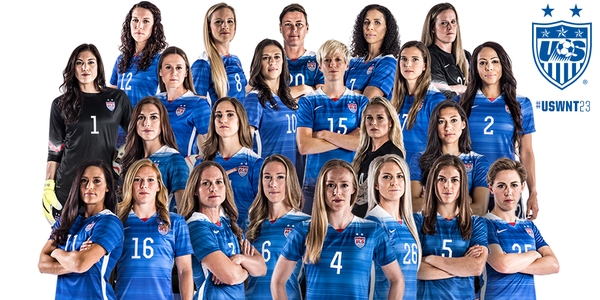
USWNT1

The 5-2 win for the U.S. Women’s National Team (USWNT) over Japan in last months FIFA World Cup make them the first women’s team to win three World Cup titles and mark’s yet another great achievement for the growth of women’s soccer. Despite a fifty percent pay raise from the last World Cup, the women’s payout for the 2015 World Cup was a mere $15 million, compared to the men’s $576 million payout in last years World Cup (Shabad, 2015). According to John Ourand of Sports Business Journal, this year’s women’s World Cup final between the USA and Japan had record high ratings averaging 25.4 million viewers on FOX (Pilon, 2015). This proved to be the highest American viewed soccer game ever and also had higher TV ratings than any single NBA finals game or NHL Stanley Cup match during the same period (Chappell, 2015; Collett, 2015). This shows a clear potential for the American women to generate revenue and earn a higher pay than the $2 million received for winning the World Cup. It is clear that FIFA leadership is behind modern day culture. Actions such as FIFA President Sepp Blatter having the Women’s World Cup played on turf rather than grass to save money, and voicing opinions that women should play in “tighter shorts and skimpier outfits” is disrespectful and out of touch with modern day society standards in the U.S. For good reason much of this has lead to the highly publicized controversy of the FIFA pay gap between the men and women’s World Cup. But I’m not here to discuss how change is needed, I think we’re all in agreements about that and the fact of the matter is until there is new leadership FIFA will continue its ways. However what can change is the endorsements deal that the American women can receive right here in our home country.

Its clear that these girls can ball, Carli Lloyd’s hat trick and nailing a 50-yard goal in the final proves that, Visa and Nike have recognized this and recently inked deals with the star player. Alex Morgan and Abby Wambach have also signed deals with brands such as Coca-Cola and Nationwide but that still leaves 20+ other women to be recognized as well. Advertisers love to associate their products with winners and those who have the spotlight on them within the market place; right now that is women’s soccer specifically the USWNT. There’s never been a better time for women’s soccer to capitalize on endorsement deals given their recent success and the fact that the Summer Olympics are less than a year away. Social engagement for the top women’s players is also high across Twitter, Instagram, and Facebook, combined followers on each platform are: Alex Morgan 4,979,329, Hope Solo 2,813,086, Abby Wambach 1,216,134, Carli Lloyd 878,917, and Megan Rapinoe 877,122.

So how do these women sustain a brand value? Some would argue that many of these women don’t have a compelling story to tell. Highly doubt it, but if so for brands I would challenge them to create a compelling story. There is a clear economic opportunity and one could even argue a corporate social responsibility opportunity to do what FIFA hasn’t and get these women paid. A win-win for both sides. So rather than question how does the women team use this momentum to sustain branding efforts as a brand manager I would ask my self how do I capitalize on the opportunity. It will be interesting what players make out with endorsements over the next year, if FIFA wont pay them I think there is a great opportunity for U.S. brands to.

References

Chappell, B. (2015, July 6). U.S. Women Shatter TV Ratings Record For Soccer With World Cup Win. Retrieved from http://www.npr.org/sections/thetwo-way/2015/07/06/420514899/what-people-are-saying-about-the-u-s-women-s-world-cup-win

Favaritio, J. (2015, July 3) Women’s World Cup Success; What’s Next? Retrieved from http://joefavorito.com/2015/07/07/womens-world-cup-success-whats-next/

Favaritio, J. (2015, July 11). Busy Summer For Soccer Biz? Kickin It With Charlie Stillitano…Retrieved from http://joefavorito.com/2015/07/11/busy-summer-for-soccer-biz-kickin-it-with-charlie-stillitano/

Shabad, R. (2015, July 6). Lawmaker: US women paid millions less than men for World Cup. Retrieved from http://thehill.com/policy/finance/246959-lawmaker-womens-world-cup-winners-paid-four-times-less-than-men

Posted in Uncategorized | 3 Comments