As a big Colbert fan I am anxiously awaiting his start at The Tonight Show. Coming from a show popular with the millennial audience he no doubt knows a few ways to be engaging with how the younger generation views television. The other late night Jimmys (Fallon and Kimmel) have also innovated to the growth of social media and online extensions to maintain success.
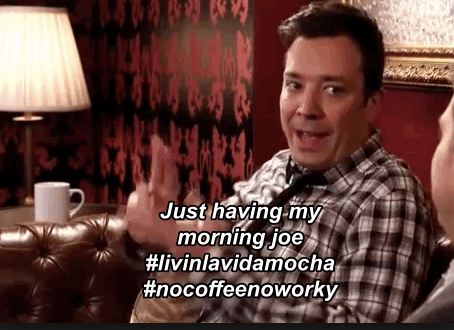
Use of Social Media: social media is largely the way millennial connect with one another (Cohen, 2013). It is therefore important the late night shows understand how media is used to engage with the millennial audience. Jimmy Fallon for example has a segment called “Hashtags” where they use a weekly hashtag to get Twitter users to add jokes. He then reads them on air. Jimmy Kimmel uses “Mean Tweets” that shows celebrities reading mean tweets written about themselves.
Embrace The Digital Format: More and more television is being viewed online (Bilton, 2014). This is especially true for late night shows as people often go to bed before they start. Late Night Shows have therefore offered their full episodes online so people can watch. They have also short clips (usually no more than 2 minutes) on YouTube that can be easily viewed and shared. The Jimmy Kimmel “I Told My Kids I Ate Their Halloween Candy” segment is a popular short clip.
Internet Insiders: To stay relevant to their core audience Late Night Talk Shows have to be dialed into what people are talking about online. This allows them to keep references fresh in their monologues and keep viewers coming back. For example, Seth Meyer had Maya Rudolph playing former Spokane NAACP chair Rachel Dolezal as the internet had drawn comparisons between the two.
References
Bilton, R. (2014). The shifting landscape of digital video consumption. Digiday. Retrived from www.digiday.com
Cohen, C. (2013). How do Millennials behave on social, mobile, and the web. Millennial Marketing. Retrieved from www.millennialmarketing.com
Ok, enough of the obscure song lyrics. Have you ever heard of Lodi?
At a recent wine tasting that I attended there were several wines that the group universally loved and they were all from Lodi, California. We were all surprised, and some didn’t even know exactly where Lodi was. Referred to as the “next” Napa, Lodi is a city in California’s Central Valley located about 75 miles east of the famous wine making region (Giglio, 2014).
Upon further research Lodi is anything but the next Napa and the Lodi Wine Commission is working hard to differentiate their unique brand of California wine (www.lodiwine.com).
The Lodi Wine commission wants you to know that Lodi is all about the passion and history of the people making the wine. Their online digital and social presence is very integrated and works to get that point across. They are active on all major social platforms including Instagram, Facebook, Twitter and Pinterest.
Now I know that Lodi is not Napa’s sister to the east, it is more like the crazy cousin they hoped you wouldn’t notice. After all, according to the Lodi Wine Commission, “What you call crazy, we call passion. What can we say, we’re LoCA.”
So, the next time you are drinking a great California Zin, look at the label and there is a good chance it is from Lodi. I might just make a trip out there to see what they are all about the next time I am in the Bay Area!
Reference
Giglio, A. (2014). 5 Reasons Why Lodi, California is the Next Napa Valley. Details. Retrieved 4 August 2015, from http://www.details.com/blogs/daily-details/2014/04/why-lodi-is-the-next-napa.html
Creative stunts have been deemed as a high-risk, high-reward feats. Marketing or PR stunts have the potential to make or break a company’s image and reputation. If executed correctly, the stunt could shoot the company’s brand into reshare trending heaven, but if the stunt fails to echo the brand’s cultural identity or offends consumers, serious rebranding efforts will be in order for quite some time. In the case of Airbnb’s floating house in London, this whimsical stunt resulted in high brand visibility.
First seen floating down the Thames in May of this year, the fully-functioning blue house was designed to raise awareness on London’s revised laws permitting Londoners to share their homes up to 90 days. This revision is celebratory news for Airbnb and locals! London is a top global tourist destination, and it is one of the most expensive cities to reside in, so the legal rewrite will allow homeowners to make extra income and continue living in their homes.
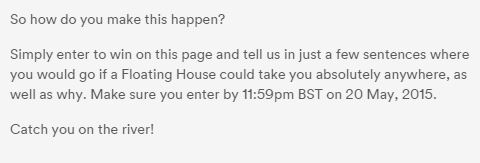
In addition to promoting the new law, spectators who caught glimpse of the Airbnb abode, or shared a shot of it on Instagram, also had the opportunity to win a night’s stay inside with three guests. The competition was housed on the Airbnb website:
Overall, I would qualify the Airbnb stunt as successful. The campaign, although risky, was launched without a hitch, promotion of the floating house was done on platforms such as YouTube, Instagram, and the website, and it increased awareness of London’s new hospitality laws to locals with a fun twist. Most importantly, the entire concept aligned with Airbnb’s idea of belonging anywhere.
Questions for Thought:
How would you evaluate this creative stunt? Based on our previous discussions on brand and marketing integration, would you agree that this execution seamlessly blended in with the brand’s overall marketing strategy? How does this stunt boost Airbnb’s reputation among Londoners?
Have you ever browsed through your inbox and noticed an email from that one place you shop at grabs your attention with that one deal? You know, that sweet deal that entices you to open that message, click on the attached link and start piling up products into your online shopping cart?
A study featured on Forbes reveals “…old-fashioned email is still far more effective than social media in attracting customers to your business online” (Devaney & Stein, 2013, para. 2). Nowadays many people access their emails through their smartphones, and the surge of mobile devices has increased customer acquisitions through email marketing (Devaney & Stein, 2013). Forbes also claims that social media is a successful tool for an organization to emotionally connect with their audience, but the primary purpose of email marketing is to drive sales (Devaney & Stein, 2013).
Email marketing is an excellent outreach method because it’s “permission-based” (Devaney & Stein, 2013, para. 7), meaning they are sent to people who have subscribed to them at some point. So here are other reasons why this method still works– especially for me, as someone who prefers to shop online instead of in-stores.
They provide valuable content. Discounts and giveaways are some examples of valuable information that will keep consumers coming back.
When done right, email marketing can establish business-to-consumer connections by keeping them updated and making the shopping experience fun and convenient.
These emails should not:
Crowd someone’s inbox (Devaney & Stein, 2013). This could make people delete emails or unsubscribe altogether. It could also damage consumer relationships with the organization.
Use complicated language. This could disengage their readers.
So next time you receive an email from your favorite store take a look at how they’re asking for your loyalty. Do they seem pushy with their sales? Does the organization offer valuable information? Ask yourself what keeps you interested in their emails, and from there you might find that you are also a shopaholic… like me ;).
Reference
Devaney, T. and Stein, T. (2013, October 1). Why Email Is Still More Effective Than Social Media Marketing. Retrieved on August 1, 2015 from http://www.forbes.com
Posted inUncategorized|Comments Off on Why Email Marketing Is Still Effective
The 2015 Special Olympics, in Los Angeles, started on July 25 and ended on August 2. The event featured thousands of athletes and was sponsored by many world renowned corporations (Special Olympics, 2015). Hosted at both USC and UCLA, the games brought many to the LA community from all over the world. While on campus yesterday, I could not help but notice the high level of integration found among the event’s marketing communications. Analyzing both primary and secondary research indicates, the Special Olympics did a fantastic job of promoting and executing the games.
In order to get to campus, I took the Metro from Los Angeles Union Station. While purchasing my TAP card, I was pleasantly surprised to note that the card featured the Special Olympics World Games logo. Digging deeper I discovered that the Metro was an official transportation sponsor of the games (Chen, 2015). While the novelty cards are just one small detail, they are a great example of effective marketing.
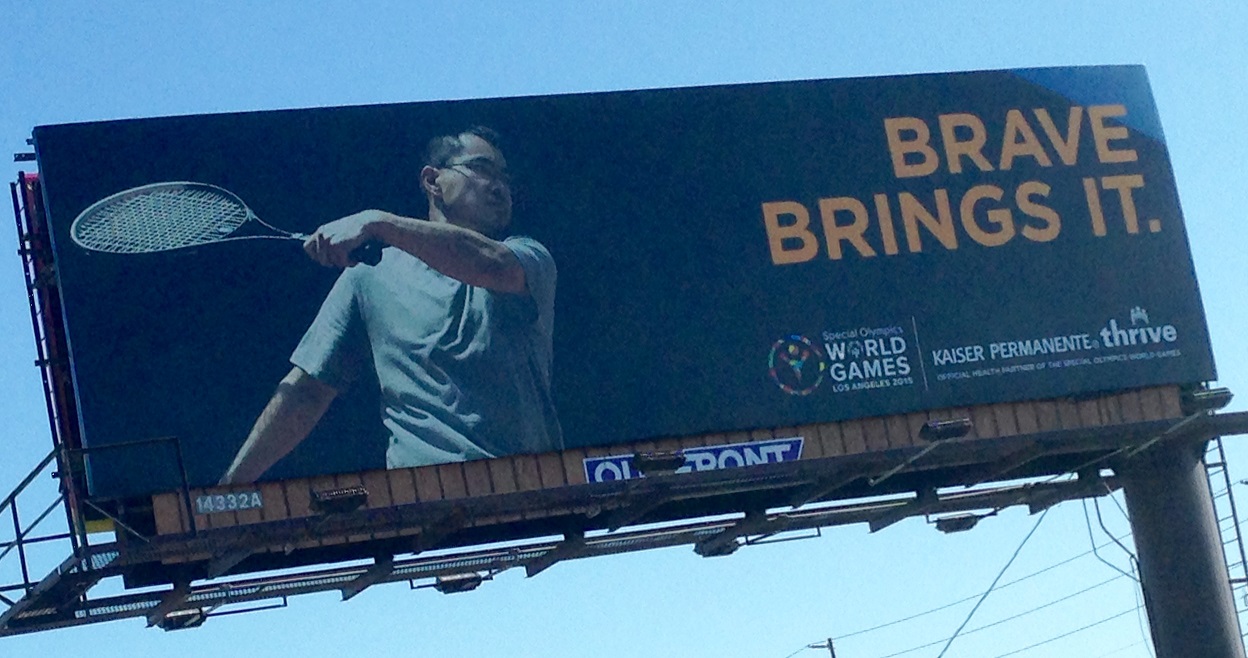
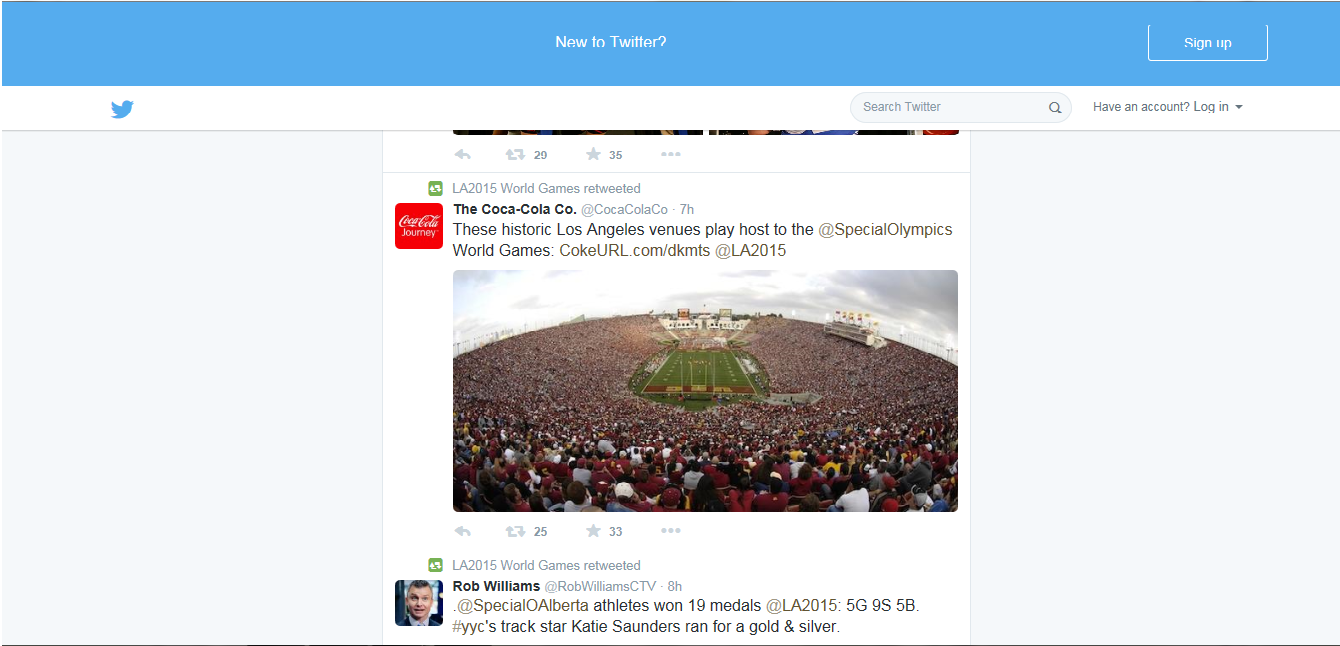
Once on site, the university was buzzing. The campus was filled with partners and sponsors that created additional awareness for the event. Partners such as Coca-Cola, ESPN, and Deloitte had their own displays on USC grounds. These displays were both fun and a strategic way to market the companies’ products. For example, at the Coca-Cola tent the company offered soft drinks and a place where children could participate in fun activities. ESPN not only broadcasted the event, the organization featured a jumbo screen for visitors. Other partners included, Mattel, Bank of America, Toyota, and Kaiser Permanente (Special Olympics, 2015).
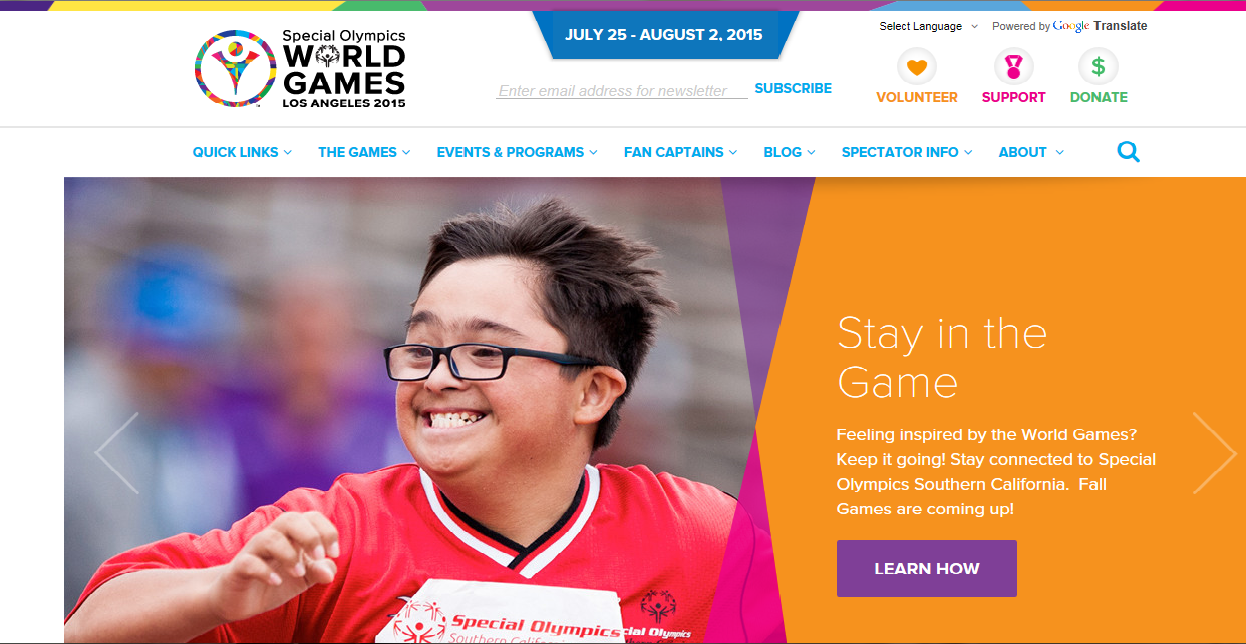
From the Special Olympics’ website, one can see other sources of integration. The site offers detailed information about the event and how to get involved (Special Olympics, 2015). An occasion of this magnitude demands maximum exposure, and the Special Olympics did a good job of utilizing all media outlets to generate awareness and promote engagement. A social media campaign was created on Facebook, Twitter, YouTube and Instagram. Hashtags such as #ReachUpLA were incorporated across platforms and were very successful.
From looking at the event’s Twitter page I discovered that 14.4 thousand individuals have subscribed to receiving updates on their feed. Additionally, the Special Olympics’ partners were also very active on Twitter throughout the duration of the games. Coca-Cola actively tweeted live from the games and provided followers with images. The industry giant, known for its creative and effective marketing, has 363 thousand followers on Twitter alone.
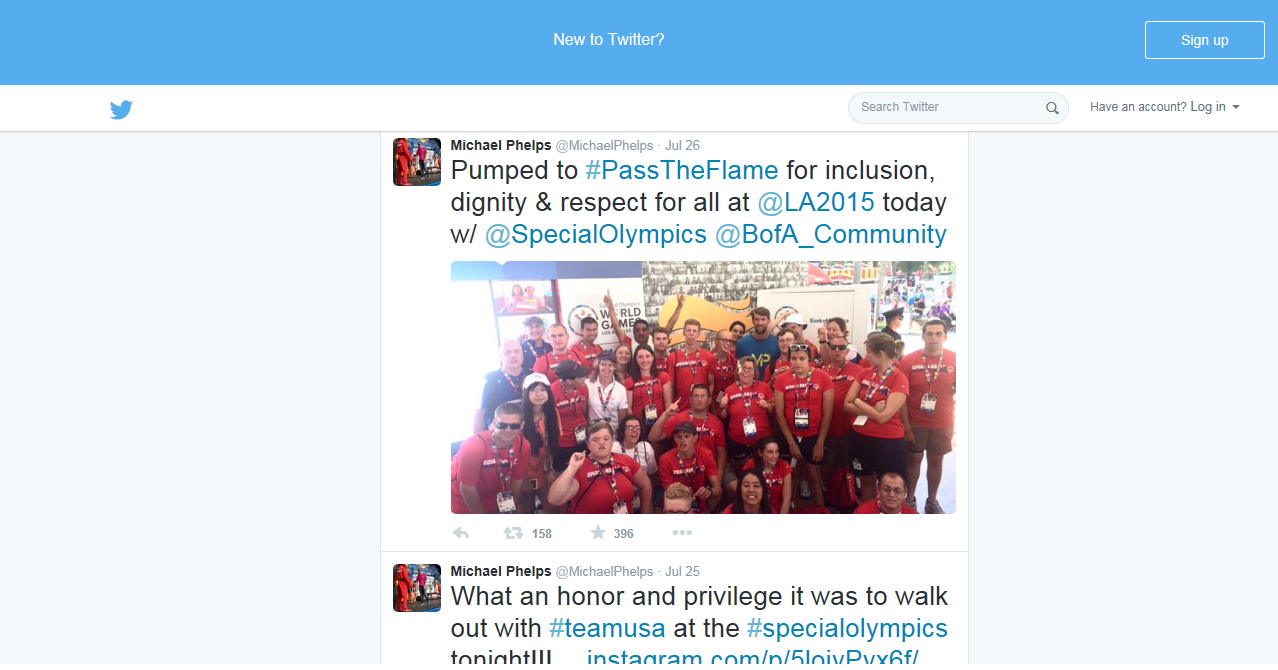
The Special Olympics also had several celebrity supporters, including former professional football player Terrell Owens, pop star Justin Bieber and Olympic gold medalist Michael Phelps (Dawson, 2015). These prominent public figures used their local and global connections to increase social awareness for the Special Olympics. Phelps showcased his dedication for the event on his social media pages.
The Special Olympics also used YouTube to highlight the games and build support. The YouTube channel has several videos that are empowering and insightful. The most recent video featured five unforgettable moments from the event, and allowed individuals the opportunity to stay informed. Other videos focused on specific sports and exclusive interviews. The videos are an effective way of ensuring repeat viewership and consumer participation.
Overall, the 2015 Special Olympics World Games in Los Angeles was a success. The games brought in an awe-inspiring 6,500 athletes from 160 countries (Rogers, 2015). With the support of over 500,000 spectators and strategic marketing efforts, these individuals made history (Rogers, 2015).
References:
Chen, A. (2015, July 16). Going to the Special Olympics opening ceremony? Better go Metro. Retrieved from http://thesource.metro.net/2015/07/16/going-to-the-special-olympics-opening-ceremony-better-go-metro/
Rogers, J. (2015, August 2). Closing ceremonies held as Los Angeles says goodbye to 6,500 Special Olympics athletes. Retrieved from http://www.usnews.com/news/sports/articles/2015/08/02/special-olympics-2015-is-winding-down-on-an-emotional-note
Special Olympics World Games Los Angeles 2015. (2015). Retrieved from http://www.la2015.org/
Many commercials, in today’s era, use popular groups or celebrity entertainer soundtracks to help promote their brands. These songs can often help in attaching a memorable groove or catchy tune so that the product can be recalled easily by a consumer’s memory. This is a trend that has become more and more apparent over the last few years.
Previously, most commercials would develop their own tunes. Who can remember the “pop pop fizz fizz, oh what a relief it is” tune of Alka-Seltzer. How about “like a good neighbor, State Farm is there” or “I’m stuck on band aide, cause band aide’s stuck on me” or “give me a break… give me a break… break me off a piece of that Kit Kat bar.” These are tunes that most of us will remember. However, this has begun changing over time and now, entertainers have begun lending their talents and their songs to TV commercials.
Perhaps corporations have seen value in adding the popularity of mainstream music to their advertising. Not only have many corporations focused on celebrities, but many of these entertainers have capitalized themselves by being involved with the brands directly. For example, take a look at Dr. Dre (Andre Young) who is a very accomplished producer/rapper. However, his part ownership of the Beats headphone corporation has catapulted him financially, well beyond where his music has taken him. However, it was a combination of good equipment and his celebrity status that brought the headphones attention. Now, their commercials use solid music and other celebrities or athletes wearing the headphones while the music pumps out of your system as viewers watch the commercials. Very simplistic, however, very successful and effective as shown by the sales and popularity of the Beats brand. In fact, Jimmie Iovine and Dr. Dre recently gave $70 million to USC in creation of the Jimmy Iovine and Andre Young Academy for Arts, Technology and the Business of Innovation.
I think this trend will continue, especially with the music aspect. Music is one thing just about every person, across the world, appreciates and listens to during the day. Music is a feeling, an emotion and now many people are finding music through advertisements. The video in the link, by Jingle Punks CEO Jared Gutstadt, explain the importance of musical entertainment in commercials and advertisement in general. He specifically points out that this is a win for everyone involved from the corporations, consumers and the artists alike.
Do you have any memorable commercials that you can directly relate to a song?
Do you see this trend continuing?
References
Lacovara, D. (2013, May 15). Jimmy Iovine and Dr. Dre give $70 million to create new academy at USC. Retrieved from USC News: https://news.usc.edu/50816/jimmy-iovine-and-dr-dre-give-70-million-to-create-new-academy-at-usc/
Tejada, J. (2015, February 10). Why today’s ads need amazing soundtracks. Retrieved from Ad Week: http://www.adweek.com/video/advertising-branding/why-todays-ads-need-amazing-soundtracks-video-162860
Serena Williams, one-half of the dominating tennis duo The Williams Sisters as well as a singles tennis phenom, has risen to the top of the athletic food chain as THE GREATEST OF ALL TIME female tennis player!! Serena is a force to be reckoned with. She has won hundreds of awards and titles including, most recently, winning her fourth singles Wimbledon title. Not only is Serena a beast on the court she has been successful in “in film, television, fashion and philanthropy” (“Serena,” n.d). She has worked hard and has risen her brand to the level of super-stardom that the mere mention of her first name, everyone knows who she is. SHE EATS, SLEEPS AND BREATHES HER BRAND, and like it or not, she is incredible!
UNFORTUNATELY, even with her level of accomplishment she is challenged, threatened, verbally attacked on a daily basis via social media. They talk about her hair, her body, HER EYEBROWS, her muscles and they even get at low as negatively commenting on her race. The more she excels, the more a subset of the public continues to bash her (Andraikos, 2015). Her every move is watched so much so that if she coughs wrong she will be attacked for it. Now is she a saint? No, but the level of cyber-bullying that occurs via social media is on the rise.
Cyber-bullying is defined as “is when a child, preteen or teen is tormented, threatened, harassed, humiliated, embarrassed or otherwise targeted by another child, preteen or teen using the Internet, interactive and digital technologies or mobile phones” (Stop Cyber-bullying, n.d.). Although, we come to understand that cyber-bullying does not discriminate and anyone can be a target.
The other day I was on my phone looking at Facebook and my daughter came up and started looking over my shoulder. We came across a meme discussing Caitlyn Jenner. It is too awful to repeat or repost, but my daughter was offended and said, “Mom, that is wrong and that’s cyber-bullying.” I looked at her and thought wow…this is coming from a girl who does not have any social media accounts, but she still understands what cyber-bullying is.
Social media, although with its original great intentions, has become a playground to attack any and everyone indiscriminately. The bullying comes in the form of tweets, Facebook posts/rants, memes, Celebrities are not the only ones being attacked. You hear about children and teens who are relentlessly bullied via social media. Some of these attacks have led to to attempted suicide while others have led to death.
NOW….what to do? How do we combat or stop cyber-bullying? What is the role of the host site? What is our responsibility? For celebs, unfortunately it’s par for the course of being in the public eye, BUT THERE IS A LIMIT. Those who are harassing and threatening physical harm should be reported (tagged) as an offender and reported to the web host for further action. If the attacks are persistent then there should be police involvement. In regards to our children, parental involvement is key to monitor the activities of children on social sites. The involvement needs to be on a level where it is recognized early on that inappropriate posts are taking place. Web hosts should have more parameters and embedded code that recognizes phrasing that could be considered harassing. On Instagram, as a preventative measure if you type the same phrase on several timelines within a short period of time you get placed on a “timeout” where you are given a one week recess from being able to post. This type of system needs to be in place on all social websites to track inappropriate behavior and flag abusers.
This needs to stop!! As Damali Elliott of The Huffington Post states “It’s no longer enough to shake your head or have a conversation with friends regarding recent events. Everyone who is against viral bullying of rape victims MUST take responsibility; and tweet, Instagram, blog, write letters and use every social media platform, to counteract hateful words that impact helpless teens” (2015). References:
When it comes to current marketing strategies, social media pops up a lot. In fact, if your company is not on the band wagon yet then you may be considered behind the times and need to remedy this ASAP (Flaxington, 2015). Building one’s brand in a digital age means understanding how your company can use this inexpensive and fast method of connecting to consumers and keeping them hooked (Vaynerchuk, 2013). Engaging consumers is often looked at in social media (tweeting/retweeting, sharing/liking, commenting, hashtags, etc.) as a way of not only promoting one’s brand but building a lasting relationship with your audience as customers and not people (Girdler, 2014, What the Fourth Wall Does).
The “fourth wall” is described as the space that separates a performer or performance from an audience (Faux, 2014, p.1). So breaking this wall allows people watching to interact with the performer or in this case, the brand or company. Social media is a great way for marketers to get through this “wall” and allow their consumers to react/share and give feedback in real time. However, is this necessary? Do companies need to be more entertaining and push the boundaries of consumer/brand relationships in order to be successful? TV ads have done this already with commercials (Faux, 2014) but what about social media?
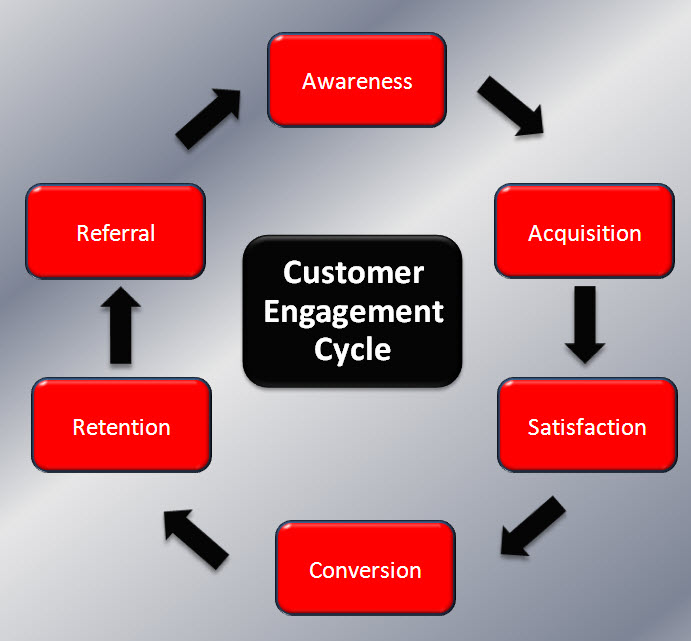
Well, it would seem that customer engagement can lead to many positive things for your brand such as brand loyalty, awareness or customer referrals to friends (“word of mouth”) (Flaxington, 2015). However, to keep consumers engaged with your brand constantly can be a challenge. It’s not enough to have a Twitter or Facebook page telling people what your current product promotion is when they come out…there has to be new, fresh material on a consistent basis and it better be good (Vaynerchuk, 2013). The more likes, retweets, comments and shares or reblogs can let a company know what works and what does not. While breaking this wall may not be the final answer for success in marketing it can certainly help in creating interest and new buyers while keeping customers tuned in to what your brand is doing. In fact, you may even be able to get them to provide some ideas for your next campaign.
References:
Faux, C. (2014, February 16). Breaking the fourth wall. JB Chicago. Retrieved from http://www.jbchicago.com/breaking-the-fourth-wall/
Flaxington, B. (2015, July 21). Four proven principles for success on social media. ValueWalk. Retrieved from http://www.valuewalk.com/2015/07/social-media-for-financial-advisors/
Girdler, J. (2014, July 10). When marketers break the fourth wall. Social Media Today. Retrieved from http://www.socialmediatoday.com/content/when-marketers-break-fourth-wall
Vaynerchuk, G. (2013). Jab, Jab, Jab, Right Hook: How to tell your story in a noisy, social world.
Marketing trends are all about social media this, and hashtag that. But what exactly is the infamous hashtag really about, and does it actually work? Is the use of a hashtag a marketer’s goldmine, or just another trending buzzword? We do know that social media has changed the landscape of marketing and communication, as well as consumer behaviors, so there’s gotta be something to it…right?
In searching for the truth behind the hashtag, I decided to look at some of the best and worst social media campaigns in hopes of becoming more #hashtagliterate. For starters it’s good to know that the hashtag didn’t exist until 2009, yet has quickly become a marketing go to. Most brands now utilize social media and a unique hashtag to support or drive a campaign, and it even has it’s own category within the AdWeek Shorty Awards (Monllos, 2015).
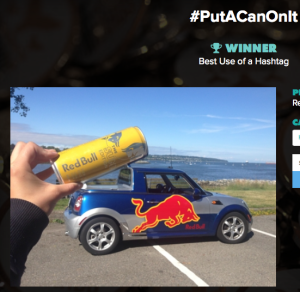
Notable brands who have used the #hashtag correctly include Redbull with
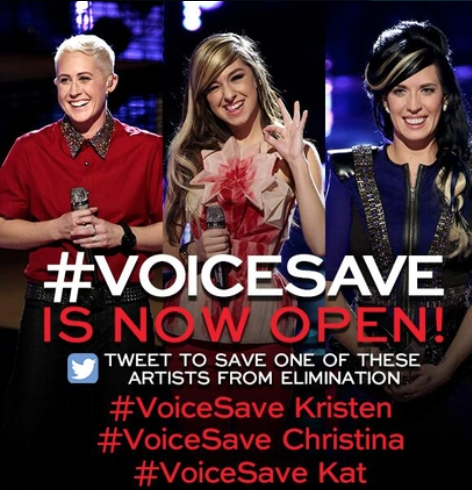
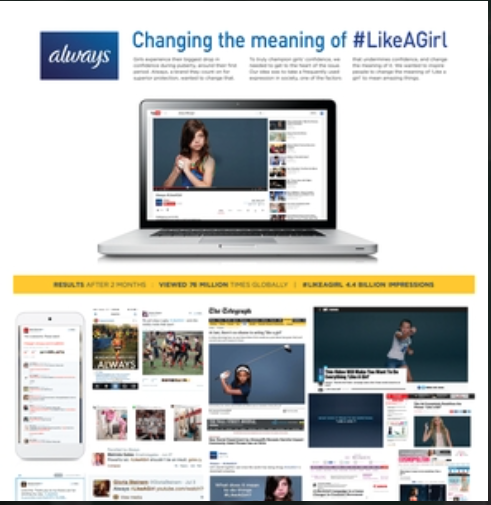
#PutACanOnIt, AT&T’s latest campaign bringing awareness to texting and driving with #X, and the popular TV show The Voice with #VoiceSave, to name a few (Monllos, 2015). For me, the stand out #hashtag campaign was Always #LikeAGirl. Not only did this campaign go viral and increase brand awareness, it is changing the perceptions and discussions around girls’ self-esteem. The hashtag helped Always receive 76 Million video views on YouTube and 4.4 BILLION impressions from the hashtag (Monllos, 2015). Ok ok, the hashtag thing had me at #billion, but are you bought in?
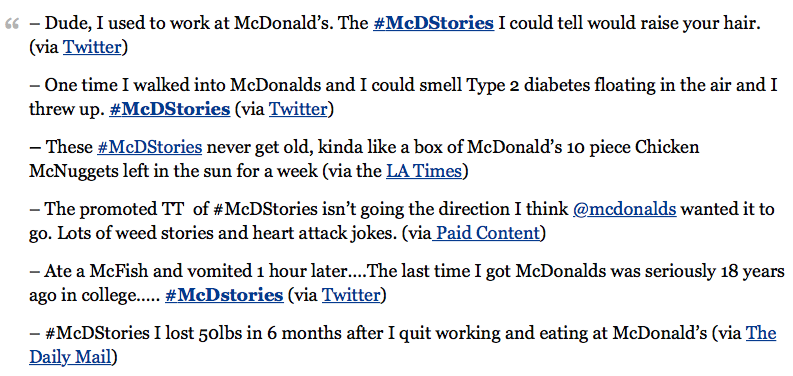
Before we all start running to Twitter and Instagram to see what hashtags are trending or available, let’s take a moment to learn from some of the worst social hashtag campaigns. McDonald’s #McDStories is one of the worst brand social hashtag failures, ever. What was meant to be a positive place for customers to share their happy McDonald stories, turned into a PR nightmare in seconds. Another epic failure was from the Canadian company, Research in Motion. They failed to identify what their abbreviated hashtag would read to the public when promoting new jobs with #RIMjobs (yikes). NYPD attempted to show good citizenship and openness with the community with #MyNYPD. Timing and sensitivity to current events is everything when it comes to social media. The NYPD did not take this into consideration when launching their campaign.
(BELOW EXAMPLES: From the #McDStories hashtag failure)
So, what can we learn from the greats and not so greats?
Do: Use engaging and actionable language in your hashtag. (Example: #tweetfromyourseat) (Kolowich, 2014)
Don’t: Launch a hashtag without getting other opinions and perceptions.
Do: Use emotion. (Example: #LikeAGirl)
Don’t: Launch without checking to see if it’s already being used and trending.
Do: Show personality and keep it simple.
Don’t: Not listen and watch for negative use of the hashtag, and always have a plan in place for crisis management.
Happy #hashtaging!
Reference:
Kolowich, L (2014, May 23). The Rules of Twitter Hashtags: Hits and Misses From 7 Big Brands. Hubspot [blog]. Retrieved from: http://blog.hubspot.com/marketing/twitter-hashtag-campaign-examples
Monllos, K. (2015, May 23). Check Out 2015’s Shorty Award Winners for the Best Use of Social Media, Apps and Video A few big names and quite a few surprises. AdWeek. Retrieved from: http://www.adweek.com/news/advertising-branding/check-out-2015s-shorty-award-winners-best-use-social-media-apps-and-video-163627
Wagner, M. (2014, December 20). Corporate social media fails of 2014: big brands make big mistakes. NY Daily News. Retrieved from:
http://www.nydailynews.com/news/national/biggest-corporate-social-media-fails- 2014-article-1.2051168
Since its inception, social media wove itself into popular culture today, causing organizations to engage with key stakeholders through various social media platforms. Social media platforms such as Facebook, Instagram, Twitter and YouTube collectively attract about 2.8 billion users each month (Facebook, 2014; Instagram, 2014; Twitter, 2014;YouTube, 2014). Since the number of internet and social media users exceeds two billion (Internet World Stats, 2014) internet users, organizations and communication professionals cannot ignore social media platforms as a way to communicate, even during a crisis.
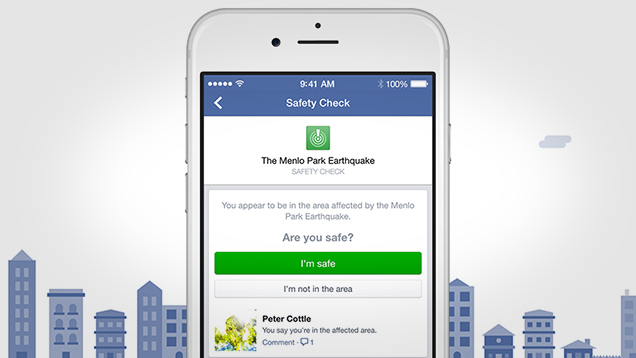
Facebook launched Safety Check on October 15, 2014. Safety Check is a Facebook tool that allows users within an area of disaster to send an update about their safety status directly to Facebook. Users who enable the geotagging feature will receive a notification from Facebook if there is a disaster reported nearby. Facebook users have the option to confirm their status and send their updates directly to their network of friends. Facebook developed this tool after the earthquake in Japan in 2011 (Facebook, 2014).
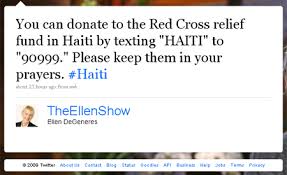
Social media also enables those affected by a crisis to communicate with others in different parts of the world. For example, during the 2011 flood crisis in Thailand, members of different communities raised awareness about the needs of flood victims. Volunteers were able to band together in effort to provide support to those in need. As the Asia New Monitor (2011) reported, different publics used Twitter to locate where volunteers were needed for disaster relief activities. Social media campaigns can also be used to generate donations for disaster relief efforts. After the 2010 earthquake disaster in Haiti, Facebook and Twitter users posted status updates and retweets to support the American Red Cross campaign to text “Haiti” to 90999 to donate 10 dollars to the Haiti relief fund (Morgan, 2010).
via Twitter
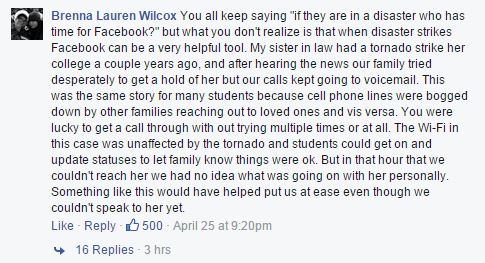
A study conducted by Howell and Taylor (2011) found that 87 percent of participants said they would use social media during a crisis to confirm the safety of their friends and family members. You might be asking who has time to use social media during a crisis, take a look at one Facebook user’s response below.
Via Facebook
References
Facebook. (2014). Facebook Newsroom. Retrieved from http://newsroom.fb.com/company-info/
Howell, G. J., & Taylor, M. (2011). When a crisis happens, who turns to facebook and why. Asia Pacific Public Relations Journal, 12, 1-8.
Instagram. (2014). Instagram Stats. Retrieved from http://instagram.com/press/
Internet World Stats. (2014). Internet World Usage. Retrieved from http://internetworldstats.com/stats.htm
Morgan, J. (2010, January 15). Twitter and Facebook users respond to Haiti Crisis. BBC News. Retrieved from http://news.bbc.co.uk/2/hi/americas/8460791.stm
Thailand: Social media put to good use during flood crisis [Electronic Version]. (2011, December 1). Asia News Monitor. Retrieved from ProQuest Database.
Twitter (2014). Twitter Usage. Retrieved from https://about.twitter.com/company







 ful to repeat or repost, but my daughter was offended and said, “Mom, that is wrong and that’s cyber-bullying.” I looked at her and thought wow…this is coming from a girl who does not have any social media accounts, but she still understands what cyber-bullying is.
 Notable brands who have used the #hashtag correctly include Redbull with