Pinning Away Our Paycheck

I love Pinterest. I am a fan of most social media such as Facebook, LinkedIn, Instagram, Snapchat…but Pinterest has become quickly a favorite of mine. I can make virtual boards of future dinners/desserts, outfit ideas, fitness routines, favorite celebrities…it’s amazing! So imagine my shock/horror/fascination when I read the other day that Pinterest would now offer a pay button to go along with some of their pins. Say what?!?
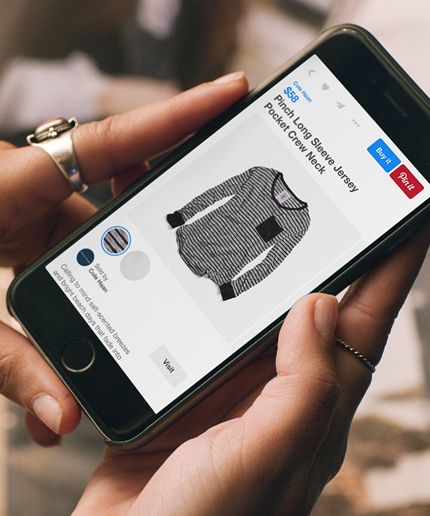
Pinterestphonebuy

Now, you may wonder why this is such a big deal.  After all this seems almost inevitable with social media being an outlet for brands to market their products and foster loyalty through their own Facebook or Instagram pages.  Well, Pinterest is now taking this a step further by giving users the ability to buy those shoes as soon as they “pin” them rather than having to search for the website or store that carries them. “Shoppable pins” will revolutionize the standard method of finding a store and looking for a shirt or outfit to buy…now users know what they want and all they have to do is press the button to buy (Heine, 2015).  Retailers who participate by providing links to purchase their products on Pinterest have a gold mine of an opportunity here.  Users can easily make impulse purchases to brands they already love or maybe find a new brand to love if the item is convincing enough.  The idea of marketing a product is to get people to buy it…so why not make this process easier?
annalect-Pinterest-Research-Purchase-Intent

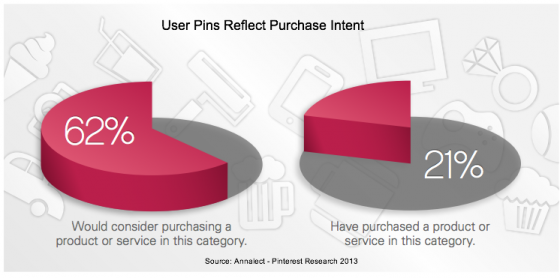
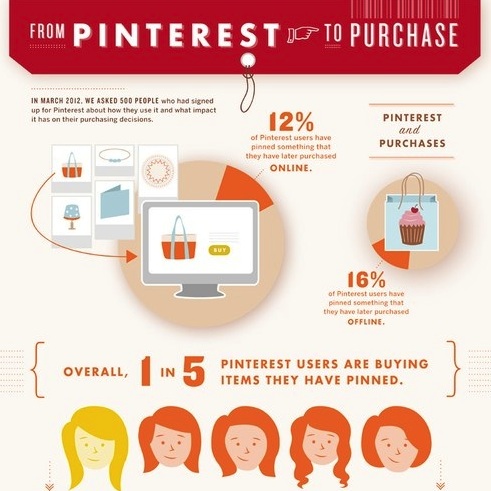
The beautiful part of Pinterest is it’s all about the user.  Their wants, hopes, ideas, life goals…who do we want to be? It’s not all that surprising that many who enjoy “pinning” end up purchasing items they have “pinned” to one of their boards.  I myself have made several meals/desserts from pins I have found and even bought items as well.  Even if one is not a huge fan of social media, those who want to build companies and make their brands more accessible should heed this: “Millenials, or Generation Y, will have a combined purchasing power of 2.45 trillion dollars worldwide by 2015. Purchases will be made online and in stores..social interaction on forums, reviews, posts and feedback is assumed to be influencing in purchasing behavior” (Scanlon, 2015).  Social media is a large part of how Millenials connect to each other through sharing their interests and ideas.  The idea is for brands to take this information and find ways for users to feel personally connected through posts and give users notices of sales/coupons/discounts.  This generation has money to spend and is not afraid to use different non-traditional channels to purchase their merchandise. (Scanlon, 2015).
pinterest-to-purchasefacts

If the ability to purchase as you pin does not shock you, then perhaps the fact that Pinterest can now help filter out pins which meet people’s interests based off past “pinnings.” VisualGraph was purchased by Pinterest in 2014 to help understand what others were pinning and help build suggestions for those users based off what was pinned earlier (Constine, 2014).  Companies who plan to sell items off Pinterest could greatly benefit from this handy service as this could bring customers back after making a purchase with frequent reminders of the brand’s products or deals.   While the concept of allowing purchases from a social media site may seem scary or risky, those who are looking to expand on their brands may find this a convenient and worthy idea.  Pinterest is full of users looking to make their boards a reality so why not make that happen with one easy step?

References

Constine, J. (2014, January 6). Pinterest acquires image recognition and visual search startup VisualGraph. TechCrunch. Retrieved from http://techcrunch.com/2014/01/06/pinterest-visualgraph/

Heine, C. (2015, June ). Instagram offers big data, but Pinterest has purchase intent.: Marketers weigh in on e-commerce upgrade. AdWeek. Retrieved from http://www.adweek.com/news/technology/instagram-offers-big-data-pinterest-has-purchase-intent-165168

Scanlon, S. (2015). How to tap into the purchasing power of Millenials with social media. YouBrand. Retrieved from http://www.youbrandinc.com/social-media/how-to-tap-into-the-purchasing-power-of-millennials-with-social-media/


Posted in Uncategorized | 7 Comments

Wanna Play?

When was the last time you went down a slide or took a ride on a swing?

Shanti_slide

Games of pirates, fairies, space wars, mystery seekers and princesses fill the playground daily. Can you feel it? Do you remember when you played one of these games yourself; many years ago? Close your eyes and think back to a time when you ran free; letting your imagination take flight.

Mila_Jumping_COMPRESS

What does that feel like?

Shanti_on_Bars

In David Slayden’s (2015) article, we learn of companies who are thriving because of their in-office play environment. Companies like Google [and Zappos] built their culture around the idea that to improve productivity and creativity, employees must incorporate play in their workday.

Allowing ourselves to find a moment each day to release stress from work and instant, mobile activity is refreshing to our mind and body. When stress is realized through play (a game with co-workers), Slayden says that your focus on job tasks should heighten.

Studies show, Sladen posits, companies benefit by adding a pinball machine in the break room or starting a company softball team. Leaders who are creative will find ways to add play to the employees workday. Google, for instance, has a rule (80/20) where employees should spend 80% of their day working productively on their job tasks and 20% on pet projects that spark their interest. Working on these projects allows employees to get out of their department and build relationships with others in the company.

Typically, play and work are separated by our limitations to the rules that exist in the play area, office or classroom. What would your 10th grade English teacher say if you got up from your seat, sat on the floor and started to play jacks?

I have to admit there were many times I held back my desire to run up the slide to catch my daughter because, well, I am an adult and we do not do things like that. According to the article, I should get more return on my investment of time with my kids by playing a little. The next time you are at the park, you may catch me running up the slide and running silly.

My advice is to try playing peek-a-boo in your office or classroom. For the sake of productivity and happiness, go out and play like you were a kid again!

Mila_on_Playset

References

Slayden, D. (2015, June 3). Lessons from the playground: The ROI of play in the office. Retrieved on June 4, 2015 from http://www.entrepreneur.com/article/246560

Posted in Uncategorized | 6 Comments

Un-following the “In-Crowd”: When Agency’s Go Against Social Norms

https://youtube.com/watch?v=sKZCcVKVHws

On Monday, June 1st, Caitlyn Jenner made her very public debut to the world on the cover of Vanity Fair Magazine. In addition to the magazine cover, Ms. Jenner also joined Instagram and Twitter where she quickly surpassed a record number of one million followers in only four hours. Following the outpour of media frenzy, ESPN announced that Jenner would be the Arthur Ashe Courage Award Honoree at this year’s ESPY Awards; The Miss USA organization offered Jenner a spot on the judges panel at their next pageant; and the show creator of Amazon’s show ‘Transparent’ offered her a spot on their show. But, what about endorsements, commercials, and advertisements? After all, Bruce Jenner was once the face of Wheaties in 1977 when he became “The World’s Greatest Athlete.”

This week, Ad Age published an article on their website titled “Why Brands Aren’t Heeding Calls to Hire Caitlyn Jenner (Yet)”. As the article explains, “If a brand wants to join this conversation, or tap Ms. Jenner for an ad campaign, it had better have a solid track record of supporting acceptance and social causes” (Sebastian, 2015). This basically means that organizations cannot just jump on the bandwagon of supporting the LGBT community, or Jenner, if they’ve never done so in the past.

In marketing, brands are more inclined to stay neutral with matters that may not be accepted by large audiences. A lot of times this means discriminating against one audience in order to fit the agenda for the majority. In a recent poll conducted by a Human Rights Campaign, only 22% of respondents said they personally know of a transgender person. Though, as the article reports, younger generations like Generation Z, don’t see what all of the fuss is about. In the case of Caitlyn Jenner becoming a future spokesperson for a brand, not only are there a lot of marketing risks involved, but there is a significant divide amongst consumers and their beliefs on the subject.

This article has inspired me to think about the history of marketing. As culture has evolved, so has entertainment, and people’s views about politics or socially acceptable behavior. CEO and founder of Sparks and Honey, Terry Young said it best in the Ad Age article,”[Marketers] have to ask [themselves], if this rapid shift is happening, and you have a generation that is completely accepting, how out of sync with the world are you going to be if you’re not connecting with them?”

It’s worth noting, that although Jenner hasn’t been approached for a marketing campaign yet, that the transgender community has been represented by beauty brands like Clean&Clear and MAC Cosmetics. And, perhaps right now isn’t the best time for a brand to approach Jenner at the cost of “riding a wave of publicity” (Sebastian, 2015). Daniel Hennessy, CCO of Geometry Global Agency in the U.K. offers another opinion, “The cleverest thing an advertiser can do is the opposite of what everyone else is doing” (Bishop, n.d).

For comparison, here are a few commercials that have gotten a lot of attention for being “risky” and “[doing]…the opposite of what everyone else is doing.”

…because an “anti-ad” campaign is just  risky. Dove’s ‘Onslaught’ spot acknowledged the pressures of beauty that are put upon young girls through marketing.

https://youtube.com/watch?v=Z01qH-jqGBY

The following ad was controversial for its depiction of an interracial family. Racists Very Upset Over Interracial Family in Cute Cheerios Commercial

https://youtube.com/watch?v=vUGDQo2Pb6g

Coca-Cola created controversy with this Super Bowl ad that depicts people of all cultures singing ‘America the Beautiful.’ Those who opposed of this commercial were angered that the song wasn’t sung in English. Coca-Cola’s “It’s Beautiful” Super Bowl Ad Brings Out Some Ugly Americans

As an end to this post, I am opening up a discussion.

Is it “risky” for companies to market to audiences or promote ideas that aren’t yet culturally accepted by everyone?

In marketing, are there certain times where brands should “follow the wave of publicity”?


References:

Bishop, K. (n.d.) The most controversial—and effective—ads ever? CNBC. Retrieved from http://www.cnbc.com/id/101963345/page/1

Mandell, A. (2015, June 6). Will Caitlyn Jenner judge Miss USA pageant? USA Today. Retrieved from http://www.usatoday.com/story/life/people/2015/06/05/caitlyn-jenner-offered-judge-position-for-miss-usa/28571443/

Sebastian, M. (2015, June 4). Why brands aren’t heeding calls to hire Caitlyn Jenner (Yet). Ad Age. Retrieved from http://adage.com/article/media/worse-brands-remain-silent-caitlyn-jenner/298890/

Toomey, A. (2015, June 4). Caitlyn Jenner Arthur Ashe Courage Award: Double amputee Noah Galloway is not ”runner up”. E! Online. Retrieved from http://www.eonline.com/news/663197/caitlyn-jenner-arthur-ashe-courage-award-double-amputee-noah-galloway-is-not-runner-up

Vulpo, M. (2015, June 3). Is Caitlyn Jenner coming to Transparent? Show’s creator “Definitely” wants to incorporate her into show. E! Online. Retrieved from http://www.eonline.com/news/663051/is-caitlyn-jenner-coming-to-transparent-show-s-creator-definitely-wants-to-incorporate-her-into-show

Posted in Uncategorized | 1 Comment

Law Enforcement and Social Media

Law Enforcement and Social Media

Historically, law enforcement agencies are frowned from discussing on-going investigations or seek public assistance due to the confidential nature of the profession. One primary concern was not to disclose any discovery of the information as the suspect may learn of it and flee to avoid prosecution.

But due to the economic crisis in 2008 that subsequently resulted in the massive budget cuts from of tax revenues. Many law enforcement agencies across the US were forced to face the inevitable of reducing manpower that detrimentally affect law enforcement on all levels (Bohn, 2008.) Law enforcement personnel are dwindled through attrition and were unable to hire due to the budget shortfalls. As such, crimes are on the rise at an alarming rate (Schoen, 2013.) The common theme of “Doing more with less” caused Law enforcement managers to rely heavily on technology to allay the heavy burden of personnel shortages.

Law enforcement agencies now depend on social media, such as Facebook, to assist with investigation and prosecution of criminals (Kelly, 2012), even apprehending them (Knibbs, 2013.) Over 75% of the largest law enforcement agencies in the US are now using Facebook, Twitter and MySpace social media websites (Liberberman, Koetzle & Sakiyama, 2013.)


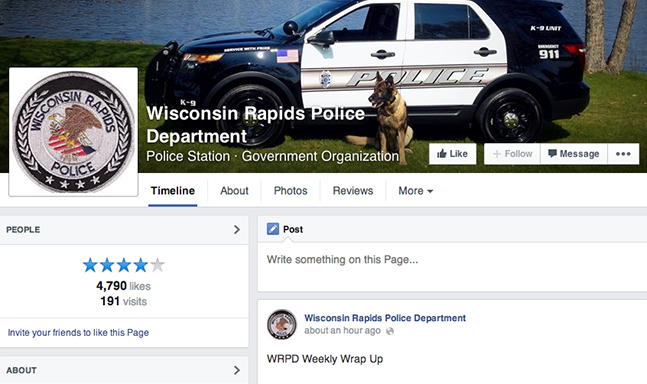
Wisconsin Rapids Police Facebook


Another salient benefit of Facebook for law enforcement is to make public announcements to the citizens of its jurisdiction. Social media became instrumental in fostering the relationship between the communities and the law enforcement officers who have sworn to protect and serve (Basu, 2012.)


Reference:

Basu, I. (2012, August 6). Social media elevates community policing. Digital                           Communities. Retrieved from: http://www.govtech.com/dc/articles/Social-Media-Elevates-Community-Policing.html

Bohn, K. (2008, October 13). Police face cuts as economy falters. CNN. Retrieved                 from: http://www.cnn.com/2008/CRIME/10/23/police.economy/

Kelly, H. (2012, August 30). Police embrace social media as crime fighting tool. CNN.           Retrieved from: http://www.cnn.com/2012/08/30/tech/social   media/fighting-crime-social-media/

Knibbs, K. (2013, July 13). In the online hunt for criminals, social media is the        ultimate snitch. Digital Trends. Retrieved from:             http://www.digitaltrends.com/social-media/the-new-inside-source-for-police-forces-social-networks/

Lieberman, J. D., Koetzle, D., & Sakiyama, M. (2013). Police departments’ use of          Facebook: Patterns and policy issues. Police Quarterly, 16(4), 438-462. Doi: 10.1177/1098611113495049

Schoen, J. W. (2013, November 22). Thinning blue line: Police cuts cripple cities.    CNBC. Retrieved from: http://www.cnbc.com/id/101179469

Posted in Uncategorized | 5 Comments

Emojis…Emojis Everywhere

Emojis. The icons that express when we’re happy…

Screen Shot 2015-06-07 at 8.01.49 AM

when we’re sad…

Screen Shot 2015-06-07 at 8.03.24 AM

and when we don’t have time for someone’s…well…

Screen Shot 2015-06-07 at 8.01.03 AM

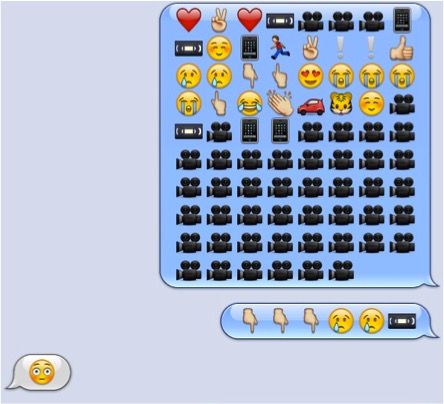
Emojis have become so ingrained in everyday conversation. So much so, that sometimes, it’s the only communication…

Convo

Now I know what it looks like. We’ve become a culture completely reduced to communicating in symbols! But maybe, just maybe, they’re not so bad after all. In fact, emojis are actually changing the way we think and communicate. Seriously. With all of the conversation through text and online these days, we’ve lost the expression and emotional cues that come from face-to-face conversation. However, emojis are introducing those cues back into our digital conversations and actually triggering the same parts of the brain that are triggered by facial expressions! Emotions are essentially creating a new way of thinking and communicating in this online world that we now live in.

So now that we have a better understanding of how emojis are changing the way we perceive online conversations, how can marketers use that to their advantage? If used correctly, emojis have the ability to humanize a brand. They give brands the chance to drive their message by tapping into the emotions of the consumer.

Before diving into this area, you must determine if they are right for the audience you’re trying to reach. emojis don’t translate for everyone. (AARP, don’t run off and start putting together an emoji strategy, ok?) Millennials and younger audiences are most likely to have familiarity with emojis and would ultimately relate with them.

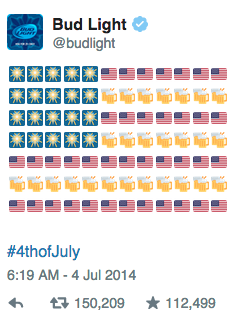
If your audience is fit for emojis, then it’s important to blending them into your marketing communications in a way that aligns with the brand’s voice and tone. The use of emojis in marketing can be something simple like adding it to a tweet…

Screen Shot 2015-06-07 at 1.38.07 PM

To more elaborate and creative uses…

Screen Shot 2015-06-07 at 1.43.03 PM

To the creation of brand specific emojis.

Screen Shot 2015-06-07 at 2.03.53 PM

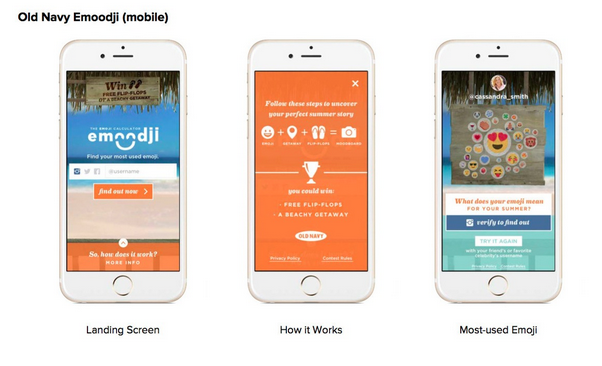
But the use of emojis doesn’t stop there. Brands are now using them in larger campaigns outside of social platforms. Old Navy recently launched a campaign called “Emoodji” which read customers top used emoji, then suggested a dream beach vacation and colored flip flops based on that icon.

Screen Shot 2015-06-07 at 2.07.12 PM

Whatever the method may be, brands should not be afraid to use emojis to their benefit. They are a great tool that can make brands a part of the current conversation, while connecting with audiences on a more emotional level. So go forth and emoji!

References

Brenner, M. (2015). The rise of the emoji for brand marketing. Retrieved from http://www.theguardian.com/media-network/2015/jan/26/rise-emoji-brand-marketing

Churches, O., Nicholls, M., Thiessen, M., Kohler, M. & Keage, H. (2014). Emoticons in mind: An event-related potential study. Social Neuroscience. (9).2.

Seiter, C. (2015). This is your brain on emojis. Here’s how to use them in your marketing. Retrieved from https://blog.bufferapp.com/emojis

Wilbur, H. (2015). Old Navy site sends free flip-flops based on your top used emoji. Retrieved from http://mashable.com/2015/06/02/old-navy-emoodji/

Posted in Uncategorized | 4 Comments

Presidential hopefuls seek new ways in reaching millennials

The presidential election season is heating up as new candidates declare their intentions to run for America’s most powerful government position. Although the 2016 election is still a year and a half away, those aspiring for the position of Commander in Chief must being hitting the campaign trail early in order to fundraise for their campaign as well as build momentum heading into the primaries. Campaigns have drastically changed just within the last few elections, as new ways of reaching voters has gone mainstream replacing traditional concepts.

Just as businesses are always looking for the latest ways in reaching consumers, politicians are doing the same exact thing, as many political strategists would consider their campaign, a marketing platform where reaching voters with effective content is the key. The key demographics that are more likely to vote are the older ones, especially those 35 years and up. These individuals grew up in an age without social media for the most part, and without the technological innovations out there today such as smart phones, tablets, etc. These older adults are more likely to read the newspaper, watch television, or listen to the radio, over younger generations who are constantly on the go, relying on their smart phone and social media for news and information. Successfully reaching millennials, those born primarily in the 1980s to around 2000 and are old enough to vote, has been a major focal point for candidates as tapping into this demographic could drastically change the outcome of an election.

My opinion in relation to successfully reaching millennials, is rather than long winded content with tons of factual information and dialogue, candidates utilize the modern advertising techniques many businesses conceptualize work in reaching this younger voting demographic. That is, an active voice on social media, short talking points that can be summed up in a few sentences, dialogue that not only addresses a range of important issues, but also how these issues relate or have an effect on millennials. Efficiently using social media, such as YouTube, Twitter, and even Instagram can have a profound result as the majority of young voters don’t read the newspaper, or pay attention to commercials and political debates (Nienstedt, 2015). When doing this, candidates must make short and concise points that stick out, they are essentially making a pitch. Keeping this in mind, it is beneficial to think of the 6 factors in the book, Make It Stick, where you want to focus your message with the key criteria: simplicity, unexpectedness, concrete, credible, emotional, and storytelling (Heath & Heath, 2008). In using this strategy and criteria, candidates are much more likely to appeal to millennials, and make sure their ideas stick out in their minds. An example I liked, was Hilary Clinton creating a LinkedIn profile and then including a brief post saying she was looking for a job (Zillman, 2015). This was a brilliant strategy as it played to many of the factors from Make it Stick and has been widely talked about across social media and throughout the news.

social-media-politics

The last point I wanted to make on this subject of marketing communications towards young voters, ties into the aspects of storytelling and emotions, and that is to tie in how a particular issue effects you as a voter. People are looking for personable information, and marketers or in this case political strategists should aim their content in such a way that requires a response from millennials, and that response in this situation is to buy into a particular candidate and vote for them.

http://cerc.net/2015/04/10/dont-read-all-about-it-reaching-the-millennial-voter/

http://time.com/3892182/hillary-clinton-linkedin/

Posted in Uncategorized | Comments Off on Presidential hopefuls seek new ways in reaching millennials

How Marketers Can Win Over Generation Z’s 8-Second Attention Span

Marketers have spent the last few years trying and trying to get into the minds of Millennials aka The World Wide Web generation. Just when they thought they had everything figured out, Generation Z showed up on the scene and presented a new problem. This new generation consists of young adults born in 1995 or later and make up one-fourth of the United States’ population. And although the two generations share similarities (e.g. entrepreneurial spirit), they differ in a one major way: attention span. It is believed that Generation Z has only an 8-second attention span. That’s right! 8 seconds.  


If marketers felt constricted before, they’re definitely feeling the pressure now. Long gone are the days when 4-minute long videos and excessively wordy articles are effective. Generation Z craves new information and they want this information served to them quickly. This explains why social media sites like Twitter and Instagram are so popular among this generation.They allow them to flick their thumbs up and down their social feeds to get content at record speeds. So what does this mean for marketers?


In order to break through all of the distractions and connect with Generation Z, marketers have to create content that is concise, quick and engaging. If they are unable to capture their attention within 8 seconds, it’s forever lost and it goes spiraling out into some black hole in the social atmosphere. This is not the time for rigidity or resistance. If marketers want to reach this generation, they have to change the way that they think and the way that they market.


One important thing to note is that Generation Z is fully capable of creating its own content; sites like Instagram and Vine have proven this. Effective marketers are able to use this user generated content to their advantage. So instead of creating content and spitting it out, these marketers play more of a curator role. The great thing about UGC is that it comes straight from the target audience. As such, it can be assumed that, when packaged correctly, they will respond well to it. 


Generation Z has a culture and a lifestyle all its own. It shares certain similarities with the generation that preceded it, however, it’s still different enough for marketers to notes and tp make adjustments. The key to winning over this tech-savvy, information-hungry generation, is to pack the most creativity into 8-seconds or less.  

 
Mizerek, A. (2015, June 5). 8-second marketing: How to craft content strategies for Generation Z. Retrieved from http://mashable.com/2015/06/05/marketing-content-strategies-generation-z/.

Posted in Uncategorized | 2 Comments

What You See is Not Always What You Get

Ice Cubes Inglass

Imagine two seventeen year-old Catholic high school girls writing about subliminal advertising in the early 1980’s and discussing images that included s-e-x.  Well those “rebels” were me and my friend Raquel.  We wrote our “team” term paper on subliminal advertising for a creative writing class.  Newell and Shanks (2014) describe a subliminal message as one that is received subconsciously but stimulates a response in the brain.  Our research, which did not include internet by the way, led us to a book written in 1974 by Wilson Key titled, Subliminal Seduction. The book was slanted toward the heightened concern that we were being brainwashed by the unscrupulous advertisers that were out to make a buck.  In fact, as I recall, our paper was filled with moral arguments on how this form of advertising was corrupting our society.  We were in Catholic school after all.

Pizza Hut

Since then there has been much debate on the effectiveness of subliminal advertising.  According to Mlodinow (2012), the concept has had enduring existence-be it positive or negative-within our culture.  Included in the definition of subliminal advertising is product placement within movies, television programs, sports events and political rallies (Newell & Shanks, 2014).   Recently, a group of students in Chile set out to study whether product placement was an effective method to promote brand awareness and recognition (Valenzuela-Fernandez, Martinez-Troncoso & Yanez, 2015).

Fedex

The group used college students for the research and the goal of the study was to ascertain whether the level brand awareness was affected by how it was displayed in the movie.  The students were separated into 3 groups to watch edited versions of movies where the brand was either displayed as part of the background, used by the main character or the brand was actually connected to the storyline.  According to the results of the research, if the brand was used as part of the storyline it received the highest level of recall and more importantly a higher participant response with the intent to purchase the product.   When the product was displayed with no tie to the plot or usage by the actor it received the lowest results in both categories (Valenzuela-Fernandez, et. al, 2015).  What does all this mean?  Maybe a study of whether brand awareness is heightened when used by actors while performing a sex scene is warranted.  Whew, I said s-e-x again.

References

Key, W. B., 1925. (1974). Subliminal seduction: Ad media’s manipulation of a not so innocent america. New York: New American Library.

Mlodinow, L. (2012, April, 22). Reality or fraud? Truth behind subliminal ads. New York Post. Retrieved from: http://nypost.com/2012/04/22/reality-or-fraud-truth-behind-subliminal-ads/

Newell, B. R., & Shanks, D. R. (2014). Unconscious influences on decision making: A critical review. The Behavioral and Brain Sciences, 37(1), 1-19. doi:10.1017/S0140525X12003214

Valenzuela-Fernández, L., Martínez-Troncoso, C., & Yáñez-Wieland, F. (2015). Influence of placement on explicit and implicit memory of college students. Comunicar, 22(44), 169-176. doi:10.3916/C44-2015-18

Posted in Uncategorized | 6 Comments

Branding: Is it worth it?

The idea of brand building began when companies took notice of psychological research that showed patterns in how people made decisions. Businesses realized they could use these tactics to get more people to make the decision to buy their product. It became increasingly successful and companies began spending more and more time and money on building their brands. But as companies continue to race to emotionally connect with consumers do those investments still pay off? Would a company be better off remaining anonymous and simply being there at the right time for a customer to complete their transaction? The answer largely depends on the type of services being provided and the end goals of the company.

There are still many benefits of building a brand. A brand can be used to distinguish products from one another and create meaning behind the product purchase. For example, a Toyota Prius driver carries a much different connotation than a Chevy truck driver. A well-built brand can help increase customer loyalty and satisfaction. With brand devotion customers will even seek out a specific brand over another. Those that are loyal to a specific brand have been proven to buy that brand over others both more regularly and more frequently. All of this is great for a company but building this level of brand allegiance takes a large amount of time and money. It cost Pepsi nearly a million dollars just to create their logo. So what is a company to do? Go all in on building out their brand and reap the benefits of their upfront investment for years to come? Forget about the branding all together and spend money and just those transactions that warrant a positive ROI?

Visuals of the Chevy Truck Brand.

Visuals of the Chevy Truck Brand.

The $1 Million Pepsi Logo

The $1 Million Pepsi Logo

For most companies branding should not be ignored. There are many benefits of having a great brand that can gain both short and long term success. Negative customer reviews or bad word of mouth can have a real impact on a company’s bottom line and growing repeat business can give a company a substantial competitive advantage. However, there are more cost-effective ways to build a brand than throwing large amounts of money on splashy TV ads. Emphasizing a positive customer service mentality is a free and easy way for many companies to build customer loyalty. An easy online check out process or friendly return policy may do more to make a memorable impact on customers than advertising. Conversely, having poor customer service cannot be easily remedied by ads. Smaller companies often times over-emphasis brand building as their advertising objectives. In many cases it is far more advantageous to master the free methods of building a great customer experience and then focus the dollar being spent on bringing in new customers. This will lead to great word of mouth from more and more people and cause a positive ripple effect to make a brand having a more meaningful and lasting impact.

Posted in Uncategorized | 1 Comment

Is Your Good Story, Good Enough? – These 3 Steps Can Help

reworked_headlines

Ok I admit it, I’m so guilty of scrolling through my news feed and clicking the story about the pregnant man or the smoking toddler, but let’s face it we don’t all get to pitch such compelling news stories (insert sarcastic *wink-wink)! With the overwhelming way to receive news these days,  public relations professionals are having to get creative when delivering key messages. I mean, something as simple as what will we put in the subject line of a mass email messages, can cause angst, anxiety…grey hairs. It is the job of the PR pro to get messages out to our stakeholders and target audiences regarding our organizations. Depending on what industry you are in, sharing the data and facts can be dry, boring or just plain uninteresting to the common person, that is if we aren’t mixing facts with stories. Think financial institutions, logistics, and such. On the other hand many times PR does too much of the anecdotal stories with not enough data to deliver stronger messaging.

I recently participated in a webinar entitled, The Art and Science of Storytelling and Messaging Across Media Platforms. I will say, ironically the headline was more interesting than the hour session, but it wasn’t a total waist of time. Andrew Gilman, president and CEO, CommCore, was one of the guest speakers and he shared a 3-step formula for developing a good story: 1) Compelling headlines 2) Scalable Facts and 3) Emotional appeal.

Gilman borrowed and example brilliantly executed by UPS, the world’s largest package delivery company, to help illustrate how this formula works.

  1. Compelling Headline

Whether we are pitching a story for earned media, writing a blog, delivering a speech, or sending a tweet, there is something challenging about the headline or the 140 characters that drive followers to the rest of the message. Here’s an example:

GoodUPS Is Committed To Saving Energy And Fuel Cost

Way Better: UPS Drivers Don’t Make Left Turns

Now, I don’t now about you, but I’m not seeking the latest in UPS news. In fact I’m mainly only interested when the brown truck is in front of my house dropping off, my latest online purchase. With that said, I would skip right over the first headline, but the much better version not only catches my attention but makes me want to learn more.

  1. Scalable Facts

Let’s face it we can’t get away with much if we are not backing it up with data. In fact data driven context is still a relevant buzz phrase in communications and I don’t see it going away. Providing these facts strengthen the story by giving it strong credibility and hopefully offering new insights to how the reader interprets the message.

UPS scalable facts: Decrease in CO2 emissions, saved 3 million gallons in gas and cut 28.5 million miles from delivery using this  

  1. Emotional Appeal

Of course, drawing on the readers’ emotions allows stories to resonate and makes them memorable. Her is where the creativity of story telling, the use of visuals or a quote from a supporter or third party representative is used.

UPS emotional appeal: Pitch the story to media about Bob, the local UPS delivery guy who only turns left 5% of his route.

The visual is there. Picture this…the reporter covering the story is on location as the passenger in the brown truck turning right all over the city…any city. This story can literally work in any city across the globe where UPS delivers. But what about the international cities where UPS operates that drive on the opposite side does the same logic work? I don’t know but what I do know is that this story continues to live because of inquiries such as this.

This strong message has so many media channels to fall into. Financial publication like, CNN Money(2010), Yahoo Finance (2014), Business Insider (2011) ran the story with similar headline over several years. Not only did the story resonate with the business world but, there is also and appeal for environmentalist reporting on organizations who are socially responsible, saving the planet, one right turn at a time.

Check out this Myth Busters clip. Though the well-known delivery service is not mentioned by name, the concept developed by them gets some mainstream media attention. This Myth Busters clip could have easily been shared on the UPS Facebook page for additional media impressions. Speaking of Facebook, the story was even posted to a competitors page from a user complaint about services. Hows that for the unforeseen impressions.

What started as a business idea for cost efficiency from the engineering and logistics team at UPS, turned into a PR success generating 4.2mm media impressions. Ok, so we may not be the next Dr. Sues but practice this 3 step formula if your are having a hard time with making a good story, great!

I’ll go work harder on my headline now.

images-3`

Posted in Uncategorized | 3 Comments