FUN WITH MURDER……..OF INSECTS

We’ve spent most of this course talking about massive corporations and their giant campaigns designed to take over the universe.  Outside of a couple of Commercial Kings episodes, though, there’s been very little discussion on the power of local advertising. You know the kind: quirky, humorous, bordering on insane.

That’s the kind of advertising I love, and while I’m buried in mountains of SWOT analyses and wondering why some companies bothering advertising at all, I want to offer all of us a break to explore the wonderful world of McGrath Pest Control.

A 34-year old pest company operating out of Cypress, Texas (just outside of Houston), I was introduced to McGrath by my father while I was discussing this course. We were talking a little about the Heath brothers’ sticky concepts, and he exclaimed, “I have to show you these commercials!” These short radio ads are, in my opinion, the greatest local commercials ever developed. They’re hilarious, completely grounded in storytelling (albeit fictional), and memorable. You can find the entire library at this link, but here is a quick sample for you.

Enjoy this library of genius, particularly the ones where he reminisces about dating Suzie Orkin, the fictional embodiment of the Orkin pest company.

Posted in Uncategorized | 13 Comments

The Interactive Consumer

In recent years, consumers have intensified the position of social media platforms in advertisement campaigns. As a result, Television networks have begun to ardently incorporate social media as a means to integrate consumers into the media mix. Think about the last time you watched an awards show or the last time you watched an interactive show like “The Voice” on Television. Consumer interaction has become a driving force behind the show. Has it not?

Now let’s take this further. Big award shows like MTV’s VMA’s (as an example) have opted to focus on real-time marketing. The show’s target audience which is predominantly comprised of millennials has a larger understanding of social media platforms and thus will be the first group to participate in on-line discussions regarding real-time events. Thus, advertisers now desire to get the ball rolling and become a part of the interaction. MTV successfully beefed up their advertising machine by promoting social currency which is, “something valuable in the moment, that they (consumer) can share while watching live shows on a TV set with a tablet or mobile phone next to them” (Elliott,par. 10).

images-1For example, Pepsi in partnership with performing artist Usher and MTV, created a hashtag #UsherNOW to promote the show and their product during Usher’s performance at the VMA’s. Concurrently, other advertisers did the same with different hashtags promoting their products and the show. Do you think it is always a good idea to use real time events for advertisement purposes? How do you feel about hashtags being used as a gateway in prompting social media discussion of products?

Elliott, S. (Aug. 20, 2014). Creating ads during the MTV Video Music Awards. NY Times. Retrieved from: http://www.nytimes.com/2014/08/21/business/media/creating-ads-during-the-mtv-video-music-awards.html?_r=1.

Posted in Uncategorized | 6 Comments

Sainsbury’s: Christmas is for sharing

This is an real story of war.

This is a sharing spirt of Christmas.

On No.12, Sainsbury’s has launched it’s new advertisement for 2014 Christmas. Only in two weeks it has been viewed more than 12 million times on Youtube.

1914

The ad retells a story happened on Dec 24, 1914, when opposing British and German soldiers emerged from their trenches, put down their guns and celebrated the holiday together by exchanging gifts and playing football. The commercial shows how war is transformed to a moment of peace, and expressed the core idea of ‘sharing’ as the spirit of Christmas.

poppy_installation_4_august_copyright_rleahairhrp__32__-_low_res-

From 1914 to 2o14, this year we witness the 100 years anniversary of the First World War. The advert follows the public’s passionate response to the exhibition of thousands of ceramic poppies in the moat of the Tower of London to commemorate 100 years anniversary of WW1.

“This year, we wanted to reflect that theme of sharing in our Christmas campaign through the lens of one of the most extraordinary moments of sharing in modern history ”, said by Mark Given, head of brand communications at Sainsbury’s.

He also stressed, “one hundred years on from the 1914 Christmas truce, the campaign remembers the fallen, while helping to raise vital funds to support the future of living.”

Remember the fallen, help the veteran.

This strategy tackles the question of  how to sell food and drink by using war. Smart enough,  Sainbury’s has decided to donate all profits made from the sale of a £1 chocolate bar that features in the advert to the Royal British Legion, to help improving the living conditions of veterans from war. Sainsbury’s has a long-running relationship with the RBL going back 20 years.

Who has the best Christmas advert: John Lewis or Sainsbury’s?

John Lewis 42% John Lewis
Sainsbury's Christmas advert 58% Sainsbury’s

As Christmas is around the corner, there is war of creative design and fancy storytelling emerging among major corporations.The Guardian had created a poll for public to vote for ‘who has the best advert’, where Sainsbury’s surpasses John Lewis by 58% vs 42%. Which one do you think is better? Why?

Links to John Lewis Penguin Campaign:

https://www.youtube.com/watch?v=iccscUFY860

Resources:

1. http://www.theguardian.com/media/2014/nov/13/sainsburys-christmas-advert-recreates-first-world-war-truce

2. http://www.theguardian.com/media/poll/2014/nov/13/sainsburys-john-lewis-christmas-advert-which-is-best

3. http://www.marketingmagazine.co.uk/article/1317340/exclusive-sainsburys-christmas-ad-feature-ww1-truce-football-match

Posted in Uncategorized | 6 Comments

WWTD (What Would Tobias Do)

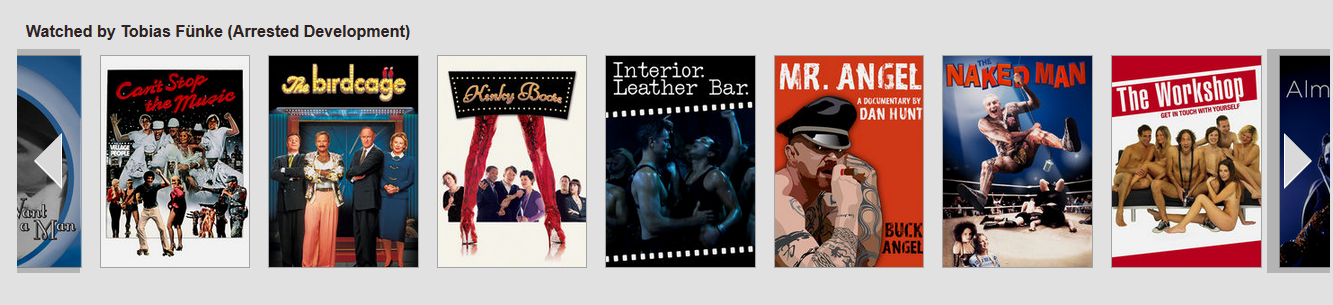
So I finally find the occasion to take a break from my MCM studies. With the reoccurring thought of Dr. Weintraub’s mantra of “take care, work hard, have fun” fresh on my mind, I felt it was necessary to enjoy some momentary respite. The CMGT 541 instructional materials for the week were reviewed, weekly readings were tackled, and the peer reviews for CMGT 597A were underway. After a solid 30 minutes of production, it was evident that a multiple hour break was necessary. 😉 Within a few clicks Netflix appeared and a menu of perfectly timed distractions were before me. Scrolling through the variety of recommendations, I stumbled across a particularly intriguing list of suggestions:

Netflix

For the sake of full disclosure, this particular menu was not present on my personal Netflix menu, although I am a fan of Arrested Development (and do hope it captured your attention). With that aside, however; and more importantly, it is noteworthy to consider this method of marketing communication. Within its own distinct arrangement, and a means unique to Netflix, the company effectively exercised a method to jab (Vaynerchuk, 2013) its customers. Offering recommendations by genre, mood, or titles similar to content already viewed is commonplace and something viewers already expect. The simple method of further tailoring these recommendations via the use of fictional characters within the actual content already viewed, however; is outstanding. It’s native to its unique platform and the context (Vaynerchuk, 2013) it provides for its customers and the fans of particular content has generated a certain amount of buzz.  A number of bloggers have noted Netflix’s efforts and there’s a general online conversation occurring regarding these communications.

Whether or not a right hook (Vaynerchuk, 2013) will be deployed is yet to be seen; the recognition of these recommendations only seems to be noted within the last several days. Ahead of the Thanksgiving holiday, the anticipated new content coming to Netflix next month is also generating significant coverage, although its direct connection with this unique marketing effort in unclear.

Have you seen any Netflix recommendations offered in this way? I have yet to, although to be completely honest, I can’t remember the last time there was enough time to sit and watch a full movie in its entirety with all my studying (seriously…I’m serious!). I was intrigued when I came across, what think is a quite clever, undertaking by Netflix, and I’m curious what your thoughts may be –either the recommendations themselves presented in this way, or if its leading to something bigger?

References:

Vaynerchuk, G. (2013). Jab, Jab, Jab, Right Hook: How to tell your story in a noisy, social world. New York: HarperCollins.

Posted in Uncategorized | 5 Comments

Breaking up is hard to do

Hot off the press: The New York Times is reporting today that Budweiser is putting their famous clydesdales back in the stables – possibly for good! After years of dwindling sales – some of which can be attributed to cannibalism by its fewer-caloried friend, Bud Light – Budweiser appears to be taking its brand in a new direction to appeal to younger beer drinkers. For many of the people in this MCM cohort, the Clydesdales probably represent a staple in your advertising past. I know I always looked forward to the King of Beers trotting out (sorry, couldn’t help myself) the horses during the Super Bowl. For my money, the “Nah, they usually go for two” ad is as good as it gets.

I write today to first pay appropriate homage to a great ad campaign, but second, to point out how Budweiser has always been able to retire good ads and replace them with something better. Remember when they added a puppy to the Clydesdale spots and the internet exploded? The folks at Anheuser-Busch in St. Louis must have a bunch of animal loving Creative Directors; I also recall when the “Bud” “Weis” “Er” frogs upstaged the 1995 Super Bowl. The beverage industry is rich with great advertisements – promoting beer is, after all, pretty easy – but I think Anheuser-Busch has always been exceptional. I’m wondering what other brands have been able to retire iconic campaigns and replace them with great effectiveness? Old Spice is another brand that has a reputation for knocking consecutive campaigns out of the park. Can anyone think of any others?


Posted in Uncategorized | 9 Comments

The Purpose or the Passion: The Why in Professional Services Marketing

Do people buy what you sell or do they buy why you sell it? When you consider purchasing a new computer what features do you seek? Reliability? Value for the money? Brand storytelling? What about when you seek out professional services? What criteria do you set for due diligence when this need arises?

Consumer computer markets are prolific with data on this topic. Brand storytellers abound in the market place, advertising is built on emotional stories, and consumers are inundated with genesis tales of college drops out toiling in their parents’ garages.

And yet, professional services marketing, a field all to often overlooked in the marketing game, relies almost exclusively on the why. Most consumers who find themselves with a need for professional services have a difficult time finding the right place to turn (Muniz & O’Guinn, 2001). Law, architecture, or engineering services can bare huge financial costs, and significant additional losses if the professional isn’t one. Therefore, an effective strategy for professional services marketing relies heavily on the why.

According to Simon Sinek (2009) the law of diffusion of innovation shows us that a small minority of individuals will seek out new services because they believe in the story that the brand tells the world. Sinek (2009) further argues that consumers are motivated by an entrepreneur’s passion and by the story that he tells. If this is true, how can we market professional services not with the service in mind but with the story in mind? An effective first step is to look to the potential client’s need and provide an elegant, cost-effective solution. To balance the client’s need and purpose with that of the professional—a lofty task indeed.

That challenge notwithstanding, marketers in these fields should look to leverage a professional’s passion and story to ensure the needs and mission of the client meet the needs and mission of the professional (Sykes, 2011). Professional service firms’ clients are often difficult to define as they typically are made up of public and private organizations and institutions with myriad decision makers and complicated hierarchies. But one thing is certain, professional services clients seek out the professional who believes in their purpose and seek to work with a professional who is passionate about their craft. In that rare crossroad, where a client’s enterprise problem aligns with a professional’s enterprise solution, marketers should seek to not only create but also to capture new value.

 References

 Muniz, Jr, A. M., & O’Guinn, T. C. (2001). Brand community. Journal of                 Consumer Research, 27(4), 412-432. doi: 10.1086/319618

Sinek, S. (2009, September 10). Simon Sinek: How great leaders inspire action. [Video file]. Retrieved from http://www.ted.com/playlists/171/the_most_popular_talks_of_all

Sykes, A., K., (2011). What is competitive intelligence? Marketer, 30(6), 18-20.

Posted in Uncategorized | 3 Comments

Instagram, The Small Business Booster

I remember when I first downloaded Instagram at the time of its launch back in 2010. I didn’t really understand it, none of my friends or family had it, and I didn’t treat it like a social media site.. All I knew was that it had really awesome photo filters that made my photos look epic! Ask me what I think of Instagram today (four years later) and I’ll tell you something totally different. Instagram is now my social media platform of choice, I’m on it more than I’m on Facebook (in fact at one point, I didn’t even have Facebook) and I never use Instagram filters anymore (my favorite is VSCO). To boot, my jaw literally drops to the floor when someone tells me they don’t have an Instagram and the first response out of my mouth is, “Whaaaaaaaaaaaat?! Are you serious?” You’re probably wondering, “So what does that have to do with anything? How does that even relate to marketing communications?” Well, the point of my story was to illustrate how much Instagram has evolved from its inception to the important marketing communication tool it is today.

Speaking from personal experience, Iʻve witnessed first hand the power of Instagram. For example, when brazilian bikinis started to trend, I watched a tiny, little, Hawaii bikini shop – @sanlorenzobikinis – go from mom and pop to changing the entire bikini scene. Walk onto any beach in Hawaii… You’ll find that it’s easy to tell the residents from the tourists. Most, if not all, local girls can be found sporting an SL bikini. Theyʻve become so popular, in fact, you can even catch celebrities wearing them.

Image from Google.com

Image from Google.com

As a second example and personal experience, there’s a friend of mine’s shave ice (or you might call it a snow cone) truck. Using, absolutely no marketing avenues except Instagram, she and her husband were able to utilize the social media platform to get the word out about their new business. Featuring their patrons with their shave ice concoctions on their Instagram account, @originalbigislandshaveiceinc, was a hit and is continuously drawing in a crowd. In less than a year, the shave ice truck has become known as the best shave ice spot on the west side of Hawaiʻi Island.

From what Iʻve seen, Instagram has really done wonders as a marketing communication tool for small businesses. If Iʻm being honest, Iʻm not sure that Instagram would have the same effect on larger corporations (i.e., producing sales and helping businesses to expand). What do you think?

Posted in Uncategorized | 8 Comments

Redirect the Jabs, Hook (and Jabbering): Social Media went South

Gary Vaynerchuk’s book, Jab, Jab, Jab, Right Hook, attempts a knockout. As for metaphorical imagery, jabs and right hooks effectively spin an instructive and interesting yarn. Vaynerchuk’s tutorial on how to conquer the digital marketplace is immediately relevant (at least in the United States). Even a few years ago, the book’s platforms didn’t even exist. The same may hold true in a few years hence. They may not even exist, or at least with the power and prevalence they enjoy today. I doubt that causes concern for the author as the evanescent popularity of marketing models and methods, along with their accoutrement platforms, promises untold sequels to Jab Jab’s current marketing missives.

Despite Vaynerchuck’s best intentions, I’m compelled to question a central premise. Will social media retain its power and pull, at least in America and Europe for the long haul? Sure, people will dabble in social media to a certain extent for years, even decades. But will today’s wonders become tomorrow’s yawns? With a flurry of jabs pummeling people from all ends, they likely will not need a right hook to score a knockout. They’ll fall flat on to the ground, victims of jab overload. It will not take a pummeling to lay them out, but simply the incessant prickling and needling as marketers pick their data like an irritating and somewhat painful scab. No doubt digital downloads are here to stay. However, nostalgia can trump novelty. The resurrection of vinyl proves that simplicity and nostalgia have a place (and a market) on the nearside of the digital divide.

brazil-map

When I wrote about Brazil’s ascending interest and import in social media for the Huffington Post and the Vail Daily over a year ago, I referred to reports in Forbes and the Wall Street Journal that social media usage was headed south, literally and figuratively. While Vaynerchuck examined American social media platforms, Hoot Suite CEO Ryan Holmes advises differently, as glaringly apparent in his column’s title, “The Future Of Social Media? Forget About The U.S., Look To Brazil.” It appears that a huge market is willing, even eager, for some jabbing (and jabbering) even as Americans withdraw. The Brazilian culture valued a vibrant collective social life long before mass media expanded beyond broadcast outlets to communication platforms. If marketers want to play the pugilist, Brazil is where the right hooks will score their intended knockouts with greater frequency. The subtext (and subtitle) of Vaynerchuck’s book, “How to Tell Your Story in a Noisy Social Media World” has it correct. The social media environment is both noisy and global. Noise can be deafening and the world extends beyond our borders and behaviors. If Americans become unable or unwilling to hear the message, Brazil wants in on the conversation. The key word is conversation; not reception. The author emphasizes that content is king, but context is God. Vaynerchuck’s compiled platforms are incomplete. It appears that anyone interested in marketing should seriously study the Brazilian landscape for both content and context.

Posted in Uncategorized | 3 Comments

Second Screen Shopping Says Bye Buy to Retail Endcaps and Displays

A fellow Trojan and one of my favorite group members, Kristal Shipp, sent our group a link of Gary Vaynerchuck’s #AskGaryVee Espisode 45. Apparently when he’s not throwing jabs and right hooks, Gary V. hosts an online segment in which he charismatically answers marketing questions from people on social media. In the first part of this particular episode, Mr. Vee talks about an interesting change in the retail landscape. Twitter user @JoeBrennan asked, “What trends should brick and mortar stores be paying attention to over the next 12 to 18 months?” And Gary’s response was pretty innovative and awesome.

Before I expose you to it, I’ll rant a little about my first job out of college because it’s relevant to Gary’s point. In 2008 I worked as a Chain Territory Manager for Southern Wine and Spirits (SWS), which was at the time, the largest wine and liquor distributor in the United States with roughly 64% of the market. SWS distributed wine, spirits, beer and some non-alcoholic mixers and beverages. The work was tough. I worked early mornings selling in displays, encouraging large retail chain stores (Ralphs, Vons, Food 4 Less, etc.) to order more stock of the items in my portfolio and building displays using tens and hundreds of heavy wine cases. But the great part of it was the fact that I had first knowledge of awesome wine and liquor sales and deals. Hint hint, the holidays, what we called “O-N-D,” are riddled with amazing wine and liquor sales and shiny gift packs with classy freebies like custom drink ware.

Enter Gary Vee. In Episode 45. He talks about the idea of “The Second Screen Shopping Opportunity” in reference to the television and cell phone, and he explains that while most people think the cell phone is the Second Screen, the television is actually slowly but surely becoming the Second Screen to the cell phone because we’re so consumed checking social media, texting, talking, playing games and everything else. Sir Vee then relays this to an experience he had in the grocery store where he saw a customer go from one aisle, around an endcap full of product and into the next aisle without looking up from there phone. Having worked in the retail space for nearly five-and-a-half years, I can tell you that endcaps and standalone displays in grocery stores are a big deal to companies, and they pay a lot of money for placement in these areas. That way you can grab your Tide, Pringles, Manischewitz Wine or Lays potato chips easily without having to go down and entire aisle searching for them.

But what good are these lavish endcaps and displays if the customer doesn’t notice them because they’re busy playing Tsum Tsum or checking in on Facebook? Gary brings up the point about Second Screen shopping in this situation utilizing geo location, which in short means that if you’re shopping at your local Ralph’s market, you would receive a little update on your phone similar to a push notification that contains a coupon or special sales information about a product that is sold in that store. Thinking about this in the general retail space that includes all products from diapers to toilet paper, steak and celery, I was completely overwhelmed, but Gary dabbles a little in talking about the wine world, an idea that I think would be groundbreaking for wine and spirits brands.

Allow me to utilize a famous Golden Girls euphemism. Picture it: you’re shopping at your local market, and you need to buy a bottle of vodka for a soiree you’re hosting next weekend. You’re not particularly brand loyal, but you prefer to not buy the store brand or Popov (like you had to in your starving college student days). You’re standing in the aisle browsing when up on your cell phone screen pops a coupon for $3 off Absolut Vodka. In addition, Absolut is already on sale, so it’s like you’re getting a double deal. Are you going to then reach for the Smirnoff bottle that is regular price? Remember that you’re not particularly brand loyal.

Of course this comparison does not work if we’re talking about a sale on Smirnoff when you’re planning on buying Grey Goose vodka because the price points between the two are quite staggered. It also wouldn’t entice you to buy a bottle of Jose Cuervo tequila instead of Patron. I said it was a good idea, not magic.

This concept of Second Screen shopping can really have an impact in sales among competitors who, in the past, spent time and dollars on shelf space, endcaps and display locations on monthly planners. Even training has been based around these elements. SWS spent time training its staff on the typical shopper: a 5’5’ right-handed woman shopping for an entire household. This meant that the most desirable location for products was on a shelf at 5’5 eye-level with multiple facings. Second Screen shopping sort of throws these principles out the window because if you have a coupon on your phone, much like if you’re holding one in real life, you’re going to be looking for that specific brand or product, and you’re going to grab it whether it’s on the top shelf, middle shelf or bottom shelf. It’s taking brand ambiguous shoppers and giving them an immediate reason to buy Svedka Vodka, Robert Mondavi Cabernet or Wild Horse Pinot Noir.

I’m interested to hear readers’ thoughts on this concept. Like I said, when I think about all the products in a grocery store, Second Screen shopping seems extraordinarily overwhelming and even annoying if I think about having to delete or reject push notifications for anchovies, motor oil and bananas (I’m allergic). At the same time, who doesn’t love a good deal, and who doesn’t love to save money? If done right and with moderation considerate of consumers, this idea can be great for both consumers and companies.


Posted in Uncategorized | Tagged , , , , , , , , , , , | 7 Comments

Black-ish, Urban-ish, Latino-ish…

In ABC’s new comedy “Black-ish” the lead character is an executive at a high-profile advertising agency.  In the pilot episode, he gets word that he is being promoted—he assumes he will be named the new SVP of the agency only to find out that he is being made SVP of the new “Urban Division.”  Throughout the episode, this event sparks a comical yet relevant dialogue regarding the role of race in the workplace.

Here’s a funny (to me :-P) clip:

http://abc.go.com/shows/blackish/video/VDKA0_97vxh0xf

Sprint appointed the first Latino to spearhead a telecommunications organization, Marcelo Claure, earlier this year.  This announcement comes at a time when more and more companies are developing Latino and Urban divisions to cater advertisements to minorities.

Thanks to the power of geo-targeting and geo-fencing, marketers can reach their desired audiences more effectively than ever.  For example, because of my zip-code in Miami, I constantly hear Spanish language advertisements on my Pandora and local radio stations.

Claure is the star of the latest Sprint commercial that premiered during the Latin Grammys.  According to Bergen (2014), this is not the first time Sprint has given their CEO a leading role.  However this is the first time the organization’s hierarchal configuration is being revamped to include a “new sales division for Hispanic and multicultural business” (Bergen, 2014, para 12).  Is this a desperate attempt to save the organization or a true socially conscious move towards a more balanced marketing platform?

Developments like these make me wonder, are these “Urban, Black, Latino, Multi-Cultural” #whateveracompanydecidestocallit branches necessary?  A part of me feels as though we are moving backwards—separating audiences by race and culture, while the other part of me feels as though it is a valid and just division of forces.    Perhaps it is because spending power is evolving as minorities become more influential in society or because the needs and wants of minorities do in fact tend to be different.

So is this shift in structure we’re seeing in organizations like Sprint more along the lines of one step forward, two steps back? Or more deserving of a big ol’ it’s about time?

References:

Bergen, M. (2014).  In Sprint’s New Hispanic Marketing Drive, CEO Is the Star Marcelo Claure Touts ‘Value’ In Ad During Latin Grammys.  Advertising Age.  Retrieved from: http://adage.com/article/cmo-strategy/sprint-s-hispanic-marketing-drive-ceo-star/295939/

ABC Black-ish. (2014).  How does a black guy say “good morning”? Retrieved from: http://abc.go.com/shows/blackish/video/VDKA0_97vxh0xf


Posted in Uncategorized | 4 Comments