The business of fashion blogging

Is it shocking to you if I tell you that a blogger can earn as much as $7.5 million a year for sharing fashion stories? Chiara Ferragni, the 27-year old Italian who runs the blog The Blonde Salad is reportedly making upwards to $8 million in 2014. The blog receives around 600,000 unique visitors and 6 million page-views each month. In the meantime, she has a significant size of audience on Facebook with about 860,000 “likes” and on Instagram with 2.9 million followers.
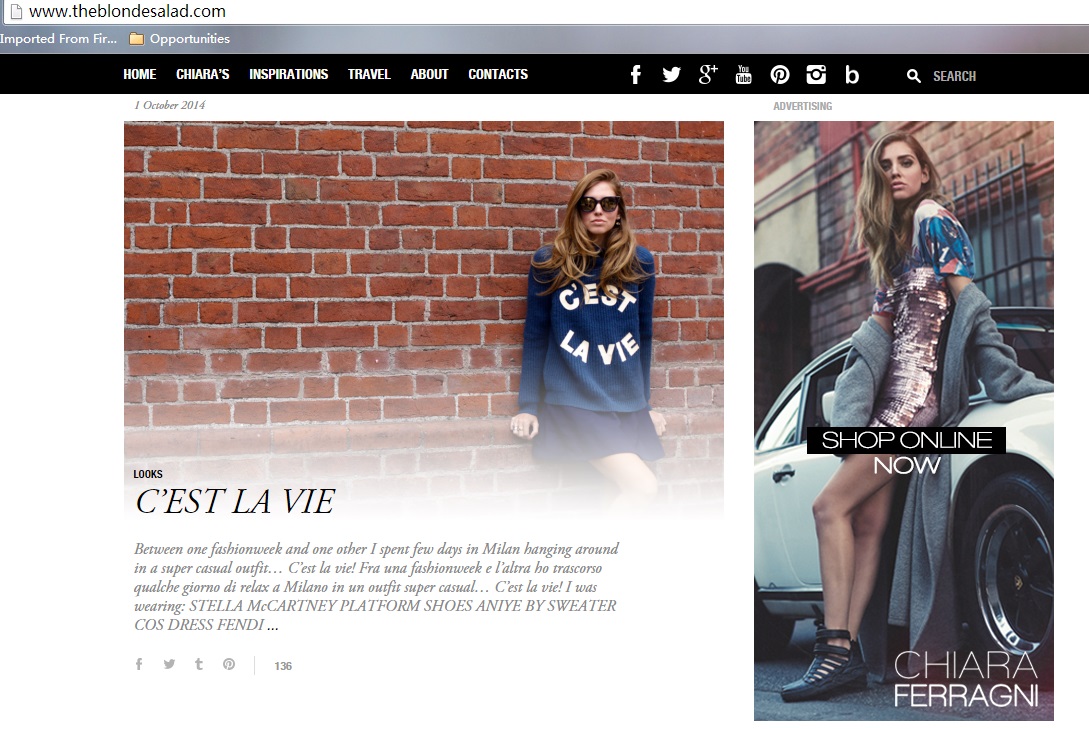
The Blonde Salad Blog theblondesalad.com

The Blonde Salad Blog
theblondesalad.com

Her huge popularity on the blog and other social media sites is interestingly not the major way of getting revenues. According to a report from Women’s Wear Daily (wwd.com), only 30 percent of her income (about $2.4 million) comes from her blog, corresponding advertising and brand collaborations, while the remaining 70 percent (about $5.6 million) comes from her footwear line – Chiara Ferragni Collection, created in partnership with Lorenzo Barindelli and Paolo Barletta.

Earlier this year, Ferragni unveiled her own boutique on Depop, a mobile platform founded by Simon Beckerman and backed by investors including Balderton Capital, Holtzbrinck Ventures and Red Circle Investments. It is an app in which you take a picture of something you want to sell and it can be out for sale online in 30 seconds. With the massive amount of followers, Ferragni’s clothes are usually sold minutes after she posts them, as she shared during an interview with The Business of Fashion.
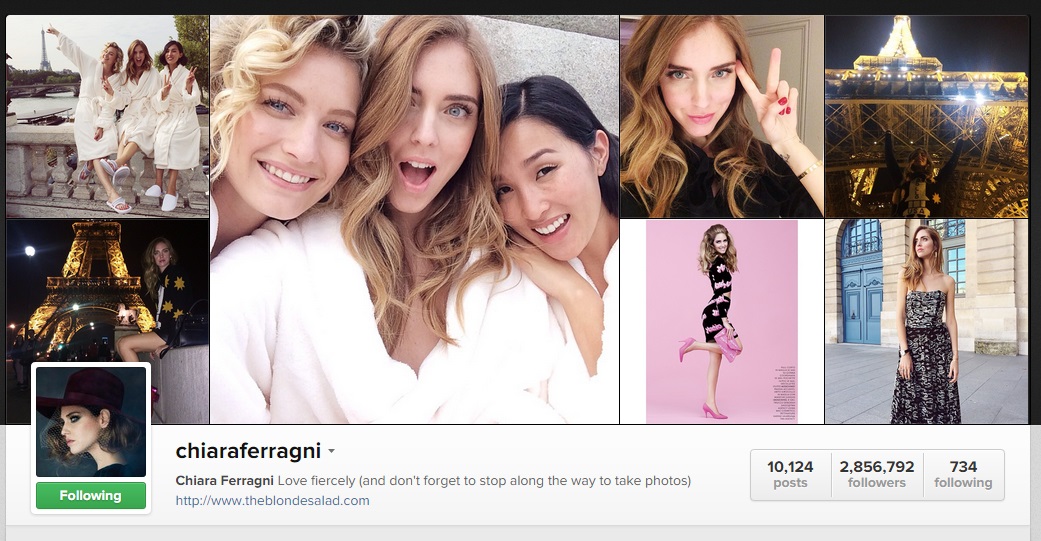
Chiara Farragni's Instagram

Chiara Ferragni’s Instagram

Ferragni is a very successful example of a fashion blogger who has managed to parlay a personal life-style and fashion blog into a fully realized brand and global business. One essential way leading to her success is the use of integrated marketing on social media and with brand partnerships. Ferragni and her team manage the blog and purposely plan their marketing and PR strategies to pursue retail business. It is obvious that her fashion impact on social media channels is huge: a selfie she posted in February during Milan Fashion Week in a Roberto Cavalli dress received 105,000 likes, and a portrait shot of her several years ago wearing natural makeup garnered more than 100,000 likes. These numbers could be associated with her achievement in market sales. The 10-style capsule collaboration she did with Steve Madden that hit the market in February sold 16,000 pairs in just the first two weeks; her own Chiara Ferragni Collection started in fall 2013 and this line of $220 to $500 shoes is now carried in almost 200 stores in 25 countries worldwide. The brand will launch in the U.S. with the spring 2015 season. So if you think fashion blogging is not really a serious business, Ferragni might ask you to reconsider.

Reference:

Chiara Ferragni’s blog: http://www.theblondesalad.com

http://stylecaster.com/the-blonde-salad-chiara-ferragni-will-make-8-million-this-year

http://www.businessoffashion.com/2014/02/business-blogging-blonde-salad.html
http://www.wwd.com/media-news/digital/the-blonde-salads-chiara-ferragni-talks-fifth-anniversary-and-footwear-launch-7888047

Posted in Uncategorized | 2 Comments

How RFID changed Festivals Forever

A concert-goer scans her wristband for entry to an event.

A concert-goer scans her wristband for entry to an event.

Who doesn’t love a good live event? Concerts. Ball Games. County Fairs. They’re all fun, but the part that really puts the magic in live events for me is the sense of collective identity that emerges from these experiences. Some call it “team spirit”, others call it “community”. Whatever it is, it’s probably a safe bet that we’ve all felt it when we were in a group of people sharing in a common purpose at one point or another.

Marketers and psychologists have only recently started understanding this realm of the human experience, but now through RFID technology the whole ball game is changing – or, perhaps evolving.

RFID wristbands are secure, fast and highly interactive.

RFID wristbands are secure, fast and highly interactive.

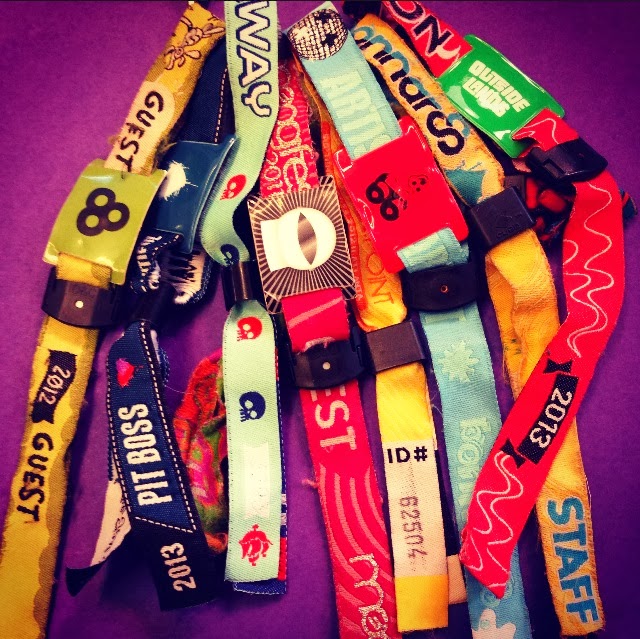
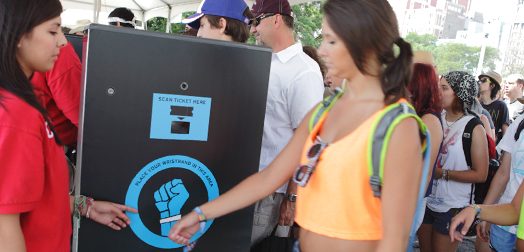
Music festivals have already taken to RFID technology to reduce ticket fraud and gather unique insights into audience members. An RFID chip is not a special edition Pringle. It’s a small transmitter that is water resistant, durable and functions as a key to access profile information on that particular wristband. By creating different scan points throughout a venue artists, vendors and sponsors can directly engage the crowd.

The Coachella Music and Arts Festival, which boasts about 80,000 attendees, uses scan points set at stages so that fans can add songs to a Spotify playlist to replicate their unique listening experience. About 30,000 ticketholders linked the wristband with their Facebook profile too. But Coachella isn’t the only one. Bonnoroo and Bamboozled used its RFID wristbands to offer discounts on merchandise, set lists and free music. Perhaps the folks at the TomorrowLand Festival in Boom, Belgium introduced the most impressive use case. As a pioneer of envelope pushing in the events industry TomorrowLand funded wristbands that allow funds to be banked and spent throughout the festival. In addition to eliminating the need for cash, a wallet or those pesky fee-driven ATMs, casual acquaintances at TomorrowLand can easily be promoted to Facebook friend status with a fist bump.

Yeah, with a dang fist bump.

http://www.youtube.com/watch?v=bn262Z0IyA4

One company, Intellitix, is behind much of these large festival uses of RFID. The company website claims that Intellitix “allows brands, artists and promoters to connect directly with the audience on and beyond the festival site. For brands in particular, it presents innovative and direct ways to reach new customers, while the technology generates interest itself.” At least part of the benefit for a live event to upgrade to this kind of technology is the PR alone. Providing smoother point of sale systems, faster security checkpoints and increased interactivity are all ways those who create live events can make them richer, more memorable experiences with lasting emotional connections.

Today, most of the youth that attend festivals hold onto their wristbands as trophies. Proof of adventures and memories of good times with friends. Some even choose to wear it for weeks after the event in remembrance.

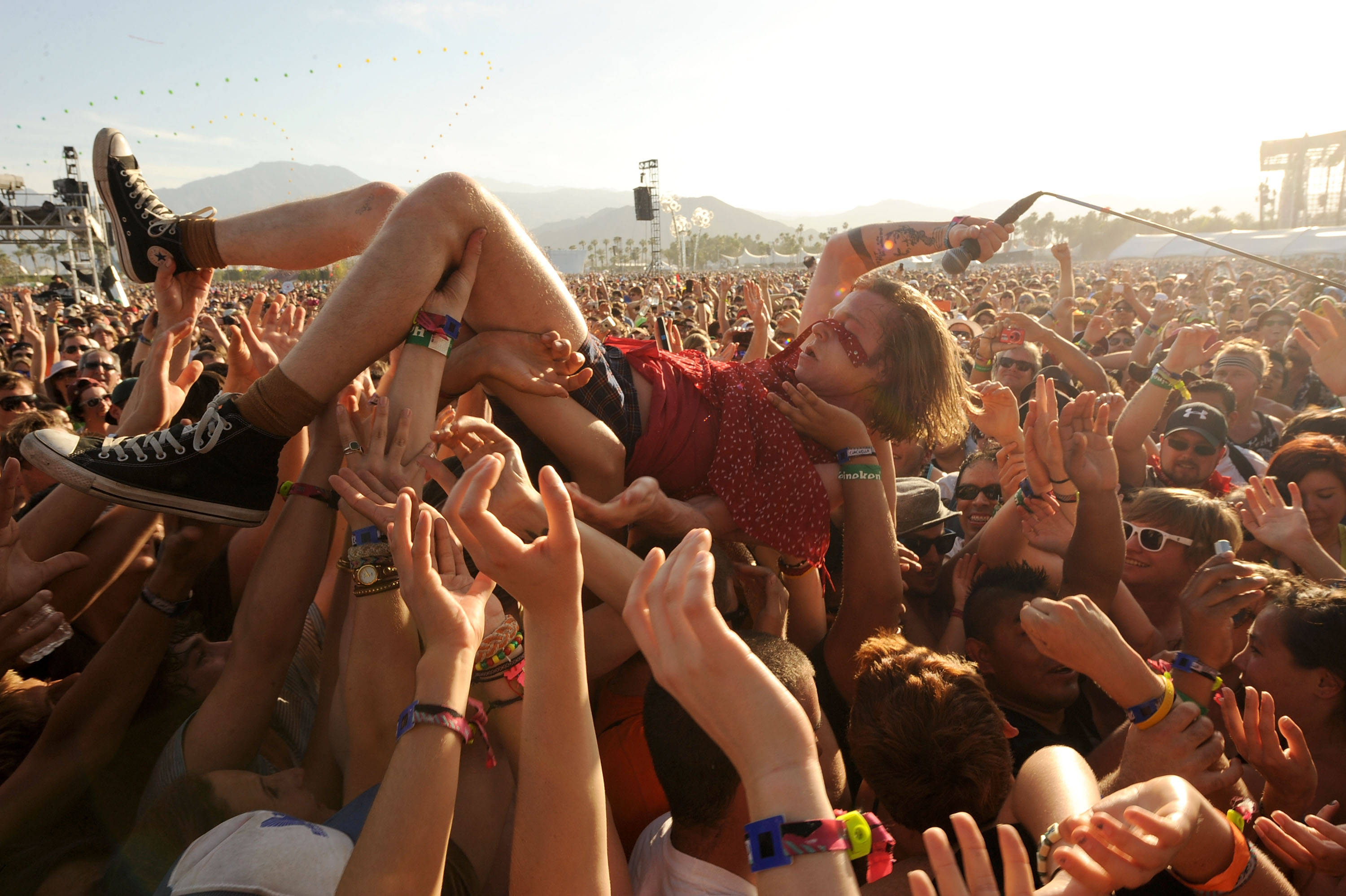
Experiences like this one with Cage the Elephant become etched in memory and honored by the keepsake wristband that was there through it all.

Experiences like this one with Cage the Elephant become etched in memory and honored by the keepsake wristband that was there through it all.

Further innovations with RFID are likely coming soon.  Many of these events are already a walk through Wonderland. But, given the potential of RFID technology one almost has to ask “how deep does the rabbit hole go?”   What other ways can RFID contribute to the experience at Live Events?

Sources:

http://www.dailymail.co.uk/sciencetech/article-2687844/Now-thats-friendship-bracelet-Smart-wristband-lets-make-friends-Facebook-bumping-fists.html

http://www.ibtimes.com/rfid-wristband-about-latest-music-festival-technology-bonnaroo-bamboozle-coachella-more-705702

Posted in Uncategorized | Tagged , , , , , | 1 Comment

The warfare marketing.

Guerrilla is a Spanish word, which means a battle fought by small army against a giant military. It depicts the practice of using forceful measures to accomplish philosophies practiced by a category of people . A guerrilla fighter will always have an edge, as he would be the only one who knows the time and type of attack unlike its rival who could be more vengeful. Guerrilla warfare is rampant today and has been in practice since decades. Most of the times, this type of warfare is used when a minority of people are suppressed or opposed, which could be unfair or for the greater good. The foes are unaware of the type and time of attack against them as the minorities revolt to benchmark their theories.

The guerrilla warfare concept seemed like a good idea to create a lasting impression on people, therefore the marketers in the 1960s started adopting it as a promotional tool (Baltes and Leibing, 2008). The spawning of corporations has made it more difficult than ever to gain attention of the right audience, in such times guerrilla marketing, with its modest budget and facile operation, has proved to be an efficient tool of marketing. The idea of applying the ‘guerrilla’ concept on the audience is not something that all companies would adopt as it is a brave attempt to capture the attention of the audience and it can easily fall flat if not planned and executed cautiously. In comparison to other promotional ideas, guerrilla marketing is taken as a very attractive strategy as it has the advantage of triggering surprised emotions from the audience (Lautenslager, 2007). Assuredly, if people are to experience a sudden change in an ordinary part of their routine, they will be amazed and take notice of what is happening around. It is very well said that guerrilla marketing spreads like love “You will find it at the moment you do not expect it at all. And at the moment you notice the advertisement and start thinking about its message they have what they want – your attention and interest” (Adeniyi, 2013, p. 44).

Look up https://www.youtube.com/watch?v=dInhX6ED15Y for a successful example of guerrilla marketing. Wait for the next blog for further discussion. Till then, Fight On!

Adeniyi, A. (2013). Guerrilla marketing: A sustainable tool for entrepreneurs andmarketing practitioners. Journal of Science and Science Education, Vol. 4(1), pp. 44 – 54.

Baltes, G. and I. Leibing, 2008. Guerrilla marketing for information services. Newlib.World, 109: 46-55.

Lautenslager, J.A (2007). Guerilla Marketing, Los Angeles, London Pres.

Posted in Uncategorized | 4 Comments

Instagram… Creating a world of envy?

I’ve never been a fan of social media. I find it to be a nuisance. Too many times friends have stopped me from consuming my food just so that they could spend five minutes attempting to find the perfect angle. What is the purpose of halting the enjoyment of experience only to capture it on photo?

Shortly after the upload, a tiny alert pops up with hearts; someone has “liked” their photo. Their faces now gleamed with joy. What was so exciting about steak? In a recent article by WSJ profiling cosmetics brand Estee Lauder “photographs put our products in a whole new light”-Laney Crowell, Estee Lauder executive director of online global communications.

In an attempt to revitalize the brand for the younger generation, brands are now utilizing marketing strategies in the form of photography. Instagram, an online tool cataloging photographs has over 150 million active users. With such a large following, it’s not surprising the companies are looking to Instagram to build their brand capital.

But can Instagram really create enough envy to sell a product? Well, 91% of all retailers now utilize Instagram as a marketing tool (Dishman, 2014). What is it about the photographs that make people wish or want? In reality, lipstick, steak, and jeans are all very common goods. But through Instagram, lipstick is now an experience. Estee Lauder currently posts photographs daily on how their lipstick is used, in a desk drawer, on the beach, with a bikini. Lipstick is no longer a cosmetic in the photo, but rather a desire. Who doesn’t need sultry red lipstick with that teeny weenie polka dot bikini?

http://online.wsj.com/articles/how-estee-lauder-creates-effective-photos-for-facebook-pinterest-twitter-instagram-1403146580

http://www.forbes.com/sites/lydiadishman/2014/02/13/instagram-is-shaping-up-to-be-the-worlds-most-powerful-selling-tool/

Posted in Uncategorized | 10 Comments

Surge of Brand Loyalty

What does a brand mean to you? Does it help you choose a product over another? Does it help you express something? Or does it help you remember a past memory?

The r0915_surge_300ecent rerelease of Coca-Cola’s Surge demonstrates a successful case of brand building. Surge is a citrus flavored soda released by Coca-Cola in the late 90’s. When it was first launched, Coca-Cola invested $50 million for the marketing campaign in an effort to compete with PepsiCo’s Mountain Dew, the product category leader. The product line was targeted towards males from 12 to 24. However, in 2002, the line was discontinued.
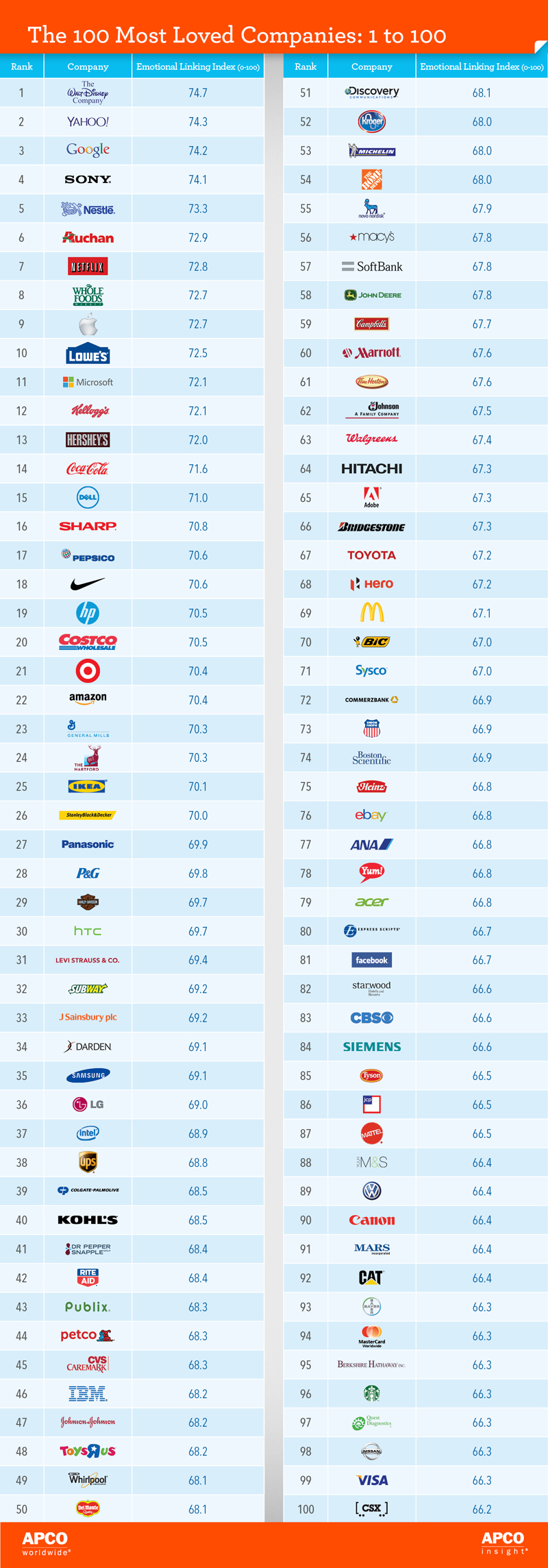
Though Surge wasn’t able to break Mountain Dew’s foothold, it definitely succeeded in branding itself. When the product was discontinued, fans of the product initiated various campaigns to get Coca-Cola to put Surge back on the market. “It’s so much more than just a soda for many of us…it was the glue I would say of everything we did,” describes Evan Carr, one of Surge’s loyal customers. Surge is no longer a product that simply fulfills consumers’ thirst; it encompasses meaning and values for the consumers. According to Laurence Vincent (2012), author of Brand Real: “Brands provide symbolic cues that influence your expectations and behavior because they are linked to relevant benefits that you value” (p. 12). Coca-Cola was successful because Surge connected with the consumers’ emotions, creating a brand loyalty that is extremely valuable for brands today. The customers feel so attached that they want to take actions to bring back the product. In an effort to measure “what consumers feel for brands or which emotions truly influence brand decisions,” APCO Insight identified 8 emotions that are fundamental to effective brand communication: Curiosity, pride, admiration, empowerment, relevance, approachability, identification, and understanding. In 2013, Coca-Cola was ranked #14 on The 100 Most Loved Companies in APCO Insight’s Emotional Linking research.

top-100-companies-el

References

APCO Insight.APCO insight : Methodologies : Emotional linking. Retrieved from http://apcoinsight.com/methodologies/tools/emotional_linking.aspx#.VCaHGb6RPzI

Suddath, C. (2014, September 15). How a facebook group persuaded coca-cola to rerelease surge. Bloombergbusinessweek

Vincent, L. (2012). Brand real: How smart companies live their brand promise and inspire fierce customer loyalty. United States: AMACOM.


Posted in Uncategorized | 8 Comments

Feminism and Integrated Marketing: When Poise and Power Meet in the Public Marketplace of Ideas

images (Source: Google Images)

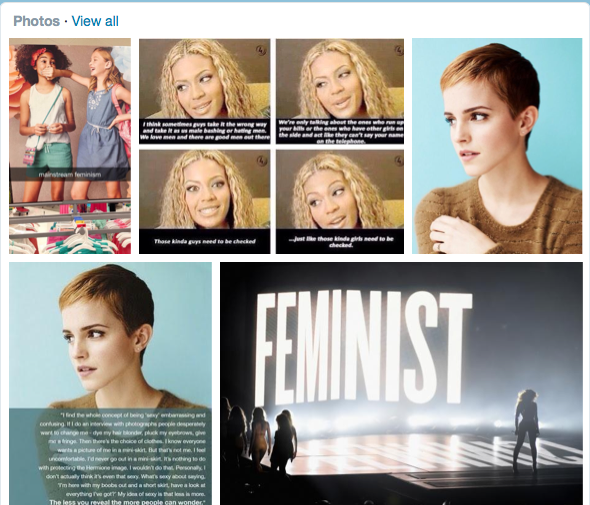
Watson and Beyonce_Feminist (Source: Twitter)

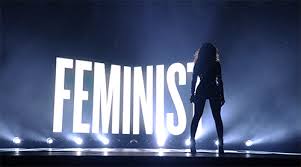
Celebrities Emma Watson and Beyonce sparked public dialogue, recently, with references to feminism. For example, last month (August), Bey performed at the MTV Video Music Awards with the giant term FEMINIST projected onto the backdrop (see above). This image of Bey on stage literally seems to show her rising above the term “Feminist”. There are multiple ways of interpreting this event, but in terms of integrated marketing, it is interesting to see how this stage performance has proliferated through various platforms including social media and the traditional press.

Beyonce and Watson Reinterpret Feminism

In the new feminist discourse, Beyonce and Watson reinvigorate the vocabulary of gender equality in order to reach a multiplicity of audiences. Look at how Watson and Beyonce are pictured in the amalgamated photos that I found on Twitter when I did a search using the terms “Feminist Beyonce” (see above). Watson’s gamine-style haircut is in contrast to what appears to be a series of photographs of, what looks like Beyonce, perhaps without makeup. Could this amalgamation of photographs be a commentary against feminist advocacy by these two superstars? If so, then the question for marketers is what impact will such a backlash, if this is a backlash, have on the marketing impact of the Watson’s “He for She,” campaign and will backlash affect Beyonce’s music sales? My thought is that probably, any perceived backlash will be advantageous to the Watson and Beyonce brands. This is because these stars built a following preceding their public affiliation with the term, feminist. Thus, these stars prove one axiom in the Igor International Naming Guide (2005), in order for a brand name to be accepted, it must have depth (14) and by attaching the word “feminist” to their own names, Watson and Beyonce re-infuse feminist with their own brand essence making the word seem heroic and chic at the same time. We are reminded by Watson, at her UN speech, that to be a feminist is to be one who believes in equality, as in equal pay for equal work and respect for women. In fact, we see through adoption by these stars that the term feminist may be reinterpreted and reimagined both audio-visually and performatively.

Emma Watson Introduces the “He for She” Campaign at the United Nations General Assembly

Promoted as “A Solidarity Movement for Gender Equality,” the “He for She” campaign asks men to take equal responsibility for the push for gender equality. Emma Watson, an actress known for her portrayal of heroic characters such as wizard Hermione Granger in the “Harry Potter,” film series, and Sam in “The Perks of Being a Wallflower,” introduced the campaign on Sunday, Sept. 21st, at the United Nations General Assembly, in her role as the United Nations Women Goodwill Ambassador. Watson, a celebrity, and Brown graduate, seeks to “universalize feminism,” as my English students said, by inviting men to take up the cause of gender equality. Watson’s authoritative, polished, demeanor, seemed in contrast to the popularized notion of feminists as “man haters,” and her speech began with an attack on the fixation with the divisiveness of the term. Clearly, this was a speech designed to appeal to youth, in the wake of Beyonce’s bold proclamation of feminism (and see here). Also, the “He for She” web page with its black, white, and pink logo, (see below) speaks to the inclusivity of the movement by incorporating the traditionally female color (pink) with the powerful (perhaps, masculine, color) black, against a white backdrop.

images(Source: Google Images)

The Lasting Impact? Spoofs or Social Reform, Let the Web Decide

emma-watson(Source: Google Images)

The above image is featured in a blog post titled “Impossible People: Emma Watson Announces ‘He for She’ Campaign” on the blog Impossible News. I do not know enough about the totality of Emma Watson’s work to know whether this picture is a still from one of her movies, or a spoof on the “He for She” campaign. (If you know the story behind the image, please let me know!). But the blog post itself gives a positive review of Watson ’s introduction of the “He for She” campaign.

References

Bennett, J. (August 26, 2014). “How to Reclaim the F-word? Just Call Beyonce. Time.com. (http://time.com/3181644/beyonce-reclaim-feminism-pop-star/).

“He for She Campaign,” website (http://www.heforshe.org/).

Igor Naming Guide (2005)

Tessam. (September 23, 2014). “Impossible People: Emma Watson Announces ‘He for She’ Campaign,” Impossible News. (http://news.impossible.com/impossible-people-emma-watson-announces-he-for-she-campaign-to-un/).

“Emma Watson and Why She Rules: Pop Culture Edition.” Ladybud.com (http://www.ladybud.com/2014/09/26/emma-watson-and-why-she-rules-pop-culture-edition/).

Henderson, N-M. (September 22, 2014). Washington Post. (http://www.washingtonpost.com/blogs/the-fix/wp/2014/09/22/emma-watson-is-a-feminist-so-is-. beyonce-and-thats-good-for-hillary-clinton/).

Posted in Uncategorized | Tagged , , , , , | 3 Comments

Midwest and McDonald’s “Badvocacy”

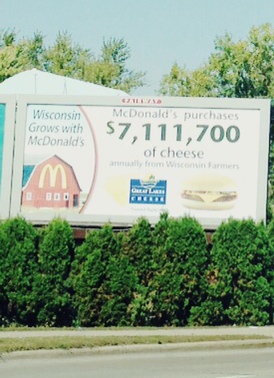
I’m currently in Wisconsin spending time with family. I grew up in Wisconsin but have lived in Los Angeles for about 5 years now. It’s always a joy to go back during the Fall and see the leaves changing colors and feel the cool air. Just as some background, Wisconsin produces some of the best cheese and meat in the country. Home cooking and great food is part of the culture out here. While driving around town I stumbled across this billboard by McDonald’s:

IMG_4669(picture by Amy)

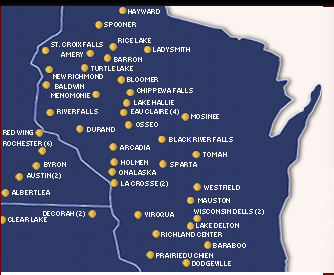
Here is a map of all the McDonald’s in Wisconsin.

Screen Shot 2014-09-28 at 7.09.59 PM(Picture from https://www.mccourtesy.com/content/home)


This ad really makes me think that McDonald’s is doing their part to get healthy food from local farmers. However McDonald’s doesn’t buy directly from the farmers because they are sourcing for Industrial food processing. This is a big problem because they are leading people to believe that McDonald’s food is part of a healthy lifestyle but it really is just the same old bad food. What are your thoughts on this kind of food marketing?

Posted in Uncategorized | 8 Comments

Made to stick in a good way

New York Times bestseller, Heath brothers’ Made to Stick, inspires me in many ways as and beyond a marketer. Its SUCCESs model, referring to create a simple unexpected concrete credentialed emotional story, is also extremely helpful for creatives to generate ideas and campaigns that can stick to people’s mind for as long as possible. There are tons of sticky campaigns out there that we can learn from. For instance, Virgin Atlantic’s Flying in the Face of Ordinary campaign and Volve Trucks’ The Epic Split. These, along with other sticky campaigns that I didn’t have time to mention above, generate lots of buzz and conversations, and ultimately improve their brand images, if not instant sales performance. However, I was thinking some questions, while reading this interesting book. Do sticky campaigns always make people feel good? And do sticky campaigns always boost sales performance?

While these questions keep spinning around my head, I saw two campaigns that stick to me this week, in a negative way. Frankly speaking, the stickiness doesn’t make me feel good about the content at all.

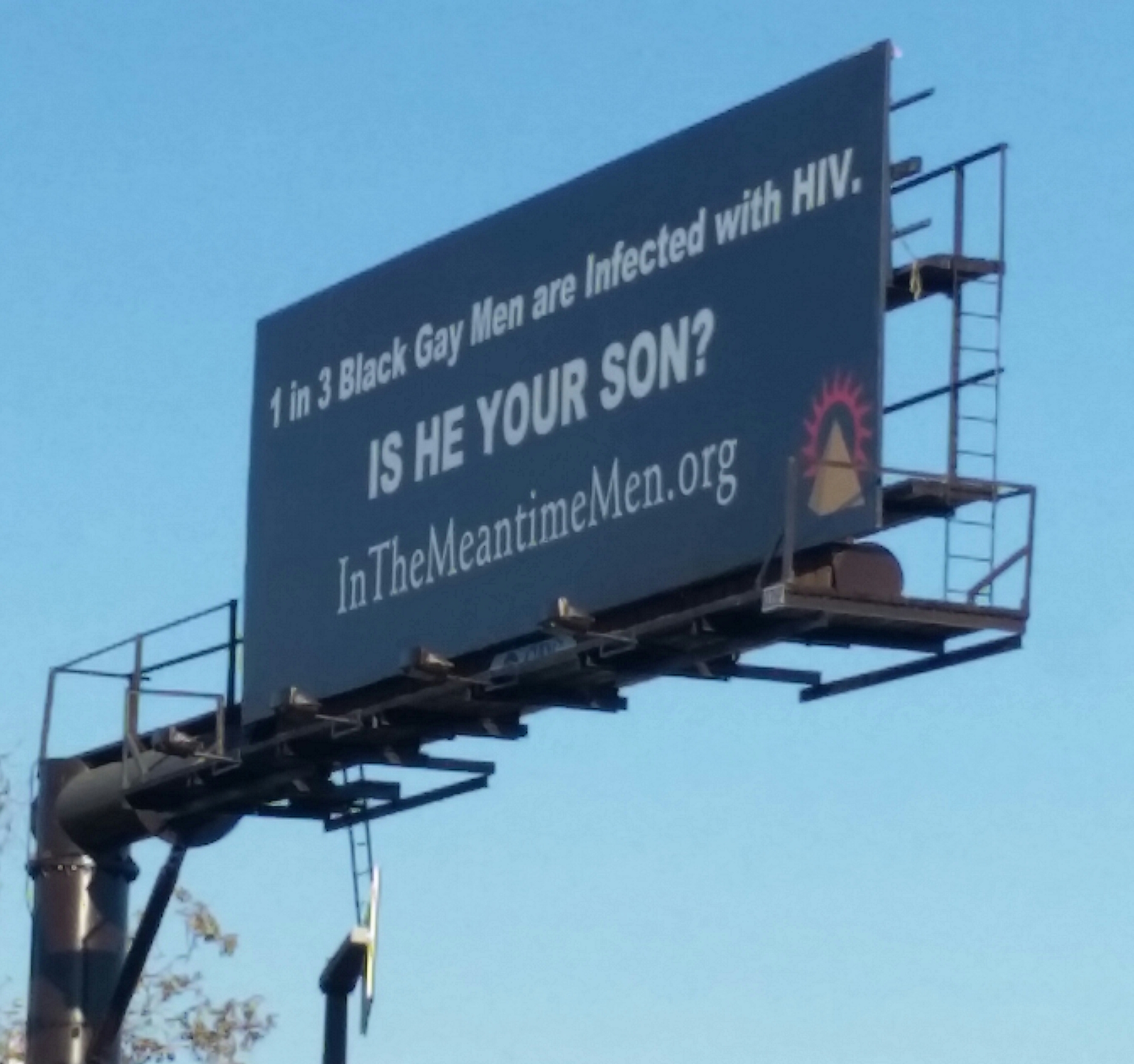
In The Meantime Men(Campaign 1)

Exiting from California 101 to Western Avenue, I saw a billboard standing at the corner, which immediately catches my attention. This is a campaign promoted by a non-profit organization called In The Meantime Men, in order to raise the awareness of HIV among black gay men. I sincerely appreciate the efforts taken by this organization to help people for the good cause. And to be honest, this campaign is very sticky to me. It delivers the simple core message in a very concrete way. The message is very unexpected. It also tries to provoke the emotions by relating it to each family, since this is a message to mom and dad. However, jumping outside the box, I do feel this campaign is a little inappropriate.  Imagine the reactions when people being asked the questions of “Are you gay?”, “Are you infected with HIV?”, and “Are you sure?” by their own parents. Also, imagine how paranoid parents would be about their children after seeing this billboard. Simply put, it is a sticky campaign with very compelling statistics and message. But from my perspective, it is definitely better for the organization to present it in another way. How about a more caring story from a mother’s perspective?

Siri vs Cortana – Groundhog Day (Campaign 2)

The other campaign that sticks to my mind comes from one of Nokia’s latest campaigns: Siri vs. Cortana. Despite of the fact that intelligent voice assistant in cellphone is no longer an attractive selling point for consumers, since major players have incorporated this feature for a long while. Comparing your brand with other competitors in commercials by mentioning their names seems like a despicable move to me. Yes, this campaign is very sticky because it delivers the simple and concrete core message by comparison. Also, the story it narrates is very credentialed and unexpected, which could relate to a lot of users who are not satisfied with the other products. However, regardless of the stickiness, I feel it is ok to show how good you are, while it is a bit shady to point out how bad your competitors are. It is just not a healthy competition.

Not to blame Nokia alone on this, because many other big names in this category have already done this before, including Apple (See the ads), Microsoft (See the ads), and Samsung (See the ads). Personally, I don’t appreciate many of those ads. And I’d really like to find out how other people feel about it. But on top of everything, my expectation to this Siri vs. Cortana campaign is negative. I don’t think many people will flip from iPhone to Nokia based on this campaign.

Making your campaign sticky and memorable is very important. However, there are a lot more factors we should considerate when creating sticky campaigns besides the SUCCESs model. For example, we should definitely try harder to make sure our campaign and message is able to leave a positive impression and make people feel comfortable, which in turn could directly or potentially improve the business performance and brand images.

Posted in Uncategorized | Tagged , , , , , , | 2 Comments

Do you want to hear a story or help create a story?

David Bertowitz recently wrote an article in Advertising Age that raises the question: Are the storytelling ways of marketers coming to an end in favor of becoming a “story maker”? My answer: no. I don’t believe that storytelling is coming to an end; instead I think that storytelling is now a part of story making. If you create a story, you or someone else needs to tell the story on the brand’s behalf. Sometimes the consumer is not interested in another story thought up by a marketing whiz at Corporate Headquarters.

This is where the consumer is being called upon. Brands such as AppleBee’s are filling their Instagram accounts with photos taken by diners. This tactic encourages followers, as people always love to be featured on someone else’s page. Shannon Scott, Executive Director of Marketing Communications at Applebee’s says, “People continue to prove that they’re more into the stuff they create versus the stuff we create”. This user-generated content is a great way to include consumers in the story making process. Now they are hooked.

Bertowitz cites the “Share a Coke” campaign as a “radical” new campaign that asks users to share their stories via custom labels. While, from a packaging standpoint this is a newer concept, Coca-Cola is not the only company including users as story creators. He states that story telling from the brands standpoint is fiction, but this is not always true.

To me the real purpose of the Coca-Cola campaign is to get the user involved in the story and become invested in the telling, sharing, and creation processes. Brands such as Apple, Red Bull, and Starbucks tell stories that allow the consumer to identify with the brand’s culture. Consumers are then encouraged to share their stories via social media. Here the brand has started the story or discussion about the product and then passed the baton to the consumer, starting a relay of sorts. Consumers then share, re-tweet, and post their stories; stories that create a brand buzz better than anything the marketing department could have conjured up on their own. The rise of social media, the Internet, and blogs has definitely changed story telling. The consumer can become part of the process in a way that was not possible 15 years ago.

References

Bertowitz, D. (2014, September 17). The beginning of the end of storytelling. Brands need to be story Makers not story tellers. Advertising Age. Retrieved from http://adage.com/article/digitalnext/beginning-end-storytelling/294975/

Johnson, L. (2014, September 22). Food porn campaign gives Applebee’s a social lift. AdWeek. Retrieved from http://www.adweek.com/news/advertising-branding/food-porn-campaign-gives-applebees-social-lift-160257

Posted in Uncategorized | 5 Comments