Decision-Making

This semester, we’ve been learning about the importance of constructing effective communication messages with creative visual appeal and a strong, relevant statement that appeals to the intended audience. When people connect with those messages, they connect with the product and brand and, well, you (hopefully) know the rest.

So how do people decide if they should, or should not, purchase an item based on an advertisement they saw on Facebook or a bus?

The decision-making process has been the subject of much scientific and social research, particularly in recent years, but it is generally considered to be an emotional process (Jarrett, 2014). People like having the freedom to choose, and our brains help us to make decisions about what to buy by placing specific sensory values on informational data, such as a visual advertisement or a social media posting, and essentially weighing the rewards of those values through neuronal activity in the parietal lobe (BrainFacts.org, 2009; Szalavitz, 2012). The values placed on informational data can be heavily influenced by both positive and negative personal experiences (Sharot, Martorella, DelGado, & Phelps, 2007). Choices that are positively impacted by the decision-making process tap into the brain’s reward center (Leong, 2011), and the following video gives a great overview about how our brains process positive experiences:

Of course, not all decisions are good. Sometimes people make seemingly bad decisions that can make us feel a sense of loss. The emotional impact of loss can be twice that of reward, and our brain’s goal is ultimately to make the decision that leads to the greatest sense of reward (Jarrett, 2014).

As we craft communication strategies and messages, it is important to incorporate stimuli that will encourage people to make positive brand associations so that they can place a greater value on the brand and its product than they do the competition. This isn’t to say the message itself needs to be positive, as there are plenty of effective non-positive messages (I’m looking at you, ASPCA commercials); rather, this is to say that messages should be constructed so that people think choosing Brand X over Brand Y will yield a greater reward. How do we convince people of this? Through relatable images, colors, sounds, qualities, etc. Knowing who your consumers are and what they want in the product you’re selling can make all the difference between making someone feel like they made a great choice vs. a bad choice.

Jen

References:

BrainFacts.org. (2009, October 1). Decision-making. BrainFacts.Org. Retrieved from: http://www.brainfacts.org/sensing-thinking-behaving/awareness-and-attention/articles/2009/decision-making/

Jarrett, C. (2014, March 10). The neuroscience of decision-making explained in 30 seconds. Wired. Retrieved from: http://www.wired.com/2014/03/neuroscience-decision-making-explained-30-seconds/

Leong, M. (2011, July 21). Red pill or blue pill: Who cares? Getting to choose is the best part. National Post. Retrieved from: http://news.nationalpost.com/health/red-pill-or-blue-bill-who-cares-getting-to-choose-is-the-best-part

Sharot, T., Martorella, E. A., Delgado, M., & Phelps, E. A. (2007, January 2). How personal experience modulates the neural circuitry of memories of September 11. PNAS. Retrieved from: http://www.pnas.org/content/104/1/389.full.pdf%20html

Szalavitz, M. (2012, September 4). Making choices: How your brain decides. Time. Retrieved from: http://healthland.time.com/2012/09/04/making-choices-how-your-brain-decides/


Posted in Uncategorized | 2 Comments

Truffle Pig: Why brands need to dig deep to get their messages out

Photo credit: http://www.telegraph.co.uk/news/uknews/3159385/Truffles-facts.html

Photo credit: http://www.telegraph.co.uk/news/uknews/3159385/Truffles-facts.html

Late last month, global advertising firm WPP announced a partnership with Snapchat and The Daily Mail to create a new type of advertising agency. The venture, called Truffle Pig, would deliver “story driven marketing” for brands. Leveraging Snapchat’s social network, WPP’s marketing expertise, and the Daily Mail’s news, Truffle Pig would create new social content for brands viewable on various digital properties (Ember, 2015).

Why the shift from static advertising to stories?

Marketers are increasingly looking toward digital content to drive business, looking for new and creative ways to get users to generate impressions and create their own buzz around a brand (Keller & Fay, 2012). Content that encourages users to engage keeps viewers on the page and helps cement those impressions.

Let’s think about viral news site Upworthy, which built its empire bringing temptingly clickable visual stories to the masses. There’s the app Storify, which lets users stitch together content from across social media platforms to create a story based on social conversation.

As stated by Dunjay (2014), “The Internet produces its own content pretty effectively. Brands have to earn their place in this.” This is particularly evident in Red Bull’s historic and literally barrier- shattering space jump. which has been called the most successful marketing campaign of all time. The feat combined a daredevil act with science, storytelling, video, and integrated social marketing for an experience that was at the same time a global conversation and a chapter in history.

Now, let’s take a look at how we live our lives these days.

A study from the American Press Institute says that “The average 18-to-21-year-old uses 3.7 social networks… and the average older Millennial age 30-34… [uses] 2.9.” That means a vast majority of us wake up and check two or three social media first thing in the morning, sometimes while still lying in bed (guilty as charged!). So much can happen during those brief few hours we were asleep… news, family events, friends’ opinions, cat videos. We don’t miss a beat- we engage with this content. Is it funny? Heartwarming? Maddening? Like it, comment on it, share it.

So it makes sense that brands need to start engaging with their customers the same way we engage with our friends and families; in dynamic, digital stories played out across vertical screens across multiple channels. This brings us back to Truffle Pig. While the company’s name doesn’t evoke the most scientific approach to hyper-personalized mobile content curation, the intent is modern, pioneering, and desperately needed in today’s marketplace. It will be fun to watch the venture unfold. If it truly delivers as promised, it could become a boon for brands and the future model for advertising in our connected digital world.

References

Dunjay, P. (2014, June). Building brands: You can’t teach old doges new tricks. Admap. Retrieved from www.warc.com.

Ember, S. (2015, June 23). Snapchat joins Daily Mail and WPP Agency in Marketing Venture. New York Times. Retrieved from http://www.nytimes.com/2015/06/24/business/media/snapchat-joins-daily-mail-and-wpp-agency-in-marketing-venture.html?_r=1.

Keller, E. & Fay, B. (2012). Word-of-mouth advocacy: A new key to advertising effectiveness. Journal of Advertising Research. 52(4). Retrieved from www.warc.com


Posted in Uncategorized | Tagged , , , , , , , , | 1 Comment

Developing an Integrated Team

Partnership Excellences and Failures

As communications manager, I’m always looking for ways and to amplify the reach of our campaigns and to optimize engagement both internally and externally. I don’t have a big team but we can be pretty scrappy and I’ve managed to pull together some really strong partners internally to ensure we are working hand in hand to pull together our best ideas and talents to launch truly integrated marketing communications campaigns. Collaboration is key here and you have to be able to manage both vertically and horizontally. Here are the key players:

  • Director of digital marketing
  • Our in-house graphics designer/video editing guru
  • Various marketing partners (depending on the initiative and platform our activities are tied to)

I can’t emphasize how critical it is to develop strong relationships with these key partners internally as you have to be able to work seamlessly together to optimize resources and ideas. We lock arms around business planning every year to ensure our plans for the following year are aligned and integrated so that digital activities support big marketing and communications activities planned for that year. When time to execute, we have to work very closely together to ensure that we’re pulling together our external partners including our digital marketing agency and PR agency so that the work they deliver is seamlessly tied together and that we’re executing things internally as appropriate to save on costs and to maximize our budgets.

It’s around the time of year when budget planning gets kicked off for the following year so this topic is top of mind for me at the moment. For those interested in dipping your toes on the corporate side, these are some helpful insights that will help you be successful that first year when you’re looking to make an impact and during that critical period when relationships are formed.

Posted in Uncategorized | Comments Off on Developing an Integrated Team

To Stream or Not to Stream?

meerkat-vs-periscopeThere are a whole host of new technologies that are enabling brands to engage with consumers in new and exciting ways. Meerkat, Periscope, Instagram and Snapchat are just some of the apps that enable brands to engage more intimately with followers, creating unique experiences for consumers at the touch of a button. I’m intrigued by all of these new apps but it begs the question, are these technologies right for your brand?

Real-time publishing can certainly help you increase the reach of the videos you create and also enable real-time connection with consumers – something that’s sought out and highly valued in today’s world of instant gratification. But this medium also comes with some risks. Real-time video is live and leaves little room for error. Once your video is published, it is out there for the world to see, criticize, love, and hate. You potentially set yourself up for negative reactions that are amplified quickly across social media. That’s exactly what it is…a risk, so you have to think carefully about the pros and cons and be deliberate about curating the event and content before you decide to live stream it to the world. Some apps like Instagram and Snapchat enable you to record and review videos before they are published but they are limited in terms of video length so that’s something else to consider.

I think there are some brands that definitely lend itself better to live-streaming and video streaming and it’s not going to make sense for every brand. Before jumping on the live-streaming bandwagon, it’s important to assess your long-term goals and to weigh the pros and the cons to ensure the benefits outweigh the potential risks and that those risks are manageable. Careful planning with anything will be prudent and there’s nothing wrong with testing use out with a small pilot group to see how things go for a few weeks before broadcasting content to the world!

Posted in Uncategorized | Comments Off on To Stream or Not to Stream?

How Your Social Media Profiles Can Affect Your Professional Life.

How Your Social Media Profiles Can Affect Your Professional Life.

Screen Shot 2015-07-01 at 12.12.09 AM

Facebook. Instagram. Twitter. Snapchat. With so many different social media platforms, there are multiple ways to allow others access to our lives, activities and opinions. The question is, how much should we post and how much do these posts affect others opinions of us? Particularly coworkers and employers.

Many people make mistakes on social media; this includes celebrities, public figures and large corporations. They often make posts, which at the time may have seemed harmless but turn out to be controversial or offensive. Or sometimes people make post that simply indulge too much personal information or information that should remain in the workplace.

It is easy to find someone’s social media accounts using a simple search on Google. When you apply for a job, there is a good chance in today’s modern times that employers will do a quick search and check out your social media profiles. Sometimes our coworkers find us and add us, trying to establish a relationship outside of the workplace. What do your profiles say about you? Do they show you to be tolerant? Outgoing? Friendly? The type of individual an employer would want to hire?

Why do employers want to see what’s on your social media profile? Well often they want more insight into your interests and values. They want to make sure that you will fit into their current company culture. All of these things are important when contemplating hiring a candidate for a position so social media has become the quickest and most efficient way to get an idea of someone’s character.

Those who are currently seeking new jobs aren’t the only ones who should be precautious of what they post on social media. Even if you are currently employed, if your page is public, you may want to be extremely careful with what you post. Your personal stance on political or social issues may not align with those of your company. This could cause issues if your employer finds out you have been making posts they don’t agree with or they find offensive; furthermore, you may risk offending coworkers without even realizing it.

Also, it is best not to post about clients or current projects without the “ok” from your employer. Some information may be sensitive or confidential and a simple social media vent about the annoying client meeting you had today, could end up costing you your job.

Some good practices to follow when posting on social media are:

  1. Make your accounts private; that way, you are free to post whatever you want and the content of your accounts remain between you and those who follow you.
  1. If you decide to keep your page public think long and hard before you post. Ask yourself the following questions. Is this offensive? Is this racist, sexist, or homophobic? If you can’t immediately answer, “no it isn’t”, then you should probably hold off on posting it.
  1. Delete. Delete. Delete. Luckily, social media platforms have the option to delete what we post. If you post something and later realize that it may be offensive or controversial, it is never too late to go back and delete the post. While some people may have seen it, it is far better to delete it anyways and avoid it being viewed by any additional people.

Those are some major points to keep in mind when navigating the world of social media. Now go out there and enjoy!


References:

5 steps for responding to a social media crisis. (2015, June 30). Ad Week. http://www.adweek.com/socialtimes/5-steps-for-responding-to-a-social-media-crisis/622654

Job hunters hit social media. (2012). Hospitals & Health Networks, 86(5), 19. Retrieved from http://search.proquest.com.libproxy1.usc.edu/docview/1021727555?accountid=14749

Mandell, R. (2015, June 15). The three biggest social media snafus that can cost you your job. US News. http://money.usnews.com/money/blogs/outside-voices-careers/2015/06/15/the-3-biggest-social-media-snafus-that-can-cost-you-the-job

Posted in Uncategorized | 7 Comments

California’s Drought: Turn it off Marketing Campaign

California has a long tradition of conflict over water conservation. But after fifteen years of battle with the drought across the region, it can no longer be a conflict but a crisis. Governor Brown has declared a statewide drought emergency and is asking all Californians to reduce their water use by 20 percent. California is experiencing a serious drought, and the state will be challenged to meet its water needs for the upcoming year.

Below are some tips compiled by the California Public Utilities Commission (CPUC) to conserve water at home and on campus. The CPUC is committed to supporting and encourages both water and energy conservation throughout the state of California. By working together, we can save water and energy to preserve the California environment.

  • Install water-saving devices. You can save water by installing low-flow showerheads, high- efficiency toilets, and kitchen/bathroom faucet aerators. Check with your utility – you may be able to get these devices at a discount, or for free. Did you know that almost 20 percent of electricity and more than 30 percent of natural gas is used to treat, transport, and use water? It’s a win-win situation – when you save water, you save energy too! (CPUC, 2015)
  • Take shorter showers. Reduce your shower by 1-2 minutes and save 5 gallons (CPUC, 2015).
  • Turn the water off while brushing your teeth. Save 3 gallons (CPUC, 2015).
  • Fix leaky faucets. Save up to 20 gallons per day (CPUC, 2015).
  • Wash a full load of laundry. Save 15 to 50 gallons per load (CPUC, 2015).
  • Use a broom instead of a hose. You can save as much as 100 gallons of water cleaning your driveway by sweeping instead of using the hose. Plus, it’s good exercise (CPUC, 2015).
  • Water before 8 a.m. You can save about 25 gallons each time you water by watering before 8 a.m. Watering early in the morning reduces evaporation and puts that water to work helping your plants grow (CPUC, 2015).
  • Make the switch from lawn to xeriscaping (low-water use landscaping). Change your garden from turf to drought-tolerant plants and reduce your household water use by more than 30 percent. Outdoor water use accounts for between 50 to 70 percent of all household water use (CPUC, 2015).

Let’s be more conscious of water conservation and get the word out fellow Trojans! Fight on and turn it off!

Reference

CPUC (2015). Water Conservation Tips. California Public Utilities Commission. Retrieved from http://www.waterboards.ca.gov/waterrights/water_issues/water_conservation_tips.pdf

Posted in Uncategorized | 8 Comments

Is a Luxury Brand Still “Luxurious” If Everyone Has Access To It?

In January 2014, I had a very rare, luxurious work trip to London that still seems like a dream. To avoid boring you with the details, I’ll give you some highlights – a private jet from Teterboro Airport in New Jersey to Luton Airport in London with a flight attendant that cooked a fresh omelet for breakfast, a Mercedes Benz with a driver to prevent me from getting lost, an overpriced luxury hotel room at the Covent Garden boutique hotel, and more delicious food and wine than I could eat or drink. Not bad, right?

Unfortunately, I got a severe stomach virus on the way home that sent me to the hospital (totally my luck). Yet, despite the nausea and vomiting (which was far from luxurious), this trip taught me the true meaning of luxury.

Luxury is something that is rare and not easy to access. It is something that brings a remarkable level of comfort and ease to your day. Naturally, after this trip I wanted more luxury. And, according to research, so do most people in our society (Kapferer, 2014).

A Dilemma for Luxury Marketers

This growing desire for luxury goods brings up an interesting dilemma in luxury marketing communications. If luxury brands market their product or service in a way that is appealing to a mass market instead of solely to luxury consumers, that can be a highly lucrative decision (Yeoman & McMahon-Beattie, 2014). However, it comes with great risk to the brand as it loses its exclusivity and thus, refers back to my original question: Is the brand still luxurious if everyone has access to it? The short answer is, no.

Exclusivity is a defining feature of luxury products (Yeoman & McMahon-Beattie, 2014). So, when everyone has access to a luxury item, the brand loses its once luxurious status (Yeoman & McMahon-Beattie, 2014).

3-seriesBMW SOJ Dealer Posters_Joy Is Maternal

BMWs for Everyone!

Let’s use BMW as an example. BMW is an iconic luxury car manufacture that is known for its German engineering and sleek design. Appropriately titled, the “Ultimate Driving Machine,” BMW has become a household name and an industry leader in the luxury car market. In 2014, BMW held 17.6% of the luxury car market share in the United States (“U.S. luxury car market,” 2015). Although their strong brand positioning and leading market share have increased profits for BMW, Yeoman & McMahon-Beattie (2014) claim that BMW is no longer a luxury vehicle but instead a “mainstream family car” (para. 4). As much as I love BMWs, I have to agree that with the increased number of them on the road, the brand has sadly lost the exclusive luxury status that it once had. The good news is that profits in the U.S. are certainly soaring for BMW. Again, this illustrates the dilemma that luxury brands are faced with: Do we mass-market to increase profits or do we maintain exclusivity to preserve our luxury brand image? Unfortunately, there is not a clear-cut answer.

So, the next time you encounter a luxury brand, take a minute to consider- is this a “real luxury” brand that has maintained its exclusivity, or a “mass-luxury” brand?

References

Kapferer, J. (2014). The future of luxury: Challenges and opportunities. The Journal of Brand Management, 21(9), 716-726. Retrieved from http://search.proquest.com.libproxy1.usc.edu/docview/1477321472?pq-origsite=summon&accountid=14749

U.S. luxury car market share in 2014, by brand. (2015). Retrieved from http://www.statista.com/statistics/287620/luxury-vehicles-united-states-premium-vehicle-market-share/

Yeoman, I., & McMahon-Beattie, U. (2014). Exclusivity: The future of luxury. Journal of Revenue and Pricing Management, 13(1), 12-22. doi:10.1057/rpm.2013.29

Posted in Uncategorized | Tagged | 11 Comments

Living in America….I Feel Good!!!

Unknown-3  Across America on the 4th of July, we celebrate Independence Day. Many, people sacrificed everything to build the country we call, America. On this day, all Americans should have patrotic pride to be an American and forget about political policies that are not going our particular way. We are very blessed to live in America!


In honor of July Fourth, author Todd Patkin has compiled a list of seven reasons to be grateful to live in the United States of America.

Patkin says, “his list represents aspects of our country that we often take for granted” (The Times and Democrat, 2015, para 2).  Listed below are seven good reasons to be grateful for being Americans:

* Our security. While attacks from terrorists (both foreign and domestic) have proven that the United States is not completely invulnerable, we do live very secure lives compared to many of our brothers and sisters around the world. Wars are not being fought on our soil, and our neighbors are friendly. Can you imagine what it would be like to not feel safe walking out of your own front door, or to live in a city that has been literally and figuratively torn apart by conflict? Furthermore, our law enforcement professionals are constantly on duty to make sure that our communities are safe, fair, and just places to live (The Times and Democrat, 2015).

* Our standard of living. Compared to so many other people on this planet, Americans live comfortable, secure and even luxurious lives. Most of us live in our own homes, drive our own cars, have plenty to eat and enjoy amenities ranging from smartphones to laptops to grocery stores to movie theaters (The Time and Democrat, 2015).

* The American Dream. It’s still alive and well. This is a country where you can do what you want, build a comfortable life and even rise to impressive heights if you are positive, honest and work hard. You do not have to be confined to a certain place or profession if you do not want to be (The Times and Democrat, 2015).

* Diversity. America continues to be The Great Melting Pot. Around the country as a whole, there is so much variety in terms of culture, food, background, beliefs, etc. Every person and family is different, and each person lives a unique life (The Times and Democrat, 2015).

* Medical care and education. Despite complaints about medical care and the education system in the United States, both are very high quality. People come to our country from all around the world specifically to take advantage of them (The Times and Democrat, 2015).

* Water. You can drink it whenever you want without worrying about getting sick. You can buy it bottled and by the case in many stores. You can take long, hot showers and baths. You can even immerse yourself in it if you go to a pool, river or lake. By comparison, many countries around the world have contaminated, non-potable water and/or have to deal with major water shortages (The Time and Democrat, 2015).

* The postal service. Talk about something we really take for granted but still rely heavily on even in the digital age. When you think about it, it’s amazing that you can put a letter in your mailbox and be pretty sure it will end up where you want it to go in a short period of time (The Times and Democrat, 2015).

Happy Birthday, America!


The Times and Demcrat, (2015). Seven reasons to be grateful as an American. Retrieved from ‪http://thetandd.com/news/opinion/editorial/seven-reasons-to-be-grateful-as-an-american/article_f7e3321e-e42e-11e2-b69e-0019bb2963f4.html

Posted in Uncategorized | 4 Comments

To Weave or Not to Weave

Summer is here and the temperature is steady rising. Most women are contemplating many things especially how to wear their hair. Yesterday as I surfed the internet (mainly Facebook) I noticed a lot of people were posting their before and after hairstyle pictures.

picture 1 Picture 2

I could not help to wonder what I was going to do to my hair for the summer! A weave?! Yes a weave. I had no clue that the black haircare industry is a $500 billion industry (Opiah, 2014). Nearly six out of 10 Black consumers wear a wig, weave or extensions (Opiah, 2014). So what are the pros and cons of wearing a weave?

Advantages

1. Experimentation & Versatility

Wearing a weave can allow you an opportunity to try a variety of styles, colors and lengths to your hair without using your own natural hair. This experimental benefit also works for natural-haired women who want a straight look without applying heat or relaxers (Sandeen, 2015). A weave can be worn (with the proper care) as long as you want to. The decision is up to you! No more green hair when your hair color goes bad or wrong. Become a blond or red hair in a matter of minutes. Women who want to experiment or add versatility to their hair can explore the different types of hair weaves (London, 2015). Whether you wear one for a special night out, or you wear one for an extended vacation, hair weaves are just another tool women can use to try different looks (London, 2015).

2. Self- Esteem Booster

Weaves can help people who suffering from baldness (e.g. alopecia areata totalis) cover up their baldness (Hairfear, n.d.). Baldness can lower a person’s self-esteem and cause depression. A weave can help some with balding issues to maintain a normal lifestyle and appearance.

Disadvantages

1. Skin & Hair Problems

Weaves require consistent maintenance to help prevent tangling problems. Too much tension on new growth increases your chances of traction alopecia (Quann, 2015).  Professional stylists suggest no more then 6-12 weeks Quann, 2015). Sometimes germs and bacteria may collect among the weaves (Hairfear, n.d.). Therefore skin/scalp problems can occur. The woven hair is more brittle as it does not get nutrient supply from the scalp making it dry (Hairfear, n.d.).

2. Budget

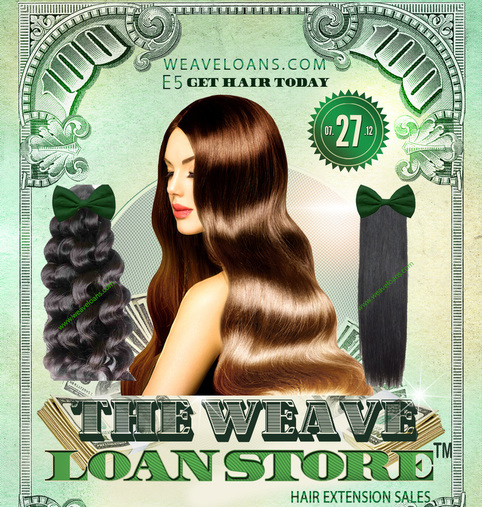
The initial investment or constant upkeep for a weave can be costly. If you are thinking about a weave calculate the figures for a year and see if it is an investment you are able to afford (Quann, 2015). Based on some of the hair salons I visited a weave can range from $300 to $1000 depending the hair texture, length and type of weave. In Detroit, Michigan you can obtain a weave loan. Who needs a car loan when you can get a weave loan!


picture 3

A few factors to consider when making a decision when it comes to getting a weave.  Happy Summer!

References:

Sandeen, D. (2015). The benefits of wearing hair weaves. Retrieved from http://blackhair.about.com/od/colorenhancements/tp/hairweavebenefits.htm

London, Z. (2015).The advantages of hair weaves. Retrieved from http://www.ehow.com/about_5395095_advantages-hair-weaves.html

Hairfear. (n.d.). Advantages and Disadvantages of Hair Weaving. Retrieved from http://www.hairfear.com/hair-loss-products/1100-advantages-and-disadvantages-of-hair-weaving.htm

Quann, C. (2015). Pros, cons & successful tips when wearing weaves while natural. Retrieved from http://urbanbushbabes.com/pros-cons-successful-tips-when-wearing-weaves-while-natural/

Opiah, A. (2014). The changing business of black hair, a potentially $500b industry. Retrieved from http://www.huffingtonpost.com/antonia-opiah/the-changing-business-of-_b_4650819.html

Posted in Uncategorized | 3 Comments

NFL’s Image Comes Under Attack but Marketers Don’t Care

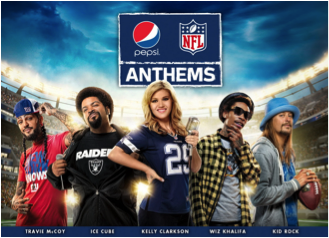
Football, and the National Football League (NFL) especially of this past year have been under attack. The heighten awareness of concussions, domestic violence, child abuse, and other unlawful acts by players have been at the forefront of sports news yet the NFL seems to be having no problem once so ever making money. The NFL consists of 32 franchises with an average team valuation of $1.43 billion and is the only league in the world to have a team valuation average over $1 billion (Winfree, 2011). Next year alone, NFL revenue is projected to be at $12 billion, about $1 billion more than this year’s revenue (Kaplan, 2015) and with all the heighten scrutiny of head injuries and character issues there still seems to be no sign of monetary success slowing down. In fact the NFL has become such a big platform that they have even attempted to charge half time performers at the Super Bowl to perform because the exposure is so great.

NFL Blog 1  NFL blog 2

A big part of their monetary success can be contributed to marketing. The NFL has become such a dominant platform for brands that marketers don’t care about the scrutiny of the league. The question for them is how to deal with the task of making a strong statement against wrong doings of the NFL such as domestic violence and child abuse while not jeopardizing deals in place with the league. The NFL is too reliable a platform that reaches an array of demographic audiences to lose as a partner for almost any brand or company. The NFL dominates TV ratings with over 120 million viewers every Sunday (Pharr, & Lough, 2012) and packs new multimillion-dollar stadiums every week with an average yearly stadium attendance of 516,238 spectators at home games, the highest of any professional sports league in the past 5 years (Quinn, 2012). With this type of audience its no wonder marketers face this dilemma.

Nfl Blog 3

The attraction for marketers is so great because the NFL is seen as a fully integrated marketing channel during the fall. The idea is that any type of association with the league means exposure to a wide audience, not just through broadcasting but a variety of platforms. The league has become so social, which is the main reason to accredit its wide fan base. The NFL will strive to continue market expansion through social tactics that will benefit advertisers to hone in on various fans that can be capitalized for monetary profit. The NFL recognizes this, marketing and advertising execs recognize this, thus business endeavors and continued brand partnerships will continue grow for the NFL and other companies, organizations & brands (Hirt, & Clarkson, 2011).

References:

Germano, S., Vranica, S., & Clack, K. (2014, September 17). NFL Sponsors Speak Out—but Keep on Advertising. Retrieved from: http://www.wsj.com/articles/nfl-sponsors-speak-outbut-keep-on-advertising-1410997534

Hirt, E. R., & Clarkson, J. J. (2011). The psychology of fandom: Understanding the etiology, motives, and implications of fanship. Consumer behavior knowledge for effective sports and event marketing, 59-85.

Kaplan, D. (2015). Sports Business Daily. Retrieved from (http://www.sportsbusinessdaily.com/Journal/Issues/2015/03/09/Leagues-and-Governing-Bodies/NFL-revenue.aspx)

Pharr, J. R., & Lough, N. L. (2012). Differentiation of social marketing and cause-related marketing in US professional sport. Sport Marketing Quarterly, 21(2), 91

Schiff, M. (2014, August 20). The NFL reportedly wants to charge artists to play the Super Bowl halftime show. Retrieved from http://www.axs.com/news/the-nfl-reportedly-wants-to-charge-artists-to-play-the-super-bowl-half-17219

Posted in Uncategorized | 3 Comments