Bracket Busting is Big Business: Integrated Marketing and the Big Dance

It’s tourney time! Since 1939 (Bachman, 2012) when 8 teams battled for the top spot, Division I men’s basketball has dominated springtime sports and the hearts of millions of Americans as now, 68 teams battle single-elimination in search of their “one shining moment”. I can remember being 11 years old the first time my dad letSherwood Brown me stay home from school for Round 1 of the tournament to overdose on 24 hours of basketball in 2 days. I can remember last year when I moved my laptop from my office to the board room and hooked it up to the projector to watch the noon games on livestream. What I have a harder time remembering is exactly when the tournament became such a marketing juggernaut!
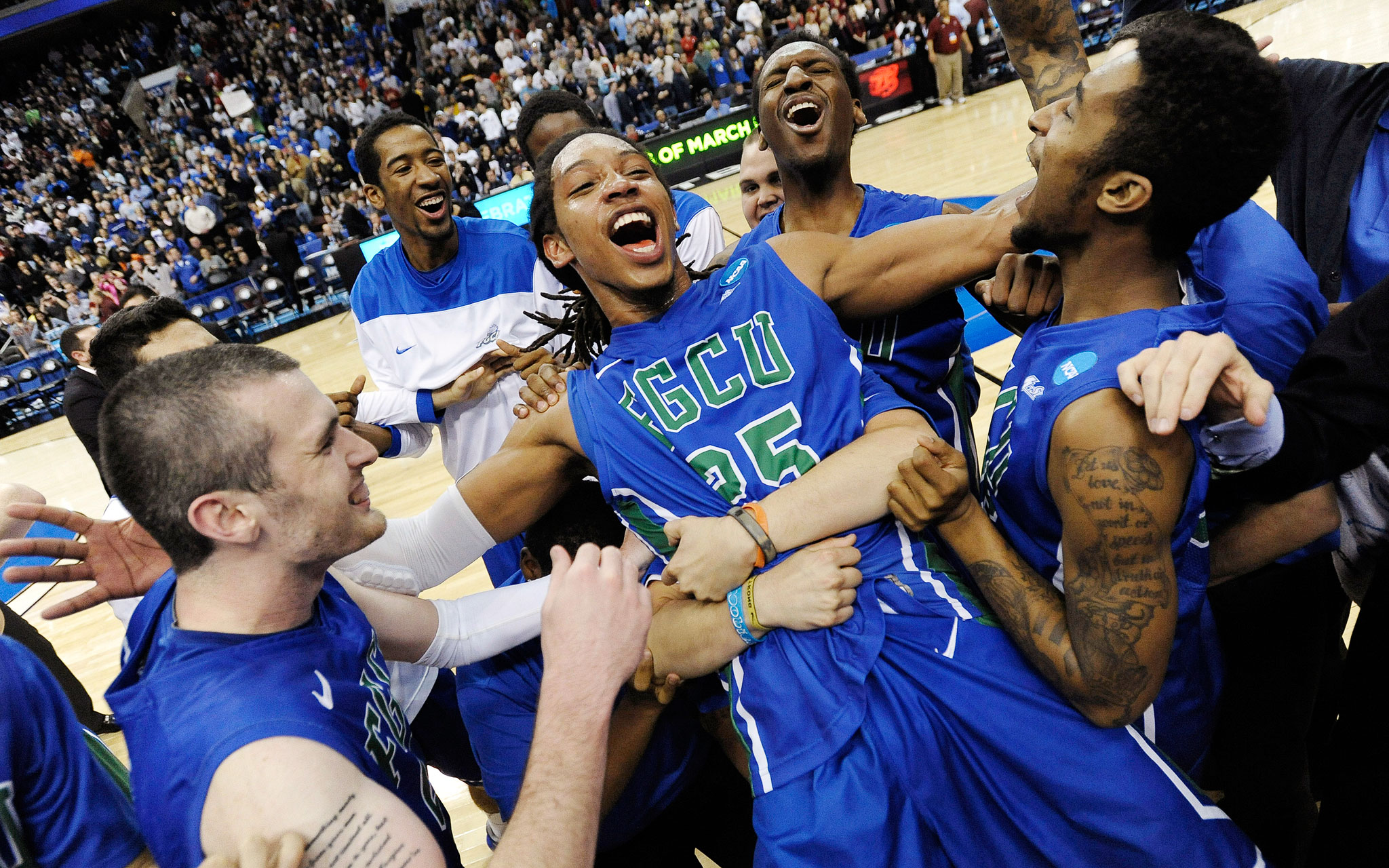
With almost 150 hours of televised exposure, throngs of sponsors like Allstate, Buick, Enterprise Rent A Car, Dominoes pizza, and countless other companies are hopping onto the advertising and marketing train to capitalize on multi-network exposure and continuous viewership. In the past decade, March Madness is everywhere. We’ve seen a concerted effort to connect and blend content across media, and a marked increase in user-generated content to push the marketing. Basketball fans (the TV networks would certainly call them consumers) are engaged at virtually every media touchpoint over the four-week tournament. Games on TV, streaming game coverage, bracket competitions on the internet, apps on mobile devices , user-generated content on  and twitter and facebook, merchandising through retail outlets, the engagement is endless. Though only for a limited amount of time each year, March Madness marketing has mastered seamless marketing integration.

Integration of media has opened up March Madness to new and ncaatwitteryounger markets previously difficult to reach. In the past,  marketers focused on the large alumni (read: adult) population that tunes in every year. Kids are normally in school for the first 2 days. Twitter, Facebook, and Instagram have opened the doors to a younger, social media market who is receptive to digital marketing in a way that their older counterparts aren’t. The cost-saving implications of launching social media campaigns on free web platforms instead of relying heavily on expensive television advertising aren’t lost on marketing teams, and the shift is evident. I got my first March Madness email on March 12th. Before Selection Sunday even determined who would be playing in the tournament. A subtle reminder from CBSSports to start gathering my troops for my annual bracket pool.
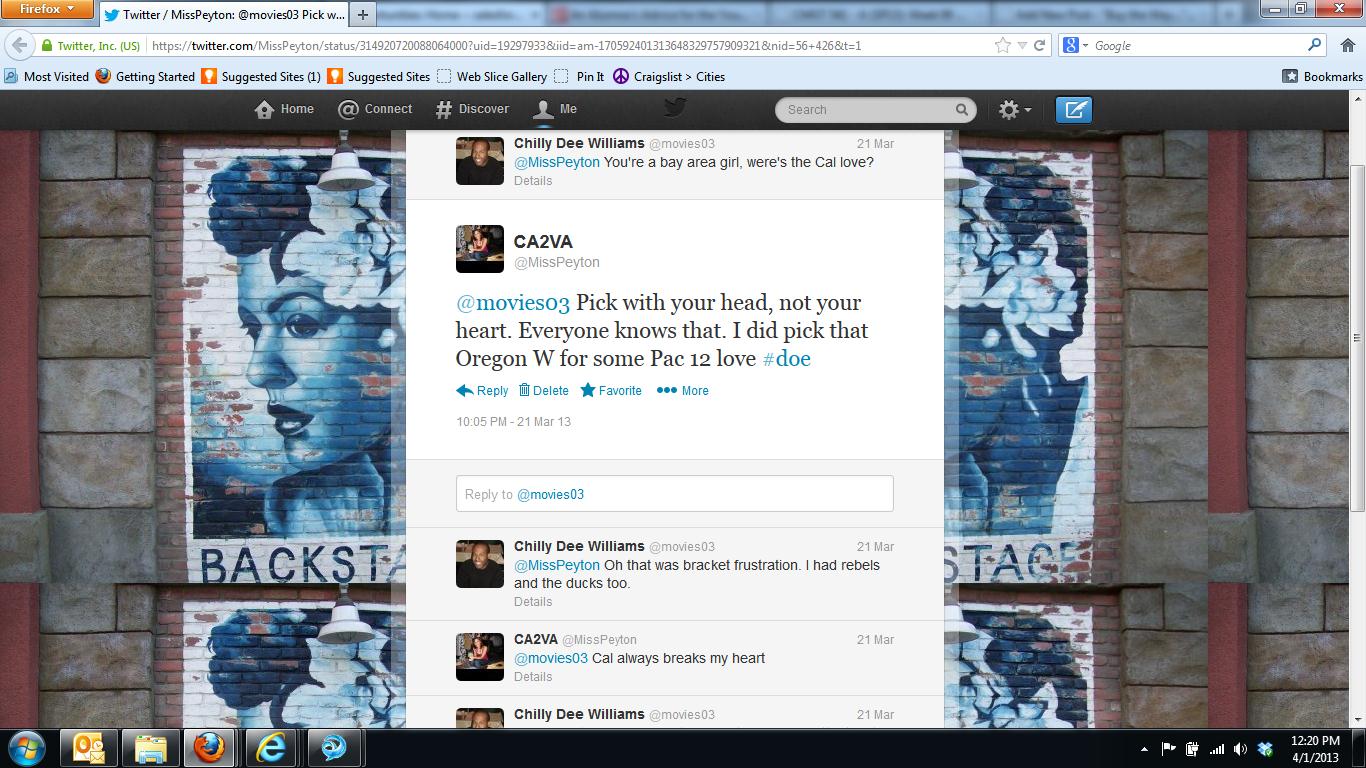
Ah, the brackets…this year ESPN reported over 8 million registered online brackets in competition. There were no perfect brackets left by the end of day 2 (thanks, Georgetown). This news spread through twitter like wildfire, much like the news that Florida Gulf Coast University existed, played basketball, and could beat top tier programs like Georgetown and San Diego State. A platform like twitter is perfect for every fan to live out their sports commentator fantasies (self included) and thanks to integration with major networks, websites and mobile applications, every thought is a tweet heard ‘round the world. Twitter erupted with questions and speculations of what a busted bracket could mean for the nation. Wanna know how I know? CBSSports runs a twitter pulse at the bottom of their life scoretracker webpage. Right. I can get a feel for twitter activity by watching my televised basketball on the internet.

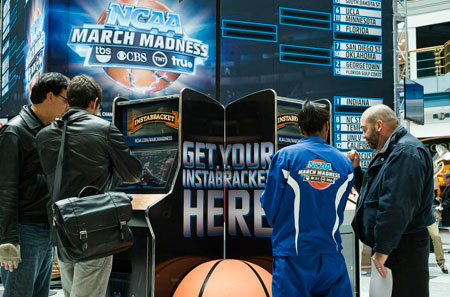
What about those who want to join in the office fun of a bracket pool but haven’t seen a single minute of basketball this year? You’re covered there too. Seemingly on demand, these bracket generators popped-upInstabracket-Philly outside Madison Square Garden, Union Stations in Chicago and DC, Liberty Place in Philly, and the Highland Cetner in LA.  the day after Selection Sunday. I can tell the machine to make picks with “minimal upsets” or “highest seed winners” and voila…my bracket completed with little to no actual basketball knowledge of my own. Oh…and it’s free.
Aside from my deep personal connection to the world of college sports, March Madness has branded itself as a unifying, can’t-miss month is our lives.  Bringing together coworkers, dads and daughters, and strangers, March Madness marketing has tapped into our emotions, our competitive spirits and our need to always be plugged in. Genius. Absolutely genius.

One last confession, I totally still cry every year when One Shining Moment plays. Don’t judge me.

Bachman, R.  (March 17, 2012). Where was the bracket born?. Wall Street Journal. Retrieved from: http://online.wsj.com/article/SB10001424052702304537904577279624141400742.html

Barrett, D.  (1987). One shining moment [Recorded by Luther Vandross).

Buss, D. (March 8, 2012). Brands tap into NCAA March Madness. Brand Channel. Retrieved from: http://www.brandchannel.com/home/post/2012/03/08/march-madness-brands-030812.aspx

Lawler, R. (March 16, 2013). March Madness live apps are free this year, stream all the games–if you have cable. Engadget. Retrieved from: http://www.engadget.com/2013/03/16/march-madness-live-apps-are-free-this-year-stream-all-the-games/

TW Staff. (2013, March 13). Let the NCAA bracketmania begin [Web log post]. Retrieved from http://www.timewarner.com/blog/posts/20130320-Let-the-NCAA-Bracketmania-Begin/


Posted in Uncategorized | 12 Comments

Have We Crossed the Line?

by Kim Tarabetz

Edgy and racy is what draws attention and attention is what wins advertising awards and sells products. But have advertisers gone too far? Some think they have. Just because you can tie something catchy or provocative back to the product doesn’t always mean you should.

The only relationship I know of between hamburgers and bikinis is, if I eat one, I probably can’t wear the other. But Carl’s Jr and Hardees feels there is a bigger connection. For the last couple of years, I can count on watching at least one PG-13 rated commercial with my family on netwoCarls Jrrk television thanks to Carl’s Jr’s line of commercials featuring sexy young women sprayed with oil, dripping sauce all over themselves and wearing next to nothing. I can assure you my teenage son thinks Carl’s Jr is one of the best burgers in town. And no doubt has dreams of running into Kate Upton in the drive through at our local Carl’s Jr. But I can’t help but wonder about the impact this exposure has on my teenage daughter. All I really know, is that the commercials motivate me to stop eating all together!

Another company that feels the bikini sells is Fiat. Yes, the littleFiat Italian sports car that is making a resurgence has targeted the sexy lady and her swimwear as the perfect accessory to sell the convertible edition of the vehicle. Now, I can honestly admit, I see the connection to the topless model and the “topless” sports car. However, the scorpion that cuts the strings of the bikini makes me turn the channel.

At this point, it’s fair of you to question whether I am opposed to any commercial
where a girl wears a bikini. The answer is no. I am supportive of a woman’s
right to use her sensuality to sell a product. But apparently, sometimes humor
and sex can cross the line. One example of that is a recent series of
caricatures featuring sexy women in the trunk of a Ford. These drawings were
done by a unit of WPP, the world’s largest advertising outfit. The proposed
campaign for the Ford Figo was to run in India. One scene in the series
features a caricature of Paris Hilton in the driver seat with the three
Kardashian’s tied up in the back. The script reads, “Leave
your worries behind with Figo’s extra large boot”.

Pause for laughter. Unfortunately, the next spot features Italian politician Berlusconi, who was recently charged in Italy with paying for sex with a minor, sitting in the front seat of a Ford Figo hatchback flashing a victory sign, with a trio of half-dressed women tied up in the trunk.Ford

Interestingly enough, this comes on the heels of new legislation in India which increases punishment for sex crimes. Are you still laughing? Probably not if you work for WWP. Although Ford states they never approved the pieces, they are still issuing an apology and doing damage control for an advertising campaign they never approved. Somewhere I feel like it should be mentioned that we as advertisers, should never, and I mean ever, embarrass the client!

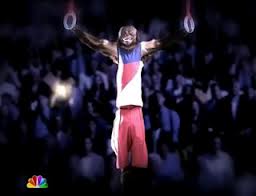
But sometimes society has a way of deciding what the client should be embarrassed about. Take the example of NBC’s faux pas during the London Olympics. Following a huge win by US Olympic gymnast Gabby Douglas, commentator Bob Costas gave a complete analysis of her performance and concluded with the compelling statement ‘There are some African American girls out there who tonight are saying to themselves: “Hey, I’d like to try that too.” More from London in a moment.’ NBC then segued right into a commercial for their new show Animal Practice. Monkey

The commercial featured a monkey in gymnastics regalia competing on Olympic rings. Now, in case you have been living under a rock for the last year, allow me to point out that gymnastic phenomenon Gabby Douglas is an African American woman. I’ll pause while you connect the dots. Yes, people were outraged. Angry viewers lashed out at the lack of sensitivity. NBC issued a hasty apology and explained there was no ill intent, simply poor timing. But, as the saying goes, you can’t un-ring a bell.

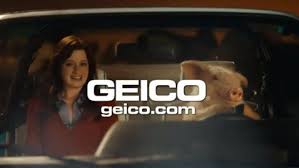
But is it safe to say we all have a different metric for measure propriety? Consider the Geico commercials featuring a mildly annoying pig with a voice that doesn’t seem at all to be what I picture a pig’s voice to sound like. One of the most recent spots features the pig on a date with a young woman. The two of them are broken down and the pig uses Geico’s mobile app to request a tow truck. Much to the disappointment of the young woman, who had hoped the mishap would give them some “alone time”. As it turns out, some moms have protested the ad saying it promotes bestiality. And you know, I’m not even going to touch that one!

Pig


Posted in Uncategorized | 20 Comments

I’m a Pepper, but I wish I were a Wiener!

Think back a few years ago. You are wearing your jammies and laying down in front of the TV on a Saturday morning; watching cartoons and arguing with your siblings about what channel to turn to. You have no worries in your life yet because you’re not even old enough to have any real responsibility except for keeping your room clean. Ok, so you might have to take care of the dog and have to be nice to your annoying auntie that gives your cheeks a pinch when she visits, geez I hated that! You remember the theme song of your favorite TV shows, you remember your favorite toy or video game and what else sticks out? You guessed it: TV commercial jingles.

http://youtu.be/m1NeogMh1JI

During a time when there were no internet, social media, or 250+ networks to choose from, there were a few TV stations. As kids, we lived for Saturday mornings! Nothing beat Saturday morning cartoons! We quietly got out of bed and turned down the volume on the knob before turning on the TV so we wouldn’t wake our parents because once they woke up, it meant less TV time and increased boredom.

Bugs Bunny, Road Runner, Tom & Jerry and George of the Jungle were the champions of Saturday mornings. To a kid, even their worst re-run was better than the best day at school. These TV friends would all be interrupted by ads targeting children. We tolerated the breaks because it gave us a chance to get some juice or a snack and be back in time to catch the rest of the show. The ads were just as equally enjoyable to a child as the cartoons because they were everything kids liked: soft drinks, toy stores, hot dogs, etc.

What we didn’t know was that we were being exposed to some of the most influential jingles of all time. As always, Coca Cola would top the charts with their ads. Their jingle, “I’d like to Buy the World a Coke,” featured people from all walks of life singing and holding a Coke bottle and as the camera pans out, it shows a larger group shot of people doing the same. I was so jealous of these people because my parents told me that Coke would rot my teeth and burn a hole in my stomach, go figure? Nevertheless, it is rated as the best jingle of all-time. Another classic was the Dr. Pepper commercial which beat out 7-Up’s campaign and nipped at the heals of Coca Cola for a while. The “Wouldn’t You Like to Be a Pepper, Too?” campaign was an instant success. The ad aired at a time when Coke was king and left little room for the competition. Soon after the commercial aired, t-shirts started popping up in stores. Everyone became a Pepper and kids started to ask their parents for Dr. Pepper at restaurants and grocery stores. The catchy jingle made people accept a brand that was not as popular before the airing and is a fine example of how a successful jingle can shift market share to a less popular brand.

But my all time favorite jingle as a child was the Oscar Mayer jingle: “Oh I wish I were an Oscar Mayer Wiener.” It was a simple commercial consisting of children and adults singing the jingle with the famous Oscar Mayer Wiener truck in the background. They nailed it! We all liked hot dogs as kids, we identified with the children singing as some of them were cute even to a kid, and most of all, we all wished we could ride in the Oscar Mayer Wiener truck! Hell, I still want to ride in that thing and I’m in my 40’s. I guess I don’t want to grow up? I still want to be a Toys R Us kid!

Toys R Us had a great jingle that I still sing to this day: “I don’t Wanna Grow Up, I’m a Toys R Us Kid.” I never really knew what it took to be a Toys R Us kid? Did I have to buy something to be a Toys R Us kid or did I have to know that damn giraffe? Nevertheless, that jingle still rings in my head to this day when I drive by a store.

Other favorites of that era were McDonald’s, Alka Seltzer, Band Aid and many more. These ads shaped our youth and awakened us to product awareness. They are still conversation pieces at parties and will still bring back fond memories of our youth. They have stuck with us all these years and will always be mentally identified with the products they advertised. They did the job they were designed to do.

Reference:

Bruno, Ken (2010). Best-Ever Advertising Jingles. [ONLINE] Available at: http://www.forbes.com/2010/06/30/advertising-jingles-coca-cola-cmo-network-jingles.html?boxes=financechannelforbes. [Last Accessed 3/31/13].


Posted in Uncategorized | 10 Comments

March Madness: AT&T for the win

This week we discussed big ideas that drive integrated marketing campaigns. Most of you have probably seen AT&T’s “It’s not difficult” commercials and if
you have been watching the NCAA Men’s Basketball Tournament you have probably
noticed a twist in this campaign’s big idea. AT&T came up with a brilliant
idea that entertains, makes us laugh, and remember their message. They adapted
the big idea to fit March Madness and take full advantage of their sponsorship
of the tournament.

RollKenneth

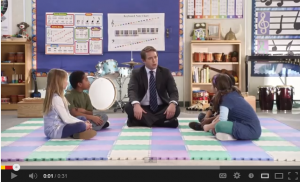
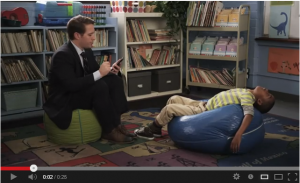
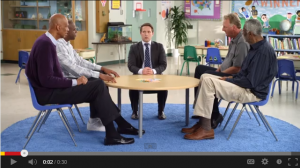
AT&T found an improv actor, Beck Bennett, to have discussions with young kids about everyday topics related to key messaging for AT&T. The overall message of the campaign is “It’s not complicated” more is better, faster is better, bigger is better and AT&T has what you’re looking for. The kids are refreshingly hilarious and Bennett’s dry humor is right on target. Best of all, AT&T realized this was a campaign made for March Madness and the commercials have been altered so Bennett asks questions about basketball that also relate to AT&T’s taglines. These commercials have been airing at practically every NCAA basketball game on CBS and ESPN. AT&T took the campaign further by asking 6 year-olds for help with bracket picks, cementing their tie to the game. This week AT&T aired another commercial even more integrated into the March Madness season. This commercial features Kareem Abdul-Jabbar, Larry Bird, Magic Johnson and Bill Russell in the same classroom style seating we have grown accustom through the campaign.

ProsBBDO Atlanta was hired by AT&T and Stephen McMennamy, creative director at BBDO, shared their timeline and frequency with the NCAA focused campaign. “We want to further it, keep the spark but at the same time we didn’t want to jump the shark” (Elliott, 2013). The idea is to continue the momentum but not loose quality or overplay it so that it becomes stale (Elliott, 2013). After the NCAA championship on April 8, McMennamy says they will “drop the microphone, leave the stage” (Elliott, 2013).

In 2012, the NCAA championship game received 24 million television viewers (Paulson, 2012). This was ranked as the most watched sporting event after the Superbowl and NFL playoff games (Paulson, 2012). AT&T and BBDO have created a successful campaign integration into March Madness and I would not be surprised if we see AT&T and others implement this idea into future sporting events.

Posted by Erin Spaulding

References

Elliott, S. (2013, March 29). For N.C.A.A., AT&T calls on pro basketball stars. The New York Times. Retrieved from http://mediadecoder.blogs.nytimes.com/2013/03/29/for-n-c-a-a-att-calls-on-pro-basketball-stars/

Paulson. (2012, July 11). Halftime: The 50 most-viewed sporting events of 2012 (so far) . Sports Media Watch. Retrieved from http://www.sportsmediawatch.com/2012/07/halftime-the-50-most-viewed-sporting-events-of-2012-so-far/

Posted in Uncategorized | 3 Comments

Women’s Radio – Afghanistan

In the majority of Afghanistan, women have re-attained their freedoms. Many women now can live, work, get an education and vote. With the increase in rights and security, the response has been an outcropping of women in the legislature, education, culture and enterprise. Through all ventures, Afghan women are becoming well known for their ability to manage technical details. It makes sense.

For generations, Afghan women have led the nation’s textile industry. Matter of fact, the next time you get an Afghan rug or shall, it was probably woven by an Afghan woman who is working in an Afghan woman’s owned business. It seems that all those generations of skill and knowledge are paying off as women use their discipline in spin-off (pun intended) into new enterprises and other technical trades.

Afghan Fabrics and textiles from women's owned businesses.

Afghan Fabrics and textiles from women’s owned businesses.

For instance, I recently spoke to a small television and film production studio in Kabul who wants to start internships with the Kabul University and in collaboration with broadcasters in the region to train women in the technical trades (editing, sound, lights, camera work, etc.) because they better manage work that has technical skills.

There are pockets, though, in the South and East, that remains staunchly conservative. Even with military enforcement and money for education and outreach, the culture remains stringent against women and their rights.

Today, being Easter and the closing day of Women’s History Month, I want to highlight two women in that region of Afghanistan who are making difference.

In the Kandahar / Spin Boldak region two women (names not given to protect their identity) have launched and are running women’s radio broadcast called “Da Kor Rana,” or “The Light of the House”. The two women DJ the program and discuss women’s issues to a local audience. The show has gained popularity with men and women in the region because of the broadcaster’s ability to balance the conservative environment while addressing popular and current lifestyle issues.

The struggle, though, is not with the local or regional conservative cultural and religious leaders. The challenge is that the US military, which runs the station, is planning to shut the station down and box up the equipment as they prepare to withdraw from Afghanistan. The treaty agreement between the US and Afghanistan states that all military owned radio and television station equipment is to be turned over to the Afghan Army.

Two women pioneer radio broadcasting.

Two women radio broadcasters run a show in Afghanistan's most cnservative region

Two women radio broadcasters run a show in Afghanistan’s most cnservative region

Unfortunately, there are no Afghan military units in the area, so the equipment will be boxed up and shipped to another region. This, of course, would end the two women’s ability to broadcast. The local governor has pleaded to the local US military and State Department officials in the region to find a way to leave the equipment, but so far, there has only received sympathy, and no solution.
Last night is when I found out about the issue. I received an email and call from the Spin Boldak PRT trying to figure out an alternative. This is a balance between policy and diplomacy. Hopefully, as a team we can find a way to preserve those women’s voices in the Southern Kandahar region. As their name says, they truly are a point of light for all women in the region to there to find their way to greater freedom and justice.

-Jack

P.S. After writing the blog, the Spin Boldak State Department representative forwarded me this news article on the issue: http://www.stripes.com/news/female-host-deals-with-family-issues-on-radio-show-in-afghanistan-1.214378

Posted in Uncategorized | 3 Comments

BIG DATA: Here, There, Everywhere

Data is becoming unmanageable everywhere. As data sets have grown in size and complexity, so has the difficulty of processing on-hand database management tools or traditional data processing applications (Wikipedia, 2013). This is no surprise to anyone taking a serious look at data usage.

In the advertising industry alone, plenty of data is used for tracking and trendsetting, from ratings to tweets and followers. Right now, during March Madness, the crunching of data to predict the 68 teams for the national championship run is necessary. On a global scale, here is a glimpse of the statistics giving the McKinsey Global Institute a reason for identifying big data – a growing torrent:

  • 30 billion pieces of content shared on Facebook every month
  • 40 percent projected growth in global data generated per year vs. 5 percent growth in global IT spend
  • 15 of 17 sectors in the US have more data stored per company than the US Library of Congress
  • $600 billion potential annual consumer surplus resulting from global use personal location data
  • 60 percent potential increase in retailers’ operating margins are possible with big data
  • 140,000 – 190,000 more deep analytical talent positions

There is no doubt, as more data materializes, the more it must be analyze for more solid answers to more new questions. Many companies in a variety of industries are taking advantage of big data to make better decisions. Beyond answers, companies are using big data insights to become more competitive, increase revenue and to learn more about potential customers. This is why there is no growing concern about managing big data, but rather a swell of new ideas arising from the benefits of big data. This popularity is creating a greater need for IT departments and/or IT staff. A crucial emerging role for IT is to coach employees at all levels to develop critical information management competencies (Cattie & Riper, 2013). Executives have gotten smart about the importance of big data and the impact on their companies moving forward.

There are still many unknowns about this big data phenomenon and its potential impact on consumers personally. According to Forbes, it is already having an impact on how we spend, how we vote, how we study, how we stay healthy and how we keep or lose our privacy. Big data’s evolution from the technical to practical phase will play a big part in making big data bigger than ever in 2013.

References

Cattie, C & Riper, K. (2013). From big data to better decisions. FCW. Retrieved on March 27, 2013 from:

http://fcw.com/articles/2013/03/29/comment-ceb-big-data-decisions.aspx

Manyika, J., Chui, M., Brown, B., Bughin, J., Dobbs, R., Roxburgh, C. and Byers, A. (2011). Big data: The next frontier for innovation, competition, and productivity. McKinsey Global Institute. Retrieved on March 26, 2013 from:

http://www.mckinsey.com/insights/business_technology/big_data_the_next_frontier_for_innovation

Taparia, S. (2013). 5 Ways big data will change lives in 2013. Forbes. Retrieved on March 30, 2013 from:

http://www.forbes.com/sites/sap/2013/01/09/5-ways-big-data-will-change-lives-in-2013/

Wikipedia, (2013). Big Data. Retrieved on March 27, 2013 from:

http://en.wikipedia.org/wiki/Big_data

Posted in Uncategorized | 6 Comments

Heading Into The Cave

With baseball season’s opening day just one day away, and hope springing anew for baseball fans everywhere (even those of my beloved but eternally futile Pittsburgh Pirates), I thought it appropriate to take a look at one way Major League Baseball stokes fan passion through social media, to drive interest in the sport and ultimately, of course, sell tickets, merchandise and $26 hot dogs.

Screen shot 2013-03-31 at 10.31.58 PM

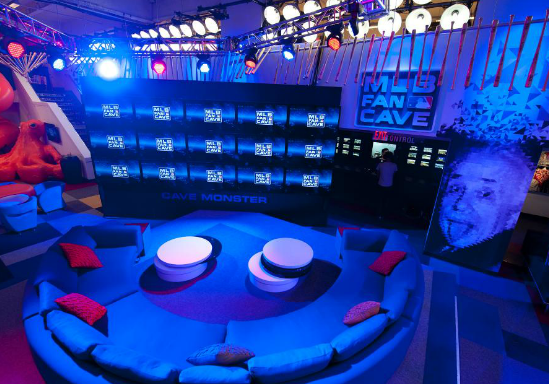
A key component of MLB’s social media strategy is known as the MLB Fan Cave. Now in its third season,the Fan Cave is a fish bowl of a space in the heart of Greenwich Village in New York where nine hand-picked baseball superfans live, watch every single game all season long, host celebrities (both from the world of baseball and otherwise), and create a constant flow of social media content on every platform. The Cave is full of specially designed equipment and outfitted with TV monitors in every nook and cranny, to watch games and provide a location for content creation. I might describe it as a cross between ESPN’s SportsCenter, MTV’s The Real World and the recent “art installation” of Tilda Swinton sleeping in a glass box inside New York’s Museum of Modern Art.

Screen shot 2013-03-31 at 10.35.17 PM

The Fan Cave website also provides a platform for MLB’s traditional advertising, like the current “I Play” campaign.

As the season goes on, the Cave Dwellers will spark discussions on events around the league, but with a pop culture sensibility, and it seems the season can’t get here soon enough, with one Cave Dweller opting to blog about his Top 9 Taco Bell Menu Items. Over the course of the season, one of the nine will be named the “winner” based on the volume of the social conversation they create, as well as their creativity in the content they develop.

For a business that’s based entirely on fan/customer enthusiasm and absolute devotion, I think the MLB Fan Cave makes a lot of sense, particularly with the length (some would say monotony) of a 162-game baseball season.

What are your thoughts? For the baseball fans among us: do social media efforts like this help bolster your association with the game, or do you see it as extraneous and focus your attention simply on what happens between the foul poles? For those that aren’t fans: does having a way to interact with or follow these MLB super fans on social media make the game more accessible and palatable to you?

Personally, as a fan who hasn’t yet made the deep dive into all the statistics baseball fans seem to know all about these days (for that, ask my brother), I like how efforts like MLB Fan Cave celebrate being a baseball fan and what the game means as part of our country’s popular culture, but I look forward to hearing others’ perspectives.

References

Adweek. (2013, March 27). MLB ‘Fan Cave’ nerds out like never before with fancy new high-tech toys. Retrieved from http://www.adweek.com/adfreak/mlb-fan-cave-nerds-out-never-fancy-new-high-tech-toys-148182.

Haberman, S. (2013, April 5). MLB Fan Cave: The core of Major League Baseball’s social strategy. Retrieved from http://mashable.com/2012/04/05/mlb-fan-cave-2012/.

Hicken, M. (2013, March 31) Beer and hot dogs: Which ballparks charge most. Retrieved from http://money.cnn.com/2013/03/31/pf/baseball-prices/.

Posted in Uncategorized | 3 Comments

Bringing Sexy Back with Great Marketing

By Kristy Junio

I am a middle-aged woman reliving my boy band crushes from the 90s. But as pathetic as that sounds, there is a marketing lesson in all of this. Justin Timberlake just rose back on top of the music world through the work of great marketing execution in an industry that seems to have hit rock bottom (Pfanner, 2013; Pomerantz, 2013).

Justin-Timberlake-The-2020-Experience

With his first album release since 2006, no one could avoid the hype that has hit the airwaves, television, and pop culture scene over the past couple of months as this music icon marketed his way to the top of the charts. Or, shall I say how his ‘people’ marketed his way back to the top. The birth of digital media took down the music industry profits over the past decade (Pfanner, 2013) but 2012 showed a glimmer of hope for this industry in despair from the rise of new media. Timberlake’s album The 20/20 Experience has paved the road for a new wave of marketing for the industry, culling together the use of classic marketing tactics like partnership marketing, guest appearances, and event marketing with new marketing tactics including social media, search engine marketing, and streaming media. Timberlake’s use of a multifaceted integrated marketing campaign resulted in a record-breaking first week of sales for the album, even surpassing Adele’s 21.

What’s even more impressive is that these tactics do not just apply to music albums, a lesson can be learned for other industries and products as well. Here’s a few lessons that entertainment marketers should keep in their back pocket to recreate the success seen with The 20/20 Experience:

  • Product  – The amazing thing about this coup is that the singer couldn’t just rest on his laurels and his singing talent; he had to bring on the full package. Timberlake has diversified his appeal by achieving triple threat status as a singer, dancer, and actor. Applying this to product sales, his brand recognition has skyrocketed. For a brand to be successful, it has to be a great package overall, not just a single product. Timberlake is the Apple Inc. of the music industry, the whole shebang.
  • Pricing – Free makes money. Unlike other entertainers who are afraid of free downloads on the web, The 20/20 Experience album was heavily promoted through free streaming on the internet, proving that the music industry’s fear of the internet is unsolicited. Giving away the products actually aided in additional sales for this album (Suddath, 2013).
  • Placement – iTunes, iHeartRadio, and Target Corporation have been key distribution points for the Timberlake’s album. He has canvassed a variety of distribution channels, allowing for his album to be purchased through many popular distribution points.
  • Promotions – Timberlake understands that cross-promotions is king. Timberlake has been everywhere, his media strategy included guest appearances on Jimmy Fallon, Saturday Night Live, and multiple page spreads in some of the world’s most known magazine publications. Furthermore, what’s better than one great artist on tour? Two well-known artists on tour together. Timberlake’s timely tour partnership with music mogul Jay-Z helped to clinch the top seat for record album and concert sales.

Four-Marketing-P

By diversifying his appeal and staying true to the classic Four Ps of Marketing, he has used product, pricing, placement and promotions to make an unparalleled comeback in the music industry.

It’s been a long time since his first appearance on Star Search with Ed McMahon but this boy band icon isn’t quite ready to say “Bye Bye Bye” to the big bucks and musical success.

References

Four Ps. (n.d.). In American Marketing Association dictionary online. Retrieved from http://www.marketingpower.com/_layouts/Dictionary.aspx?dLetter=T

Pfanner, E. (2013, February 26).  Music Industry Sales Rise, and Digital Revenue Gets the Credit. Retrieved from http://www.nytimes.com/2013/02/27/technology/music-industry-records-first-revenue-increase-since-1999.html?_r=0

Pomerantz, D. (March 27).  Was Justin Timberlake forced into making ‘20/20’?. Forbes. Retrieved from http://www.forbes.com/sites/dorothypomerantz/2013/03/27/was-justin-timberlake-forced-into-making-2020/

Suddath, C. (2013, March 29). Justin Timberlake made a fortune giving his album away. Yahoo Finance. Retrieved from http://finance.yahoo.com/news/justin-timberlake-made-a-fortune-giving-his-album-away-171352523.html

Posted in Uncategorized | 20 Comments

Your Take: Tiger Woods’ latest Nike ad

Whether you’re a golf fan or just a casual observer of news headlines, chances are you’ve heard all about the latest concerning Tiger Woods. No, I don’t mean the news that he’s dating Olympic skier Lindsey Vonn. There’s a new ad celebrating his return to the world’s number one golfer status that’s ruffling some feathers.
After a rocky return to golf after his high-profile personal issues, Woods returned to the number one spot as the world’s top golfer last weekend. Nike saluted the golfer with an advertisement disseminated through Facebook and Twitter that featured a quote from Woods, “Winning takes care of everything.”

Tiger Woods Ad
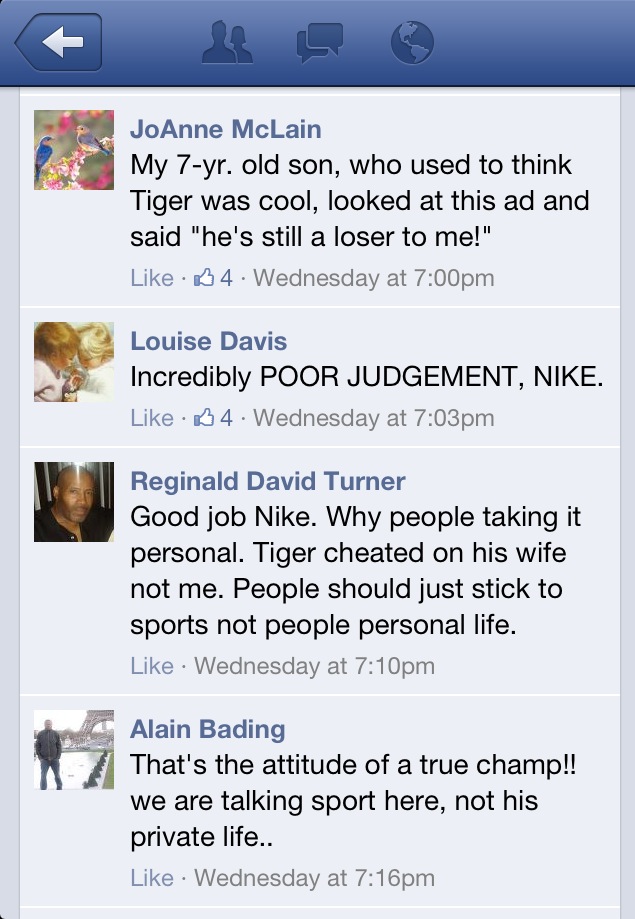
Since the advertisement was released, there has been a firestorm of criticism leveled at Nike. Many believe that the ad harkens back to Woods’ personal struggles, implying that his winning negates his controversial personal issues. The number of comments on the post currently stands at 471 and runs the gamut of responses. One user remarked, “I like this ad, good for you Tiger and for you Nike. Tiger is a golfer, not a saint or the head of a church. His personal life is just that, PERSONAL and people should stay out of it.” Another user stated, “Completely asinine marketing move – I imagine some people are going to lose their jobs over this, hopefully.”

Nike Screenshot

Nike spokeswoman Beth Gast has come out in defense of the ad, explaining that the quote is something Woods has always stated even prior to his personal issues. “The statement references that sentiment and is a salute to his athletic performance,” Gast told the New York Daily News (Boren, 2013). Meanwhile, the debate about the meaning of the ad is continuing on morning news shows, in the advertising world and around water coolers everywhere.
One thing is certain. Nike, regardless of the intent or subtext of the ad, has achieved what it wanted to do and then some. Woods amazing feat has been acknowledged by millions. Beyond that, Nike has stirred up a debate that keeps it on the conscious of people everywhere. Whether people see the ad as a simple acknowledgement or a case of mocking past wrong-doings, on thing is evident. People are talking about it and keeping the Nike name on lips everywhere. But is this notoriety coming at a price? Woods has weathered a firestorm that consumed his life at the expense of his personal career. Lost endorsements, public judgment and irreparable damage to his brand marked a time where the world saw Woods at his worst. As time passed, the damage leveled off and Woods became known again for his golf prowess rather his personal failings. For better or worse, Nike’s ad is causing the world to rehash what Woods has worked hard to get passed. Time will prove if the ad’s notoriety is worth it.

Reference

Boren, C. (2013, March 27). Tiger Woods Nike ad causes a stir with “winning takes care of everything” message. The Washington Post. Retrieved March 29, 2013 from http://www.washingtonpost.com/blogs/early-lead/wp/2013/03/27/tiger-woods-nike-ad-causes-a-stir-with-winning-takes-care-of-everything-message/

Posted in Uncategorized | 17 Comments

Pass the credit card: Couch commerce invades your living room

As I write this post on my laptop computer, a movie is playing in the background (for the record, it’s Good Will Hunting on Netflix). My Blackberry is in my purse but well within reach. My Android phone is on the coffee table in front of me, and a second laptop is just a few feet away from me.

If only I had an actual cable TV subscription, I’d be the spitting image of the demographic eBay is hoping to reach with its interactive shopping app, “Watch with eBay.”

Couch-Commerce-mit-eBay_very_large

I don’t personally know anyone who owns a next-generation interactive TV, and I’ve never used a television set to buy anything more sophisticated than a pay-per-view flick. But a recent report by WorldPay (2012) asserts that 1 in 5 consumers worldwide own interactive TVs, and about 25% of that number have bought goods or services using their enhanced sets.

What is couch commerce?
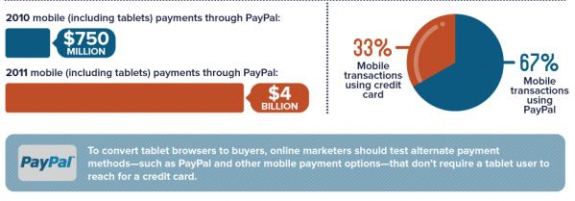
Broadly speaking, “couch commerce” refers to any shopping consumers perform at their leisure using mobile devices, and it’s a phenomenon that’s growing by leaps and bounds. Consider this infographic, which illuminates the rapid increase in mobile payments made between 2010 and 2011 (Monetate, 2011):

money-tablets

More specifically, couch commerce has come to mean the shopping we do on our mobile devices while watching television. This meaning relies on the notion that today’s television viewers increasingly use their smartphones and tablets as “second screens” (WorldPay, 2012).  eBay is among the first to capitalize on this phenomenon with its application for iPad and iPhone called Watch with eBay.

How It Works
After downloading the app, consumers are asked to tell eBay what they’re watching by indicating their zip code and cable or satellite provider (eBay, 2011). Based on this information, the app delivers the consumer’s own program schedule to the device, and the consumer selects the exact program he or she is watching (eBay, 2011).

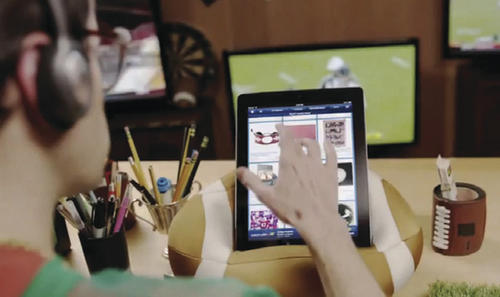
The consumer’s “second screen” thus synchronized, Watch with eBay supplies the consumer with real-time shopping suggestions related to what’s on TV. For instance, a consumer who uses the app while viewing a football game will be offered the opportunity to buy team merchandise. During the 2012 Summer Olympic Games, Watch with eBay connected fans with the Nike shoes worn by their favorite runners (Rueter, 2012). Did you find the indie dress Hannah wore in this week’s Girls just darling? Maybe Watch with eBay could show you exactly where to buy it.

The Verdict
The experience seems to work best when the app satisfies our curiosity in ways we could not easily achieve ourselves. You may love the leather briefcase carried by your favorite TV detective, but you’d be hard pressed to find it unassisted. When Watch with eBay answers this type of burning question, it connects with users in a meaningful way.

But not all reviewers are thrilled with the Watch with eBay experience. Consumers seem least impressed when the app returns products that are only loosely aligned with the live viewing experience (Wolff, 2011). A fan of How I Met Your Mother doesn’t need the assistance of an app to find and buy the Season 1 box set. Virtually anyone who knows how to download an app also knows how to use Amazon.

What’s Next?
In a comment on another student’s post, I predicted that the future will bring us personalized digital product placements. That is, when advertisers digitally add a box of cereal onto the kitchen table of our favorite sitcom family, the brand of cereal displayed will vary based on what marketers know about us from our search history and other collected data.

Along the same vein, it’s easy to imagine a more integrated interactive shopping experience is just around the corner. Retailers are forever looking for ways to “hook” consumers, and couch commerce allows shoppers to indulge their impulse buying habits 24/7 — no barkers or expensive store displays needed (Happach, 2012). I think we’ll see applications like Watch with eBay become much more sophisticated over time.

And, of course, there’s always the question of what’s next. eBay has already rolled out another app to leverage consumers’ seemingly boundless fascination with all things Hollywood (can I say that to bunch of jaded Angelenos?). Called “eBay Celebrity,” the app encourages consumers to follow in the footsteps of their favorite stars. Katy Perry says she likes to search eBay for Jonathan Taylor Thomas memorabilia — why shouldn’t you?

http://youtu.be/KSW8b8yF0Fc

References

eBay. (2011). Watch with eBay: How it works. Retrieved from http://mobile.ebay.com

Happach, S. (2012, July 2). Internet and interactive TV — the retail revolution. The Guardian. Retrieved from http://www.guardian.co.uk

Monetate. (2012, June 29). Couch commerce: How tablet shoppers are changing online sales. Retrieved from: http://www.monetate.com

Rueter, T. (2012, July 27. eBay goes for Olympic gold. Internet Retailer. Retrieved from http://www.internetretailer.com

Wolff, M. (2011, December 12). Watch with eBay, or don’t. Techcitement. Retrieved from http://www.techcitement.com

WorldPay. (2012). Are you giving your customers what they really, really want? Retrieved from http://www.worldpay.com

Posted in Uncategorized | 12 Comments