
The Wonderful World of Lilly Pulitzer

Fashion icon Lilly Pulitzer

Fashion icon Lilly Pulitzer

“It all started 50ish years ago with a simple shift dress in Palm Beach, Florida” (Herald Online, 2013). Well, not quite…

It actually started 80ish years ago when Lillian McKim was born in Farmington, Connecticut. And what a beginning it was! Lilly attended school with future first lady, Jacqueline Bouvier (a friendship that would last for years), and married Peter Pulitzer, grandson of newspaper mogul Joseph Pulitzer (Newcomb, 2013).

On the advice of doctors trying to cure Lilly of severe depression after moving with her family to Palm Beach, Florida (put more bluntly, they basically told her that she needed to find something to do), she began juicing oranges from the family’s groves and selling the juice at a roadside stand. Finding she was always covered in juice at the end of the day, Pulitzer designed herself a shift dress to match the juice stains. After receiving many compliments on her creation, she began selling a few dresses at her juice stand, and a fashion empire was born. The year was 1959.
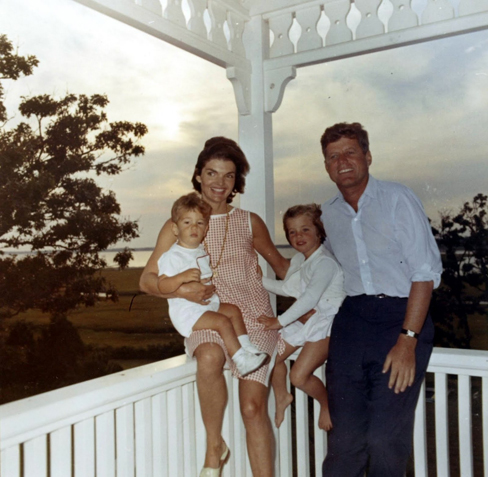
Jackie Kennedy, photographed for Life magazine wearing The Lilly, on a family vacation.

Jackie Kennedy, photographed for Life magazine wearing The Lilly, on a family vacation.

So with no business sense or fashion design experience whatsoever, Lilly Pulitzer entered the fashion business full time. Of course, it didn’t hurt that she had come from and married money. Or that Jackie Kennedy was photographed wearing one of her dresses…made from kitchen curtain material! After that, The Lilly took off and a fashion icon was born (Fashion I.Q., 2013).
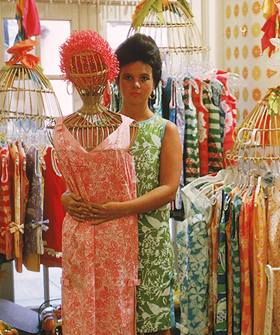
Vintage 1960s Lilly Pulitzer wearing her own design in one of her early shops

Vintage 1960s Lilly Pulitzer wearing her own design in one of her early shops

Part of Pulitzer’s success can be attributed to being in the right place at the right time. The time was the rules-busting, turbulent ‘60s, a decade perfectly suited to Lilly’s rebellious bohemian nature. In fact, Lilly and her husband were pioneering an alternative lifestyle that was more casual and organic than the rest of high society. Lilly, herself, describes her success thus: “It was the time, the place and the name” (cited in Fashion I.Q., 2013).
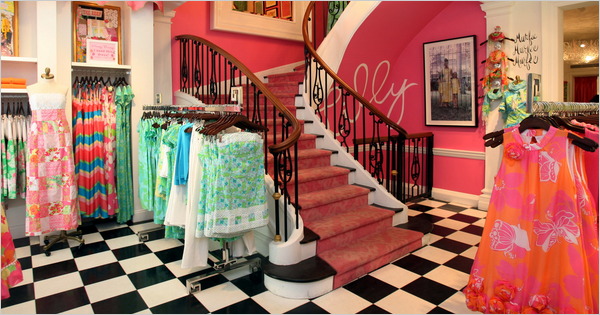
Lilly Pulitzer shop today.

Lilly Pulitzer shop today.

The Lilly Pulitzer line is still alive and well today, although its founder shut down the company in 1984. A decade later, the line was revived when its founder sold the license to Oxford Industries, a publicly traded company, in 1993, remaining on as a consultant. The company continues to feature the bright colors and prints that Lilly loved, introducing “the wonderful world of Lilly to new markets” (Lilly Pulitzer president James Bradbeer, Jr., cited in Herald Online, 2013).

Lilly Pulitzer passed away peacefully on April 7, 2013, at her home in Palm Beach, Florida. She was 81 years old. But thanks to the continued Lilly Pulitzer revival, the free-spirited socialite’s belief that “it’s always summer somewhere” lives on (Newcomb, 2013).
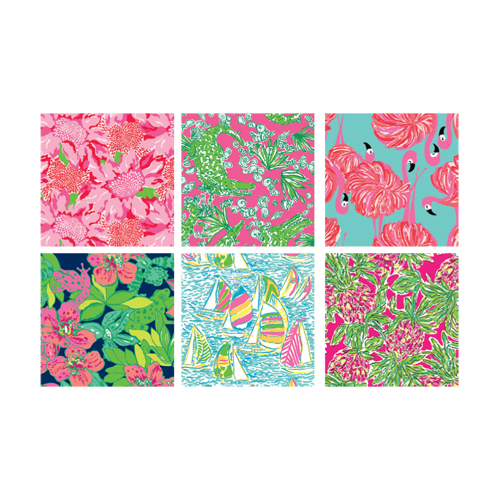
lilly-prints2References:

Business Wire (2013, April 3). Lilly Pulitzer opens 20th store in The Shops at Riverside. Herald Online. Retrieved from http://www.heraldonline.com/2013/04/03/4744482/lilly-pulitzer-opens-20th-store.html

Fashion I.Q. (2013, April 4). Town & Country’s Kathryn Livingston on Lilly Pulitzer. Sarasota Magazine. Retrieved from http://sarasotamagazine.com/fashion-iq/2013/04/04/kathryn-livingston-on-lilly/

Newcomb, A (2013, April 7). Lilly Pulitzer: Fashion designer, socialite dies at 81. ABC News. Retrieved from http://abcnews.go.com/US/lilly-pulitzer-fashion-designer-socialite-dies-81/story?id=18901439#.UWJkZknn-M8


Posted in Uncategorized | 20 Comments

What do companies do when consumers are #notbuyingit?

It’s all about leveraging the power of consumer engagement, right?

From the opening pages of Brand Media Strategy to the Effie Award-winning Old Spice campaign to our evaluations of the integration of respective brands, 541 has focused significantly on engaging with consumers and allowing their feedback and conversations and activity guide the trajectory of current campaigns and inform future product enhancements and launches.

But what do you do when that feedback is decidedly negative and, furthermore, organized?

Some companies have had to answer that question with the advent of the #notbuyingit Twitter movement. Organized by missrepresentation.org, a non-profit social campaign aimed with the goal of shifting cultural mindsets and ending gender discrimination, the #notbuyingit movement “calls out sexism in the media” and “challenges the misrepresentation of women and girls.”

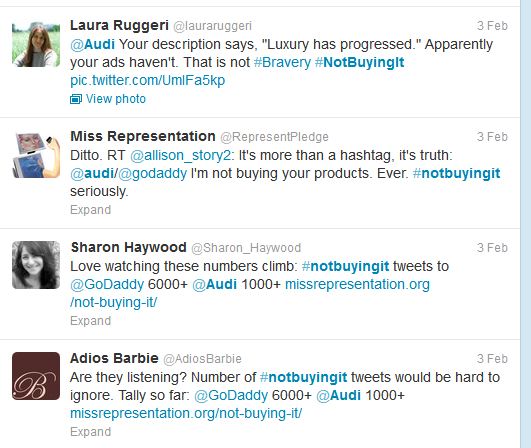
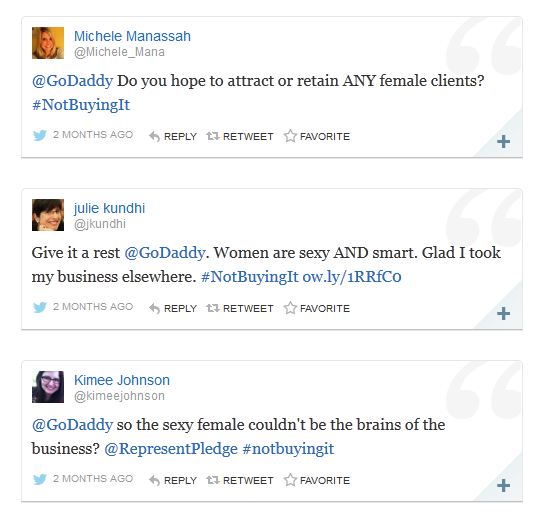
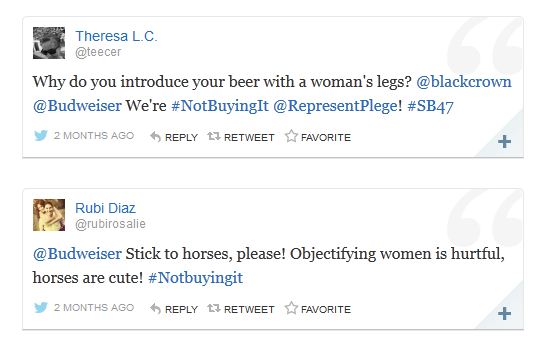
While the #notbuyingit hashtag has been in use for several years, the movement picked up considerable steam during the 2013 Super Bowl, when some 10,000 people tweeted to decry the sexism they saw in ads by Go Daddy, Audi and Budweiser, just to name a few:

Go Daddy Budweiser audi

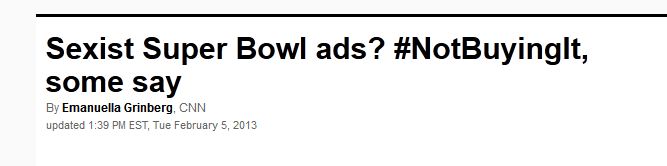
#notbuyingit attracted even more participants in the days after the game as media outlets including CNN and The Boston Globe reported about the campaign:

cnn Boston Globe

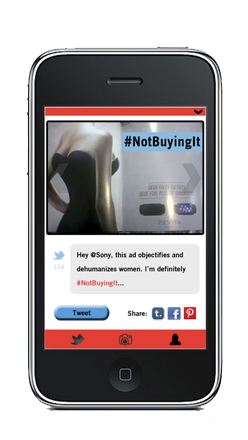
And now missrepresentation.org is upping its own game with the #notbuyingit app, which organizers say makes it even easier to call out companies they feel are degrading women.

app

missrepresentation.org expects the number of #notbuyingit tweets to soar with the ease of the app, development of which has been financed in part by $13,000 from interested consumers donated through the indiegogo website.

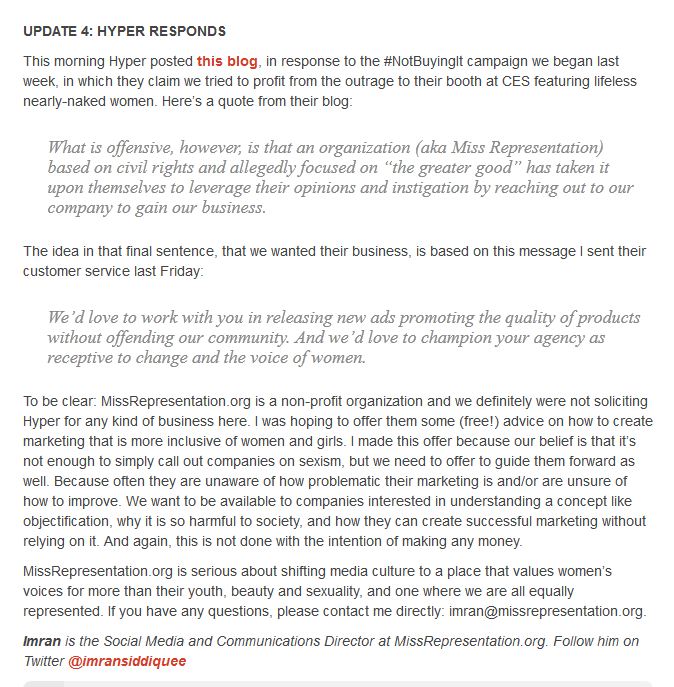
So what should companies do in the face of such intense consumer blowback? Corporate reactions have been mixed, ranging from this humble post from the founder of Solid Gold Bomb clothing to accusations of extortion:

hyper

Negative consumer feedback appearing online certainly isn’t anything new, as anyone who has ever read walmartsucks.org or ihatedell.net can attest. But what makes #notbuyingit a little different is how quickly a campaign can pop up and spread. Just by watching #notbuyingit trend on Twitter, consumers can form opinions about multiple companies and products — no need to visit individual gripe sites. And as we all know from the astonishing billions of Tweets sent each week, retweeting is as easy as click and send.

missrepresentation.org and the consumers who Tweet #notbuyingit say they’re working toward a less sexist culture, something to which companies certainly don’t want be seen as opposed. So how do they respond?

About the Author

Lynn Tefft Hoff is the Assistant Director of Communications for the Radiological Society of North America, a society of 53,000 radiologists based in Oak Brook, Illinois. Lynn is in the Fall 2012 cohort of the Masters of Communication Management program at the University of Southern California. She lives in Aurora, Illinois, with her husband, 10-year-old stepson and 3-year-old son, who doesn’t believe that “writer and editor” is an actual profession and is waiting for her to decide to be a doctor or fireman “when she grows up.” Lynn chronicles life as a mom, middle manager and master’s student at mommyhitsthebooks.com.

Posted in Uncategorized | 14 Comments
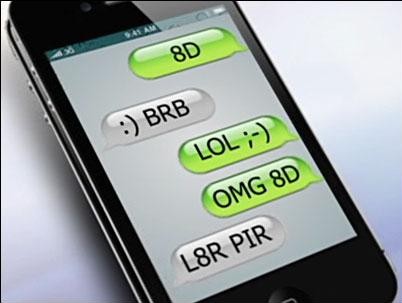
Example of Txt Speak

Example of Txt Speak

The Masters of Communications Program at the Annenberg School for Journalism and Communications at the University of Southern California focuses on teaching its students how organizations and people communicate. Language is the basis of communications and language is consistently evolving. The first type of language was most likely a type of sign language established by cavemen.  As each generation of people evolve, the language that they speak progresses, and the pronouncements and the meanings of the words used in their language change based upon the current society and circumstances (Liberman 2011, para 4.).  But how has modern day language been influenced through the use of social media?

In the early days of the internet was the introduction of the email message and, a major fear was that the email message would replace and or destroy the act of written correspondence or letter writing (Sherman, 2010, para. 3).  But, this was not the case, just as email was looked upon to change the way society conveys written messages. Today social media has had an impact on the way the written word is used and understood (Sherman, 2010, para. 5). 

The use of the written word has evolved with the use of social media in many different ways. One way is text speak.   Text speak uses different spellings and abbreviations for words.  This language change has been highlighted by the media in recent years and the use of these abbreviations or text speak to communicate may be somewhat overblown.  Text Speak is the use of vowel-free abbreviations and acronyms usually in short message with a character limit such as a “tweet “or a “SMS” message (Kleinman, 2010, para.30).  Many people believe that text speak is new language but, on average when people send text message only 10% of the words in an average text message are not spelled out completely (Kleinman, 2010, para.31).

Another language phenomenon that occurred because of social media is the way technology has changed the definitions of existing words to mean something else. An example of this is the term wireless in the 1950’s the word meant a short-wave radio. (Kleinman, 2010, para.40). Today, the word means a type of communication and computing devices. (Kleinman, 2010, para.41).

According to David Crystal , honorary professor of linguistics at the University of Bangor, historically language takes many generations to change but, the internet as speed up this process so, now people notice this change much more quickly (Kleinman, 2010, para.45).    People are using word play on the internet to manipulate language. (Kleinman, 2010, para.51).  The manipulation of language or word play on the internet is becoming a skill similarly to that of tagging or skateboarding (Kleinman, 2010, para.45).    It will be interesting to see how the use of language will change on the internet in the next 20 years.

–Vicki Young

CMGT 541-C

  References

 Kleinman, Z. (2010, August 16). How the internet is changing language

BBC.co.uk. Retrieved from http://www.bbc.co.uk/news/technology-10971949

Liberman, M. (2011) Linguistics 001: introduction to linguistics. University of Pennsylvania.

Retrieved from: http://www.ling.upenn.edu/courses/ling001/

Sherman, A. (2010, April 28).  How social media is affecting the way we speak and write

Gigaom.com. Retrieved from: http://gigaom.com/2010/04/28/how-social-media-is-affecting-the-way-we-speak-and-write/

Posted on by schmulev | 15 Comments

Salad Dressing Just Got Steamy

Salad dressing just got steamy, sexy and sensual. Last week, Kraft introduced their new “Let’s Get Zesty” ad campaign for it’s Italian dressing. It features a hot guy cooking over an outdoor grill and it’s full of sexual innuendos, take a look:

http://youtu.be/97Q56WXTsp4

This commercial, with several targeted spots on Bravo, has a similar look and feel to past Effie award winner – “Old Spice” which used sex to entice women to buy it’s body wash for the men in their life, but “Mr. Old Spice” didn’t have quite have as many sexual undertones in his commercial as “Mr. Zesty.” And, sex sells.

tumblr_mklplrW92v1qbvmzbo1_500

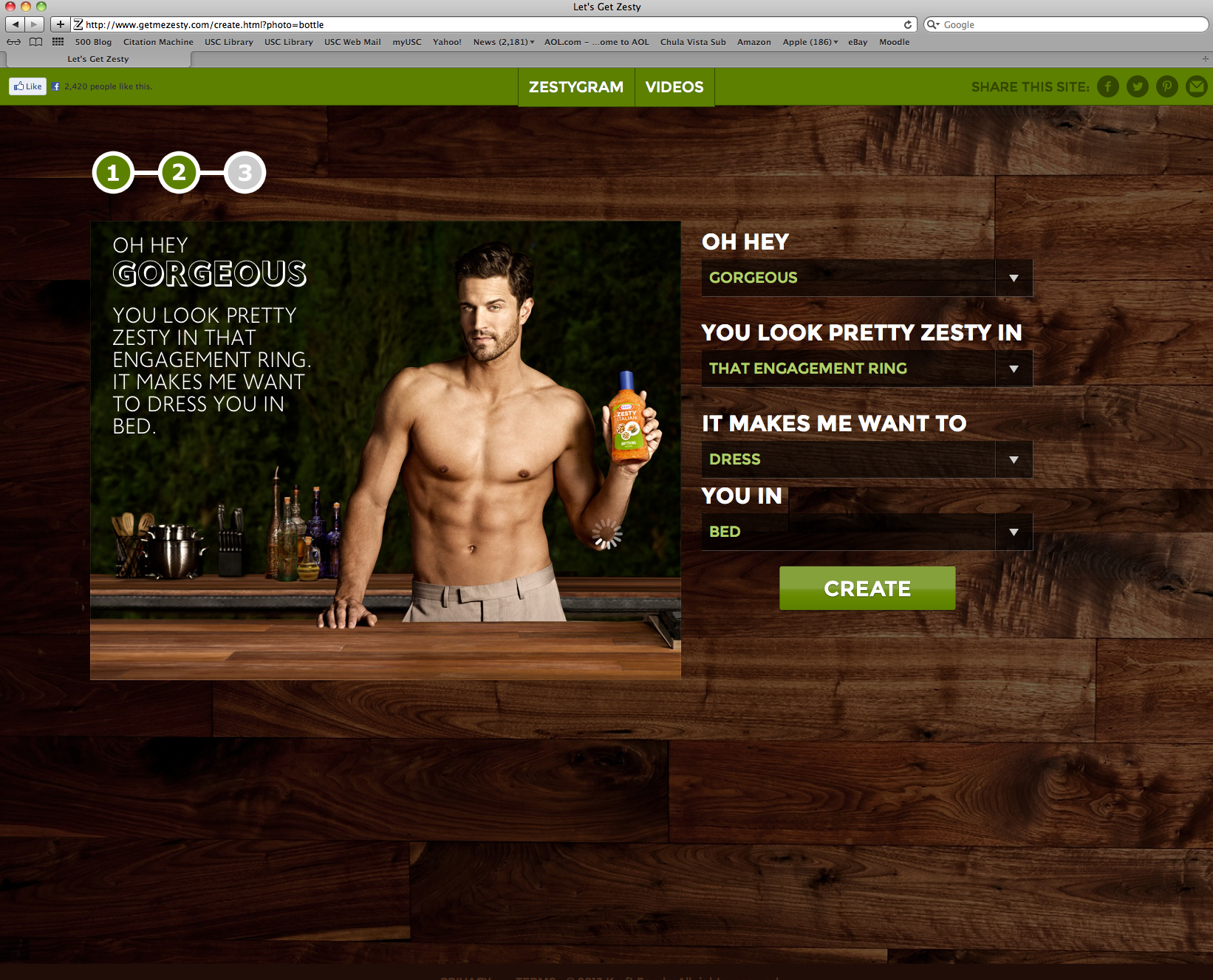
Kraft takes the integrated marketing campaign a step further with its “GetMeZesty.com” landing page where you can personalize a “Zestygram” and share it with friends and family.
GetMeZesty

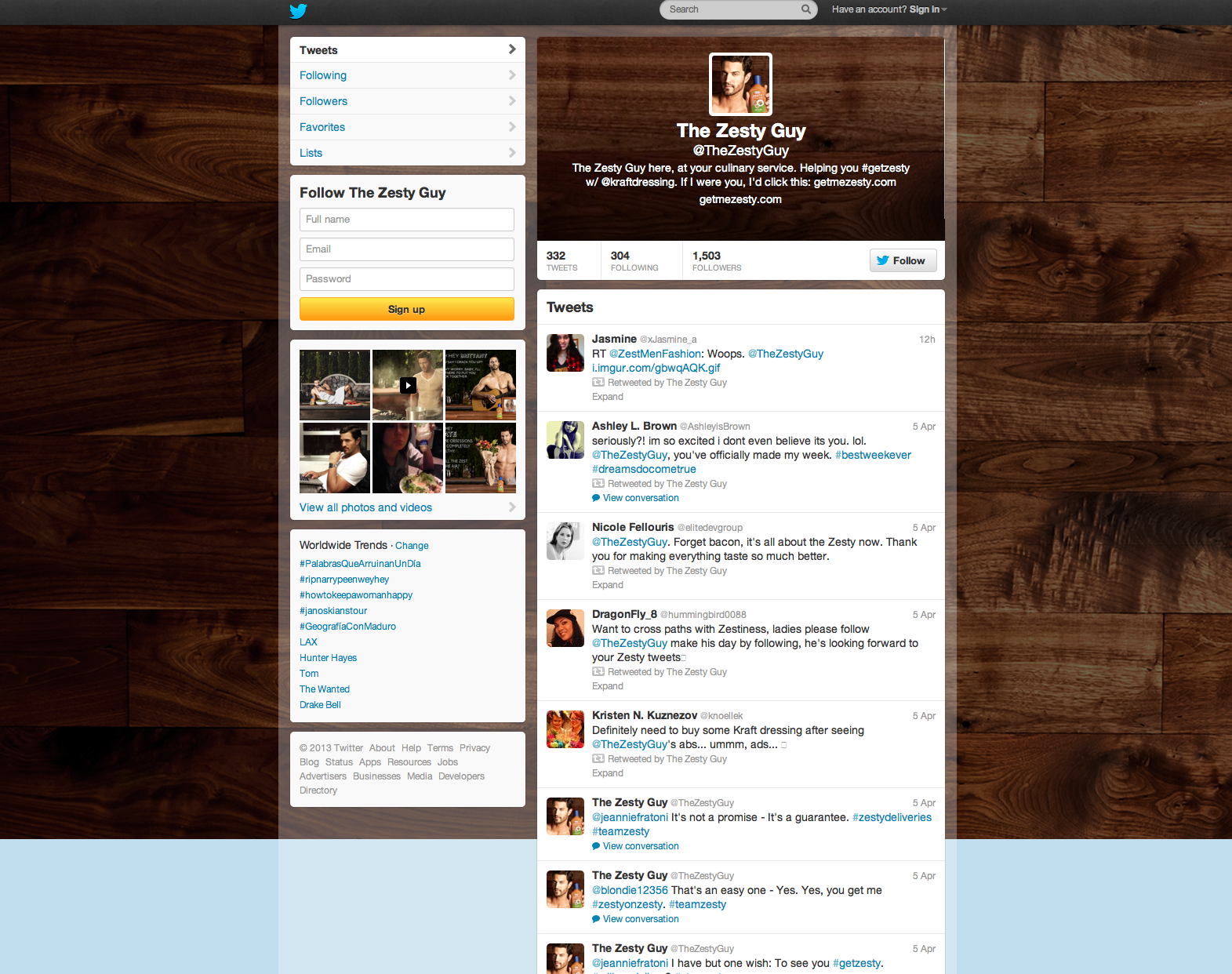
And if that wasn’t enough to engage consumers, you should check out Mr. Zesty’s Facebook page and Tweets to his fans– complete with brief (Vine) video messages to his followers.

Vine was released by Twitter in January to engage consumers in conversation, create brand awareness, introduce new products, etc., and of course, it comes with analytics. It allows you to measure what “Vines” are being shared or re-tweeted compared to other media such as YouTube and Instagram. So, Kraft can measure Mr. Zesty’s appeal and if his sexiness is selling the product.

By judging tweets from over a thousand fans so far, Kraft should be pleased with the positive responses from their steamy new ad campaign. For instance, T. Monet tweeted “My mom and I both purchased Zesty Italian dressing after watching TheZestyGuy’s commercial and Kristen K. said “Definitely need to buy some Kraft dressing after seeing @TheZestyGuy’s abs… ummm, ads…”

Zesty Twitter

It will be interesting to see how this campaign unfolds. If Kraft’s brand image and awareness will increase by successfully mimicking the “Old Spice” concept, or just see a temporary spike in sales. Either way, Mr. Zesty (aka Anderson Davis) is definitely entertaining eye candy and might just become the next “Fabio.” Afterall, he’s already getting marriage proposals from women online which even caught Good Morning America’s attention. So, what you think? In the world of advertising — Fad or Fab?

References:


Posted in Uncategorized | 11 Comments

And here’s the pitch!

There I was, sitting in the barber’s chair getting a haircut the other day, when I overheard a couple of guys raving about some of the new commercials that are running promoting the start of baseball season, especially those highlighting our local reigning World Series champs, the San Francisco Giants.  A particular favorite, one said, was this commercial based on the “inspiring” John Belushi speech in the movie Animal House.  And here it is as a side-by-side comparison, in case you’ve never seen this classic.

Pretty clever, wouldn’t you say?

Being a student of integrated marketing communications, I decided to take a deeper dive and explore how Major League Baseball overall is promoting America’s pastime this year.  They have a new marketing campaign, referred to as “I play” designed to reach new, younger fans and attract them to the ballpark by highlighting young superstars (in their early to late 20s) from various teams such as the Giant’s own Buster Posey (Elliott, 2013 March 22).  Check it out here.

This approach takes a “serious, earnest tone rather than the lighthearted tack that Major League Baseball sometimes uses in its promotional efforts” (Elliott, 2013 March 22).  According to an executive with Hill Holliday, the advertising agency that created the campaign, the goal was to communicate passion and give people an idea of what the players are thinking about (Elliott, 2013 March 22).  I also learned that the “I play” campaign is well integrated with a strong social media component.  It invites fans to submit video clips on Twitter’s Vine video sharing capability talking about their favorite teams and players and why they watch and/or play baseball.  You can visit www.mlbfancave.com for more details.

Now that I think about it, the guys talking baseball in the barbershop that day were probably in their 40s and 50s, and interestingly there was no mention of the “I play” commercials.  Perhaps they just hadn’t seen them yet.  As for me (I’m in my 40s), I am a fan of both approaches, utilizing a combination of serious/historical and lighthearted, because I think this game should have something for everyone.  Which approach do you prefer?

References

Elliott, S. (2013, March 22), M.L.B Turns to Young Stars to Reach New Fans.  New York Times, Retrieved from: http://mediadecoder.blogs.nytimes.com/2013/03/22/m-l-b-turns-to-young-stars-to-reach-new-fans/

Posted in Uncategorized | 11 Comments

What! Spying on my friends just got easier?!

Hi, my name is Melinda and I am addicted to Facebook.

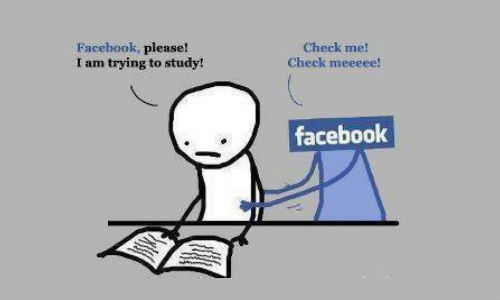
facebook-Are-you-a-Facebook-addict-Test-and-find-out

Source :www.addiction-treatment.com

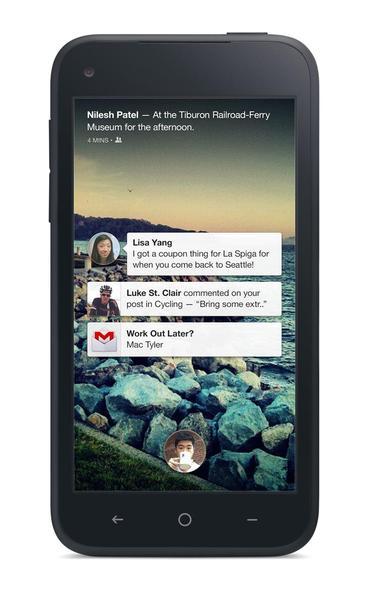
I really am. I check my newsfeed as soon as I wake up, when I get to work, countless times during the day and sometimes if I wake up in the middle of the night for water, I check it then too.  I’m pretty sure a lot of people do the same thing. Facebook is where we can keep up with everything that is going on in the lives of our friends, family and frenemies. This is why I am positive Facebook Home was made for people like me. Facebook announced that the new app will be available starting April 12 for Android phones. The app will become like a living screen and will constantly update your “cover feed.” Just like a newsfeed but now you don’t need to log in to the app to spy on your friends. Facebook Home will also improve on the chat that is currently Facebook Messenger, in case you can’t text your friend but you really need to chat. The only problem with Facebook Home is privacy. Which is a curious thing considering most people put their entire lives on Facebook but want it to be private when it comes to what information Facebook keeps.

4

So what information will Facebook be able to see with this new app? Facebook will have access to your messages through the app, the apps you’ve launched, your location (which you give when you check in places anyway), and all the juicy information it normally gets when you use the site or the original app.  Plus the information is only held for 90 days so rest easy my Big Brother hating friends, Facebook is not going to report to the mothership.

The problem I have with Facebook Home as a Facebook addict is that this app will not only hinder my daily recovery process but it will make my cyber stalking feel even more like real stalking. It leads to the question of how much is too much? Mark Zuckerberg has always been a fan of openly sharing information.This was the main reason for Facebook’s creation in the first place. However, are we oversharing? Has Facebook taken over direct communication? It will be interesting to see the effect this app will have on personal relationships as there really is no need to call someone when you can easily check their status to see how they’re doing.

All I can say is be prepared for me to text or call the instant you post something interesting because I’ll probably be watching as you type your status.

Stay strong fellow Facebook addicts. April 12 is almost here.

-Melinda Menchaca

Main source for this post: Facebook……. surprised?


Posted in Uncategorized | 6 Comments

Ideas That Stick – Beyonce & Pepsi

On April 3rd, Beyonce posted a cryptic announcement on her YouTube page stating she would be making an important announcement on April 4th, 2013, at 9:13 A.M., with the hashtag “beyherenow.”  Little was known about what she would be announcing, but the universe rapidly began speculating what she could possibly be announcing.  Of even greater significance, the announcement was being made on the 4th of the month — the number “4” being of great importance to Beyonce.

https://www.youtube.com/watch?v=_RavZNpbV60&feature=youtube_gdata

On April 4th, promptly at 9:30 am, tons of people tuned into her YouTube channel to see what it is she could possibly be announcing.  As it turned out, Beyonce was debuting her latest Pepsi ad.  This was ingenious on the parts of Beyonce and Pepsi — #beyherenow – Live For Now – Pepsi.  Not only did this guarantee that millions of people would be tuning in to view Pepsi’s latest ad, but it got everyone talking and writing about it in the popular press as everyone had been waiting in high anticipation for Beyonce’s latest announcement.  The premiere of this ad became a “must see” event with an instantaneous buzz.

http://www.youtube.com/watch?v=_2smYVl0zrk

Posted in Uncategorized | 6 Comments

Now I Want Pringles

Branded entertainment. Situational advertising. Product placement. –
They are integrated marketing attempts to embed advertising within content.  Just over a decade ago the media was reporting on its rise and unlimited options (“The times they are a-changin’,” 2004), and now it is an unavoidable reality.

trumanshowThese days, one cannot turn on a network television show without experiencing branded content.  And surprisingly, the strongest product placements are more difficult to recognize.  For example, something as simple as a smart phone.  Nearly everyone has a cell phone in real life, so it does not seem so odd for our favorite characters on television to use their iPhone or Galaxy in a scene, or use a laptop without the logo covered.

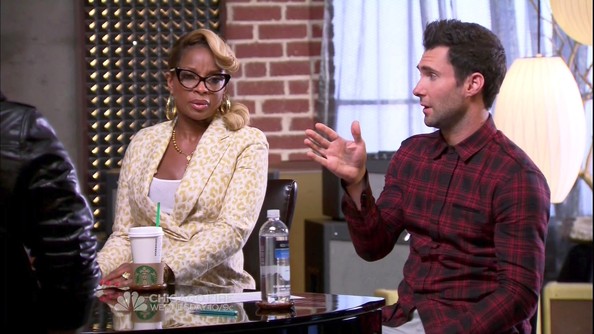
Some products are integrated in multiple ways for repetition and intended effectiveness.  In a program like in the new season of NBC’s “The Voice,” the lobby waiting area for competitors contains a Starbucks branded coffee shop. Plus the coaches, subliminally, Adam+Levine+Voice+Season+3+Episode+10+starbuckshave cups resting in the cup holders of their chairs that are clearly visible as the Starbucks cold drink cups with the signature green straw.  This image shows a coaching session from season three where drinks are casually resting on the piano in front of the two celebrity coaches, one drink just happens to be the major advertiser Starbucks.  This may or may not be any less in-your-face than the Coca-Cola placement in Fox’s American Idol, but it does seem to be effective – I remember it.

Branded entertainment has definitely come a long way from the days worth mocking with movies like The Truman Show.  For example, in CBS’s The Big Bang Theory (one of the top rated shows on network television), branded content is such an integral part of the story lines it is often difficult to notice it like with the comic book heroes and the character Penny’s job at The Cheesecake Factory a national restaurant franchise.  tumblr_m5b0wuHPj51r8uiyuo1_1280 Pringles ingredients Sheldon

In one episode of The Big Bang Theory, a mini-storyline centers around the character Sheldon’s strange quirk of knowing all the ingredients to Pringles, now owned by Kellogg’s, (Click here to watch the scene, jump to 00:15).

bones toyotaWeaving content into television shows is a reality.  There is certainly room for improvement as evidenced by the nearly weekly, embarrassing plugs for Toyota automobiles in episodes of Fox’s Bones.  One can never forget the episode where they tried to explain what a great car the minivan was for the single, young artist on the show because of all the storage room, nor the episodes where they take 15-30 seconds to discuss the handy new feature on their car that comes standard like ‘lane detection’  or self parking.

Branded content and product placement is becoming increasingly popular in the world of DVR, Hulu and Netflix, the key to integrated marketing success will likely be in consistency and blending content across media (MediaPost & MediaPost).   I must begrudgingly admit that this branded entertainment and product placement does work – I recalled each of these television shows and the featured brands from memory…

Can you think of any examples when branded content was not glaringly obvious, and what you would consider a successful product integration?

Posted in Uncategorized | Tagged , , , , | 12 Comments

Design for Sustainable Change

Anne Chick’s book, Design for Sustainable Change (2011) claims that design can help solve societal problems. She discusses how design thinking is evolving and being applied to a much wider spectrum of social and environmental issues. Therefore, design can be used as a tool for activism. She describes design activism as “ characterized both by its clear intent and the often radical nature of its practice” (p.59).

They key aspect of design activism is to propose a solution, and therefore design must be a collective process, done in conjunction with the communities it wishes to help (Chick, 2011). Design activism is a communication job, as all relevant stakeholders must collaborate and the designer (communicator) is in charge of communicating a well thought solution, with catchy and sticky design. This creates a whole new landscape for designers and communicators.

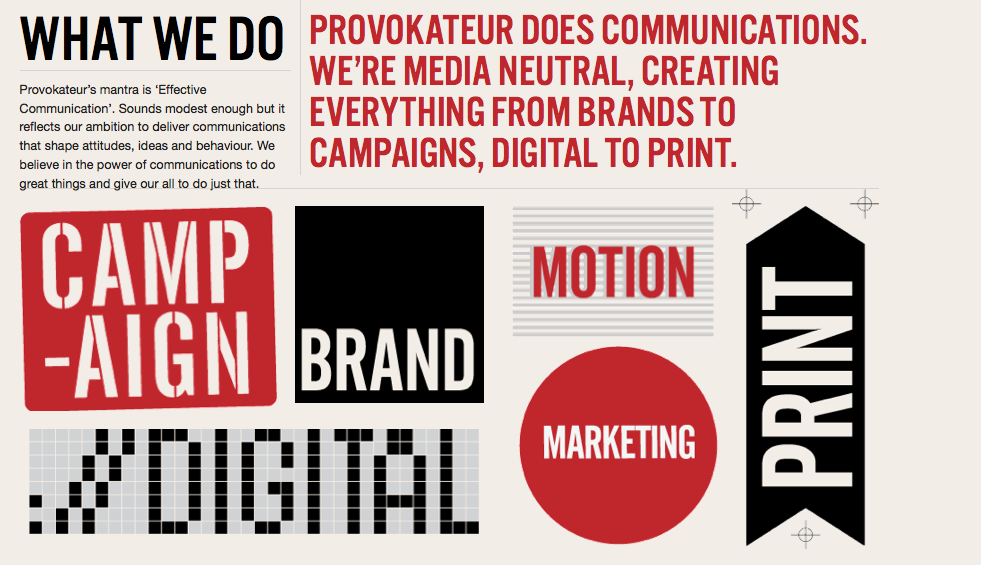
Screen Shot 2013-04-05 at 3.46.29 PMDesign activism can become stronger when done in partnership with organizations that share the dream of changing the status quo, such as nonprofit organizations.  Such is the case of Provokateur, a design agency whose mission is to change the world. This is a new niche within the design and ad agency world, as they primarily focus on nonprofits, and sometimes also work with private companies that they themselves like. In their website, they state that communications shape attitudes, ideas, and behaviors.

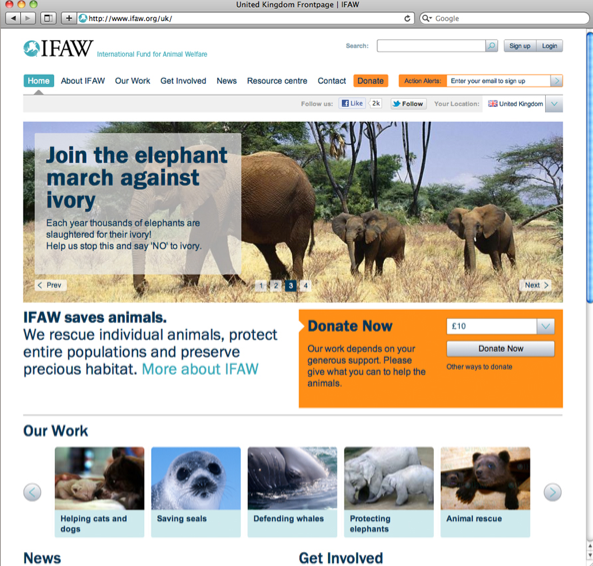
Screen Shot 2013-04-05 at 4.00.38 PMThey provide a variety of services, ranging from marketing, branding, print, digital, and motion advertising. This  is an example of their campaign for the International Fund for Animal Welfare (left).

What makes these guys even more unique is their “ enterprise” section, where they self-fund design projects. One of these projects is called Project:Tap. This project aims to educate the public on the reality behind bottled water, and how it is essentially the same as drinking tap water. They created an integrated marketing campaign for this initiative and they  won the Best Integrated Campaign at the Green Awards.

Screen Shot 2013-04-05 at 3.50.02 PMThe design and communication landscape is exciting for those interested in the nonprofit sector. The role of the communicator is tremendous in creating social change, which is why it is so important to study how to create emotional an emotional connection with our audiences. Niche agencies like Provokateur present an exciting landscape for those designers and communicators interested in changing the world.


References

Chick, A. & Micklethwaite, P. (2011). Design for Sustainable Change. Switzerland: AVA Publishing.

Provokateaur (2012). Who We Are. Retrieved from,

http://provokateur.com/

Posted in Uncategorized | 7 Comments

For consumer brands, April Fool’s Day ain’t no joke.

Each year on April 1, I log into my social media accounts and gaze suspiciously at the updates that appear before me; today was no different. I logged in expecting to see one friend’s yearly “I have two extra tickets to (Detroit Tigers) opening day; who wants them?” status update and there it was. I scrolled farther down my news feed and saw a post from a mixed martial arts news outlet that said my favorite fighter was retiring from MMA; oh, and then there were the Facebook alerts saying that a friend and his fiance were no longer engaged: people knew it was April Fool’s day, but were too afraid to ask if it was a joke, except for one “huh is this for real?” reply. Later, the couple announced posted a couple of hearty LOLs to announce that they’d tricked their friends. But the hijinx didn’t end there …

Brands, seemingly more than ever, got in on the action, too. Google announced its version of smell-o-vision and Scope unveiled its new bacon-flavored mouthwash. The amount of buzz these (and other) brands generated around the Internet as a result of these stunts was amazing. Social media channels, blogs, news websites and podcasts were abuzz with this year’s most outrageous April Fool’s shenanigans and as a result of developing (creative) creative executions, often with a very high production value, many brands enjoyed a great deal of global publicity.

In the world of marketing, April Fool’s Day is no longer about pulling a fast one on consumers. It’s about entertaining and engaging them, and in turn, reaping the benefits of the countless mentions, retweets and click-throughs that ideas like Sony’s cat headphones provide. People want to be amused; they anxiously check their social media feeds for new, fictional content pushed out by their favorite brands and share it with hundreds of friends at a time; smart brand managers have recognized and exploited this behavior.

While half-hearted attempts at tomfoolery will likely result frustration among consumers, thought-out, on-brand April Fool’s executions that support a brand identity and/or campaign can be extremely effective in supplementing an integrated marketing communication strategy.


Posted in Uncategorized | 18 Comments