Heat in the Driver’s Seat -Ford Apologizes for Tasteless Ads

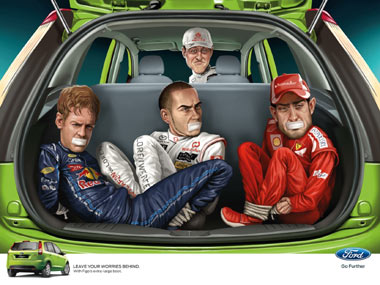
Ford made headlines recently, but not in the most positive light.  The car manufacturer received some bad press and criticism for a series of ads that were seen as offensive and violent against women.  The ad campaign was created by J. Walter Thompson (JWT), their advertising agency in India.  As The Wall Street Journal and other news outlets report, “Ford did not approve the ads; the agency was publishing some speculative renderings to show off its creative chops” (Memmott, 2013).  The ads are for the Ford Figo; a model that is known for having a spacious trunk.  Three ads have circulated, one that features former Italian Prime Minister Silvio Berlusconi, one that features Paris Hilton, and another with Formula One driver Michael Schumacher.  All three figures appear in the front seat of the Figo, while three other characters are featured in the trunk tied, gagged and stuffed in the trunk of the car.  The ads tag line “Leave your worries behind with Figo’s extra large boot” (Memmott, 2013).

Ford Ad-1 Ford Ad-2 Ford Ad-3

Immediately Ford followers took to social media outlets to criticize the company.  One woman said on Ford’s Facebook page: “Your company is a disgrace to publish such a vulgar and violent ad against women. You will never get our business. Shame on you!” (Facebook, 2013).  Last December a young woman in India was raped and murdered, allegedly by five men.  The incident sparked an international uproar about violence against women (NPR, 2013).

Even though Ford has said the ads were not approved for public distribution, they have been exposed globally! I find the ads offensive and tasteless. It’s a misuse of creativity and shines a bad light on the advertising industry as a whole.  Furthermore I am alarmed that given the recent news in India surrounding rape, JWT’s Indian affiliate would create such a grotesque campaign.  While JWT’s parent company WPP Plc, based in London, has apologized for the ads, I was unable to find a formal apology or message on their website.  As we have learned so far this semester, creating a successful and effective ad campaign takes a lot of effort and research. But I wonder, what were the conversations during the creation of these ads? What ‘big idea’ were they trying to convey?

Even though these ads did not go public, is this an acceptable form of creative expression?

References

Welsh, J. (2013, March 23). Ford Apologizes for Offensive ‘Berlusconi’ Figo Ads. Wall   Street Journal. Retrieved March 25, 2013 from http://blogs.wsj.com/drivers-seat/2013/03/23/ford-apologizes-for-offensive-berlusconi-figo-ads/

Memmott, M. (2013, March 25). Ford Sorry For Mocked-up Ads in India Showing Bound and Gagged Women. NPR News. Retrieved March 25, 2013 from http://www.npr.org/blogs/thetwo-way/2013/03/25/175251760/ford-sorry-for-mocked-up-ads-in-india-showing-bound-and-gagged-women

Philip, S. (2013, March 25). Ford Apologizes After Mock Ads of Berlusconi Tying Up Women. Bloomberg. Retrieved March 25, 2013 from http://www.bloomberg.com/news/2013-03-25/ford-apologizes-after-mock-ads-of-berlusconi-tying-up-women.html

NPR (2013, February 2). In India, Men Accused of Deadly Rape Formally Charged. Retrieved March 25, 2013, from http://www.npr.org/2013/02/02/170947140/in-india-men-accused-of-deadly-rape-formally-charged

J. Walter Thompson. (2013). Retrieved from http://www.jwt.com/jwtdelhi

Posted in Uncategorized | 13 Comments

MONOPOLY COLLECTS PARTNERS LIKE PROPERTIES

Hold your horse!

HorseOne of the best-loved games Hasbro’s Monopoly axed a playing piece and I’m just finding out about this now?  Even worse, I found out about it on Facebook – through a Zappos ad?!  This game and I spent much of my childhood together, we dreamt of having a fantastic career in marketing that would afford me to really buy houses on Marvin Gardens.
MVintage

Monopoly is a classic game that has been around since 1935. According to its website, by 1940 it was America’s #1 game.  In 1960, it dictated urban planning – when the real Baltic and Mediterranean Avenue were going to change their names, public outcry prevented it.  Over “275 million games have been sold worldwide and it’s available in 111 countries and in 43 languages (Hasbro.com).”  It has been the subject of many a long night in families around the world and has turned family members against one another.  So how does a game that already yields world-wide championship tournaments based on this good, wholesome fun up its game? It gets in bed with some popular partners!

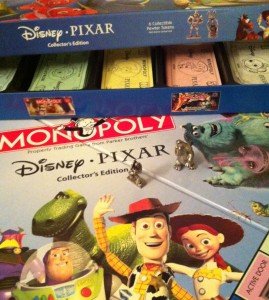
PixarMonopoly

Between the 80’s and the turn of the millennium, Monopoly formed some strategic partnerships.  Limited edition Monopoly games with licensed characters on them started popping up everywhere to help sell movies, best-loved cartoon characters and cities, and a separate version for their football teams.  Not only was it a cool way to create more depth for the brands but it expanded all of their fanbases.

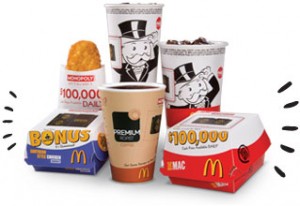
Mcdonalds-monopoly

About this time too, banking on the addictiveness of McDonald’s food and the thrill people get by collecting properties, McDonald’s launched the Monopoly game where the more you ate, the more chances you have to win.  This game has kept up with the times truly integrating its marketing potential with its most recent version of this game driving people online!  So not only did people get the playing pieces in the stores, but they had a 2nd opportunity to go online and enter ticket serial numbers there.  This kept McDonalds in the forefront of consumer’s minds, long after the salty grease got licked from their fingers (Gracia, 2012).  Then the online site connected to Facebook which also posted when someone played it so their friends could see.

ZapposMonopoly

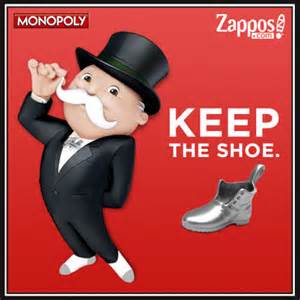
So this reminds me… how I found out that Monopoly was melting down a playing piece, never to play again.  On Monopoly’s Facebook pages were ads by Zappos stirring up customers to “Keep the shoe!” and from  Morris the Cat (9-Lives catfood fame) campaigning for the cat (one of 5 new pieces you could vote from to replace the piece that would leave) (Stampler, 2013).  This marketing campaign actually employs a lot of what we recently learned in “Made to Stick” regarding the marketing message.  It was Simple, Unexpected, Concrete, Credible, Emotional, and told Stories – all in their succinct campaigns for their favorite playing pieces (Heath & Heath, 2007, 2008).

Money

Is this the first time that Monopoly got rid of a piece?  Of course not, I still remember finding my mother’s Monopoly set from when she grew up that has a wheelbarrow I’d never seen before.  Is this the first successfully integrated marketing plan with Monopoly?  No. They’ve had some success with partnering with the CA Lottery Scratchers as well (Anonymous, 2012).  What makes you dream of Monopoly money more than playing a Scratcher?  For a split second, just like in Monopoly, you dream that becoming a millionaire living on Boardwalk will be just that easy.  Alas, Monopoly’s campaign being featured on the US Postal Service stamps did a lot for sharing how Monopoly is one of America’s greatest pastimes, but not even free parking was enough to help USPS’ financial woes.

chance

In this new era, businesses – not even Monopoly – don’t want to leave it to Chance and will make sure you’re invested in their big news. Nothing is done under the board.

Who’s up for a game? I’ll let you be the banker!

Sarah Harris
CMGT 541 A

RESOURCES:

Anonymous. (March 26, 2013). ABOUT Monopoly. Retrieved from http://www.
hasbro.com/monopoly/en_US/discover/about.cfm

Anonymous. (September, 2012). Lottery Launches MONOPOLYTM-Themed Scratchers®
Games. Retrieved from http://www.calottery.com/media/press-releases/press-
release?Item={17361451-C496-4C41-B2C4-956A7FE14E92}

Heath, C. & Heath, D. (2007, 2008). Made to Stick. New York: Random House.

Stampler, L. (January 9, 2013). Monopoly’s Killing a Token and Hasbro Wants You to
Choose Which Ones Survive. BusinessInsider.com Retrieved from http://www.
businessinsider.com/one-monopoly-token-will-die-and-hasbro-wants-you-to-choose-
who-survives-2013-1

All images (C) Hasbro, Disney/Pixar, CA Lottery, McDonalds

Posted in Uncategorized | Tagged , , , , , , | 10 Comments

Marketing Overload: A Blessing in Disguise?

Have we actually come to the stage in marketing where we’re simply deluged with too many choices, whereby our ability to effectively and adeptly choose which product best fits our needs or preferences is being severely hampered?  Some market analysts believe so.  Scheibehenne et al (2010) assert that when we are faced with too many options from which to choose, our motivation to make a choice wanes, or we become dissatisfied with the choices we made due to constantly questioning ourselves as to whether the optimum choice was made. th

Oh sure, we try to convince ourselves that we researched the product, shopped for the best deal, and even tell ourselves that we outsmarted the salesman into giving us a better price than anyone has ever attained.  Of course, deep down, we know that’s far from the case, and moreover, as soon as we leave the store, the car lot, or the furniture store with our purchase, we encounter that internal nemesis known as “buyer remorse.” th (1) Why do we conjure up these emotional doubts in ourselves?  The answer lies in the fact that regardless of when we purchase, why we purchase, and from whom we purchase; no sooner than we do, another ad pops up on the Internet, in the newspaper, or on the radio alerting us to an alternate to that product that we just purchased, with better features, lower price, and better warranty.  Geez!  How can we possibly retain our sanity in this world of marketing abundance constantly being spewed in our direction?  Is it time to get on that 2013 version of the SS Minnow, and only hope that our fate is the same as that which Gilligan encountered – to be marooned on a deserted island, removed from all forms of marketing techniques, away from the barrage of minute-by-minute advertisements, only to be left alone with our fellow castaways with no form of solicitation levied our way? th (2) Really? Is that the answer?  Of course not, because we all know that regardless of the remoteness of the island, an Internet service provider is sure to follow us.  As such, there’s no escape!

So what are we to do in our attempt to coexist with the relentless array of marketing campaigns targeting us daily in order to retain our sanity? The answer is quite simple; we should embrace the multitude of options that these campaigns provide.  It is easy to think back to the simplicity in purchasing decision-making that once existed when there were only two choices available (chocolate or vanilla).  Sure, the decision-making process was easy then, but at the same time, we were unwittingly being deprived of our freedom of true choice.  Marketing campaigns were limited in their reach, demographic  research abilities, and overall breadth of consumer advocacy.  Basically, we were stuck with the limited choices thrust upon us.  It was either regular or de-caf; now the lattes, frappes, cappuccinos, and the rest scramble our brains to make the choice of the day, but aren’t we truly better off for at least having these options?  I, by no means, partake in any of these indulgences, but I am empathetic to the consumers who have these choices at their disposal, for they are free to select the product they want, not just the product granted unto them.

So the next time you reach the point of sheer frustration over being inundated with marketing campaigns for anything from cars, computers, furniture, clothing, shoes, sporting goods, audio, video, digital, technology and the other million ads with which we are subjected to on a regular basis, keep in mind the alternative. Wouldn’t you rather have brands competing for your dollar, rather than you having to compete against other buyers in a market with limited products from which to choose?  Ultimately, these inexorable campaigns induce the true spirit of capitalism, inasmuch that given multiple choices, the consumer ultimately holds the cards, and that makes for a much more leveraged dollar in terms of our buying power vs. their selling strength.

Reference:

Benjamin Scheibehenne, B., Greifeneder, R., & Todd, P. (2010). Can there ever be too many options? A meta‐analytic review of choice overload.  Journal of Consumer Research , 37(3), 409-425.

Posted in Uncategorized | 9 Comments

Digital Media Integration in a Post Print World

This is a sample digital campaign.

This is a sample digital campaign.

So in my last post (That seems like an eternity ago, right?) I discussed how the print media is not dead, how perhaps no other medium is better suited to cross the digital divide then a newspaper, with its ability to both sell and produce content. Today we are talking about how digital integration can play a major part in a successful promotional campaign.

But first, let’s remind you what the goals are for newspapers transitioning from an older business model of merely selling print real estate to that of a company that offers a multitude of solutions for different audiences. These goals are to: 1. Sustain print revenues as long it can; 2. Increase digital revenue; 3. Reduce legacy costs (associated the old business model).

Increasing the digital revenue helps bridge the shortfall of a reduction in print revenue. In other words, if the average newspaper is feeling a 10% yearly decline in print revenue, the difference has got to be made up in other areas, specifically digital. So let’s take a look at how digital elements are helping some newspapers sell local promotions. We’ll take an NCAA Bracket Challenge promotion as an example.

When you want to drive participation to any promotion, in this case a March Madness contest, it’s imperative to have your contest widget on the most highly-viewed page on any web site: the home page. So you have a link on a home page and that link has to go to a bracket page in which a user can fill out his/her picks for the NCAA Tournament. The user then hits the “submit” button and it’s finished.

In a perfect world, yes. Here’s what really  happens.

You have to tell people about the contest, so you go to your arsenal of promotional tools to get the message out. We’re talking about a digital contest, so would it be smart to promote using print? Surprisingly, yes!

A newspaper’s sports section will always run an updated bracket of the tournament. This is a perfect opportunity to drive readers back to the digital page and encourage them to participate in the online contest. This will help drive page views and unique visitors to your site.

Email marketing is another digital element that can be used to get the word out about the online contest. If a newspaper has 50,000 registered subscribers and 10% of them participate, that’s a very successful promotion right off the bat. That’s 5,000 participants, page views and more potential unique visitors!

Social media – daily reminders to your organization’s social fan base during the participation phase of your contest extends your reach even further. And because it’s a digital contest, this means you can provide the link to the contest within the social media message.

There you have it – a digital promotion that required no print at all (except for the bracket that was already going to run in the sports section). We tapped into our opt-in subscriber base, our social media fans and our already high number of frequent visitors. This is what newspapers are doing these days to keep digital numbers up and obtaining more revenue as a result. From a company standpoint we increased  digital revenue (someone has to sponsor the contest, right?) and reduced our legacy costs (notice we didn’t run a promotional print ad for the contest).

Now all you have to do is crown a bracket winner and you can call it good!

Posted in Uncategorized | Tagged , , , , | 1 Comment

Law Enforcement Agencies Around the World Connect via Twitter – #poltwt!!!

twitter-follow-us-on-twitterlogo_twitterpolice

Who would have imagined law enforcement agencies located around the world connecting through social media? Well, that’s what happened this past Friday as 200 law enforcement agencies in 10 countries around the world began tweeting (Ivie, 2013) as part of an experiment in connecting through social media platforms. The start of Friday’s event was a virtual ride-along to portray actual events police officers face every day on the job (Ivie, 2013). As part of the worldwide tweet-a-thon, the hash tag #poltwt began trending around the global on Thursday because of the various time zones partaking in the event (Ivie, 2013). Law enforcement agencies from as far away as New Zealand,

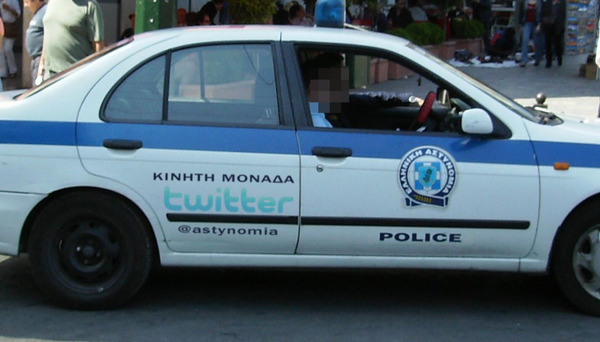
Police Car with Twitter logoWhat is fascinating is law enforcement agencies around the world are turning to social media as a way to connect to the public they protect and serve (Webster & Stevens, 2013). Laurie Stevens, founder of LAwS Communications, says that agencies are moving rapidly toward social media like Twitter and Facebook to solve crimes and connect with the public they serve for newsworthy events (Webster & Stevens, 2013).

greater-manchester-police-names-shames-rioters-on-twitter-a19c24e2e7

Stevens continues to express the need for law enforcement agencies to communicate with the public their use of social media tools as a way to have real-time conversations with various enforcement agencies (Stevens, 2013). Police can connect with the public on a different level and use social media to their advantage in collecting tips and solving crimes (Lamberty, 2013). Other advantages to connecting via Twitter include real-time updates, traffic advisories, weather updates, and community involvement.

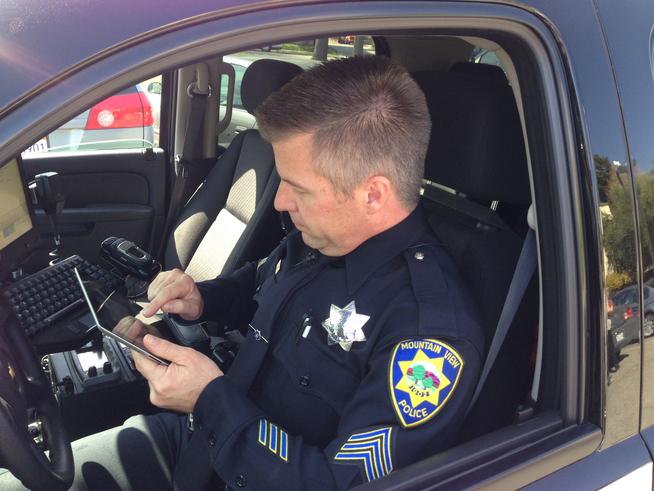
Nine of the 200 agencies participating in the tweet-a-thon are located in the Bay Area Cops Tweet in first gloabl tweet a thon(Northern California). Fremont, San Mateo, Palo Alto, East Palo Alto, Sunnyvale, San Rafeal, Mountain View, Campbell, and Los Gatos are the named Bay Area agencies participating in the Twitter event (Ivie, 2013). It is no surprise that 8 out of the 9 agencies are located in the heart of the Silicon Valley. Palo Alto Police Chief Dennis Burns and the departments Public Information Officer worked together on the event and began sending tweets at 3 p.m. on Friday (Ivie, 2013). Additionally, Fremont police tweeted about a car accident, a drunken man in the park, and a burglary all by 10 a.m. on the first day of the event (Ivie, 2013).

Twitter and FacebookMost important to law enforcement agencies participating in the event was the message they are sending to the public: Law enforcement agencies are up on social media and we’re sharing information instantly (Webster & Stevens, 2013).


On a personal note, on February 27th two Santa Cruz Police Officers were slain in the line Butch Bakerof duty. Santa Cruz has been my home since 1988. I was working in town when the shooting occurred. I came out of an appointment and was shocked to see the police presence from various agencies in town and on every exit on Highway 1 (the main highway from Santa Cruz to Monterey). At the time I did not know what happened, only that something significant did occur. I immediately turned to the local news, where I heard an officer-involved shooting had resulted in the death of two police officers. I immediately turned to facebook for more information as the night went on. Around midnight, I turned on the news and heard the names of the officers involved. To my sadness, Sergeant Loran “Butch” Baker was one of the officers involved in the shooting. Butch was a friend of mine and my husband. Facebook became my source of information from then on as I wanted the most up-to-date information on the shooting and the forthcoming memorial service. I found the police departments Twitter page as well to keep the information forthcoming. My heart breaks for what his family is going through and for the other officer slain next to Butch. Detective Elizabeth Butler was a young mother of two little boys who have their whole lives ahead of them. I know this is somewhat off topic, but I feel better sharing this experience with my classmates. Our police officers are everyday heroes. They put their lives on the line to protect us and our loved ones. The next time to see a law enforcement officer, I ask that you smile or wave to show your appreciation. It may be the last act of kindness they receive.

References

Ivie, E. (2013, March 23). Bay area police set tweets in motion. Santa Cruz Sentinel, p. C4.

Lamberty, R. (2013, Month 22). Local police participate in tweet-a-thon. Retrieved from http://www1.whdh.com/news/articles/local/boston/10010165391513/local-police-stations-participate-in-tweet-a-thon/

Webster , R., & Stevens, L. (2013, Month 5). Social media is critical to police it systems dealing with newsworthy issues. Retrieved from http://lawscommunications.com/

Posted in Uncategorized | 13 Comments

Advertising Reminds You to Keep “Workin’ on My Fitness”

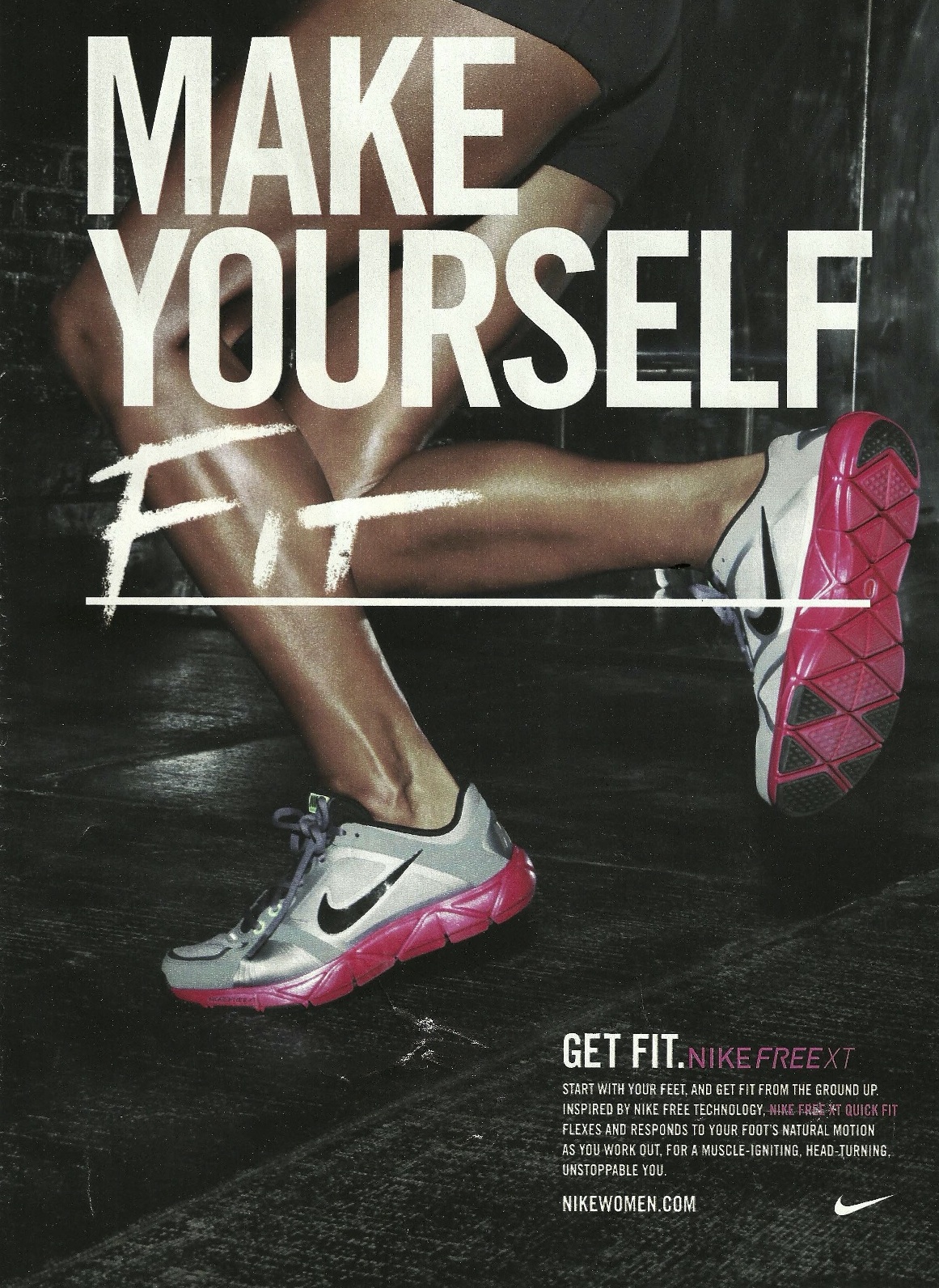
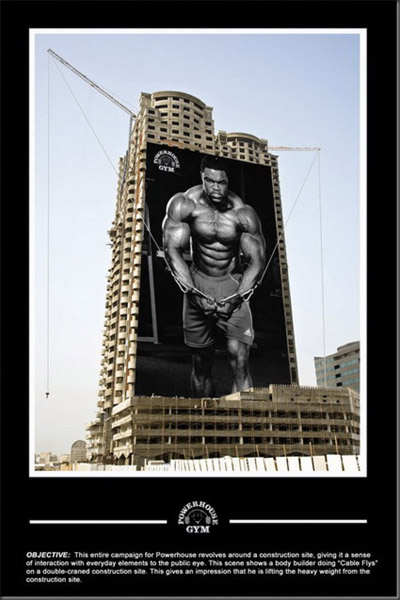
Fergie coined the term “workin’ on my fitness” and that’s exactly what fitness advertising encourages you to do.  A huge question that comes into play though is their methodology. Which is better – advertising your gym or fitness program using already fit people or how about advertising that uses the everyday person to sell their product.

As temperatures continue to rise, swimsuits are being dug up from the back of the drawers.  Advertising for gyms and home workouts are capitalizing on consumers angst about being seen in a bikini. Even food companies are! Anyone else eat their Special K in their swimsuit?

If you’ve seen any fitness advertisements over the past year, you’ll notice that they usually cast already fit people.  When I saw the Flirty Girl Fitness commercial on TV, I didn’t know if they were trying to sell me a fitness program or dance classes to be an exotic dancer (no offense to anyone using the FlirtyGirl brand by the way).

nike fit

I think this sends an inappropriate message to viewers though. As a media consumer, I don’t see the progress that they’ve made or how long and gruesome their weight loss process has been. Instead, I see already beautiful people who look like they hit the gym for fun – while I’m over here with sweat dripping down my face and my eyeliner going right along with it.

To counter this perception, Planet Fitness has run a different type of campaign. They actually parody the “hot” bods who workout at their gyms and show the regular John and Jane Doe joining the gym to avoid those crowds. They even make fun of the gyms that are a hangout for all the beautiful people – and for me this is much more effective.

As health and fitness become more of a priority as the temperatures rise, I think an exploration of what type of fitness advertising works is an interesting topic to discuss. Personally, I’m able to relate more to Planet Fitness’ ‘real’ campaign, whereas the lean bodied men and women in gym commercials just do the opposite in motivating me.

powerhouse gym

Advertising agencies are tirelessly trying to find ways to motivate and change consumer behavior. In my opinion, what works for consumers (at least it does for me) is to create a sense of reality in the ad. I want companies to show me how their products help everyday people in an everyday lifestyle. This way, their pitch can become my own reality.

What works for you?

Posted in Uncategorized | 11 Comments

New Pepsi Packaging: Fizzy or Flat?

What makes a soda brand appealing? Is it only the taste? Logo familiarity? Is design ever a reason you come back for more?

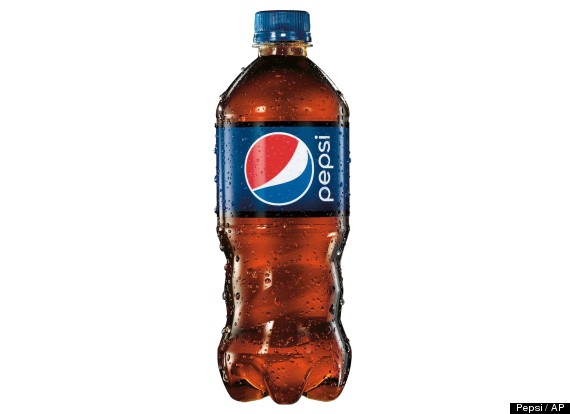
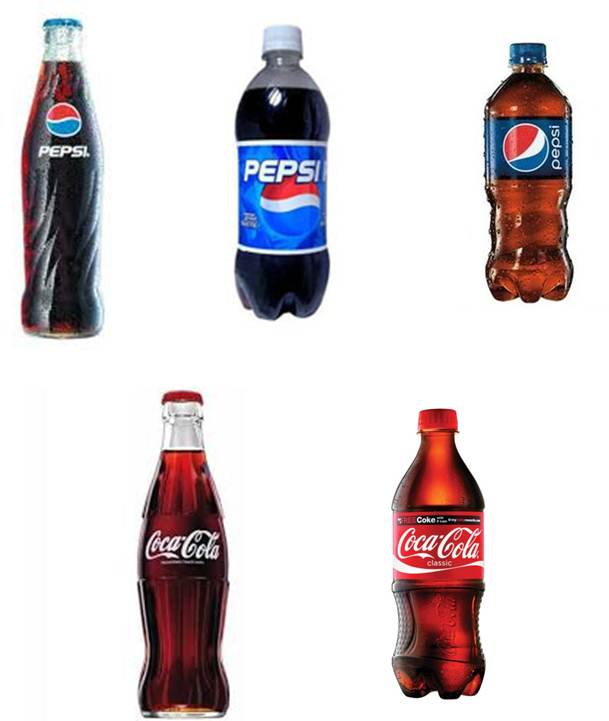
PepsiCo is trying to revitalize their brand after losing market share to Coca-Cola recently (USA Today, 2013). Pepsi just announced new packaging for their 20-ounce soda bottle. The bottle showcases a contoured bottom half, making it easier to hold and a wraparound label that is shorter so that more of the cola is visible. Sounds great, but why do we care?

Pepsi New Bottle

A spokeswoman for Pepsi explains that the new bottle shape is “part of the company’s ongoing update of marketing and packaging materials for cola” (USA Today, 2013). Sure, creating a buzz around a new bottle silhouette may be effective short-term but it’s not going to make people rush out and purchase it. There are no changes to the actual product, no green initiatives, no throw-back glass bottle — nothing new. Additionally, it will take nearly one to two years for all markets to receive and sell the new bottles.

In this case it seems lots of money is being spent on marketing efforts that may prove to be ineffective. Marketers failed on numerous levels, most obvious: connecting with consumers on an emotional level and not being uniquely inventive or innovative. I think the marketing team fell flat on this one. Unless Pepsi has a surprise for us all, I don’t think this particular change is going to improve sales or regain any loss in market share. When I decided to write about Pepsi, I wasn’t sure which direction I would go. Then I realized this marketing scheme fits well into this week’s module and the discussion of Made to Stick. PepsiCo did not communicate a new idea or make people feel something so that anyone would listen or care. The “stickiness” element that Heath & Heath mention is not looking so sticky for Pepsi or their new bottle design. Would you agree?

Perhaps they could benefit from some “Pepsi Freakout” similar to the simplistic and brilliant marketing campaign developed by Burger King. Personally, I love Diet Coke for it’s taste and familiarity but if Pepsi said tomorrow they were pulling it from shelves, I would probably freakout. It’s a brand that I’m used to, it makes me feel comfortable seeing it on shelves as an option. I think of Cindy Crawford throwing back her hair and guzzling a can of Pepsi. Most of all, it evokes memories of my childhood bestfriend who loved to drink it warm. Pepsi needs to remind people why they care about the brand and reconnect, not form a new bottle.

By Nicole Palacios

References
USA Today. (2013, March 22) Retrieved from  http://www.usatoday.com/story/money/business/2013/03/21/pepsi-rolls-out-new-bottle-shape/2007449/

Posted in Uncategorized | 15 Comments

Are You Brave Enough to “Lean In?”

My lifelong best friend, Sonya, delivered a surprise to my mailbox last week: A copy of Sheryl Sandberg’s topical book, Lean In. In it was a note encouraging me to continue to lean in to my career by working hard at this Annenberg program. She also called me a great mom, which is no small compliment when my sons are the lights of my life. A gem of a best friend, Sonya was the Matron of Honor at my wedding, and she was there 18 years later to help me organize my closets in my rental house after my marriage ended. One could never ask for a truer friend. Sonya also happens to be Co-Head of CAA’s Television Department and was named #77 on The Hollywood Reporter’s 2012 list of the 100 Most Powerful Women in Hollywood. She’s a highly engaged, wonderful mom to two teenage sons and wife to a great man.

CAA Portrait Sessions

(Sonya Rosenfeld, 2013; Source: The Hollywood Reporter)

Being an intelligent woman who values a career is not easy. You can pay a high price in the 21st century for  working even part-time if you do it by choice. I can personally attest to that as I’m now a divorced single mom who has faced judgement from friends, neighbors and in-laws over the desire to use my brain and continue with an exciting, demanding career. Sheryl’s book has consumed and motivated me like no other in recent memory. It’s just so, well, true. 

Searching for illustrative examples of Sandberg’s thesis, that we need strong leaders in powerful places in all sectors of society and we can’t ignore the deep talent that resides within 50% of the population, I found some stories about women in the advertising industry that are worth sharing.

Sandberg writes about how research has clearly documented that “success and likability are positively correlated for men and negatively correlated for women” (Sandberg, 2013). The more successful a woman becomes, the less both men and women like her. And, we all know that most human beings want to be liked.

sally fields

(Source: www.jendauthor.com)

Interestingly, I found an article on a website called Ad Women (http://www.adwomen.org/) discussing Ogilvy & Mather’s Chairman, Shelly Lazarus, and her decision to retire after a distinguished 40-year career. Astonishingly, she climbed the ranks of this uber-agency through its creative department, a bastion of male dominance. What I found interesting about the piece was that the writer, most likely a woman (no name was given), ended the article by saying, “Beyond all the accolades what strikes us is her humility, love for what she does and her unwavering focus on people” (AdWomen, n.d., page 1). I highly doubt that an article praising a man for a similar career would have ended by emphasizing his humility. 

Shelly Lazarus

(Shelly Lazarus; Source: www.leadersmag.com)

Working moms, in particular, are likely to rankle at the discrimination described by Roberta Cocco, central marketing group director at Microsoft Italy, during a marketing summit held in Europe to discuss inequality in business. Cocco explained that “in her country women are tops — if you’re a mom, that is. If you’re a working woman, “you’re here,” she said, indicating with her hands something in the middle. And if you’re a working mom? She lowered her hands further, her gesture indicating low regard” (Klaasen, 2011).

working moms

(Working Moms; Source: www.jpost.com)

An editorial written by an anonymous man in the blog, The Denver Egotist, agreed that the fact that only 3% of the nation’s ad agency creative directors are female when 80% of all household purchases are made by women is egregious (The Denver Egotist, 2013). The editor went on to point out, however, that women now fill approximately 60% of the in-house marketing positions in corporate America and they are the ones buying the type of advertising that takes no risks and portrays women stereotypically. His assertion was that no matter the gender ratio of ad agency creative departments, the same schlock we see wouldn’t change. I wonder what Sandberg would have to say about that?

woman pulling up other woman

(Women sponsoring women; Source: intralimina.livejournal.com)

So what can we do about this inequality and, more importantly, the fact that so many brilliant minds aren’t making it to the top of corporate board rooms, government, or agencies? The solution is too complex for one blog post, but I did like one practical idea espoused by writer Abbey Klaasen who covered a Cannes panel discussion about women in advertising. She reported on the suggestion that female executives who have “made it” need to sponsor younger, middle managers, and actively reach down and pull them higher up in the organization (Klaasen, 2011). Her suggestion made me think about contacting my agency, Ketchum’s, first female CEO of North America Barri Rafferty. Barri and I are contemporaries and she is a phenomenon. I bet she’d welcome more women in the board room and Sheryl’s urging, coupled with my now more well-rounded background in communications provided by Annenberg’s CMGT program, inspires me to reach for the stars. I have more to lose by not modeling the type of equality I hope to instill in my teenage sons.

2-sheryl-sandberg.gi

(Sheryl Sandberg; Source: money.cnn.com)

I’d love to hear about your experiences, both men and women, with the gender make-up of the C-suite at your organizations. What have you seen?

Should be a lively discussion!

References

AdWomen. (n.d.) One of the most powerful female executives in advertising, if you can dream it, you can do it [Web site post]. Retrieved from http://www.adwomen.org/2012/05/one-of-the-most-powerful-female-executives-in-advertising-if-you-can-dream-it-you-can-do-it/

Klaasen, A. (2011, June 22). Cannes Panel: How Women in Ad Industry Can Increase Senior Ranks. [Web site post]. Retrieved from http://adage.com/article/special-report-cannes/women-ad-industry-increase-senior-ranks/228336/

Sandberg, S. (2013). Lean In. New York. Alfred A. Knopf.

The Denver Egotist. (2013, March 8). So, Only 3% of Ad Agency Creative Directors are Women. Is That The Real Problem? [Blog post]. Retrieved from So, Only 3% of Ad Agency Creative Directors are Women. Is That The Real Problem?

The Hollywood Reporter. (2012, December 5). THR’s Women in Entertainment 2012: Power 100. [Web site post]. Retrieved from http://www.hollywoodreporter.com/lists/sonya-rosenfeld-397702

Posted in Uncategorized | 20 Comments

See me. Feel me.

There wiPEPSIll soon be a new shape to a Pepsi bottle. This news was announced last week.  It’s been 17 years since the 20-ounce bottle has been updated. It is a piece of a wider effort to bolster the sagging soda brand.  The new bottle has an easier to grip shape and the label is smaller so that more of the soda is visible.  The current 20-ounce bottle of Pepsi’s main competitor, Coca-Cola, was introduced in 1993, and has undergone small tweaks over the subsequent years (Associated Press, 2013).

Reading this as “news” made me wonder how important the bottle shape, ease of grip and overall packaging are to a brand.  I’m not sure I’ve ever made a soda purchase decision solely on the bottle shape. I do remember picking up a throwback bottle but it was the drink inside I was after, the nostalgic bottle was just a bit of fun.

In looking for more information about product packaging and found an interesting article about the how touch has an impact on consumer purchasing decisions (Spence & Gallas, 2011).  There’s an industry focused on the tactile appeal of product packaging since after eyes, touch is often the next sense to interact with products and touch can triggers an emotional response.  Innovations in the coatings industry have allowed manufacturers of hair care products, for example, to create a silky coating on the bottle to trigger an emotional connection between the product and a desirable silkiness for the hair (Spence & Gallas, 2011).

It’s an interesting way to look at branding products.  That it’s not just the message, color and words on product packaging, but also how it feels in your hands and what emotional connections you can elicit from it.   Pepsi may have just revamped its bottle to create some buzz for its flagging brand and generate awareness.  It would be interesting to know more about the process the team went through in deciding how to remake that 16-ounce bottle.

References
Pepsi bottles get a makeover after 17 years. (2013, March 21).  Associated Press. Retrieved from http://lifeinc.today.com/_news/2013/03/22/17415189-pepsi-bottles-get-a-makeover-after-17-years

Spence, C., & Gallace, A. (2011). Multisensory design: Reaching out to touch the consumer. Psychology & Marketing, 28(3), 267-308. doi:10.1002/mar.20392

Posted in Uncategorized | 6 Comments

Dove For “Men”

Since the week where we learned about Dove’s campaign for Real Beauty I’ve found myself paying more attention to ads that define consumers. And it amazes me that so many of our traditional definitions of how to act and be can be found in campaigns. The idea of “‘Young, white, blonde and thin’ were the almost universal characteristics of woman portrayed in advertising and packaging” according to Dove: Evolution of a Brand (Deighton, 2008). Commercials for men use what are probably the male equivalent, chiseled, dark, and lean. Calvin Klein tells us how to look, then Dove tells us how to act. The men in the Dove commercials have the same type look as those in the CK ones, too.

Take a look and ask if this is the average guy you see walking around? Calvin Klein is the easy one to find and this is the ad from this year’s Super Bowl.

Dove defined guys while it was promoting “Real Beauty” for women a few years ago.

Dove then followed it up with a man’s face and its wear.

http://www.youtube.com/watch?v=chLA0peskfE

I find it interesting that so much of our roles and behaviors in society are defined by marketing and television, things that are known to be creative industries. And it has me wondering what’s next (maybe that Apple watch Paul blogged about) or even if I land at the right agency and at the right time can I create a new definition of how a guy should act? How far can we push things?

Deighton, J. (2008). Dove: Evolution of a brand. Boston: Harvard Business Publishing.


Posted in Uncategorized | 10 Comments