Advertising that Provokes Emotion

I’ve always admired the strength of emotion. It can change your mind, influence your decision, help you interpret something in your life. In the case of advertising, emotion has become a tool that many major consumer brands are turning to in order to sell their products and services.

I can’t say that a commercial has ever made me cry. Honestly, to evoke that powerful of an emotion comes something being triggered deep inside and then needing the release through tears. Then I saw Expedia’s long form ads.

Most notably, Expedia’s Find your Understanding and Find your Strength both evoke the powerful emotion that causes you to think twice about what they offer. On the surface level, Expedia is a travel agency. However, their new advertisements are making you think deeper about what travel means. Travel is both personal and powerful. Expedia’s advertisements remind us that travel goes further than what airline you take or what seat you end up with – travel is about an entire emotional experience.

Although not all travel has to reach that deep of a level, after all we’ve all taken those one day trips for a quick client meeting, I think what Expedia wants its consumers to understand that their services play a part in helping create these emotions and these memories. The entire “Find Yours” campaign keeps the consumer at the heart of the message, and in doing so Expedia has achieved a higher level of brand connections with their audience.

The entire emotional marketing movement has transformed the way that major consumer brands target their customers. Rather than try to immediately message the product (the way that Folgers did in the 1950s), ads have now started with a story. While Expedia was not the first company to use emotion for their product or service, they were certainly not the last.

Dodge had a wonderful spot during the most recent story that centered around the concept of why “God Made a Farmer.” I personally can’t say that I cried, but I will say that the emotion was more shock. Shock that a truck brand forewent any scenes of heavy lifting or construction work and instead used a community of people to showcase their product.

As major consumer brands are challenged with finding a way for their brand to resonate with the general consumer, I hope that they continue to turn to emotion. For me, these are the brands that stick out in my mind. Which types of ads strike you the most?

by Rachael Guia

CMGT 541, B

Posted in Uncategorized | 1 Comment

The Rise of Experiential: Marketing’s Next Evolutionary Step

experiential-marketing

Experiential marketing is exactly what it sounds like. And yet it is so much more than anything consumers and marketers have been able to grasp yet. But some are getting close. Indeed, experiential marketing and advertising is creating a new level of consumer interaction that goes beyond selling products to consumers, but guides them along a path that is intelligent, intuitive and, well, the next step in the evolution of marketing sales.

Read this brief selection out of Darrell Rigby’s groundbreaking Harvard Business Review article, The Future of Shopping to get a better idea of what I’m talking about…

“It’s a snowy Saturday in Chicago, but Amy, age 28, needs resort wear for a Caribbean vacation. Five years ago, in 2011, she would have headed straight for the mall. Today she starts shopping from her couch by launching a videoconference with her personal concierge at Danella, the retailer where she bought two outfits the previous month. The concierge recommends several items, superimposing photos of them onto Amy’s avatar. Amy rejects a couple of items immediately, toggles to another browser tab to research customer reviews and prices, finds better deals on several items at another retailer, and orders them. She buys one item from Danella online and then drives to the Danella store near her for the in-stock items she wants to try on. As Amy enters Danella, a sales associate greets her by name and walks her to a dressing room stocked with her online selections—plus some matching shoes and a cocktail dress. She likes the shoes, so she scans the bar code into her smartphone and finds the same pair for $30 less at another store. The sales associate quickly offers to match the price, and encourages Amy to try on the dress. It is daring and expensive, so Amy sends a video to three stylish friends, asking for their opinion. The responses come quickly: three thumbs down. She collects the items she wants, scans an internet site for coupons (saving an additional $73), and checks out with her smartphone. As she heads for the door, a life-size screen recognizes her and shows a special offer on an irresistible summer-weight top. Amy checks her budget online, smiles, and uses her phone to scan the customized Quick Response code on the screen. The item will be shipped to her home overnight.”

Decades ago, these ideas would have seemed to come from some futuristic novel or movie, but now they seem all too real. Consumers can receive mobile alerts from their favorite brands when an item they might enjoy goes on sale. If it’s close to lunch time, consumers might receive a text message when wander within a 100 foot proximity of a restaurant they like inside a shopping mall or casino. With modern technology like smart phones, tablets, interactive maps and more, experiential marketing almost seems like a natural step. But it actually began in the 90s, and has taken off ever since. Unfortunately, however, few companies have taken advantage of modern technology to develop experiential marketing and advertising to the full extent that they can.

Let’s take a step back and ask an important question: What exactly is experiential marketing? According to Tyler Lacoma of Demand Media in his article What Is Experiential Advertising, it “uses modern forms of communication and interactivity to approach marketing from a different, more personal angle. It combines salesmanship with the ability to connect with consumers and give them something to encounter and interact with, rather than just see or listen to.” With such a broad definition, experiential marketing could include a wide array of advertising tactics. Indeed, when a consumer buys something from Amazon.com and they begin to receive recommendations of other similar items that they might like, would that fall under experiential? Most likely, yes. Amazon is interacting with their consumer using prior behavior to help them find something else that they might like, while also garnering increased revenue for their company.
nike+

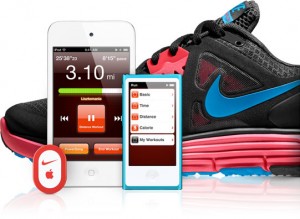
That said, what is it that experiential marketing brings to the table that traditional and even newer forms don’t, beyond Amazon’s consumer history product matching? It is the deeper level of interaction that consumers don’t just prefer, but crave. With the invention of the loudest communication tool in the history of the world, social media, consumers desire to connect on a deeper level with brands than ever before. They don’t just want to buy the latest pair of Nike shoes, they want to post pictures of them to show their friends. They want their Nike+ mobile application, which comes free with their shoes, to show all of their peers how they are using their latest pair of Nikes to set a new personal record at their next 5K. And they want it all to be intelligently streamlined and easy to use while offering exciting and cutting-edge interactive capabilities. It’s about developing not just buyers, but followers. No problem, right?

Well, yes and no. The problem is that developing these experiential campaigns isn’t cheap, and the companies that have the budget for them don’t necessarily have the inclination. If traditional advertising has worked in the past for these successful organizations, then why do they need to spend all that time and money when their standard mix of television, radio and print are working just fine? Hell, they spent close to a million dollars to develop a cutting-edge website, what more do consumers want? Of course, that isn’t always the case. Many forward thinking companies like Nike, Amazon and Apple understand the shifting landscape of modern marketing. But even the ones that have made the leap into this new era of advertising aren’t finding it all fun and games.

While experiential marketing seems to have a great deal of promise for a new era of consumerism and interactivity, there are (as always) going to be some downsides. These intelligent systems, like the ones described in The Future of Shopping are sure to lead to some Big Brother-esque fear of intrusion. Just how much is too much in terms of what a company knows about you? Or, how much communication is too much? Sure, the intelligent offerings created for our fictional character Amy were a blessing for her, as she clearly enjoys shopping and had a need for a product ASAP. But what about the millions of other consumers who give a bit of personal information at the register or online in order to get the initial 10% discount, but don’t want to be pestered every day about a new pair of shoes that just went on sale?

As the term “experiential marketing” indicates, those who are participating are creating a unique brand experience. It makes the buying process easier, more intuitive and more fun for their consumers. But like any new paradigm, there will certainly be kinks to work out. Not everyone who buys a pair of Nike shoes wants to be part of that community. Maybe they just want to go for a jog in peace. So there will be trial and error, of course. The right experience needs to match the right brand, and perhaps even more importantly, the right consumer. The last thing we can do is assume that everyone wants to join the cult of your company. Many will. Others won’t. And that’s okay. But either way, this is a very exciting new level of marketing that we should all be considering in our next campaign.

About the Author

Stuart Haack is an advertising copywriter for Caesars Entertainment and Master of Science Communication Management Candidate at University of Southern California. He loves topics including modern advertising, management strategy, corporate social responsibility and strategic communications. He currently lives in Las Vegas, Nevada with his wife and two dogs and is always open for further discussion via LinkedIn, Twitter or shaack@usc.edu.


Posted in Uncategorized | Tagged , , , , , , | 4 Comments

Whose side are we on?

The music fades up. Her words–“We wait. We hope. We pray. Until you’re home again.”–appear on the screen. And then we hear the iconic voice of Oprah Winfrey:

“There will be a seat left open. A light left on. A favorite dinner waiting.”

So opens one of most popular–if we are to believe social media chatter and expert analysis–ads broadcast during the Super Bowl, Jeep’s “Whole Again”:

http://www.youtube.com/watch?v=FadwTBcvISo

It is at just past 1 minute of this 2-minute ad that we see any image of a Jeep. Just a few more brief glimpses of the vehicle, then the music soars as images of soliders coming home, reuniting with their families and their neighborhoods. And Oprah concludes: “Because when you’re home, we’re more than a family–we’re a nation, that is whole … again.”

The imagery is beautiful, and emotional. I’m sure many viewers choked up a little (this author did, at the image of the wife weeping at the table with her child). Many probably felt renewed gratitude for the sacrifices of our nation’s military.

All that said … is the type of ad right, or necessary? Does it serve to remind us of those who serve, or needlessly exploit them?

To be fair, Jeep is hardly alone in this type of advertising., with sweeping music, dramatic voiceovers and soldier imagery. Many of us have probably seen this military-themed ad for American Airlines:

http://www.youtube.com/watch?v=x6iAMiJUu5g

Or this one from Anheuser-Busch:

Or maybe this one, for dog food:

http://www.youtube.com/watch?v=LVeBHwRbXB0

In the wake of this Budweiser ad’s

release a couple years ago, brand strategy experts weighed in on the ethics of using the military in advertising, with some claiming that it’s “in our country’s DNA” to support the troops and others comparing it to “using puppies and children.” (See the full article here.)

While not part of a military immediate family myself, and fully aware that other groups are exploited for commercial benefit (breast cancer survivors, of which my mother is one, come to mind), I have long felt an unease with these ads. Consider this:

  • U.S. military veteran suicides rise, one dies every 65 minutes (Reuters, 2013)– reported just this month, this figure certainly belies the imagery of equanimity and serenity that advertisers depict in the faces of returning soldiers.
  • “Real and disturbing disconnect among the majority of Americans in understanding how deployment contributes to economic, social, and familial stress”–fascinating results from a poll commissioned by the Coalition for Iraq and Afghanistan Veterans show a considerable lack of awareness of how veterans returning home are prone to homelessness, unemployment, and lack of access to healthcare. Makes the image of the applauding crowd in Anheuser-Busch’s airport ad seem somewhat disingenuous, if not complete fiction.

We’re in an age where, as we learned from the Song Airlines experience, it’s not enough for a company to say its beer tastes good or its vehicles hold up or dogs love its food. Every brand wants an emotional experience with its consumers. But perhaps we ought to ask, at what point does that emotional experience come at someone else’s expense? Or, put another way–regardless of where we each stand on the wars–whose side are we on?

References

Reuters (February 1, 2013). U.S. military veteran suicides rise, one dies every 65 minutes. Retrieved February 17, 2013, from http://www.reuters.com/article/2013/02/02/us-usa-veterans-suicide-idUSBRE9101E320130202.

The Coalition for Iraq and Afghanistan Veterans (2010). Public Awareness Poll: Needs and Support for our OIF/OEF Military and Veteran Community. Retrieved February 17, 2013, from http://www.cohenresearchgroup.com/media/ciav_201006.pdf.

Wilner, M. (2012). Running patriotic ads up the flagpole. Columbia News Service. Retrieved February 17, 2013, from http://columbianewsservice.com/2012/02/running-patriotic-ads-up-the-flagpole/.

About the Author

Lynn Tefft Hoff is the Assistant Director of Communications for the Radiological Society of North America, a society of 53,000 radiologists based in Oak Brook, Illinois. Lynn is in the Fall 2012 cohort of the Masters of Communication Management program at the University of Southern California. She lives in Aurora, Illinois, with her husband, 10-year-old stepson and 3-year-old son, who doesn’t believe that “writer and editor” is an actual profession and is waiting for her to decide to be a doctor or fireman “when she grows up.” Lynn chronicles life as a mom, middle manager and master’s student at mommyhitsthebooks.com.

Posted in Uncategorized | 1 Comment

Go Viral for Humanity

images-1GO VIRAL FOR HUMANITY

“In order for people to care, they have to know” – Jason Russel, Invisible Children

Viral marketing is defined as a piece of content generated by a person or company that viewers are eager to share with friends, colleagues, and family members (Markowitz, 2011). The Web is a powerful tool to share information, and according to Pete Barry, in the Advertising Concept Book (2008), online advertising can become viral (contagious) media.

In 2012, the San Diego based nonprofit Invisible Children launched a 30-minute video with the objective to arrest Ugandan rebel leader Joseph Kony. It went viral. According to the New York Times, “ it became a sensation in less than four days” (March, 2012). The Time reports that in this period of time, the video got 40 million views on Youtube, and more than 13 million on Vimeo, as it was shared through Facebook and Twitter (Goodman & Preston, 2012). The success this video had makes it a great model to study viral marketing. So how did Invisible Children succeed? The New York Times article, How the Kony video went viral gives us some great insight.images

They created narratives without going over 140 characters, while still creating emotional connection with the viewer (Goodman et al., 2012). They also were able to create action messages that can be converted into a hashtag. They already had a strong base of active and passionate followers in their social networks, which were socially disconnected from each other, allowing the message to float all around the world. Jason Russell, the film director and narrator invites the viewers to share the message through all of their social media networks, and to enlist celebrities to help get the world out. The call to this action was, to create awareness about Kony and to put pressure to the Ugandan government in order to find and arrest him.

If going viral is your goal, here are some important aspects to consider. According to Eric Markowitz (Inc Magazine), the content of a viral content should not talk about a product or service itself. He interviewed marketing specialists who confirmed that no one cares about your products. Instead, marketers should think about what the audience cares about. Traditional advertising is about promoting a product or service as being superior to its competitors, but a viral campaign needs to be thought of differently (Markowitz, 2011). A viral hit must have a message that is proactively talked about and shared my people- a mass recommendation” (Barry, 2008, p.198). Its about finding “ a purple cow”, or something that will stand out. (Markowitz, 2012). People want to share things that are funny or outrageous, in other words, memorable.

There are high risks and high rewards to viral marketing. Some companies don’t want to go viral because they lose control of their marketing and messaging. (Markoitz, 2012).  Most campaigns fail, but the ones that succeed get big rewards. Viral marketing is risky, and the truly successful ideas are the most forward thinking ones, the ones that have never been done before.

Here are some other recommendations to going viral:

-Youtube videos do not need to be as short as traditional TV ads. They can surpass the 15-30 second rule.

-Optimize videos for smart phones

-Have enough followers on facebook and twitter to start the sharing process

-Use common call to actions, such as suggestions to share with a friend.

References:

Barry, P. (2012). The advertising concept book: A complete guide to creative ideas, strategies, and campaigns. New York: Thames & Hudson. Chapter 8.

Markowitz, E. (July 26, 2011). How to Launch a Viral Marketing Campaign. Inc Magazine. Retrieved from http://www.inc.com/guides/201107/how-to-launch-a-viral-marketing-campaign.html

Goodman, J. D, & Preston, J. (March 9, 2012). How the Kony Video Went Viral. New York Times. Retrieved from http://thelede.blogs.nytimes.com/2012/03/09/how-the-kony-video-went-viral/

Posted in Uncategorized | Comments Off on Go Viral for Humanity

When to Send that Message?

ClockTwitter, Facebook, Pinterest, Google+ are tools that nearly all organizations should be using at some level to share their message with current and potential clients. Each tool has its uses, and not all are appropriate or worthwhile for every organization to use. Almost every organization with an internal communications team should be either posting content or contracting that task to an experienced contractor.

There are definitely good times and bad times to post content on social media channels. Every social media professional needs to be aware of the optimal times and days to post content. The most useful study done on the best times to post social media content was written for Forbes by Doug Chavez, VP of Marketing at RadiumOne, which built the social sharing platform Po.st. (I will let you click through to his article to find out the best times for the social media channel you use for your organization.)

Mr. Chavez did not mention a very key concept. It is vital to understand your current and potential clients. The concept, “fish where the fish are,” is as old as fishing itself. If your company sells products to mothers of school children, 7-8 am may not be the best time to post, since they are most likely getting their kids out the door. If you are marketing snack products, a great time to post is during the big football game.

Unspoken by Mr. Chavez, except for a small mention in his byline, is that he sells Po.st, a useful tool to schedule content. I use Hootsuite, which is a free but powerful tool that also allows you to schedule content. They have an inexpensive professional version that adds some more features, like analytics. There are also many other tools available that will allow you to schedule content.

A final thing to be aware of is that Facebook can lower the ranking of your business page posts if you use some scheduling tools. The reason is that Facebook sees all posts that come from sites like Hootsuite and lumps them into one bin, rather than considering them as originating from the Facebook page of your business. However, Facebook will allow you to schedule business page posts, if you fully set up your business’s profile.

Bonus material: Christopher S. Penn shares the best times and days to not send out a press release.

-Paul Merrill
@paulmerrill

Posted in Uncategorized | 11 Comments

You Want Me to Recommend THAT to Our Client?!!

sb10063107b-001
(Photo citation: Unknown, “Vines.”)

It happened last week. After checking my USC email, Facebook, Twitter, and Instagram feeds, and whipping off a text message to my son, I turned my attention, finally, to my work email. And there it was. A robust, worldwide discussion chain among my agency, Ketchum’s, media relations and digital specialists on the merits of a new technology called Vine. In what could be likened to a Gold Rush atmosphere in the advertising and PR industry, where everyone clamors to be the first to show the next “shiny object” to one’s clients in hopes of winning the grey-area of digital work, are we properly considering when and even if we should be recommending these new tools during their infancy at all?

Honestly, I find it exhausting to keep up on all of these platforms, so I welcomed the news with skepticism, wondering when or if we’ll get equally excited about spending time with people in person.

The past couple of weeks the digital world has been in a frenzy over Vine, the new Twitter-developed app that allows users to create and post looping six-second videos. Vine differs from the unsuccessful 12seconds.com in that it allows the user to make animations. And every agency is in a hurry to be the first to show clients how Vine can be used.

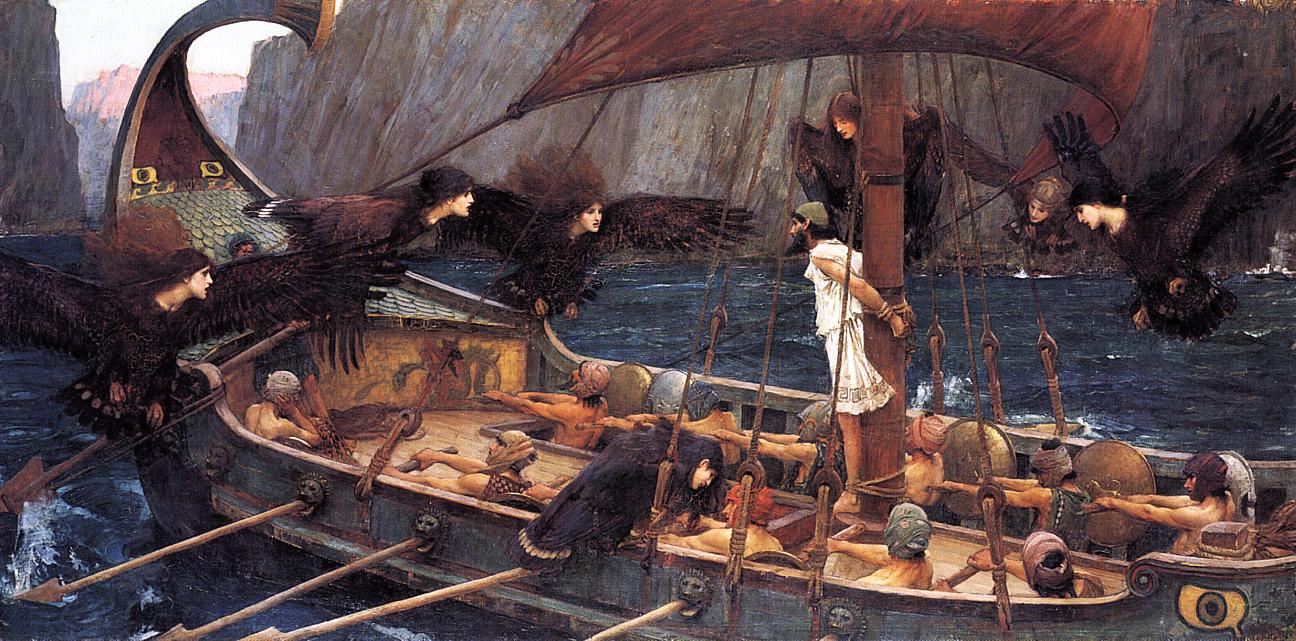
During the discussion – the most prolific and well-attended dialogue I’ve seen at Ketchum in the past six months — a clip of a Vine creation was shared and instantly someone came up with the idea to make Vine-clips of every office in the network to share to help make Vine more comprehensible to employees. Not a bad idea, but it elicited a wonderful response from one of our most beloved senior counselors, Gustavo, the regional director of our Latin American operations. Gustavo is one of our agency’s best storytellers and reminded us about Homer’s Odyssey where Ulysses is crossing a dangerous strait and onshore sirens use whispers and tempting songs to try to lure the ship to crash against the rocks. Ulysses plugs his crews’ ears with wax and they pass safely.

John_William_Waterhouse_-_Ulysses_and_the_Sirens_(1891)
(Photo citation: Waterhouse, John William, “Ulysses…”)

As communications professionals, perhaps we should heed Ulysses’ advice while evaluating digital sirens that cannot be measured and have not yet demonstrated the ability to effectively reach key stakeholder audiences. Or, at least have the restraint and confidence to let some time pass to see what happens. Witness past shiny objects that were likely sold to clients only to waste valuable resources and crash and burn: Google Wave, Google Buzz, and Go Walla are just a few.

images
(Jim Lin, senior digital strategist, Ketchum)

My favorite Senior Digital Strategist at Ketchum West, Jim Lin, gave me his predictions for why some of even the tried-and-true former digital darlings are destined to fail. I asked for short thoughts, but Jim’s insights are so good, I’m sharing two of his best in full detail:

Foursquare: Yes, they bested GoWalla by focusing on one thing and doing it well. However, the flip side of digital success is the ability to evolve. Foursquare has not evolved. It’s still simply a check-in app. Well, guess what? Facebook, Yelp and pretty much every other site has integrated check-ins into their apps. But beyond that, they also have core features that already appeal to users. So now, Foursquare is standing there with their main feature being the one thing that every other app incorporates as their side feature. Not so impressive anymore. They are destined to be the Mayor of “square one” before long.

G+: Google should just give up on social media and focus on search. G+ boasts the second largest social media network, and they base this on number of registered users. Sarcastic applause. Do you know why they have the second largest user base? Because nowadays if you sign up for any Google service (YouTube, Gmail, etc.), you automatically get a Google Plus account. What Google fails to realize is that in order for a social media platform to work, people must engage with it. A barren plain with empty houses on it does not constitute a vibrant city. I personally have five of these empty houses sitting in G+ land because I have multiple Gmail accounts. Do I ever even touch any of them? Nope. Because no one else is home in their houses. When G+ first came on the scene, I loved it, because honestly it has better features than Facebook. However, the reality is people don’t like change. If your grandmother has FINALLY figured out Facebook, do you really think she is going to pick up shop and use G+ because it does the same thing, but offers a few more features? Hell no. And this is exactly what happened. A few brave souls ventured into G+ land and tried it. They talked about how awesome it was (me included) and tried to get all their friends to join. No one did. So G+ land got really lonely. And we eventually all moved back to Facebook and Twitter, where our friends were waiting for us.

This debate won’t go away anytime soon and I think it’s excellent fodder for an Annenberg discussion on the topic. What are your experiences in this mad rush to be seen as the smartest, most on-top-of technology communicator? What are your predictions of current digital communications technologies that might join Jim’s list?

I’ll close with this final thought. The entire Ketchum worldwide, thought-provoking conversation about Vine took place completely on good old-fashioned email.

Amy Kull
CMGT 541, B

References

Unknown. (n.d.) Vines. Retrieved from Getty Images, February 17, 2013.

Waterhouse, J.W. (Painter). (1891). Ulysses and the sirens [Painting], Retrieved February 17, 2013 from: https://www.google.com/search?hl=en&q=john+william+waterhouse+ulysses+and+the+sirens&tbm=isch&tbs=simg:CAQSXwkb3APfC-jVORpLCxCwjKcIGjkKNwgBEhFBQNgD1wO3BGe_1BLgEvQS-BBog5MxU1Am0pGXBSmHbobP7qHWK_1ByaWXF26suPqM93zLQMCxCOrv4IGgAMIZWkU-tq2snq&sa=X&ei=r0shUbTMA-7RigKxzoD4DQ&ved=0CCgQwg4&biw=1440&bih=668#imgrc=Zfum-X1OQZ3-0M%3A%3B7TSzTC-nglLyjM%3Bhttp%253A%252F%252Fallart.biz%252Fup%252Fphotos%252Falbum%252FW-X-Y-Z%252FJohn%252520William%252520Waterhouse%252Fjohn_william_waterhouse_68_ulysses_and_the_sirens.jpg%3Bhttp%253A%252F%252Fallart.biz%252Fphotos%252Fimage%252FJohn_William_Waterhouse_68_Ulysses_and_the_Sirens.html%3B1820%3B900

Posted in Uncategorized | 3 Comments

Floating Away on a Crisis

I’ve watched with fascination this week as Carnival Cruise Lines was cast in the spotlight as one of its cruise ships became disabled in the Gulf of Mexico.  Without power for propulsion or electricity, the 3000-plus guests and 1000-plus employees on board faced incredibly difficult conditions for several long days.  This was a living lesson in crisis communications and because of social media and the 24-hour news cycle, it was everywhere.

Carnival kept friends and family of the ship’s passengers and crew updated about the ship and its progress back to port through social media including its Facebook page its Twitter feed and broadcasting on YouTube, the company’s press conferences and updates.  Traditional media followed the story closely as well.

Carnival handled the initial crisis communications well; they used a variety of channels to provide updates.   The CEO, Gerry Cahill, used what crisis communications expert, W.T. Coombs termed “Mortification Strategy,” apologizing to passengers and their families for the situation, he did not seek to place blame, to try to downplay the struggle and conditions on the ship.  He articulated a message that the company’s first priority is the safety and security of its passengers and in this case, their safe return home.

The challenge for Carnival is now that the ship is docked and the passengers have returned home, how does the company repair the reputational damage that was caused?  In addition to the wrecked vacation for those who were onboard the ship, Carnival has cancelled a number of future cruises on that ship, while it is repaired, thereby ruining the vacations of the thousands who had booked on those future cruises.  And to quell the fears of the even greater numbers of cruisers who have booked on any of Carnival’s other ships in the coming weeks.

As I drive through Houston today, the Carnival Cruise Lines billboard advertisements encouraging me to book a Carnival Cruise are kind of funny.  But points the challenge the company faces: they need to continue to entice and book passengers on their cruise ships while resolving the issues with this latest cruise.

To rebuild its reputation, Carnival is going to have to quickly identify what went wrong on this cruise and assure the public that it has fixed the problem.  Additionally, the company will need to assure passengers that they have learned from this experience and the conditions in which passengers found themselves during this crisis will serve as key learnings for dealing with future crises.   Would you book a Carnival cruise today?

Posted in Uncategorized | 9 Comments

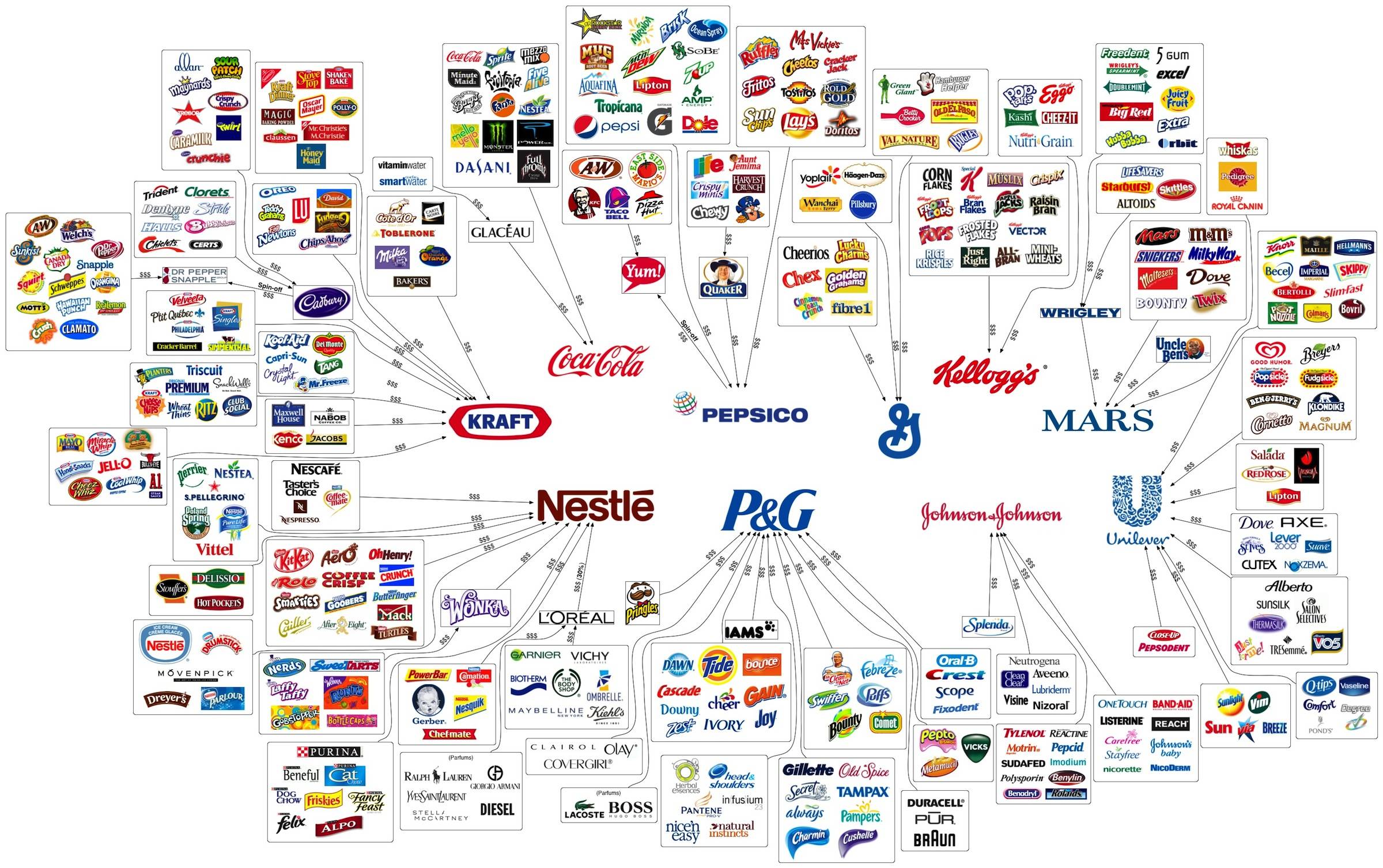
Brand Strategy and The Illusion of Choice

Click for larger view and zoom

This week’s reading on brand authenticity (Burt’s Bees, etc) reminded me of this infographic on the largest Fast Moving Consumer Good brands (FMCG). Hope it helps illustrate the point on brand authenticity.


Posted in Uncategorized | 4 Comments

Fresh off the Vine – Twitter’s Move into Video

First, 140-characters.  Then geo-location.  Pictures.  And now?  Video.  Six-seconds worth, to be precise.

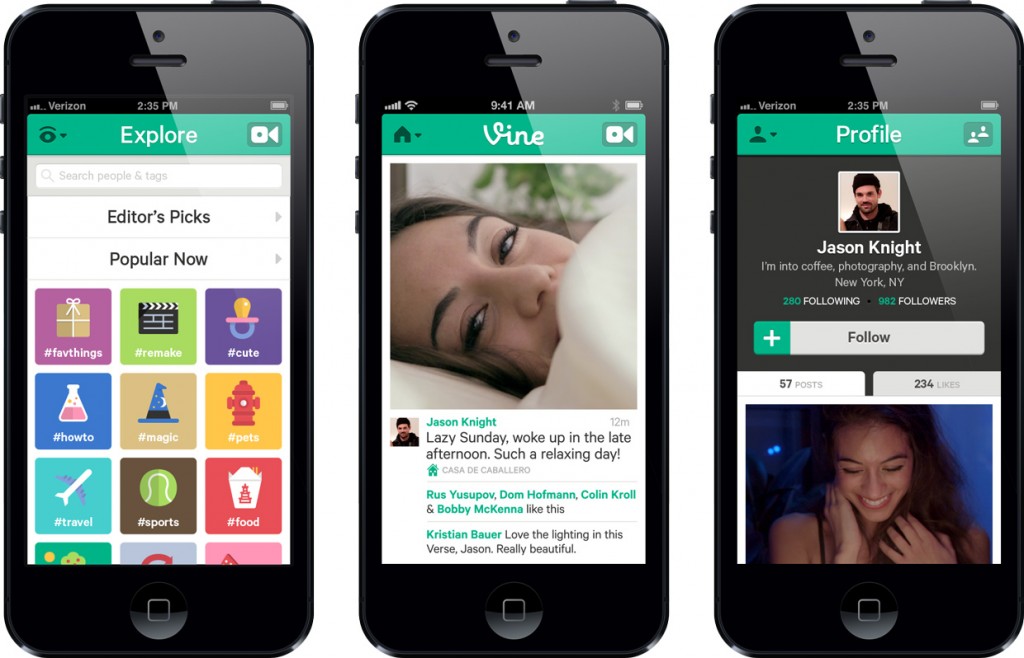
The Vine App interface. Source: https://vine.co/blog

Introducing Vine, Twitter’s mobile video sharing app.  It allows users to record, edit, and share 6-seconds worth of looping noteworthy, mundane, or even NC-17 rated content to their Twitter feed or just the Vine community.  Brought three weeks ago into the social sphere, Vine has been touted as the elevation of social video: simple, concise, and integrated.  Let it be known that Vine is not the first or the most innovative social video service around – SocialCam, Viddy, and Light have all tapped into the market well in advance, with their own unique offerings from Instagram-esque filters to audio manipulation.  But they weren’t bought by Twitter. They didn’t have a built in audience of 200 million active users.  They didn’t have a rush of users the first day, including coverage from top media, celebrities, and thousands of “Hey, I’m using vine” tweets.

Now, on to the good stuff: Did the NC-17 comment catch your attention? Great, because it’s caught the media’s.  Like with any newly popular trend, the porn industry is on top of Vine (NSFW), using its service to share content that is normally regulated to questionable hotel rooms across America.  But that in itself is not news.  Porn is an industry of adaptation – they take over Twitter trends daily, spambot key words, post explicit TwiPics like there is no tomorrow. The difference?  As Vine is not integrated into the Twitter interface but rather lives as a separate App, Vine has been labeled with a 17+ restriction in Apple’s App Store.   A deterrent?  Maybe.  An easily avoided deterrent by simply claiming to be 17+?  Yes, indeed.   Vine has already banned certain hashtags like #porn and #sex to ease the findability of adult content, as well as adding the new restriction.

If anything, this rating may charge Twitter to do what it did with geo-location and photos: integrate.  From a brand perspective, integration is simplification – if a community manager can post from a single account they are more likely to use the service regularly.  Facebook did it with Instragram.  Google did it with YouTube.  No one enjoys a spreadsheet of passwords – integrate!

So: Will you Vine today?  Anyone who responds with a 6-second Vine gets a 140-character soliloquy that you can loop indefinitely.


@Mercurek

Kristen Mercure

CMGT 541, A


Posted in Uncategorized | Tagged , , , , | 5 Comments

Incompetent and Incontinent?

Insult or ignore. How is that for a marketing strategy to the demographic that has the most disposable income and whose numbers swell by the week? You would never buy into a strategy like that but the truth of the matter is many companies seem to be doing just that when it comes to marketing to baby boomers.

I’m not a boomer but I’m not that far behind them so I perk up whenever a story about them pops up. It’s my way of peering into my future. One of my favorite boomers, Jane Pauley popped up along side Tom Brokaw last week on Morning Joe. The two talked about their days on the Today Show and the conversation veered into the dis job advertisers are doing on boomers. Check it out.

Pauley was on Morning Joe in part to promote a special she’s doing, “Boomers 2.0”. I haven’t had a chance to check it out yet but the Huffington Post’s Barbara Hannah Grufferman did. She keyed in a point Pauley made on how advertisers are feeding their own misconceptions when it comes to advertising to those 50 and above, “If youth sells to the boomer market, and your only impression of boomers from the commercials run during the early evening newscasts, we’re incompetent, impotent, or incontinent”.

The advertising sweet spot is the 18-54 demographic, yet as Pauley pointed out, boomers control three quarters of the nation’s wealth and spend $2 Trillion annually on consumer goods.

Driving Away from Boomers

At the North American International Auto Show this year, auto makers unveiled their new designs and to the Wall Street Journal, it seemed very clear that the auto industry was playing to Generation X & Y with very little left in the tank for boomers. Volkswagen’s CEO Rupert Stadler confirmed the reporter’s suspicion when he said, “The baby boom is 60-years-old. We have to look for younger customers”.

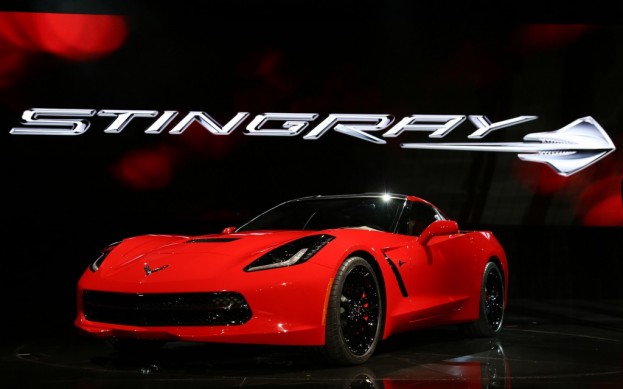
Stadler’s desire for younger customers is sound. Companies need to develop brand loyalty and why not hook them while they’re younger and forming brand alliances. But Stadler also seems to be writing off a demographic that is shifting from saving to spending, and they are spending a lot more freely than their parents. The Journal reporter found one brand remembering to dance with the one that brought it.  Corvette reintroduced Stingray, its classic model from the 70s and a nod to boomers that they still matter.

What’s strange about this decision to ignore boomers is the fact that this generation has a LOT of disposable income. That’s not to say that boomers didn’t take a hit in the last recession but they did a much better job at surviving it than younger folks. According to the New York Times, unemployment levels for those over 45 were anywhere from 2-10 points lower than Gen X, Y, and millennials. So if baby boomers kept their jobs, and their cool, chances are good their 401ks have more than rebounded since the Dow’s deepest valley and depending on where they live, housing values may have come up significantly as well.

Getting It

Some advertisers are coming around to the realization that many boomers are sitting pretty and looking to spend. The travel business, “having studied the predilections of boomers as if they were a tribe recently discovered by anthropologists “ (Rosenbloom, 2013) has figured out that many boomers have delayed retirement and are looking for shorter trips to exotic locations. The restaurant industry as well has picked up on this trend of boomers staying in the workplace longer. “It would be wise to begin marking more heavily to baby boomers in 2013… they’re not cutting back on spending as much (as younger people).” (Dostral, 2013).

Unlike their parents, boomers don’t seem to have a desire to stop working and shut their wallets when they hit 65. I see my older siblings blow past 50 and they’re redefining what it means to age. They are closer to their kids and are very active in social media. Health-wise, the news is just as good. I have one brother who just ran a 30k over the weekend at the age of 56. He seems typical of a generation open to new things… it will be a challenge to those in their 20s and 30s to develop an advertising strategy that speaks to them. The roles have changed in another way too. Advertisers are used to telling us what’s cool, now it’s the boomers letting them know the way they’re advertising to them isn’t cool at all.

Resources:
Dostral, E. (2013, January 14). Five Trends for 2013: Consumer Forecast. Nation’s Restaurant News. Retrieved February 10, 2013 from Proquest.
Grufferman, B.H. (2013, January 31). Life after 50: Has the TV industry finally figured us out? Huffingtonpost.com. Retrieved from http://www.huffingtonpost.com/barbara-hannah-grufferman/tv-shows-life-after-50-what-post50_b_2574644.html
Rosenbloom, S. (2013, February 03). We’re all boomers now. New York Times. Retrieved from Proquest.
White, J.B. (2013, January 17). Corporate intelligence: Automakers look past baby boomers — A rethinking of design & pricing to win over 20 – 40-year-olds. Wall Street Journal. Retrieved from Proquest.

Posted in Uncategorized | 18 Comments