Naughty Prince Harry and Marketing Improvising

It’s quite rare to see advertising agencies improvising on certain unexpected events. Most marketing practices take a lot of time to prepare. However, if the event is a real eyeball catcher and the improvising is quick and elegant, positive results can be surely expected.

For instance, the British Prince Harry caught naked in Vegas last month. This is a significant event that can potentially be used in marketing. Lynx took the opportunity by connecting Harry’s wild night to the “Lynx Effect”. The underwear with the classic British flag logo is quite self-explanatory. And the tagline “unleashed the chaos” left much room for imagination. Moreover they even started to apologize to Harry for the possible and uncontrollable “Lynx Effect”. Lynx has been long known for its sexually alluring branding strategy. This time the royal symbols and the hormone -arousing indications blend quite smoothly.

On the other hand, some non-profit organizations also focused on that wild night and treated it as a branding opportunity. The LVCVA (known as Las Vegas Convention and Visitors Authority) took the advantage of this incident. However they approached in another way. A campaign called “Know the Code” was launched to support Prince Harry. The “code” was apparently referring to “what happens in Vegas stays in Vegas”, which has been seen as iconic but controversial since Las Vegas became Americans’ playground. LVCVA reinforce this concept by accusing those paparazzi for disrespecting to the code or others’ privacies. At the same while, LVCVA suggested people to carefully choose travel companions when going to Vegas. And what’s interesting is that in their advocacy letter, iconic features of Vegas, like bottle service, bikini clad girls were substantially emphasized. On the other poster, the famous quote “keep calm and carry on” was adopted. Personally I’m quite curious about Prince Harry’s reaction upon seeing such encouragement.

Pitifully, it’s unlikely that Harry can have the chance of reading the encouragements by LVCVA. Both of their posters were put on “USA Today”. But the Lynx commercial printed on “Suns” can easily found by the royal family. Despite the possible offend to the royal family; Lynx and LVCVA drew lots of attention. These posters were originally designed for papers. They ended up being reposted,  shared and “liked” for thousands of times.

By quickly responding to Prince’s embarrassing moment, both Lynx and LVCVA provided concreteness, unexpectedness in a simple way. Improvising marketing based on certain eye catching event is like standing on the shoulders giants.
Posted in Uncategorized | Tagged , , | 6 Comments

SALE for YOU! NO SALE for YOU! Confused?

More than a year ago, Johanna Blakley explained in a TED speech (watch it here) that the knowledge marketers and advertisers could gain from online networks would render traditional demographic data not only useless but offensive—glorified stereotyping. Demographics, she argues, perpetuate divisions between what we assume men and women might want to buy, or how we gage the value of young verses old consumer populations. We market to certain groups, assuming they have homogenous wants and desires. With data generated from online behavior, however, Blakley suggests marketers may finally see us for the unique, individual consumers we are. And unlike those old stereotype strategies, raw behavioral data is always egalitarian … right?

Wrong. A new ethical dilemma presents itself to marketers and advertisers as they use online information to provide ever more direct advertising and services to their customers. No, I’m not actually talking about privacy concerns (take a look at this – link). I’m talking about the inadvertent effect of consumer-behavior influenced offers and advertisements for services. Individual consumer knowledge of both products and deals is becoming unequal based on algorithms that determine who might be interested in what. There is no reason to think that in every case personalization is egalitarian or empowering for consumers.

Recently (08/09/12), Stephanie Clifford of the New York Times reported on Safeway’s trial with a new system that records its shoppers behavior and then sends discount offers to consumers based on their buying history and preferred products. Over time, Clifford suggests, price tags may disappear and pricing will be dependent on past consumer behavior—on proven loyalty to certain products and marketers offering rewards to their preferred customers.

It is worth thinking about the ramifications of this kind of program even if it is intended to benefit both consumer and seller. Under this system consumers are not only picking preferred products; the brands are picking their preferred consumers. Suddenly shopping for groceries becomes more like shopping for health insurance or a bank lone. Do I need a good record with purchasing Pepsi Co food and beverage to get the best deal?

Increasingly, this doesn’t sound like a program that simply lets me buy my favorite things for less. This is a program that also allows brands to further curtail my power of choice or even my knowledge of the possibility of other options. ‘They’ will know when I cheat on them. Consumer data gathered with more sophisticated technology that tracks consumer behavior might mean that advertisements and offers gain the power of personalization, which is sometimes a good thing for everyone. But we should be cautious as consumers, communicators and regulators, about the trajectory of uses of data that restrict the consumer’s ability to choose between numerous possible products.

Posted in Uncategorized | Tagged , , | Comments Off on SALE for YOU! NO SALE for YOU! Confused?

Athletes used in Marketing campaigns

Football is the most popular sport in America by far and companies across this country are starting to use people’s interest in football to their benefit in their brand campaigns. For example, State Farm is a car insurance company that has had more competition in the past three years then ever before. State Farm needed a campaign that would set themselves apart from their competition and they looked at star football player Aaron Rodgers as their answer. State Farm created a marketing campaign that stemmed around commercials featuring Aaron Rodgers. Aaron is a Super Bowl winning quarterback for the Green Bay Packers and is a fan favorite across the nation.

Discount double ccheck

The commercials were very unique and relevant to what Aaron Rodgers was doing on the football field. After every touchdown Aaron Rodgers does his distinct touchdown celebration where he grabs around his hips and acts as if he is putting a championship belt on his waist. Because he threw so many touchdowns last year, he has become known for his touchdown celebration and State Farm used it to their advantage. This commercial series was a great campaign for State Farm and brought a lot of much needed attention to the State Farm brand again.

This campaign was over a year ago and now many other companies have taken hed to State Farm’s idea and have featured there own brand campaigns around specific athletes using comedy. What is so interesting about these campaigns with athletes is they are all sticky. The State Farm campaign fits Dan and Chip’s ‘SUCCEs’ principles perfectly. The idea was simple enough that all football fan’s would understand it and find the commercial funny. It was also unexpected and concrete, the idea was original and caught most people by surprise. Since they had Aaron Rodgers actually in the commercial it was definitely credible and it triggered people’s emotions by being funny and making them laugh. Lastly, the commercial series told a story because after the first commercial they created two more that lead into each other creating a story that the audience can understand and appreciate.

Posted in Uncategorized | 1 Comment

Ice cream war between Unilever and Nestle

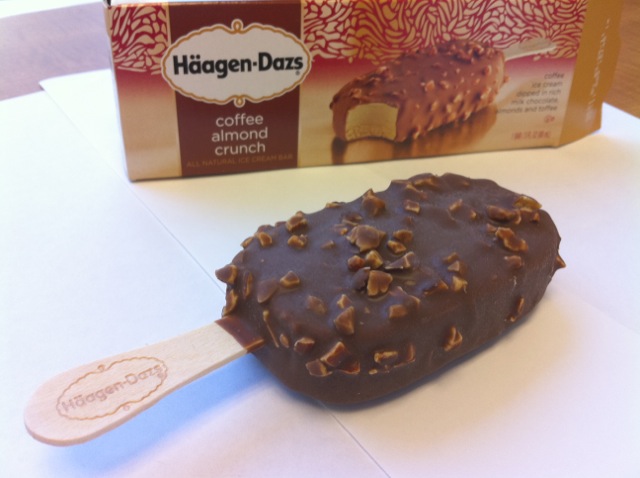
I bought three flavors of Magnum ice-cream bar last week as soon as I found there was a promotional discount for Magnum in Ralphs near my home. Positioned itself as premium ice-cream bar, Magnum is as delicious as Haagen-Daz, and in my home country Magnum is more accessible to local grocery stores and supermarkets than Haagen-Daz, which is mostly seen in high-end and even luxurious shops. This kind of familiarity motivated me to buy Magnum more often than Haagen-Daz, and made me take a look at Magnum’s history in US.

        Magnum was just imported into US in March by it’s parent company, Unilever, the large conglomerate who owns Klondike, Ben & Jerry’s, Cornetto, and other brands. Since them Magnum has made outstanding performance. According to Bloomberg Businessweek, Americans has now consumed more than 100 million Magnum bars. However, Unilever still cannot overtake US’s ice-cream leader, Nestle, who owns brands such as Häagen-Dazs and Dreyer’s.

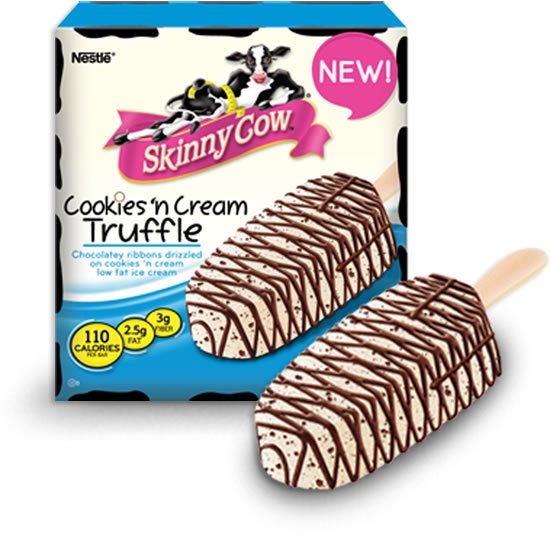
Who is Magnum’s biggest competitor? To my surprise, it’s not Haagen-Daz, it’s Skinny Cow (though their ice-cream bar businesses are all owned by Nestle ). It’s a low-fat brand and a Skinny Cow Fudge Bar usually contains 100 calories and 1 gram of fat, while Magnum’s flavors like Double Caramel and Mochaccino, has 240 calories and 16 grams of fat. However the fact that Skinny Cow has gone downhill since 2010 shows that after a tendency of pursuing diet food, more people has come back to care about the taste itself. “The focus on the diet brands had dragged the market down.” According to an a market research analyst, Chris Brockman.

I also find the future of Magnum in US very promising according to some online comments. The blogger from Netherlands felt thrilled when he found out Magnum finally entered US after missing this brand for such a long time. Since US is an immigrant country, there are people all over the world. Magnum has expanded into more than 50 countries before it entered US, I believe that lot’s of people who are familiar with Magnum before will feel as excited as me or as the blogger from Netherlands: http://adailyscoop.com/magnum-ice-cream-now-in-us-and-as-tasty-as-ever/

Another reason I feel confident about Magnum is, American people’s eating habits of ice-cream has shifted from half gallons and pints to European style’s cones and sticks. As an international brand originally made in Denmark, Magnum could fit such shift and  continue to threaten Nestle’s market share. What’s more, Magnum also invented a mini- bar product line (smaller bars with 150 calories), in order to cater to some people’s need of keeping diet.

Boyle, M.(2012, August 23), Unilever Wants to Be America’s Ice Cream King. Retrieved from http://www.businessweek.com/articles/2012-08-23/unilever-wants-to-be-americas-ice-cream-king

Posted in Uncategorized | 5 Comments

Apple does it again – It’s almost here.

A week before the launch of iPhone5, Apple sends out invites for their September 12 event. Nothing is said about what will happen specifically, but rumor has it that Apple will reveal their new phone on that very special day.
People have been talking about the iPhone5 ever since the iPhone4 was launched, and Apple definitely seems to know how to keep people hanging in. Just give the consumers a slight hint, flirt with them a little – and they will always be intrigued and eager to find out more about what you can offer.
Up until this point nothing official has been said about the new iGadget, but this teaser ad tells it all. As Chip & Dan Heath has mentioned in their book Made to Stick, and this ad fulfills all 6 traits of to be “sticky.” The message is simple and concrete. The twelve on the top represents the launching date, and the five below it resembles the iPhone5. Basically Apple is saying “Come and watch us unveil our new product next week.” The ad was also unexpected and a pleasant surprise to those who were anxiously waiting for the phone. It’s credible, with the Apple logo being on the top right corner of the ad. Lastly, the invite is very artistic and emotional – consumers are about to turn to the page that shares the climax of the story.
Certainly this teaser has been a SUCCESs, and I myself am standing on my toes longing for the day to come.
Posted in Uncategorized | 1 Comment

#Fail

My grandparents got their first television in the 1960’s, a beast of a thing, more wood than screen, and used mostly as a doily covered counter on which framed family pictures sat. They used it so infrequently that they didn’t buy a new television set until the mid 1980’s (which they sat on top of the old wood set). Even though the new television came with a remote, my grandmother never used it, preferring instead to pull her arthritis ridden body out of her armchair, and with the help of a walker shuffle her feet across the room to change the channel, and out of breath return to her chair. When I was in the second or third grade I asked why she wouldn’t use the remote to which she responded, “My aim isn’t so good”. This baffled me, until I realized she had no idea how a remote control worked and was worried you could damage something in the room if you “shot” it with the remote. I tried to explain it to her, and she dismissed me with a wave of her hand, saying, “You have got to be careful when you push buttons”.

I’ve been thinking about my grandmother’s advice to be careful when you push buttons over the past week as more and more tweeters feel the repercussions of recklessly hitting the send button after thoughtlessly drafting some questionable tweets about the Olympics.

Most in need of my grandmother’s advice were Paraskevi Papachristou and Michel Morganella, both sent home after tweeting comments that were easily interpreted as racists by most who read them. Even though Papachristou tweeted an apology, the damage was done; her original tweet had been re-tweeted and re-tweeted and re-tweeted, while her apology went unnoticed. An act that took 10 seconds to complete erased years of preparing, and cost both of these athletes a chance to live their dream.

Then there was the arrest of soccer player Daniel Thomas who is suspected of having sent British diver Tom Daley a homophobic and threatening tweet. This came on the heels of spectators threatening to drown Daley via Twitter after he failed to medal, and one spectator tweeting that Daley had disappointed he dead father.

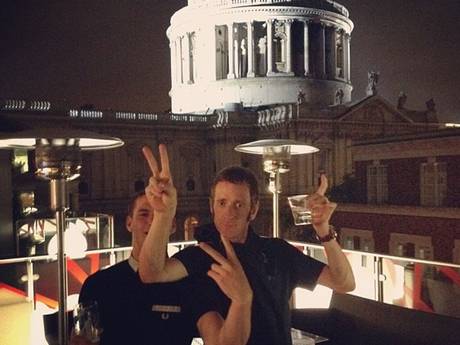
All of this makes British cycling star Bradley Wiggins’ bad decision to tweet photos while on a gold medal induced “blind drunk” bender seem benign. It of course gives the host country a bit of a black eye, when one of their biggest sports heroes, lets everyone in on the fact the he got drunk at St. Paul’s Cathedral.

Most interestingly is the strange case of Guy Adams, a British journalist suspended from Twitter for the way in which he expressed his displeasure over NBC’s handling of the games. So many people have become upset by NBC’s strategy of showing events up to nine hours after they happen (since results are streaming out in real time) that the #NBCFail is one of the most used hashtags over the past week. Twitter claims that they suspended the journalist in response to a complaint by NBC over the fact that Adams had tweeted the email address of an NBC executive, and that publishing details like that are against their policy. However, none of that is true. Twitter has no such content policy as are not legally responsible for any content published on their site, and NBC didn’t complain until Twitter suggested they do. It seems more likely that twitters reaction to Adams was due to the strategic partnership that NBC and Twitter have formed during the Olympics.

It’s interesting to note that Twitters reaction to the racists and threatening tweets was to say we aren’t responsible and it is an issue of free speech, but when a corporate partner was targeted they took immediate action. While I think Adams should have also shown better decision making before hitting the send button, I am concerned that Twitter, a service that claims to give everyone a voice, is already monitor tweets and making decisions based on their own best interests.

Posted in Uncategorized | Tagged , | 3 Comments

Official Non-Sponsor of…that event

Official Olympic sponsorships are coveted by companies for the brand exposure and the prestige of being able to say, “Official Sponsor of the 2012 London Olympic Games.” The International Olympic Committee has very strict marketing standards to protect official sponsors, especially against non-sponsors. There are exclusivity clauses given to many brands that have paid millions of dollars to place the 5 color rings next to its logo. Heck, you can get stopped by the brand police if seen eating french fries not from our friends over at the yellow arches. Or you can be turned away from Olympic Park if seen wearing your Pepsi branded t-shirt.  If a brand is not an official sponsor, how can they get in on all the Olympics advertising gold? Ambush marketing.

thedrum.co.uk

In essence, ambush marketing is the act of selling your product by skirting marketing rules set by an event, in this case the OIC and the London Olympic Games Organizing Committee. Many athletes have been seeing wearing those over-sized Dr. Dre Beats headphones. That has caused a stir since Beats is not an official sponsor of the games. Dr. Dre sent the British Olympic delegation Beat headphones emblazoned with the Union Jack instead of the Beats logo. Lawyers have yet to act on this ambush.

Another example is Nike’s Find Greatness campaign. One ad features athletes from around the world in cities named London, not in England. The narrator states that “greatness should not be reserved for a chosen few” with a stream average people playing sports in cities around world named London. It does not, however, refer to the Olympics in any way, even thought it is inferred.

http://www.youtube.com/watch?v=_hEzW1WRFTg&list=FLUFgkRb0ZHc4Rpq15VRCICA&index=2&feature=plcp

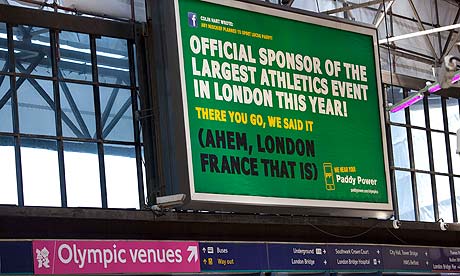
The Paddy Power billboard at London Bridge Station. Photograph: Tim Anderson

British bookmaker Paddy Power was ordered to take down their billboards proclaiming them to be an “official sponsor of the largest athletics event in London this year!….ahem London, France that is.”

Is this fair to official sponsors that paid hundreds of millions dollars or just a clever way to advertise? The Nike ad has over 3 million hits on YouTube and Paddy Power is getting more attention due to this tactic then they would otherwise get.

Posted in Uncategorized | 3 Comments

Does your company need a hacking strategy?

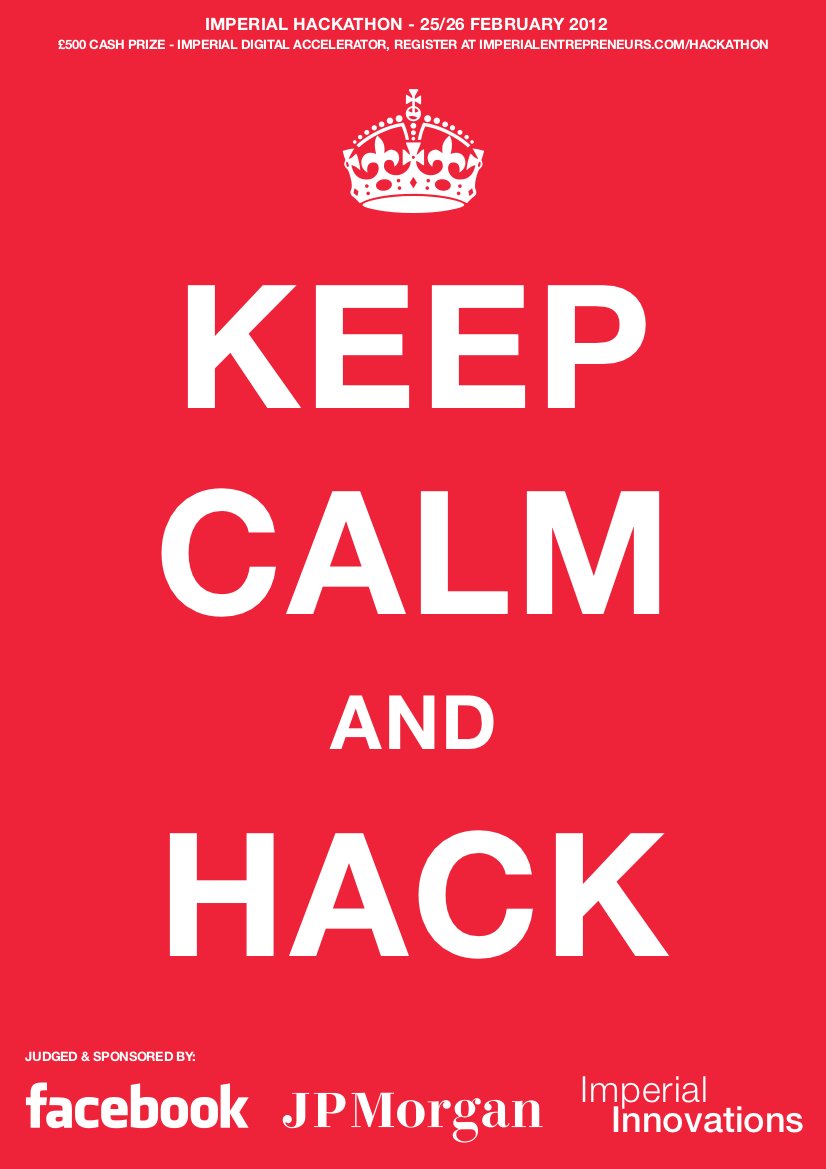
http://imperialentrepreneurs.com/hackathon/

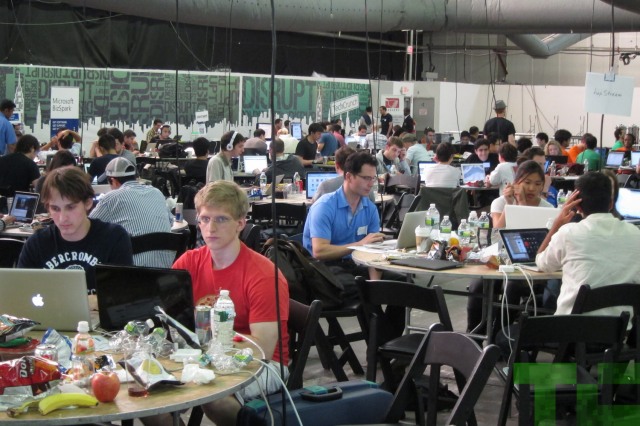
Hacking as a means of creating and testing new ideas is the new wave of the future. Many companies (i.e. Facebook, Google, Blackberry, and Foursquare- just to name a few) have been in the practice of hosting organized hackathons and swear by their effectiveness. Chang (2012) notes that Facebook’s timeline, Video, the Like button, and Chat all made their debut at a hackathon. Essentially, a hackathon is the offspring of a focus group turned experiment for computer geeks. Instead of answering questions with answers, they stroke the keypad and search for innovative solutions then test them.

http://techcrunch.com/2012/05/19/meet-the-disrupt-ny-2012-hackathon-hackers/

So what can a hackathon do for your company? With the growing amount of communication taking place on the internet, what company doesn’t need new innovative ways to deliver that content? Hackathons can keep a lively, thrill seeking edge on employees’ work and hinder groupthink. Not to mention the increase of employee moral that arises from this fun and engaging affair. It also gives the employees a worry free environment to encourage creative thinking without possibility of failure. This imaginably leads to the employees feeling their contributions are valued as well as facilitating collaboration between employees. So, basically, a hackathon can potentially do a lot for your company. From conquering software related issues to improving the company’s culture, hackathons could be the next big thing.

Chang, A. (2012, July 20). Deep Inside a Facebook Hackathon, Where the Future of Social Media Begins. Retrieved from http://www.wired.com/gadgetlab/2012/07/facebook-gears-up-next-big-thing-in-three-day-camp-hackathon/2/

Posted in Uncategorized | 6 Comments

Negative Buzz….. oh my!

Have you ever seen a social media blunder from one of your favorite companies or bad reviews on their Facebook page and it changed the way you thought of them?  In March 2010, a Nestle employee who was annoyed by the improper use of the Nestle logo by Facebook users decided to post a request on Nestlé’s Facebook page asking users to stop.  This upset some Facebook users and they posted their disdain for the scolding with some fairly tame posts questioning the motives of the request.   The Nestle employee didn’t appreciate the Facebook users opinions and decided to sarcastically post comments to the users with posts like, “Oh please… it’s like we’re censoring everything to allow only positive comments” (Broida, 2010).  This PR gaffe was a huge mistake because it prompted more negative responses like one who said “Your page, your rules, true, and you just lost a customer, won the battle and lost the war! Happy?” (Broida, 2010).

I decided to check out Nestlé’s Facebook page to see if I could find any other blunders and instead found another PR problem facing them, negative posts.  There appears to be one who is a thorn on Nestlé’s side with the name ‘SAY No to Nestle All Year’ because they post negative comments on every story posted on their page.  On a story Nestle posted regarding their acquisition of Accer, a medical food manufacture for Alzheimer’s, SAY No to Nestlé posted,

“Will nestle do anything ever that might be ethically right but not make money for them or even lose money? Not until hell freezes over and probably not even then” (Facebook.com).

And on a story touting Nestlé’s support for the regeneration of Haiti’s coffee industry this same user posted,

“Nestlé you can’t be trusted – you destroyed forests until you were rumbled. Bet you still do”.

How much longer can Nestle allow users to comment until the Facebook page becomes a detriment rather than a marketing tool?

In February 2012, American Express administered an internet usage survey and found 46% of US internet users turned to companies Facebook pages to vent their frustrations (eMarketer.com, 2012). With brands increasing their social media presence, this type of negative buzz has to be hurting brands over time.  Since posts on the internet can last forever, it seems logical that every company should employee professional PR writers to monitor customer posts.  But in a January 2012 worldwide survey by a customer service provider, Satmetrix, only 49% of the companies surveyed actually followed up and tracked customer feedback on social media (eMarketer.com, 2012).  According to eMarketer.com, a digital intelligence company, “This buildup of negative buzz on social media can have a significant impact on brands because social media is more public and moves faster than customer complaints via traditional channels,” (eMarketer.com, 2012).

Do negative posts affect your view of a company and influence your buying decisions?  How long do you think a company can allow a single user to continually post negative comments on every story posted on their Facebook page before they debar them?  Does your company employ people just to monitor customer reviews and social media sites?

References:

Broida, R. (2010, March 19). Nestlé’s Facebook Page: How a Company Can Really Screw Up Social Media. cbsnews.com. Retrieved from http://www.cbsnews.com/8301-505143_162-28646786/nestles-facebook-page-how-a-company-can-really-screw-up-social-media/

eMarketer.com. (2012, July 16). Brands Ignore Negative Social Buzz at Their Peril.  Retrieved from http://www.emarketer.com/Article.aspx?R=1009189

http://www.facebook.com/Nestle

Posted in Uncategorized | 10 Comments

Mommy marketing: I have the power! And the stuff!

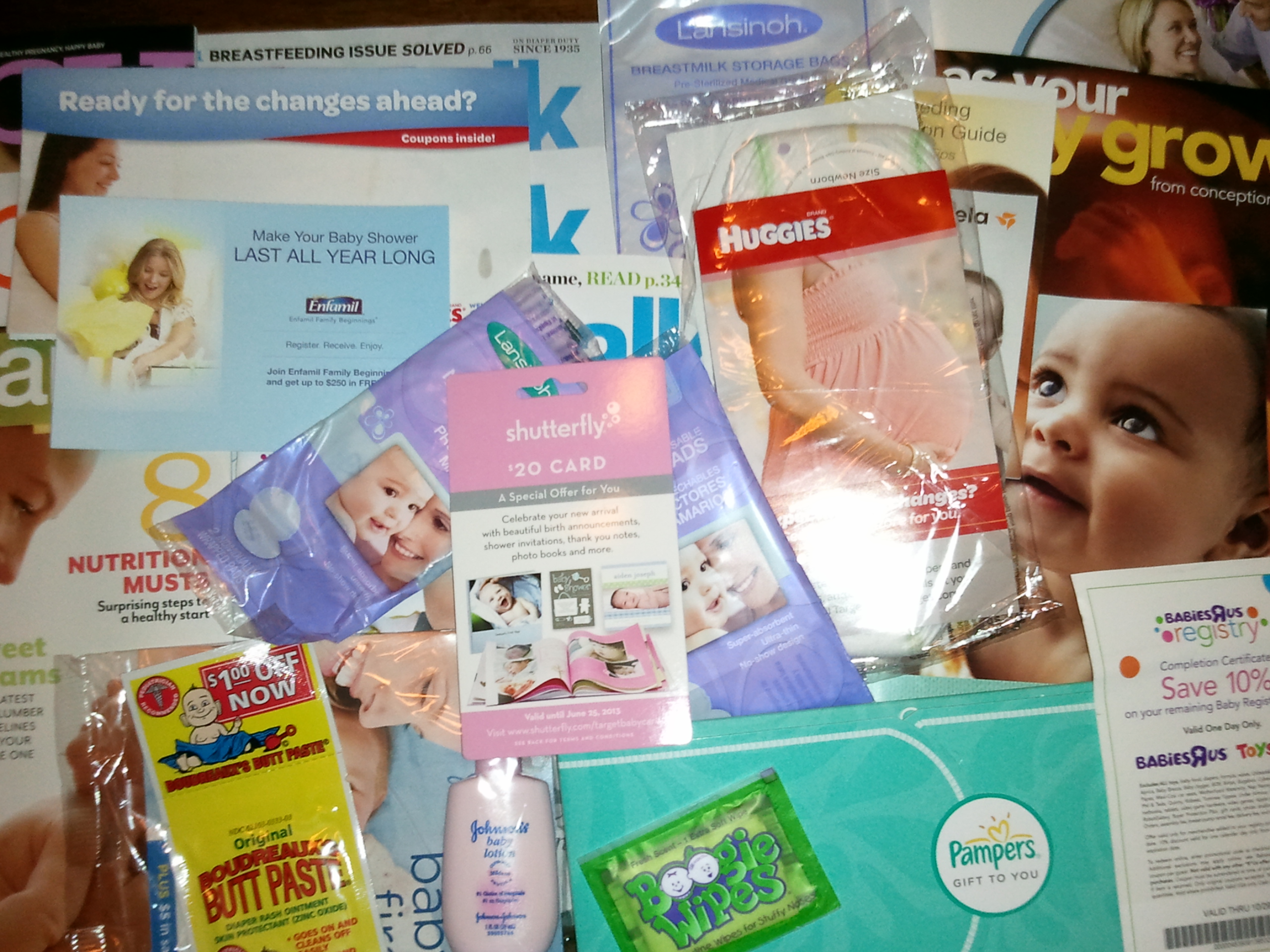
So, I’m going to have a baby at some point in the near future… the very near future. Our official due date is September 13, a mere six weeks away!  This has big news for all of our friends and family, and everyone has been wonderful, sending us warm wishes, gender-neutral gifts and (often unsolicited and somewhat weird) advice.  And, by “everyone,” I even mean some of the largest companies in the world; the friendly folks at Proctor & Gamble, Disney, Johnson & Johnson, Kimberly-Clark, Target, Burlington, “R” Us and Bonnier have all sent coupons, samples and literature to us in the last six months. (Note to Bonnier: One issue of Parenting is sufficient. I have six!) Pictured is just a small sampling of my mail to date:

Now, you and I already know that companies such as Target will monitor consumer purchases in order to decide when to start sending the baby circulars around. And, I knew once I completed gift registries I would be bombarded with stuff. But, there were those months between when I found out I was expecting and when I actually completed registries, months that were full of teeny weeny diapers, cord blood donation solicitations, baby bath samples, free Butt Paste and a host of other “necessities” for a newborn. Not that I mind—I’m sure we will use a free diaper or thirty, but the whole experience has a Big Brother-ish feel to it. I tried to figure out how giant, global corporations figured out that a Baby Spitzer is on the way.

I can’t think that my shopping habits tipped them off—unless, of course, the analysts are monitoring my ice cream consumption—as we shop as needed and at whatever store is convenient, which means four grocery stores, two big box stores, a few local vendors and the farm down the street. My prenatal vitamins are completely off the books (samples from the doctor), and I am hopeful that my hospital registration stayed private under HIPAA rules. I did not “like” or post anything on Facebook. Was it my Amazon search for a Pack ‘n Play? Did they somehow see the EPT purchase at Walgreen’s? I would love to figure out how the consumer universe was informed of my pregnancy before my own parents knew.

From the business perspective, I can’t blame a single company for wanting to capture the new parent market. After all, even if you try to resist the deluge of product that is available—and believe you me, there is STUFF—there are certain things that you simply have to buy along the way (maternity pants for mom, diapers for baby, Xanax for dad, etc.) In fact, although we are trying to be smart and avoid the billion-dollar “parental money warp,” the fact of the matter is we have a new human on the way that will require food, clothing and shelter or at least new bedroom furniture and adorably themed jungle merchandise… and a Sophie the Giraffe. Not to mention the special bath products, laundry detergent, food vessels, required safety and transportation implements… the baby list is endless. And, in my house, new baby also involved atypical spend, with my husband buying a new digital camera, a new car, 40 boxes of new flooring and several tandem truckloads of topsoil. (His reaction to the positive pregnancy test? “I need to go to Lowes!” True story.)

So, while we are primed to spend right now, I guess I will consider it good business sense that we are being sent so many samples, coupons, trials and magazines for this new phase of our life. (Interestingly, all of the magazines we get are 80% advertisements for the products that have already sent us samples and coupons.) Perhaps this is a blanket effort to engage the mommy bloggers and trendsetters; maybe it is just trying to establish some credibility and brand loyalty while I still have some functioning brain cells. Many of the top brands haven’t changed from when I was a child, so there is only a need for a reintroduction to the specifics of today’s products. Nowadays, though, consumers can trumpet the good and the bad of these products through word of mouth, now expanded beyond playgroups to the entire world, which makes getting the good messages out early and often of the utmost importance. Now, if I could only figure out (1) how they knew to get me at the right time and (2) if they have discovered I don’t do online reviews, heavy social networking or mailing list subscriptions… a little part of me is afraid that, if they see I am not a brand champion, the free diapers will come to an end!

Posted in Uncategorized | Tagged , , , | 10 Comments