The ALS Ice Bucket Challenge Campaign- a Successful Example of Viral Marketing

Amyotrophic Lateral Sclerosis (ALS) is a disease which was rarely known by public before 2014. Patients diagnosed with this disease have relatively weaker muscle in early phase and gradually the symptoms develop to having difficulty in walking, swallowing, even breathing. The development of the Amyotrophic Lateral Sclerosis is progressive and irreversible, and there is not any effective treatment to cure this disease so far. Therefore, most ALS patients only have two to five years’ life expectancy after the diagnosis (ALS Association).

In the summer of 2014, a non-profit campaign called ALS (Amyotrophic Lateral Sclerosis) Ice Bucket Challenge went viral across all kinds of social media platforms such as Facebook, Twitter and Instagram. The ALS Ice Bucket Challenge mainly asks people to either dump a bucket of water with ice over the head or donate 100 dollars to the charity organization which fights Amyotrophic Lateral Sclerosis disease within 24 hours. After taking the challenge, the challenger has to upload the video onto at least one online platform and dare three other people to participate. The objective of this campaign is to raise people’s awareness towards this incurable disease and collect money for the study of the Amyotrophic Lateral Sclerosis.
QQ截图20141007142552

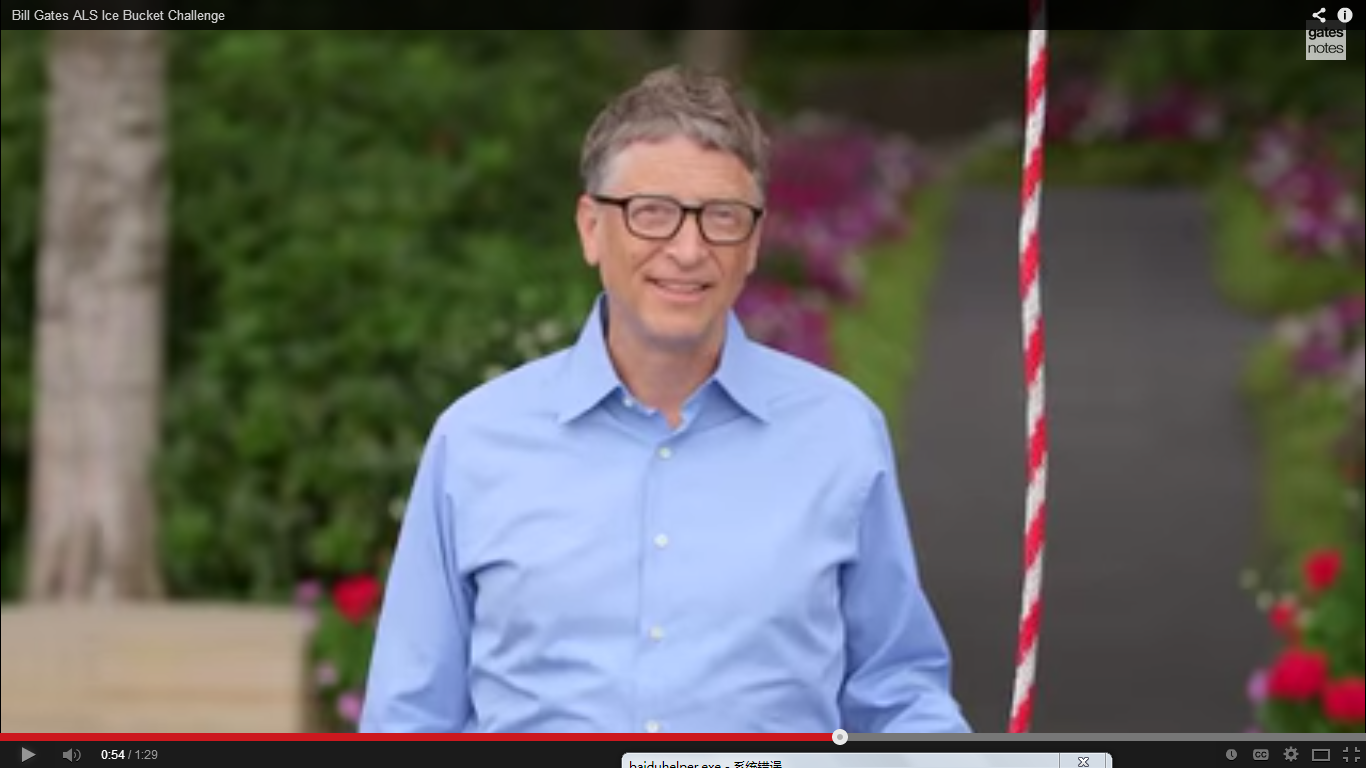
Many celebrities participated in and disseminated the ALS Ice Bucket Challenge Campaign. Unlike other activities, this charitable fundraising activity not only attracted stars from the entertainment industry, but also some well-known businessmen and politicians. Up to now Bill Gates (http://www.youtube.com/watch?v=XS6ysDFTbLU), Mark Zuckerberg (http://www.youtube.com/watch?v=6TTpXKFBkjk), George W. Bush (http://www.youtube.com/watch?v=DepakUSDtQE), Tim Cook (http://www.youtube.com/watch?v=M_T1K7pFsI0), Jim Parsons (http://www.youtube.com/watch?v=l7l1p2vxTC8), Chris Pratt (http://www.youtube.com/watch?v=B_iCIg2oCCs) and many more had accepted the challenge and post their videos on the website. “The ALS Ice Bucket Challenge” had become one of the most popular hashtags on social media such as Twitter and Instragram. The celebrity effect and the innovative campaign format had significantly raised people’s awareness and triggered heated discussion on the internet.

Undoubtedly, the ALS Ice Bucket Challenge Campaign has achieved unbelievable success and it is more influential than most other non-profit campaigns. The ALS Association had raised 98.2 million dollars within a month, and the number of the donations collected last year during the same period was only 2.7 million. What is more, from the perspective of public awareness, the ALS Ice Bucket Campaign also outperformed other campaigns. Statistics show that before August 2014, only 1,662,842 people viewed the Amyotrophic Lateral Sclerosis’ page on Wikipedia, while this number increased to 2,717,754 views after the campaign was launched (Townsend, 2014).

The ALS Ice Bucket Challenge Campaign is a successful example of viral marketing. The main objective of viral marketing is “creating the potential exponential growth in the massage’s exposure and influence” (Wilson, 2000, p. 1). It is of great importance to generate effective unsolicited electronic referrals and raise customers’ awareness towards certain activity or product. From the perspective of psychology, customers may disseminate information either intentionally or unintentionally and several incentives can cause people to share the information. If there is strong social tie between the target audience and the information distributor, people are willing to pay more attention; if there is strong perceptual affinity between the target audience and the information distributor, recipients tend to have more interests to share information. Moreover, according to a study conducted by Woerdl and his colleagues (2008), message content determines whether information receivers have intention to distribute information to others. For instance, fun and intrigue information are better than boring information, and the message with high visibility seems to be shared more often.

The ALS Ice Bucket Challenge Campaign applies the principles mentioned above very well. First of all, it asked people to dare three of their friends to take the challenge, which created strong social tie. Since most participants were celebrities, there was strong perceptual affinity between them and their followers. As a consequence, the target audiences were more likely to share the campaign information on their social media sites. Last but not least, the form of the ALS Ice Bucket Challenge is different from other non-profit campaigns because video is more visible than words. People could easily get involved and the format of challenge is fun and interesting.

Even though the ALS Ice Bucket Challenge had created a miracle in the past summer, the influence of this campaign decreased gradually. Few people disseminated the information about this campaign in the past two months and audiences may even forget this campaign in the near future. A successful non-profit campaign should not only create a one-time buzz, but also create long-lasting influence so that it would be beneficial to the society.

Discussion questions:

1. How do you like the ALS Ice Bucket Challenge Campaign?

2. What do you think the ALS Association can do to maintain and increase the long-lasting influence of this campaign?

References:

ALS Association (2014). Quick facts about ALS. Retrieved from: http://www.alsa.org/news/media/quick-facts.html

Townsend, L. (2014, September 1). How much has the ice bucket challenge achieved? BBC News Magazine. Retrieved from: http://www.bbc.com/news/magazine-29013707

Wilson, R. F. (2000). The six simple principles of viral marketing. Web Marketing Today, 70(1), 232.

Woerdl, M., Papagiannidis, S., Bourlakis, M., & Li, F. (2008). Internet-Induced Marketing Techniques: Critical Factors in Viral Marketing Campaigns. Journal of Business Science and Applied Management, 3(1), 35-45.

 

Posted in Uncategorized | 15 Comments

Calling All OfficeMax Elves

The holidays are just around the corner and a well-developed holiday marketing campaign can live forever.  In 2006 OfficeMax developed a campaign called Elf Yourself, which got almost 200 visits every second after its launch.  This success of the campaign continues to grow as elements of the original dancing elf characters change each year. Why though, from a marketing standpoint is this campaign so popular and so successful?

Part of the success of the Elf Yourself comes from the personal nature of the campaign.  As a visitor to the site, or the app, you upload a picture of yourself or some good-natured participant, and watch as the picture is transformed into a dancing and singing elf.  The site, and the campaign was the brainchild of OfficeMax Senior VP of Advertising and Marketing, Bob Thacker.  It was meant as an inexpensive tool to draw attention away from traditional advertising that saturated the airwaves during the holiday season, and it worked.  It better positioned OfficeMax to compete with other stores during the economic downturn while others spent hundreds of thousands of dollars on their ads. The best part, most people didn’t even know they were being marketed to.

Screen Shot 2014-10-06 at 7.23.50 PM

Even with the popularity of the Elf Yourself, it’s hard to say if the campaign helped to increase sales for OfficeMax.  Although, it seems to have helped maintain interest in the organization long enough to see two of the biggest office supply chains merge into one, $17 billion company.  The fate of Elf Yourself?  I guess we’ll have to wait a month or two to find out.


References

Beesley, C. (2014, October 1). 6 Good Reasons to Start your Holiday Marketing Plan Now | The U.S. Small Business Administration | SBA.gov. Retrieved from http://www.sba.gov/blogs/6-good-reasons-start-your-holiday-marketing-plan-now

CazuaLLUK. (2012, December 14). Merry Christmas from My Family! – Elf Yourself. Retrieved from https://www.youtube.com/watch?v=ggVxMcQhFJY#action=share

Fine, J. (2009, January 28). OfficeMax’s Wacky Marketing Strategy – Businessweek. Retrieved from http://www.businessweek.com/stories/2009-01-28/officemaxs-wacky-marketing-strategy

Kovner, K. (2014, October 2). 5 Best Practices to Use in Your Holiday Marketing Campaign. Retrieved from http://mashable.com/2014/10/02/holiday-marketing-best-practices/

Long, C. (2006, December 15). Elf yourself with holiday eCards | HamptonRoads.com | PilotOnline.com. Retrieved from http://hamptonroads.com/2006/12/elf-yourself-holiday-ecards

OfficeDepot|Max. (n.d.). Welcome to the NEW Office Depot, Inc. Retrieved from http://www.officedepotmaxmerger.com/

Posted in Uncategorized | Tagged , , , , , , , , , , , , , , , , | 4 Comments

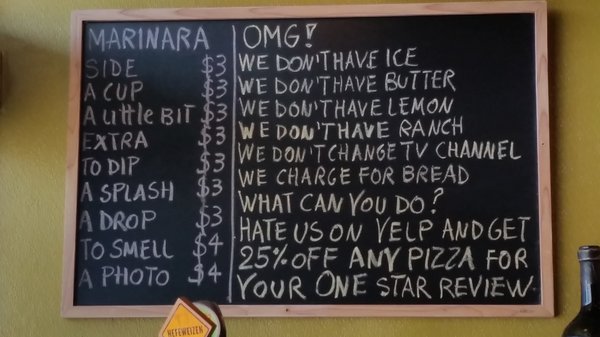
Hate us on Yelp (Please do)


Sign at Bottos

You’ve got to hand it to them for creativity.  25% off for a 1-star review.

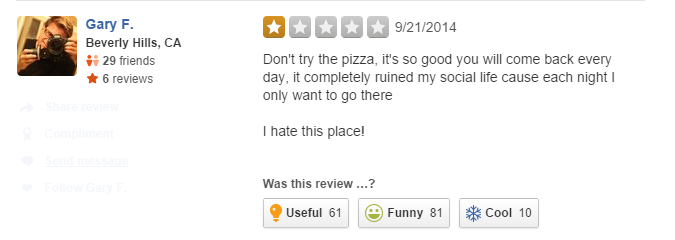
Five-star Yelp reviews are like hitting modern day gold for many business owners – but what happens when negative reviews threaten the very existence of a good restaurant?  Botto Italian Bistro was faced with just such a dilemma. And they took the lemons they had been dealt and made lemonade.  By incentivizing negative Yelp reviews. Yes, you read right – they incentivize negative reviews. Botto’s has gone to the extreme of offering a 25% discount to any customer who posts a 1-star review.  But wait, there’s more! They have also embraced the ambitious goal of becoming the “worst rated” business on Yelp.  Customers think it’s hilarious (and like the discount too) and on top of it all, the restaurant has made national news.

Something doesn’t add up here

When I first heard the story, I had to dig a little deeper and needed for my own stubborn curiosity to know… was Botto the victim of a few haters? …is there truth to the negative reviews and is Botto just a crummy place to eat?  …is there some truth in Botto’s Yelp conspiracy claims?

Yelp3

A Yelp Conspiracy

My first step was to check out the restaurant website and to read the reviews on Yelp (I read through probably 50 of them).  After I determined that the food looks edible, the place looks clean, and that customers seem to like the food, I wondered if there was some legitimacy to the conspiracy claims.  Let’s review. Botto’s claims that:

  • They were advertising with Yelp
  • They stopped advertising
  • Some of their best positive reviews were then hidden and negative reviews were promoted on their restaurant’s Yelp page

So, Yelp, what’s your side of the story?

Yelp pleads the fifth apparently, because their voice was noticeably absent from most of the coverage.  The organization chose instead to point inquires to canned information on its website where it states: “our recommendation software treats advertisers and non-advertisers exactly the same. You’ll find plenty of Yelp advertisers with negative reviews, and plenty of non-advertisers with five-star ratings across the board.”

Sadly, we may never have a direct answer from Yelp and we may never definitively know the truth about Botto’s experience. What we do know is that Botto’s flipped the situation and created a counter culture in its favor.

What do you think about Botto’s “Hate Us on Yelp” campaign?

References:

Botto Bistro (2014). Yelp commentary. Retrieved on September 24, 2014 from http://www.bottobistro.com/YELP.html

Yelp (2014). Common questions. Retrieved on September 24 from https://biz.yelp.com/support/common_questions

Cullers, R. (2014, September 22). This restaurant wants to be the worst rated on Yelp, and the reviews are indeed hilarious. AdWeek. Retrieved on September 24, 2014 from http://www.adweek.com/adfreak/restaurant-wants-be-worst-rated-yelp-and-reviews-are-indeed-hilarious-160299

Brackett, E. (2014, September 18). Restaurant fights Yelp, seeks one-star reviews. USA Today. Retrieved on September 24, 2014 from  http://www.usatoday.com/story/money/business/2014/09/18/restaurant-fights-yelp/15801393/

Whitehouse, K. (2014, September 6). Anger over court’s decision on Yelp’s reviews. New York Post. Retrieved on September 24, 2014 from http://nypost.com/2014/09/06/anger-over-courts-decision-on-yelps-reviews/

Posted in Uncategorized | 18 Comments

Subliminal Sophistication and Sexiness

As I set sights on the cigarettes placed strategically next to the cash register, I stole a glance sideways. Guilt created anxiety but aspirations to an artistic identity provided resolve. The overt tobacco advertising still allowed on billboards at the time weren’t the incentive to pick up a pack. That pitch was too obvious. After all, the Marlboro Man later died of lung cancer. The pack of cigarettes was an accessory, a prop to fulfill the promises subtly suggested in period pieces and film noir flicks on late-night television. Artists of all stripes – writers, actors, painters – smoke and drink. Implied sophistication trumped the Surgeon General’s warning and accepted wisdom that cigarettes were anything but sophisticated. Images of charred lungs, oxygen tanks and  tracheae disavowed that conceivable excuse. Reality conflicted with dreams, an inconvenience resolved by dated images and inferences. The subliminal advertisements – whether they were sponsored, paid, or circumstantial – in those old films did not consist of shady and split-second images and words typical of latter-day subliminal efforts, but the smoke-filled frames are no less dubious. Psychological inferences and suggestions are wildly effective.

While guerrilla tactics surprise and shock, many times with loud and upfront messages, the eyeblink subtlety of subliminal strategies imply and infer through peripheral vision, attention, and consciousness (Love, 2011; Mercer, n.d.). “In most cases, when you see or hear a subliminal message, your conscious mind ignores it, but your subconscious mind hears it loud and clear (Mercer, n.d., para. 1).” From my experience reading about the practice, the overriding debate and controversy converge on a single question: Is subliminal advertising deceptive and perhaps immoral? Using a discreet word, noise, phrase, or visual to stimulate unconscious desires and buying behaviors (Love, 2011; Mercer, n.d.) has ethical implications, no doubt. Sometimes the subliminal message isn’t within an ad, but in the placement of a social media link or photo of a product on a website or personal page (Mercer, n.d.)

Blog I

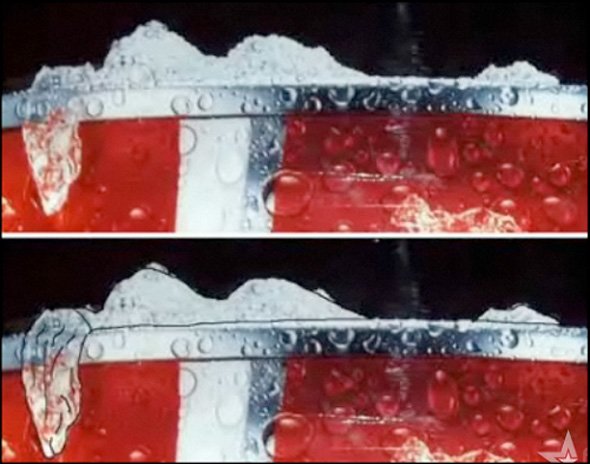
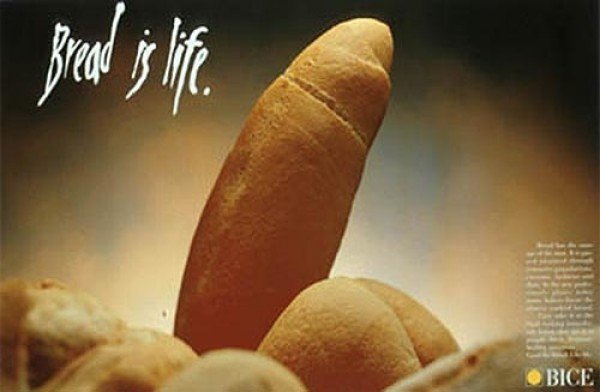
The old adage that sex sells is conspicuously apparent throughout marketing and advertising. Beer commercials, workout pitches, and cologne positioning all blatantly appeal to the reproductive hormones. As Love (2011) and Mercer (n.d.) demonstrate in respective compilations of subliminal advertising, the art and practice of subtly (slyly?) associating a product with sex and power is mainstream. Positioning an erect loaf of bread as either an aphrodisiac or a means and measure of virility does not seem overly malicious, and the icy silhouette serving as the proverbial icing on the cake or, in this case, a can of Coca Cola is not glaringly duplicitous. Then there are other examples like the penis within the abs and the breasts inside the ice cream (Love, 2011).

Blog IV

Would the advertisements be more honest and less deceptive if they positioned the sexual inferences outright as many beer, bikini, and brief advertisements do without apology or ambiguity? Indirect allusions are also read in tea leaves and clouds, forming predictions and patterns interpreted by seers and believers. They reinforce or reinvent beliefs and prompt action. The same goes with subliminal advertising. This is where the practice grasps at a moral and ethical tightrope. When we demanded that tobacco companies cease sponsoring television shows and promoting on billboards, we pushed past moral ambiguity and indifference. The subliminal content of an individual ad’s worth or danger is negotiable. However, the inferences and associations of the practice are downright sneaky. At least be honest about the product and benefits you’re pitching.

References

Love, D. (2011, May 26). The shocking drink and incredible Coke history of subliminal advertising. Business Insider. Retrieved on October 5, 2014, from: http://www.businessinsider.com/subliminal-ads-2011-5?op=1

Mercer, L. M. (n.d.) Ten examples of subliminal advertising in social media. Top Ten Social Media. Retrieved on October 5, 2014, from: http://www.toptensocialmedia.com/social-media-social-buzz/ten-examples-of-subliminal-advertising-in-social-media/

Posted in Uncategorized | Tagged , , , , , , , , , , , , , , | 3 Comments

The Power of Business Blogging

Social Media provides a large market of opportunity for business owners, stemming from Facebook, LinkedIn, Instagram, Twitter, and other social media. However, there is one platform that until recently has received the shaft; blogging.

images

Social Media is comprised of a variety of platforms used by Fortune 500 companies with Facebook carrying the most weight at 74 percent media use (Lesonsky, 2012). There are many benefits to blog marketing. According to Forbes, companies that make consistent blog posts have better web presence and as a result, an overall increase in social media marketing (Lopez, 2014). Second, blogging gives a company a voice and a means to establish a tangible brand identity.

images-1

Blogs can showcase a company’s talents and expertise. Coincidentally, social media provides an opportunity for free advertising. If consumers like what they see they can easily share company information with the quick click of a button. Oftentimes, company posts can go viral enhancing the probability of consumers purchasing a company’s product.

Blog posting can easily be tasked to an employee with social media advertising experience. The key here is to remain consistent and creative. Put together a weekly schedule of tasks that the employee will have to monitor and update. According to Lopez (2014), “Make sure posts are relevant, interesting and address a need” (Lopez, par. 17). Businesses utilize blogs to get in front of the competition, so posts must be informative to make a meaningful impact on advertisement.

References:

Lopez, A. (July 22, 2014). Businesses Are Missing Out On One Valuable Social Media Platform. Forbes Magazine. Retrieved from: http://www.forbes.com/sites/adrianalopez/2014/07/22/businesses-are-missing-out-on-this-one-valuable-social-media-platform/

Lesonsky, R. (April 10, 2012). The Best Social Media Platforms for Your Business. American Express Open Forum. Retrieved from: https://www.americanexpress.com/us/small-business/openforum/articles/the-best-social-media-platforms-for-your-business/

Posted in Uncategorized | 3 Comments

Do you Dare Touch Craig Robinson’s Dart? Dodge Hopes So.

Dart

Imagine a world in which comedians Craig Robinson and Jake Johnson are your neighbors… the only rule is, no one can touch Craig’s new Dodge Dart. In a hilarious departure from the typical car commercial, Dodge worked with the Portland Oregon agency Wieden + Kennedy to create this story of warring neighbors as Jake itches to go for a ride in Craig’s shiny new Dart.

After months of troubled sales of this entry-level class sedan in the Chrysler Corporation’s suite of Dodge brand vehicles, this commercial aimed at millennials  launched in August and was voted AdWeek’s #1 commercial of the first week of August.

A few weeks later, W+K rolled out a series of brief videos that continue the story of Jake trying to get Craig’s attention, from peeking through his garage door windows, to building a birdhouse to hang right above the car, to approaching the car with key in hand with the intention of giving it a friendly first scratch. When these 30 second spots are viewed on Dodge’s “Don’t Touch my Dart” YouTube playlist, an ad pops up on the video screen inviting you to “See what happens when you touch my dart.” The link directs viewers to an interactive micro site, where Craig gets out of the car and warns you not to touch his Dart while he’s in the house making a sandwich. Moving your cursor over the car or actually daring to click on it prompts an amusing series of obstacles and mini games. One of the most clever ones is a dare, “If you touch my Dart, I’m going to make you touch every Dart on the internet,” and the consequence of when you inevitably click on the car is hundreds of popups within the screen advertising the Dart’s features and price with the tagline “There’s a lot to be proud of.” Also, true to Craig Robinson’s unique talents, the ads incorporate a “Don’t Touch my Dart” theme song written and produced by Craig himself.

Continue reading

Posted in Uncategorized | 5 Comments

Nestle cereal and a tweeting bra, how cool is that?

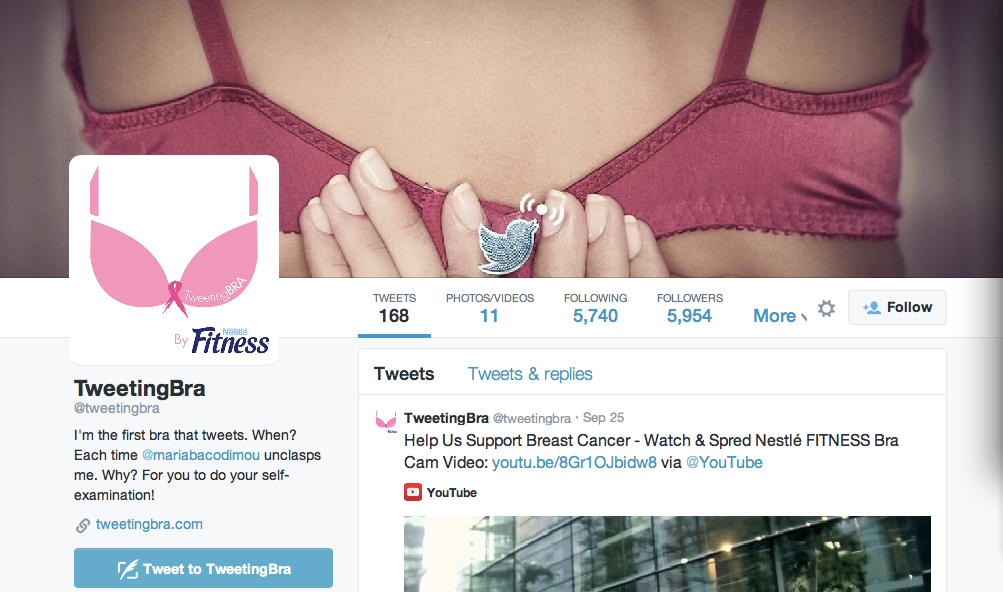
Over the years, breast cancer has always been a topic that brands won’t miss if there is a need for showing corporate social responsibility. It surprised me when I saw Nestle, a food and beverage brand, brought out a “tweeting bra” last year. Recently, during the breast awareness month, Nestle certainly did a great job in advocating the importance of checking your breasts regularly.

tweeting bra

This year, Nestle did a social experiment by putting a hidden camera on a women’s bra. The camera record the number of times people checked on the women’s breast. The key message delivered in this campaign is that “you might be surprised how many time your breasts are checked out every day. But when was the last time you checked your own?” Genius right? And it’s all for a good cause.

video: Nestle Fitness bra cam

Looking back at last year’s Nestle Fitness tweeting bra campaign. The tweeting bra has a special mechanism hidden under the hook. Every time the bra is unhooked, it sends a signal to a cell phone. The cell phone will then notifies a server, and the server generates the tweet. It basically can remind you to self-check breast monthly.

Video: Tweeting bra

Although the idea and the campaign itself is pure genius and cleverly done, I still have this question in mind. Where is the product? Where is Nestle Fitness cereal? This campaign can definitely raise women’s awareness for breast cancer, but can it leads to higher sales of the cereal itself? Let me know your thoughts!


Resources:

http://www.brandchannel.com/home/post/2014/09/30/140930-Nestle-Fitness-Bra-Cam.aspx

http://www.dailymail.co.uk/sciencetech/article-2478384/The-bra-TWEETS-Underwear-reminds-Twitter-followers-check-breasts-cancer-symptoms-time-undone.html

http://adsoftheworld.com/media/online/nestle_fitness_tweeting_bra

Posted in Uncategorized | 4 Comments

Pepsi vs. Coca-Cola…Again.

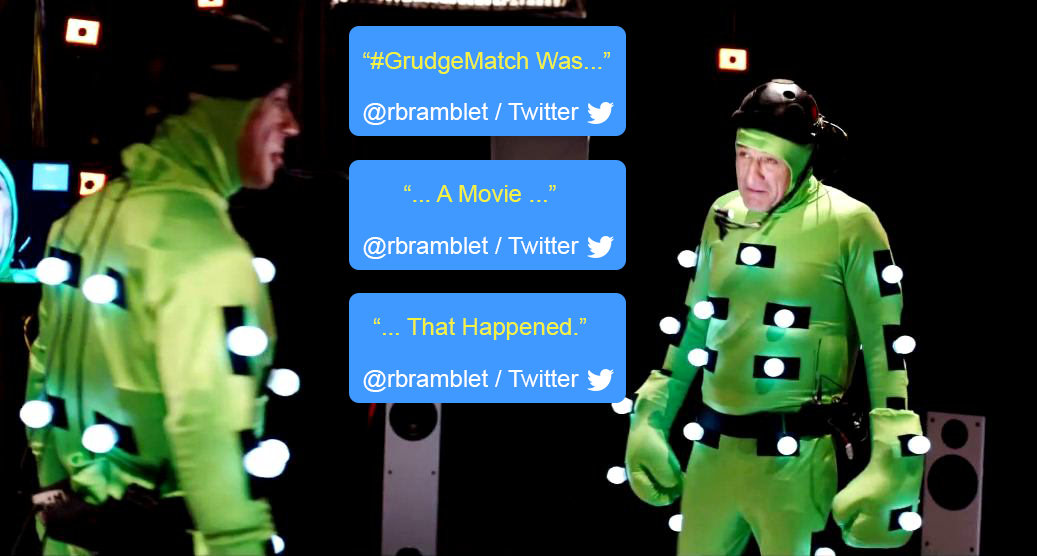
Pepsi and Coca-Cola are at it again, and it leaves (pun intended) me wondering if consumers are getting tired of watching these two in the ring.  Grudge Match. Anyone? Didn’t think so).

grudge match

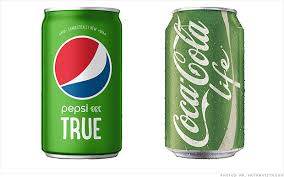
Consumers are more cautious and more concerned with what they put in their bodies and soft-drink companies have been challenged by this health-revolution for several years.  The latest heath craze, Stevia, a plant-based sweetener whose ingredients are extracted from its leaves (that was the pun :-P) is said to be a healthier alternative to refined sugar.  This natural sweetener hit the market and seems to have negotiated a pretty “sweet” deal with rivals Pepsi and Coca-Cola.  Coca-Cola launched Coca-Cola Life in the United States in August, 2014 and Pepsi answered with Pepsi True in October, 2014.

Green Envy

Green Envy

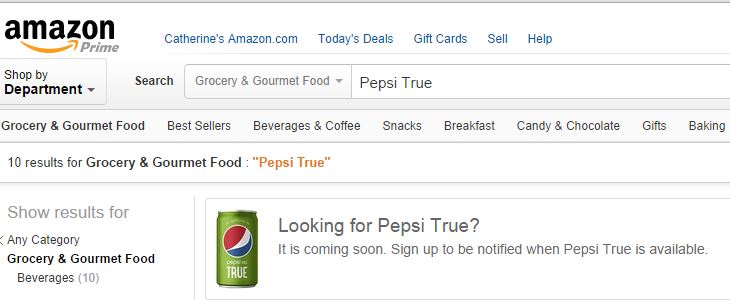
Both companies opted for green cans because of course green represents nature and environmental-conscious efforts…right? Both companies are targeting the adult, health-conscious citizens of the world because these are the exact people reaching for a can of soda…right?  According to the Coca-Cola Blog, “Consumers will have the chance to discover the new beverage through more than 4,000 sampling opportunities nationwide, and the brand’s distinctive green label and visual identity will stand out in store displays and the Coca-Cola Digital Network of electronic billboards.”  What is Pepsi doing?  It looks like they are partnering with Amazon…that’s right, Amazon.  According to Schultz (2014), Pepsi will launch Pepsi True on Amazon prior to selling the beverage in-stores.

Pepsi True, where are you?

Pepsi True, where are you?

From a marketing standpoint I can honestly say I am bewildered as to why Pepsi chose to release its product on Amazon first.  While Coca-Cola’s positioning and branding efforts seem transparent, the same cannot be said for Pepsi.  Is this merely a competition or does each company truly have an interest in the public’s well-being?  How would you market Pepsi True?

Retrieved from: http://adage.com/article/cmo-strategy/pepsico-s-pepsi-true-salvo-cola-wars/295241/

Posted in Uncategorized | Comments Off on Pepsi vs. Coca-Cola…Again.

Meet Domino’s New Voice: Dom

Dominos_Pizza_store

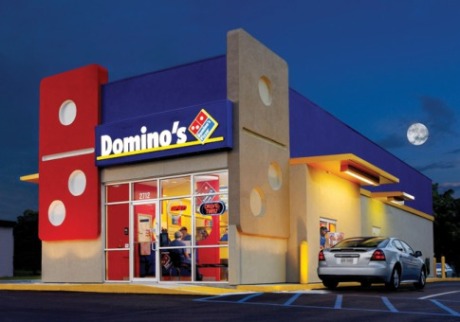
Tired of having to text in your pizza order through Domino’s app? There’s a new solution for that. Following in Apple’s footsteps with Siri, Domino’s recently presented “Dom”, the new computer-generated male voice that can take food orders through Domino’s ordering app.

The function, available for iPhone and Android devices, provides consumers with a more conversational experience while they place their order.

In addition to placing an order, Dom can also answer questions and hold a conversation in a similar way that Siri can. The only difference is that Dom’s character and responses aren’t sarcastic or empathetic. Dom is most concerned with one thing, and one thing only, pizza. Ask him about the weather, and he’ll tell you something about pizza.

Domino’s hopes that consumers find Dom funny and helpful during the ordering process. He is designed to help meet the needs of any pizza order, whether it includes gluten-free crust or a different sauce type. Dom can also make meal selection suggestions or find coupons to offer up a good deal. Domino’s claims this is the first such app available in the restaurant and dining industry.

More and more consumers, it seems, demand a more interactive shopping experience from their brands. Is this the future of the consumer shopping experience, or do you think that consumers value the convenience aspect of such apps over the high level of interaction? I’m interested to hear what you have to say.

The ad spots beginning to unveil Dom to the public can be spotted during Sunday’s NFL broadcast commercial breaks. Visit this link to see the all-business Dom in demo action: https://www.youtube.com/watch?v=noVzvBG0GD0

Resource:

Newcomb, A. (2014). Meet Dom, the Siri of the pizza world. ABC
News. Retrieved from http://abcnews.go.com/Technology/meet-
dom-voice-taking-dominos-pizza-mobile-
order/story?id=24164268

Posted in Uncategorized | 2 Comments

Build Your Own Burger… At McDonalds?

Image courtesy of utsandiego.com

Would you believe me if I told you that you could build your own burger at McDonald’s? Probably not. In fact, as many of my friends did, you might even look at me like I was crazy. In their struggle to create a burger that’s loved by all and to keep up with our millenial generation, the fast good giant introduced their experimental build your own burger line at select locations (four in SoCal) in the US, last month.

The process is simple, but the experience is completely new. Walk up to the counter – a separate line from its ‘fast food’ counterpart – and well… build your own burger using tablet technology. Your topping choices include Quarter Pounder burger patties, artisan or brioche rolls that are either buttered or toasted, different types of cheese, guacamole, pickled jalapeños, grilled mushrooms, garlic aioli, and bacon – among other things (Harvey, 2014).

Unlike the norm, these burgers are made to order (what?!) and are served to you at your table, in a fancy metal basket. Once you’re done indulging in your McDonald’s creation, servers – yup, you read that right – bus your table and ask for your feedback on the burger and your experience.  And yes, this is real life!

So what does any of that have to do with creating a new, hit burger and keeping up with the millenials? I’ll tell you. McDonald’s tablet technology tracks each order that is inputted. Whatever burger combination is ordered the most, will likely become the next ‘big hit’. And then there’s us – the millenials. Who, as we’ve been learning, have been changing the face of the way organizations manage and market themselves. To fill the needs of our generation, McDonald’s roll out of their build your own burger line is expected to fulfill our expectation of higher standards and our need for higher quality products.

What do you think of McDonald’s Build Your Burger campaign? Hit or miss? Too little too late?

References:

Harvey, K. (2014). McDonald’s ‘build your burger’ trial comes to San Diego. Retrieved from: http://www.utsandiego.com/news/2014/sep/04/mcdonalds-build-your-burger-test/

Posted in Uncategorized | 7 Comments