Email marketing: the future of precise and personalized marketing?

What is the first thing you usually do when you wake up every morning? Brush your teeth? Make Coffee? Or for some people, check emails through smartphones.

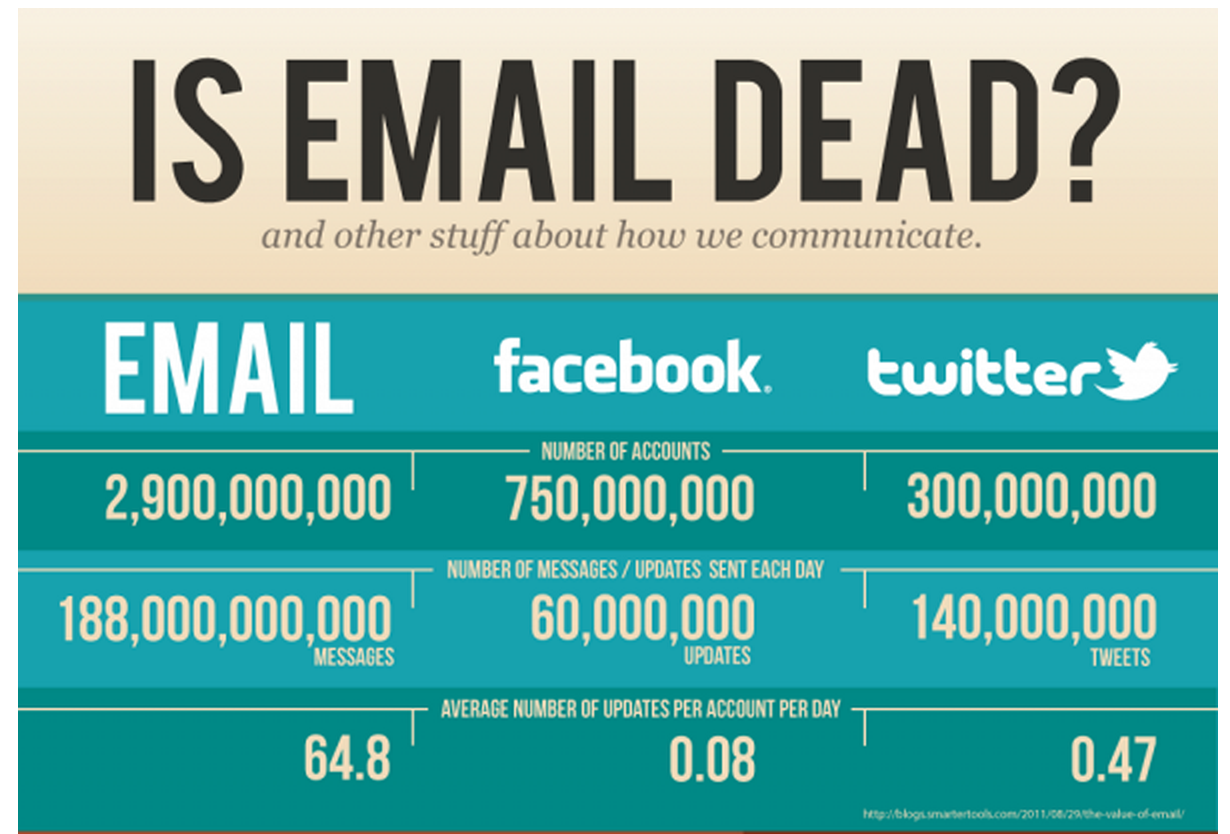
The truth is that checking emails many times per day has become a regular habit or compulsion for most modern people. Marketers also see potentials in the field of email marketing and harness the emails as an effective way to increase sales volumes, brand engagement and brand loyalty. A report from analyst firm Forrester predicted that, by 2014, companies will spend over $2 billion on email marketing in the U.S.

why-your-businesses-should-embrace-email-marketing

(Source: http://tweakyourbiz.com)

However, with the rise of marketing techniques like social media and mobile marketing, is old-fashioned email marketing still booming as before? If so, what are the trends driving the future of email marketing?

I want to share my personal experiences of two recent email marketing. Yesterday, when I checked my emails, I was surprised to find an email with my name on the subject line. It turns out to be an upcoming concert alert of Katy Perry from Ticketmaster.com since they know Katy Perry is my favorite singers based on my interest profiles. By analyzing the collected customer databases, marketers can target emails based on demographic, preference and seasonal trend, such as holiday suggestions, useful tips, and also gift recommendation.

The second email I received is from Sephora, including a 10% off promotion code on the next purchase as a reward for my recent purchase. It offered me a sense of loyalty and commitment to the brand. According to research conduct by Convinceandconvert.com, 44% of email recipients made at least one purchase last year based on a promotional email. In most cases, Promotional emails usually have higher open rates and click-through rates among the numerous inbox emails since consumers are more tolerant for special offers. Further, consumers are more likely to be in a buying frame of mind through emails rather than social media because emails are more suitable channels for business relationship and communications.
email

(Source: http://secondstreetlab.com)

From the case, I know customization and precise information are two key principles of successful email marketing. It is important for marketers to devise email marketing strategies based on the understanding of consumers’ demands and preferences. Overwhelmed by spams and inbox overload, contemporary consumers are pickier about which types of message are worthy of time and attention. If the promotional emails are irrelevant, unfocused or annoying, consumers tend to immediately delete emails or even permanently unsubscribe from the email lists. The segmentation and details determine the success.

email+social+win1

(Source: http:// janetejohnson.com)

In my opinion, as technology continues to evolve, email marketing still remains the dominant role in the marketing mix and has extended to the mobile platform. Social media will never replace but complement the email marketing..A comprehensive marketing communication strategy should integrate the traditional email marketing and the cutting-edge social media marketing. The incorporation of social media in email marketing campaign can greatly drive quality engagement and get the information across on different platforms.Cooperation is the future.

Is email marketing dead or alive in today’s marketing landscape?  Share your personal experience of promotional emails with us.

References:

1. 25 Mind Blowing Email Marketing Stats
2. E-mail Marketing Still Works

3. Best Practice: Email Marketing

Posted in Uncategorized | Tagged , , , | 2 Comments

Cause-Related Marketing: a Socially Responsible Company or a PR Stunt?

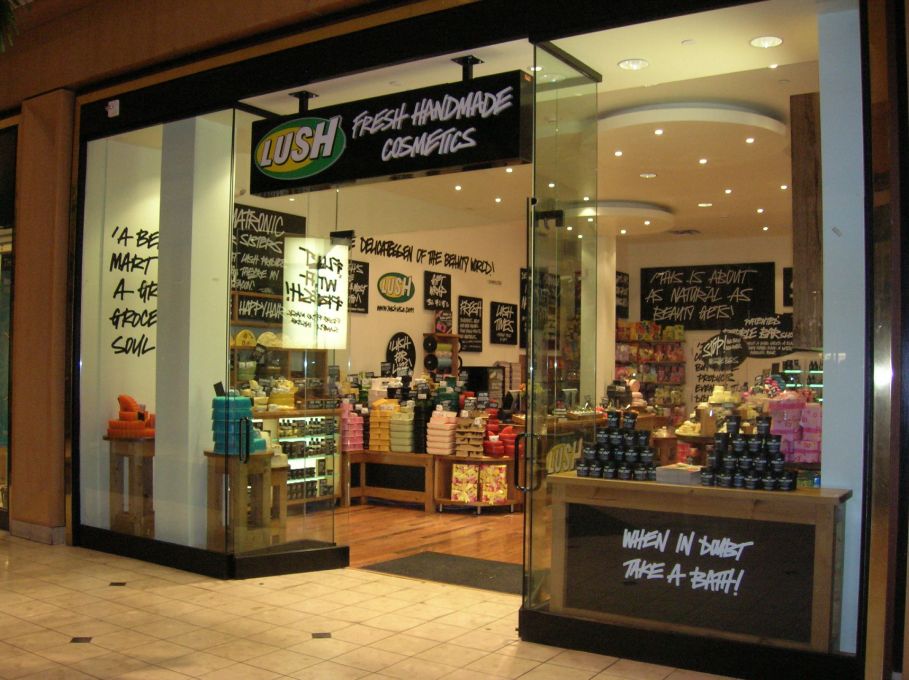
Lush Store (Source: boston.com)

A few days ago, I went shopping with my friends at Glendale Galleria. We passed a Lush store and were attracted by a notice on the board at the entrance of the store, which said if you brought back 5 black pots to any Lush shop, you could get a free Fresh Face Mask. The black pots from Lush were made from post-consumer recycled material and could be recycled again after use. This is not only a great deal for consumers, but also shows that Lush cares about the environment and is a socially responsible company.

Lush Black Pots (Source: Lush Cosmetics Facebook Page)

I’m quite sure that Lush is not the only brand that realizes the importance of engaging with social and environmental causes. Cause-related marketing, which is described as a general connection between businesses and non-profit causes that provide resources and funding to address social issues and business marketing objectives, is probably one of the most effective ways for businesses to enhance their consumers’ perceptions and brand images.

Cone Communications, which is a PR agency, recently launched an online survey to study consumers’ purchasing of products associated with social causes. 89% of the respondents claim that they would buy a brand associated with a cause, given comparable price and quality ahead of one that had no such link. Alison DaSilva, executive vice president for Research & Insights at Cone Communications, said, “consumer demand for cause is stronger than ever, solidifying it as a savvy business strategy.”

cone_communications_logo

Cone Communications Logo (Source: tiki-toki.com)

However, the survey also showed that only 16% of the respondents thought companies had made a significant positive impact on social or environmental issues. Consumers wonder if their purchases have made any difference. They start thinking if a company is strategically committed to corporate social responsibility, or it just uses cause-related marketing as a PR stunt.

To clear up consumers’ doubts about companies’ genuine intentions, companies should go beyond mission statements to provide personally relevant and tangible evidence that collectively, businesses and consumers are helping the world move forward.

Consumers can also take an active role in asking for feedbacks and searching for reports from companies on their charitable activities. This will help push the companies to pursue their stated social responsibility goals.

Sources:

http://www.warc.com.libproxy.usc.edu/News/default.aspx?isUS=True

Cui, Y., Trent, E. S., Sullivan, P. M., & Matiru, G. N. (2003). Cause-related marketing: How generation Y responds. International Journal of Retail & Distribution Management, 31(6), 310-320. doi: 10.1108/09590550310476042

Posted in Uncategorized | Tagged | 2 Comments

The Experience Economy: the Prosperity of Independent Bookstores

Last Sunday, when passing Barnes & Noble in Pasadena, my uncle told me that it seemed the last chain bookstore in Los Angeles. Even though I was aware that the digital onslaught of e-books has put bricks-and-mortar bookstores in an existential predicament, I was still surprised to learn that the condition is so severe. However, independent bookstores such as Elliott Bay, seek a way out of the plight, enjoying steady growth in sales and customers.

When Barnes & Noble’s sales decreased by 3.4% in its most recent fiscal year, sales of independent bookstores grew by 8% in 2012. Since 2009 more independent bookshops have opened than closed in America. How to survive and even to thrive in the winter of print media? The answers lie in experiences generated in independent bookstores.

Experience Economy (Source: emeraldinsight.com)

Experience Economy (Source: emeraldinsight.com)

According to Pine and Gilmore, we move from the commodity business, the goods business, the service business to an experience business, which charges for the feeling customers get by engaging it. Sellers orchestrate memorable events for their customers, and that memory itself becomes the product – the “experience”. The commonly mentioned example is Starbucks, selling not the cup of coffee, but the memory spending with friends.

Elliott Bay in Seattle (Source: Economist.com)

Elliott Bay in Seattle
(Source: Economist.com)

Bookstore owners also apply this concept in improving “the experience of buying books” in their stores. Elliott Bay, a family-owned book company in Seattle, is celebrating its 40th anniversary. In the local area it is seen as a bit of a cultural icon. Peter Aaron, the owner, suggests that the advantage of his store is that it is small enough to get to know their customers well. They see them, they talk to them, they recognize regulars, and they know how to keep them coming back. For customers, going to Elliott Bay is not only to buy books, but also to visit an old family friend. The intimacy cultivates the brand loyalty.

Librairie Avant-Garde, located in a former bomb shelter. (Sourse: mtime.com)

Librairie Avant-Garde, located in a former bomb shelter. (Sourse: mtime.com)

Librairie Avant-Garde, the name card for Nanjing. (Sourse: mtime.com)

Librairie Avant-Garde, the name card for Nanjing. (Sourse: mtime.com)

Another kind of experience of buying books I have encountered was in Librairie Avant-Garde, my favorite bookstore in my hometown, Nanjing, China. Walking into a former bomb shelter, you are in the country’s largest single-floor bookstore – 4,000 square meters. The warm light of reading lamps, the portraits of the most accomplished artists, such as Picasso and Van Gogh hang on the roof, the famous verses carved on the wall, and a faint scent of coffee, separates it from the real world, leading you to the wonderland of books. Comfortable couches, free wifi, coffee bars and countless books turn it into a best place to hang around for an entire afternoon. Occasionally, Librairie Avant-Garde will organize lectures and live concerts, inviting the author to discuss their works. Moreover, there is a souvenir shop selling as many as 3,000 kinds of creative products. An independent team is dedicated to the design and production of these “little gadgets for the young”.

Independent bookstore as Librairie Avant-Garde transforms itself into a concept bookstore and books are only the byproduct for customers. What they really buying is an experience of consuming culture and art, a relaxed and artistic lifestyle.

However, when the souvenir shop in Librairie Avant-Garde has made double the profits compared to book sales, some people may ask whether the prosperity of independent bookstores provides the solution for print book revival. Or it is only a fake prosperity.

References:

D, G. (2013). The future of the bookstore:A real cliffhanger. http://www.economist.com/blogs/prospero/2013/02/future-bookstore

G, H. (2013). Independent bookstore: Reading between the lines. http://www.economist.com/blogs/schumpeter/2013/08/independent-bookshops

Han, B. (2011). Librairie Avant-Garde opens a new chapter . http://usa.chinadaily.com.cn/culture/2011-08/16/content_13121244.htm

Pine, J. and Gilmore, J. (1999) The Experience Economy. Boston: Harvard Business School Press.

Posted in Uncategorized | 4 Comments

Re-consider Internet’s Impact: Online Branding vs. Online Brand

Before starting discussion, let us review the latest commercial campaign of Burberry online. Coordinated with the internet magnate Google, the British luxury brand has provided new form of consumer engagement, Burberry Kisses—-a visually immersive and interactive experience that allows users to send letters sealed with a virtual kiss to friends and loved ones across the globe (Swinton, 2013).


How do you feel about the campaign? Does it enhance overall brand value? Particularly, what is your comment on internet’s role incorporated in the whole commercial campaign?


Burberry catwalk

Digital innovation: Burberry is beginning to live-stream their catwalk shows. Photograph: Victor Virgile/Gamma-Rapho via Getty Images

In fact, Burberry is among other luxury brands who have harnessed digital channels as a way of delivering unique experiences. Aiming at creating emotional connection with millennial consumers, this campaign is designed in a romantic tone through the lens of beauty products. Burberry is after all one of the most successful examples of a luxury brand that largely deploys online branding strategy. From Live-streamed catwalk shows, viral social media campaigns to online communities, Burberry’s case has illustrated the integration of digital into the luxury goods sector with £2bn revenue in the year of 2012.


Despite the significance of internet and online media campaign, what should be noticed is the limitation of internet and other digital media in branding promotions.


In the past few weeks, we have discussed a lot on the benefits that integrated marketing strategy can bring to us. We have examined various forms of online activities that a company may use to generate public attentions and user-led contents. Additionally, we have been aware of how social media can be used to create buzz and maintain good relationships with consumers.


However, when considering branding constructions, the imperfection of online channels should be equally addressed. Borrowing from Dao (2013), the idea is that although internet can be effectively used to facilitate online branding of luxuries, it will never be capable of being used to create a high status online brand. To explain, he lists 2 inherent defects of internet.    


  • An exceptional and unique user experience—-there is not much that an online brand can do to differentiate itself from others, because online properties are all limited to interfacing through a screen and keyboard. For example, while Burberry can attract people by immersive experience with high-touch human service and attention in physical store, its partner Google has great difficulty to beat competitors, such as Yahoo, by intangible products.


  • Displaying the mark as a status symbol—- Online brands have zero “flaunt” value. Nobody will consider having a @gmail.com address as superior and cool…


Google's official campaign  http://www.google.com/think/campaigns/burberry-kisses.html

Google’s official campaign
http://www.google.com/think/campaigns/burberry-kisses.html

Perhaps, you want to challenge Dao (2013)’s notion on branding. But for me, his argument is instructive, because he helps people notice the different impacts of internet towards Online Branding and Online Brand. At least, internet as an important component of integrated marketing strategy should be considered inseparably with other media channels in dealing with either Online Branding or Online Brand issues.


Reference

Dao, F. (2013) Why online brands don’t have lasting value

Retrieved from http://pandodaily.com/2013/09/26/why-online-brands-dont-have-lasting-value/

 Swinton, J.(2013) How Burberry’s digital strategy is boosting brand value

Retrieved from http://www.theguardian.com/media-network/partner-zone-brand-union/burberry-digital-strategy-brand

Posted in Uncategorized | Tagged , , | 4 Comments

Now That’s Better: Wendy’s Marketing Revamp

    WEN-LOGO

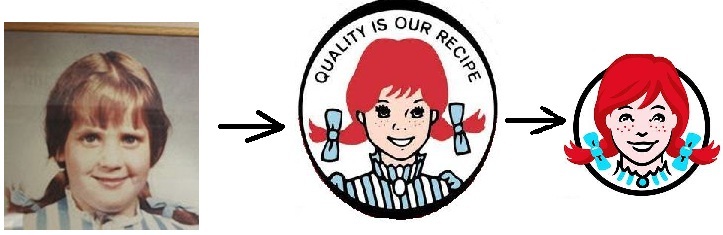
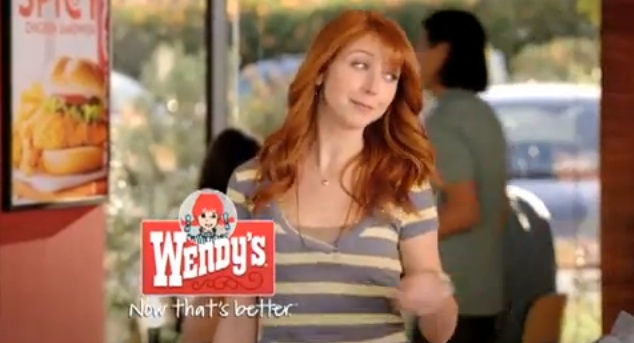
Wendy’s has been making huge strides in their marketing strategies in the last few years.  They recognized that they had fallen to the back of the pack in terms of fast food companies.  They wanted to reinvent themselves and become relevant as McDonald’s, Taco Bell, Burger King, and Carl’s Jr. are in consumer’s minds.  They answered with a full arsenal of ways to try and get people back to Wendy’s.  They started by advertising again, which was a hit and miss process.  They tried to implement their new premium menu items to set them apart from their competitors in the commercials, which helped.  Next they made the push to show off their dollar menu items; which also helped.  When they tried to put the actual Wendy in the commercial it wasn’t reacted to as planned.  They have now, thrown the actual Wendy out of the commercials and now moved to a thinner, younger, more attractive red headed girl to be the new Wendy.  This moved Wendy’s back into the positive direction it was going.  Sorry real Wendy.  And now they are beginning to redesign all the restaurants, modernize the uniforms, and obviously they reinvented the classic logo.

real-wendys    Wendys_ThatsBetter2

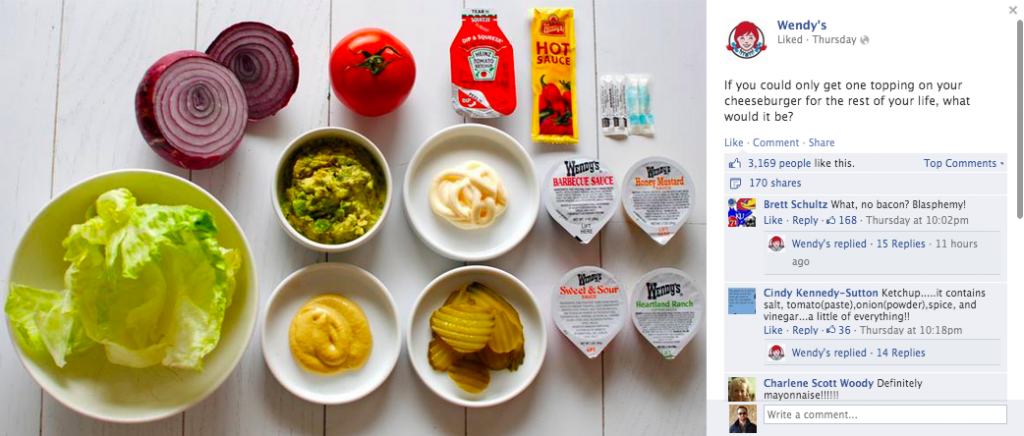
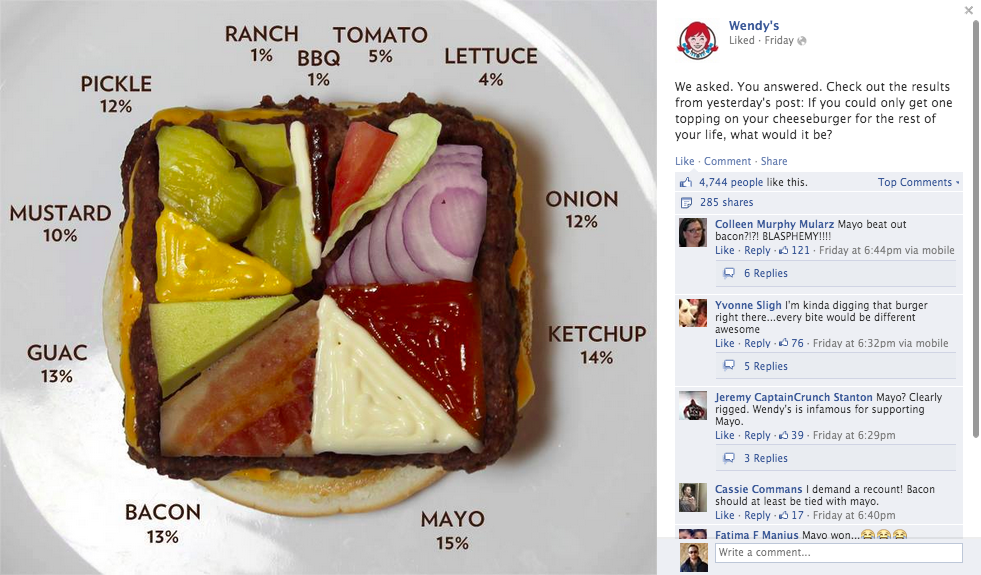
All of this has brought them closer into relevance among the other fast food competitors.  However, many people think that their online presence has made the difference.  They have updated their website to be more simple, flush, and contemporary; gearing it more towards devices like smartphones and tablets.  However, it is through its Wendy’s recent social media presence that received the buzz.  Wendy’s decided to ask the question to its followers on Facebook if they could only get one topping on their burger for the rest of their lives what would it be.  This post was well responded to getting over 3,000 likes and 3,600 comments (Carter 2013).  This was an extremely successful in engaging their audience in their brand, yet this was not the end of their plot.  They then posted the results as a pie chart, but on a burger patty with the actual ingredients.

  One-Topping-1024x436      One-Topping-Results

You may say, well this is all great, but does it actually have that much of an effect on the actual business?  My answer to that would be that’s what their stock is saying.  An article from Yahoo Finance claims that Wendy’s is “proving to be a serious turnaround contender” (Ogg 2013).  Wendy’s has traded more than 30 times this year’s expected earnings, while it fast food competitors like McDonald’s have had no change.  So after the new logo, menu additions, contemporary restaurant redesign, successful new technological connection, and dramatic stock increase, I would agree with the caption under the new more attractive Wendy (Del Gigante 2013).  Now That’s Better.

References

Carter, C. 2013. Facebook Marketing Content Inspiration: Wendy’s (Burger) Pie Chart. Ignite Social Media. Retrieved from http://www.ignitesocialmedia.com/facebook-marketing/facebook-marketing-content-inspiration-wendys/

Del Gigante, J. 2013. Wendy’s Marketing Makeover Continues with New Responsive Website Design. MDG Advertising. Retrieved from http://www.mdgadvertising.com/blog/wendys-marketing-makeover-continues-with-new-website-design/

Ogg. J.C. 2013. Wendy’s Win: No Change for McDonald’s, and Fast-Food Sector Concerns. Yahoo Finance. Retrieved from http://finance.yahoo.com/news/wendy-win-no-change-mcdonald-163051514.html

Posted in Uncategorized | 2 Comments

Pinterest Adds “Promoted Pins”

photo

A pin a day…

I’ll admit it.

I’m a Pinaholic.

For those of you unfamiliar with the term, I applaud you for your self-control and/or healthy distance from the website Pinterest. ‘Pinaholics’ are Pinterest fanatics: people who spend inordinate amounts of time on the website, people who constantly refer to the website in daily conversation, people who write their dissertations about it… (Who, me?)

If you’re reading this and have never even heard of the site, give it a browse here.

pinterest_logo_red

Pinterest is unique from other social media in that, despite the user’s ability to follow friends, re-pin other users’ posts, and comment on pins, it’s primarily a fairly individualized experience. The website’s about page calls Pinterest a “tool for collecting the things you love.” And unlike Facebook and Twitter, there are no ads on the website.

Until now, that is.

Screen Shot 2013-09-26 at 2.53.45 PM

Sample Pinterest user’s homepage

Pinterest users received an email from CEO Ben Silbermann on Thursday that outlined the company’s cautious next steps towards introducing advertisements on the website.  These promotions will come in the form of “promoted pins” from select companies that align with the Pinterest user’s interests and likes. The goal is for the advertisements to be transparent, relevant, and non-intrusive. In his email, Silbermann writes, “I know some of you may be thinking, ‘Oh great…here come the banner ads.’ But we’re determined to not let that happen.” (You can read the rest of the email on the company’s blog, here).

pinterest_badge_red

So far, there has been no large outcry to this announcement. Maybe users expected it. Maybe there’s a certain amount of trust between the brand and the consumers. Maybe it’s because these promoted pins could actually be—dare I say it? Helpful. On a website that is often used to generate ideas for events, projects, etc., the use of promoted pins that could assist in the ability to purchase items could actually help users know where to find the items that they love and found on Pinterest.

Screen Shot 2013-09-26 at 4.56.01 PM

Screenshot of Pinterest boards

This recent announcement got me thinking in terms of our discussions and readings this week about Target and personalized ads. When do personalized advertisements become “too much”? Is it a matter of online vs. offline? For Pinterest users, how do you feel about this change?

As for me, I’m not too bothered. The day Pinterest introduces pop-up advertisements, then we’ll talk. But for now, you know where I’ll be. Now if you’ll excuse me…Pinterest calls.

Elizabeth


Posted in Uncategorized | Tagged , , , | 4 Comments

Online advertising: is it really working?

Seeing is believing. This has been quite right for a long time. But does it also work in measuring efficiency of online advertising?

I was chatting with my group members (Allison, Andrea and Pema) the other day and Allison mentioned to us this video on youtube. The title is Click, Baby, Click! I was immediately drawn and watched this video, which has raised to my attention: are statistics about online advertising and marketing reliable?

Screen Shot 2013-09-26 at 1.00.11 AM

http://www.youtube.com/watch?v=TZXUq7Pln3g

Online advertising has become popular as they can use different platforms to target different groups of audience, as we have discussed in class. In Young (2012)’s book, it’s also emphasized that utilizing digital platforms to accomplish integrated marketing communication. It’s safe to say that with the aid of cookies and personal information gathered online, digital marketing can be very effective. Judged from the IAB Internet Advertising Revenue Report done by PricewaterhouseCoopers (PWC), companies are investing more in online advertising and the amount has now reached 9.6 billion dollars. Apparently, companies find it worth investing in digital advertisement.


IAB Report: Digital Advertising Revenue up 15.6% since 2012

However, it is really what we think it is? As seen in this video, it is a problem for companies to realize when the numbers are reflecting the reality and when it is not. With online advertising, the most difficult part is not to target the right audience accurately, but to measure the efficiency of putting advertisements online. Without really knowing how online advertisement is helpful, isn’t it a bit too bold or irrational, like the boss in the video, to decide whether to increase production?

So here comes the question: are these online advertisements really being seen?

Nowadays with so much information being exposed online to us everyday, I find it really easy to block the advertisements instinctively. In a class I am taking, the professor once asked the class:”Can you recall some advertisements you have seen online today?” I was shocked that I couldn’t remember any of them, nor could most of my classmates. He then further illustrated, that this is why companies are still putting the most amount of money in traditional advertising, simply because it’s easier to catch eye balls and actually being seen. ComScore has recently published a study that suggested 46% of advertisements online are not being seen by consumers, and the main reason is that the ads are positioned on areas on webpages that people automatically filter. Think of the amount of money invested in the online advertising market, and think of the percentage of that being wasted. Doesn’t it seem too hasty to advertise on digital platforms, before knowing how to measure the efficiency?

There is a method called “pay-per-click”, meaning companies pay advertising agencies by the number of clicks on the ads. However, does a click really indicate that the person is interested? We don’t really know what is happening on the other side of the tunnel. Maybe, there is some one who is interested in that ad, but it’s also possible, that on that side there is just another baby who is messing with you.



-Fenni Huang

(Sources:

Pay-Per-Click Advertising: What Is PPC & How Does It Work?

http://www.iab.net/about_the_iab/recent_press_releases/press_release_archive/press_release/pr-060313

http://www.theguardian.com/media-network/media-network-blog/2013/sep/20/online-advertising-measurement-viewability)


Posted in Uncategorized | 1 Comment

iPhone + Burberry= too chavvy?

Despite the fact that Apple shares dropped 5% after new iPhone release, the new iPhone 5C and 5S still generate some buzz after their cooperation with the über-British luxurious brand Burberry. Yet, many make jokes about their chavvy union.

Burberry-iphone-5S

iPhone 5S filming a Burberry Sketch (photo via Burberry.com)

Before the official launch of the new iPhone, Apple provided the new phone for the British brand to snap runway photographs and film exclusive runway show for its 2014 spring and summer fashion collection. It showcases the new phone’s fantastic video and photographic capabilities with exquisite slow motion video in an Instagram clip.

This cooperation sparked talks and interests. Even some suggested that this demonstration helped Apple’s stock bounced back.However, many see it as a chavvy union between the technology guru and the British fashion house.

burberry (1)

A typical “chav” (left), Daniella Westbrook (right) with her daughter in Burberry. (photo via dontpaniconline.com)

Burberry, the successful high-end British fashion company, was at a time struggling with its image that associated with the “chav” – British term referring to youth of lower class with poor education and loutish behaviours, who puts on luxurious fashion brand clothes or counterfeit version of the clothing. Burberry’s iconic tartan became the symbol of  “the chavs”  because of its release of a comparatively cheap 50-pounds baseball cap in check and it even became the high-end fashion house’s nightmare when a C-list celebrity and her baby dressed from head to toe in Burberry’s iconic check.  Suddenly, the famous tartan became a joke of every tabloid in UK. Moreover, some pubs and clubs even banned customers who dressed in Burberry check because some of “the chavs” were aggressive soccer hooligans.

christopher-bailey-and-angela-ahrendts--photo-money-cnn-com_2186

Christopher Bailey (left) and Angela Ahrendts of Burberry (photo via reduxpictures.com)

Yet, Burberry reinvented its image. Buberry ditched the baseball cap that got itself into the mud in the first place. Then, Angela Ahrendts, the new CEO stepped in to buy back 23 of its licenses and tackle the problem of counterfeits. The company then hired Christopher Bailey as its CCO and took down its famous check and opted for a subtle pattern of tartan in its design. They even opened up for new ways to promote its original British image in the younger generations’ mind by campaigning around made-in-Britain talents, indie bands and music. Moreover, they took advantage to the advent of new media. Burberry, a fashion house with a-century history, is one of the first high-fashion brands that stream live fashion show on its website in 3D and engage its younger customers with a Facebook page that collect photos of customers wearing their iconic trench coat.

01-apple-iphone-5s-5c-sale-200913

Customers holding iPhone 5S and 5C (photo via ibnlive.in.com)

Apple, being the leading brand in mobile technology, seems to go down to the same path with Burberry with the launch of colourful iPhone 5C and gold-coloured iPhone 5S. Tech bloggers bad-mouthed the new release phones and called them “vulgar, gaudy and tacky” or “cheapy, plasticy” phones. Could this new iPhones hurt iPhone’s brand image? Could this cooperation with Burberry make iPhone5S a fashionista must-have? Or it just revived the connection with “the chavs”? Would it even reduce Apple’s value?

Only time will tell, but I am assured that iPhone is still something everyone covet at least for now. The new gold-coloured iPhone is now soared to $1900 in Hong Kong and $2300 in Taiwan (10 times and 12 times of its original price respectively). My roommates queued up for the gold gadget in three different stores in LA for three straight mornings still can’t get hold of one.

Posted in Uncategorized | 3 Comments

Do you enjoy shopping in a gallery?

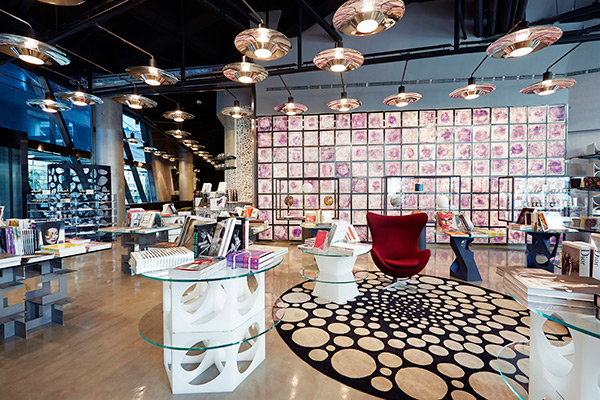
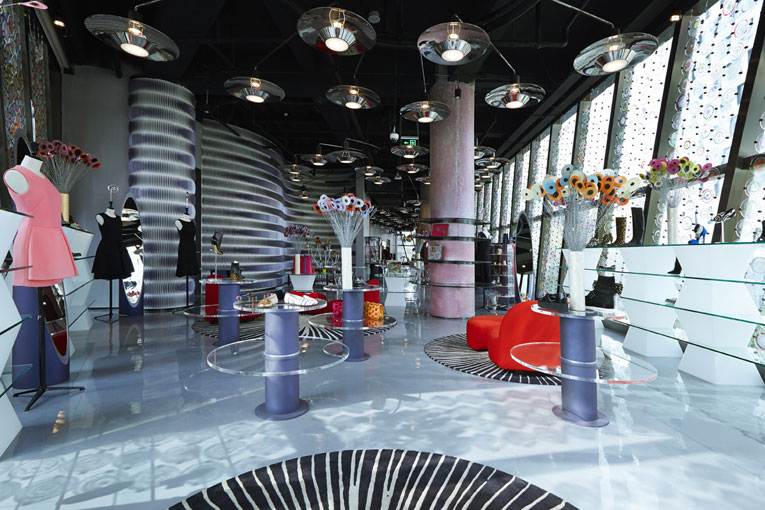
Last week, Carla Sozzani cut the ribbon on her concept shop launched in Shanghai, China. The four-level store was designed by American artist Kris Ruhs and Carla Sozzani. On the first floor are the shops for household items, a bookstore, and pastry café. The second and third floors sell outfits for men and women. The fourth floor is a space for art where delicate artifacts are exhibited.

The inside of 10 Corso Como  Source: http://www.toodaylab.com/51441

The inside of 10 Corso Como
Source: http://www.toodaylab.com/51441


Located on the flashiest shopping street, 10 Corso Como is not only a place for shopping. It is more like a gallery where people can merge themselves into the ocean of modern arts and fashion, spend a lovely afternoon with a cup of latte, and get inspirations from the delicately designed things.


10 Corso Somo source: http://www.toodaylab.com/51441

10 Corso Somo
source: http://www.toodaylab.com/51441

What is a concept store? In recent years, there are loads of concept stores emerging, especially in metropolitan cities like New York, Tokyo and Shanghai.  The phrase “concept store” is used to portray a store that can be identified by a special mix of a bunch of brands. Those concept stores go  extra miles by providing people unique shopping experiences. Rather than simply selling the products, concept stores emphasize certain types of attitude and lifestyle that are appealing to a certain groups of consumers. They sell the tangible products in a way that traditional shopping malls and boutiques seldom choose, namely creating a unique environment and rewriting the definition of “stores”.

10 Corso Como outfits for women  source: http://www.toodaylab.com/51441

10 Corso Como outfits for women
source: http://www.toodaylab.com/51441

Two elements are crucial for concept store. One is the experience and the other one is consistency. Obviously, 10 Corso Como is doing a great job in providing  a special shopping atmosphere. When customers step into the store, the first thing that strikes them may not be the product, but the gorgeous interior design. People feel that purchasing products is not the main purpose. Instead, enjoying their time in a nicely designed place and consuming the environment become more important in the entire shopping experience. Also, consistency is incredibly important for concept stores. It is not necessary for the concept stores to have themes. However, the ideas behind the store should be integrated into the whole design of the shops.

Concept stores demonstrates a new form of fashion and are favored by young generation. Here are some comments from my friends who have ever experienced concept stores:

“I like concept stores. They are so beautiful. I always want to buy something when shopping at concept stores because everything looks so lovely and delicate.”  From Lucy, Female, 23

“Concept stores are using a good marketing strategy. I don’t think they really have excellent products. More often than not, people are caught by the environment not the products.”  From Gary, Male, 21

“Concept stores are leading a trend. I value the shopping experiences more than the products per se.  From my point of view, the concept stores promote a classy and fashion lifestyle.” From Eiffe. Female, 24

10 Corso Como from outside Source: http://www.adaymag.com/

10 Corso Como from outside
Source: http://www.adaymag.com/

Are concept stores leading a new trend? In an age when shopping can be done with several clicks, brick and mortar shops are facing great threats. In order to survive in a highly competitive environment, some of the shops  transformed themselves into concepts stores in hopes to attract people through offering unique shopping experience. However, there are some issues that cannot be neglected. First, the concept stores usually have very narrowed target market. In most of the cases they mainly target young people who have a good sense of fashion and novel definitions of lifestyles. This is a constraint that prohibits concept stores from turning into something big. Second, in the globalized world, concept stores have great opportunities to shine on global stage. But launch business in a different culture context is not easy. Thus localization has become a primary issue. How to adjust marketing strategies when encountering cultural differences is a top concern.  Also, in integrated marketing and communication age, those concept stores need to make full use of social media channels to do promotions. How to build a good image on social media platforms and keep consistent with their concepts is a key issue in the success of the business in new media realm.


Resources:

10 Corso Como arrives in Shanghai, retrieved on Sept. 18th, 2013 from:

http://www.wallpaper.com/fashion/10-corso-como-arrives-in-shanghai/6762

List of concept stores, retrieved on Sept. 19th, 2013 from:

http://slowretailen.wordpress.com/concept-stores/


Posted in Uncategorized | Tagged , , | 7 Comments

How the Buying Experience Relates to the Brand Experience

A few weeks ago, my roommate and I decided to have a beach day so we headed down to Santa Monica. On the way back to the parking garage, she decided to make a quick stop at Lush Fresh Handmade Cosmetics so she could purchase a $6.95 Fresh Face Mask. Since I had never heard of the company before I decided to join. I clearly had not anticipated buying anything, but long story short and an hour later, I was the one who ended up walking out spending $60+. Had the fact that my roommate and I gotten free facials at the store have anything to do with the recent damage done to my credit card? Possibly. Although that does not explain why my roommate walked out only buying what she came in for and I, on the other hand, walked out almost buying the entire facial cleansing section of the store.

Lush logo. Source: Lush website

Lush logo. Source: Lush website

We are continuously told the importance of great customer service, and I believe a customer’s retail experience is the future. In fact, a recent Salesforce blog post by Kendall Thornton, states research from McKinsey & Company found “70 percent of buying experiences are based on how the customer feels they are being treated.” As marketers, we know when a customer walks into a store for the first time, the way they are treated sets up all future encounters. We want these customers to feel good enough to engage with the company and ultimately become brand loyal. Simply put, a buying experience can lead to a brand experience. The experience is just a matter of how we steer customers into that direction.

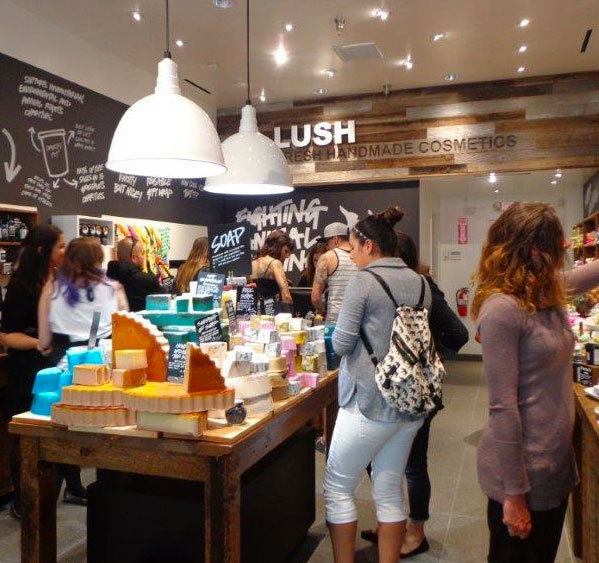
Customers inside a Lush store. Source: Lush Blog

Customers inside a Lush store. Source: Lush Blog

Before I go any further, I should explain our experience at Lush. The vast difference between our experiences at the store is what led me to believe why I had recently turned into a talking billboard for the company. As soon as we arrived, we began looking at the facial masks. Within a few minutes, a salesperson asked if we would like to get free facials. As the salesperson massaged each cleanser and mask on my face, she took the time to explain what each item was and what it did. This does not sound quite special, but the next thing she did actually took me by surprise. She asked me personal questions – each time addressing me as Miss Allison – to understand me and my lifestyle. Upon learning that I was a second year graduate student who was about to embark on a whirlwind of a journey called a thesis, she began to recommend products with scents of lavender to calm my anxiety. Never before has a salesperson 1) cared enough to get to know me personally and 2) help me find ways to cope with my anxiety through everyday products. As for my roommate, all the above had been absent from her experience. In fact, every time a product was placed on her face, she had to ask her salesperson what the item was and what it did.

Erase Bulling Window at the Santa Monica store. Source: Lush Facebook

Erase Bulling Window at the Santa Monica store. Source: Lush Facebook

It is very apparent my roommate and I had completely different in-store experiences; I felt as I had been treated like a princess, while my roommate felt conversely. My buying experience was simply unparalleled to any shopping experience, and thus, creating a wonderful new relationship. However, my buying experience did not stop there. As I was checking out, the cashier told me to like the Facebook page of their store in Santa Monica. She said the employees from the store check it regularly and answer fan questions posted to the page. When she handed me my bag of goodies, she slipped in a free sample of their Ice Blue soap bar and a copy of their Lust Times magazine which highlights all the charities they have helped through the years. As I walked out of the store, I noticed the window display in which people were encouraged to write on the window to erase bullying.

It became very clear to me that the company stands with its values and honestly respects every customer and goes beyond to help not only the local community, but also the world. Lush has built their company on a truly compassionate brand – something that has been clearly conveyed throughout the company, even in the buying experience.

We live in a society where people want to feel respected and now it seems people are becoming intolerant to brands that do not treat them with respect. With popular social networking websites (i.e. Facebook, Twitter, Yelp, Redit, etc.) it makes it impossible for companies to avoid negative reviews or comments, which can go viral and become damaging to the brand’s image. By placing more time and effort into matching the buying experience with the brand identity and experience, it can help eliminate people from feeling negatively towards a brand. Show customers what the brand stands for through the brand experience. Connect with the customers outside of the buying situation and show them the brand is more than just making sales. The trick is to create a cohesive identity and experience. The brand should encompass the same feeling when people visit a store, use the products, and interact with the brand. If the characteristic the brand has founded their identity and experience on is missing from one aspect, it could mean the very difference between someone such as me and someone such as my roommate.

Source: http://blogs.salesforce.com/company/2013/08/customer-service-stats.html


Posted in Uncategorized | 5 Comments