Victoria’s Secret PINK and Its Ethics Challenge

In a recent talk with a lady who has been in the Marketing business for over two decades, I asked her what she thinks about ethics and how she, as a markete1r, would react when positioned in dilemmas. I simply burst into laughter upon hearing her answer. She said, “Well, as marketing people, we are able to package a box of crap nicely and sell it by convincing people that it is delicious.” “But,” she continued, “being able to do something does not always mean that we should do something. We carefully pick, phrase and send the message to make sure it is done in the most persuasive way. But there’s a fine line between what’s profitable and what’s unethical. And that fine line is authenticity, integrity and conscience.”

As our group was searching for a solid project topic, I stumbled upon a case that would further shed light on the discussion we had last Tuesday. Victoria’s Secret PINK, the youthful line of the famous lingerie brand Victoria’s Secret, had to face severe challenge from outraged parents. Earlier this year, the brand launched a Spring Break themed campaign with the slogan “Bright Young Things”, which upset parents of teenage girls. Parents raised an outcry against the brand as they consider such campaign, which featured underwear printed with flirty phrases such as “call me” and “feeling lucky”, as sexualizing young girls. Parents blogged about it, and Victoria’s Secret Facebook page was flooded by angry comments. Unsurprisingly, this is not the first time that PINK had to deal with backlash over their ads and campaigns.2PINK claims its target audience is college-aged young women, not tweens or teens. However, it contradicts with what Stuart Burgdoerfer, chief financial officer of Victoria’s Secret, said at a conference—“When somebody’s 15- or 16-years-old, what do they want to be? They want to be older, and they want to be cool like the girl in college, and that’s part of the magic of what we do at Pink.”  So what really went wrong? Do PINK intentionally target teenagers while stating they don’t?3 Are parents so conservative and protective that they overreact whenever it comes to the topic of sexuality? Who contributed the most to the general perception of over sexuality in today’s society? Is it companies like Victoria’s Secret, or the media?


 

I don’t have definitive answers to any of the questions above. The only thing I’m certain is that if I was a parent, I would probably also be disturbed, as thinking about how to look sexier and how to attract boys is not typical 13-year old business after all. At this point, I would rather consider the incident as a poorly carried out campaign than a well-established brand cheating about their real target audience, because as a consumer, all we want is being able to trust.

-Andrea

Posted in Uncategorized | 2 Comments

Are Print Media Dying in China?

Do you still remember there was a time when we took fashion magazines with us when we were rushing to the restroom? Do you still remember when we bought and cut off the pages inside a Vogue, made collages when there were dresses that we love and long to have? (Specifically, do guys still remember when you posted sexy pictures of ladies in swimsuits from magazines on your bedroom wall?) Well, now it is very likely that all these high school memories in our generation may be written in a history textbook, and will probably no longer exist.

无标题

According to the financial report released in August 2013 by Modern Media Ltd., one of the leading media company in Greater China area, by the end of June 2013, Modern Media has witnessed a 78% decline, gaining only 3,000,000 RMB (500,000 USD) in profits compared to that of 2012. You cannot even afford a decent house with this amount of money in Mainland China. Moreover, in correspondence with that, the advertising volume in fashion industry especially in print media has also witnessed a downfall in recent years. As the number of digital platforms are rising, consumers are more willing to download magazines with interactive features from App Store, follow fashion tycoons’ fashion blogs, facebook pages, twitters, and weibos (Chinese version of Twitter), than to purchase real print version with similar contents. That really makes sense. If I can enjoy the same thing online, then why should I pay extra money for it?

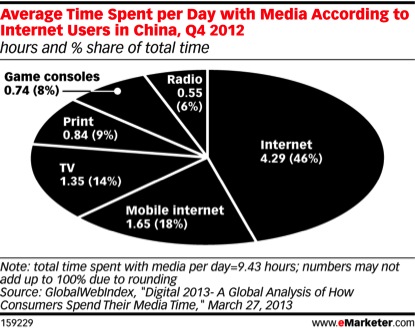
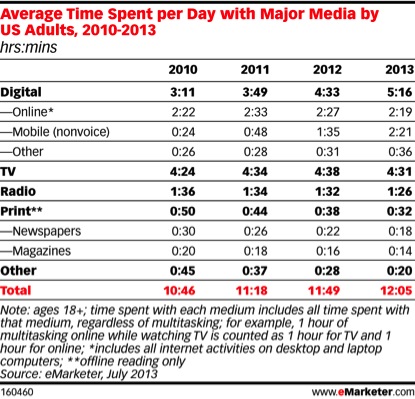
However, price is not the only factor that influences consumers’ buying behavior. The marketing research site eMarket recently carried out a report about the average time that people spend per day on different media (see the charts below). Being bombarded by media and information, people are spending less and less time on print media. According to the same research in the U.S., there is a clear diminishing trend in time spent with print media from 2010 to 2013.

无标题2 无标题3

There is another field research done by a company in China about the sales of kiosks in the capital city Beijing. According to the data, the average daily sales of newspapers and magazines is around 100 RMB (17 USD), which is 50% less than that of 2012.

Facing this fact, are print media really dying in China? If yes, print media in the U.S may not be far behind. So what should print media companies such as Modern Media in China do to cope with this situation? How can we revolutionize traditional advertising on print media? Do our children still have a chance to make collages as we did before?


Posted in Uncategorized | 4 Comments

“Windokia” or “Nokrosoft”? Neither.

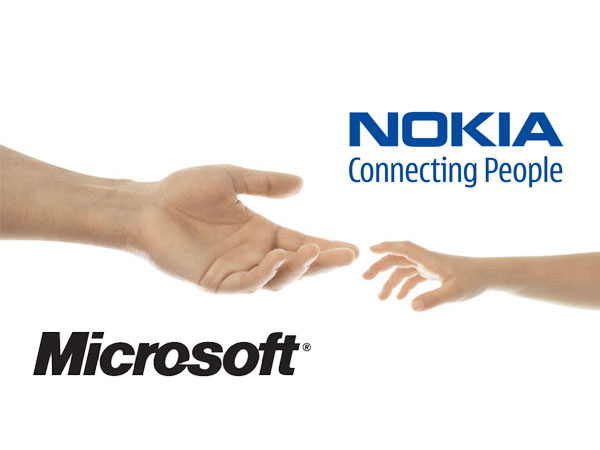
One of the biggest (and probably the saddest) technology news recently was about the deal between Microsoft and Nokia, with the former company acquired the “Asha” and “Lumia” device name brand trademarks, while the Nokia brand will still be used on lower end devices.

Microsoft-Nokia

Therefore, there won’t be any “Windokia” or “Nokrosoft” phones, as the media perdicted. Microsoft will continue to use the Nokia brand name on feature phones (non-smartphones). For now, Microsoft is facing a dilemma in deciding which brand, Windows Phone or Nokia, will lead its mobile product services. Since it launched the Windows Phone, Microsoft has been facing the problem of its brand awareness. Hopefully, with Nokia’s handset business, Microsoft can boost its mobile service by conducting a clearer market segmentation.

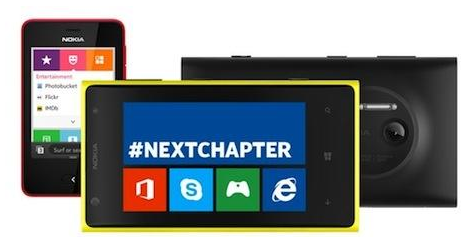
Nokia Lumia phones with Windows Phone platform

Nokia UK posted this image on its Twitter feed to mark the announcement regarding Microsoft’s purchase of the company.

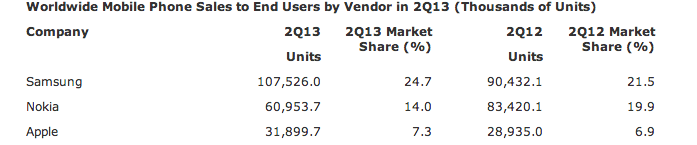
The market for feature phones is shrinking rapidly as people around the world are switching to smart phones. But not everyone can afford a smart phone, especially people from the emerging markets. According to Gartner’s research on Worldwide Mobile Phone Sales to End Users in the Second Quarter of 2013, Nokia still ranked the second for sales volume.

Source: Gartner (August 2013)   Please clink to enlarge the picture.

Source: Gartner (August 2013) Please clink to enlarge the picture.

In the developing countries such as India, the Nokia brand name still commands huge amounts of trust. It demonstrates the high brand equity of Nokia, with strong consumer loyalty, high brand awareness and emotional association.

If Microsoft can utilize the Nokia brand and handset business, it will enter the key growth markets more easily. Maybe it’s also a better marketing strategy for Windows.


Posted in Uncategorized | Tagged , , , , | 2 Comments

Ladies, be ready to share your makeup products with men.

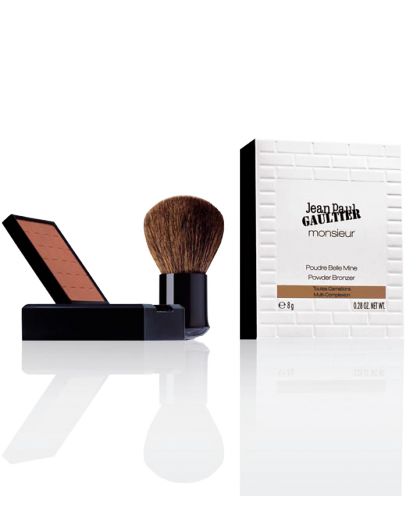
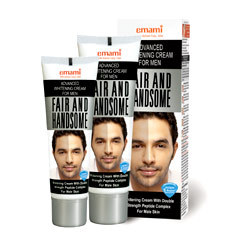
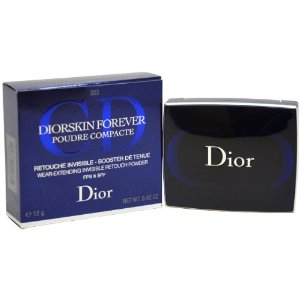
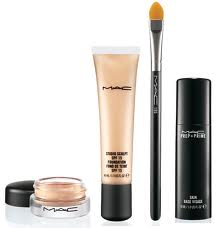
Make up products have always been associated with women, though we have had men’s grooming trends being followed throughout history. The great beauty brands like Mac and Dior are assumed to target female audience, and have been persistently successful at doing so. We do have many beauty brands targeting men too but they have not been as successful as women’s beauty brands in persuading their target audience.

 poudre-belle-mine_1fair-20-26-20handsome_10372568

Marc Jacobs currently launched his new beauty line ‘Marc Jacobs beauty’ on 9 August at Sephora and selected Marc Jacobs stores, with over 120 products. In the following three weeks, a YouTube video of the designer himself addressing his three essentials Remedy concealer, brow tamer and Lip lock and using it has been shared by numerous medias and bloggers. The designer addresses the beauty line as unisex products ‘Boy Tested. Girl Approved.’ positioning the brand by targeting both men and women.

 Boy Tested. Girl Approved.

The designer’s beauty brand has its own Website, Twitter, YouTube, Pinterest and Instagram addressed as Marcbeauty or Marcjacobsbeauty, but does not have its own Facebook page yet. The beauty brand refers to the Marc Jacob International Facebook page for its followers. In my opinion, it is a good marketing plan since he has 118k + likes in the Facebook page and it is a good platform to build awareness of the new beauty line.

41AQQMWcO8L._SY300_images

In general, none of the beauty products packaging are titled ‘for women’. The beauty products have their product name and its elements displayed on their packaging. It’s the assumption of the audience and a conception built through the beauty brands by representing only female models associated with their products on their marketing elements. So, like there are unisex clothing lines, the beauty lines can also be considered unisex product line. Actually, it’s a safer strategy for the beauty brands who prefer targeting men too because if the men do not consume them, the brand can always survive with women consuming it.

P.S. I believe we will be experiencing more ‘unisex’ beauty lines in future.

Posted in Uncategorized | 10 Comments

Closing out the semester

Anne Smedinghoff

I would like to close out this semester’s blog with a note about someone I worked with who gave her life working in communication.

Anne Smedinghoff worked with me at US Embassy Kabul. She was killed in early April while managing press at a school book donation ceremony. The affects have been very tough for everyone in the embassy.

With this note, though, I don’t want to pour sadness all over her memory, but wanted to say that she believed in her work and fought to make a difference in Afghanistan and the world around her … and I think she did.

Often, we communication and public affairs types get stuck in the daily grind. Sometimes it seems like were just spinning our wheels and not making a difference as we slug throug talking points and messaging. I beg to differ though – you and I do make a difference.

Building communication between people is like building a bridge of understanding.

Ann’s death did not wipe away her memory. The State Department and her friends continue to memorialize and celebrate her life and the positive affects she had on the public affairs community. Matter of fact, tonight is “Space / Pirate Night” at the Duck and Cover bar here. It combines some of the things she loves; friends, pirates and space theme parties ; )

Also, in the community where she died, the families and children also honor her. They stand up and face threats and violence every day. They send their children to school, vote, and demand control of their lives.

Ann died too young, but her death hardened the local Afghan resolve to not allow brutality to control them.

And in that way, Ann built a bridge and it led to understanding.

-Jack

Posted in Uncategorized | 5 Comments

Atlanta’s “World of Coke” – a shrine to a brand

World of Coke

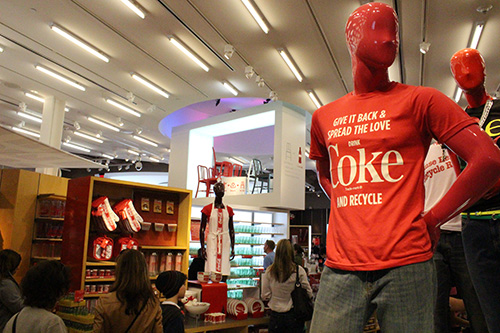
The World of Coke center in Atlanta, GA

We all know that when it comes to integrated marketing, Coke is pretty much the king.  From television to print ads, online content and more, Coke knows how to integrate it’s marketing channels.

But Coke’s taken it one step further — creating a shrine to the Coke brand.

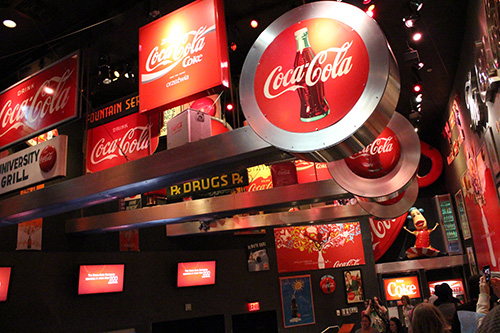
A visit to the World of Coke in Atlanta, GA is a must-do for any marketing aficionado.  From the first moment you want in the modern-style building, it’s clear this is a place where you’ll get to experience some of the history and insight of one of the world’s greatest marketing brands.


World of Coke

From the first moment, the Coke brand is everywhere to be seen.

What makes a visit to the World of Coke so special is that it presents a history of global advertising of a single brand.  Students of marketing can draw inspiration from the design and themes found in more than 100 years of advertising creatives.

World of Coke

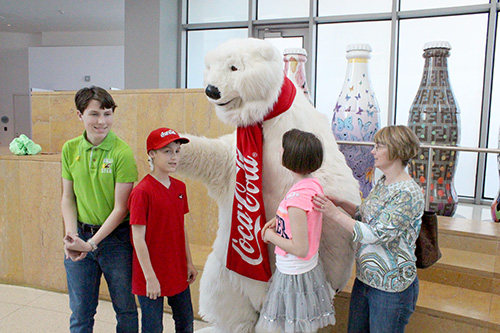
Who could pass up a chance for a photo with those loveable Coke polar bears?

Coke has even learned a thing or two from Disney by having a costumed character available for meet and greets (and being a Disney guy, I have to say the articulation of this character is superb)!

World of Coke

The vault allows guests to step into see some of Coke’s “secrets.”

One of the questions that’s often asked is “what is Coke’s greatest asset?”  I’ll give you my answer a little later, but for now, let’s step inside The Vault, an experience where guests have the opportunity to try their hand at guessing the secret formula and learning more about how the drink came to be, thanks to Dr. Pemberton, and how a simple soft drink turned into one of the world’s most recognizable and identifiable brands.

At the end of this experience, guests can actually see the actual vault where the only written copy of the Coke secret formula is kept.  Coke does a great job of inserting a lot of mystery and intrigue with this reveal.  All you’re really seeing is a high tech safe, but it sure feels exciting!


World of Coke

Try your hand at Coke products from around the world.

There are many, many more brands made by Coke than just those found here in the United States.  At the World of Coke, you can sample different Coke drinks from all around the world – some of them are pretty good and some, well, not so much.  A watermelon-flavored drink?  How about one made from ginseng?  And then there’s the Beverly from Italy.  I won’t spoil the surprise for you, heh, heh.

World of Coke

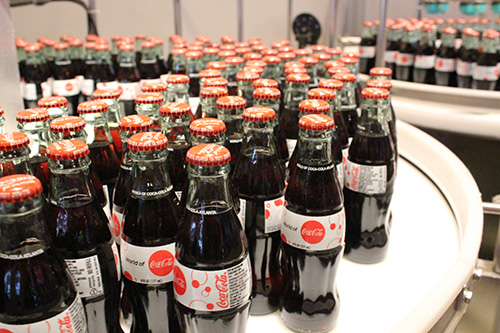
The World of Coke has it’s own small bottling plant that creates exclusive bottles just for this location.

Of course, no visit to the World of Coke would be complete without your own souvenir bottle of Coke?  Best of all, it’s free, but one to a guest, please!

World of Coke

The World of Coke gift shop is nirvana for Coke brand enthusiasts

And what would a visit to any sort of area attraction be without… yep — a gift shop.  Here you can find all sorts of Coke-branded products from shirts and balls to those iconic Coke glasses and retro ads.

So there you have it — a quick tour through just part of the World of Coke in Atlanta.  Oh?  What the answer to the question, “what’s Coke’s most valuable asset?”  You might think it was that secret formula in the vault, but you’d probably be wrong.

What’s their most valuable asset?  You’ve seen it this whole time.  Here it is:


Coke logo

That’s right.  It’s their brand.  You see, you could give a Coke person any other cola in a Coke branded cup and they’ll prefer it over the same drink in a non-Coke branded cup.  I recently saw a presentation on a brain study done at Virginia Tech that did this exact experiment.  If I find the published research, I’ll try to post it sometime.

So there you have it.  Time for me to go grab a drink, and, you guessed it, I’m reaching for a Coke.

Enjoy!

Chuck Lionberger, APR


Posted in Uncategorized | Tagged , , , | 7 Comments

#prayforboston

I’m so saddened by today’s events. As a runner, I know what type of disorientation the body (and mind) experiences after such a long distance. Then to have your personal victory met with the harrowing echoes of screams and shards of glass flying at you – the experience is unimaginable. The outpour of support, prayers and outreach has been encouraging and I think social media has played a big role in facilitating that support.


pray for bostonSocial media networks such as Facebook, Twitter and YouTube brought us the news as it happened. And just as quickly, these same networks created a sub-network of people who were willing to help in some way.  Today, Mashable reported that the Boston community has built out a massive Google Doc indexing homes and space availability for anyone who has been displaced by today’s events.   On Facebook, over 16,000 people are talking about the Boston Marathon and #prayforboston has been trending internationally on Twitter all afternoon. The topic has quickly risen as a ‘popular’ topic, proving that social media brings people together at lightning speeds.

I think it’s easy to forget how powerful social media is.  Throughout our coursework we talk about ways that social media can be used to market a product or communicate a selling point. Today’s events though underlined how well social media can not only inform the masses but also organize a coalition of people who are willing to help others in need.

As coverage over the next few days unfolds, I think it will be interesting to see how our own social media networks flood with thoughts about what happened, questions asking why  and reflections about how grateful individuals are in their own lives. It’s events like these that remind me that social media networks have changed the way consumers access, talk about and react to news.  While social networking can sometimes be met with criticism or misunderstanding, I hope people don’t forget how these networks facilitate fast response to such a tragic event.

Posted in Uncategorized | 16 Comments

Facebook … Losing the Cool Factor?

Facebook-killer

Facebook is losing ground among teen users.  FB noted In its 2012 10-K report:

We believe that some of our users, particularly our younger users, are aware of and actively engaging with other products and services similar to, or as a substitute for, Facebook. For example, we believe that some of our users have reduced their engagement with Facebook in favor of increased engagement with other products and services such as Instagram.

This could be part of the product’s normal lifecycle (even Beatles fans sometimes migrate to other bands).  Or it could indicate the beginning of a seismic shift as people make decisions about how they choose to interact.

With due respects to Melinda’s post, I’m not addicted to FB.  I get on maybe once every couple of months to update photos for friends far away.  But I don’t stick around.  Maybe it’s a generational thing.  Many of my GenX coevals are migrating away from FB … or never got on in the first place.

And so I was surprised to learn that younger users were beginning to drift away.  Facebook may be headed for a Facelift, a revamp that will bring back the apostates looking for the Next Big Thing.  In the case of FB, it may not have so much to do with cool.  People will use FB if they need it, and stop when they don’t.

Are you a FB apostate?  Here’s one guy’s Top 10 for hating FB (from facebookhaters.com):

1. Lack of privacy. If they say they protect it, then why do they always ask for more and more of your information?
2. It’s a (fake) popularity contest.
3. They don’t include a ‘Dislike’ button.
4. My high school bully sent me a friend request 10 years later
5. Someone posted and tagged that photo of me with my fly down.
6. People from work trying to befriend me.
7. Facebook’s creepy friend suggestions. Am I actually similar to these bozos?
8. Notification overload. I don’t log in for a week and return with 10,000 notifications.
9. The people that post the most often are the people that post the most mundane crap.
10. You can’t go one day without having to hear someone talk about Facebook.

—————

Sources:

http://www.breitbart.com/Big-Government/2013/03/05/Facebook-In-Decline

http://facebookhaters.com/

Posted in Uncategorized | 13 Comments

Facebook on the Move

Facebook is on the Move

Online communications have come a long way from impersonal and un-customizable chat rooms, to the fully integrated Facebook. (i.e. fan pages, businesses pages, advertisements) Facebook started off as a platform to communicate with friends and now has transitioned into a vehicle for communication for businesses as well. Businesses such a Neiman Marcus and General Motors have bought into social media and included Facebook as part of their integrated marketing communications. Most recently, Facebook helped Pepsi reach 18-20 million people every month versus 3 million a year ago. (Rusli,2013) Hyundai saw a 28% increase in sales from its ad campaign on Facebook.

There are many ways that business can advertise via Facebook, they can advertise through their customizable business pages, as well as banner ads on the side bar and embed advertisements within the feeds. Using Facebook as an avenue to maximize consumer reach is advantageous; however, Bryan Nagy for Social Media Today states “the Facebook problem” is this: “brands have forgotten about integrated marketing communications.” Businesses have put much focus on Facebook, making it the core of their communications for potential mass reach that they have forgotten that Facebook is a single market channel and one part of the social media umbrella. (DM Confidential, 2013)

Bryan Nagy, further states that in addition to businesses making Facebook the core of their integrated marketing communications, “ there are other problems with how brands are using Facebook, – namely, the increasing noise, and additions to numbers and the lack of focus on crafting good marketing messages and creative.” (Social Media Today, 2013) Although this may be true, Facebook continues to be a powerhouse and a very effective tool for businesses.

BY: LeiLani Lemle-Macias

References:
DM Confidential (April, 2013). ‘The Facebook Problem”: Brands Have Forgotten About Integrated Marketing Communications. Retrieved by: http://www.dmconfidential.com/ the-facebook-problem-brands-have-forgotten-about-integrated-marketing-communications/

Nagy, B. (April, 2013). The Facebook Problem: Why We Need to Rethink Facebook Marketing. Socialmedia Today. Retrieved by: http://socialmediatoday.com/bryannagy/1340136/facebook-problem-rethink-facebook-marketing

Rusli, E. (April. 2013). Buy Signal: Facebook Widens Data targeting. The Wall Street Journal. Retrieved by: http://online.wsj.com/article/SB10001424127887324504704578412960951909032.html?KEYWORDS=pepsi

Posted in Uncategorized | 4 Comments

J.C. Penney: The Importance of Customer Research

jcp

Faced with dramatically plunging sales and a bleak future, this week the retailer J.C. Penney (”JCP”) fired CEO Ron Johnson just 17 months after he started with the company.  Notably, Johnson was the Apple executive who masterminded the retail experience for Apple Inc.  Shortly after Johnson was fired, JCP indicated that it was replacing him with the company’s former CEO, Myron “Mike” Ullman.

Johnson had a dramatic, yet flawed, vision for JCP.  For a chuckle, you might want to check out Business Insider’s excellent portrait of Johnson’s failed plan: http://www.businessinsider.com/ron-johnsons-failed-plan-to-turn-around-jcpenney-2013-4

As can be seen from the Business Insider article linked above, Johnson’s plan for JCP was like taking the Apple retail experience and just super-imposing it onto JCP with the apparent thinking being that what works for Apple will work for JCP.

As part of his plan, Johnson eliminated JCP’s high/low pricing policy of marking up prices and then offering sales and discounts.  Instead, he wanted to offer “fair and square” reasonable prices all the time.  Also, Johnson rejected the traditional retailing strategy of conducting pricing tests in a limited number of stores before widely rolling out the pricing changes, which was a big mistake.

Johnson’s pricing policy changes did not go over well with JCP’s bargain-minded customer base that was used to the company’s previous promotional pricing policies.

Sales plummeted and JCP eventually was forced to return to its former promotion-centered pricing policies.  But, by the time the company returned to its former pricing policies, it was too late; the customer based had been thoroughly alienated.

There are some valuable marketing lessons to be learned from Johnson’s failed marketing changes at JCP.

You must understand your customer.  You must be in touch with what your customer wants or needs.  The JCP debacle underscores the importance of customer research prior to changing pricing strategy.  I just simply don’t understand why pricing tests would not have been performed prior to making the significant changes envisioned under Johnson’s plan.  Was it a case of CEO hubris?

Summing up the key lesson is hedge fund manager and JCP principal shareholder and board member Bill Ackman: “One of the big mistakes was perhaps too much change too quickly without adequate testing on what the impact would be.”

Ironically, JCP board member Ackman was instrumental in Johnson’s hiring.  He even once showed a slide at a conference that stated: “Ron Johnson’s record of retailing success makes him the ideal leader to fix JCP.”

JCP’s failure under Johnson is a financially painful lesson for Mr. Ackman, since he is now sitting on a substantial underwater stock position in JCP.  Ackman’s hedge fund, Pershing Square Capital Management LP, currently owns 18% of JCP (39,075,771 shares).  He paid around $25 a share, while the share price is now $14.62—a 42% decrease in the per share price.  Ouch.

If you were the incoming JCP CEO what would you do to help turn-around the company?  I’m curious what you think.  Please leave your comments below.


Posted in Uncategorized | 13 Comments