My friend and I were walking on campus last week and came across a table with people in hot pink shirts promoting the Nike + “She Runs LA” 10K run and its associated after party to occur last Thursday night in the Nokia Theater at LA Live. It immediately peaked our interest because we would get two tank tops, two concert tickets, massages, hair and makeup done all for free at the event. So, we signed up and paid the registration fee on the spot. I went to the Nike website that night to validate my registration prior to the event as the representatives had instructed us to do. Needless to say my friend and I ended up having a great time. Nike did a splendid job integrating its marketing efforts and driving people to their website as a central location for its campaigns and brand identity.
Within the span of twenty-four hours Nike grabbed my attention again. I definitely chuckled the next day when I came across an article highlighting Nike’s creation of abstract art from feet. I thought, ‘could it be’? Long story short, to promote the new Nike Free Run+ QS City Pack shoe line they partnered with YesYesNo, an international interactive design collective, and designed a software to translate a runner’s route recorded through Nike + GPS into a personalized painting. Unfortunately, this software is not available to the public yet and a trial was only conducted at Nike internally. But, there’s more-
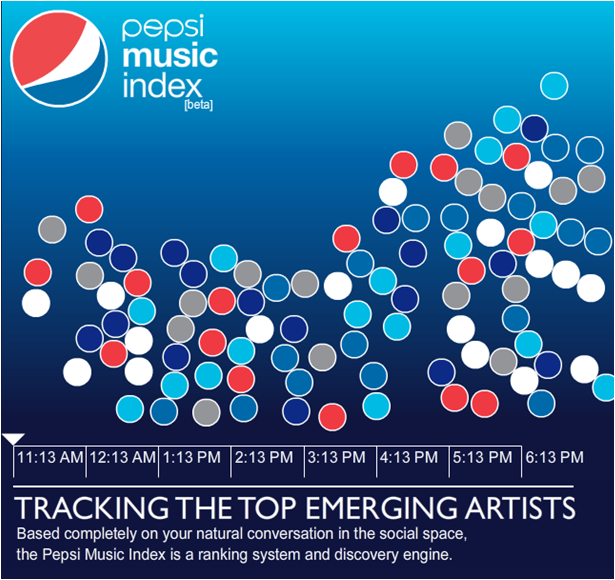
Pepsi Music Index
Nike is not the only company uniquely employing infographics, or the visual representation of data and information, into their integrated brand representation. One week prior to my discovering this newfound persona of Nike, we discussed the Pepsi Music Index in class. This index on the Pepsi website tracks the top emerging music artists’ trends online. Here, data is continuously collected and the viewer can personalize how this data is displayed (bubbles, bar graphs, line graphs).
2009 International Birth Rate & Life Expectancy, World Bank
I found these examples fascinating and did my own search on how I could personally become a present day Picasso. I came across an article in Fast Company, “The 5 Best Free Tools for Making Slick Infographics”, that lists websites where anyone can upload a data set, or use previously loaded data, and transform it into artwork for their office, living room, or even a birthday. The library of data sets spans from U.S. state populations to the rate of flowers blooming this spring in an obscure small town. Since there has been so much buzz about the royal wedding, I decided to test my skills to create my own piece using a previously loaded set of data on the website, generated through Google analytics keyword “Royal Wedding” for the month leading up to Prince William and Kate Middleton’s wedding.
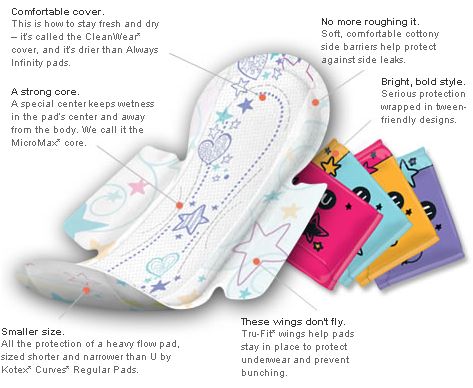
The labeling of different life cycles, started most notably with the teenager in the 1950’s. During this time period, various products including music, film, etc. where targeted towards the young adult demographic. Rising recently in the 2000’s was a further segmentation of the young adult–the tween. Sometimes referred to as “too old for toys, too young for boys” this demographic usually, understood as children 8-12 years old, is growing exponentially. Right now there are 20 million tweens in the US and this number is projected to expand to 23 million by 2020. Interestingly, that by 2023 tweens will become the most diverse demographic in the US, encompassing 40% minorities. The buying power of tweens? 40 million dollars annually. In response to the huge tween market, companies are trying to corner this demographic with products and marketing tailored to their needs and interests. Kotex has jumped on board with tweens in their new product line for tween girls, resplendent with sparkles and cute designs.
This new line named “New U” comes in vibrant colors and patterns for tween girls. While this product addresses the reality that the onset of female menstruation is increasingly becoming lower in the US (currently around ~12 years old) it is interesting to see the lengths marketers will go to cater to the tween market. With this example, it is interesting to see if through marketing to tweens Kotex can reposition menstruation more positively in the minds of young girls. To me, although I’m not in the target audience, the new Kotex U’s certainly pop out on the grocery store shelf. This new line may succeed with more than one target audience as it in essence re-brands”menstruation”.
Group buying officially introduced to people’s daily life by the legend of group buying business-Groupon. Groupon started its business at October 2008 and extended to be the giant business with international business operation. It is preparing for a $25 billion IPO in 2011.
The idea behind Groupon is very simple: providing the best deal possible to the customers by negotiating price with vendors as a group of buyers. It is a great idea that lead to a win-win situation. At the same time, it is a simple idea that is very easy to be copied. Therefore, it is not surprise to see that there are many competitors in this area and giant companies want to share the market as well.
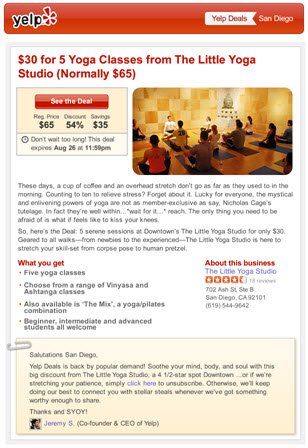
Currently, there is Groupon, LivingSocial, and other smaller local group buying websites. Also, Yelp started to provide deals on its website in associating with its users’ reviews of deal providers.
FaceBook touched group buying area as well based on its huge loyal user base.
In addition, after Groupon turned down Google’s 3.5 millions offer, Google launched its own featured local coupon service. It provides mobile access.
Reviewing all those group buying business, there are a couple of new trends that help the company survival in the competition.
1. Provide the best deal possible. The center of the group buying is to provide the best deal to customers and biggest size of customers to vendors. Therefore, as important as good content to a website, finding and negotiating great deals are critical for any group buying business.
2. Customized newsletter. Nowadays, people receive tons of subtracted emails everyday. They are easily to get tired of useless information. Depending on customers’ buying history and basic information provided, it is more effective to provide personalized relative deals, which will keep customers interested.
3. Being convenient is the significant important as well. As a daily functional information provider, the first thing is to be helpful and accessible. No matter Google providing mobile access or Yelp associating reviews with deals, those are all about offering customers the best and the most convenient service ever.
So what’s the next generation of group buying business model? Will a product that combines all the functions possibly offered by current group buying businesses be a good idea?
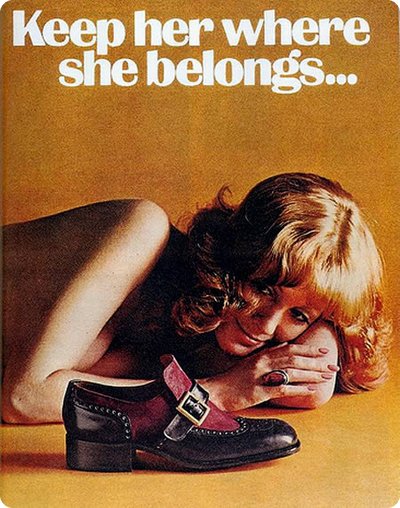
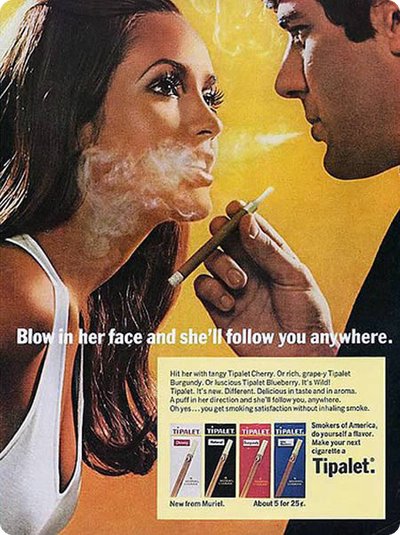
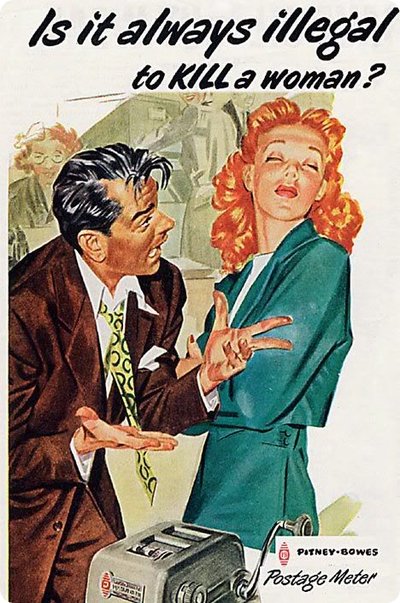
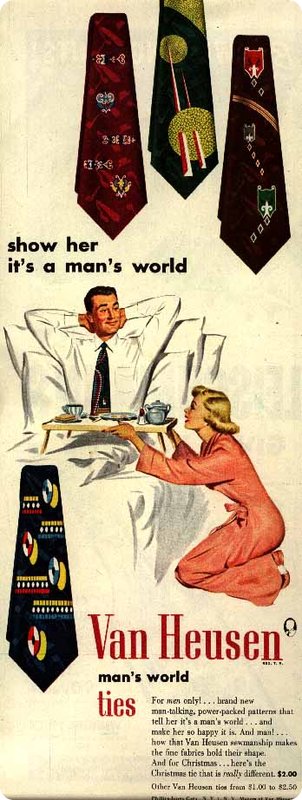
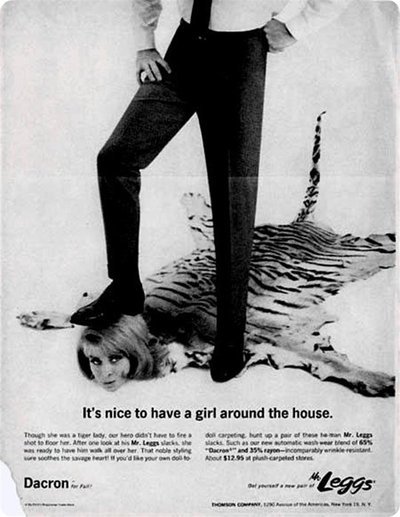
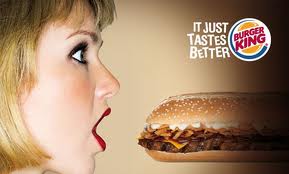
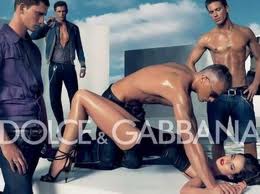
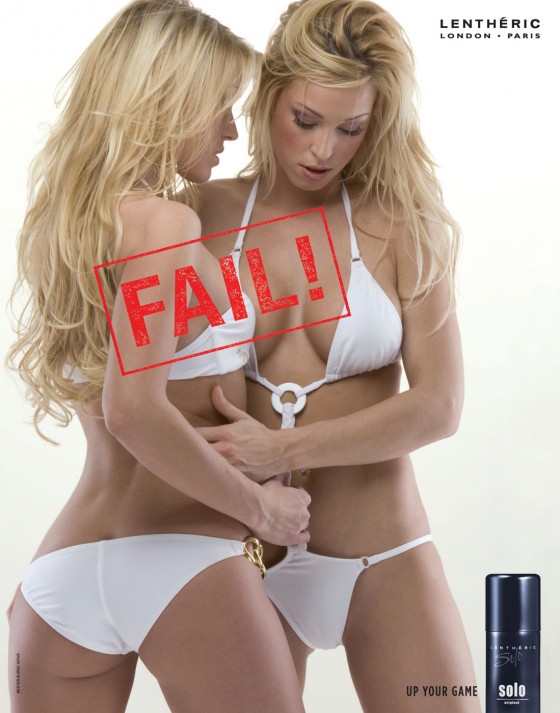
Last week, we talked about advertising ethics and how Sony was stupidly enough to come up with the racially controversy print ad for its black and white PSP. I found it very interesting to see how the opinion has changed and made certain ads impossible today. However, is the “good old days” with the upscale world of Mad Men with sexism and racism really far removed from our lives today? Or has it just changs to the different format and reappears? At least, in my opinion, some of the sexist or lets say sex-related ads still exist nowadays.
Here are some old ads that existing decades ago and also some new ones, it is interesting to see how much it has / has not changed:
So what do you all think? Is a paradigm shift needed to avoid the sexism in the ads, or is it something unavoidable as an effective advertising strategy to attract consumers?
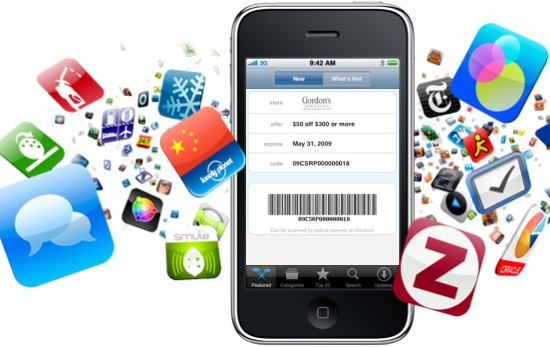
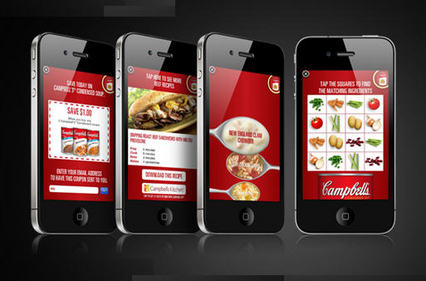
Mobile ads are fast becoming the next big thing in social media marketing with Google and Apple claiming its share of the pie with Apple’s iAd and Google’s AdMob. Moving one step up, and to leverage off the boom of mobile gaming and the increase in time spent on these games, advertisers and start-ups are coming up with ways to engage gamers and reward them for playing.
Google’s Admob and Apple’s iAd: the forerunners in Mobile ads
The ‘first’ generation of mobile ad units were static features, appearing as standardized banners at the top or bottom of your mobile screen. Phase 2 saw ads appearing in the middle of mobile games, usually as the user is moving on to the next level of the game or waiting for the page to load.
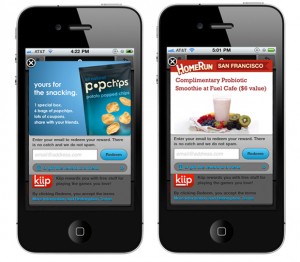
Version 3.0 sees a more interactive approach to these ads, featuring dynamic hyperlinks that takes users to the advertiser’s website/iTunes App page. Well, the next generation of ads are here with more social incentives. Start-up company Kiip (pronounced as ‘keep’), is revolutionizing mobile gaming apps by rewarding users with ‘real-life’ perks when they complete a level or task on the game. According to TechCrunch, the new advertising model would do away with pop-ups and banner ads that have long polluted the valuable screen space on our mobile devices.
Kiip Mobile Gaming Ad unit
“Achievements are the universal currency for accomplishment and every game in the world has achievements,” 19-year-old Kiip co-founder and CEO Brian Wong tells TechCrunch. “The achievement itself isn’t the cool thing, it’s the moment. We realized that the moment was worth something. The natural evolution is to put something there that actually matches the achievement.”
So what’s next for the mobile advertising industry? It would be interesting to see how these ad units would integrate and connect users to their social networks, enabling you for example, to check-in using foursquare when you’re redeeming your Kiip reward or tweeting about it to your friends all while on the go.
There are many ways of describing marketing. Some would describe it as selling a product. Some might describe it as all that fuels your revenue. But I would describe it as more than that. For me marketing is about selling an idea, selling a dream, selling something that would change our lives.
So, I shall not be writing about a marketing example that talks about selling a product, but about a mass movement.
If you have even a single friend on facebook who’s from India, I’m sure you must have noticed two things in the past 1 month.
1) Massive Chest-thomping because India won the Cricket World Cup
2) Messages that spoke about India’s Fight against corruption
While the first one is pretty universal ,(we can expect the second thing even if the Lakers win), the second is an excellent example of the power of marketing an idea and marketing a dream.
India as a country has had a problem with corruption for quite a while. It went to the extent of an implicit reaction that said “If there are too many people doing it, it isn’t a crime”. The scale at which corruption was rampant, especially among people in office and politicians, was unacceptable.
Here’s this gentleman by the name of Anna Hazaare. He was a freedom Fighter who contributed to India’s Struggle for Independence in the 1940’s and then went on to jon the army. He pledged that he would spend the rest of his life in serving the country.
Mr. Hazaare has been fighting corruption for the last many decades. Until recently, he was a lone warrior against a cause. But things suddenly changed.
Marketing is all about timing.
India won the Cricket World Cup on the 2nd of April 2011. There’s nothing that lifts a country’s spirits like sports. When India’s GDP goes up by 4% , you dont see people dancing, you really don’t see people coming together. But when the World Cup came home, this is what happened:
Suddenly, we had a situation where people from all over came on the streets. My whole life I’ve lived in India, I’ve never seen something of this sort happening. Random people were going on the streets and hi-fi-ing each other. When the traffic police tried to bring some order to the chaos, they were roped in and people in the crowds started hugging them. There was energy, all around. Excess energy, waiting to find more outlets.
And within two days, Anna Hazaare announces that he shall be fasting to death against corruption. And that he shall break his fast only if the Government agrees to pass a bill, where an outside committee can hold politicians accountable for swindling public money, and can be imprisoned if caught.
Try and understand group psychology here. 1 Billion rebels, ecstatic with joy and victory, have found a cause. Months of newspaper reports of political scams members of parliament, years of accepting corruption as a way of life, an excess influx of esctatic energy because of an event unprecedented for 28 years, a social networking site where you see what your friends are thinking, a world where videos of protests are broadcast with a push of a button, 1 man willing to give his life for a cause that everyone believes in. Mix all of that together, and you have the recipe for a revolution.
All over the world, Indians joined in this war against corruption. People took to the streets, organizing protests. There were fasts and protests all around the country. Indians all over the world right from London, to New York, to California, organized fasts and marches. There were peace protests that you could see, as an Indian, your friends going to. The more you saw them going to it, the more you felt an urge to contribute to it.
Log into facebook and look at this to get a taste of the action
http://www.facebook.com/#!/IndiACor
Suddenly, the government found itself under tremendous pressure. Not agreeing to the demands for a just cause would have meant risking civil disturbance. If anna Hazaare would have died because of the fast, all hell would have broken lose. The lull threatens with the storm. This was an example of that happening.
The bill was passed and Anna Hazaare broke his fast. All of this happened in the last 15 days.
There’s a newfound confidence in the young of India now. There’s a great urge of making a difference. Everyone has bought into this dream.
The last time something of this scale happened, was some time in the mid-40’s, when there was a fast by a certain Mr. Mahatma Gandhi.
Now, let’s analyze this situation from the lens of a Marketing major:
1) The timing was perfect. Right after the world cup win. People were high, really high. Everybody unanimously felt a sense of achievement, and a power to do anything. There was a mood that was set in, of relentless energy. People were looking for outlets of all that energy.
2) There was the My-friend-is-into-it factor. It is the golden grail of marketing. You saw your friends talk about it. You saw news channels talk about it. You saw everybody talk about it.
3) There was a facebook community. Once you joined it, you got continuous updates. Since it’s constantly grabbing your attention, there’s more thought into this. Good marketing campaigns always stay in the public eye.
4) Every piece of news has a short life-span, after which it fizzles. This life-span is generally two-weeks. So if any action has to be taken it must be taken in those two weeks. Timing Timing.
5) There’s a story. Every successful marketing campaign always always has to have a story. There has to be a hero and there has to be a villain. Apple always showcased a villain, either IBM or Microsoft. Good quality goods show their villains in the bad quality ones. Cheaper products show their villains in the mighty-expensive ones. You always always, must create a villain. We had here the hero Anna Hazaare vs. the villain in the politicians of India. The best Marketing campaigns have always manufactured Villains.
6) Thye hero has to make the general mass his team in fighting against this common enemy. Steve Jobs told us that we have to join him against Big Brother, against IBM, against Microsoft. We bought into that vision. Anna Hazaare and the facebook community told us that we have to fight against a common enemy. We bought into that vision. How can you make people feel like heroes without generating villains, right?
7) There was a sense of identification that people felt. You saw a strong movement happening. You wanted to be a part of a movement. So, you got into it. You tried to make as much of a contributuion as you could. The rebel within you found its cause. The factor was ‘Identification’.
These are some lessons of marketing that one can learn from a revolution and a mass movement.
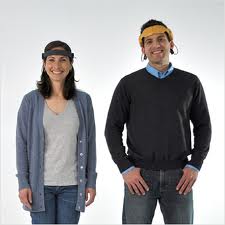
Over the decades marketing has become more and more targeted with new and innovative ways to determine consumer engagement with advertisements. The EmBand and the EmBand 24 are no exceptions. These tools were released just a month ago by the EmSense Corporation and are the most advanced “line of neuromeasurement devices for non-invasive physiological and brainwave analysis specifically for market research.” In other words, they are headsets that measure a participant’s brain signals when he or she is watching advertisements on either a television or computer screen. Additionally, the EmBand and EmBand 24 analyze respiration patterns, eye blinks, head movement, body temperature and changes in heart rates. When all of this data is combined, researchers can establish the cognitive and emotional responses a person has to specific advertisements, which in turn might help marketers create more successful ads.
Although similar devices have been created in the past, the EmBand and Emband 24 far surpass their EEG predecessors because they are less meddlesome. They do not require gel electrodes, are quick and easy to set up, lack additional obtrusive attachments, allow for full participant mobility and are more comfortable. Most importantly, they are a more reasonable price. But, despite their potential value for researchers, I wonder if it might be taking things a step too far. Are advertisers becoming too intrusive by looking into our personal thoughts? Other, more traditional methods for researching audiences rely on participants willingly providing information usually via surveys, but with the EmBand, no one can control the input their brain activities reveal.
So far, the apparatuses have tested more than 100,000 participants in 25 countries so it is already off to a quick start. While it solely depends on the participation of volunteers at the moment, it is uncertain how far this technology will go in the coming years or how the Emband and EmBand 24 will transform marketing. Would you volunteer your brain and body for this new tool?
“We’re the community for social media leaders at the world’s greatest brands.”
~ SocialMedia.org ~
Continuing on the topic of new up-and-coming social media communication, I highly suggest checking out SocialMedia.org. This is a website that I discovered several weeks ago that is a community of individuals running the social media for companies anywhere from start-ups just beginning their media campaign to mega-companies who are already running at full capacity. By being a member of this organization, individuals and companies share ideas, bounce off concepts, and come up with creative ideas and solutions to tackle the social media dilemmas.
SocialMedia.org explains the community that is represents: “Members represent a wide range of both BtoB and BtoC brands. Some of us are leading mature social media programs while others are just getting off the ground. But regardless of industry or length of program, we’re all facing similar issues. We’re not a group of vendors, consultants, or self-proclaimed social media gurus. We’re all figuring out how to make this work within our companies, and every day we’re sharing actionable advice that helps us make better decisions.”
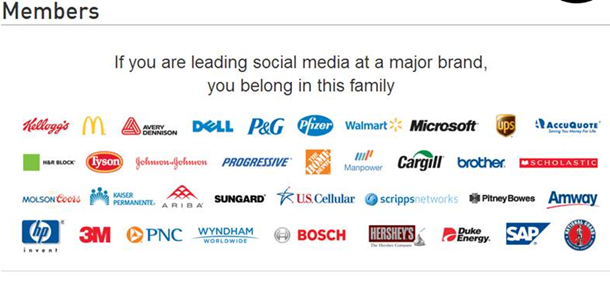
There are hundreds of companies involved in this community. Just to give you an idea of some of the companies involved, see the print screen of logos and brands below…(click on photo to enlarge).
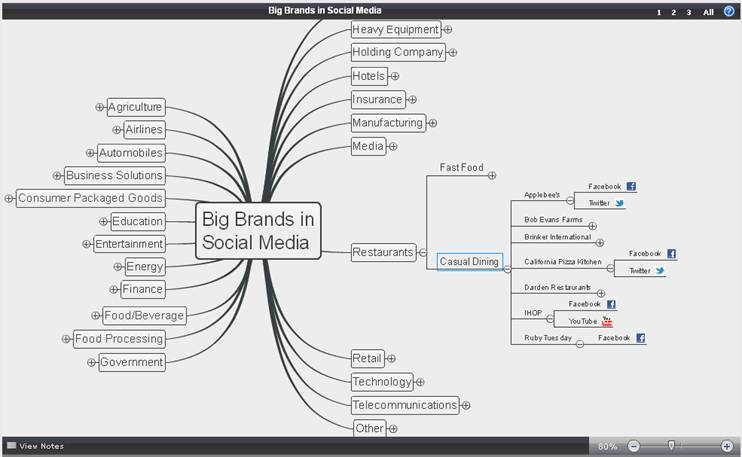
This organization has also developed a tree-like interactive page that displays some of the major players in the social media realm. There are two separate “trees” – one that is based on brands and industries and one that is based on agencies. By clicking on the “branch” that you are interested in, you will then be directed to further options of more detail. After you click on the second “branch” you will be directed to even further detail, such as specific companies. Once you click on the company (or brand or agency) all of the social media sites that they are involved with will appear. (See below for a snapshot of the “Social Media Tree”). Check it out! Hope you find it interesting! (click on photo to enlarge)
Facebook advertising has long had a reputation of being some of the most affordable advertising on the web, but a recent study by Efficient Frontier, a digital marketing firm, may indicate that this is changing. According to the report Facebook is using its dominance and imposed a 40% cost-per-click increase in the first quarter.
One reason given for the increase is that advertisers are realizing Facebook’s “tremendous value.” “As advertisers are understanding this medium, they are allocating budgets, and it’s becoming increasingly competitive. They are willing to pay a lot more to get to the consumer,” according to Efficient Frontier’s Siddharth Shah. This is a huge opportunity for Facebook, and one that they are clearly trying to capitalize on. Even before the increase, Facebook reported $1.86 billion in advertising revenues, so it begs the question, why the increase? Is it simply to increase revenue or is Facebook trying to discourage small business advertising and serve bigger,more high profile companies?
It is obviously to soon to see what kind of effects this will have not only for Facebook, but for the small companies that have become accustomed to Facebook as a resource for affordable advertising. Also, only time will tell whether advertisers will be willing to pay more for advertising on a platform whose ads perform half as well as more traditional banner ads.
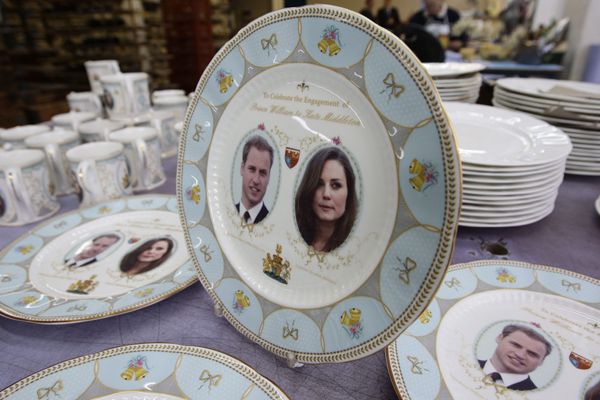
A couple weeks ago I reported on the annual “Win-Win-Branding at the Oscars,” where stars’ images benefit from wearing the most beautiful (and expensive) dresses on the market, and designers can cash in on the reputation boost offered through these stars’ endorsements. Now, the next international high-profile event is coming up: the wedding of HRH Prince William of Wales with Kate Middleton in the UK. Public attention regarding this event has been endless – infinite magazine, newspaper, and TV specials, daily discoveries on things like who’s invited and what the cakes will be made of, and – of course – the merchandise.
"William & Kate" Dinner Set - An alternative to actually dining with the royals
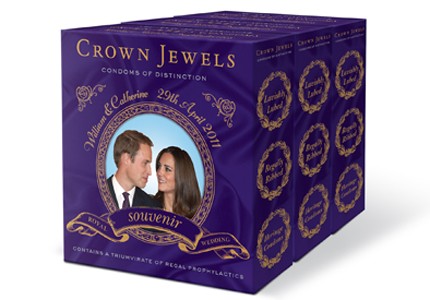
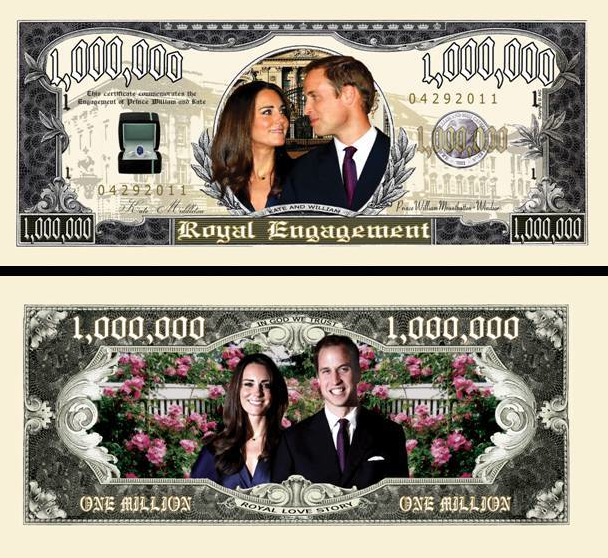
Although the British royal family is usually not allowed to (literally) ‘put their faces’ or names onto any commercial products, an exception has been made for souvenirs “commemorating” the wedding. Clarence House, Prince Charles’ official residency, has issued a very detailed list of which pictures and crests may be used for any memorabilia, and what kind of characteristics (such as durability and design) any royally branded item must possess so as to be approved by the royal family. And the creativity of manufacturers has been endless – you get your usual ‘Will & Kate’ mugs, plates, posters, stamps, and dolls, but also toilet seats, condom collector’s packs, and copies of Kate’s engagement ring (needless to say, the latter three are only available from sellers outside the UK).
Highly controversial - the "Crown Jewels" souvenir
Experts estimate that the sale of such merchandise will generate revenues of approximately $42 million for the British economy, a welcome financial boost given today’s economically challenging times.
However, unlike most merchandise, these ‘Will & Kate’ wedding memorabilia remain unique in that those who actually own and maintain the brand – the British royal family – do not earn a penny in the whole hype. The reasoning behind this is, of course, the fact that the royal family is a representative and a servant to the people of the UK; the people already pay their Queen and her relations for their services with (a lot) of tax money. Still, looking at this number – $42 million total revenue – and at the many UK taxpayers complaining about their money going to an ‘outdated’ monarch, I cannot help but wonder whether in this case one should allow the British royal family to make use of their brand the way companies and organizations do.
If they were allowed to license the use of their names for ‘harmless’ products such as souvenirs, it would generate a whole new source of income for them, and taxpayers could demand to pay less for the monarchy’s maintenance. A very similar development has already taken place a few years ago, when the royal family opened the doors of its many residences to the public so as to generate funds from the entry fees that would allow these properties to be maintained. Most tourists visit places such as Windsor and Buckingham Castle not because they are just nice places to go, but because they are associated with the royal family, i.e. because they have been branded by them.
Thus, it seems that the first step towards using the brand of the British royal family as a source of their income has already been done. Wouldn’t licensing their name(s) for merchandise be the next logical step? Particularly if one were to impose detailed guidelines as to which products could be branded by the royal family and which ones could not?
Is the British royal family missing out on a money-maker?


 Need a fresh piece of artwork? Try out these websites listed within the FastCompany article: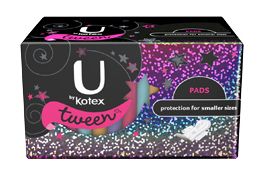





 Facebook advertising has long had a reputation of being some of the most affordable advertising on the web, but a recent study by Efficient Frontier, a digital marketing firm, may indicate that this is changing. According to the