The boomerang effect

Yeirang Lee

This week I found a new interesting marketing communication method called “boomerang effect.” The boomerang effect is the social phenomenon that pushes a person towards anti-conformity (Bird, 2011). In other words, if a social marketing clause tries to strongly change the perception of someone, an equal force will counter that effort. This would then result in an attitude change away from the original effort given by the social marketing clause (Brehm, 1966).

If you still don’t get the concept, don’t worry. It took me a while as well, and it’s really simple once you get it. I’ll give you an example. For example, a group of college students campaigning to reduce alcohol consumption had an effect that increased alcohol consumption among their peers. What happened was that their peers read the campaign statement (The campaign stated that average college students spends $900 on alcohol per year) and realized that they were spending less on alcohol than the average person, so they spent more on alcohol and drank more to drink more than an average college student (Bird, 2011). Thus, the campaign created an opposite effect than the intended purpose.

Another interesting aspect about the boomerang effect is that it can relate with the “magnetic middle,” which is the force that attracts people towards the middle or average (Bird, 2011). So what happened with the alcohol campaign was that they were using social norms to influence the behavior of the students. This social norm provided a point of comparison for the students with the average. Thus those students who were above or below the average were attracted to the middle.

Although I explained the boomerang effect in a light manner, the dynamic relationship between agreement and confrontation is very complex. As I mentioned previously, there are two forces in persuasive communication – one that pushes towards positive change (directed by the communication) and one that resists the positive change. But the degree of force, incentives, language, and other factors implied in the persuasive communication can change the outcome of a boomerang effect (Mann & Hill, 1984). What movie theater marketers are doing now, for example, is that instead of stating “You MUST NOT litter,” they pinpoint signs where the trash can is located. This way, customers who feel as though they have the right to litter as part of the price paid for the ticket do not overtly react and feel that their freedom has been taken away as a customer (Mann & Hill, 1984).

Going back to the boomerang effect, there were also studies that showed there are ways to prevent the boomerang effect. There is what’s called “injunctive social norm” which is described as others’ approval of a particular behavior, and “descriptive social norm” which is the description of the norm, such as given by the alcohol campaign (Bird, 2011). For example, many organizations use injunctive social norms such as the community’s disapproval of littering, but also use descriptive social norms that just state that littering is present and the community should be aware of it to encourage picking up trash. But when both social norms are combined, it can have a powerful effect.

One energy NGO campaigned to reduce energy consumption of the average person promoted four ways to reduce energy consumption: turning off unnecessary lights, taking shorter showers, turning off air conditioning, and using fans rather than air conditioning (descriptive social norms) (Bird, 2011). For those who did better than the average received a smiley face J on their front door, but those who did less than average received a frown L (injunctive social norm). The results showed that the households generally decreased the energy consumption, decreasing the boomerang effect (Bird, 2011).

It’s amazing how social norms can affect us in so many ways. This was a very interesting marketing method that utilized psychology of social norms and I feel as if it can be applied in so many ways. Simple ways include placing both injunctive and descriptive norms in marketing campaigns, billboards, and commercials to make people aware of the issue. Once people find the company to be powerful and persuasive in their act, organizations can have a strong impact on consumer behavior that could have dividend effects.

Bibliography

Bird, N. (2011). Boomerang effect: how you can take charge of your life. Bloomington, IN: iUniverse Inc.

Mann, F. & Hill, T. (1984). Persuasive Communications and the Boomerang Effect: Some Limiting Conditions to the Effectiveness of Positive Influence Attempts. In T. Kinnear, NA – Advances in Consumer Research (pp. 66-70). Provo, UT : Association for Consumer Research.

Brehm, J. (1966). A Theory of Psychological Reactance. New York: Academic Press.

Posted in Uncategorized | 2 Comments

D23: How Disney integrated theme park fan sites into marketing campaigns

by Chuck Lionberger, APR

WANTED:  Millions of passionate fans.  How passionate, you may ask?  So passionate that they go out and write their own fan blogs, create fan podcasts, publish fan magazines and create entire fan communities — all around your brand.  What could be better?

Integrating their efforts into your own marketing campaigns.

I’m not talking about crowdsourcing, the process of gathering user-submitted content to then use in your own marketing materials, instead I’m talking about bringing these ultra-fans into the family and providing a means for them to interact with your brand and experience behind-the-scenes content that otherwise would sit on a shelf or in a file.  The result is to create a huge army of (unpaid) brand ambassadors who interact with others to promote the brand.

This is just what the Walt Disney Company has created.

D23 logoBefore 2009, Disney’s online presence was limited to their standard website.  There was no social media presence, there was no blog, no YouTube channel.  Disney did begin to offer a weekly podcast feed in iTunes starting in 2005, but it died just two years later.  As we have heard in other MCM classes, messaging abhors a vacuum, so Disney fans, especially fans of the theme parks, took it upon themselves to fill the void by creating their own online communities, their own blogs, their own podcasts, their own videos.  Sites like WDW Radio, DisneyDaddy, Touringplans, AllEars and WDWToday emerged to fill the information void left vacant by Disney’s official silence.  These sites were havens for rumors, updates on new releases, updated on theme park attraction refurbishments and much more.  While Disney permitted and quietly embraced these sites, they weren’t in control of the message.
In 2009, Disney CEO Robert Iger created “D23” a community for Disney fans.  Individuals pay a membership fee to get access to special content and events.  With D23 all this changed.  Disney launched the Disney Parks Blog, which has developed into a tremendous official resource for Disney Parks-related news and updates.  Even more importantly, Disney adopted the mentality of the fan sites by providing continuous updates on even the most trivial matters.  Disney also worked directly with the fan sites by holding special conference calls with operators of key fan sites to offer further details of major announcements that the mainstream media may not report.  D23 officials were available to fan sites, making guest appearances on podcasts, videos and blogs.

A key component of the D23 community is the semi-annual D23 Expo – a huge gathering for Disney fans (of all kinds) to come together to hear the latest in what’s coming to the theaters, to the theme parks, to gaming and to television.  At the first D23 Expo in 2009, Disney used the event to announce the largest ever expansion at Walt Disney World.  By coordinating with the fan sites, the news went around the world in a matter of minutes.  At the 2011 D23 Expo, Disney showcased their new acquisition of Marvel with a special appearance by Robert Downey, Jr.  Again, the fans quickly became brand ambassadors, showcasing the benefits of the Marvel acquisition.

With the recent acquisition by Disney of Lucasfilm, there already is a great deal of fan anticipation for what’s coming for the 2013 D23 Expo.  When considering “touch points,” this one event brings together the different facts of the Disney company and displays them in a myriad of ways – from physical exhibits to printed signage, to online announcements and videos to intense media coverage.  Oh, and, of course, there’s a retail element selling D23 exclusive merchandise and a live auction where extremely rare collectible items are sold.

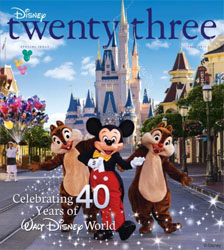
twenty three magazineYet another touch point with D23, Disney produces a high quality magazine, “twenty three” for D23 members with exclusive interviews, photos and collectible items.  Through a special relationship with Barnes & Noble, “twenty three” is available for individual purchase for those who don’t want to purchase a D23 annual membership.

Now as D23 enters it’s fourth year, D23 membership has begun to take on a status of it’s own, especially for those (like me) who are charter members.

What’s next for D23 is anyone’s guess.  What I do know is that D23 was the beginnings of a huge IMC that now encompasses not only the fan sites themselves, but it’s also taken on a life of its own.  It all started with a simple question…

Are you 23?

Posted in Uncategorized | Tagged , , , | Comments Off on D23: How Disney integrated theme park fan sites into marketing campaigns

The State of Print (As of this week, anyway)

When I was offered a position to head up the marketing efforts for 8 newspapers and their digital counterparts in West Texas and throughout New Mexico, I almost brushed it aside like a piece of lint you might find in your pocket. After all, coming from the world of television, I was led to believe that print was dying, going the way of the dinosaur. But after asking as many questions as my current employer actually asked me to see if I was the right fit, my opinion has changed; newspapers are not dying, they’re evolving.

And every medium is following suit.

You see, when you think about the digital world and where audiences choose to get their online information, entertainment, scores, etc., we go where there is the most content. So think of the market you live in. Of the major media organizations doing business in your hometown – let’s just say for the sake of argument we’re talking about television, newspaper and radio, here – which of these media companies is best suited to be the most successful in providing the most online content? Nine times out of 10 it’ll be the company that has the most reporters on staff – the newspaper.

Now let’s take this same scenario but apply it to generating revenue. Of the top media companies in your market, which of them has the most sales staff? In our newspaper group, it is our flagship newspaper that has about as many sales personnel (retail, auto, classified, digital, etc.) than any of the television and radio stations combined. 

As of right now, newspapers that have adopted strong digital models, including e-editions, mobile and tablet apps are looking to grow this revenue while sustaining print revenues. Believe it or not, print revenues are still saving the day for newspapers despite smaller circulation numbers. But the tremendous digital numbers – page views, unique visitor, time spent – compared to other media only shows advertisers and agencies that buying with the newspaper (both print and digital) is a smart way to get a message out there. Here are a few newspaper facts that might surprise you:

  • Because newspaper.com sites more than likely lead the way in terms of page views and unique visitors within a given market, they are able to leverage this traffic in working with companies like Facebook ad titter. For example, the El Paso Times is a Facebook reseller, able to build pages with extra bells and whistles not available to businesses that have a mere fan page.
  • Ever see a local ad on Google or Yahoo? Your newspaper probably created the ad and sold it as a vendor.
  • Did you know your newspaper probably has the ability to sell search, targeted newsletters, behavioral targeting through Yahoo, SEO, SEM, and AdTaxi?

When you stop to think about it, the printed newspaper could be considered a calling card in comparison with all of the digital products available for advertisers. And it’s all because newspapers across the country decided to pull up their bootstraps, get leaner and adapt to the changing times. As a result, they are winning the digital game and have more solutions to offer than most companies today!

Posted in Uncategorized | Tagged , , , , , , , , | 4 Comments

Magazine covers turned into Windows 8 start screens!

If you have been watching any form of media in the U.S. lately, you would have most likely seen an ad displaying the Windows 8 live tile start screens. Whether it is a Surface tablet ad (which we watched in class), a HP laptop computer ad, or a HTC Windows phone ad – they all feature the easily recognizable brightly colored tiles from Microsoft’s new operating system (OS).

Unfortunately, all those ads also neglected to demonstrate how users can have total control over their gadget’s live tiles to truly reflect their personality and needs. Moreover, they were pretty standard typical gadget-related ads that weren’t especially out-of-the-box creative, memorable or intriguing. It wasn’t until I saw the Windows 8 campaign arrive on magazine print that I got interested in learning more about Microsoft’s new OS.

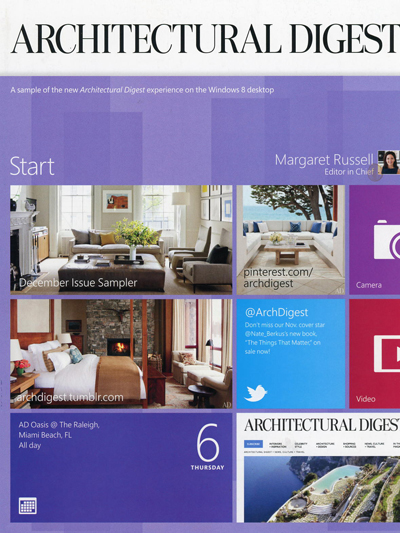
On this December’s issue, Microsoft had managed to take over 14 Conde Nast magazine covers from Vogue, The New Yorker, to Wired, with full page cover attachments that look like a Windows 8 start screen. These Windows 8 start screens are designed and tailored for the magazine’s top editors.

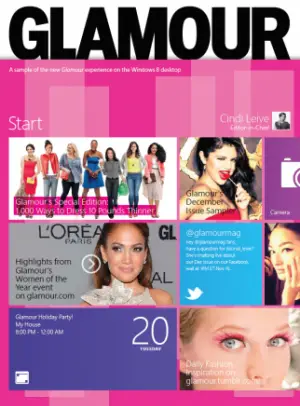
Glamour Magazine’s December promotion featuring a Windows 8 start screen.

Glamour Magazine, for example, depicts a start screen for Editor-in-Chief Cindi Leive with items such as highlights from a magazine event, a tweet that Windows 8 pulled in from @glamourmag, a December Issue Sampler for Windows 8, the Windows camera app, a special edition of the magazine and a holiday-party reminder from the new Windows 8 Calendar app.


It’s not only a great way to show how personalized Windows 8 can get, but also an effective way to target niche consumers; showing a fashion-centric girl who reads Vogue, how Windows 8 can be the fashion-centric phone she wants that cater to her needs.  Additionally, imagine glancing at a newsstand and seeing all the Windows 8 start screen magazine covers staring back at you, it will definitely be a memorable sight and grab most people’s attention!

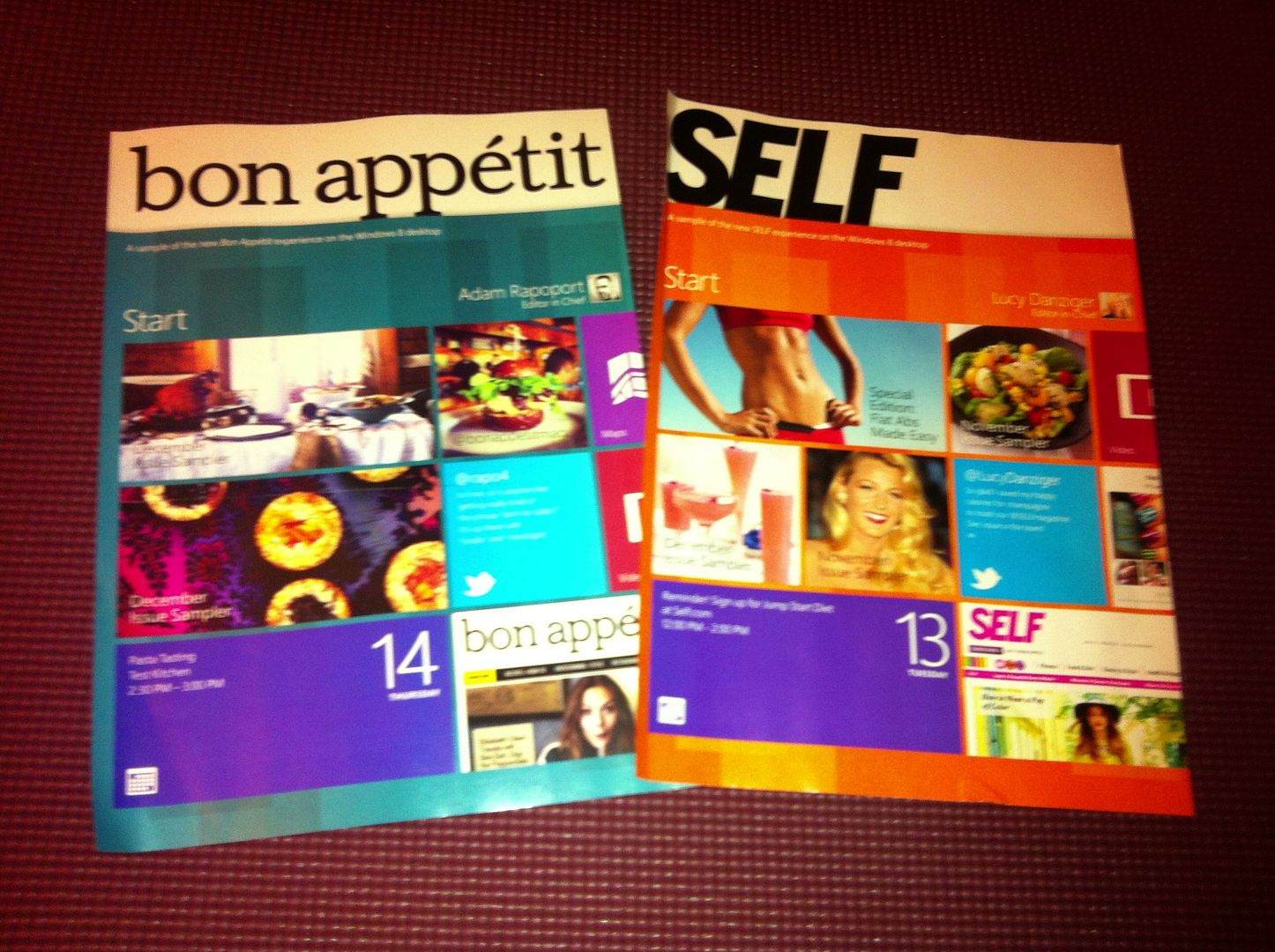
I first encountered these ads at my friend’s apartment. She had just received her monthly magazine subscription on bon appétit and Self, and the unusual magazine cover we were both unaccustomed to, caught our eyes.  It was catchy, and relevant to the reader. My friend being an avid foodie with a passion for fitness, was intrigued and impressed by how those windows tiles really catered to her, and immediately took a picture of it to show her friends.

My friend’s December issue of bon appétit and Self magazine.

The covers are something unexpected, relevant, and catchy; which helps make this print section of the campaign pretty sticky.  As we have previously mentioned in class, ‘the medium is the message’, where the medium of a front page magazine print really influenced how the message is perceived. I believe that having this part of the campaign executed on any other print media such as billboards or bus stands would not have had the same effect.

On a related note, such creative-ness is not often seen on magazines. Editors traditionally avoid involvement in any paid ad covers, partly to show viewers that their content is not heavily influenced by their ads.  So it came as a surprise to me when I found out that Microsoft got these covers attachments for free. The Conde Nast spokesperson explains that the cover attachments had “no advertising dollars involved”, and Microsoft’s paid ads that were inside the magazines were “separate and distinct.” She also clarifies that it was their magazine company’s own initiative to tell readers about its content on Windows 8, and had “clearly coordinated” with Microsoft’s paid ads to make sure they tied together.

A paid Windows 8 magazine ad

I personally find it skeptical that Conde Nast would spend so much money to promote such a new OS platform without a big, ad-buy from Windows in the works. However, in the end of the day regardless of what their agenda is, I think that this collaboration really helped put creativity into magazine print ads, and I would love to see this kind of innovation start to occur more in print advertising.


Posted in Uncategorized | Tagged , , , , , , , , , , , , , , , , , , , | 7 Comments

What IKEA Told Us

With the growth of global consumer market, many companies start expanding their business to foreign countries. When they get into a new market they are not very familiar with, new marketing strategies would be usually created to adapt to local culture and consumers. When you are waiting for the kids meals in Mcdonald’s in Japan, you probably can get a promotional toy of Japanese sumo instead of a superman that is very common to get in the U.S. for your child; when you step into a store of Shiseido in the U.S., you probably can find out most products have the function of anti-aging instead of whitening skin that is primarily promoted in Asia. Companies need to change their marketing strategies to fit in different countries. However, adjusting marketing strategies to meet the standard of foreign culture sometimes might hurt the branding imagine especially when it cannot correspond to human-rights policies.

IKEA recently gave us a good lesson about adapting marketing strategies to local culture. The story begins with its catalog of this year released in Saudi Arabia in early October. People in other countries felt women were totally offended on the catalog because they were even not shown on the catalog! This Swedish furniture giant totally removed women from the photos on its catalogs shipped to Saudi Arabia. As you can see on the following pictures, all the women are wiped out and only men are left on the photos. In most countries, a family means a man and a woman with kids, but on the catalog in Saudi Arabia, a family only means a man with boys. Each year IKEA publishes about 200 million copies of the catalogs with 62 version in different countries, and the pictures printed on these catalogs are very similar. This year is the first time for the company to make a big change on its marketing materials globally, and the purpose of tailoring the photos is to suit local markets and culture, as the company claims.

After the new catalog was released to public, tons of people criticized that the catalog should not omit the women on its marketing materials in Saudi Arabia because the photos conflicted with IKEA’s values to “gender equality”. Many people even photoshopped some famous photos and artworks involved in female figures to oppose IKEA’s marketing practice. Although it’s very common that women in Saudi Arabia need to gain approval from their male guardians if they want to work, study or even drive a car, the government doesn’t have any rules to ban women showing up in marketing materials. IKEA finally apologized on its official website for their changing on the catalog to Saudi Arabia: “We regret the current situation. We should have reacted and realized that excluding women from the Saudi Arabian version of the catalogue is in conflict with the IKEA Group values.”

Besides this, IKEA also changed its marketing materials in Russia. Just a few days before IKEA released the catalog in Saudi Arabia, it removed a picture of four young people in Pussy Riot-style balaclavas from the gallery of IKEA’s Russian website. The photo was part of the marketing campaign in Russia, took the lead in the photo gallery and would become the cover for the catalog of next year. However, because three members of Pussy Riot in Russia were involved in the crimes this year, IKEA felt the photo could be viewed as a support to these three members. The company finally decided to remove the photo and replaced it with a statement to show its online users that “IKEA is a commercial organization that operates beyond politics and religion. We cannot allow our advertising project to be used as a means of propaganda of any kind.”

When companies try to adjust their marketing strategies in different countries, they should not only consider the interior cultural influence but also need to know how the changes influence exterior environment. We are not living in a single country anymore and information tends to connect people more tightly nowadays. Before a company makes a different marketing decision in a different country, it must rethink that whether the change can benefit its brand globally instead of locally.

Posted in Uncategorized | Tagged , , | 10 Comments

Amazon Brand Pages – a hybrid of Facebook and Google?

I hope everyone enjoyed Thanksgiving and Black Friday shopping.

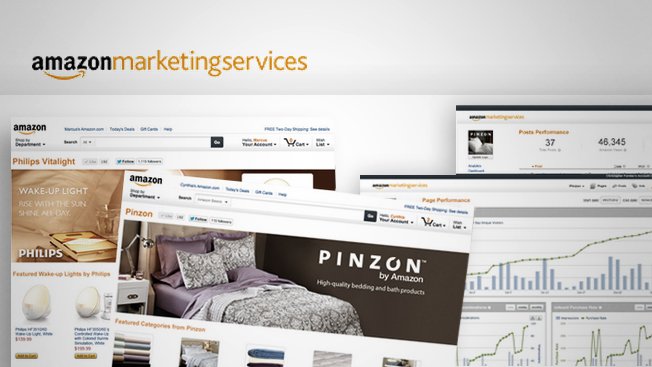
Just before the Thanksgiving holiday, On Tuesday, November 20, Amazon launched a “Brand Pages” section to their website as a personalized Amazon Page for brands to promote and sell their goods. https://ams.amazon.com/products/pages.

The Pages are free to create and lets brands customize their content by creating a microsite on Amazon, just like how it is done on Facebook. Companies can now create their own pages as “custom destinations” under their own domain name under amazon (“www.amazon.com/brandname“), and add features like product pictures, links to social media (e.g. Facebook and Twitter pages) and “merchandizing widgets” (which are links to specific products on Amazon) on their main brand page.

Amazon also lets brands become “more social” in a section called “Amazon Posts” by enabling them to publish posts that could also be synced to the brand’s Facebook page simultaneously. The company also offers a dashboard for brands to monitor the status and circulation of their website through Amazon Analytics, which is also free. Doesn’t the name sound familiar? Google Analytics, Amazon Analytics?

According to Amazon, the main purpose of the brand page is to create a friendly environment so that consumers would feel comfortable to spend more. Brands can also be more involved in communicating with potential customers as they sell their goods through Amazon, and consumers would have easier access to go to a certain brand or reseller directly as long as they know the brand’s name.

Being in the shoes of a particular brand, is it worth it? Companies these days are continuously trying to gain presence in social media by creating facebook fan pages, separate facebook event pages, manage twitter accounts, etc. When I used to work for a tech company, I couldn’t believe the number of brand pages the team had to manage. I felt that the team was basically saying the same thing over and over again through different outlets, but they had no way to respond back to consumers’ comments in time because there were just too many websites to manage. However, Amazon Pages does not seem like another one of those “social media sites.”

Amazon’s brand page is directly linked to the site where its products are sold, which would be more convenient for consumers to check what the brand has to say as well as look at other products that the seller offers – all on the same page. In contrast to other social networking sites or brand pages, consumers would not have to sign up or “like” the page to take part in socializing with the company. Furthermore, Amazon is known for its credibility, and using the same platform would create synergy for brands to promote their products.

Well, it has only been a few days since the platform has been launched. We have yet to see whether this page would be a success or another one of those like friendster and myspace that failed to maintain their pages.


Posted in Uncategorized | 6 Comments

SimCity Social’s success in political economy

For the past few weeks, I have been following the integrated communication strategy through a Facebook video game called the SimCity Social. The game is the extension of it’s famous original game the SimCity where the player works as the mayor of the city, who is in charge of building infatuations, public facilities, houses, and create employments. The mayor’s responsibility between the online version and the original one are slightly different. The online version has been simplified from the original version to fit the Facebook game format in aiming for greater access amongst casual gamers. Not only the interactive system of how the game functions but also the fact that it allows players to connect with their Facebook friends leading to bonds between each players through their interaction with the game. This generates a forced word of mouth amongst the network. The reason I said forced is because; the game itself allows players to request ‘gifts’ from their peers. This is also the way they generate the other players to keep playing the game and motives them to play the game daily.


With continuous visits from their casual and usual players allow the game to become a part of their daily routines. The traffic flow and the popularity of the game shows that the game became a new media channel that has it’s own group of subscribers. With a strong audience base, the game was enables to attract companies’ marketing team to use SimCity Social as one of their medium as part of their integrated marketing communication strategy. The advantages of this media channel in comparison of many others are the fact that customers online or gaming behaviour can be closely tracked for example the number of time they visited the game and/or their purchasing behaviour within the game (such as buying game’s Diamonds and SimCash with real money). Further more, before the player and access the game, they must give permission for the game company to access their personal information. This includes demographics and interests, which is beneficial since the game company could use or sell this information to other brands for commodity. Companies would then be possible to use this information for their potential customer’s insights. Another great this about this method of audience research is the fact that everything is quantitative, however the data might not be absolutely accurate due to the fact that a lot of gamers tend to have false account for games and or multiple accounts to send more gifts to themselves.

In the following section I will demonstrate how the process works:
Oftentimes, players need to be subscribe to, likes, or sign up for a product or a brand in order to claim the reward which is relevant to game players and fits will with the narrative of the game.

Do any of your brands need SimCity Social as part of your communication strategy?


Posted in Uncategorized | Tagged | 4 Comments

5,000,000 views for only $32.99!–Buyral: When you NEED your video to go viral.

Gungnam Style

Justin Bieber

Rebacca Black

The annoying orange

Similarities?

It is highly possible that you are familiar with these names and even watched their videos because their videos went nuts all over the cyberspace. No need to mention what the internet has brought to Justin Bieber and Rebecca Black. They started from YouTube videos and have now became famous stars. Even the annoying orange gets its own segment on cartoon network. Millions and millions of views will not only bring you fame, but also money. The question is :How do you make your videos go viral?

Buyral makes it all possible now. (and I am not trying to make a sell.)

Anyway. Buyral is a company that offers clicks on your video that help your video to go viral,and lets now watch their informative sales video.

Doesn’t sound like a bad idea isn’t it?  Because it says Buyral “guarantees” you with a viral video if you buy their service.

The price isn’t so bad either. 5 millions views is even on sale.

This reminds me of  the Twitter case that we discussed in class where people sell fake fans to make you look more popular. I believe this case is just as controversial. The true value of a viral video to a brand is the attention and the awareness from the audience and possibly potential consumers. However, Buyral is now making all of these values into a mice and multiple clicks. Is this right? Would this work?

Lets see what are the vague values of a viral video.

So the viewership really doesn’t mean everything. Even though Buyral can give you millions and millions of view counts, but it doesn’t give you the things that a real viral video gives.

Lets now take a look what is real viral video marketing:

As mentioned in the clip, a real viral video has many benefits. Viral video marketing is really not just about the view counts. I believe the content still rules everything else. Maybe Buyral and the meaningless viewership will get you a good start? I don’t know. People may get curious to see what the fuss is about a highly viewed video, but if the content is not attractive enough, audience will soon lose interests, and no one wins in the end.

On the other hand, some people might need the viewership and nothing else because some marketing agents have mentioned in the comments of Buyral’s sales video that they had clients asking just for the view counts and were not worried about what that really means.In this case, Buyral is just about to give the right things to the right people: filling the need gap in the market. This is never wrong.

How would Buyral do in the future, better or worse? The question remains unanswered. Do you think buying the views is ethical? or do you see the future of it since the social network is getting more and more powerful?

Let me know what you think of it.


Posted in Uncategorized | 13 Comments

Skyfall + Coke Zero = Unlock the 007 in You

After watching those endless episodes of 007, Mission Impossible or the Bourne series, don’t tell me that you’ve never dreamed of being a secret agent yourself. With the release of the newest episode of the 007 series entitled Skyfall in UK on Oct. 26, Coke Zero is offering everyone the chance to become James Bond for 70 seconds. Well at least that’s what the commercial shows. Check it out here:


It all happened in a train station in Belgium. What’s more to the vending machine routine was a task to get to another Coke Zero vending machine at another platform in 70 seconds to win a movie ticket to the 23rd episode of the 007 series. Undoubtedly it’s never easy to be a secret agent. The escalators were never clear. And there were always a dog walker with a bunch of dogs or spilled oranges and boxes to block your way. Even if you had made your way to the other vending machine in 70 seconds, there was still one last task waiting for you at the destination. You had to sing the James Bond theme song to finally win the ticket. Fortunately it got a lot easier when all the nice people were singing with you. The movie ticket finally came out and it’s the end of the story. The whole plot echoes perfectly with the Coke Zero tagline “Make It Possible”.

This cross campaign for Skyfall and Coke Zero entitled Unlock the 007 in You has gone viral on the web. First of all, it’s cool. Who wouldn’t want to become James Bond even if it’s just for 70 seconds? It’s always tempting to challenge yourself with some mission impossible. In this sense, it fulfills some sort of movie fantasy in everyone. Moreover, while watching those funny encounters on the participants’ way to the destination, you might wonder on a second thought if all this was just a fiction or a documentary. It shouldn’t be hard to come up with a conclusion if you think rationally. And yes it’s all stunts. But does it matter whether it’s fake or real? We are all well aware that movies aren’t real but a lot of times we still find ourselves inevitably trapped in the fantasy. Therefore, it’s a smart campaign as long as it links Coke Zero with the coolness of 007 for consumers.

Here’s a new commercial of this partnered campaign. It looks like the hero manages to accomplish another mission impossible, only that this time it’s a more clichéd plot.

It’s not a first-time partnership between Coke Zero and the 007 series. This is the ad for the promotion of the Quantum Of Solace episode from a year ago.

It’s fair enough to say that the one from last year is more abstract but visual while the new one this year is more concrete and sticky as it tells a story with humor. Now do you feel like trying a Coke Zero or buying a movie ticket? Will this campaign boost the sale of Coke Zero or raise the box office numbers of Skyfall? Hopefully it’s a win-win situation. We’ll see.

Posted in Uncategorized | 13 Comments

A snowman’s secret journey: how John Lewis hopes to melt our hearts in this Christmas

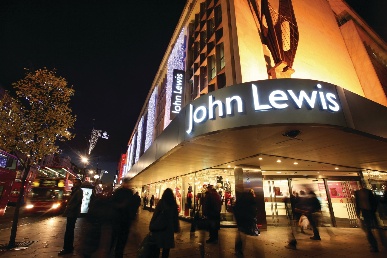
With the coming of Christmas, shopping malls start the war of communication campaign. Tired of mountainous commercials and promotions, John Lewis  draws an extremely different picture of Christmas which creates new understanding on the shopping festival.

Recently, John Lewis launched their 2012 Christmas campaign with a 90-second TV advert called the journey. The commercial is banking on a love struck snowman’s journey to meet his love.

Please click the picture below to watch the sweet video. 

The ad, dubbed ‘The Journey’, opens in a family’s snow-covered garden, with children making a snowman and snowwoman. When the snowman has mysteriously disappeared the next morning, the audience is transported to a magical world, following the determined snowman on an epic journey across river, mountain, road and city. The motive for the snowman’s journey is not revealed until the last scene, when we see him return on Christmas morning.

The love story is unique. Snowman’s love melts my heart. Great visuals and heart rending music leaves the viewer with a lovely warm feeling. I genuinely admire this advert as a tele-visual artwork. Differently with other commercials, it doesn’t actually sell John Lewis nor would it induce me to visit one of their stores. In fact, the advert presents John Lewis’ understanding of Christmas: meeting people you loved, which is much more important than commercials. It’s  heartwarmer in the cold winter and therefore it makes me have a great expression on the shopping mall: considerate, warm and sweet. I have to admit emotional sweet story can always work, at least, for me.

In fact, This advert, which features the tag line “Give a little more love this Christmas“, is the follow-up to last year’s multi-award winning campaign, which is highly praised by BBC news as a breakdown in Ads. Actually I love last year’s video more than this newly launched one. I remember When I saw it the first time, I just cannot help crying.

Please click the picture below to enjoy the video. Please do not miss it.

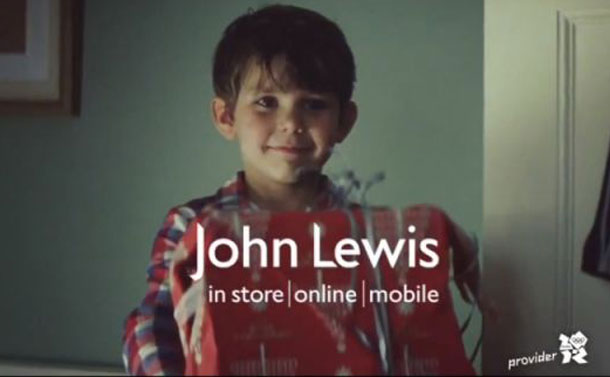
The video features a little boy who could not wait to give his parents the perfect gift on Christmas morning. The child in the video is seven-year-old Lewis McGowan, who in the ad spends 10 days counting off the hours, minutes and seconds until Christmas. Not so he can indulge in a frenzied present-opening fest, but so that he can experience the joy of giving his parents a special gift of his own. The Long Wait is engaging on an emotional level – having a character that we can relate to, such as checking the time again and again, being too exciting to fall asleep and cannot focus on anything else. I totally understand the feeling of cannot wait to give, which is far more excited and even nervous than receiving gifts. I remember every year when I finish preparing the birthday gifts for my parents, I just cannot help telling them before the big day.


John Lewis uses this commercial to press home the real meaning of Christmas – that it is better to give than to receive. Customers put real effort and emotion into finding the perfect gift for their loved ones at Christmas. This commercial succeeds by motivating the philosophy of giving which is extremely hit the core of the festival. More importantly, the smartness is that John Lewis selects an intangible way to encourage customers to consume in the name of showing love.

Above all, I favor the commercials by John Lewis not only because it use a intangible way to describe a beautiful life but also it has been using storytelling to take the viewer through a long-form ad for a few years. It is a successful strategy. Each year, the Christmas commercials it promotes is consistent. When I watch newly launched Ads , I will always go back to review the former ones  and expect more for the next year.

If you would like to know more about John Lewis’ Ads, here is another classic commercial from: Never Knowingly Undersold. This one does not focus on Christmas theme, but I extremely like it because of the Britishness as well as the love story that spans time and space.

The advert is the story of two people falling in love. On the left side of the screen we see the girl’s side of the story. She lives in 1925, the year that John Lewis made its life long commitment to Never Knowingly Undersold. On the right side of the screen we see the boy’s side of the story. He lives in the present day. By bringing their two worlds together as one, we show that falling in love, and embarking on a relationship, is a universal story which will keep being replayed throughout time. The Ads tells us while many aspects of our lives today are very different to almost a century ago, the really important things haven’t changed at all.

Please click the picture below and enjoy the romantic story that spans time and space.


Posted in Uncategorized | 5 Comments