Top 5 inventions coming soon

I am preparing for a Digital Marketing Summit in November. In reviewing the agency material, I came across an interesting YouTube video, Top 5 Future Technology Inventions: 2019 – 2050, that is relevant for today’s organizations tomorrow. This video showcases the top five inventions anticipated to be in market as soon as 2019 and as late as 2050:

  1. Smart Newspaper
  2. Smart CARD
  3. Wall-Format Display Glass
  4. I Watch
  5. Cicret Bracelet

Getting to know future drivers of results – Annually Gartner releases a “Cool Vendors” report across many sectors including the marketing technology space. Innovation in marketing is rising with dramatic impact on budgets. The 2015-2016 Gartner report indicated 71% of marketing executives dedicated a portion of their budget to innovation (up 64% from the previous year). The critical take away is deciding what’s cool and what innovations need to be on your radar screen right now.

Often us Communication Professionals and others within the organization are so focused on the “here and now” communication tactics that we never get a chance to PAUSE to see what’s right around the corner. Emerging technologies, the Internet of Things (IoT) and other trends such as wearable technologies, will change how organizations think and how consumers make product and service decisions. According to the Economist, the good news is new technological advancements and the introduction of gadgets create new markets and new employment opportunities.

If you are interested in next generation inventions, subscribe to Generation Challenge.

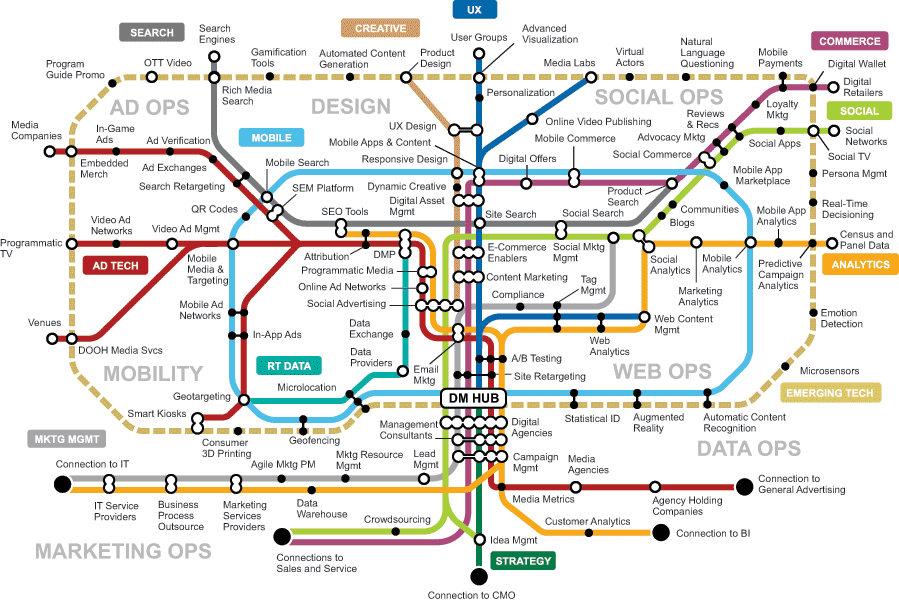
Gartner’s 2016 Marketing Cool Vendor Visual 

transitmap

References

Cool MarTech Vendors for 2016 – Gartner Blog Network. (n.d.). Retrieved from http://blogs.gartner.com/kirsten-newbold-knipp/2016/05/11/whats-cool-in-marketing-technology-in-2016/

The onrushing wave | The Economist. (n.d.). Retrieved from http://www.economist.com/news/briefing/21594264-previous-technological-innovation-has-always-delivered-more-long-run-employment-not-less

Top 5 Future Technology Inventions | 2019 – 2050 – YouTube. (n.d.). Retrieved October 23, 2016, from http://www.youtube.com/watch?v=vbNHCn2gHQ4

Posted in Uncategorized | 9 Comments

The NFL’s “A Crucial Catch” Campaign: Genuine Charity or Underhanded Marketing?

In recent years, the National Football League (NFL) has observed each October as National Breast Cancer Awareness Month. For viewers tuning into NFL games in October, they have likely seen pink football equipment such as caps, gloves and wristbands worn by players to commemorate the month. On the field, they will also see breast cancer awareness logos and cheerleaders dressed in pink and sporting pink pompoms. The league has even produced memorable commercials featuring popular players as part of its campaign:

While brands have long tried to alter their perception by aligning themselves to charitable causes, the question must be asked as to why the NFL, a professional sport played only by men, would choose breast cancer awareness for a major communications campaign? Is it a genuine attempt to raise awareness for a disease that affects women? Or does the NFL have an ulterior motive in trying to broaden its fan base and viewership to women? Well, it depends on who you ask.

According to the NFL, “More than $8 million has been raised for the American Cancer Society through the partnership… The NFL does not profit from the sale or auction of pink merchandise.” (NFL, 2016). The NFL clearly views the “A Crucial Catch” campaign as a charitable endeavor that raises money to help raise awareness about a terrible disease.

However, there are plenty of detractors who would disagree. Basen (2013) writes, “Research suggests that the NFL and its corporate partners are more concerned with enhancing their public images — especially among women — and ultimately revenues, than they are with addressing breast cancer, and they seek to manipulate NFL fandom in the name of public health.” To buttress this point, Basen (2013) discusses “cause-related marketing” where brands have used marketing campaigns to benefit charities as well as themselves.

Other detractors argue that if the NFL was truly interested in supporting breast cancer awareness, the league would give a much greater percentage of its revenues to the cause. Notte (2015) argues how the money raised by the NFL so far in this campaign is extremely small when compared to the billions of dollars the league makes in revenue each year. He states, “It’s become such a brazen publicity stunt that each year, we’re treated to a different story about how the NFL raises just about no money to increase cancer awareness, education or screenings.”

While it would be impossible to determine the true motives of the NFL’s “A Crucial Catch” campaign, there is ample evidence for both its supporters and detractors to debate.

References

Basen, R. (2013). Pink-shaded marketing. Sports On Earth. Retrieved from: http://www.sportsonearth.com/article/62332742/

NFL.com. (2016). NFL supports National Breast Cancer Awareness Month with A Crucial Catch campaign. Retrieved from: https://nflcommunications.com/Pages/NFL-Supports-National-Breast-Cancer-Awareness-Month-With-A-Crucial-Catch-Campaign.aspx

Notte, J. (2015). The NFL’s pink October is a publicity stunt. MarketWatch. Retrieved from: http://www.marketwatch.com/story/the-nfls-pink-october-is-a-publicity-stunt-2015-10-21

Posted in Uncategorized | Tagged , , , | 21 Comments

A Game Company Would Say, “It’s All About Brand Experience”

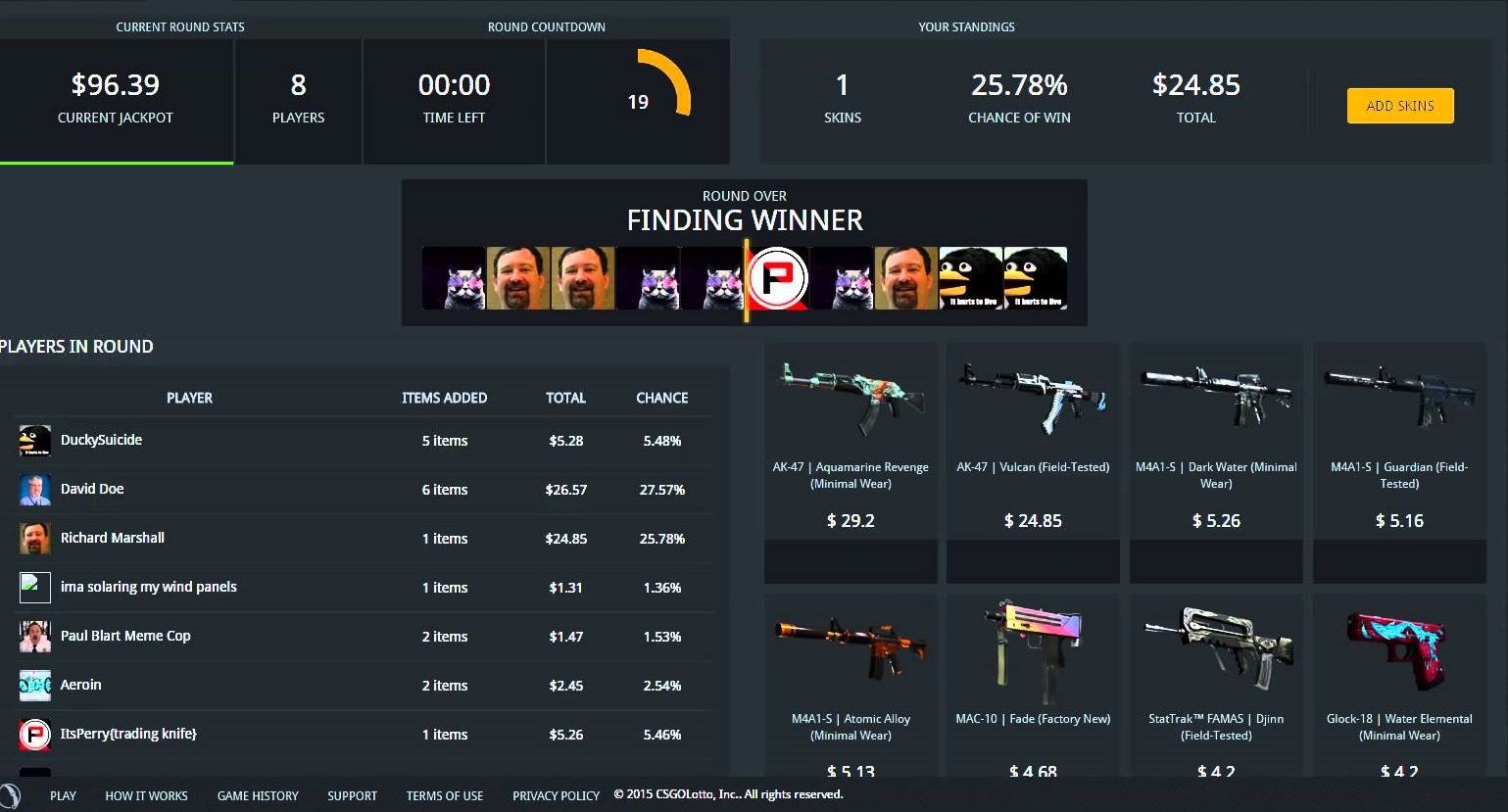
I have a friend who regularly plays a Counter-Strike: Global Offensive (a.k.a CS: GO), a classic shooter-video game with a giant international gamer society. During our recent outing, she brought up the topic of how unethical CS: GO was for instigating its players to gamble for its purpose of increasing its publicity and viewership and motivating its fans to stay in its society. I am neither a cyber or video game player nor an expert in cyber game cultures; however it is surprising how some game businesses execute exemplary, effective marketing strategies, while they have some ethical, legal “gray areas” that concern the public. 

4-0

(Source: http://www.polygon.com/features/2016/7/18/12203534/counter-strike-cs-go-skin-gambling)

Again, I never lived in the gaming world. Although I did some research on this topic, I am still unsure whether I fully understood some of CS: GO jargons such as “skin betting,” and “gun skins.” For those who are not familiar with these jargons like I am, here are my notes from my research on this global-wide scandal in the gaming world.

– CS: GO has multiple relevant websites and social media platforms that carry out a multitude of the gaming experience for its players.

-The websites allow players to buy and sell gun skins, virtual game items used in the game, exchanging real cash.

-Some websites enable players to gamble with the virtual game items which players can get either from playing the game or by purchasing with actual money.

-The gambling practice has grown large which led to the largest wagers to be around $4000.

-The owner of the game deceitfully posted YouTube contents as if a gamer sharing tips of how to make money out of gambling practice. The purposes of his postings were to publicize CS: GO and to motivate the gamers to stay engaged with the community (Leslie, 2016).


Due to their unethical business practices, two lawsuits have been filed and are risking its future. Although I detest its beguiling practice, I want to give credits for its attempt to expand the gaming experience for its users. The game company The expansiveness of this gaming society motivated people to pay real cash to buy virtual items off the game platform and made their purchase experience rewarding (Gumussoy 2016).
CS: GO strategies emphasize real brand experience and consumers’ engagement with the brand.  Gamers feel real to live in and felt strong connection which made them striving to earn more rare game items to maximize their satisfaction in the gamer society. The more real the community is, the more natural gamers will form emotional connections that led them to exchange real cash to buy and sell virtual game items. To create the realness, the company has taken advantages of the online gamer community as gamers from all over the country discuss the game-related topics. CS: GO’s strategy was effective but ended up losing consumer’s trust as it deceived loyal fans.  

Business leaders stress the importance of creating a unique brand experience and emotional bonds between brands and consumers. “Human connections are emotional. The power of emotion is what bonds us together and build trust” (Coughter 2012). Their strategies proved how important it is to make the brand experience as real as possible for the consumer.  Consumers want to purchase products that matter to them and has intangible, emotional values. However, it must be supported by consumers positive emotion and trust. Unethical business practices will cause irreversible damage to the brand image like CS:GO is currently going through.  

Reference

Altin Gumussoy, C. (2016). Acceptance of the virtual item auctioning system in online games: The role of intrinsic motivation, extrinsic motivation, and trust. Human Factors and Ergonomics in Manufacturing & Service Industries, 26(5), 627-637. doi:10.1002/hfm.20682

Coughter, P. (2012). The art of the pitch: Persuasion and presentation skills that win business. New York: Palgrave Macmillan.

Leslie, C. (2016, July 26). The CS:GO gambling scandal: Everything you need to know. Retrieved October 14, 2016, from http://www.dailydot.com/esports/csgo-gambling-scandal-explained/

Posted in Uncategorized | 4 Comments

Captivating on Mobile: Considerations for Brands

As consumers spend an ever increasing amount of time on mobile, so it is becoming all the more important for brands to optimize their campaigns on the medium. In this pursuit, there are several considerations for brands seeking to captivate consumers on mobile.

Balancing In-App & Mobile Web
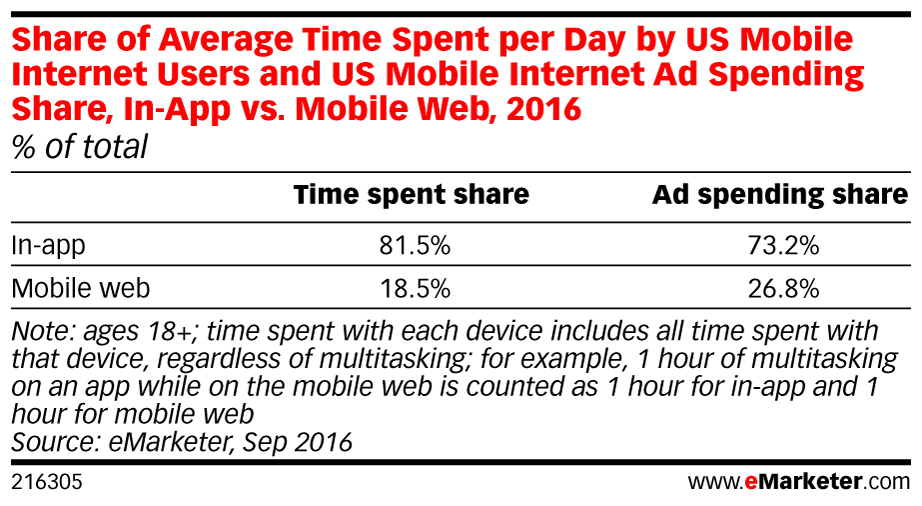
Unfortunately, many advertisers are over-spending on mobile web advertisements relative to the time users actually spend on these properties.

216305

Currently, only 18.5% of mobile time spent is on mobile web, yet mobile web claims 26.8% of mobile ad spend. Meanwhile, 81.5% of time spent on mobile is spent in-app, yet in-app advertising accounts for only 73.2% of ad spending share.

As such, it would behoove advertisers to rethink their media mix to more closely align consumer content consumption behaviors.

Addressing Viewability
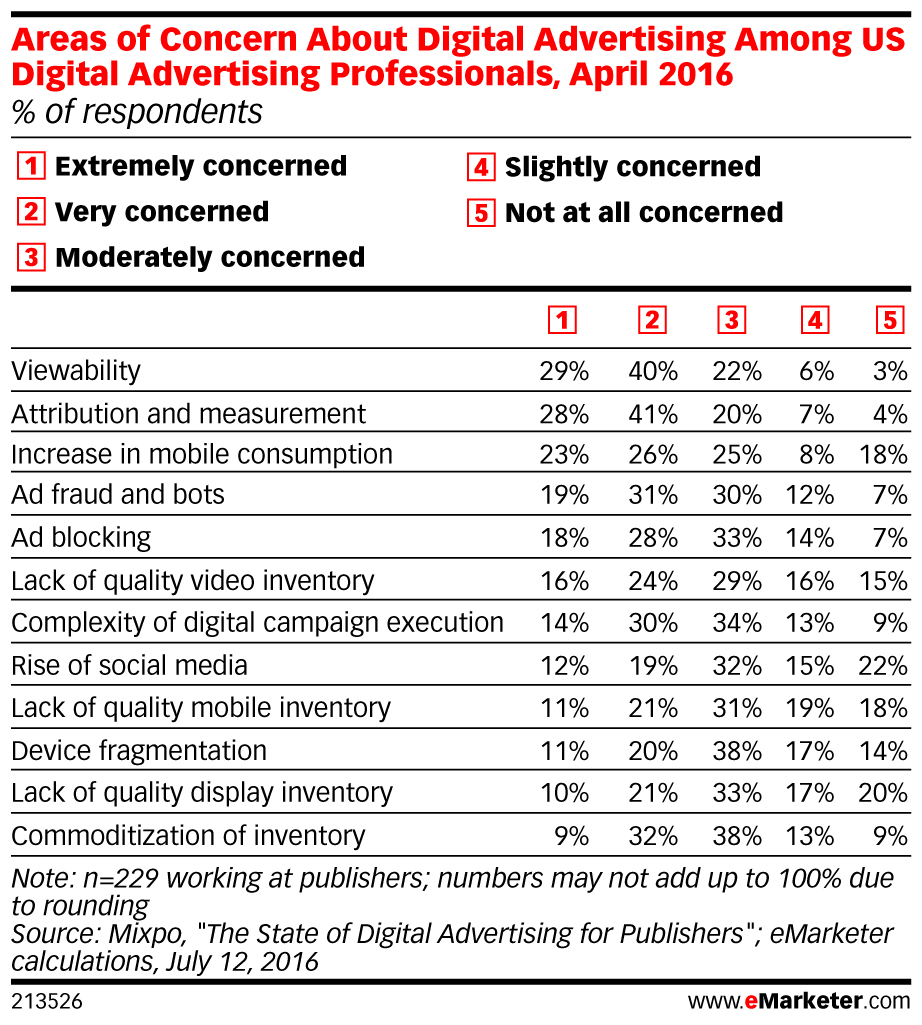
Another area of concern for brands advertising on mobile is the viewability of their ads. After all, what good is a paid impression that isn’t truly seen? It’s no wonder that 91% of digital ad professionals working at publishers cite viewability as a moderate to extreme concern.

213526

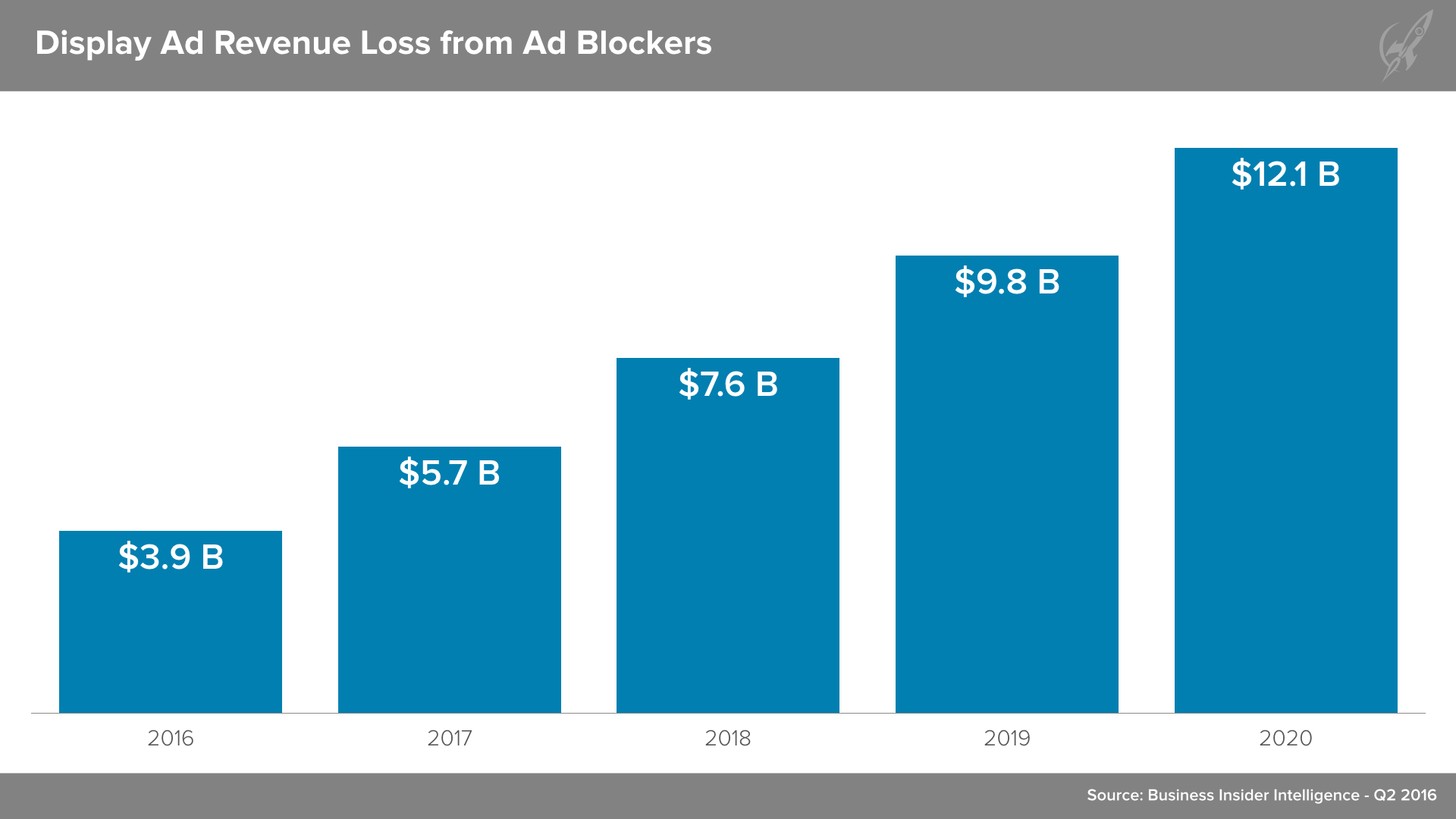
In the same vein, it’s not surprising that 79% of advertisers are concerned about ad blocking. After all, ad block usage is projected to double in the next few years, with potential display ad revenue loss expected to crest over $12 billion.

adcolony_chart_05-17-16-002

So what can a brand do to ensure their ads are seen, and not scrolled past before it loads, is in focus, or is caught by an ad blocker? There are several options available, including:

  • Change the bid. Bid based on actions (CPA) instead of impressions (CPM), thereby ensuring the brand never pays for an impression that wasn’t seen.
  • Go in-app. Place mobile campaigns exclusively within apps, which are free from the ad blocking vulnerabilities of mobile web.
  • Get verification. Bid through a tracking & attribution company that has verifiable standards for viewability.
  • Go full-screen. Consider premium, full-screen interstitial ad placements in lieu of cheaper & more easily ignored banners.

Optimizing Creative
Finally, brands must consider optimizing their creative for mobile environments. After all, what captivates on a television or desktop may fall flat when shown on a 4″ screen, and 79% of mobile users will reject content that’s not optimized for their device.

So what can a brand do to optimize their creative for mobile? While there are countless best practices that vary by campaign objectives, there are numerous baseline considerations, including:

  • Leverage non-standard times. Just because a television spot is typically produced in 15 second intervals does not mean that a mobile video ad needs to follow the same timeline. In fact, it’s been shown that performance campaigns perform the best when they are 23 to 29 seconds in duration.
  • Use close shots & quick cuts. A comScore study has shown that in-feed ad units that offer product closeups & snappy cuts between a handful of scenes are the most captivating for distracted mobile audiences.
  • Don’t rely on audio. Many mobile users have their phones silenced, so ad creative that relies on an audible narrative may fall flat. Consider subtitles and key text callouts to tell the story.
  • Shake things up. Haptic feedback can be integrated into mobile ad creative to create more immersive experiences.

Summary
In short, if brands want to optimize their campaigns and truly captivate users on mobile, they must rethink their budgets, their placements, and their creative. Anything less is a waste of money, time, and consumer patience. Anyone who has ever quickly closed out of an ill-designed ad on their phone knows this to be true.

Posted in Uncategorized | 5 Comments

Craft beer: Is this market “saturated”?

It’s Fall, so naturally, I think about football…and beer.

beer-tailgating-recipes-featured-558x800

I load myself up in my Uggs and flannel shirt and head on down to my local grocery store to stock up before the big tailgate party. But wait! Where did all of these beers come from? Not long ago it seemed one had only about a dozen choices in the beer aisle; Budweiser, Coors, Corona. Not anymore.  Enter the Craft Beer movement.

So many choices! Is this market "saturated"?

As USA Today News reports in the article Craft beer movement comes to a head

There are more breweries in the United States than at any point in country’s history. Is the market becoming, shall I say, saturated? 

In the spirit of my educational pursuits, I decided to investigate this beer issue myself.  In the Product Life Cycle theory, a market cannot continue to grow forever. I mean, how much beer can a nation drink? The craft beer market began in the early stage of life as development and introduction into the mainstream beer consumer market gradually.  With the hipster anti-large corporation movement of local, homegrown brand choice, the craft beer movement became acceptable and preferable ( thus entering the growth stage).  Alas, all good things must come to an end as they say in Product Life Cycle Theory.

Product Life Cycle Theory

So many choices! Is this market “saturated”?


As such, sales stabilize and mature with small increases.  Lastly, the product enters the decline phase, where demand is low and the once thirsty craft beer drinking masses no longer see value in their cute, unique different craft beer product.

One thing is for sure, doing market research has never tasted so good!

Is this tasty trend on the way out?

Is this tasty trend on the way out?

Posted in Uncategorized | Tagged , , , , , , , , , , , | 6 Comments

Whose Trendy?

Hello Trojans,

I have learned many lessons critical to marketing success while in the MCM program. The research I have done in this program has proven organizations who either create or are closely connected to the latest trends tend to be successful. We have seen many examples of success for those who create marketing trends. Organizations such as Coke and Disney have provided guidance for us to unleash our creativity in the business world. Pulizzi (2016) describes the latest trends in 2016 for marketing and shares his perspective on “Influencer Marketing.” Much of our studies have focused all marketing efforts outward towards the public. For this discussion, I would like to focus those efforts inwards toward our internal customers, our employees. Please indulge me for a moment and consider if we took what we have learned and applied it to internal marketing campaigns. How much better would your workplace be?

Influence marketing is described as users looking to their peers for feedback rather than companies (Unknown, 2015). The same can be said for employees within an organization. Each of us have looked to peers for influence and feedback for a variety of reasons. Perhaps we do not receive enough feedback from our boss or the organization has a poor culture surrounding internal communications. What would exceptional internal marketing look like? Who has examples of recent trends in corporate internal communication campaigns?

Pulizzi, R. 2016. Influencer Marketing: The Latest Strategies, Template and Tools. Retrieved from: http://contentmarketinginstitute.com/education/the-complete-guide-to-influencer-marketing-strategies-templates-tools/

Unknown. (2015). 10 Reasons Why Influencer Marketing is the Next Big Thing. Retrieved from: http://www.adweek.com/socialtimes/10-reasons-why-influencer-marketing-is-the-next-big-thing/623407

Posted in Uncategorized | 2 Comments

“Are you one dimensional?”

“Integrated marketing communication is a holistic approach to the areas of advertising, public relations, branding, promotions, event and experiential marketing, and related fields of strategic communication”(Persuit, McDowell Marinchak, Ebrary, 2016, p 1).

As an undergrad in PR we learned to be a jack-of-all-trades, our department was in the journalism school so we saw collaboration of all areas of journalism.

images

Today as a communication student I have learned that in the real world this is considered a holistic approach. Communication is not one-dimensional so we can no longer be one-dimensional practitioners. We are fighting for space and impressions in a multi-faceted digital environment; we can no longer depend on reaching our customers during prime time TV in the 8’clock time slot. Even the most expensive and well thought out commercial is subject to on demand viewing.

Heather D’Amico  (2015)is also a blogger who shared six M’s for mastering your integrated marketing campaigns. They include, market, mission, message, media, money and measurement. Campaigns must be shared across multiple platforms to be deemed worthy of a consumer’s time. These six M’s are a good starting point to avoid being one-dimensional.

imgres


Customers know they have the power in their hands, and they want to be wowed! Organizations know that their dollars don’t stretch as far as they used to, and they want to be wowed! How do we do this? We stay multi dimensional. We use all of our integrated marketing tools together to create campaigns that reach television viewers, online surfers, social media addicts, tweens, millennials, the gen-xer, baby boomers, and everyone that has two eyes.

So here is my advice, stay multidimensional and your campaigns will never fall flat!


Reference:


Persuit, J. M., McDowell Marinchak, C. L., & Ebrary, I. (2016). Integrated marketing communication: Creating spaces for engagement. Lanham: Lexington Books.


D’Amico, H. (2015, April 14). The 6 M’s of Mastering your integrated marketing campaign. Retrieved from http://www.carnegiecomm.com/blog/the-6-ms-of-mastering-your-integrated-marketing-campaign/


Posted in Uncategorized | 4 Comments

Where have the brand logos gone?

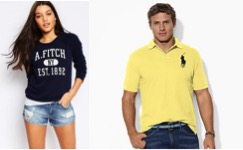
       Millennials are disrupting the way consumer shop. Retailing 101 shows that brand logos are an effective way to integrate marketing communication while advertising the brand. Retailers such as Ralph Lauren and Abercrombie and Fitch have built an empire in advertising their logo. To wear their logo meant that you were “in” and that you belong to certain class of consumers. To a company, brand logo symbolizes the company’s DNA, status and represents the lifeblood of the brand. Brands logos adds value to the brand and create brand equity (Keegan & Green, 2012). Trying to belong to a class group is not new. A study conducted by Guven and Sorensen shows that “perceived social class is highly correlated with happiness while actual social class is of little importance” (2012). With this information, retailers appeal to the emotional senses of “wanting” to fit in. They are selling a dream, a lifestyle and the opportunity to belong.

preppy

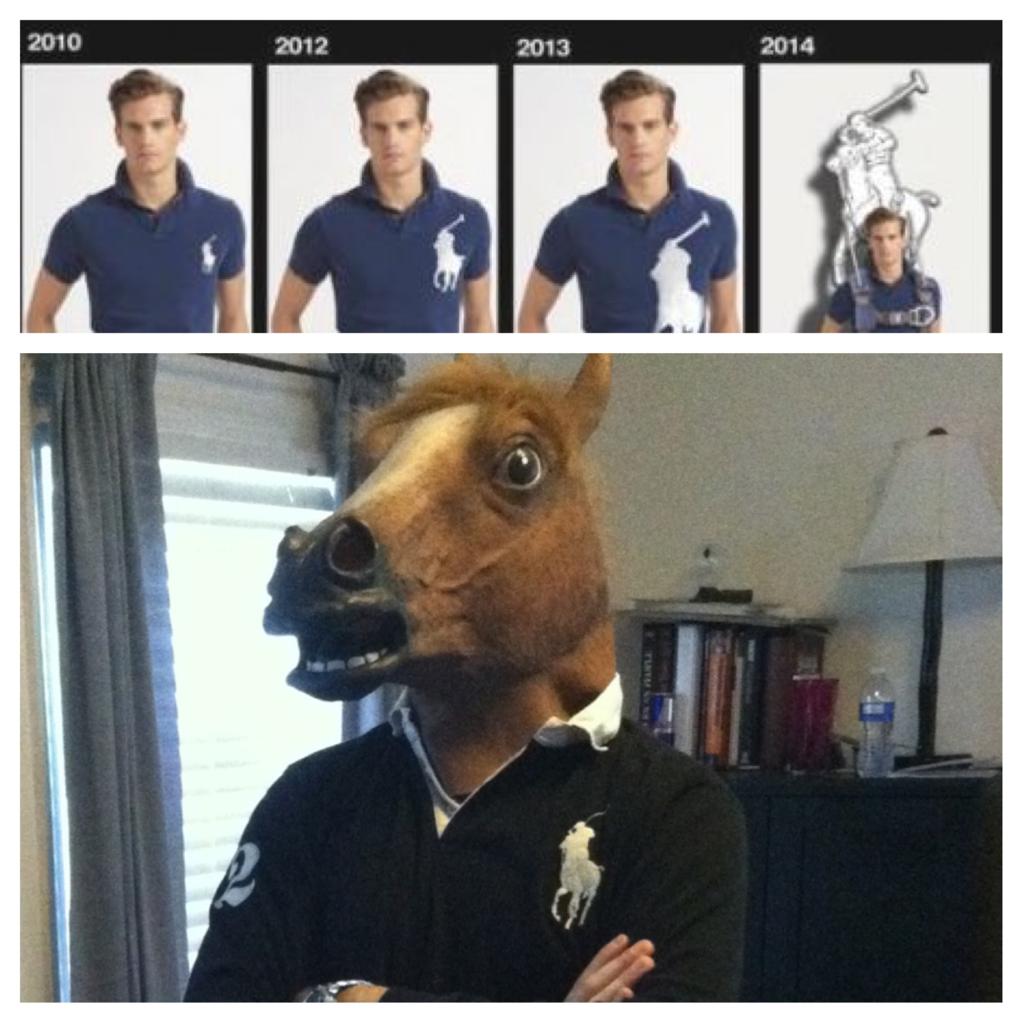
When you wear a brand’s logo, you are telling everyone that you are hip, belong to a certain class, and embody what the brand stands for. This was the guiding principle many brands leveraged in the 90’s and 2000’s. Brands were making their logo bigger, brighter and putting in on everything! Although a satirical view of brand logo evolution, the photo below gradually shows how ridiculously big the logos were getting! The brand logo in apparel and accessories were the early iterations of the #hashtag!

polo

Now that millennials making up a bigger portion of the consumer spend, and since brand logos are no longer en vogue, many companies that were built on logos are suffering. A report conducted by Goldman Sachs indicated that millennial prefer clothing without labels. With consumer preference changing, many brands have minimized the presence of their logo and many have opted to get rid of their logo altogether. Without the logos, many companies have become unrecognizable. Since most brands offer similar styles, without their logos there are no differentiating factors that distinguish one brand to the other. This, coupled with millennial discretionary shopping habits changing, many companies have lost millions.

Earlier generations derived status from what they bough or wore, but millennials are after experiences rather than material goods. With this disruption in consumer spending and different shopping patterns, what are retailers doing? For one, many brands have increased their social media presence. With the increase in social media, retailers are hoping to increase social marketing and gain leverage power of social and mobile marketing to attract millennials. Second, retailers are increasing their social corporate responsibility (SCR) to attract millennials. A study by Stanford, has shown that companies that have increased their SCR, have increased in profit. Retailers know that millennials care about causes important to them, so retailers are slowly shifting focus to their philanthropy work.

The road ahead looks grim for some retailers. Millennials would rather spend their money one nice dinners, experiences and more tangible items than clothes, causing many retailers to shift their offerings to non-branded goods. Many retailers like Kate Spade, now offer practicality and function over brand names. Kate Spade has started to shift their focus to craftsmanship – a trait that millennials favor. So if retailers want to survive and attract millennials, they will need offer an assortment that compliments their values, goals and aspirations.

References

Guven, C. & Sørensen, B.E. (2012). Subjective well-being: keeping up with the Joneses. Real or perceived? 109: 439. doi:10.1007/s11205-011-9910-x

Keegan, W. J. & Green, M. C. (2016). Global marketing (9th ed.). New Jersey: Prentice Hall.

Nelson, M.E., (2012). Millenials want to party with your brand but on their own terms. Advertising Age. Retrieved from http://adage.com/article/digitalnext/millennials-party-brand-terms/236444/


Posted in Uncategorized | 13 Comments

Emotions: They Made Me Do It….

Being that I am turning 30 at the stroke of midnight, the following statistic struck a cord: “By age 30 you have seen close to two million commercials” (ISPO News, n.d.). Can you remember the last commercial you have seen? Out of those two million commercials, I can honestly say I can’t remember one from yesterday or last week. Perhaps, that is all in thanks to a little technology called the DVR, that has caused many of us to forego watching commercials at the drop of a pin. The only time it is important to watch commercials is during the Super Bowl, or if you are my fiance you enjoy watching commercials any day of the week. The ability for consumers to retain commercial communication has decreased dramatically since 1965 with 34% of television viewers being able to remember, with a sharp decline to 8% in 1965, and 2.2% in 2007 (ISPO News, n.d.). In fact, the real reason for television viewers being unable to retain commercials is due to a lack of originality and the inability to differentiate brands. This type of information is not what companies want to hear when they are investing millions of dollars into advertising and marketing.

In fact, it gets even worse for companies, “90 percent of all purchasing decisions are made subconsciously” (ISPO News, n.d.). Marketing guru, Martin Lindstrom, conduct one of the world’s most extensive marketing studies in order to understand how the subconscious influences our buying behavior. He has been able to conclude the importance in companies focusing on neuromarketing instead of consumer polling. Neuromarketing introduces a new field of marketing research that focuses on a combined study of consumer “sensorimotor, cognitive, and affective response to marketing stimuli with psychology” (ISPO News, n.d.). This method introduces brain scans that can help in understanding “why a product has a positive or negative effect on consumers’ (ISPO News, n.d.). In addition, it will provide researchers with more understanding into a consumer’s reaction to brands and products. This method is called the functional magnetic resonance tomography, or fMRT.  

slir

Apple, Coca-Cola, or Nivea are brands and products that are experts in being able to evoke emotions, resulting in a win. George Loewenstein, behavioral economist, says, “A major part of our brain is busy with automatic processes, not conscious thinking. A lot of emotions and less cognitive activities happen” (ISPO News, n.d.). Therefore, the subconscious of a consumer explains buyer behavior much better than the conscious.

Brands and emotions aren’t the only ones that mix well and influence consumers to purchase products, so do scents, well at least vanilla does. When a scent is able to tug at our emotions, all rational barriers are eliminated. Ever wonder why vanilla makes us feel all cozy and happy, and buy every product that smells like vanilla? Well, it is because “vanilla scents stimulate sales because we associate the scent with mother’s milk” (ISPO News, n.d.). How is that for an ice breaker? Perhaps, it is a subconscious stimulant, because when I am at Bath and Body Works the products smell good but definitely don’t remind me of my mother’s milk.

References:

ISPO News. (n.d.). 90 percent of all purchasing decisions are made subconsciously. ISPO News. Retrieved from http://mag.ispo.com/2015/01/90-percent-of-all-purchasing-decisions-are-made-subconsciously/?lang=en

Young, A. (2014). Brand media strategy: Integrated communications planning in the digital era. New York: Palgrave Macmillan. Chapter 5-6.

Posted in Uncategorized | 9 Comments

Bloggers are Shaking Up the Beauty Industry

Beauty Blogging Image

(http://www.makeupandbeautyblog.com/wp-content/uploads/2016/01/interns.jpg)

Beauty lovers, this one’s for you!

Remember the excitement you used to feel when the newest issue of your go-to fashion publication would hit the stands or your mailbox and you’d flip straight to the beauty section to see what must-have products you needed to add to your makeup arsenal? Well, I do and I can tell you those days are over and the traditional way of advertising in the beauty industry is slowly becoming irrelevant.

Beauty bloggers have become a powerful force in the industry. Their large followings on social media platforms like Instagram, YouTube and Snapchat allow for a wider reach resulting in increased engagement with fans and a heavy influence on consumers. From makeup tutorials to product reviews, consumers are increasingly reliant on bloggers for beauty education or to help them determine their next beauty purchase. An example do this was when beauty blogger Arielle Charnas of Something Navy posted a Snapchat of a gel mask. Within 24 hours, the brand sold 502 masks. Crazy right?

Because of this, there has been a shift in the beauty industry’s marketing strategy and the once dominant reliance on magazine editorials and ads has been pushed aside in favor of digital marketing. Today, more and more beauty brands like L’Oréal and Smashbox have reallocated a majority, if not all, of their advertising dollars towards social media ads and partnerships with some of the most popular beauty bloggers.

This change is not sitting well with everyone in the industry though. In the past, bloggers have been considered fake journalists, and to beauty editors that view themselves as real journalists, this digital take over is not a welcomed one. Bloggers have now become the editor’s colleague and a highly paid one as well. Beauty brands have been reported to pay bloggers as much as five figures for both short and long-term partnerships.

Although beauty bloggers have not received the warmest of welcomes from beauty editors, they have proven to be an effective marketing asset for many beauty brands. Research done by Pixability, an advertising firm, shows that the videos created by the most popular beauty bloggers on YouTube have significantly more views than videos produced by the beauty brands themselves.

Ultimately, the digital take over of the beauty industry looks like it’s here to stay and beauty editors will have to learn to adjust and play nice in the proverbial sandbox.

References

Hope, C. (2016, September 28). Beauty bloggers continue their dominion over brands on YouTube. Retrieved from http://jezebel.com/beauty-bloggers-continue-their-dominion-over-brands-on-1787191480

Strugatz, R. (2016, August 10). Bloggers and digital influencers are reshaping the fashion and beauty landscape. Los Angeles Times. Retrieved from http://www.latimes.com/fashion/la-ig-bloggers-20160809-snap-story.html

Posted in Uncategorized | 8 Comments