Predictions in Mobile Marketing for 2014

We are now into the final month of 2013 and it has been a banner year for Internet marketing. According to Nielsen figures, there is over 60% of smartphone penetration in the states, with one out of three people owning tablets at home. With this increasing penetration, people working in marketing for any business will need to rethink their mobile marketing strategy. I have researched and analyzed the market and would like to share with you some trend predictions for 2014.

Real time bidding growth surge

RTB allows advertisers to buy ad space on a person-by-person basis. Picture retrieved from http://blog.sitescout.com/2013/02/rtb-zeitgeist-real-time-bidding-for-dummies-feb-19-2012/

In 2013 mobile real-time bidding was bought by twitter and went mainstream. Real time bidding is a new method of of selling and buying online advertising in real time and has become the fastest growing digital ad segment. You can look for this trend to continue far into 2014 with at least 45% of the mobile ad buys for the year going through RTB. This growth spurt is due in part to mini PC ad buyers finally coming on board with the RTB model and continued growth in the mobile market. Mobile real-time bidding gives buyers that are transparency and higher monetization for sellers. Marketers definitely need to adapt to this new model as soon as possible in order to execute better digital strategies and increase advertising exposure.

Mobile first approach for web properties

Picture retrieved from http://www.theguardian.com/media-network/ebuzzing-partner-zone/mobile-advertising-trends-2014

Nowadays, we spend more than half of the time opening webpages and applications on our mobiles. According to eMarketer, 71% of the U.S. smartphone users check their email with their mobiles. In 2014, with more and more people having access to smartphones, increasing amounts of emails and websites will be opened on mobiles, changing from a PC channel to a mobile focused channel. To successfully market products and services, it is expected for marketers to focus and prioritize mobile optimization for all web properties. Better technology and optimization will provide a better experience for direct sales and advertisements.

Twitter will increase accessibility to third party clients

Picture retrieved from http://mediame.com/en/news/headlines/advertising-business/twitter-adds-scheduled-tweets-advertisers-only

According to comScore, over 90% of the time what are will be access not from a laptop or PC but from a mobile device. Presently there are very few third-party Twitter clients that apps that will support a twitter based ad. The use of twitter will continue to grow exponentially and third-party clients are going to be improving their applications so as to take advantage of this new avenue of traffic. Twitter clients like the twitterrific desktop version, tweet lines, twidere and tweetbot do not support Twitter at this time. The prediction for 2014 is that all of them will climb on board.

Conclusion

Sense 2013 saw a marked increase in the sale of mobile devices, this translate to an increased number of people that will access the Internet and all of its social media avenues from these devices. In order for businesses to get a significant return on their investment than 2014 they will have to gear their marketing efforts toward mobile applications. Internet marketing is entering into a new age and if businessman of going to keep up they will have to meet their prospective clients where the they live.

Do you see any other trends that might emerge? Please comment and share your foresights and ideas!

Reference:

http://www.adknowledge.com/blog/the-4-biggest-opportunities-for-mobile-marketers-in-2014/

http://www.theguardian.com/media-network/ebuzzing-partner-zone/mobile-advertising-trends-2014
http://www.mediapost.com/publications/article/212955/2014-trends-in-mobile-marketing-and-advertising.html


Posted in Uncategorized | 1 Comment

Xbox ONE doesn’t do it for the money… They do it for the world

In a response to Moran’s post I decided to take the other side of the fence.  Since the release of the Microsoft Xbox, Sony’s Playstation has been trying to remain relevant and not lose the grasp it has in the gaming world.  And for both these consoles it looks like the release of their new consoles are trying to monopolize this industry, because the release of the Xbox ONE and PS4 are not going to be profitable for either company.  The Xbox ONE is priced at $499, and the PS4 is sold at $399, and they are both cost very close to that to be made.  The Xbox ONE costs $471 to be made giving them only a $28 profit on each console.  Playstation 4 costs $381 to be made giving them only $18 profit on their console (Whitney, 2013).  This may not mean anything to you, but Andrew Rassweiler, an IHS analyst states that if the cost is $10 to $20 of the retail price, there is very little chance there is going to be a profit made on the console (Whitney, 2013).  This reveals that neither Microsoft nor Sony is trying to get rich off this new release, but I am assuming it is to be dubbed the king once and for all.

imagesCAA0XYUV               So how is either of these companies going to attack the market?  Sony has focused on targeting the die-hard gamers, which they believe is the smartest way to earn their crown as THE video game console.  Microsoft has decided to go a different route by earning the belt as the console champion and that is by, turning it into more than a video game console.  They have made the Xbox ONE into more like a living room entertainment center that doesn’t necessarily focus on games.  It interacts with your television, comes with Netflix, Hulu, and Skype (Bass, 2013).  They have gone on to say that one will be able to put a camera on the front door and the Xbox will be able to identify who is at the door (Bass, 2013).  Another change that the Xbox ONE will bring is a flush look with the rest of Microsoft’s products unlike before.  Before, they explain Xbox consoles being like a sullen teenager in dealings with its parent’s company; It kept its distance and pretended like they were not related (Bass, 2013).



For Xbox’s marketing strategy besides being an all-in-one entertainment center, Forbes explains that the U.S. may not be Microsoft’s main market they are trying to impress.  In their ads they have appearances from Liverpool football star and England national team captain Stephen Gerrard, and other European presences (Thier, 2013).  There were very few Americans put in their ads for their new campaign (Their, 2013).  This is most likely because, as popular as the Xbox 360 was in America, it was not in Europe or Japan.  So they are trying to expand their territories by focusing on Europe, by bundling the European consoles with the FIFA game and having non-American accents on the console (Their, 2013).  I am not a big gamer, and will probably have neither console for a long time, but I feel myself pulling for Microsoft.

References

Bass, D. (2013). Xbox Is a Test for the One Microsoft Strategy. Business Week.

Thier, D. (2013). Microsoft Begins Major Xbox One Marketing Push. Forbes.

Whitney, L. (2013). Microsoft squeezes little profit out of each Xbox One. News.CNET.com

Posted in Uncategorized | 2 Comments

The story of a bear and a hare–Creativity helps John Lewis?

John Lewis Christmas ad.   Retrieved from http://www.theguardian.com/business/2013/nov/08/department-stores-christmas-advertising-campaigns

John Lewis Christmas ad. Retrieved from http://www.theguardian.com/business/2013/nov/08/department-stores-christmas-advertising-campaigns

John Lewis recently released its Disney-inspired Christmas ad. At the very beginning, the ad tells audiences “there once was an animal who had never seen Christmas”. The animal is a bear that always sleeps over the winter. His friend, a hare, wants him to see the beautiful Christmas tree and celebrate the big day with all his friends. The hare bought the bear an alarm clock as the Christmas gift. The bear was woken up by the alarm clock. He was just in time for the big celebration of Christmas. At last, the ad says, “give someone a Christmas they’ ll never forget”. (To view the ad: http://www.youtube.com/watch?v=XqWig2WARb0)

John Lewis Christmas ad  Retrieved from http://www.dailymail.co.uk/news/article-2491761/John-Lewis-Christmas-advert-tells-hare-making-sure-bear-best-friend-doesnt-miss-out.html

John Lewis Christmas ad Retrieved from http://www.dailymail.co.uk/news/article-2491761/John-Lewis-Christmas-advert-tells-hare-making-sure-bear-best-friend-doesnt-miss-out.html

Creativity makes a difference. In the fierce competition, only the ones with creative ideas can make consumers remember them. This time, John Lewis thinks outside the box. Its competitors, Marks & Spencer and Debenhams John, show the products that can make decent gifts in their ads, which are quire straightforward and predictable. John Lewis chose a different path. In the ad of bear and hare, John Lewis only shows one product, an alarm clock. John Lewis is not showcasing its products in the ad but conveying the message: the Christmas gifts from John Lewis gives the one you send the gift to a splendid memory.  The positive association is constructed in consumers’ minds.

John Lewis’s marketing director Craig Inglis notes, “we are trying to do things differently and always trying to raise the bar.” John Lewis wants to add some playful elements to its ad. This time, it succeeded. The ad has created huge storm of intrigue on Twitter. The discussion of hare and bear puts a spotlight on John Lewis. Also, John Lewis has spent £6m on TV airtime and £1m on press, online media, cinema and events. John Lewis is making use of multimedia channels to make the bear and hare enter the public psyche.

John Lewis Christmas ad  Retrieved from http://www.dailymail.co.uk/video/video-1067741/John-Lewis-Christmas-Advert-2013-The-Bear--The-Hare.html

John Lewis Christmas ad Retrieved from http://www.dailymail.co.uk/video/video-1067741/John-Lewis-Christmas-Advert-2013-The-Bear–The-Hare.html

The ad of bear and hare has attracted much attention. Inglis said that John Lewis intended to use the animation to say more about their products. He thought the story-telling approach was effective in making emotional connections between consumers and John Lewis. Indeed, the lovely story and delicately created animation caught consumers’ attention and created buzz. John Lewis successfully differentiated itself from its rivals, Marks & Spencer and Debenhams John.

However, the ad encountered critiques. Some people point out that the ad is not straightforward enough. The implicit information conveyed in this ad may not be fully understood by consumers. Therefore, the communication effects may not be as good as what John Lewis expected. Also, the cost of £7m is relatively high. People doubt that the money was not spent wisely.

Here I have three questions for you to discuss. First, do you like the ad? Second, do you think it has conveyed the information effectively?  Third, is creativity always a good thing? Why or why not?

References

Butler, S. (2013). John Lewis pins Christmas hopes on £7m hare and bear advert. Retrieved from http://www.theguardian.com/business/2013/nov/08/department-stores-christmas-advertising-campaigns 

Hawkes, S. (2013). John Lewis launches nationwide contest to find new voice for its Christmas ad. Retrieved from http://www.telegraph.co.uk/finance/newsbysector/retailandconsumer/10460348/bear-and-hare-best-Christmas-ads-Lily-Allen-John-Lewis-Christmas-adverts-Xmas-ads-Steve-Hawkes.html

Posted in Uncategorized | Tagged , , , | 8 Comments

PlayStation 4 Marketing Campaign–Biggest Ever

I haven’t decided to buy a Sony PlayStation 4 until I saw the newly-released advertisement The Players Since 1995, which aroused my nostalgia for PlayStation memories from bygone eras. This great advertisement triggered my interest about the whole marketing campaign for PlayStation 4, and a few unusual facts are found.

Sony is betting big on the PlayStation 4, since the PlayStation 3 is a fail, making the company lost roughly $500 million in 2009. In fact, the company has repeatedly said that it “can’t fail” with the PlayStation 4, as the games division is now such a big part of the company’s bottom line. Accordingly, the upcoming PlayStation 4 marketing campaign will be the biggest Sony has ever done, for any product: in the North America market alone, Sony will spend $100 million to promote the PlayStation 4 during the selling season from Thanksgiving to Charismas this year, which means that Sony need to sell roughly 286,000 PS4 consoles to cover the budget. In addition, to compete with Xbox One in price, Sony will lose $60 for each PS4 console sold. Overall, Sony has to rely on the sales of games and PlayStation Plus subscriptions alongside the hardware to get the money back.

graph

PlayStation 4 Marketing Budget (source: gamingbolt.com)

The PS4 marketing to date is trying to position the console stark different from its most immediate competitor, Microsoft’s Xbox One. While Microsoft is touting the Xbox One spots as an entertainment system with multiple uses (blue ray drive, motion control, Netflix connection, food order, etc), Sony’s PS4 is very clearly targeting at hard-core video game players.

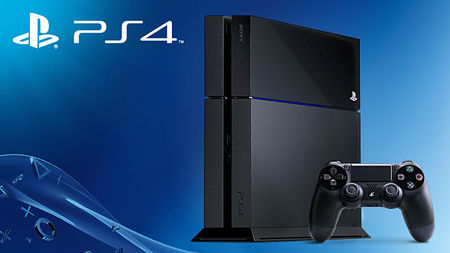
PS4

Sony Next-Gen PlayStation 4

So whether it worth to spend such a great amount of money on marketing, and whether the marketing segmentation for the PS4 is too narrow? The sales data may give the answer: Sony sold over one million PS4 consoles within the first 24 hours after its launch. But the question is always like this: what percentage of the sales could be attributed to the marketing?

Source: http://www.geek.com/games/sony-will-sell-every-ps4-at-a-loss-but-easily-recoup-it-in-games-ps-plus-sales-1571335/

http://ps4daily.com/2013/04/playstation-4-marketing-budget-tops-100-million/

http://ps4daily.com/2013/10/playstation-4-marketing-campaign-is-the-biggest-in-sonys-history/

https://www.gamespot.com/forums/system-wars-314159282/sony-s-marketing-budget-for-ps4-largest-in-its-his-30870807/?page=1

http://news.cheatcc.com/articles/391791

Posted in Uncategorized | 5 Comments

The Rise of the Mini-Campaign

1

In Store Ads (Source: Starbucks Facebook Page)

2

Starbucks Share Joy (Source: news.starbucks.com)

Yesterday, my friend texted me and asked me to go to Starbucks to share a lazy afternoon and have some coffee, because there is a promotional event at Starbucks – Share Joy. When you buy one holiday beverage, you will get one free to share.

On November 12th, 2013, Starbucks transformed all their US stores, welcoming the holiday season. And the Share Joy campaign started on November 13th, and ended today, November 17th. To promote this campaign, Starbucks have print ads and hand drawing ads in stores; a banner ad on its commercial website; a special website for this event at http://www.starbucksholidayjoy.com/?promo_id=3# where you can add your own wish to the web page, and share it with your friends through Facebook, Twitter, and email; a TV commercial; and promotional texts and graphics on its social media sites.

Share Joy – Starbucks

This kind of mini-campaigns is becoming more and more universal in today’s technology advanced society, argues by Kristen Cavallo, chief strategy officer at Mullen, and one of the judging panel for this year’s Jay Chiat Awards for Strategic Excellence, an annual competition organized by the 4A’s.

Cavallo claims that a central component of modern marketing planning is the development of mini-campaigns. Mini-campaigns help brands win in the short term, whether that be during the holidays or back-to-school season. Such a requirement is partly a response to the advent of real-time marketing and measurement, and puts pressure on agencies while simultaneously fostering a tighter focus and liberating them from traditional restrictions.

A mini-campaign is like one chapter in a book. Cavallo points out that current marketers incline to write the book in chapters, as opposed to create a whole story in one sitting. And there is the added complication that you don’t always know where the next chapter is going to lead. She stresses that planners now need a broader skill set and a multidisciplinary mindset if they are to understand the array of channels now available.

I think mini-campaigns can help a brand increase its sales in a short time. However, marketers should have a clear stated marketing strategy, which leads these mini-campaigns. If not, different mini-campaigns may work for their own sake, but will not do anything good for the brand’s long term development.

Have you noticed any mini-campaigns recently? What do you think about the rise of the mini-campaign?

Posted in Uncategorized | 9 Comments

Capitol Couture: Living in the world of The Hunger Games

Speaking of film marketing, what do you think of? Posters, billboards, trailers or website? Tim Palen, the Lionsgate’ marketing chief does not thinks in that way. He goes beyond traditional film marketing campaign, bringing the universe to life in an elaborately detailed campaign for “The Hunger Games: Catching Fire”.

Fashion Magazine Capitol Couture: Bring Panem to life and Alternative way of product placement

capitol

Cover page of Capitol Couture (Source: CapitolCouture.pn)

During the year-long campaign that launched last November, Palen created an online fashion magazine, Capitol Couture, modeled after luxury publications like DuJour, Gotham and Ocean Drive, built around the ultra-rich and style-obsessed capitol city of Panem, the fictional nation in the bestselling author’s trilogy of young adult novels. Reading Capitol Couture, people would feel like that they were living in the city of Panem.

capitol1

Collins, the writer of The Hunger Games was also excited of this brave idea, “It’s appropriately disturbing and thought-provoking how the campaign promotes ‘Catching Fire’ while simultaneously promoting the Capitol’s punitive forms of entertainment. The stunning image of Katniss in her wedding dress that we use to sell tickets is just the kind of thing the Capitol would use to rev up its audience for the Quarter Quell (the name of the games in “Catching Fire”). That dualistic approach is very much in keeping with the books.”

Cover Girl via Capitol Couture (Source: CapitolCouture.pn)

Cover Girl via Capitol Couture (Source: CapitolCouture.pn)

Apart from bring the fictional nation to reality, generating the context of the new movie; Capitol Couture was also a perfect platform for product placement. Overt product placement or sponsorships were annoying and would turn off fans, no matter how subtle they were. However, products in Capitol Couture were ambient ads, relating to the film but not violate its own territory. It provides a place for promotional partner Cover Girl to tout its products and tie in with the film. Fashion e-tailer Neta-Porter and nail polish brand China Glaze are other beauty partners tying in via Capitol Couture.

Capitol Portraits: turning posters release into events

march

Capitol portrait of Katniss (Source: Varitey.com)

In March, Palen and his team used Capitol Couture to create a series of so-called Capitol Portraits — dramatic photographic images that revealed the look of the sequel’s 11 major characters who play significant roles in laying the groundwork for the final rebellion in the third and fourth films.

Other studios release such photos as character posters, but Palen does not want to do  something so mundane, and at the same time carefully control the story he was trying to tell — while also having some fun. Lionsgate turned the release of each portrait into an event, sending images as exclusives to a variety of online partners like MTV, IGN, Yahoo Movies, Empire, MSN and the Huffington Post, and through the fake magazine’s Instagram, Tumblr and Facebook feeds. The shots were first teased with empty chairs on Instagram, which generated considerable buzz on their own, and helped four different characters trend on Twitter in the week their portraits were released.


Film marketing in today’s society, while less people go to cinema compared with 50 years ago, is so important that it sometimes determines the life or death of a film. “The Hunger Games: Catching Fire” provided a good example of using digital media to bring the imaginary nation to life, blurring the line between fantasy and reality, as well as merging the commercial product into the culture of the film. It also turned every ordinary advertisement into event, generating more buzz around the film. Therefore, as Palen suggested, this film might attract not only teens and tweens, but also Hispanics, African-Americans, fashionistas, even seniors.

However, people may question the idea of “audience creation” by advertisements. Even though sometimes advertisement becomes more and more important, for many people the content is still the priority. No matter how successful the campaign is, people who are not interested in the theme of the film will not go to cinema.

Which is your favorite movie marketing campaign? Do you think film marketing is more important than the content of the film? Have you ever been attracted to the cinema because of its marketing campaign?

References:

http://variety.com/2013/biz/news/lionsgates-tim-palen-crafts-stylish-universe-for-hunger-games-catching-fire-1200772931/

http://variety.com/gallery/photos-catching-fire-marketing-timeline/#!4/march/

http://capitolcouture.pn/home

Posted in Uncategorized | 13 Comments

Get ready for the Black Friday?

Midnight approaches—it’s almost Black Friday 2013! Are you ready for a turkey meal with your family? Do you have plans to go somewhere for a refreshment? Or perhaps, you are getting more and more excited just like I am. See, it is the biggest deal season in the year. Nobody wants to miss it! —-We know it, so do merchants.

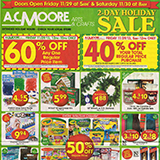
Walmart      A.C.Moore

According to Ewoldt (2013), as much as 40 percent of retailers’ annual sales were rung up during the holiday season and retailers had been taught about the fact long before. In this year, with television ads and doorbuster-worthy deals kicking in as early as Nov. 1, the holiday push has already been underway. Retailers were fully prepared with bag of tricks to woo Black Friday shoppers, through which, they were hoping that this year’s Black Friday weekend would bring bigger sales than last year (about $580 billion), when retail sales actually fell 1.8 percent.

Strategy 1: The Price War
From home department to fashion, beauty and food, we can find special savings and coupons almost everywhere. Take Walmart as an example, its best deals include an Emerson 50-inch HDTV for $288 and Monster Beats by Dr. Dre Solo headphones for $115 (Dealnews. com). However, the question is—- will the special price strategy work to drive traffics to Walmart’s stores?

The answer will probably be no. As Ben Nettleton, the web editor of Global Healing Center, Walmart’s strategy may work for its stable of cost conscious shoppers, but it will not be enough to bring in the haters. For example, part of the reason that many people hate going to Walmart is dealing with the crowd. (See the video below and you will know how crazy it was in the last year).

Other reasons that may keep consumers away from Walmart include the convenience of online shopping experience and similar deals available from other retailers. Consumers are always expecting bigger discounts. For them, many deals of Black Friday are simply not big and attractive enough.

Strategy2 The Earlier the Better

8771283_161838838000_2

The early opening strategy largely aims to take business away from competitors, and prevents rivals from doing the same. In this year, many retailers decide to start sales earlier than past few years. They are—-
* Target (sale starts at 8 PM Thursday, 11/28)
* Kohl’s (sale starts 8 PM Thursday, 11/28 and earn $15 Kohl’s cash for every $50 spent November 26 – December 1)
* Costco (some sales starting Sunday 11/24, some sales valid Friday 11/29 through Sunday 12/1 and some sales only valid online 11/29 – 12/1)
* BJ’s (sales starting as early as November 24)

Also, Stores will open early on the Thanksgiving Morning
* Kmart: Opens 6 am on Thanksgiving morning through 11 pm on Black Friday
* Sears: Opens 8 am on Thanksgiving morning through 1 pm Friday they will offer their doorbuster sales

According to Mark Bergen, the associate dean of marketing at the University of Minnesota’s Carlson School, the earlier opening strategy does work. “If I get you into my store first or second, I may get 20 or 30 percent of a consumer’s dollars instead of 10 percent,” said Mark Bergen.
However, when this strategy is widely adopted, will it still be effective? How do you feel about it? Is really the earlier the better?

Strategy3 Social Media Battlefield

2010425214039323
For business giants, social media has already been part of their media strategies to reach people and maximize campaign effects. On Facebook, we can see a lot of promotions from them in recent days. However, for small business, social media is also their best choice for celebrating the Black Friday, because the budget of social media is low yet the ROI is high.

In November. 10, Tech Cocktail published a short article, talking about social media strategies for especially small business to win the Thanksgiving season. It said that small business should ‘launch targeted social media campaigns designed to alert consumers to Black Friday deals while promoting their brand as a small business worth talking—or tweeting—about’.
As part of media integration, social media is playing an increasingly significant role in marketing strategy. In the meantime, the competition on this battlefield is getting fierce and cut-throat. Comparing to selling giants, does social media benefit small business more?

While we are all expecting for the coming Black Friday, it is good time to share  Black Friday information and plans with friends. Or tell me anything you are interested in with these campaigns.


Reference
Ewoldt, J. (2013) Retailers Will Try Bag of Tricks to Woo Black Friday Shoppers, Nov 16.
http://www.startribune.com/business/232148351.html
Prosser, F. (2013) Black Friday New Ads: Target, Walmart, Kmart, Sears, Kohl’s& Many More! Nov 15.
http://www.wral.com/black-friday-new-ads-target-walmart-kmart-sears-kohl-s-many-more-/13115208/
Smith, J. (2013) Are Walmart Black Friday Deals Big Enough to Get Haters in the Door? Nov, 15.
http://www.gottabemobile.com/2013/11/15/walmart-black-friday-deals-big-enough-get-haters-door/
Tech Cocktail (2013) Banking on Black Friday: Savvy Social Media Strategies for Your Business, Nov 10.
http://tech.co/banking-black-friday-savvy-social-media-strategies-business-2013-11

Posted in Uncategorized | Tagged , , | 8 Comments

Are you ready for 30 Squats challenge?

Do you Squat?

Would you Squat for a free metro ticket?

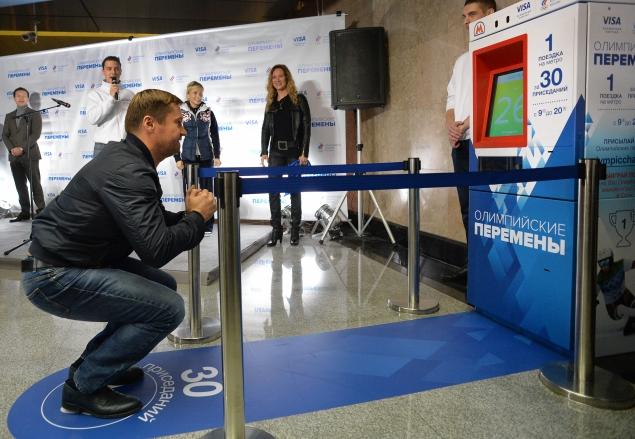
Sochi 2014 Winter Olympics is coming soon and Russian Olympic Committee have started to create a noise by engaging people to fitness. Vystavochnaya station in western Moscow has a ticket vending machine that provides free metro ticket in exchange for 30 squats in two minutes. The machine will be in the Vystavochnaya station through November with the mission to add element of sports in daily life of people.

30 Squats challenge in Moscow.

I love this idea because there is engagement and involvement of the people. The Russian Olympic Committee could have developed ads and prints as well as other marketing elements to spread the message but they have implemented the idea by giving the feel of the message in an entertaining way to the audience. It creates an inspiration to exercise in contrast to receiving information only. The participation of the Olympic players in the activity has also influenced the people to consider the 30 squats challenge.

dv1573871

‘Imagine a person who does 30 squats at least 2-3 times a week for a month? It will definitely add some basic fitness in the person’s daily life. And as said, it takes only 21 days to form a habit. So, we never know if people will continue the habit for long term.’

P.S. USC is hosting 2014 Special Olympics Southern California Summer Games from June 6 to June 8.  Would you participate if they had a machine that would give you a drink as a reward for 10 Jumps in 2 minutes?


Posted in Uncategorized | 3 Comments

Upworthy on the up and up?


upworthy logo and slogan

If you’re not familiar with Upworthy.com, the social justice-centric website known for its conscientious, edifying, positive content, just sign onto Facebook for a brief moment and wait for a somewhat distant Aunt or an over-30 cousin to post a link. Odds are, it will be Upworthy content. Think something along the lines of:

“I Never Thought I’d Want to High-Five a Teacher for Yelling at a Student, but I was Wrong”

“You’d Never Believe that Coca-Cola and Pepsi would Stoop So Low”

or

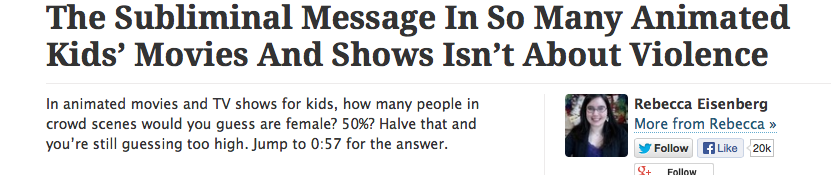
“The Subliminal Message in so many Animated Kids’ Movies and Shows isn’t About Violence”

Immediately, you’d be struck by the headline. It’s vague. It’s scary. It invites so many questions. I imagine the thought process of reader going a little something like this: “Subliminal messages in children’s entertainment? OUTRAGEOUS! I have a kid! NOT ON MY WATCH! It’s not about violence? WHAT COULD BE WORSE THAN VIOLENCE?!”

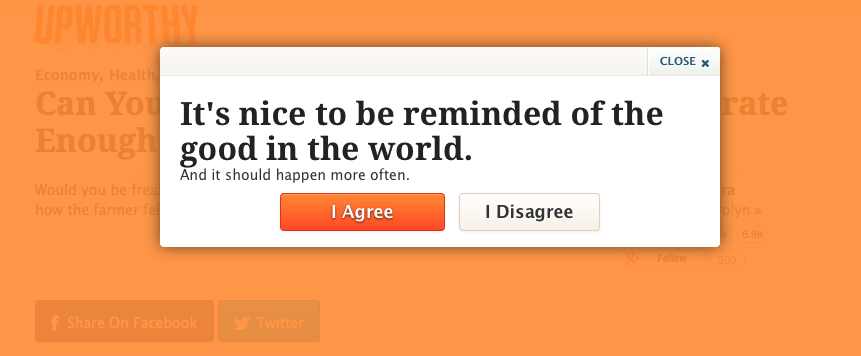
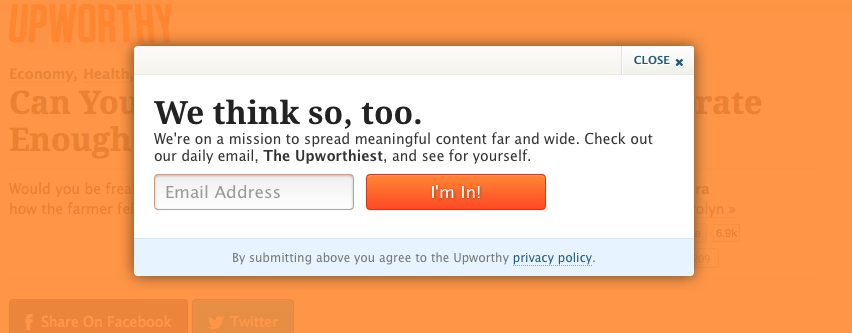
Obviously, this is followed by an angry click to the link to find out how the heck Disney is polluting young, impressionable minds. You must know. Immediately, upon clicking on any Upworthy.com link, your route to the article will be interrupted by something like this:

Good in the world


Likely still riled up from the incendiary headline, and feeling preemptive guilt at the prospect of clicking “no,” you declare to yourself and the internet “YES! I AGREE!” And now you are ready to find out about the evils of Pocahontas. But wait! Your pathway is further interrupted by this:

We think so too

And you think to yourself, “YES! YES I DO! IT’S FOR THE CHILDREN!” (You still have not received an answer to the pressing question, “what is worse than violence?”) And you righteously enter your email address, probably not even your default aol handle from the early 00’s that you use for promotional offers, sneakily avoiding spam and unwanted newletters. No! You will use your much-protected gmail address because it’s for the children.

And just like that, you’ve subscribed to daily Upworthy life-changing content.

Now on to figure out how the next generation of innocents are being brainwashed into tiny weapons of destruction.

Headline and intro

You begin to read the article. Desperate to find out the secret…

Wait. There’s a video. We still haven’t been told what’s happening to our children. Something about men. Oh look, it’s Gina Davis. What is she doing here?

“Ahhhh, I see. Women are underrepresented in fantasy crowd scenes. I see. Well, that was interesting. Should I still be upset? As upset as indoctrinating children with violence in cartoons? What am I supposed to do with all these feelings? I should read more of these rage-inducing articles in the sidebar here…”

And just like that, you are an Upworthy subscriber, reader, and look! You can share your outrage with all your Facebook buddies! Because they should know! And feel all the feelings I feel!

Now, it is important to note that I don’t necessarily disagree that subtly implying that a patriarchal, male-dominated society is the norm, even in Never Never Land, but I do resent being (metaphorically) lit on fire and sent running through the Internet screaming at the top of my lungs.

Upworthy’s model is designed to manipulate readers—to hook, outrage, inspire curiosity, leave questions unanswered until the last possible point of engagement, and then leave you to feel like a bad person that probably should care this deeply about more issues.

I, for one, feel used. Every single one of my heartstrings and fears pulled and tweaked. My primary email address given out. My mounting feelings of anger and concern were left  deflated and anticlimactic. I’m tired now.

What are the implications of this style of content? If another news source were to employ these tactics, what would the reaction be? Is this level of manipulation okay because it’s for a good cause? Does this bother anyone else?

Posted in Uncategorized | Comments Off on Upworthy on the up and up?

IKEA’s “Online Flea Market”? Brilliant!

Have you ever whispered to yourself “what a waste” when you toss out some of the furnitures from IKEA? I am not sure about you, but this resonate with me very much because as an international student, IKEA is on the top of my list when it comes to furniture shopping – it’s relatively cheap, one-stop shopping, with great service. Also, I think it’s how it brands itself – furnitures that are tasteful but aren’t designed to last long. At the end when I need to move to a new place or get back to my country, eventually I have to throw these fully functioning furnitures away. That has been such a waste, until now.

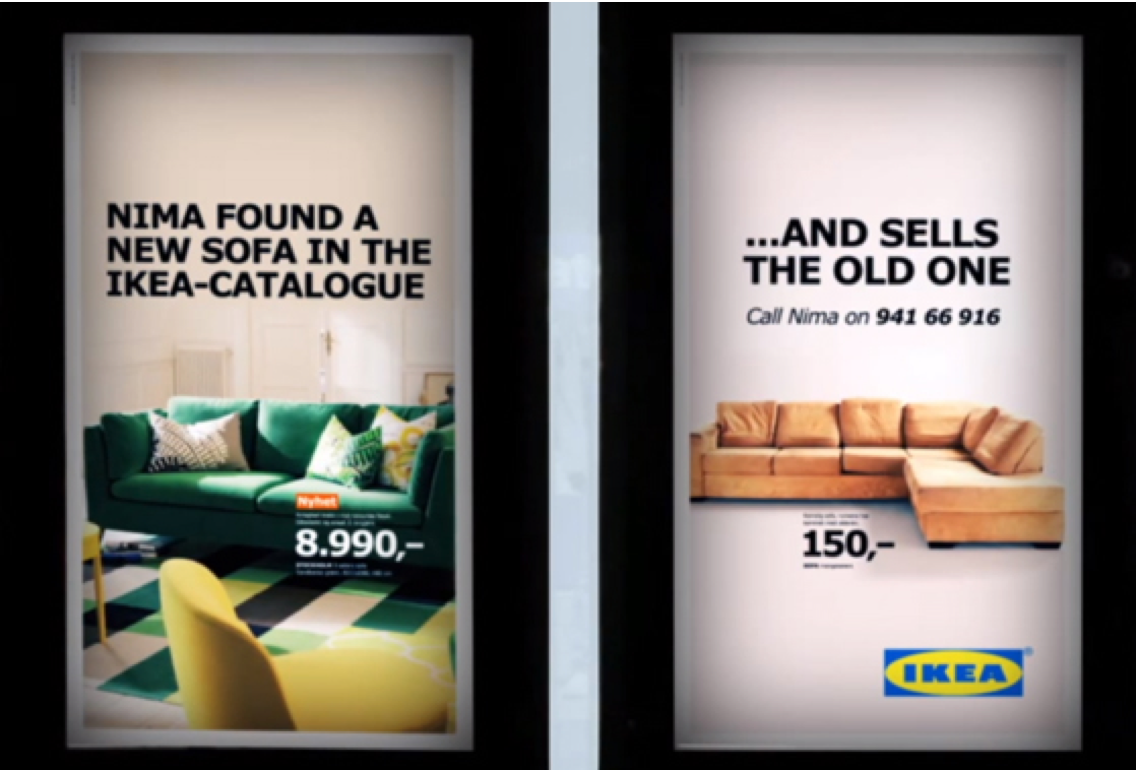
I was browsing on the internet the other day and came across IKEA’s newest campaign: The Second-Hand Campaign (click to look at the video introduction). This intrigued my interests, because I have always been wondering why IKEA never realize the value of creating a platform for people to resell their IKEA products. Gladly, they finally took some actions. I went afterwards to do some research. This campaign was launched last week, and the first batch of consumers were 50 Norwegian customers. IKEA retrieved their used furnitures, photographed them and put them in the ads next to the brand new ones. It looks just like this one.

Screen Shot 2013-11-04 at 10.47.01 PM


The reason why I found this campaign very brilliant, is how it hits three birds with a stone. First of all, it is such a great way to build its image as a consumer-friendly brand by providing such a platform. Secondly, it adds a layer of entertaining to the new ads, which I believe will contribute to their marketing performance. And it is an integrated campaign, as it encourages people to visit their websites and social media pages. Thirdly, it brings attention to their new products, and audience can actually see what that piece of furniture will look like after an amount of time.


However, while I am complimenting the creativity of the campaign, I also have some concerns. You may notice that on the ad, besides the furniture, the slogan, the logo, the price, there is something else. Do you see the chain of numbers on the ad? That’s the used-furniture owner’s contact number. According to a report, all the furnitures from these 50 consumers were successfully sold after the ads were posted on websites, magazines and TV, and the phone number on the ads were the major way for communication.

While I was amazed by the consumers’ courage to expose their personal contact information, I was thinking if I were one of the consumers, I probably would feel very uncomfortable exposing myself like that. I might be too sensitive here, but still it’s a potential disturbance in the future, as it says something about me. Maybe I am too insecure about my information, but I am very curious to see how many people are willing to do that and how does this model work. I don’t know if IKEA charges them for advertising on their behalf, or if IKEA subtracts a certain percentage of the amount of the deal if it gets made. What do you think? Will you be comfortable about this, and what do you think of the whole campaign?

Posted in Uncategorized | 7 Comments