For their new Kompressor Elite vacuum cleaner, LG made an ad that takes viewers into a vintage-looking toy world, with a story line seemingly inspired by the most recent addition to the Toy Story movies, Toy Story 3. While vacuum cleaners and the Pixar film do not have immediate links that come to mind, this is a creative way of using entertainment and emotional equity that the Toy Story trilogy has accrued to LG’s advantage.
Since we can assume that the target market for the Kompressor Elite includes home-makers, fathers and mothers, the visual suggestion of toys brings to mind children and keeping the house clean and tidy for their sakes. The epic music and dramatic scenes lend a sense of intensity that appeal to both male and female audiences.
To top it off, the well-executed ominous 3D dust sharks, Barbie and Ken’s humorously unromantic relationship and the happy ending round this out as an ad deserving of a closer look.
Facebook, Twitter, LinkedIn and the scores of other sites that allow marketers to take to the social media airways are powerful tools when used in the right way. But there are boundaries and if marketers overstep those boundaries it can lead to consumer backlash.
In a recent article by Susan Gunelius at Entrepreneur.com she outlines what she defines as the 10 Laws of Social Media Marketing, summarized below:
1. The Law of Listening
Success with social media and content marketing requires more listening and less talking.
2. The Law of Focus
It’s better to specialize than to be a jack-of-all-trades. Have a highly-focused social media and content marketing strategy.
3. The Law of Quality
Quality trumps quantity. It’s better to have 1,000 online connections who read, share and talk about your content with their own audiences than 10,000 connections who disappear.
4. The Law of Patience
Social media and content marketing success doesn’t happen overnight.
5. The Law of Compounding
If you publish amazing, quality content and work to build your online audience of quality followers, they’ll share it with their own audiences on Twitter, Facebook, LinkedIn, their own blogs and more.
6. The Law of Influence
Spend time finding the online influencers in your market who have quality audiences and are likely to be interested in your products, services and business. Connect with those people and work to build relationships with them.
7. The Law of Value
If you spend all your time on the social Web directly promoting your products and services, people will stop listening. You must add value to the conversation.
8. The Law of Acknowledgment
You wouldn’t ignore someone who reaches out to you in person so don’t ignore them online. Building relationships is one of the most important parts of social media marketing success, so always acknowledge every person who reaches out to you.
9. The Law of Accessibility
Don’t publish your content and then disappear. Be available to your audience. That means you need to consistently publish content and participate in conversations.
10. The Law of Reciprocity
You can’t expect others to share your content and talk about you if you don’t do the same for them.
I agree mostly with the laws shared above and think it is important that all marketers realize that social media cannot be used in the same way that billboards and radio ads of years past have been used. You cannot be an idle marketer, rather you need to be actively engaged. My favorite law shared is the Law of Value which states: “If you spend all your time on the social Web directly promoting your products and services, people will stop listening.” This has happened to me, and I am sure all of you can relate as well.
Just in case any company thinks they don’t need to invest in social media marketing or take the time to build their social media brand I included the following video:
Today is the one of busiest days for chocolate stores. Not only did well-known chocolate brands throw tons of money on advertising their products, but also local chocolate stores joined the annual chocolate war by advertising through radio stations and uploading featured videos to YouTube. It’s a sweet war.
Observing commercials and videos during Valentine’s day, emotions, including love, attraction, romance, and happiness, are attached to all of them. Actually, not only during Valentine’s day, chocolate has been associated with love and romance since Hershey connect chocolate with Valentine’s day in 1907.
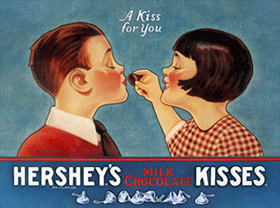
Above is the early years advertisement of Hershey’s Kisses. The post simply presented a couple sharing Kisses chocolate. They both were closing eyes and with genius smile on faces. A loving message was perfectly delivered by the tag: “a kiss for you”, which meant a Kisses chocolate and a loving kiss at the same time. It was proved that emotional selling works well for chocolate industry. Love, attraction, and happiness are desired and needed emotion for everyone. Therefore, it is not surprise that most chocolate brands applied emotional branding to connect with their customers. For example, Godiva changed their website to pink color and highlight a heart-sharp gift box with candles (see below pictures).
Hershey is a chocolate company with over 100 years history. Facing strong competitors, such as Godiva and Dove, how could it win the chocolate war when chocolate industry share the same emotional brand theory?
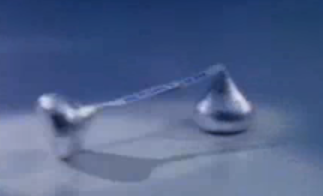
In my opinion, personification is the top secret for Hershey Kisses’s success. Hershey started to use Kisses chocolates to represent the loving couple since 80s. Those small size sweets are no long chocolate on couple’s hands or in gift boxes. They are dance, singing, or skating together, with love and happiness, like real couples (see screenshots below). Unique chocolate images successful implanted positive emotion, such as romantic, to the brand. Also, Kisses’s commercials always associated with happy musics. The concrete sounds and movements transferred intangible emotions to something that audience can feel and remember. In addition, benefit from its unique small size package, sharing Kisses is more easier than other chocolate bar. As we all know, sharing is loving. I believe this concept also contribute to the success of Kisses.
Little sharing: Do you know Why Kisses called “Kisses”?
“While it’s not known exactly how KISSES got their name, it is a popular theory that the candy was named for the sound or motion of the chocolate being deposited during the manufacturing process.” (Hershey Inc., 2010)
Disney recently started an ambitious program, Disney Baby, that will put company representatives in 580 maternity wards across the country peddling Disney baby products to mothers who just gave birth. It doesn’t surprise me that Disney is extending its brand to dominate this newborn market. This is Disney, the brand champion; it’s what they do. But, what is a bit disconcerting about this, is the strategy they are using to do it.
About five years ago when I learned I was pregnant, I immediately started getting bombarded with post cards or emails asking me to sign up to mailing lists. I’m not sure how these companies discovered I was pregnant but it was fine because most of these requests came with free baby gifts. So months before I gave birth, I had already received countless cans of formula, diapers, creams, nail kits and other products for my baby. Even in the hospital room, diaper bags filled with wipes and more formula was there waiting for me. And before being released, I was given the choice of either a car seat or stroller. It was great!
So what makes Disney’s program different from all the other companies trying to target new mothers and babies? Well, I didn’t have a Gerber representative sitting in my room after 18 hours of labor trying to tell me about what makes Gerber so grand. According to the New York Times, Disney will use bedside demonstrations to market their products and ask mothers to sign up for email alerts from Disneybaby.com. Really Disney? This is one of the most important times in people’s lives. It is a time when mothers are balancing feelings of utter joy and pure exhaustion. And while still in the hospital with the help and care of nurses, we are trying to savor our last moments of peace before taking our newborn home and having to fend for ourselves. Do you really think we want to talk to a Disney representative who will spend our precious moments talking about how Disney onesies (those are baby bodysuits for those of you who are unfamiliar with baby talk) will remain soft and durable even after washing?
The whole thing reminds me of a time share presentation. How they promise you a free trip if you sit through a 90-minute presentation. None of us really want to do it, but we really need that free trip. So to Disney, I say this for all new mothers: “Just give me the damn gift and get out!” You will rarely hear this sentiment from parents as you are approaching them during one of the most vulnerable times in their lives. Because like new mother Elizabeth Carter told the New York Times, we need those gifts.
My father is a huge Google fan. He showed me his shiny new Android phone when he visited me last month. I am not jealous. Since I knew I will soon have an iPad. We went to Griffith Observatory together. It was a clear night. I was using his cell phone to play with the Sky Map, an Android app helping me search the night sky for my favorite constellations. I have been wondering long time how it differs from the similar Star Walk app on my iTouch.
Since when? Every night before sleep, I will log on to the iTune store, to check if there is any thing new I can download. Yes, apps work. I use them to read news every morning. I browse the apparel catalogs to see if there are sales. Veggie Samurai is my favorite. Since it kills vegetables and also the time.
Apps matter. Google knows that. Last month, Google places joined iPhone. People can use it to search and rate restaurants, bars and hotels. It puts pressure on those existing navigation/life apps. Recently, Google launched its new web-based Android Market. It first allowed users to search and download apps by website. Before, they can only download apps by phone.
To be more specific, now, if a user wants to download apps for his/her phone on computer, their paths should be:
1. Apple devices –download/open iTunes – iTune account – apps
2. Android devices –website – Google account –apps
As we can see, while apple uses iTunes as the medium platform, Android decides to move to website, which is its turf. Obviously, going to a website is easier than downloading/opening a software. This convenience might be inspired by the philosophy of the search engine: giving people what they want when they want it.
Why apps become the battle of smartphone? Perhaps there lie niches. It will not cost much to post an app on the iTune/Android store. It can be either a product or a promotion of the product ─ a Japanese brand “MUJI” recently did both. Also, $0.99 apps are not expensive. But Tons of $0.99 apps make “the long tail”. As Chris Anderson suggests, due to the low cost of drawing or paying attention in the new (digital) environment, people concern more about the ‘long tail’ of the demand curve where lying numerous niches. For those who want to make profits, occupy markets and amass capital, it is necessary to pay attention to those fragmented, specialized and flexible niches, for its particular attraction to advertisers. In other words, a clear vision of users of a certain sharing taste, hobby or lifestyle can help to predict potential consumers.
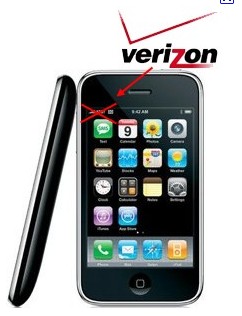
Before, if people want to use iPhone, they can only choose AT&T. But The rate of AT&T is very high, and people are not satisfied with AT&T. However, Verizon began to pre-order Verizon iPhone. On the first day of pre-order, Verizon sold all the stock out within two hours. They break the sales record at that time. According to the spokes person of Verizon, if they can sell 11 million iphone, they can improve their sales by 8% of this year.
Because Verizon now is the first big carrier of the U.S., and AT&T is at the second place. Some people are worried that the Verizon will take a lot of market share of AT&T. And people may change their carrier from AT&T to Verizon. So at this time, the brand loyalty seems to be the very important thing for the carrier AT&T. If AT&T wants to keep the previous customers, they need to think making some changes, in order to compete with Verizon.
In my home country China, there are only two carriers, the bigger one is called China Mobile, and the other one is China Unicom. They are always fighting for taking more market share. They all use promotions, commercials, and viral marketing to obtain more consumers from the other carrier. But China Mobile is always at the top and have far more consumers than China Unicom. When iPhone came out, China Unicom got the exclusive rights to sell iPhone, which means if people want to use iPhone legally in China, they need to use China Unicom’s service. However, China is famous for its “special technology” , which is called “jail break”. It means people can buy the iPhone anywhere in the world, and then they use a software to help the original iPhone break the jail. Then people can use whatever carriers’ service. This is kind of illegal, but so far, the police in China could not do anything to stop it, they can just do to prevent smuggling. Reference: http://www.hollywoodreporter.com/news/verizon-iphone-sells-two-hours-96943
As per annum, this week the whole of America (and a large proportion of the rest of the world) will congregate and consume in front of the sporting calendar’s most anticipated contest; The Super Bowl.
In recent years, the NFL’s marquee event has emerged not only as a showcase for sporting excellence and intense competition, but rather as a platform for lucrative commercial advertisement opportunity.
Ever since Joe Namath and Farrah Fawcet’s promotion of Noxzema skin cream in Super Bowl VII, a large majority of the most familiar brands have delved into the merciless 30-second Super Bowl market. Most notably, Coca-Cola, MacDonalds, Budweiser and Snickers have all attempted to capture the attention of the audience within the consistently most-watched television broadcast of the year. Enormous demand for a limited pool of allotted advertisement space has result in the price of a 30-second Super Bowl spot escalating to an astonishing $3 million.
When executed effectively, Super Bowl campaigns can represent a landmark event in the conception of a commercial brand. Apple’s “1984” commercial, directed by Ridley Scott, not only gained accolades for the spot itself, but also generated unprecedented levels of free publicity for Apple through word-of-mouth and media attention.
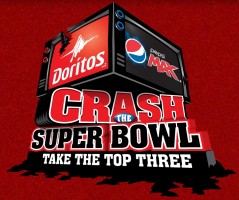
The artistic, innovative and nuanced methods incorporated in Super Bowl campaigns have often set the trend for the wider commercial landscape. At Super Bowl XLI, Dorito’s famous “Crash the Superbowl” crowdsourcing campaign received exceptional levels of recognition and popularity. The idea of outsourcing advertisement to YouTube or MySpace consumer competitions has since become an integral strategic asset to any commercial brand.
So, what can we expect from Super Bowl XLV this Sunday?
This year’s campaigns promise to involve the most digital, integrated and technologically sophisticated methods of all time. In addition to the 30-second spot, many companies have established synchronized Twitter or Facebook campaigns in the period leading up to the game. Kia’s “One Epic Ride” campaign has included print, television, social media and digital components and will culminate in a competition whereby five “fans” can win an all-new 2011 Kia Optima.
New technologies have undoubtedly provided brands the opportunity to compile more interactive and inclusive marketing campaigns. As such, the Super Bowl campaign is no longer restricted to the 30-second advertisement segment; but rather, an incredibly complex and considered overlap of complementary marketing techniques.
On February 6th at 3:30PT Audi, Pepsi, Skechers and an array of other familiar brands will do battle against one another in pursuit of the highly coveted “Best Super Bowl Campaign” tag.
Uniqlo's (shipping container) pop-up store in NYC.
Come and get it…but hurry. You’ve only got 96 hours before this limited edition retail experience moves out of town. Hurry up! You don’t want to miss out.
Pop-up stores—retail outlets that open temporarily and then move on—are sprouting up around the US (and abroad) as a new way to engage customers and market products. From online retailers (like eBay and piperlime.com) to car manufacturers to tourism bureaus, pop-up stores allow companies to generate buzz and create a custom consumer experience.
1. One-to-One Marketing
Pop-up stores create a one-to-one marketing experience by allowing consumers to engage with (see, touch, smell) products and speak directly to retailers. For example, the Greater Fort Lauderdale Convention & Visitors Bureau opened a pop-up location in New York in January. They created the entire sensory experience for shoppers—a beach (complete with sand), a putting green and lifeguards. Consumers stepped out of the snow and into paradise.
2. Testing Grounds
Pop-up stores are an excellent opportunity for various types of retailers to introduce their products to the public. Online retailers can give customers the opportunity to engage with their products for the first time. Additionally, pop-up stores allow companies to test new products or market areas with no long-term commitment. Finally, many companies use pop-up stores to launch new products—giving dedicated customers the “first look.”
3. Media Attention
The sense of urgency that surrounds pop-up stores helps them generate a huge amount of buzz. For example, the U.S. Potato Board opened a pop-up store in New York to promote potatoes as a good source of potassium and vitamin C. The store got them featured in the New York Times and a number of network morning shows—which would have been impossible using traditional marketing tactics within the same budget.
4. Cost
Pop-up stores are efficient for retailers and landlords. The cost of opening a pop-up store is far less than the cost of producing television ads and buying television time. Additionally, since the investment in relatively low, marketers can be more progressive and think “outside the box.” Japanese clothing brand Uniqlo, promoted their launch in New York by opening a pop-up store in a shipping container. The idea—that the products were literally coming to New York from Tokyo—sent a clear message at a relatively low cost. For landlords, pop-up stores are a way to generate income in otherwise unoccupied properties and keep activity in the neighborhood alive.
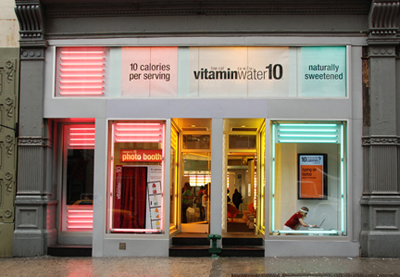
The VitaminWater10 pop-up store gave consumers the opportunity to taste the new product.
Pop-up stores are not limited to one type of retailer. Companies like Nike, Gap, JVC, Wal-Mart, eBay, VitaminWater, Lexus and Ford have already entered the pop-up space. In time, we can expect to see pop-ups going places other than New York and Los Angeles, which have emerged as far and away the most popular locations. Big cities are attractive for a variety of reasons (number of inhabitants and major media outlets top the list), but pop-up stores will also emerge in more rural areas, giving those shoppers the opportunity to purchase products not usually available to them.
Coffee drinkers, unite! For those of you who are loyal to Starbucks…this is probably already old news.
Starbucks, one of the most prominent coffeehouse chains in the world have served its loyal customers since 1971. Atmospheric, cozy rooms, a wide variety of cold and hot drinks, baked pastries and snacks, and even some of the latest selection of hip, urban music for added ambience.
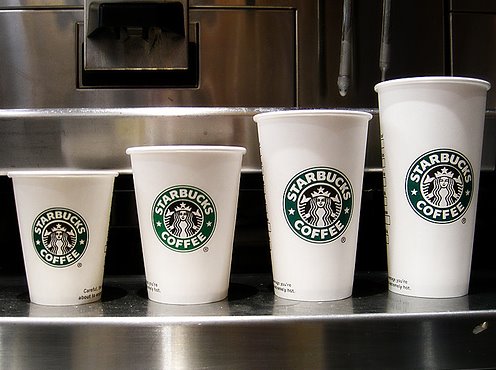
Current sizes at Starbucks (from l-r): Short, Tall, Grande, and Venti (20 US fl oz.)
After releasing its new logo in 2011, Starbuck’s next marketing task for the new year is to gradually introduce its new cup size, the trenta(Italian for thirty, although it is 31 US fl oz.) to customers in the United States. The company hopes to debut the new marketing product nationwide by May 3rd.
New Starbucks logo for 2011
While some customers may be jumping with glee (I know I am), the company seemed to have overlooked the fact that our nation is among one of the most health-conscious; consistently rooted in the notion that living well equates to consuming less calories. Trenta have been under attack by dietitians, and graphs have sprung up that provide visual comparisons of the size of a human stomach to trenta (the average stomach capacity at 900 ml, while the trenta size is 920 ml). Starbucks have claimed that they will only be utilizing the trenta size for drinks that are under 230 calories, but some have contested that extra additions (such as sugar, cream, milk, or flavoring) that customers put into their drinks will increase the calories overall. Others believe that the new size might make its way to drinks of higher caloric content in the long run. Howard Schultz, CEO of Starbucks, defended the new product by stating that “the 31-ounce beverage was a response from customers who wanted iced coffee and iced tea only in a larger size.” In order to generate customer excitement for the arrival of trenta, Starbucks recently launched the Starbucks Card eGifts on Facebook, where Facebook users can now connect their accounts to eGifts and send Starbucks gift cards to their friends without knowing their email addresses.
Taking these arguments into account, how do you think the Starbucks ‘trenta’ will fare in the future – short-term and long-term? What are some alterations or additional marketing techniques the company should adopt in order to appease the health concerns of our nation, and to make the product more appealing to its consumers?
As a final note, be on the lookout California. You are next on the list as the trenta will be arriving to your local Starbucks on February 1, 2011…you might want to save room in your stomach for that day!
Promoting brands seems to be Facebook’s up and coming tag-on to its current marketing strategy, which seems to be doing quite well anyways. “Sponsored stories” are now going to be built into different elements of Facebook user pages and will find ways to be more visible more often. The whole goal of adding “Sponsored Stories” is to even further connect Facebook users and add on an extra element to the concept of viral marketing (developing a spider-web-like dynamic). By connecting brands and stories with people and multiple users, exposure become drastically increased and also becomes associated with people and what they do.
They say that by incorporating the “sponsored stories” into user interactions and applications (likes, location check-ins, page posts, etc.) that Facebook is hoping to capture the “word of mouth recommendations and endorsements that are happening across Facebook every day…and increase distributions of those.” But is it really possible to capture word of mouth marketing? Isn’t that messing with the entire essence of word of mouth? Maybe it isn’t; maybe this is the future of marketing in places where marketing already exists and is somewhat saturated. Facebook seems to always be on the forefront of new and improved social media and maybe, just maybe, they have found a way to capture “word of mouth.”








 “Sponsored Stories” is to even further connect Facebook users and add on an extra element to the concept of viral marketing (developing a spider-web-like dynamic). By connecting brands and stories with people and multiple users, exposure become drastically increased and also becomes associated with people and what they do.